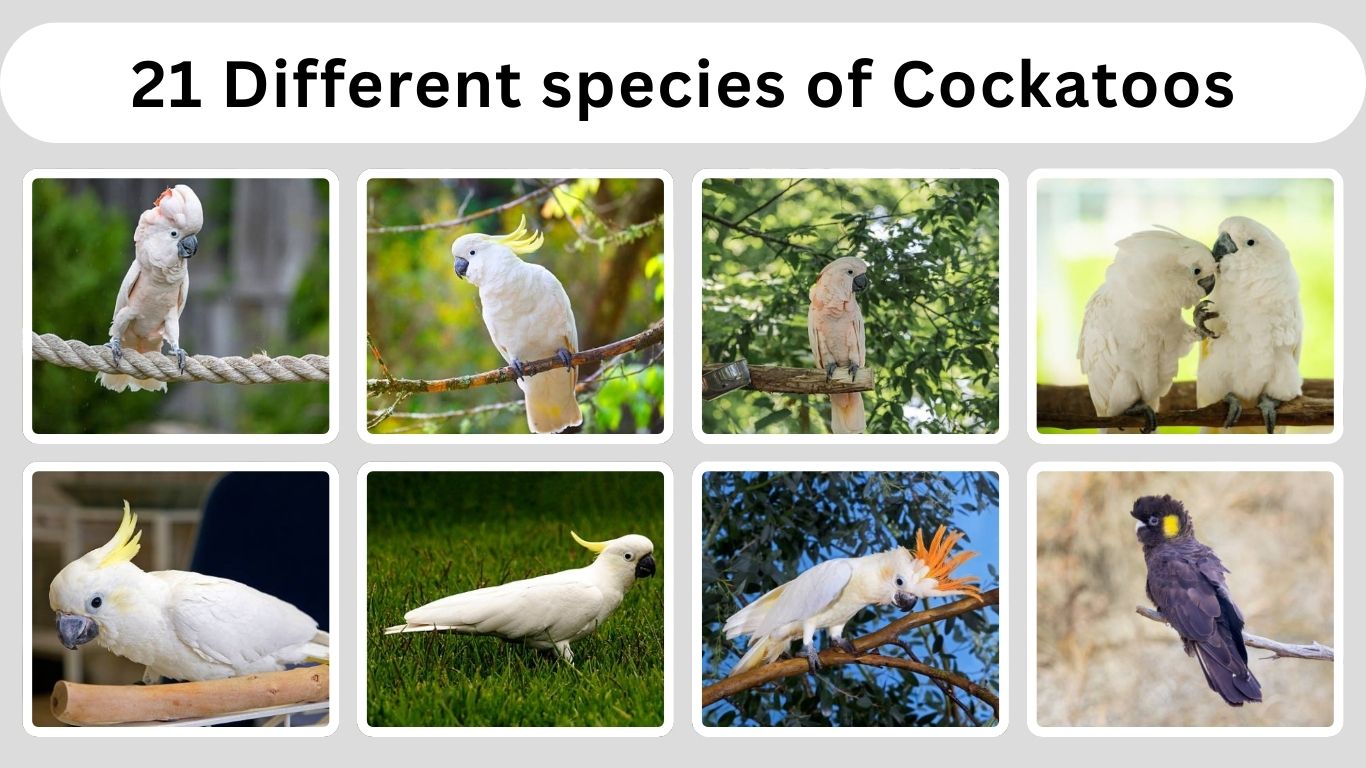
Cockatoos are highly intelligent, social parrots known for their expressive crests, strong beaks, and playful personalities. Found mainly in Australia, Indonesia, and nearby islands, these birds range from small corellas to large, powerful black cockatoos. Each species has unique colors, behaviors, and habitat preferences, making cockatoos one of the most diverse and fascinating parrot groups in the world. In this guide, you’ll explore different cockatoo species, along with their identification features, lifestyles, and natural traits.
1. Umbrella Cockatoo
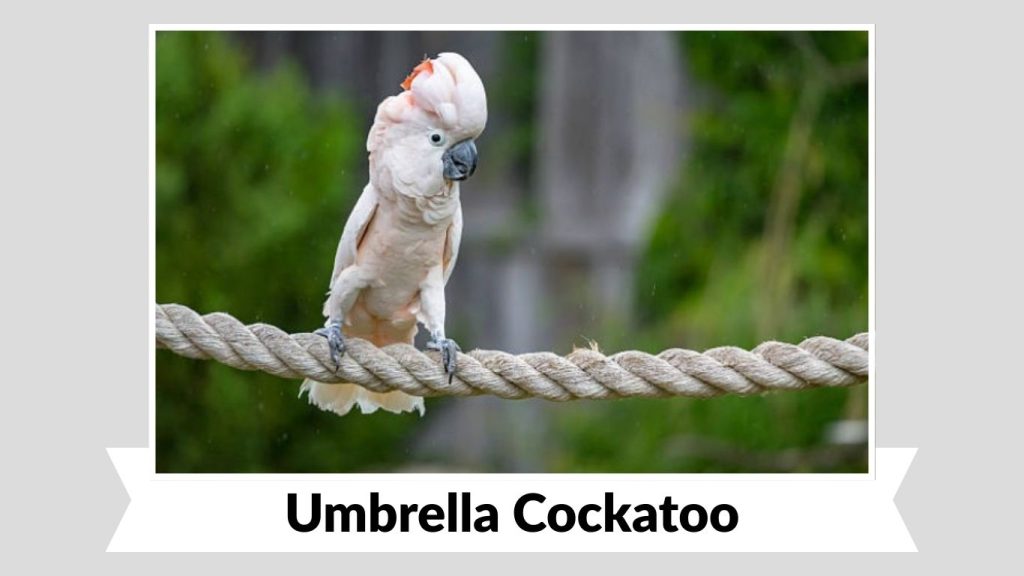
The Umbrella Cockatoo (Cacatua alba) is a striking white parrot best known for its large, fan-shaped crest that opens like an umbrella. Native to Indonesia’s tropical islands, this cockatoo is highly intelligent, social, and expressive. It is one of the most recognizable cockatoo species due to its pure white plumage, dark eyes, and playful personality.
Identification
- Pure white feathers across the body
- Large white crest that fans out like an umbrella
- Black beak and dark gray to black feet
- Dark brown to black eyes
- Medium to large-sized cockatoo (about 45–50 cm long)
Habitat
Umbrella cockatoos naturally live in lowland rainforests, mangroves, wooded areas, and forest edges. They are most commonly found on islands in North Maluku, Indonesia, where they prefer tall trees for nesting and roosting, often near rivers or coastal forests.
Behaviors
This species is extremely social and forms strong bonds with flock members or human caretakers. Umbrella cockatoos are playful, vocal, and curious, often using their crest, body posture, and calls to communicate emotions such as excitement, fear, or affection.
Diet
In the wild, umbrella cockatoos feed mainly on seeds, nuts, fruits, berries, and leafy vegetation. They also eat insects and larvae occasionally. In captivity, their diet usually includes pellets, fresh fruits, vegetables, and limited nuts.
Lifespan
Umbrella cockatoos are long-lived birds. In the wild, they may live around 30–40 years, while in captivity, with proper care, some individuals can live 60 years or more.
2. Sulphur-crested Cockatoo
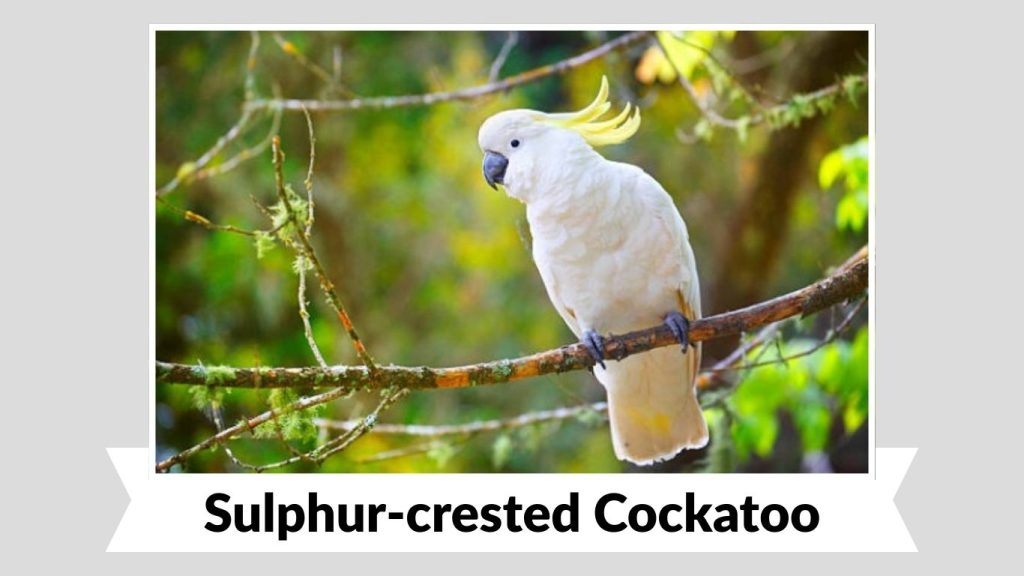
The Sulphur-crested Cockatoo (Cacatua galerita) is a large, eye-catching white cockatoo known for its bright yellow crest and powerful voice. Native to Australia, New Guinea, and nearby islands, this species is highly intelligent, energetic, and social, often seen in noisy flocks in both wild forests and urban areas.
Identification
- White body feathers with a bright yellow crest
- Yellow wash under wings and tail
- Strong black beak
- Dark eyes with gray-black legs and feet
- Large size, about 44–55 cm in length
Habitat
Sulphur-crested cockatoos live in open woodlands, forests, mangroves, farmland edges, and even city parks. They easily adapt to human environments and are commonly seen nesting in tall trees near water sources.
Behaviors
This species is very vocal, social, and playful. It forms strong pair bonds and lives in large flocks. Sulphur-crested cockatoos are excellent problem-solvers and are known for their curiosity, tool use, and expressive crest movements.
Diet
Their natural diet includes seeds, nuts, fruits, berries, roots, and insects. They also forage on crops and garden plants, which sometimes brings them into conflict with farmers.
Lifespan
In the wild, sulphur-crested cockatoos usually live 20–40 years. In captivity, with good care, they can live 60 years or more.
3. Moluccan Cockatoo
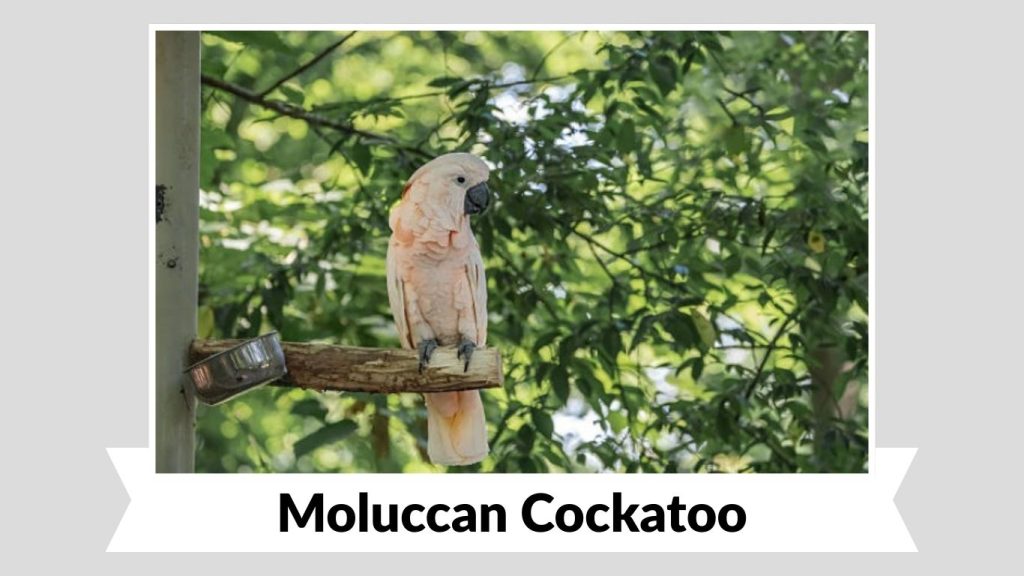
The Moluccan Cockatoo (Cacatua moluccensis), also called the Salmon-crested Cockatoo, is famous for its soft pink feathers and large, dramatic crest. Native to the southern Moluccan Islands of Indonesia, it is one of the largest and most expressive cockatoos, known for strong social bonds and emotional behavior.
Identification
- Pale pink to salmon-colored body feathers
- Large crest with red, orange, and yellow tones
- White wings with a light peach tint
- Black beak and dark gray feet
- Large size, around 48–52 cm long
Habitat
Moluccan cockatoos inhabit lowland forests, hill forests, and wooded areas, usually below 1,000 meters. They prefer dense tropical forests but are also found near forest edges and cultivated land.
Behaviors
This species is extremely social and affectionate. In the wild, they live in pairs or small groups and communicate loudly. They are intelligent, sensitive birds that use their crest and body language to express excitement, fear, or bonding.
Diet
Their diet includes seeds, nuts, coconuts, fruits, berries, and vegetation. They may also eat insects and larvae. In captivity, they require a balanced diet of pellets, vegetables, fruits, and limited fats.
Lifespan
Moluccan cockatoos typically live 30–40 years in the wild and may exceed 60 years in captivity with proper care.
4. Goffin’s Cockatoo
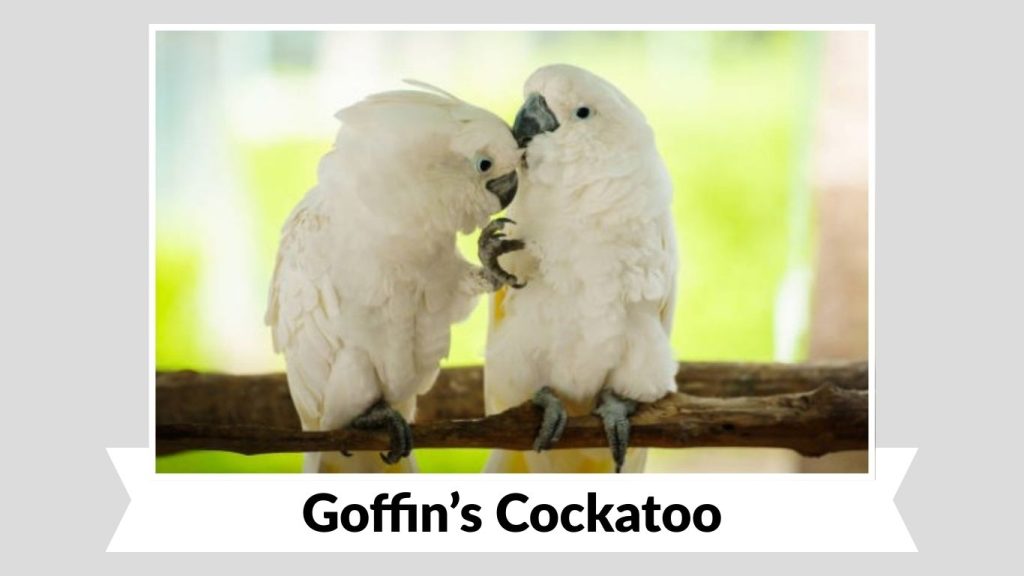
The Goffin’s Cockatoo (Cacatua goffiniana), also known as the Tanimbar Cockatoo, is one of the smallest cockatoo species, yet among the most intelligent. Native to the Tanimbar Islands of Indonesia, it is well known for problem-solving skills, curiosity, and playful behavior.
Identification
- White body feathers with a slight pink blush on face and chest
- Short white crest with pale salmon at the base
- Light gray beak compared to larger cockatoos
- Dark eyes and gray feet
- Small size, about 30–32 cm long
Habitat
Goffin’s cockatoos live in tropical dry forests, mangroves, open woodland, farmland edges, and coconut plantations. They adapt well to disturbed habitats and often forage near villages.
Behaviors
This species is extremely curious, active, and social. Goffin’s cockatoos are famous for their advanced tool use, playful nature, and strong bonding with mates or caregivers. They communicate with soft whistles as well as loud calls.
Diet
In the wild, they feed on seeds, fruits, corn, nuts, blossoms, and roots. They also consume insects and larvae occasionally.
Lifespan
Goffin’s cockatoos usually live 25–40 years in the wild and can reach 50–60 years in captivity with proper care.
5. Lesser Sulphur-crested Cockatoo
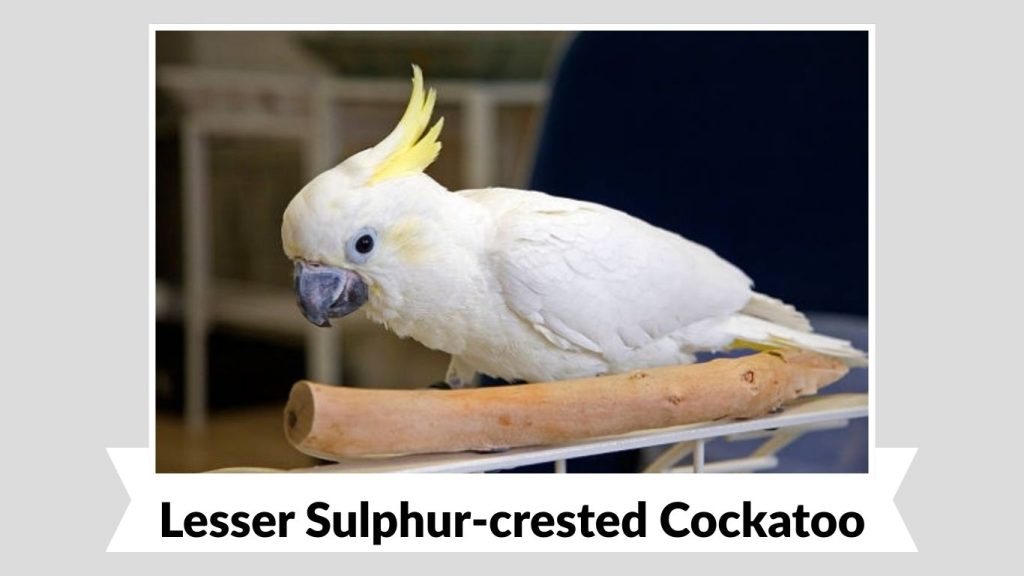
The Lesser Sulphur-crested Cockatoo (Cacatua sulphurea) is a smaller relative of the sulphur-crested cockatoo, recognized by its slim build and bright yellow crest. Native to Indonesia and Timor-Leste, this species is now rare in the wild but remains well known for its alert nature and strong social behavior.
Identification
- White body feathers
- Bright yellow forward-curving crest
- Yellow wash under wings and tail
- Dark gray to black beak
- Smaller and slimmer than the greater sulphur-crested cockatoo (about 33–35 cm)
Habitat
Lesser sulphur-crested cockatoos inhabit dry forests, woodland, savannas, farmland edges, and coastal areas. They are often found in lowland habitats and nest in tree hollows.
Behaviors
They are active, vocal, and highly social birds, usually seen in pairs or small flocks. This species is intelligent and curious, using loud calls and crest displays to communicate with others.
Diet
Their natural diet includes seeds, fruits, nuts, berries, buds, and cultivated crops such as corn. They may also eat insects and larvae.
Lifespan
In the wild, they can live around 20–30 years. In captivity, lesser sulphur-crested cockatoos may live 40 years or more with good care.
6. Greater Sulphur-crested Cockatoo
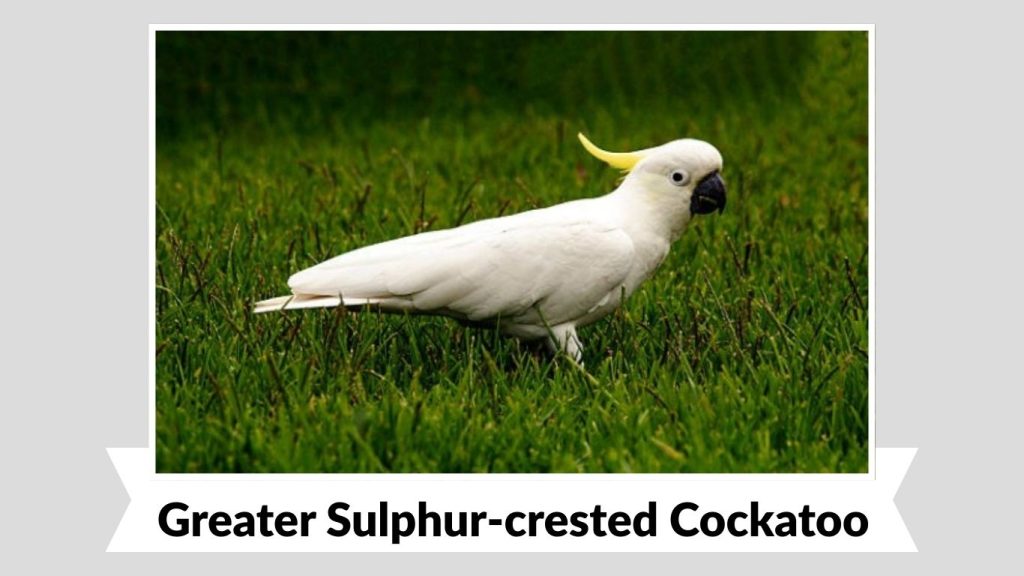
The Greater Sulphur-crested Cockatoo (Cacatua galerita galerita) is the largest and most widespread form of the sulphur-crested cockatoo. It is easily recognized by its long, bright yellow crest and bold personality. Native mainly to Australia and nearby islands, this cockatoo is highly adaptable and often seen in both wild forests and urban environments.
Identification
- Large white body with a long, bright yellow crest
- Yellow coloring under the wings and tail
- Strong black beak
- Dark eyes and gray-black legs
- Large size, around 48–55 cm long
Habitat
This cockatoo lives in forests, open woodlands, mangroves, grasslands, farmland, and city parks. It prefers areas with tall trees for nesting, especially near rivers and coastal regions.
Behaviors
Greater sulphur-crested cockatoos are very social and noisy. They live in flocks, form strong pair bonds, and are highly intelligent problem-solvers. They are known for playful behavior, loud calls, and dramatic crest displays.
Diet
Their diet consists of seeds, grains, nuts, fruits, roots, and insects. They often forage on the ground and are known to feed on crops and garden plants.
Lifespan
In the wild, they commonly live 20–40 years. In captivity, many individuals can live 60 years or longer with proper care.
7. Citron-crested Cockatoo
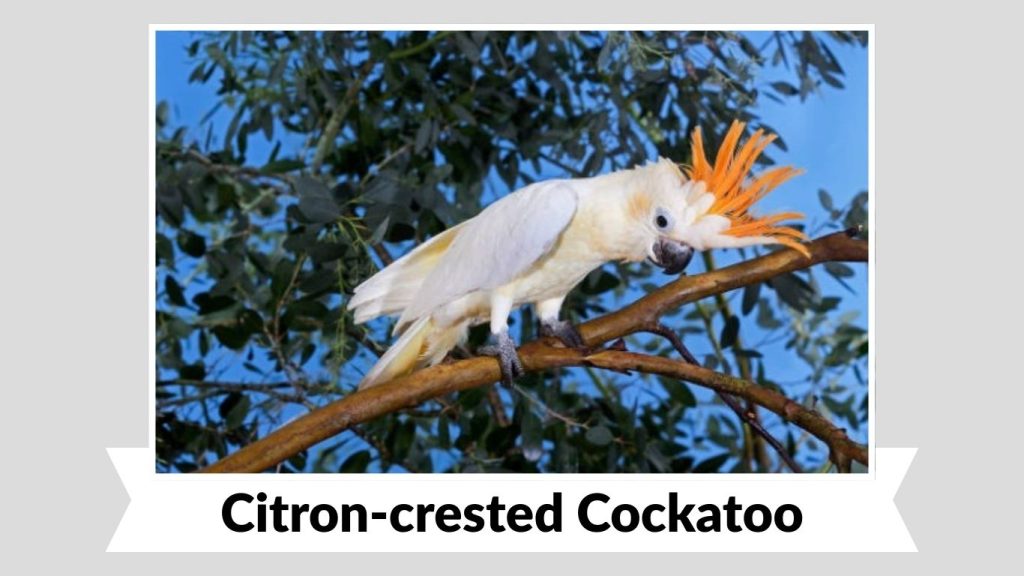
The Citron-crested Cockatoo (Cacatua citrinocristata) is a rare and beautiful cockatoo distinguished by its bright orange-yellow crest and gentle expression. It is native to the island of Sumba in Indonesia and is considered critically endangered in the wild. This species is admired for its intelligence, affectionate nature, and striking appearance.
Identification
- White body feathers
- Bright citron-yellow to orange crest
- Pale blue eye ring
- Dark gray to black beak
- Medium size, about 33–35 cm long
Habitat
Citron-crested cockatoos inhabit dry forests, open woodland, forest edges, and cultivated areas with scattered trees. They rely heavily on old trees with hollows for nesting.
Behaviors
They are social, alert, and expressive birds, often seen in pairs or small groups. Citron-crested cockatoos communicate through loud calls and crest movements and form strong bonds with mates.
Diet
Their natural diet includes seeds, nuts, fruits, berries, buds, and cultivated crops. They may also eat insects and larvae when available.
Lifespan
In the wild, they are estimated to live around 25–35 years. In captivity, with good care, they can live over 50 years.
8. Yellow-tailed Black Cockatoo
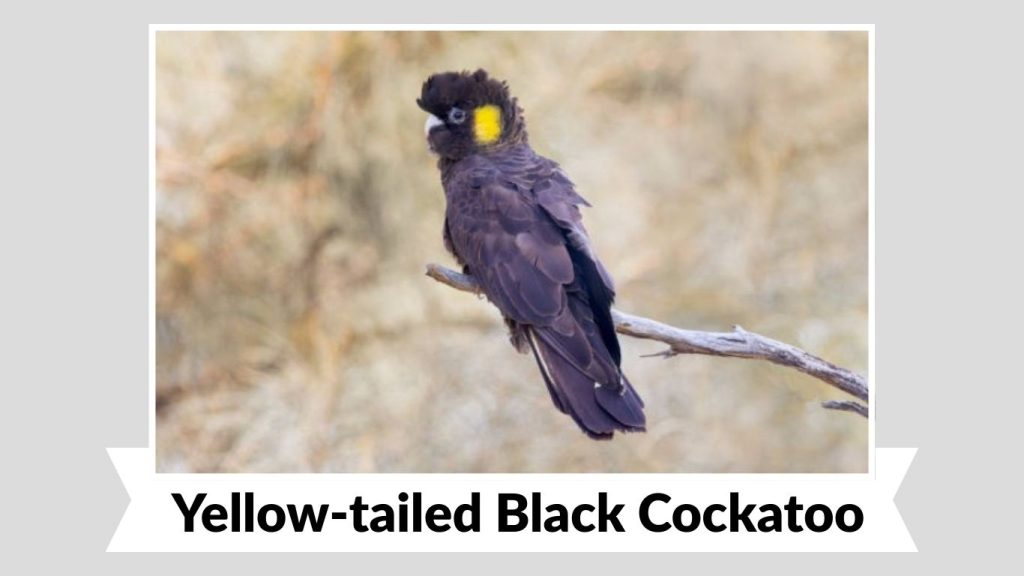
The Yellow-tailed Black Cockatoo (Zanda funerea) is a large, dark-colored cockatoo easily recognized by its black plumage and bright yellow tail panels. Native to southeastern Australia, this species is known for its slow, graceful flight and distinctive, wailing calls.
Identification
- Mostly black feathers with yellow cheek patches
- Bright yellow panels on the tail
- Large black beak
- Long, broad tail
- Large size, about 55–65 cm long
Habitat
Yellow-tailed black cockatoos live in eucalyptus forests, woodlands, pine plantations, and coastal forest regions. They depend on large trees for nesting and are often found in mountainous or forested areas.
Behaviors
They are usually seen in pairs or small family groups. These cockatoos are slower flyers than white cockatoos and are known for their loud, drawn-out calls. They often chew wood to extract insects and larvae.
Diet
Their diet includes seeds, nuts, wood-boring insects, larvae, and fruits. They commonly feed on banksia, hakea, and eucalyptus seeds.
Lifespan
In the wild, yellow-tailed black cockatoos often live 30–50 years and may live even longer under protected conditions.
9. Red-tailed Black Cockatoo
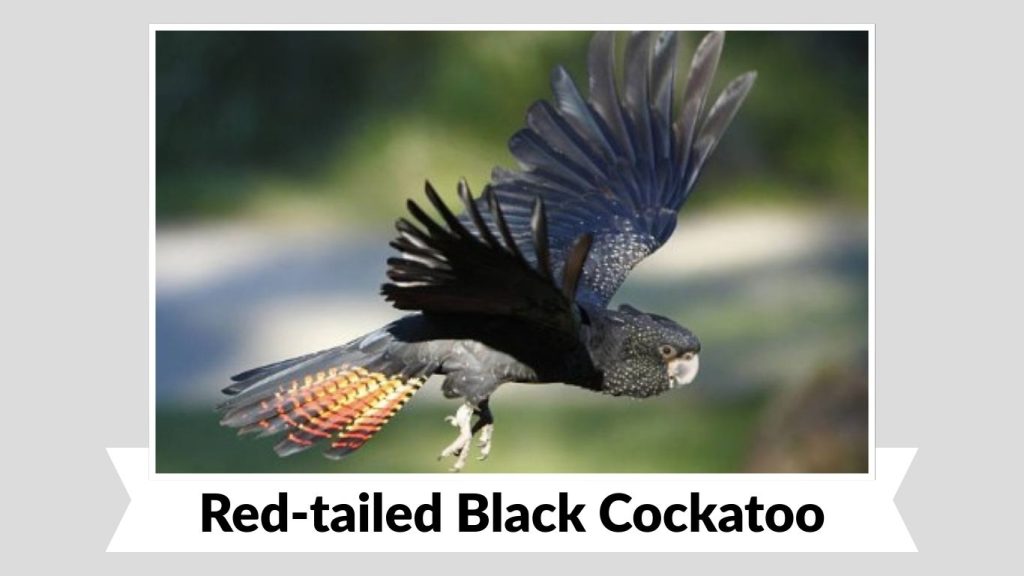
The Red-tailed Black Cockatoo (Calyptorhynchus banksii) is one of Australia’s most iconic cockatoos, recognized by its glossy black feathers and striking red tail panels. This powerful, slow-flying bird is known for its deep calls, strong beak, and impressive size.
Identification
- Glossy black plumage across the body
- Bright red (males) or orange-red barred (females) tail panels
- Large, thick black beak
- Males have dark bills and blackish eyes; females have pale bills and spotted faces
- Large size, about 50–65 cm long
Habitat
Red-tailed black cockatoos inhabit eucalyptus forests, woodlands, savannas, and scrublands across much of Australia. They prefer areas with large trees for nesting and nearby open spaces for feeding.
Behaviors
They are usually seen in pairs or small flocks. This species is calm but vocal, producing slow, rolling calls. They are strong fliers and often travel long distances to feeding areas.
Diet
Their diet mainly consists of seeds from eucalyptus, acacia, banksia, and casuarina trees. They also eat nuts, fruits, and occasionally insects and larvae.
Lifespan
In the wild, red-tailed black cockatoos commonly live 30–50 years. In captivity, some individuals have been known to live well over 60 years.
10. Glossy Black Cockatoo
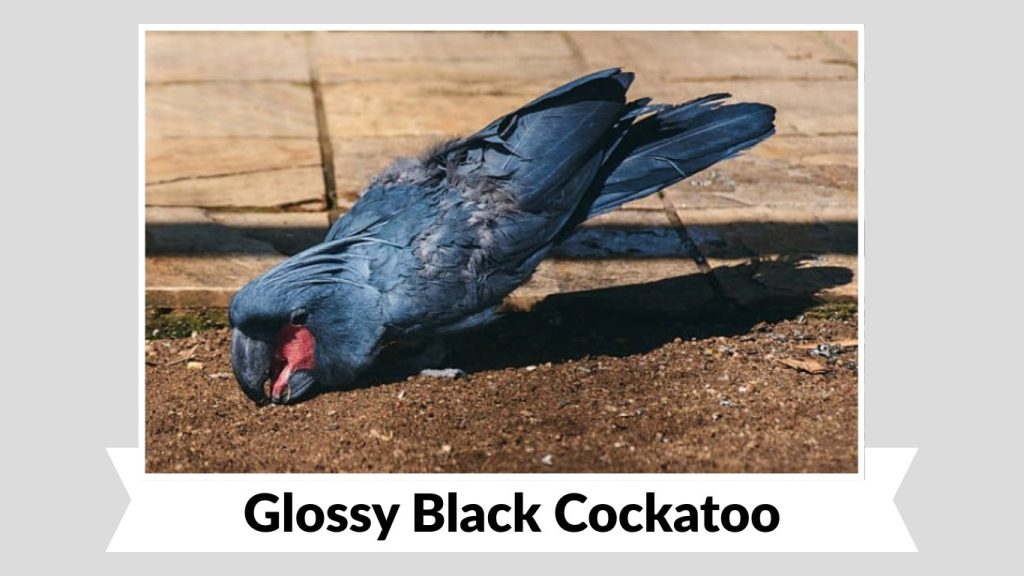
The Glossy Black Cockatoo (Calyptorhynchus lathami) is the smallest of Australia’s black cockatoos, known for its slender shape, soft glossy-black feathers, and quiet, gentle nature. It is more secretive than other cockatoos and is often found in forested habitats where its favorite food trees grow.
Identification
- Glossy dark brown to black plumage
- Large rounded head with short crest
- Males have bright red tail panels; females have orange-yellow barred tails
- Females show yellow spots on head and neck
- Small to medium size, about 46–50 cm long
Habitat
Glossy black cockatoos inhabit eucalyptus forests, woodlands, coastal forests, and inland riverine woodlands. They are strongly associated with areas that contain casuarina (she-oak) trees, which are essential for feeding.
Behaviors
They are usually quiet, shy, and seen in pairs or small family groups. Compared to other cockatoos, they are less noisy and move slowly through treetops while feeding. They often remain in the same feeding areas for long periods.
Diet
Their diet is highly specialized, feeding mainly on the seeds of casuarina trees. They occasionally eat seeds from other trees and shrubs but depend heavily on she-oak forests.
Lifespan
In the wild, glossy black cockatoos are believed to live 30–40 years. With protection and proper care, they may live longer, especially in managed or captive environments.
11. Palm Cockatoo
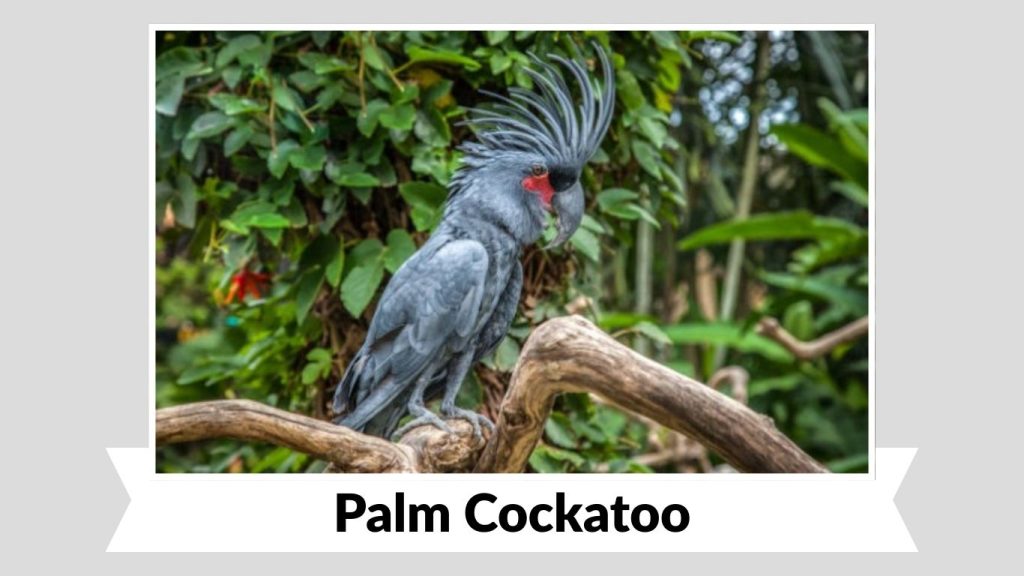
The Palm Cockatoo (Probosciger aterrimus) is one of the largest and most unusual cockatoos in the world. It is instantly recognized by its jet-black feathers, massive curved beak, and bright red cheek patches. Native to northern Australia, New Guinea, and nearby islands, this cockatoo is famous for its intelligence and unique tool-using behavior.
Identification
- Mostly black to smoky-gray plumage
- Large powerful black beak
- Bare red cheek patches that flush when excited
- Tall pointed crest
- Very large size, about 55–60 cm long
Habitat
Palm cockatoos live in tropical rainforests, savannas, eucalyptus woodlands, and forest edges. They usually stay near tall trees and often nest in large hollows high above the ground.
Behaviors
They are generally solitary or found in pairs. Palm cockatoos are known for drumming on hollow trees with sticks or seed pods, a rare example of tool use in birds. They are intelligent, cautious, and slow to mature.
Diet
Their diet includes nuts, seeds, fruits, berries, and occasionally insects and larvae. They use their powerful beak to crack very hard nuts and seeds.
Lifespan
Palm cockatoos are long-lived birds, often reaching 40–60 years, and possibly longer in well-protected or captive conditions.
12. Gang-gang Cockatoo
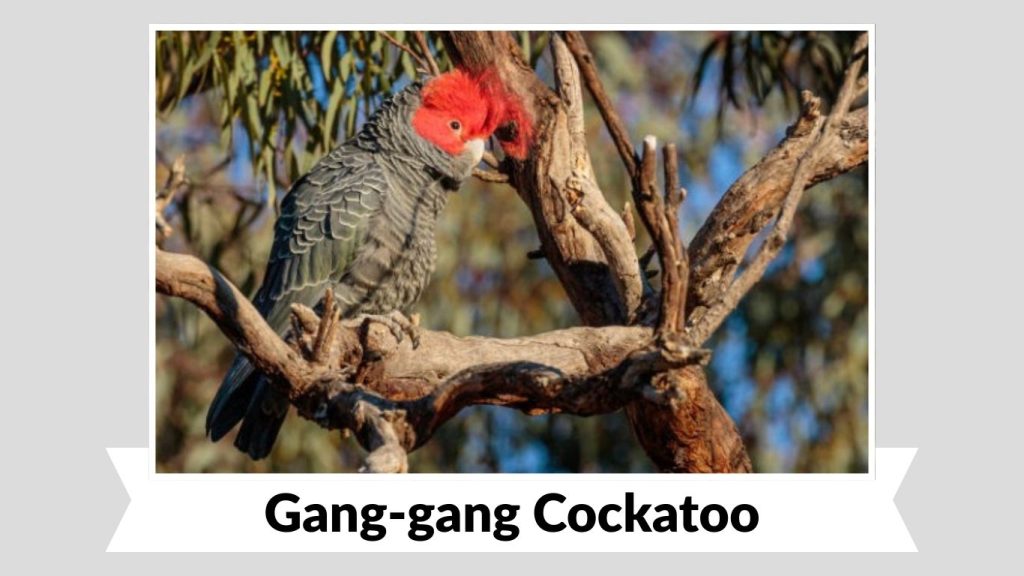
The Gang-gang Cockatoo (Callocephalon fimbriatum) is a distinctive Australian cockatoo best known for the male’s bright red head and soft, creaking call that sounds like a door hinge. This shy, forest-dwelling species is smaller and more reserved than many other cockatoos.
Identification
- Males have a bright red head and crest with a gray body
- Females are gray with fine yellow and orange barring
- Short rounded crest
- Strong gray beak
- Medium size, about 32–37 cm long
Habitat
Gang-gang cockatoos inhabit cool temperate forests, eucalyptus woodlands, and mountain forests. They are often found in higher elevations during breeding season and may move to lower woodlands in winter.
Behaviors
They are usually seen in pairs or small groups and are relatively quiet compared to other cockatoos. Their flight is undulating and slow, and they often feed quietly in treetops.
Diet
Their diet consists mainly of seeds from eucalyptus and acacia, along with berries, fruits, nuts, and insects and larvae during the breeding season.
Lifespan
In the wild, gang-gang cockatoos are believed to live 30–40 years. In captivity, they can live longer with proper care and protection.
13. Pink Cockatoo (Galah)
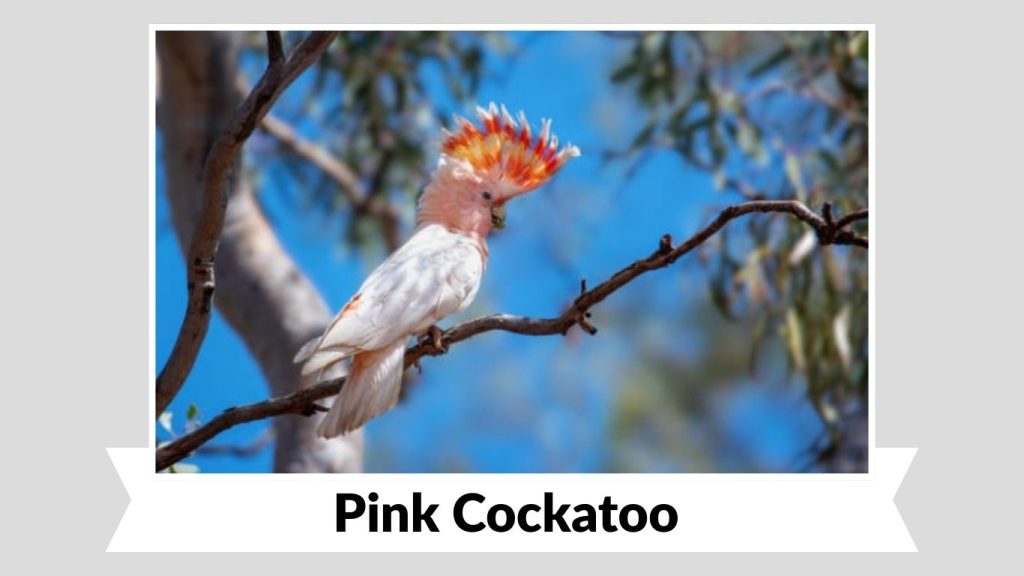
The Pink Cockatoo (Eolophus roseicapilla), commonly called the Galah, is one of Australia’s most familiar and widespread cockatoos. It is easily recognized by its rosy-pink chest and face combined with soft gray wings. This species is highly social, adaptable, and often seen in large, noisy flocks.
Identification
- Rosy-pink face, chest, and belly
- Pale gray wings, back, and tail
- White to pale pink crest
- Light-colored beak
- Medium size, about 35–38 cm long
Habitat
Galahs live in open woodlands, grasslands, farmland, scrublands, and urban parks. They adapt extremely well to human-altered environments and often nest in tree hollows near open feeding areas.
Behaviors
They are very social and playful birds, frequently seen in large flocks. Galahs are known for aerial acrobatics, strong pair bonds, and loud, chattering calls.
Diet
Their diet mainly includes seeds, grasses, grains, roots, fruits, and buds. They often feed on the ground and are common visitors to agricultural areas.
Lifespan
In the wild, galahs usually live around 20–30 years. In captivity, they can live 40 years or more with good care.
14. Leadbeater’s Cockatoo
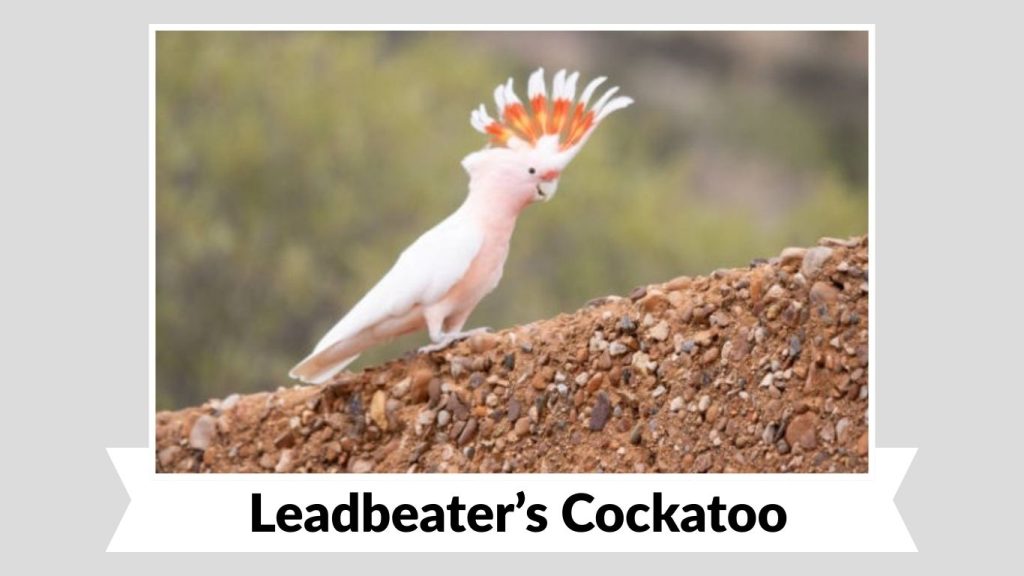
The Leadbeater’s Cockatoo (Lophochroa leadbeateri), also known as Major Mitchell’s Cockatoo, is considered one of the most beautiful cockatoos due to its soft pink body and dramatic multicolored crest. Native to Australia, it is admired for both elegance and intelligence.
Identification
- Soft pale pink body feathers
- Large crest with red, yellow, and white bands
- White wings and tail
- Light-colored beak
- Medium size, about 35–40 cm long
Habitat
Leadbeater’s cockatoos live in arid and semi-arid woodlands, scrublands, and open forests. They prefer areas with large trees for nesting and open ground nearby for feeding.
Behaviors
They are usually seen in pairs or small groups and are less noisy than many cockatoos. This species is intelligent, cautious, and forms strong pair bonds that often last for life.
Diet
Their diet includes seeds, nuts, grains, fruits, berries, and occasionally insects and larvae. They often feed on the ground as well as in trees.
Lifespan
In the wild, Leadbeater’s cockatoos commonly live 30–40 years. In captivity, some individuals may live over 50 years with proper care.
15. Blue-eyed Cockatoo
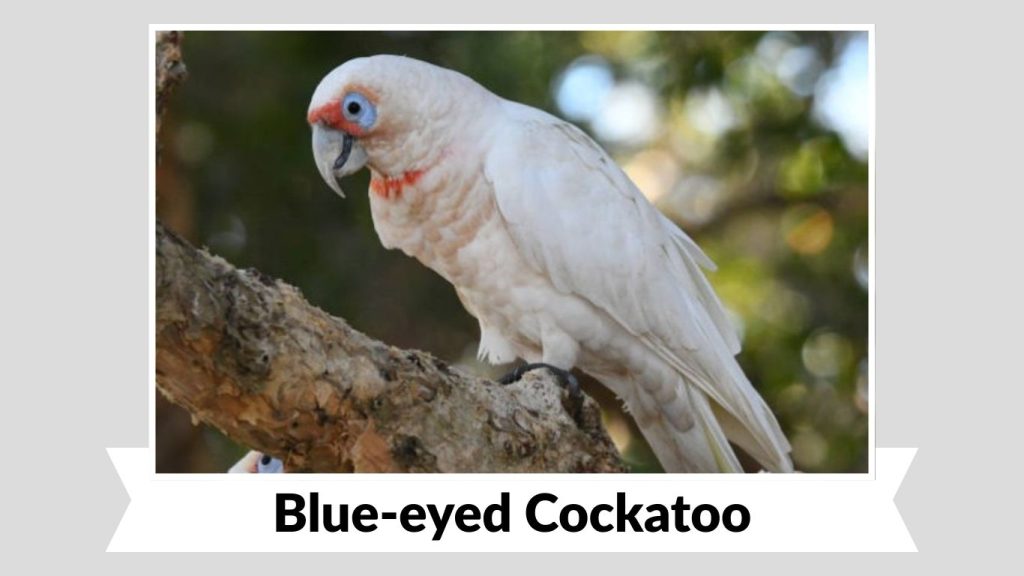
The Blue-eyed Cockatoo (Cacatua ophthalmica) is a striking white cockatoo known for the vivid blue skin around its eyes. Native to New Britain and nearby islands of Papua New Guinea, this species is closely related to the sulphur-crested cockatoo and is admired for its bold look and expressive personality.
Identification
- White plumage across the body
- Bright blue bare skin around the eyes
- White crest
- Dark gray to black beak
- Medium to large size, about 45–50 cm long
Habitat
Blue-eyed cockatoos inhabit lowland rainforests, hill forests, forest edges, and wooded areas. They are usually found in dense tropical habitats but may also visit cultivated land near forests.
Behaviors
They are social, vocal, and alert birds, commonly seen in pairs or small flocks. Blue-eyed cockatoos are intelligent and expressive, using loud calls and crest displays to communicate.
Diet
Their natural diet includes seeds, nuts, fruits, berries, buds, and cultivated crops. They may also eat insects and larvae when available.
Lifespan
In the wild, blue-eyed cockatoos are believed to live around 30–40 years. In captivity, they can live longer, often exceeding 50 years with proper care.
16. Tanimbar Corella
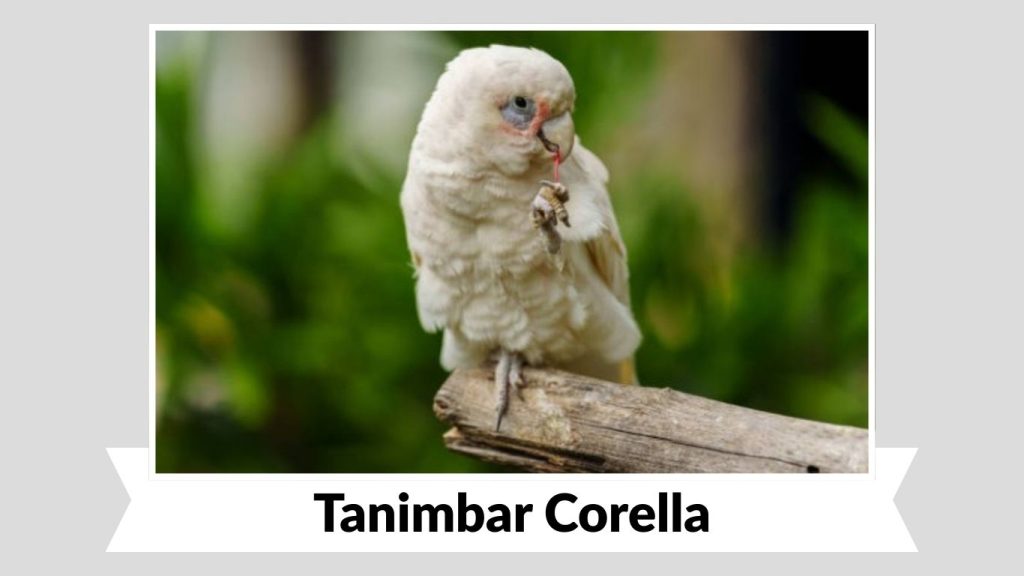
The Tanimbar Corella (Cacatua goffiniana), often called Goffin’s Corella, is a small, intelligent cockatoo native to the Tanimbar Islands of Indonesia. It is known for its gentle appearance, high curiosity, and impressive problem-solving abilities.
Identification
- Mostly white plumage
- Soft pink tint around the eyes, face, and chest
- Short white crest
- Light gray beak
- Small size, about 30–32 cm long
Habitat
Tanimbar corellas live in dry forests, open woodland, mangroves, farmland edges, and coconut plantations. They often stay near lowland areas and nest in tree hollows.
Behaviors
They are highly social, playful, and intelligent birds. Tanimbar corellas form strong bonds, communicate with whistles and calls, and are famous for tool use and curiosity.
Diet
Their diet includes seeds, fruits, nuts, corn, blossoms, and roots. They also eat insects and larvae occasionally.
Lifespan
In the wild, they usually live 25–40 years. In captivity, many individuals can reach 50–60 years with proper care.
17. Long-billed Corella
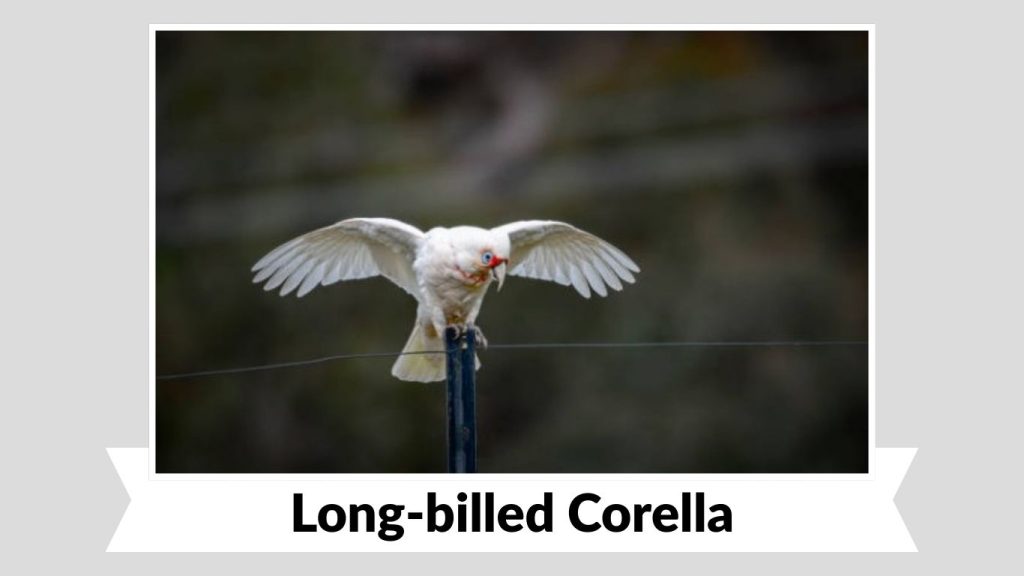
The Long-billed Corella (Cacatua tenuirostris) is a slender, medium-sized cockatoo known for its long pale beak and pink facial markings. Native to southeastern Australia, this species is often seen feeding on the ground in open grassy areas.
Identification
- White body feathers
- Pink face, throat, and chest patches
- Long, pale horn-colored beak
- Short white crest
- Medium size, about 35–41 cm long
Habitat
Long-billed corellas live in open woodlands, grasslands, farmland, and river plains. They prefer open areas for feeding and tall trees nearby for nesting.
Behaviors
They are social and usually seen in flocks, especially outside the breeding season. Long-billed corellas spend much time on the ground digging for roots and bulbs and are strong, direct fliers.
Diet
Their diet includes seeds, grains, grasses, roots, bulbs, tubers, and insects. They often forage in agricultural fields and open grasslands.
Lifespan
In the wild, long-billed corellas can live around 30–40 years. In captivity, they may live longer with good care.
18. Western Corella
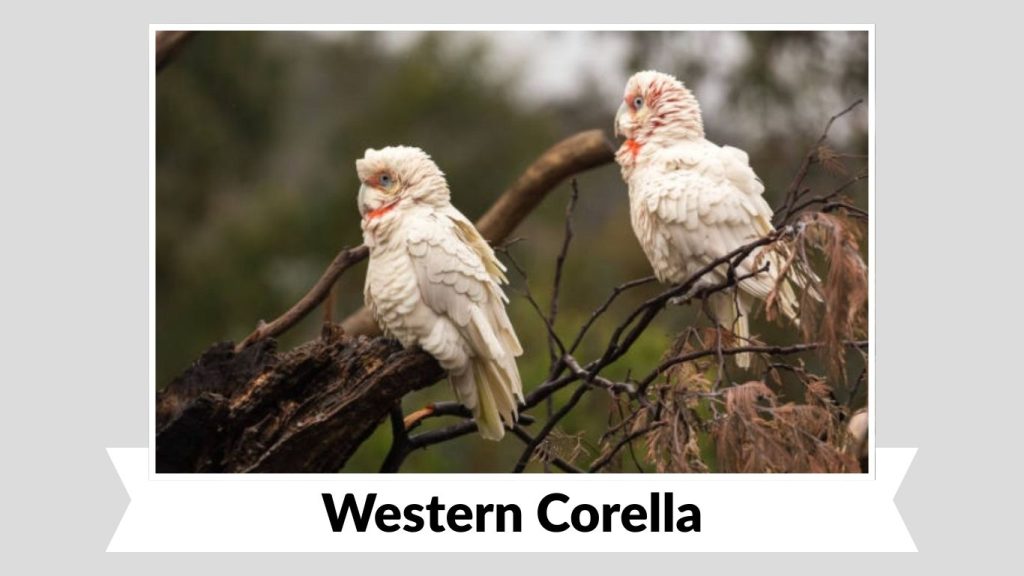
The Western Corella (Cacatua pastinator), also known as the Western Long-billed Corella, is a white cockatoo with soft pink facial tones. It is native to southwestern Australia and is well adapted to open landscapes and agricultural regions.
Identification
- White plumage
- Pinkish face, lores, and throat
- Pale horn-colored beak
- Short white crest
- Medium size, about 38–42 cm long
Habitat
Western corellas inhabit open woodlands, farmland, grasslands, coastal plains, and river corridors. They often nest in tall eucalyptus trees and forage widely on the ground.
Behaviors
They are highly social birds, usually seen in flocks. Western corellas are strong flyers, vocal, and spend much of their time feeding on the ground, digging with their beaks.
Diet
Their diet consists of seeds, grains, roots, bulbs, tubers, fruits, and insects. They are frequent visitors to crop fields and open pastures.
Lifespan
In the wild, western corellas may live 30–40 years. With protection and proper care, they can live even longer.
19. Little Corella
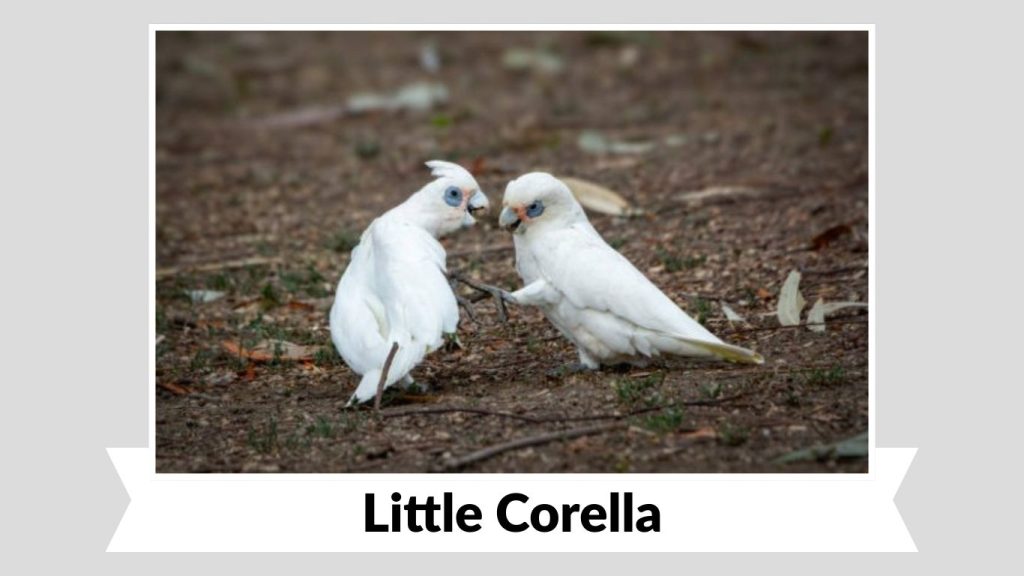
The Little Corella (Cacatua sanguinea) is a small, lively white cockatoo with subtle blue skin around the eyes and a short crest. It is one of the most widespread corella species in Australia and is often seen in large, noisy flocks.
Identification
- White plumage
- Pale blue bare skin around the eyes
- Small white crest
- Pale gray to horn-colored beak
- Small size, about 34–39 cm long
Habitat
Little corellas inhabit open woodlands, grasslands, farmland, river plains, and urban parks. They are highly adaptable and often live close to human settlements.
Behaviors
They are very social and energetic birds, forming large flocks outside the breeding season. Little corellas spend much time on the ground feeding and are known for loud calls and playful flock behavior.
Diet
Their diet includes seeds, grasses, grains, roots, bulbs, fruits, and insects. They frequently forage in open areas and agricultural lands.
Lifespan
In the wild, little corellas usually live 20–40 years. In captivity, they may live longer with proper care.
20. Slender-billed Corella
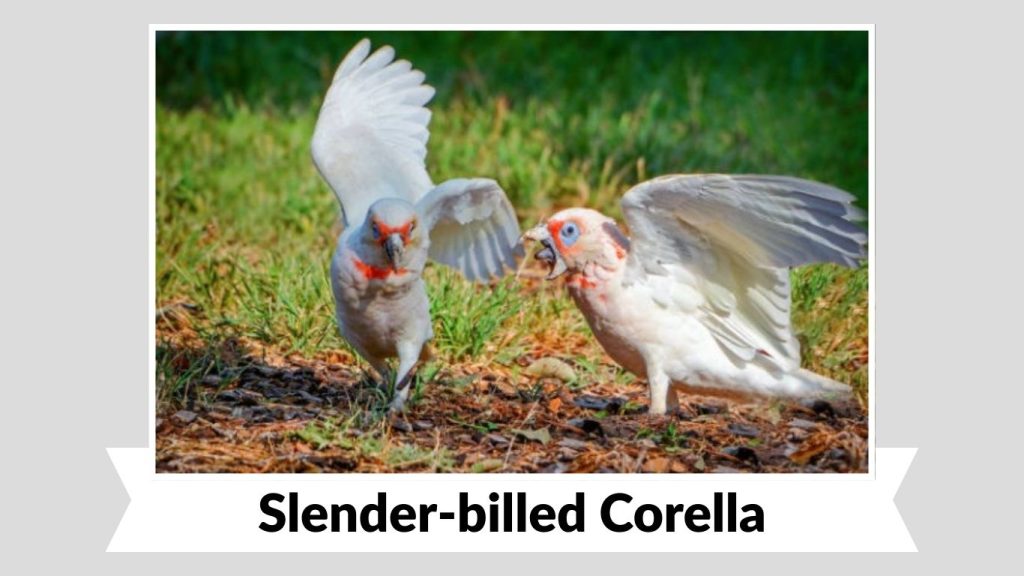
The Slender-billed Corella (Cacatua tenuirostris) is a graceful white cockatoo with a narrow, elongated beak and soft pink facial coloring. It is native mainly to southeastern Australia and is closely related to the long-billed corella.
Identification
- White body feathers
- Pink face and throat
- Long, slender, pale beak
- Short white crest
- Medium size, about 35–41 cm long
Habitat
Slender-billed corellas inhabit open forests, grasslands, farmland, and river valleys. They prefer open feeding areas with tall trees nearby for nesting.
Behaviors
They are social birds, usually seen in flocks. Slender-billed corellas often forage on the ground and are strong, fast fliers, moving long distances between feeding and roosting sites.
Diet
Their diet includes seeds, grasses, grains, roots, bulbs, tubers, fruits, and insects. They are well known for digging in soil to find underground food.
Lifespan
In the wild, they can live around 30–40 years. In captivity, they may live longer with good care.
21. Blue-eyed Cockatoo (Final species in this list)
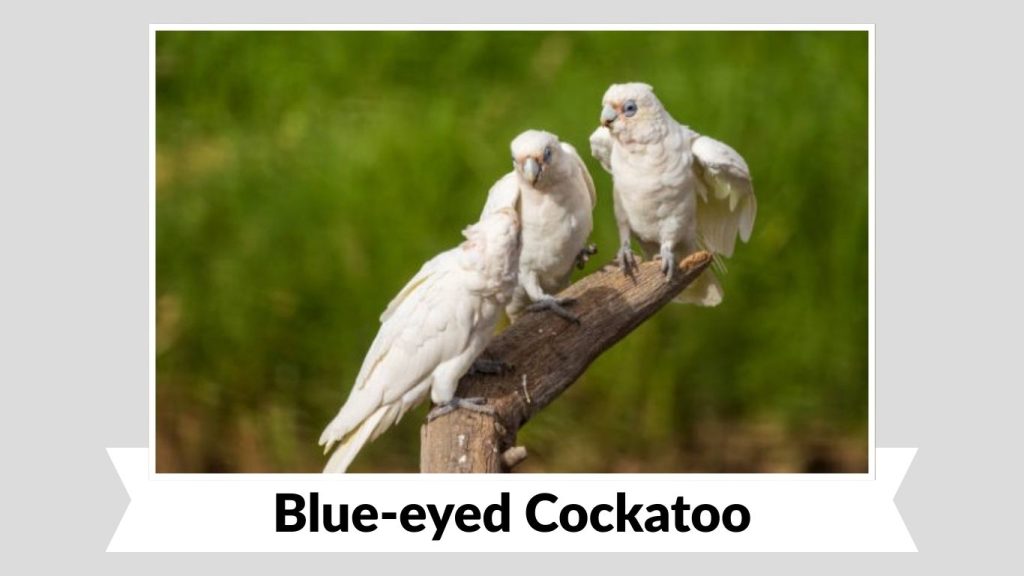
The Blue-eyed Cockatoo (Cacatua ophthalmica) is a striking white cockatoo best known for the vivid blue bare skin around its eyes. Native to New Britain and nearby islands of Papua New Guinea, this species is admired for its bold appearance, intelligence, and expressive behavior.
Identification
- Pure white plumage
- Bright blue bare skin around the eyes
- White crest
- Dark gray to black beak
- Medium to large size, about 45–50 cm long
Habitat
Blue-eyed cockatoos live mainly in lowland rainforests, hill forests, forest edges, and mature tropical woodlands. They prefer dense forests but may also visit nearby cultivated areas for feeding.
Behaviors
They are social, alert, and vocal birds, commonly seen in pairs or small flocks. Blue-eyed cockatoos use loud calls, crest displays, and body posture to communicate and are known for strong pair bonds.
Diet
Their diet includes seeds, nuts, fruits, berries, buds, and sometimes insects and larvae.
Lifespan
In the wild, they generally live around 30–40 years. With good care in captivity, they may exceed 50 years.
FAQs
Are cockatoos good pets?
Cockatoos can be good pets for experienced owners because they are highly intelligent, social, and emotionally sensitive birds. They require daily interaction, mental stimulation, and large living spaces. Without proper attention, cockatoos may develop stress-related behaviors such as screaming or feather plucking.
How long do cockatoos usually live?
Most cockatoo species are long-lived. Smaller cockatoos often live 20–40 years, while larger species can live 50–70 years or more in captivity. Their long lifespan means owning a cockatoo is a serious, long-term commitment.
What do cockatoos eat in the wild?
In the wild, cockatoos feed mainly on seeds, nuts, fruits, berries, roots, blossoms, and vegetation. Many species also eat insects and larvae. Some cockatoos specialize in certain foods, such as black cockatoos that depend heavily on specific tree seeds.
Where are cockatoos naturally found?
Cockatoos are native to Australia, Indonesia, Papua New Guinea, and nearby islands. They inhabit a wide range of environments including rainforests, woodlands, savannas, mangroves, grasslands, and even urban parks.
How can you tell different cockatoo species apart?
Cockatoo species are distinguished by size, crest shape, body color, facial skin color, tail markings, and calls. For example, sulphur-crested cockatoos have bright yellow crests, black cockatoos have dark plumage and colored tail panels, and corellas are smaller with blue or pink facial skin.