



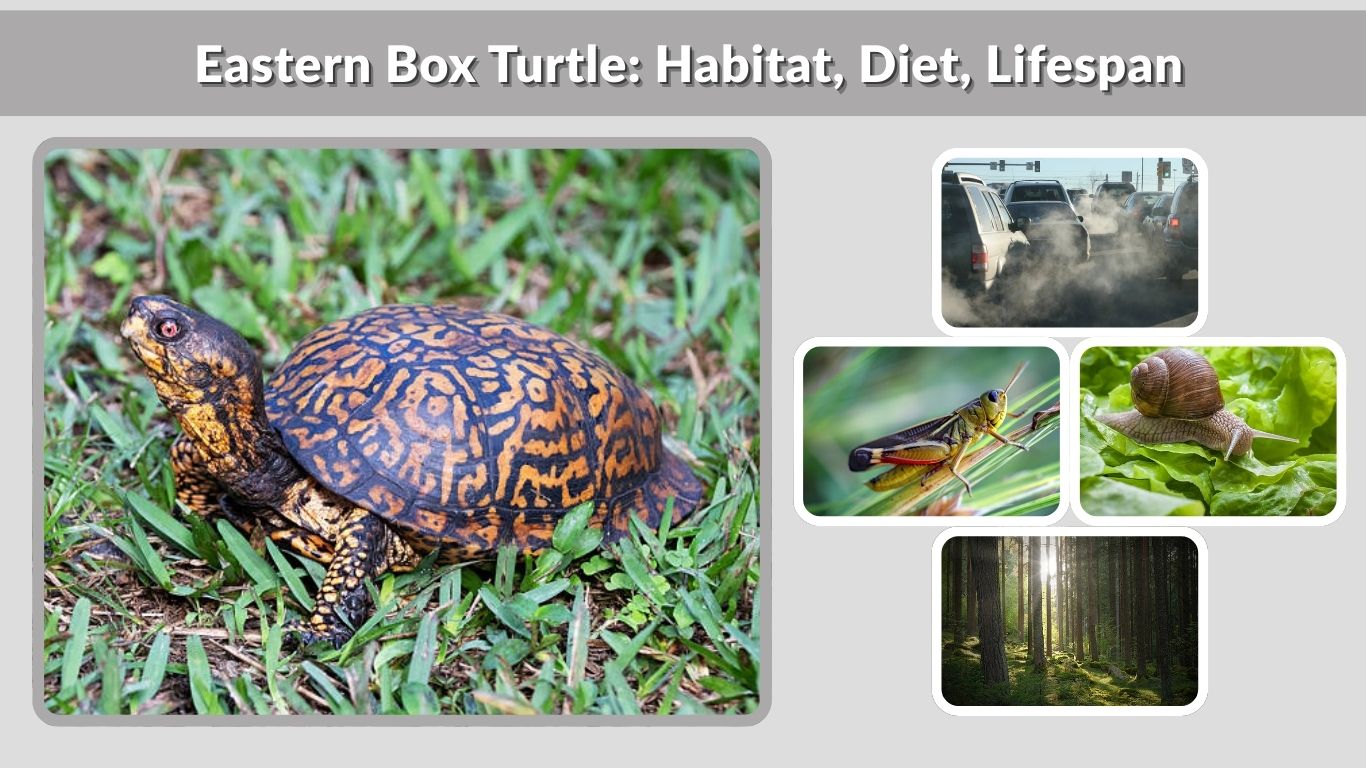
The eastern box turtle is one of the most recognizable land turtles in the United States. Known for its colorful shell markings and unique hinged plastron, this small reptile can completely close itself inside its shell for protection. Found mainly in forests and meadows across the eastern U.S., the eastern box turtle lives a slow, steady life and can survive for decades. In this guide, you’ll learn about eastern box turtle identification, habitat, diet, and early life stages.
What Is an Eastern Box Turtle?
The eastern box turtle (Terrapene carolina carolina) is a subspecies of the common box turtle. Unlike many turtles that spend most of their time in water, the eastern box turtle is primarily terrestrial, meaning it lives mostly on land.
It is native to the eastern and southeastern United States, ranging from Maine down to Florida and west to parts of Texas and the Great Lakes region. This species prefers temperate climates with moderate humidity.
The name “box turtle” comes from its most distinctive feature — a hinged bottom shell (plastron). This hinge allows the turtle to close its shell tightly, sealing itself completely inside like a box. This defense mechanism protects it from predators such as raccoons, foxes, and birds.
Eastern box turtles are relatively small, typically measuring 4.5 to 6 inches in shell length. Despite their small size, they are sturdy and long-lived reptiles.
Eastern Box Turtle Identification
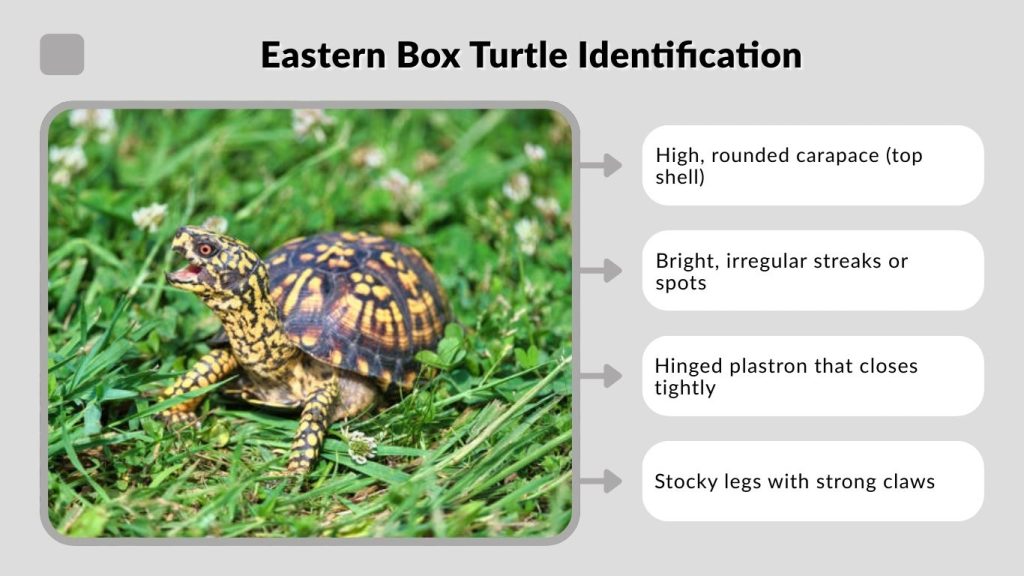
Eastern box turtle identification is fairly straightforward once you know what to look for. These turtles have a high-domed shell that is usually dark brown or black with bright orange, yellow, or red markings. No two individuals have exactly the same pattern.
Key identification features include:
- High, rounded carapace (top shell)
- Bright, irregular streaks or spots
- Hinged plastron that closes tightly
- Stocky legs with strong claws
Their skin is often dark with specks of orange or yellow, especially on the head and legs.
Male vs. Female Differences
There are several visible differences between male and female eastern box turtles.
- Eye Color: Males often have red or orange eyes, while females typically have brown or yellowish eyes.
- Plastron Shape: Males usually have a slightly concave (curved inward) plastron, which helps during mating. Females generally have a flat plastron.
- Tail Size: Males tend to have thicker, longer tails.
These differences can help with accurate identification in the wild.
How to Distinguish from Similar Turtles
Eastern box turtles are sometimes confused with other box turtle subspecies, such as the ornate box turtle or the three-toed box turtle.
- Ornate box turtles usually have more symmetrical, starburst-like patterns.
- Three-toed box turtles often have fewer toes on their hind feet and may show less vivid shell markings.
Location is also an important clue, as eastern box turtles are mainly found in the eastern U.S.
Eastern Box Turtle Habitat
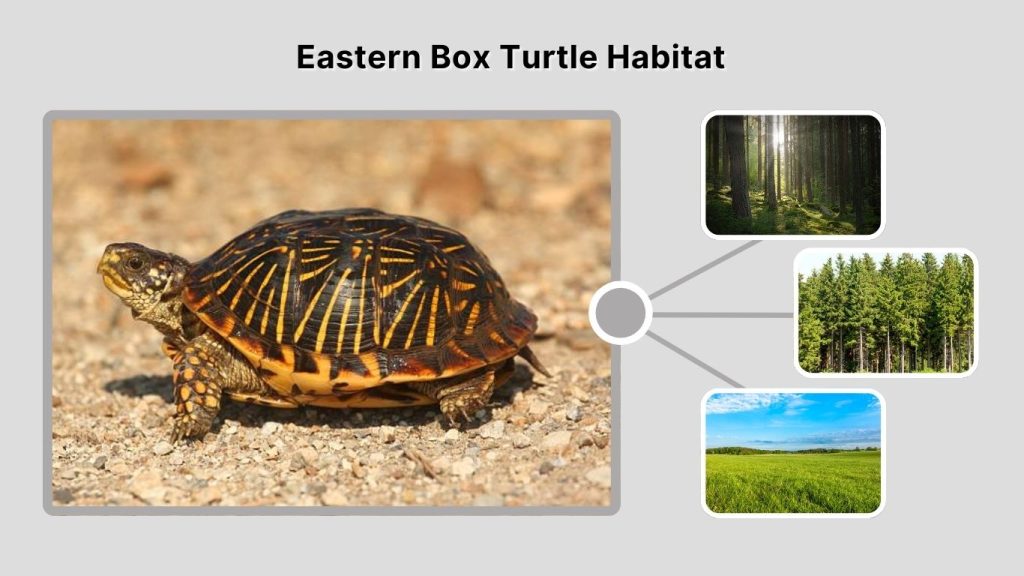
The eastern box turtle habitat includes forests, woodland edges, meadows, and grassy fields. These turtles prefer areas with:
- Loose, moist soil
- Thick leaf litter
- Access to sunlight and shade
- Nearby water sources such as streams or ponds
Although they are not aquatic turtles, eastern box turtles may soak in shallow water or muddy areas to stay hydrated.
They require humid environments to prevent dehydration. Forested regions provide both protection and steady food sources. Eastern box turtles often maintain a small home range, sometimes living their entire lives within just a few acres.
Summer Habitat
During warmer months, eastern box turtles are active during the day (diurnal). They search for food among leaf litter and under logs. They may bask in filtered sunlight to regulate their body temperature.
In hot weather, they seek shade or burrow slightly into the soil to cool off. Access to damp soil and shaded cover is critical during summer.
Winter Habitat (Brumation)
As temperatures drop in late fall, eastern box turtles prepare for winter dormancy, also called brumation. They dig shallow burrows into soft soil or hide beneath thick leaf litter.
During brumation, their metabolism slows significantly. They remain inactive throughout winter, emerging again in spring when temperatures rise.
What Do Eastern Box Turtles Eat?
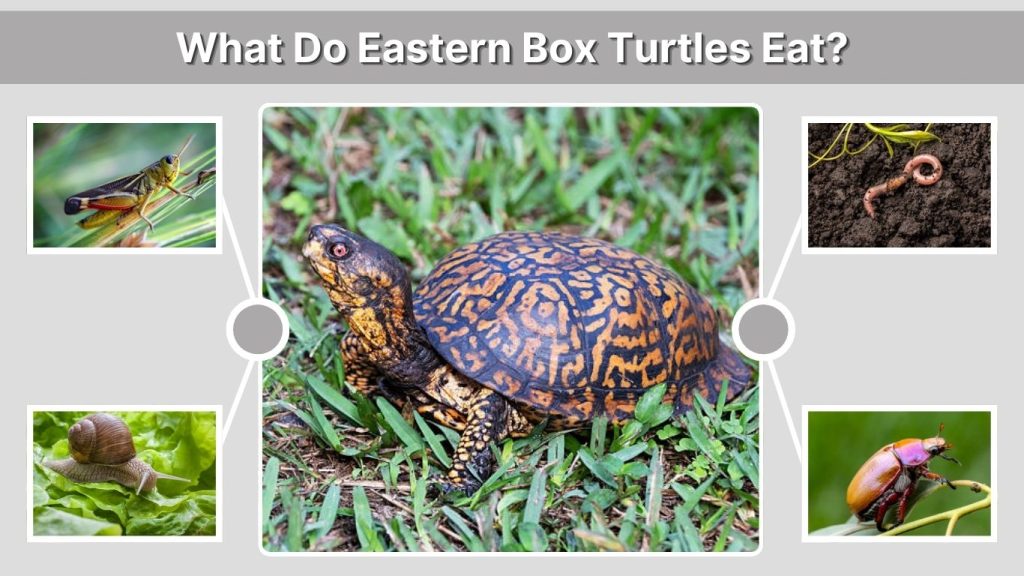
The eastern box turtle diet is omnivorous, meaning they eat both plant and animal matter. Their diet varies depending on season, age, and food availability.
Because they live on land, they forage slowly through forest floors and grassy areas in search of food.
Animal-Based Foods
Eastern box turtles consume a wide variety of small animals, including:
- Earthworms
- Beetles
- Grasshoppers
- Slugs and snails
- Caterpillars
Young turtles, especially hatchlings, tend to eat more protein-rich animal foods to support rapid growth.
Plant-Based Foods
Plant matter becomes increasingly important as turtles mature. Common plant foods include:
- Berries
- Mushrooms
- Fallen fruit
- Leaves
- Tender shoots
Their consumption of fruit helps spread seeds throughout forest ecosystems, contributing to plant growth.
Diet Changes by Age
Diet shifts as eastern box turtles grow. Hatchlings and juveniles rely more heavily on animal protein, such as insects and worms, to fuel rapid development. As they mature, adults consume a more balanced mix of plants and animals. Seasonal changes also affect feeding habits. In spring and summer, turtles eat more insects and fresh vegetation, while in late summer and fall they often consume more fruits to build energy reserves before winter brumation.
Eastern Box Turtle Life Cycle
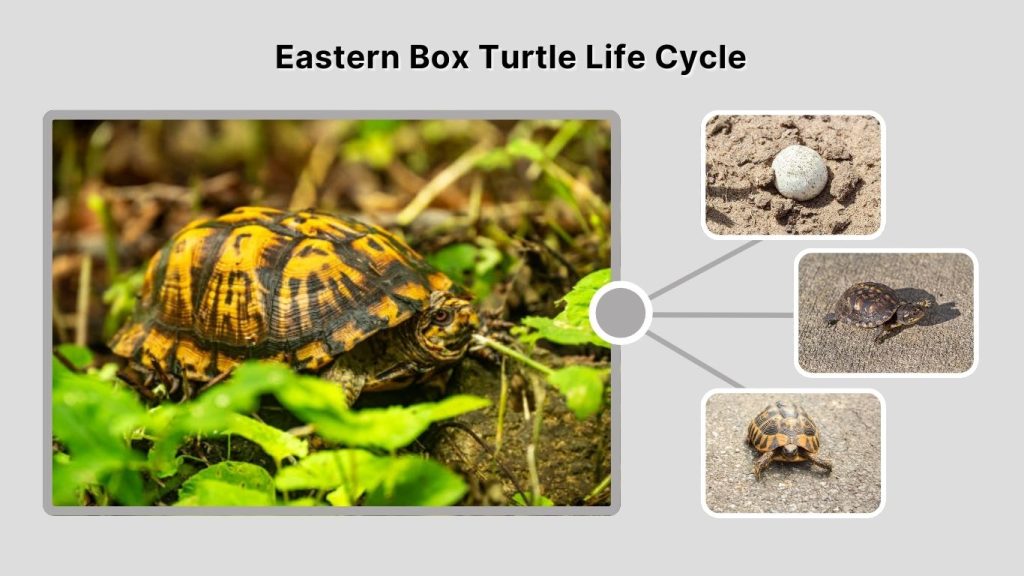
The eastern box turtle life cycle includes several slow-developing stages: egg, hatchling, and adult. These turtles grow gradually and may take years to reach full maturity.
Eastern box turtles typically become sexually mature between 5 and 10 years of age, depending on environmental conditions. Because they mature slowly and reproduce at low rates, stable adult survival is essential for healthy populations.
Nesting and Eggs
Mating usually occurs in spring and sometimes again in early fall. After mating, females search for a suitable nesting site with loose, sandy soil in sunny areas.
Key nesting facts:
- Nesting season: Late spring to early summer
- Clutch size: Usually 3–8 eggs
- Incubation period: About 60–90 days
After digging a shallow nest, the female lays her eggs and carefully covers them with soil. Like most turtles, eastern box turtles provide no parental care after nesting.
The temperature of the nest influences the sex of the hatchlings. Warmer temperatures generally produce more females, while cooler temperatures result in more males.
Hatchling Stage
An eastern box turtle hatchling is small and vulnerable. At birth, hatchlings measure about 1 to 1.5 inches long. Their shells are flatter and less colorful than those of adults, often appearing more brown or muted in tone.
Hatchlings face numerous threats, including:
- Predators such as raccoons, birds, and snakes
- Harsh weather conditions
- Habitat disturbance
Many hatchlings do not survive their first year. Those that do grow slowly, gradually developing the bright shell markings and high-domed shape seen in adults.
Eastern Box Turtle Lifespan
The eastern box turtle lifespan is one of its most remarkable features. In the wild, these turtles commonly live 30 to 50 years, and some individuals have been documented living over 100 years.
Their long lifespan helps balance their slow reproductive rate. However, it also means populations recover slowly if adults are lost.
Several factors influence lifespan:
- Habitat quality
- Availability of food
- Predation
- Human-related threats such as roads and habitat destruction
In captivity, with proper care, eastern box turtles may live for several decades. However, removing wild turtles from their habitat is harmful and illegal in many areas.
Behavior and Movement Patterns
Eastern box turtles are diurnal, meaning they are active during the day. They spend much of their time foraging, basking, or resting under cover.
One important behavioral trait is strong site fidelity. These turtles often stay within a small home range and may live their entire lives in the same general area. Because of this, relocating a turtle far from where it was found can reduce its chances of survival.
When threatened, eastern box turtles use their hinged plastron to close their shell completely. This defense strategy protects their soft body parts from predators. They may also hiss or withdraw quickly into vegetation.
Seasonal movement is limited compared to many other reptiles. Most activity occurs within a small territory, though turtles may travel short distances in search of food or nesting sites.
Threats and Conservation
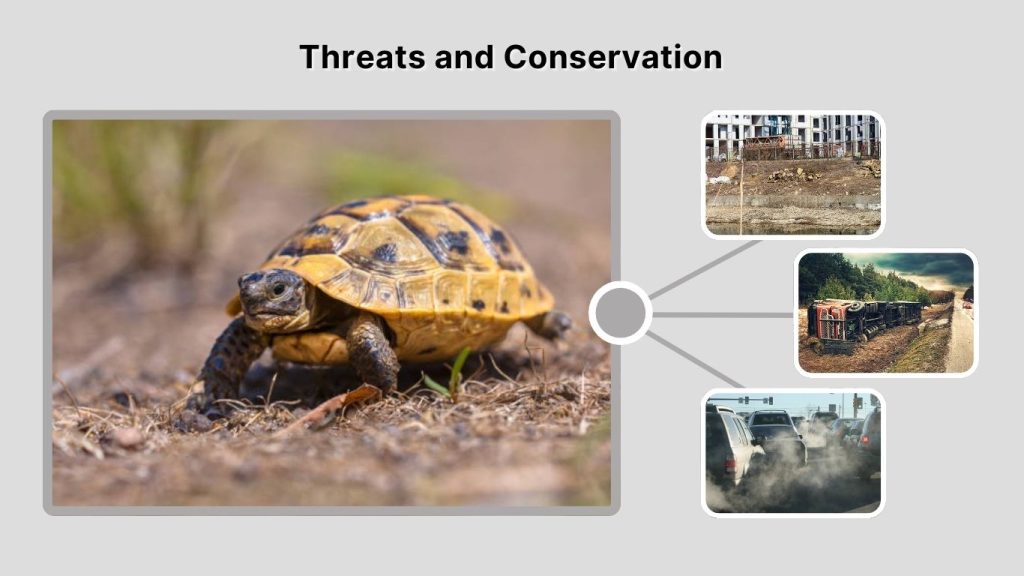
Eastern box turtles face several modern threats despite their adaptability.
Major risks include:
- Habitat fragmentation from development
- Road mortality during seasonal movements
- Collection for the pet trade
- Lawn mowers and landscaping equipment
- Pollution and pesticide exposure
Because these turtles mature slowly and reproduce in small numbers, the loss of even a few adults can significantly impact local populations.
In many states, eastern box turtles are protected by law. Conservation efforts focus on preserving woodland habitats, reducing road mortality, and educating the public about leaving wild turtles in their natural environment.
Conclusion
The eastern box turtle is a unique and long-lived reptile known for its colorful shell, hinged plastron, and woodland lifestyle. From its humid forest habitat to its omnivorous diet and slow life cycle, this species plays an important role in local ecosystems. Although capable of living for decades, eastern box turtles face growing threats from habitat loss and human activity. Understanding eastern box turtle identification, diet, habitat, and lifespan helps promote awareness and conservation of this remarkable native species.