




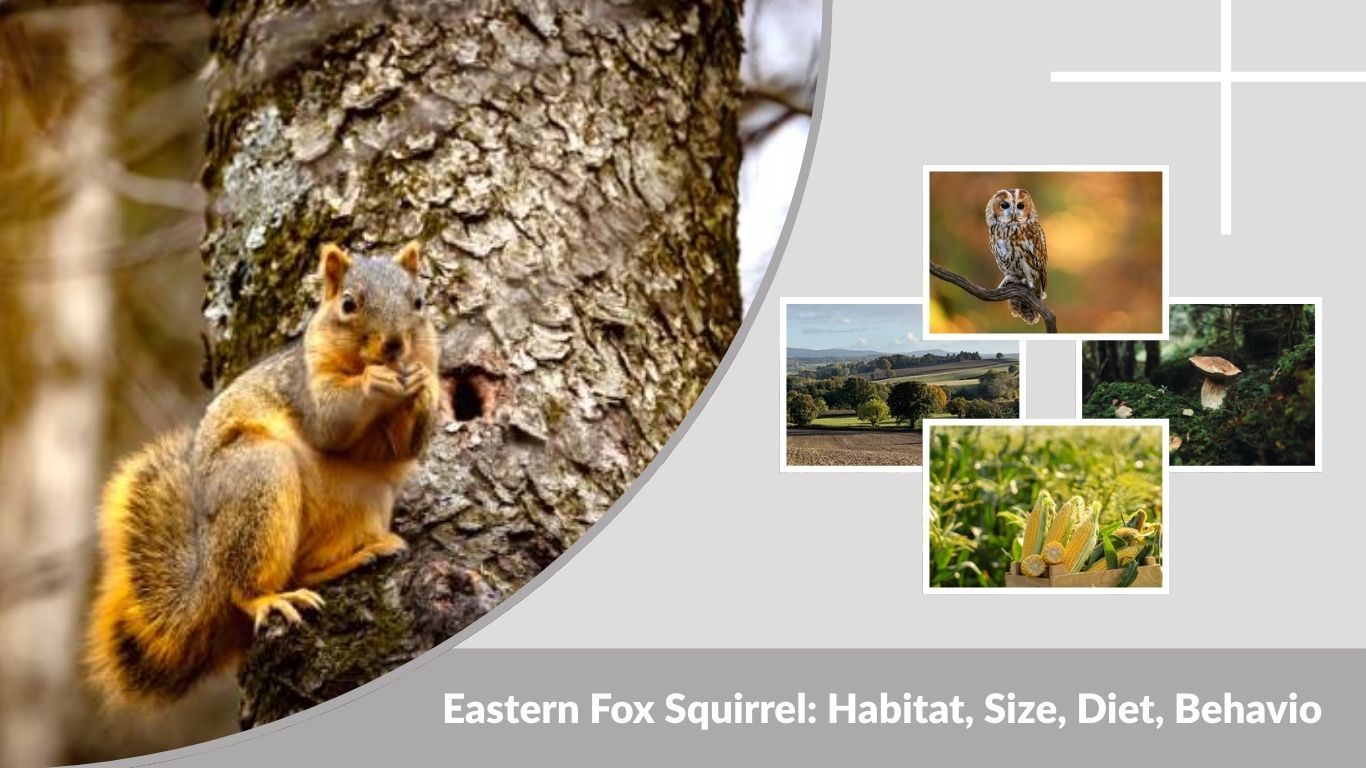
The eastern fox squirrel (Sciurus niger) is the largest tree squirrel species in North America and is widely recognized for its bushy tail and reddish-brown fur. It is commonly found in the eastern and central regions of the United States, where it inhabits forests, woodlands, parks, and suburban areas. Known for its adaptability and impressive food-gathering skills, the eastern fox squirrel plays an important role in forest ecosystems. Learning about its physical characteristics, habitat, and lifestyle helps us better understand this fascinating and widespread wildlife species.
What Is an Eastern Fox Squirrel?
Scientific Classification
The eastern fox squirrel belongs to the squirrel family Sciuridae, which includes tree squirrels, ground squirrels, and flying squirrels. Its scientific name is Sciurus niger.
Basic classification:
- Kingdom: Animalia
- Phylum: Chordata
- Class: Mammalia
- Order: Rodentia
- Family: Sciuridae
- Genus: Sciurus
- Species: Sciurus niger
As a tree squirrel, the eastern fox squirrel spends most of its life climbing trees, searching for food, and building nests in wooded environments.
Overview of the Species
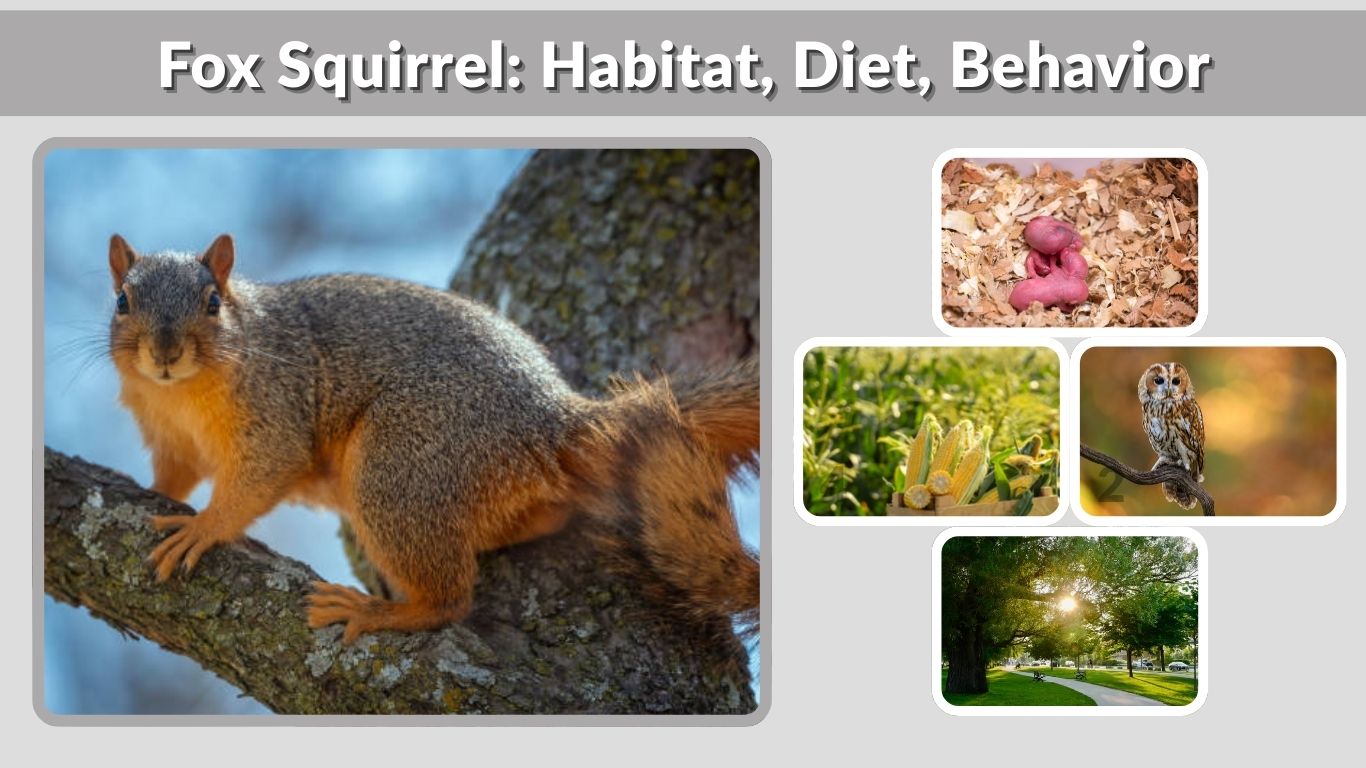
The eastern fox squirrel is known for its large size, strong limbs, and thick bushy tail. It is noticeably bigger than many other squirrel species, especially the eastern gray squirrel.
These squirrels are highly adaptable and can survive in many different environments, including forests, farmland, parks, and residential neighborhoods. Their ability to find and store food helps them survive during harsh weather and seasonal changes.
The eastern fox squirrel is generally solitary, meaning it spends most of its time alone except during the breeding season.
Why It Is Called the Eastern Fox Squirrel
The name “fox squirrel” comes from its large bushy tail, which resembles the tail of a fox. Early naturalists noticed that the squirrel’s reddish coloration and thick tail looked similar to a fox’s tail.
The term “eastern” fox squirrel is used to distinguish this population from other regional variations of fox squirrels found in different parts of North America.
Eastern Fox Squirrel Physical Characteristics
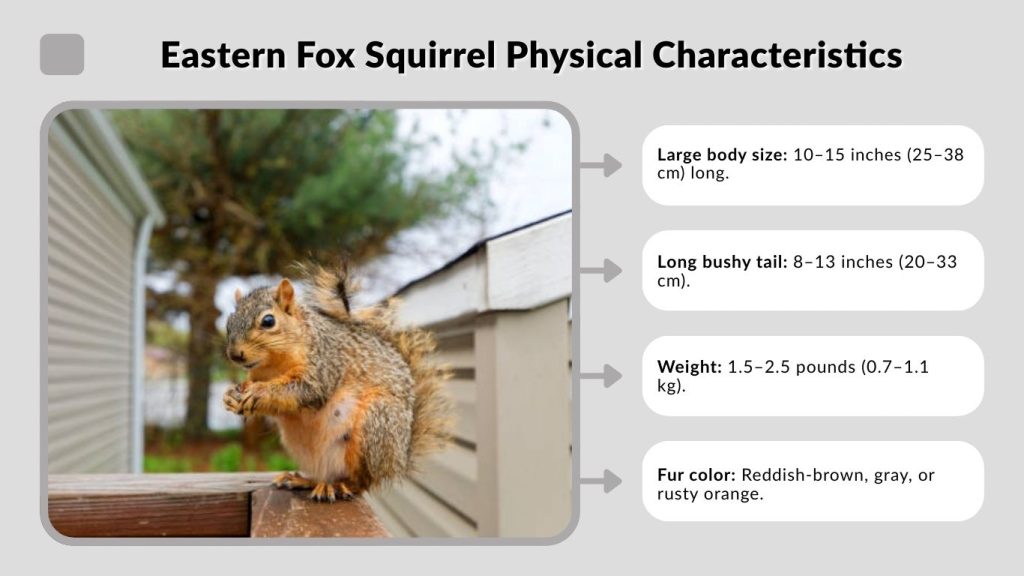
The eastern fox squirrel is known for its large body, bushy tail, and distinctive reddish coloring. As the largest tree squirrel in North America, it has strong physical features that help it climb trees, gather food, and survive in woodland environments. Its sturdy limbs, sharp claws, and thick fur make it well adapted for life both in trees and on the ground. Compared to other squirrel species, the eastern fox squirrel appears bigger, heavier, and slower in movement.
Key physical characteristics include:
- Large body size: Usually 10–15 inches (25–38 cm) long.
- Long bushy tail: About 8–13 inches (20–33 cm), used for balance and warmth.
- Weight: Typically ranges from 1.5–2.5 pounds (0.7–1.1 kg).
- Fur color: Often reddish-brown, gray, or rusty orange with a lighter belly.
- Strong hind legs: Allow powerful jumps between tree branches.
- Sharp curved claws: Help grip tree bark while climbing.
- Large dark eyes: Provide good vision for spotting food and predators.
- Rounded ears: Short and covered with soft fur.
These features make the eastern fox squirrel well adapted for climbing, foraging, and surviving in forests, parks, and suburban areas.
Eastern Fox Squirrel Habitat
Geographic Range
The eastern fox squirrel is widely distributed across the eastern and central United States. Its natural range extends through many states including:
- Florida
- Georgia
- Texas
- Illinois
- Missouri
- Oklahoma
- Indiana
Over time, some populations have also been introduced to other regions, where they successfully adapted to new environments.
Preferred Environment
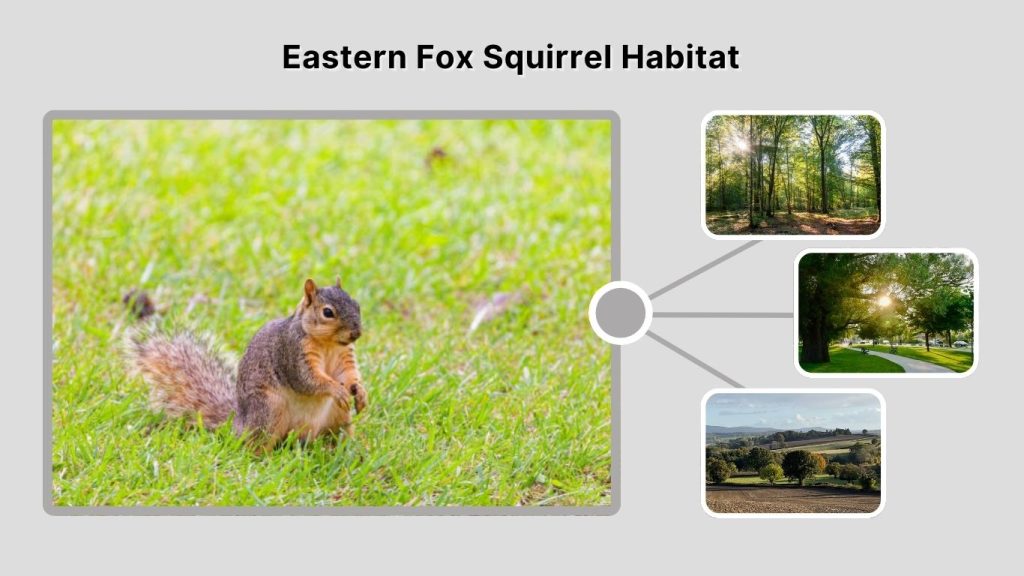
Eastern fox squirrels prefer open woodlands with scattered trees rather than dense forests. These habitats allow them to easily move between trees while still spending time on the ground searching for food.
Common habitats include:
- Oak and hardwood forests
- Woodland edges
- Farmland areas with trees
- City parks and campuses
- Suburban neighborhoods
Unlike some other squirrels, eastern fox squirrels often forage on the ground, especially when collecting nuts and seeds.
Nesting Locations
Eastern fox squirrels build nests called dreys, which are made from leaves, twigs, grass, and bark. These nests are usually placed high in tree branches to provide safety from predators.
They may also use tree cavities as shelter, especially during colder months or when raising their young.
A typical nest provides:
- Protection from rain and wind
- A safe place for raising babies
- Shelter from predators
Some squirrels build multiple nests within their territory and may move between them when needed.
Eastern Fox Squirrel Diet
Primary Foods
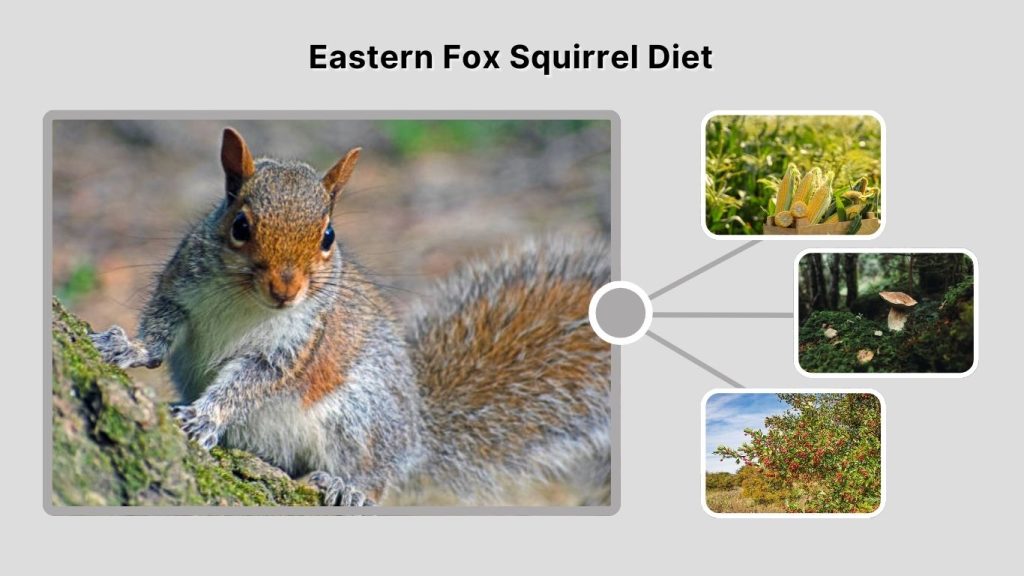
The eastern fox squirrel has a varied and flexible diet, which helps it survive in different environments. Although it is technically an omnivore, most of its food comes from plant sources.
Common foods include:
- Acorns
- Walnuts
- Hickory nuts
- Seeds
- Fruits and berries
- Corn and grains
- Mushrooms and fungi
These squirrels have strong teeth that allow them to crack open hard shells and access the nutritious seeds inside.
Seasonal Diet Changes
The eastern fox squirrel’s diet changes depending on the season and available food sources.
Spring:
They eat tree buds, flowers, shoots, and occasionally insects.
Summer:
Their diet includes berries, fruits, seeds, and fresh vegetation.
Fall:
This is the most important feeding season when they gather large amounts of nuts such as acorns and walnuts.
Winter:
During winter, eastern fox squirrels rely on the food they stored earlier in the year.
Food Storage Behavior
Eastern fox squirrels practice a behavior known as scatter hoarding. They bury nuts and seeds in many different places to store food for later.
They have excellent spatial memory and can locate many of their buried food caches. Some buried seeds are never recovered, which allows new trees to grow. Because of this behavior, eastern fox squirrels play an important role in forest regeneration and seed dispersal.
Eastern Fox Squirrel Behavior
Daily Activity
Eastern fox squirrels are diurnal animals, meaning they are active during the daytime. Their activity usually peaks during the early morning and late afternoon.
During the hottest part of the day, they often rest in their nests or on shaded tree branches. In winter, they remain active but may reduce their activity during extremely cold weather.
Social Behavior
These squirrels are mostly solitary animals. Each squirrel typically maintains its own territory where it searches for food and builds nests.
However, interactions with other squirrels occur during:
- Mating season
- Territorial disputes
- Competition for food
Young squirrels stay with their mother for several weeks until they are strong enough to survive independently.
Communication
Eastern fox squirrels communicate using sounds, body movements, and tail signals.
Common forms of communication include:
- Tail flicking to signal danger
- Sharp barking calls to warn other squirrels
- Chattering sounds during conflicts
Their large bushy tail also helps them express emotions and maintain balance when climbing.
Eastern Fox Squirrel Life Cycle
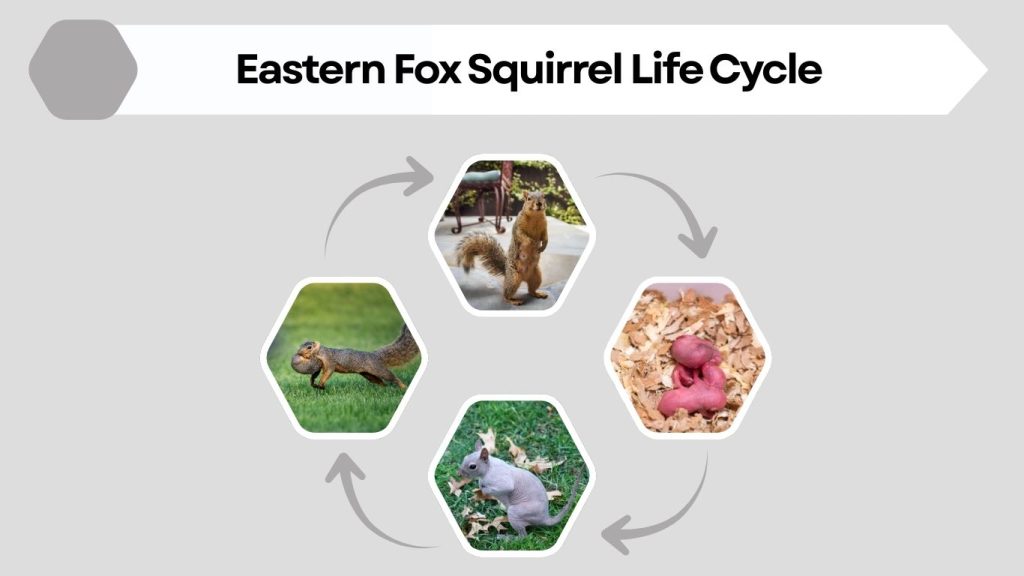
Breeding Season
Eastern fox squirrels usually breed twice a year.
The main breeding periods are:
- Late winter (January–February)
- Late spring or early summer (May–June)
During the breeding season, males often chase females through trees and across the ground before mating occurs.
Gestation and Birth
The gestation period lasts about 44–45 days. After this time, the female gives birth to a small litter of baby squirrels called kits.
A typical litter contains 2–4 young. Newborn squirrels are:
- Blind
- Hairless
- Completely dependent on their mother
The babies stay in the nest for several weeks until they develop fur and open their eyes.
Lifespan
In the wild, eastern fox squirrels typically live 6–8 years, although many face dangers that shorten their lifespan.
In protected environments or captivity, they may live up to 15 years or more.
Predators and Threats
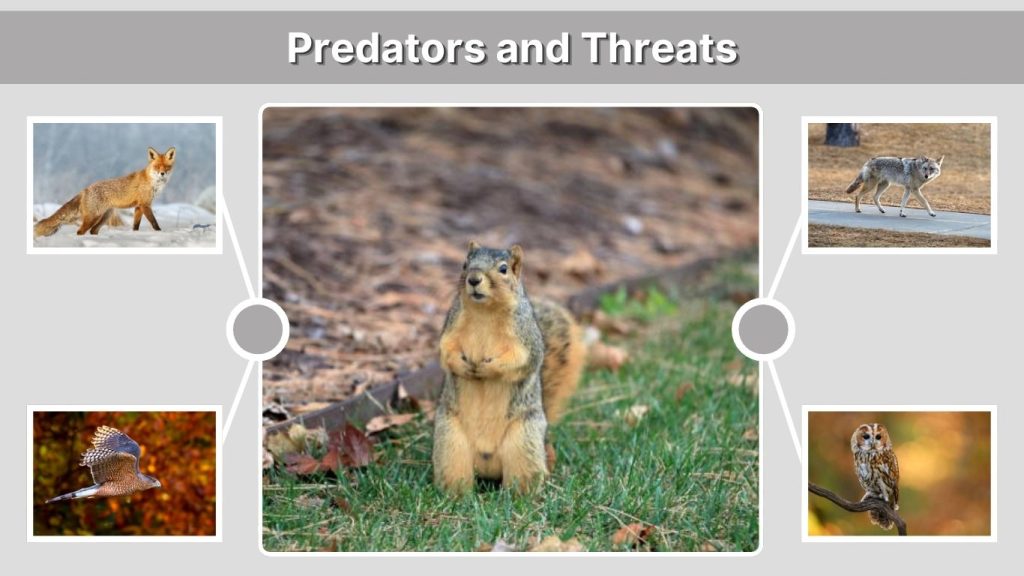
Natural Predators
Eastern fox squirrels face several predators in the wild. Common predators include:
- Hawks
- Owls
- Foxes
- Coyotes
- Snakes
- Domestic cats and dogs
Young squirrels are especially vulnerable because they have less experience avoiding danger.
Human-Related Threats
Human activities can also affect eastern fox squirrel populations.
Major threats include:
- Habitat loss due to urban development
- Vehicle collisions on roads
- Hunting in certain regions
Despite these challenges, eastern fox squirrels remain widespread and adaptable across many areas of North America.
Eastern Fox Squirrel vs Other Squirrels
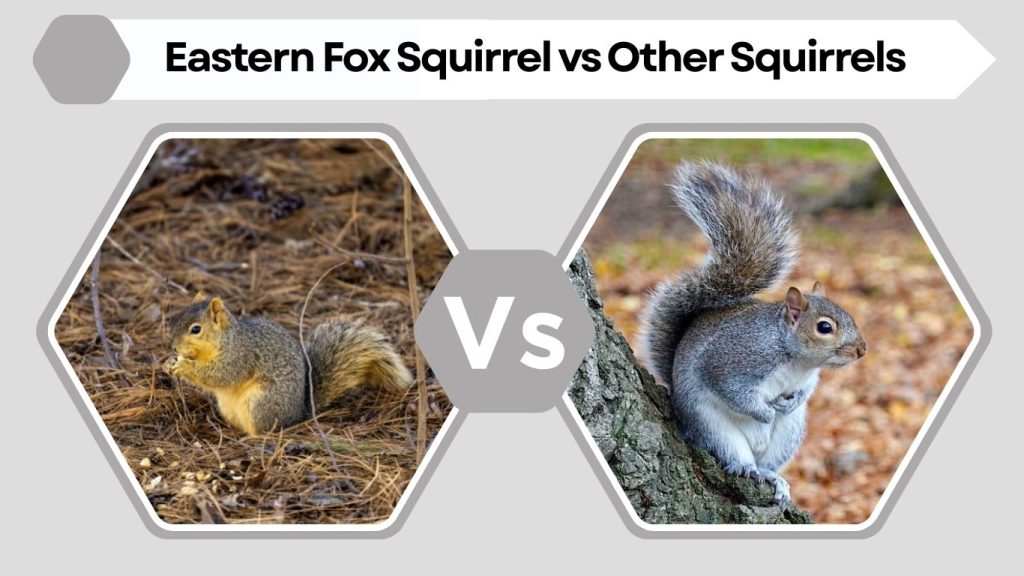
Eastern Fox Squirrel vs Gray Squirrel
Although they are often confused, eastern fox squirrels and gray squirrels have noticeable differences.
Eastern fox squirrels:
- Larger body size
- Reddish or orange fur tones
- Slower and less nervous movements
Gray squirrels:
- Smaller body size
- Mostly gray fur
- More active and quicker movements
Eastern Fox Squirrel vs Red Squirrel
Red squirrels are significantly smaller and more aggressive. They usually live in conifer forests, while eastern fox squirrels prefer open woodlands with hardwood trees.
How to Identify an Eastern Fox Squirrel
You can identify an eastern fox squirrel by several key features:
- Large body size
- Thick bushy tail with reddish tones
- Orange or rusty underside
- Slower and more relaxed movements
Interesting Eastern Fox Squirrel Facts
Largest Tree Squirrel in North America
The eastern fox squirrel is recognized as the largest species of tree squirrel in North America.
Excellent Memory for Food Storage
They have remarkable memory that helps them locate buried food months after storing it.
Important Role in Forest Ecosystems
By burying nuts and forgetting some of them, eastern fox squirrels help plant new trees and support forest growth.
Highly Adaptable Animals
These squirrels can live in forests, farmland, parks, and urban areas, which explains their wide distribution.
Conclusion
The eastern fox squirrel is a fascinating and adaptable species that thrives across the eastern and central United States. Its large size, bushy tail, and reddish fur make it easy to recognize among other squirrel species. With its varied diet, intelligent food-storing habits, and ability to live in different environments, the eastern fox squirrel plays an important role in maintaining healthy forests. By spreading seeds and supporting forest regeneration, this remarkable animal continues to be a valuable part of North America’s wildlife.