



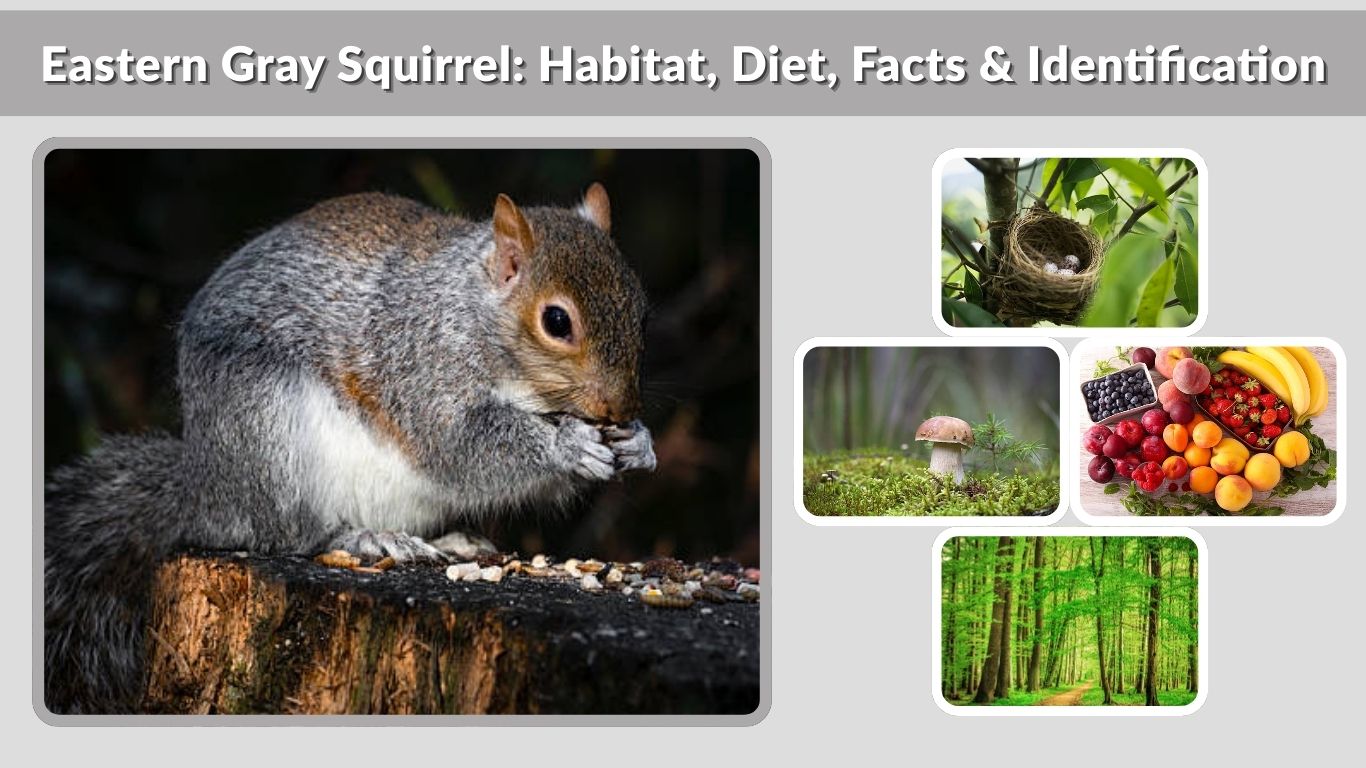
The eastern gray squirrel is one of the most common and recognizable tree squirrels in North America. Known for its bushy tail and agile climbing abilities, this small mammal can be found in forests, parks, and even busy urban neighborhoods. Eastern gray squirrels are highly adaptable animals that thrive in a wide range of environments. From their diet and nesting habits to their behavior and lifespan, these squirrels play an important role in forest ecosystems and seed dispersal.
What Is an Eastern Gray Squirrel?
The eastern gray squirrel (Sciurus carolinensis) is a tree squirrel native to eastern North America. It belongs to the family Sciuridae, which includes many species of squirrels, chipmunks, and marmots.
Eastern gray squirrels are medium-sized rodents known for their gray fur, white belly, and long bushy tail. Adult squirrels typically measure 40–50 centimeters (16–20 inches) in total length, including the tail, and usually weigh 400–700 grams (14–25 ounces).
Their strong hind legs and sharp claws allow them to climb trees quickly and move easily between branches. The large bushy tail helps them maintain balance while jumping and also provides warmth during cold weather.
Eastern gray squirrels are very adaptable animals and can survive in many environments, including forests, city parks, and suburban neighborhoods. Because of this adaptability, they are one of the most widespread squirrel species in North America.
Eastern Gray Squirrel Identification
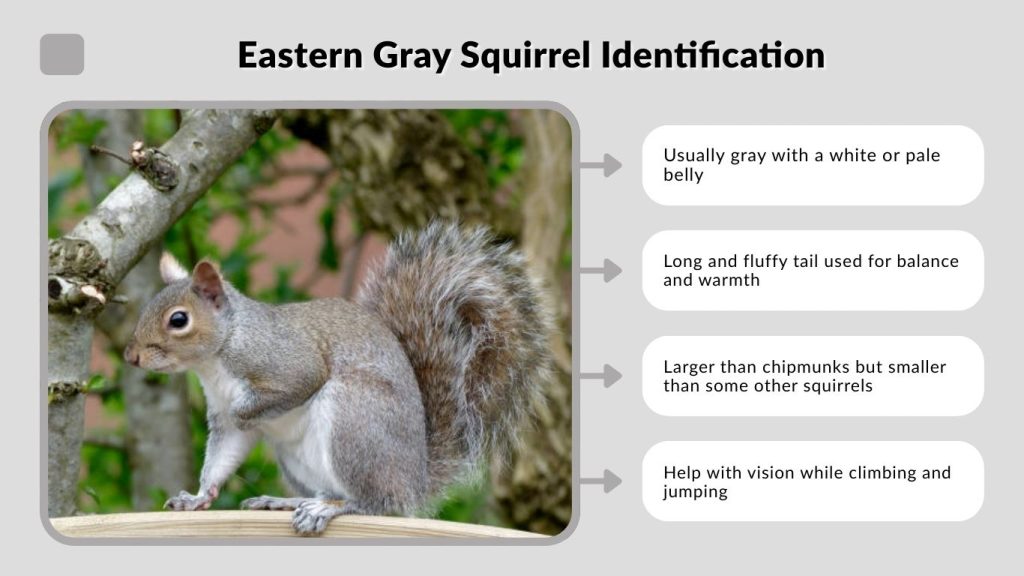
The eastern gray squirrel can be easily identified by several physical features that distinguish it from other squirrel species.
Although gray is the most common color, eastern gray squirrels can sometimes appear black or brown due to natural genetic variations.
Key Identification Features
- Gray fur: Usually gray with a white or pale belly
- Bushy tail: Long and fluffy tail used for balance and warmth
- Medium body size: Larger than chipmunks but smaller than some other squirrels
- Large dark eyes: Help with vision while climbing and jumping
- Sharp claws: Adapted for gripping tree bark and branches
- Strong hind legs: Allow powerful leaps between trees
These characteristics make the eastern gray squirrel easy to recognize in forests, parks, and residential areas.
Eastern Gray Squirrel Habitat
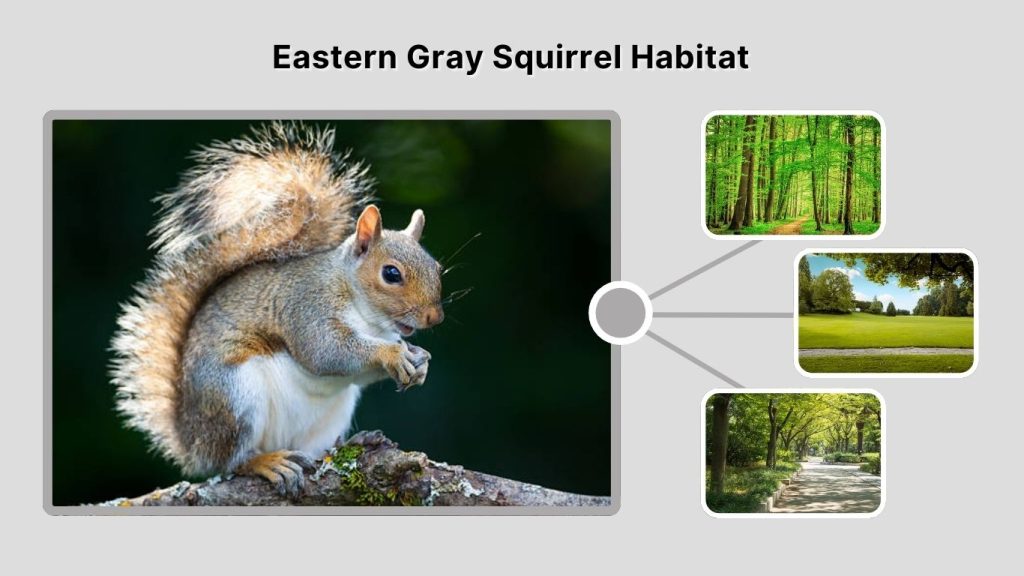
Eastern gray squirrels are highly adaptable and can live in a variety of environments. However, they are most commonly found in deciduous forests with plenty of trees that produce nuts and seeds.
Native Range
The eastern gray squirrel is native to several regions of North America, including:
- Eastern United States
- Southeastern Canada
Because of their adaptability, eastern gray squirrels have also been introduced to other regions, including parts of Europe, where they have established populations.
Preferred Habitat
Eastern gray squirrels commonly live in habitats such as:
- Deciduous forests
- Woodland areas
- Urban parks
- Suburban neighborhoods
- Tree-lined campuses and gardens
These environments provide the squirrels with food, shelter, and safe nesting sites in trees.
Eastern Gray Squirrel Diet
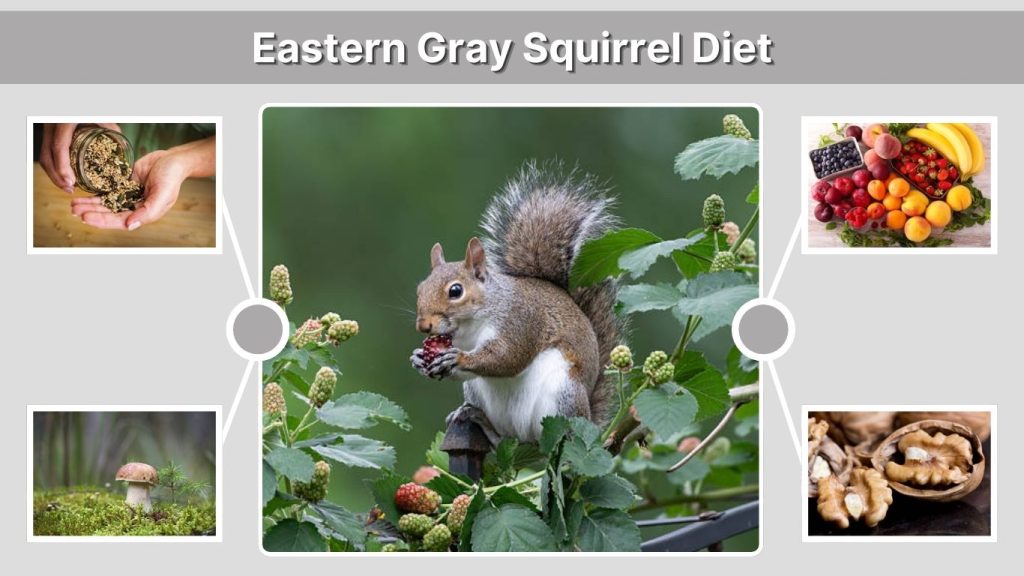
Eastern gray squirrels are omnivores, meaning they eat both plant-based foods and small amounts of animal material. However, most of their diet consists of plant foods found in forests and urban green spaces.
What Do Eastern Gray Squirrels Eat?
Eastern gray squirrels feed on a wide variety of foods depending on what is available in their habitat. Their diet commonly includes:
- Acorns and other tree nuts
- Walnuts and hazelnuts
- Seeds and grains
- Fruits and berries
- Mushrooms and fungi
- Tree buds and bark
Occasionally, they may also eat insects, bird eggs, or small animals.
Feeding Behavior
Eastern gray squirrels are well known for their habit of caching food, which means they store nuts and seeds in the ground or in tree crevices for later use. This behavior helps them survive during winter when food is scarce.
Their feeding activity usually peaks during the morning and late afternoon, when they search for food and bury nuts for future consumption.
Seasonal diet changes are also common:
- Spring and summer: Fresh buds, fruits, and insects
- Autumn: Nuts and seeds are heavily collected and stored
- Winter: Stored food and tree bark become important food sources
This flexible diet allows eastern gray squirrels to thrive in both natural forests and human environments.
Eastern Gray Squirrel Behavior
Eastern gray squirrels display several interesting behaviors that help them survive in both forest and urban environments. They are known for their agility, intelligence, and ability to adapt to changing conditions.
Tree-Climbing Skills
Eastern gray squirrels are excellent climbers. Their sharp claws and strong hind legs allow them to run up and down tree trunks quickly. They can even rotate their ankles to climb down trees headfirst, which few animals can do.
Communication
These squirrels communicate using a variety of vocal sounds and body signals. They produce chatter-like calls to warn other squirrels about predators. Their tails also play an important role in communication, as tail flicking can signal danger or irritation.
Activity Pattern
Eastern gray squirrels are diurnal animals, meaning they are most active during the daytime. Their activity usually peaks during early morning and late afternoon, when they search for food and explore their territory.
Eastern Gray Squirrel Nest
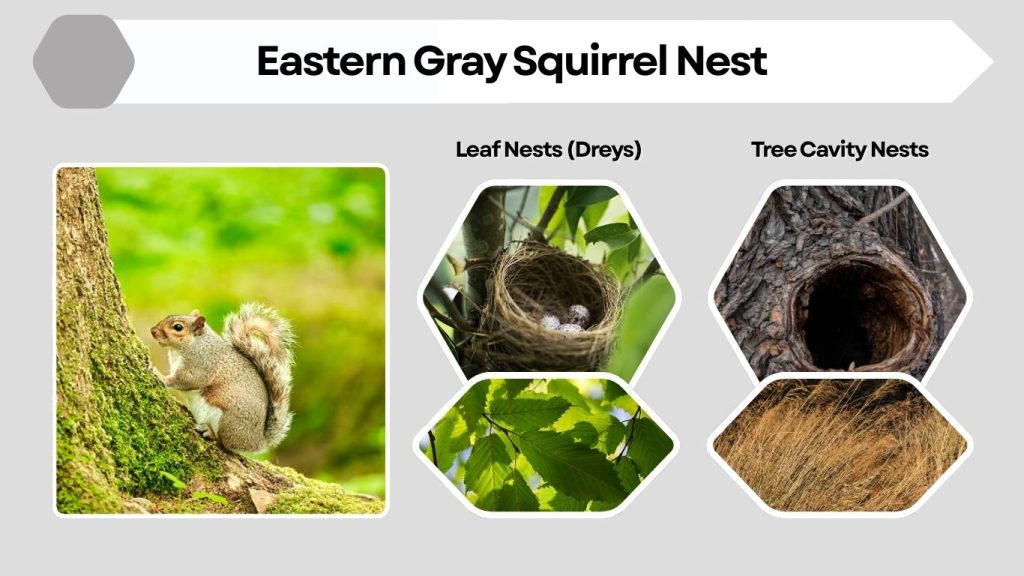
Eastern gray squirrels build nests that provide protection from predators and harsh weather. These nests are usually located high in trees.
Types of Nests
Eastern gray squirrels typically build two main types of nests:
Leaf Nests (Dreys)
Dreys are nests made from leaves and twigs. They are usually built in tree branches and shaped like round balls. Inside, the nest is lined with soft materials such as moss, grass, and shredded bark.
Tree Cavity Nests
Sometimes squirrels use natural holes in tree trunks as nesting sites. These cavity nests offer better protection from wind, rain, and predators.
Nest Construction
To build a drey, squirrels gather materials such as:
- Twigs
- Leaves
- Moss
- Grass
- Bark strips
These materials are woven together to create a sturdy and insulated shelter.
Eastern Gray Squirrel Life Cycle
The life cycle of the eastern gray squirrel includes several stages from birth to adulthood.
Breeding Season
Eastern gray squirrels typically breed twice a year, once in late winter and again in early summer. After mating, the female carries the young for about 44 days.
Birth and Early Development
A female usually gives birth to 2–4 baby squirrels, called kits. The newborn kits are:
- Blind
- Hairless
- Completely dependent on their mother
During the first weeks of life, the babies remain inside the nest where the mother feeds and protects them.
Growth and Independence
After about 8–10 weeks, the young squirrels begin leaving the nest and exploring their surroundings. By 3–4 months of age, they become fully independent and start searching for their own territories.
Eastern Gray Squirrel Lifespan
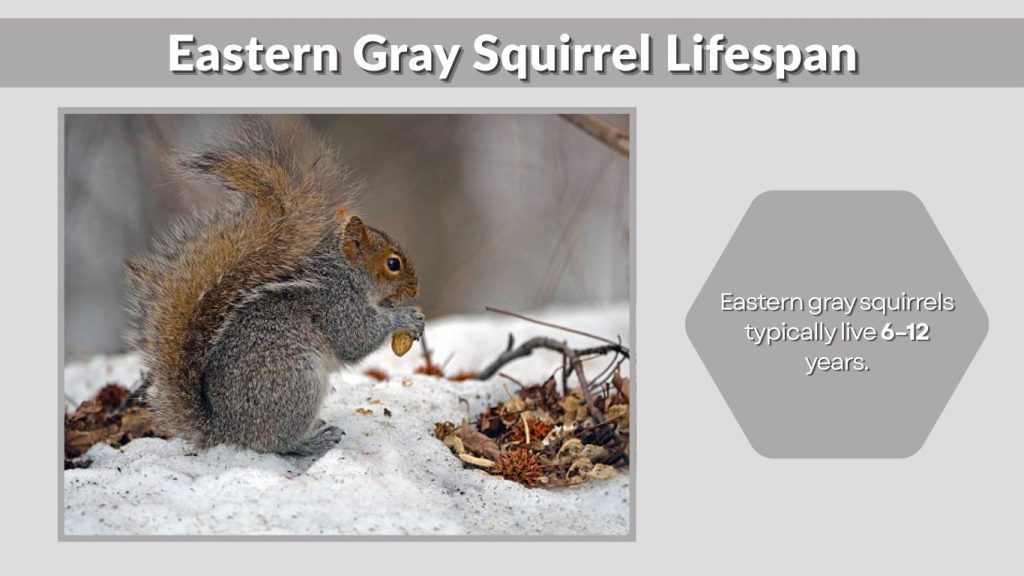
The lifespan of an eastern gray squirrel varies depending on environmental conditions and threats.
In the wild, eastern gray squirrels typically live 6–12 years, although many individuals do not survive that long due to predators and accidents. In captivity, they may live up to 20 years.
Factors Affecting Lifespan
Several factors influence their survival:
- Predators such as hawks, owls, foxes, and snakes
- Vehicle collisions in urban areas
- Food availability
- Disease and parasites
Despite these challenges, eastern gray squirrels maintain stable populations because of their high reproductive rate and adaptability.
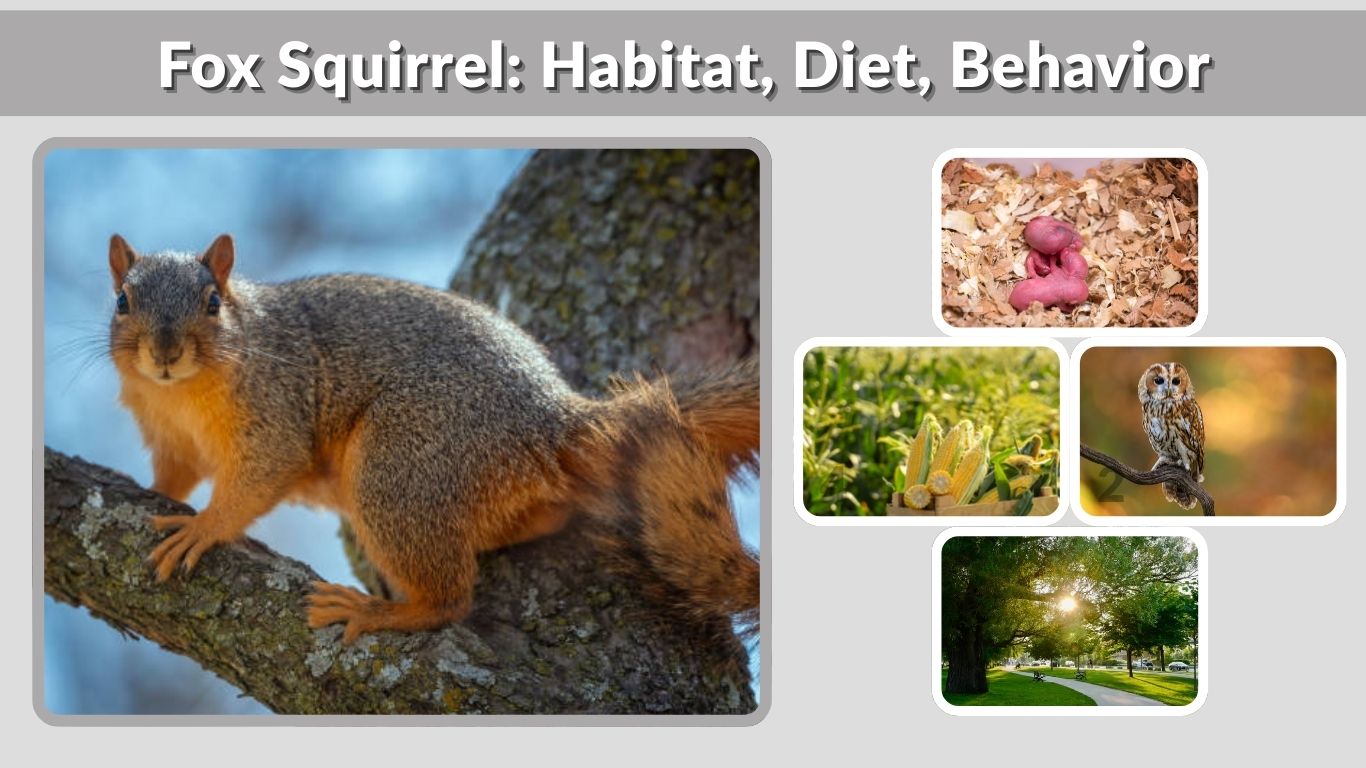
Eastern Gray Squirrel vs Fox Squirrel
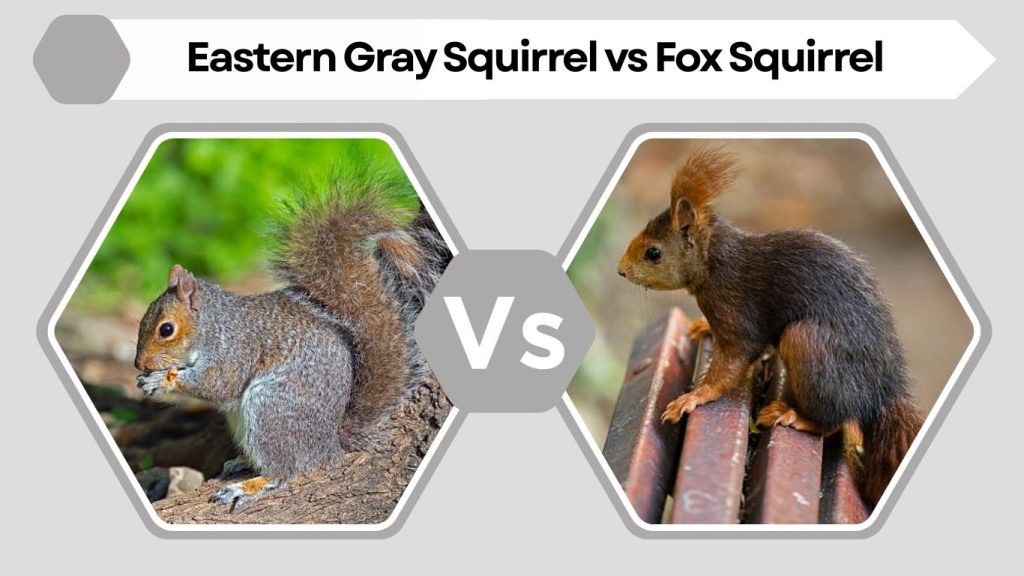
The eastern gray squirrel and the fox squirrel are two common squirrel species in North America. Although they are similar in appearance, there are several noticeable differences.
Key Differences
| Feature | Eastern Gray Squirrel | Fox Squirrel |
| Size | Smaller and lighter | Larger and heavier |
| Fur Color | Mostly gray with white belly | Often reddish, brown, or orange |
| Tail | Bushy gray tail | Fluffier tail with mixed colors |
| Habitat | Forests, parks, urban areas | Open woodlands and farmland |
Both species are excellent climbers and share similar diets, but fox squirrels generally prefer more open habitats compared to the forest-loving eastern gray squirrel.
Interesting Eastern Gray Squirrel Facts
Eastern gray squirrels have several fascinating traits that make them unique.
- They can leap up to 3 meters (10 feet) between tree branches.
- Their bushy tails help them balance and stay warm in winter.
- They have excellent memory and can remember the locations of buried food caches.
- Squirrels play an important role in forests by spreading seeds that grow into new trees.
- They can rotate their hind feet 180 degrees, allowing them to climb down trees headfirst.
Conclusion
The eastern gray squirrel is a highly adaptable and intelligent animal that thrives in forests, parks, and urban areas across North America. With its bushy tail, agile climbing ability, and flexible diet, this squirrel plays an important role in forest ecosystems. From building leafy nests to storing food for winter, eastern gray squirrels demonstrate remarkable survival skills. Understanding their behavior, habitat, and life cycle helps us appreciate the ecological value of these energetic and resourceful animals.