




The emerald toucanet is a small but striking member of the toucan family, easily recognized by its vivid green plumage and compact body. Unlike larger toucans with oversized bills, emerald toucanets have a more modest appearance that blends perfectly into the misty forests they inhabit. Found mainly in Central America and parts of South America, emerald toucanets play an important role in maintaining healthy forest ecosystems through seed dispersal and insect control. Their quiet behavior and preference for high-elevation forests make them less visible than other toucan species, yet no less fascinating.
What Is an Emerald Toucanet?
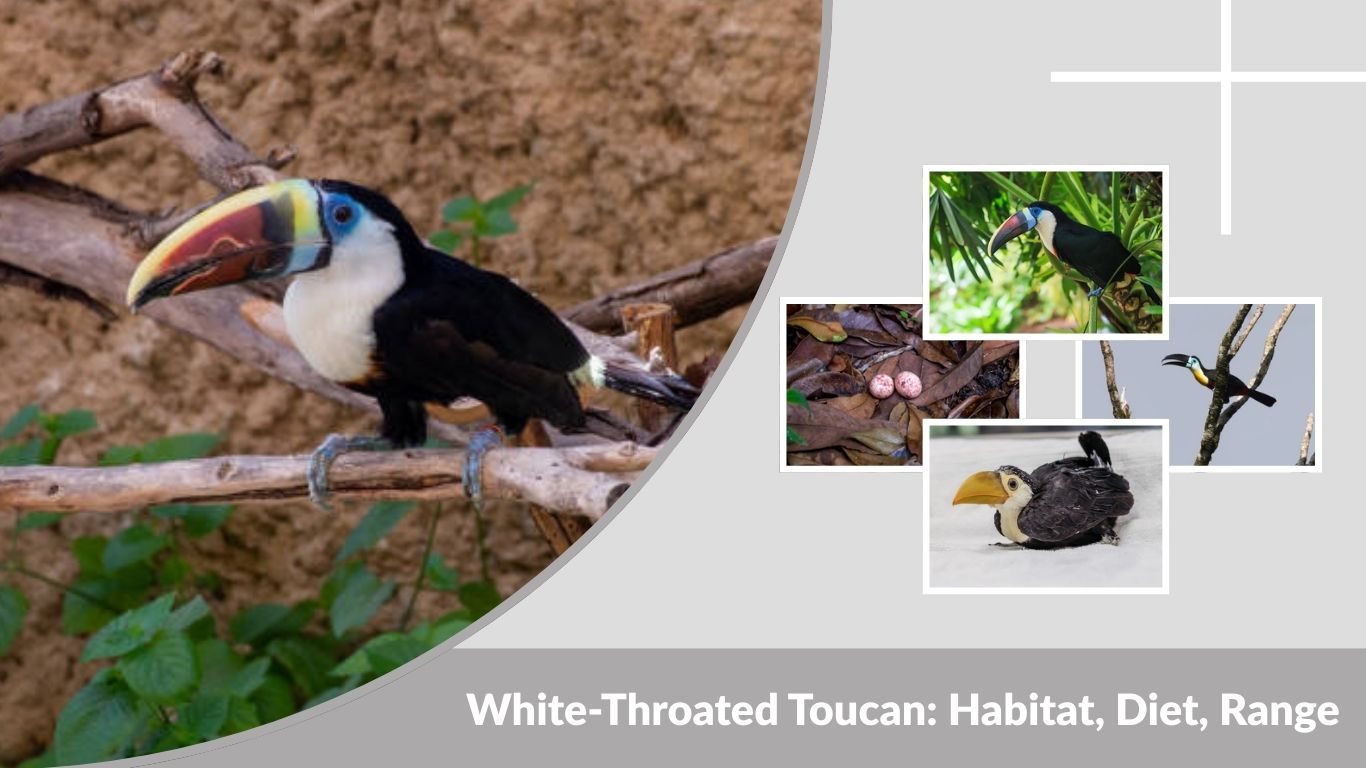
The emerald toucanet (Aulacorhynchus prasinus) is a medium-sized toucanet known for its bright green feathers, slender build, and relatively small beak. The bill is usually greenish with subtle markings and is perfectly adapted for picking fruit and catching insects. Unlike large toucans, toucanets are more agile and better suited for navigating dense vegetation.
Among common emerald toucanet facts is that this species is often quieter and more elusive than its larger relatives. Adults typically measure around 12 to 14 inches in length, making them noticeably smaller than most toucans. Their coloring provides excellent camouflage in cloud forests, helping them avoid predators.
Emerald Toucanet Habitat and Natural Environment
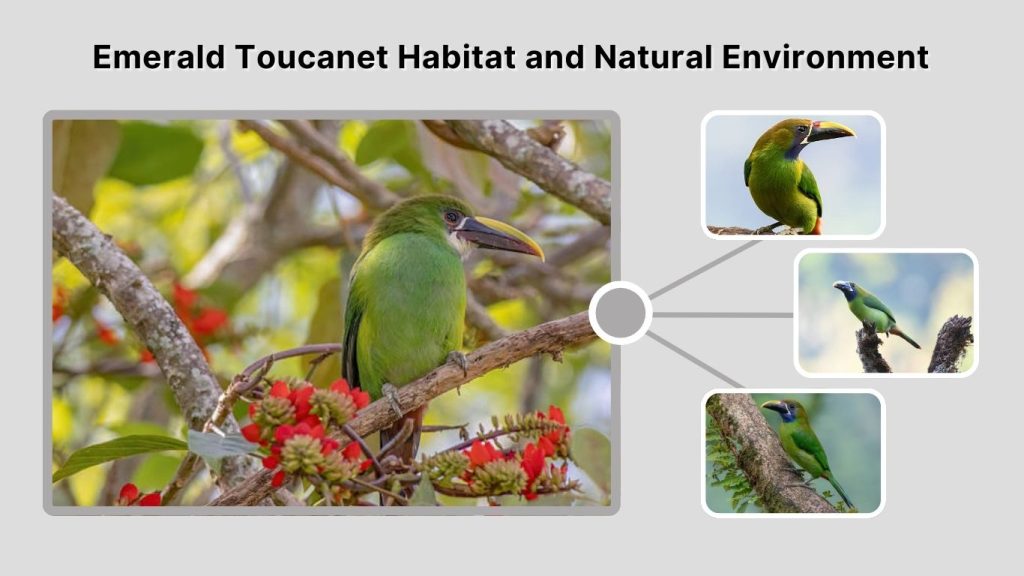
The emerald toucanet habitat consists mainly of cloud forests, humid montane forests, and high-elevation tropical forests. These environments are characterized by frequent mist, dense vegetation, and a rich diversity of plant life. Emerald toucanets prefer elevations ranging from about 2,000 to 6,000 feet, where temperatures are cooler and food sources remain plentiful year-round.
A typical emerald toucanet location includes forested mountain slopes, wooded ravines, and forest edges near clearings. Large trees are essential, as they provide both nesting cavities and a steady supply of fruit. Because cloud forests are highly sensitive ecosystems, habitat destruction poses a serious threat to emerald toucanet populations.
Emerald Toucanet Range and Geographic Distribution
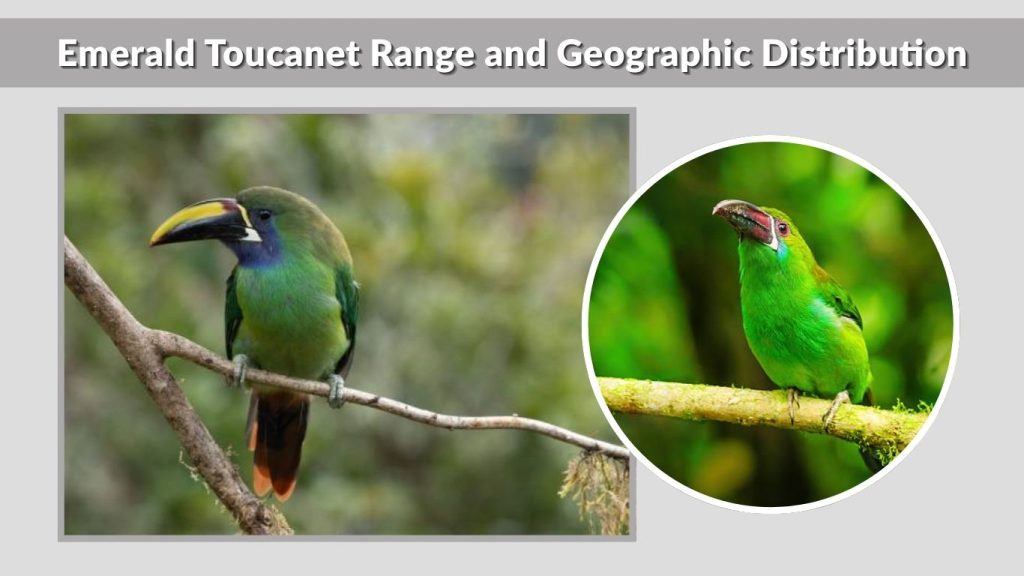
The emerald toucanet range extends from southern Mexico through Central America and into northern South America. Countries within this range include Mexico, Guatemala, Honduras, Nicaragua, Costa Rica, Panama, Colombia, and Venezuela. Within these regions, emerald toucanets are usually found in forested highlands rather than lowland rainforests.
Although the species has a relatively wide distribution, emerald toucanets are often locally uncommon due to their specific habitat requirements. Their presence usually indicates a healthy, intact forest ecosystem with minimal human disturbance.
Emerald Toucanet Diet and Feeding Behavior
The emerald toucanet diet is primarily fruit-based, with berries, figs, and small tropical fruits making up most of their meals. Using their nimble beaks, they pluck fruit from branches and swallow it whole. Their smaller size allows them to feed on fruit in dense foliage that larger toucans may struggle to access.
In addition to fruit, emerald toucanets eat insects, spiders, and small vertebrates such as lizards. This mixed diet provides essential nutrients and protein. As they move through the forest feeding, they disperse seeds across wide areas, helping to regenerate plant life and maintain biodiversity.
Emerald Toucanet Lifespan and Survival
The emerald toucanet lifespan in the wild is estimated to range from 12 to 15 years. Survival depends largely on habitat quality, food availability, and predation pressure. Natural predators include snakes, birds of prey, and small carnivorous mammals that target nests and young birds.
Habitat loss is the greatest threat facing emerald toucanets today. Deforestation and agricultural expansion reduce cloud forest cover, fragmenting habitats and limiting access to food and nesting sites. Conservation of high-elevation forests is crucial to ensuring the long-term survival of this species.
Emerald Toucanet Eggs, Babies, and Breeding Behavior
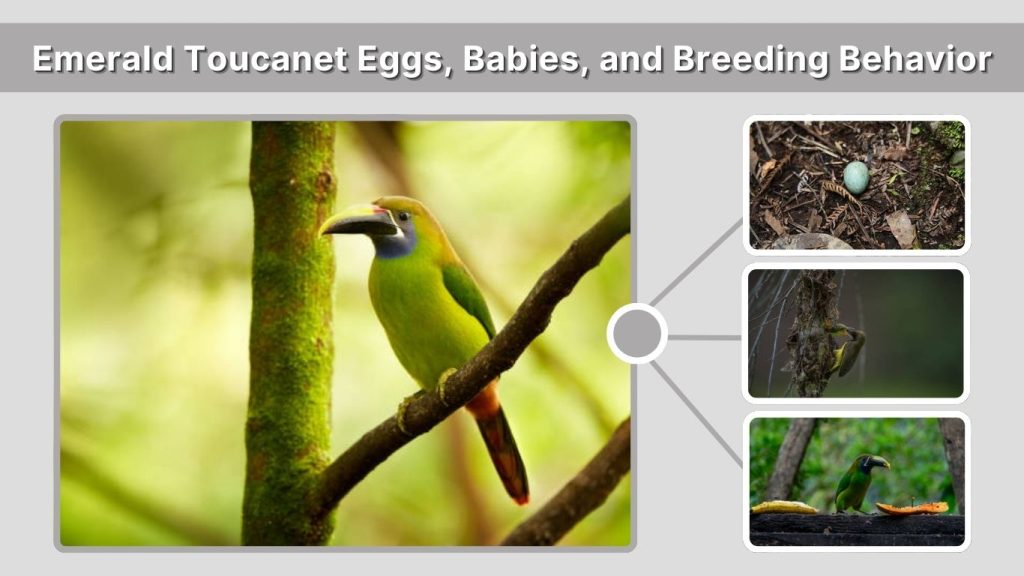
Emerald toucanets do not build nests from scratch. Instead, they rely on natural tree cavities or abandoned woodpecker holes found high in the forest canopy. These nesting sites provide shelter from predators and harsh weather during the breeding season.
Emerald Toucanet Eggs
The female usually lays two to four emerald toucanet eggs, which are white and slightly oval in shape. Both parents share incubation duties, which last around 16 to 18 days. This cooperative behavior helps ensure the eggs remain protected and properly warmed throughout the incubation period.
Emerald Toucanet Baby Development
An emerald toucanet baby hatches blind and featherless, completely dependent on parental care. During the first weeks, the chicks grow rapidly and develop thick pads on their heels to protect their feet from the hard nest floor. Parents feed the chicks regurgitated fruit and insects until their feathers and beaks begin to develop. After approximately seven to eight weeks, the young toucanets are ready to leave the nest and begin exploring nearby branches.
Male and Female Emerald Toucanet Differences
Male and female emerald toucanets are similar in size and appearance, making them difficult to tell apart at a glance. However, the emerald toucanet female often has a slightly shorter bill and less pronounced coloration around the eyes compared to the male. These differences are subtle and usually only noticeable when a pair is observed closely. Both sexes share responsibilities such as incubating eggs, feeding chicks, and defending the nesting area.
Can Emerald Toucanets Fly?
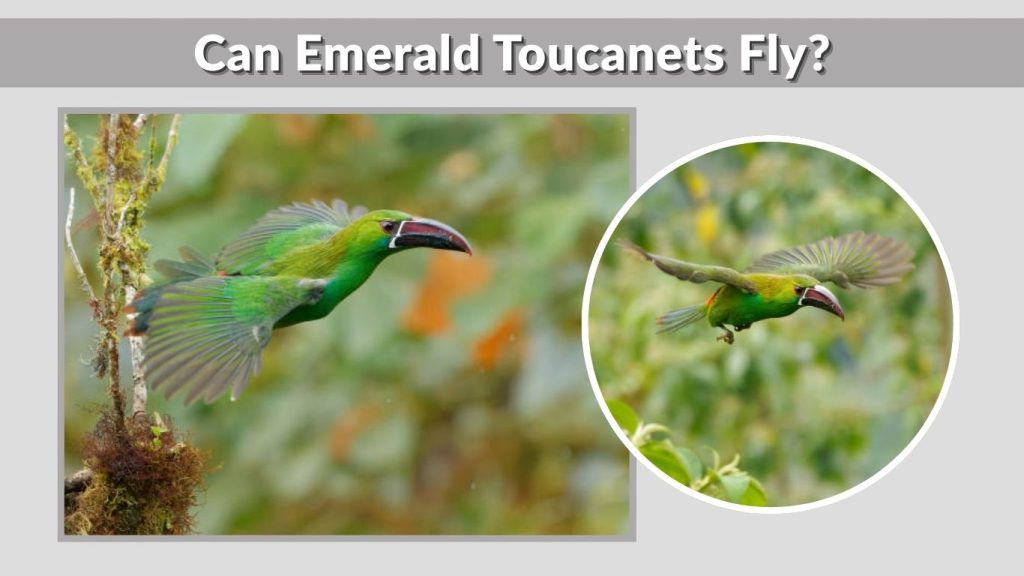
Despite their compact size, emerald toucanet flying ability is well adapted to forest life. They are capable of flight but typically travel short distances between trees. Their flight consists of rapid wingbeats followed by brief glides, allowing them to maneuver efficiently through dense vegetation. On the ground, emerald toucanets are more comfortable hopping than walking, which suits their arboreal lifestyle.
Interesting Emerald Toucanet Facts
There are many fascinating emerald toucanet facts that highlight how well adapted these birds are to cloud forest environments. Unlike larger toucans, emerald toucanets are generally quieter and less conspicuous, relying on camouflage rather than bold colors to avoid predators. Their green plumage blends seamlessly with leaves and moss-covered branches.
Emerald toucanets are social birds and are often seen in pairs or small family groups. They communicate using soft calls rather than loud croaks, which helps them stay in contact without attracting unwanted attention. Another interesting behavior is how they sleep: by tucking their bills under their wings and curling their tails, they can rest comfortably inside narrow tree cavities.
Why the Emerald Toucanet Matters
The emerald toucanet plays a vital role in maintaining the health of cloud forest ecosystems. By dispersing seeds and controlling insect populations, these birds support forest regeneration and biodiversity. Because they depend on intact high-elevation forests, emerald toucanets are valuable indicators of environmental health.
Protecting cloud forests not only ensures the survival of emerald toucanets but also safeguards countless other species that rely on these unique habitats. Conservation efforts focused on preserving highland forests are essential for maintaining the ecological balance of these regions.
FAQs
Where do emerald toucanets live?
The emerald toucanet habitat includes cloud forests and humid montane forests in Central America and northern South America. They are commonly found in high-elevation forests in countries such as Mexico, Costa Rica, Panama, Colombia, and Venezuela.
What do emerald toucanets eat?
The emerald toucanet diet is mainly made up of fruit, including berries and figs. They also eat insects, spiders, and small reptiles, which provide important protein and nutrients.
How long do emerald toucanets live?
The average emerald toucanet lifespan is about 12 to 15 years in the wild. In captivity, they may live longer due to stable food supplies and protection from predators.
Can emerald toucanets fly?
Yes, emerald toucanet flying ability is well developed. They usually fly short distances between trees using quick wingbeats and brief glides, which helps them navigate dense forest canopies.
Are male and female emerald toucanets different?
Male and female emerald toucanets look very similar. The emerald toucanet female is often slightly smaller and may have a shorter bill, but the differences are subtle and difficult to notice without close observation.