


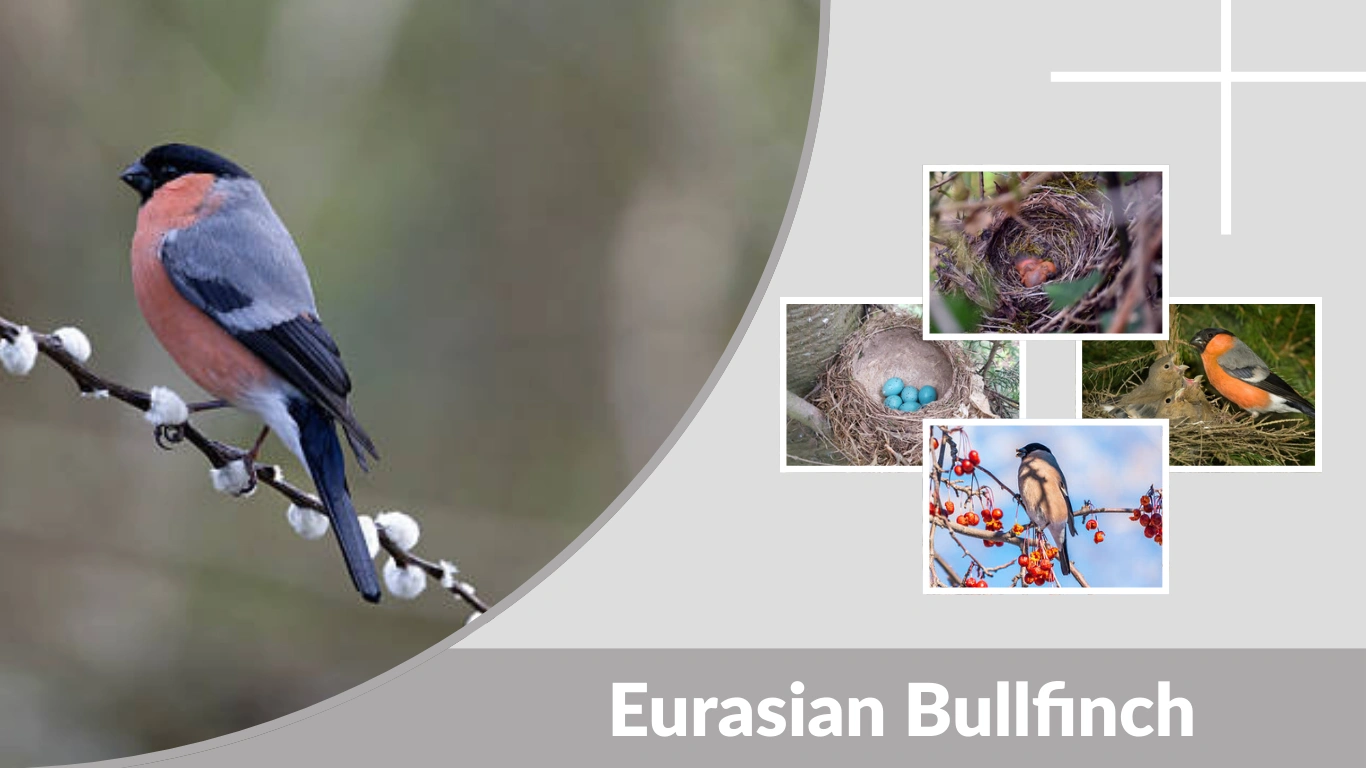
The Eurasian bullfinch (Pyrrhula pyrrhula) is a small, stocky songbird best known for its soft whistling call and the striking rose-red chest of the male. Found across Europe and large parts of northern Asia, this shy bird prefers woodlands, hedgerows, and quiet gardens where it can feed on buds, seeds, and berries. Although not always easy to spot, the Eurasian bullfinch is highly valued by birdwatchers for its calm behavior, beautiful coloration, and gentle presence in natural landscapes.
Eurasian Bullfinch Overview
The Eurasian bullfinch belongs to the finch family Fringillidae and is scientifically known as Pyrrhula pyrrhula. The name “bullfinch” refers to its thick neck, rounded body, and strong, short beak, which together give it a sturdy, bull-like appearance. This species is widely distributed across Europe, Russia, Siberia, and parts of East Asia, adapting well to both wild and semi-urban environments.
Bullfinches are often associated with mature woodlands, forest edges, orchards, and overgrown hedgerows. They are generally quiet and unobtrusive birds, spending much of their time hidden among branches while feeding. Despite their bright colors, they are not aggressive or noisy, preferring a calm lifestyle centered around steady foraging and close pair bonds. Their ecological role is important, as they help control plant growth by feeding on buds and seeds and contribute to seed dispersal through fruit consumption.
Identification and Physical Features
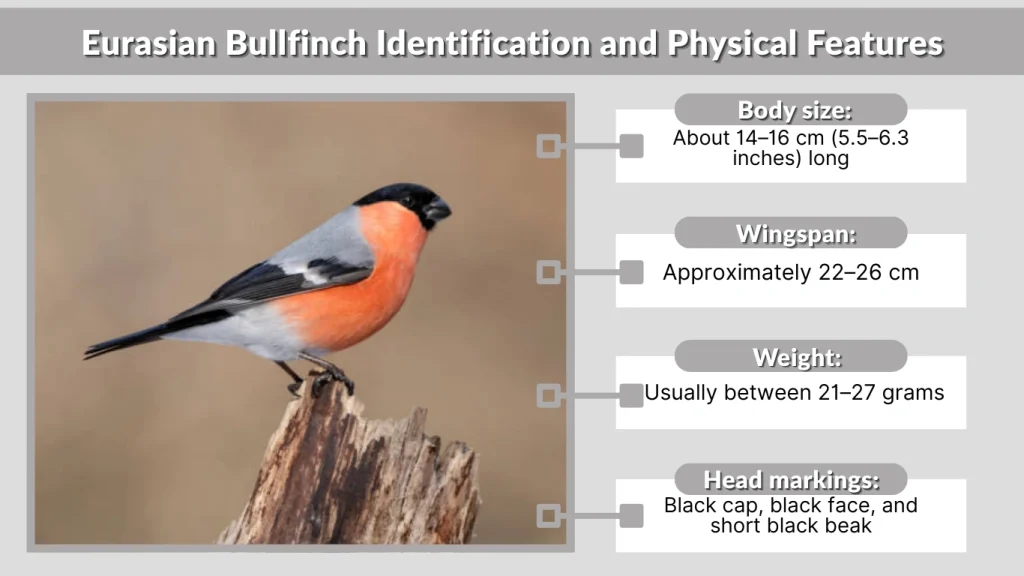
The Eurasian bullfinch has a distinctive, compact appearance that makes it recognizable once you know what to look for.
- Scientific name: Pyrrhula pyrrhula, family Fringillidae
- Body size: About 14–16 cm (5.5–6.3 inches) long
- Wingspan: Approximately 22–26 cm
- Weight: Usually between 21–27 grams
- Head markings: Black cap, black face, and short black beak
- Body shape: Rounded chest, thick neck, and relatively long tail
- Wing pattern: Black wings with a noticeable pale wing bar
- Flight style: Gentle, undulating flight, often low through vegetation
Their strong, conical beak is specially adapted for crushing seeds and clipping buds, which forms a major part of their diet.
Male vs Female Eurasian Bullfinch
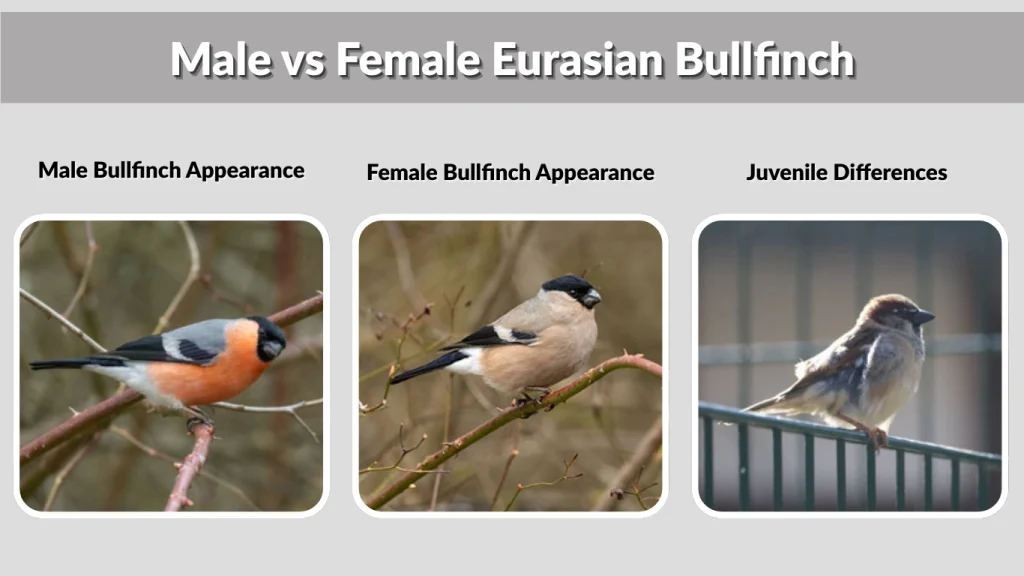
Male Bullfinch Appearance
Male Eurasian bullfinches are famous for their vivid coloring. The chest and belly are a deep rose-red or pinkish-crimson, which strongly contrasts with the black cap, face, wings, and tail. The back is bluish-gray, while the rump is bright white and clearly visible during flight. This bold coloration plays a role in courtship and makes adult males easier to identify in the field.
Female Bullfinch Appearance
Females share the same general pattern but are much more subdued in color. Instead of red, their chest and underparts are soft gray-brown or beige. This muted tone provides better camouflage, especially during nesting. Females also have the black cap and white rump, but the overall effect is less striking than in males.
Juvenile Differences
Young bullfinches lack the black cap seen in adults and are mostly brownish-gray all over. Their colors gradually intensify as they mature, and the black head markings appear after their first molt. Juveniles often stay close to their parents during the early weeks after fledging.
Natural Habitat and Distribution
The Eurasian bullfinch occupies a wide geographic range, stretching from Western Europe through Scandinavia and Russia to parts of northern China and Japan. It thrives in temperate and boreal zones, especially where dense shrubs and trees are present.
Typical habitats include deciduous and mixed forests, woodland edges, hedgerows, orchards, riverbanks, and well-planted parks or gardens. Bullfinches prefer areas that offer both cover and food, allowing them to remain hidden while feeding. During winter, they are more likely to appear in gardens and farmland edges, where natural food sources become scarce and feeders provide reliable nutrition.
Diet and Feeding Behavior
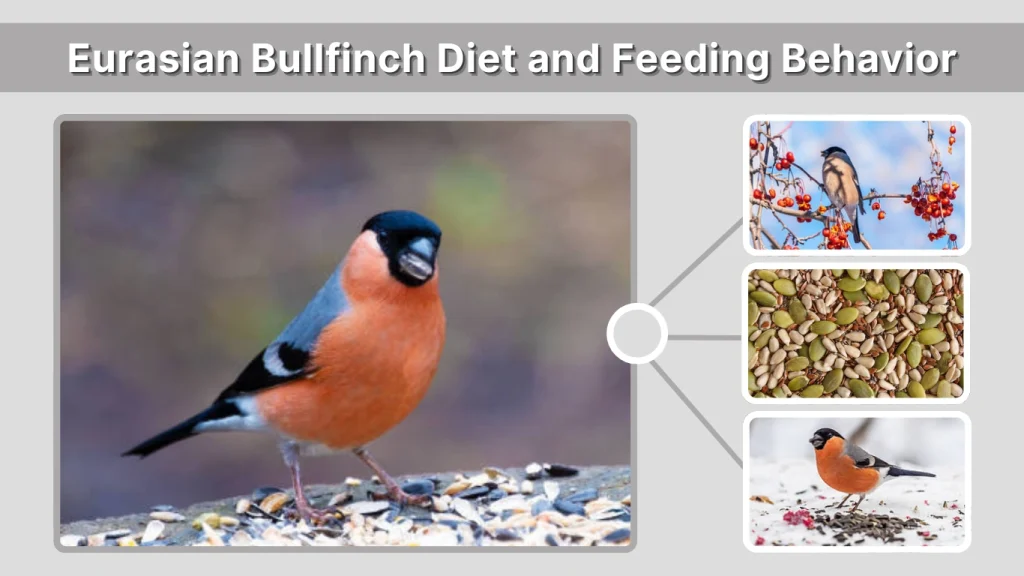
The Eurasian bullfinch is primarily a plant-based feeder, although its diet changes slightly with the seasons.
- Tree buds: Especially from fruit trees, birch, ash, and maple
- Seeds: From grasses, weeds, and wild plants
- Berries: Hawthorn, rowan, blackberry, and elderberry
- Soft fruits: Apples, cherries, and other orchard fruits
- Insects and larvae: Mostly during breeding season
- Winter foods: Seeds, buds, and garden feeder mixes
Bullfinches feed quietly, often plucking buds one by one and holding them firmly with their beaks. They usually forage in pairs or small family groups, moving slowly through branches rather than hopping actively on the ground. Their feeding behavior is calm and methodical, reflecting their overall gentle nature.
Nesting and Breeding Cycle
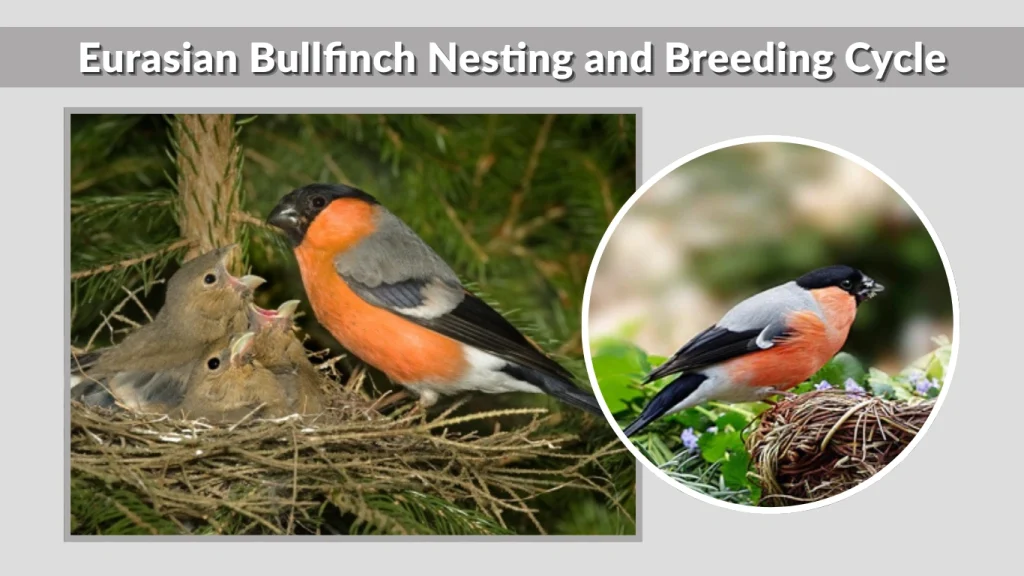
Breeding Season and Courtship
The breeding season of the Eurasian bullfinch usually begins in late April and continues through July, depending on climate and food availability. During this period, pairs become more territorial and remain closely bonded. Courtship is subtle and quiet, involving soft calls, mutual feeding, and short display flights. Unlike many songbirds, bullfinches do not perform elaborate visual displays, relying instead on gentle vocalizations and consistent companionship to strengthen pair bonds.
Nest Construction
Nests are typically built in dense shrubs, hedges, low trees, or thick climbing plants. The female takes the primary role in construction, while the male guards the area. The nest itself is a loose but stable structure made from thin twigs, roots, and stems, with a softer inner lining of fine grass, moss, and hair. Placement is usually well hidden, offering protection from predators and harsh weather.
Eggs and Incubation
A typical clutch contains four to six pale blue eggs, lightly marked with brown or purplish speckles. Incubation lasts around twelve to fourteen days and is carried out mainly by the female. During this time, the male regularly brings food to the nest, reinforcing the strong cooperative bond between the pair.
Eurasian Bullfinch Eggs and Chicks
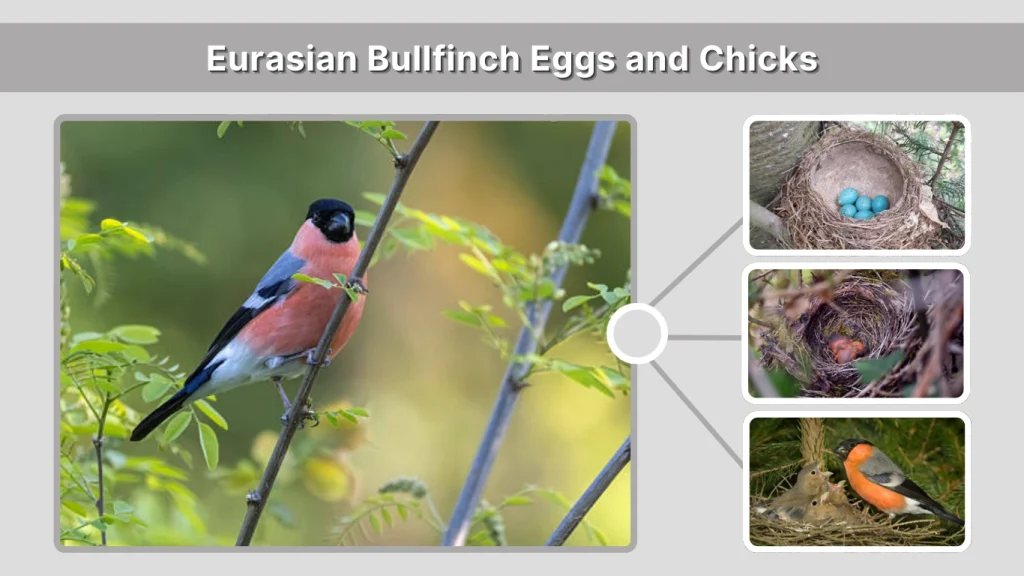
Once hatched, the chicks are blind, nearly featherless, and completely dependent on their parents. Both adults take part in feeding, bringing a mixture of insects, larvae, and softened plant material. This high-protein diet supports rapid growth during the early days. Within two weeks, the chicks develop feathers and open their eyes. Fledging usually occurs after about fourteen to sixteen days, but young bullfinches continue to rely on their parents for food and protection for several more weeks as they learn to forage independently.
Song, Call, and Communication
Bullfinch Song
The Eurasian bullfinch is not known for loud or complex singing. Instead, its song consists of soft, flute-like whistles that sound calm and slightly melancholic. These gentle notes are often delivered from within dense vegetation, making the bird easier to hear than to see. Males sing most frequently during the breeding season to maintain pair bonds and define territory.
Alarm and Contact Calls
Bullfinches use quiet contact calls to stay in touch with their partner or family group while foraging. Alarm calls are sharper and more urgent, signaling the presence of predators. These simple vocal signals help maintain group coordination without drawing unnecessary attention.
Behavior and Seasonal Movement
The Eurasian bullfinch is generally shy and unobtrusive, preferring to remain hidden among branches rather than feeding in open spaces.
- Daily activity: Most active in early morning and late afternoon
- Temperament: Calm, slow-moving, and non-aggressive
- Social structure: Usually found in pairs or small family groups
- Territorial behavior: Mildly territorial during breeding season
- Winter habits: Often forms small flocks and visits gardens
- Movement patterns: Largely resident, with short seasonal shifts
In colder regions, bullfinches may move to lower elevations or closer to human settlements in winter, where food is easier to find. These movements are not true long-distance migrations but seasonal adjustments to environmental conditions.
Lifespan, Predators, and Survival
In the wild, Eurasian bullfinches typically live between two and five years, though some individuals survive longer under favorable conditions. Common predators include domestic cats, sparrowhawks, owls, and nest-raiding mammals. Eggs and chicks are particularly vulnerable. Bullfinches rely on dense cover, quiet behavior, and camouflage to avoid detection. Their habit of feeding within shrubs rather than in open areas significantly increases their chances of survival.
Eurasian Bullfinch in Gardens and Birdwatching
Bullfinches are welcome visitors in well-planted gardens, especially during autumn and winter. They are attracted to feeders offering sunflower seeds, nyjer seeds, and soft fruits such as apples. Shrubs like hawthorn, elder, and dog rose provide both food and shelter. Birdwatchers often spot bullfinches early in the morning when they feed quietly before retreating into cover. Patience is key, as their reserved nature means they rarely stay long in exposed locations.
Conservation Status and Population Trends
The Eurasian bullfinch is currently listed as “Least Concern” by the IUCN, indicating a stable global population. However, regional declines have been recorded in parts of Western Europe, largely due to habitat loss, agricultural intensification, and reduced hedgerows. Conservation of mixed woodlands, traditional orchards, and garden habitats plays an important role in maintaining healthy populations. Providing food sources and preserving natural cover can significantly benefit this species.
FAQs
What does a Eurasian bullfinch eat throughout the year?
Eurasian bullfinches mainly eat buds, seeds, and berries. In spring, tree buds form a large part of their diet. During summer, they add insects and larvae, especially when feeding chicks. In autumn and winter, they rely heavily on seeds, fruits, and food from garden feeders.
How can you tell a male from a female Eurasian bullfinch?
Male bullfinches have a bright rose-red chest and underparts, while females are gray-brown in the same areas. Both sexes share a black cap and white rump, but the male’s stronger color contrast makes him easier to identify, especially during the breeding season.
Where do Eurasian bullfinches usually build their nests?
They usually build nests in dense shrubs, hedges, or low trees. The nest is placed well above ground but hidden within foliage. It is made from twigs and roots, with a softer lining that protects the eggs and young chicks.
Is the Eurasian bullfinch migratory?
The Eurasian bullfinch is mostly resident across its range. Instead of long-distance migration, it makes short seasonal movements. In winter, birds often move closer to gardens, farmland edges, or lower elevations where food is more available.
Are Eurasian bullfinches endangered?
No, Eurasian bullfinches are not endangered and are listed as Least Concern. However, some local populations have declined due to habitat loss. Protecting hedgerows, woodlands, and traditional orchards helps ensure stable numbers in the future.