




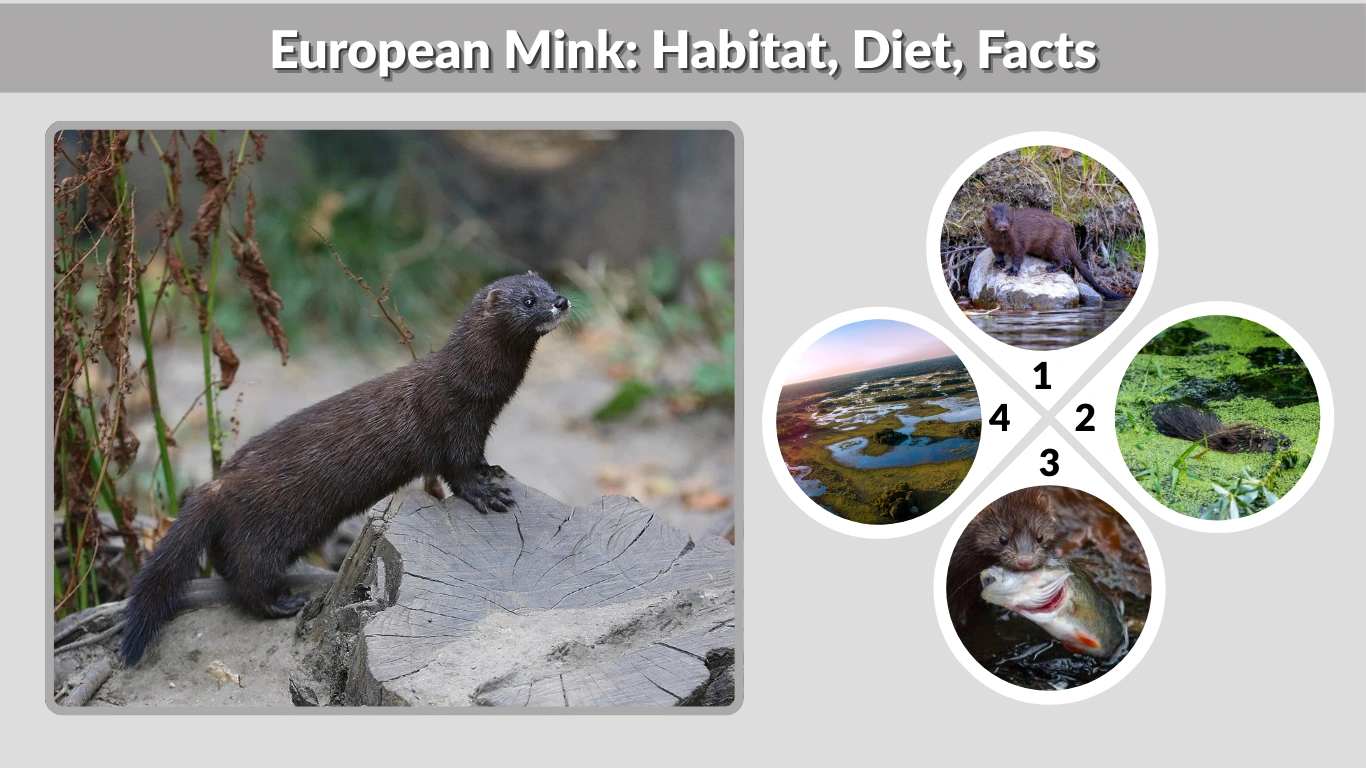
The European mink (Mustela lutreola) is one of the most endangered mammals in Europe. Once widespread across the continent’s rivers and wetlands, this small carnivorous mammal has suffered a dramatic population decline over the past century. Today, it survives only in a few isolated regions. Habitat destruction, pollution, and competition from the invasive American mink have pushed the species to the brink of extinction. Understanding the European mink’s habitat, behavior, and threats is essential to protecting this rare and vulnerable animal.
What Is the European Mink?
The European mink is a semi-aquatic mammal belonging to the Mustelidae family, which includes weasels, otters, ferrets, and badgers. Although often confused with the American mink, the European mink is a distinct species native to Europe.
Scientific Classification and Background
- Scientific name: Mustela lutreola
- Family: Mustelidae
- Order: Carnivora
The European mink evolved as a specialized wetland predator. For centuries, it played an important ecological role in freshwater ecosystems across Europe. However, its range has significantly decreased, and today it is classified as Critically Endangered on the IUCN Red List.
Physical Characteristics
The European mink is small and slender, with a long body and short legs. Adults typically measure about 30–40 cm in body length, with a tail adding another 12–19 cm. They usually weigh between 400 and 900 grams, with males being larger than females.
One of the most distinctive features of the European mink is the white fur marking on both the upper and lower lips. This characteristic helps distinguish it from the American mink, which usually has white only on the lower lip. Its dense, dark brown fur provides insulation in cold water environments. Like other mustelids, it has sharp teeth and strong jaws suited for catching prey.
European Mink Habitat and Distribution
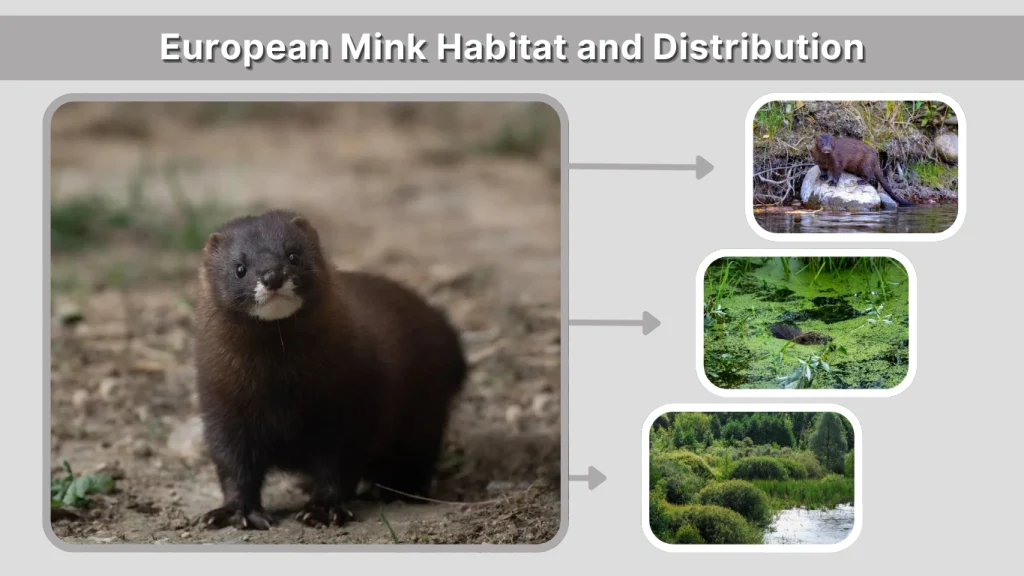
The European mink is strongly associated with freshwater environments. Its survival depends on healthy wetland ecosystems.
Natural Habitat
European mink prefer:
- Riverbanks and streams
- Marshes and swamps
- Wetlands with dense vegetation
- Floodplains and lakeshores
They require areas with thick plant cover along water edges, which provide shelter and protection from predators. Because they are semi-aquatic, access to clean freshwater is essential for hunting and movement.
These animals are excellent swimmers and often use burrows along riverbanks for nesting. Sometimes they occupy abandoned burrows of other animals or natural cavities near water.
Historical vs Current Range
Historically, the European mink was found across much of Europe, from Spain in the west to Russia in the east. It once inhabited numerous river systems and wetlands across the continent.
Today, its distribution is severely fragmented. Remaining populations exist mainly in:
- Parts of Spain
- Southwestern France
- Romania
- Small areas of Eastern Europe
The dramatic shrinkage of its range is one of the primary reasons it is now considered critically endangered. Habitat fragmentation isolates populations, making breeding more difficult and reducing genetic diversity.
Diet and Behavior of the European Mink
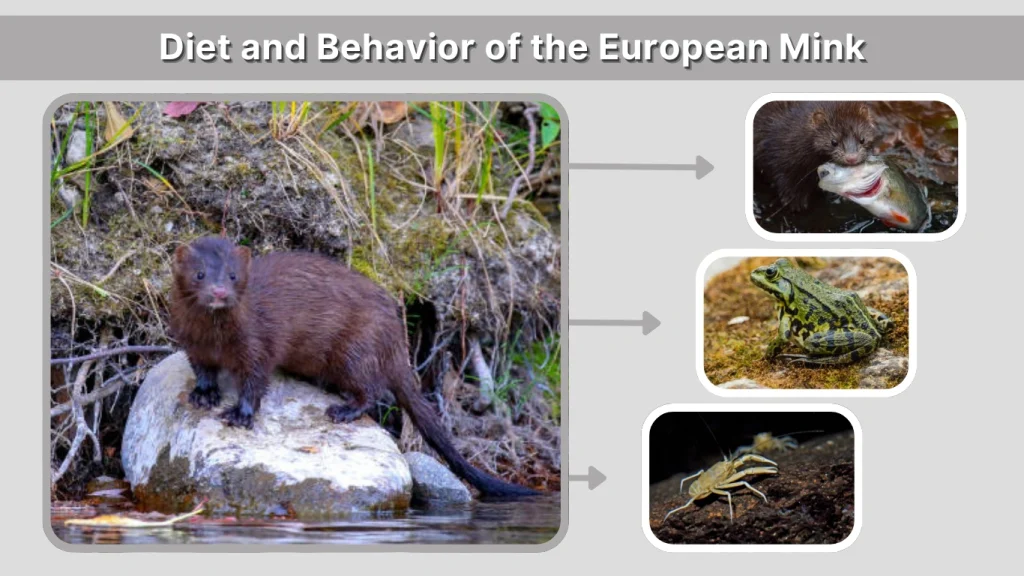
The European mink is a carnivorous predator adapted to wetland hunting.
What Does the European Mink Eat?
Its diet mainly consists of:
- Fish
- Frogs and amphibians
- Crustaceans
- Small mammals
- Birds and bird eggs
Because of its semi-aquatic lifestyle, it often hunts both in water and on land. Seasonal changes can influence its diet, depending on prey availability.
Hunting and Activity Patterns
European mink are primarily nocturnal, meaning they are most active at night. They are solitary and territorial animals, marking their territory with scent glands to warn off other mink.
Their streamlined bodies and partially webbed feet make them strong swimmers. They can dive underwater to catch fish and amphibians with impressive agility. On land, they move quickly and quietly through vegetation while searching for prey.
This combination of aquatic and terrestrial hunting skills makes the European mink an important predator in wetland ecosystems. It helps control populations of small animals, maintaining ecological balance.
Why Is the European Mink Endangered?
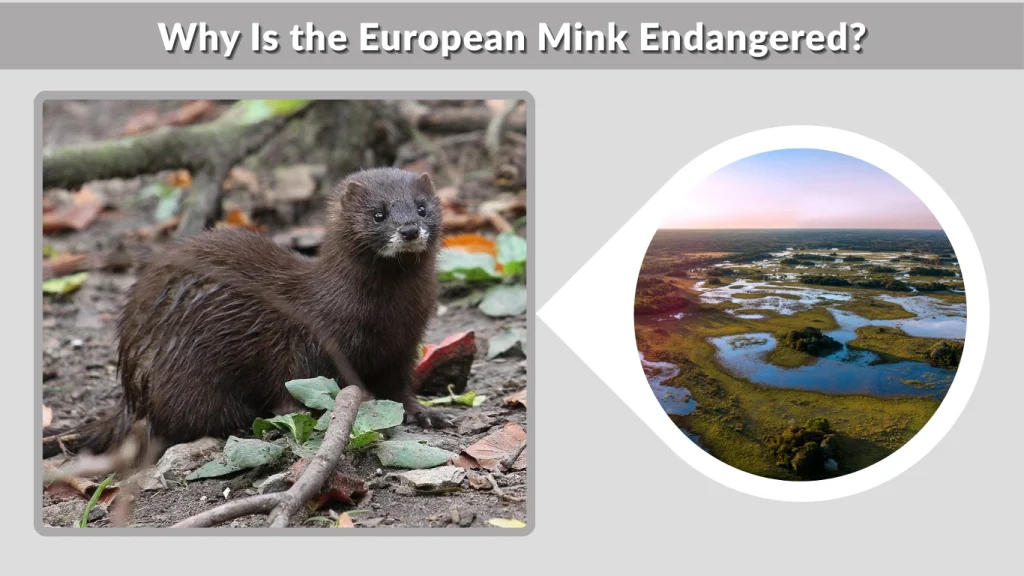
The European mink is now considered Critically Endangered, and its decline has been both rapid and severe. Several major threats have contributed to the species’ near disappearance.
Competition with the American Mink
One of the biggest threats to the European mink is the introduction of the American mink (Neovison vison). Brought to Europe in the 20th century for fur farming, many American mink escaped or were released into the wild.
The American mink is larger, more adaptable, and more aggressive. It competes directly with the European mink for food and territory. In many regions, the American mink has completely replaced its European relative. This invasive species has dramatically accelerated the native mink’s decline.
Habitat Loss and Pollution
Wetlands across Europe have been heavily altered by human activity. Rivers have been dammed, marshes drained, and floodplains converted into farmland or urban areas. As a result, the European mink has lost much of its natural habitat.
Water pollution is another serious problem. Agricultural runoff, industrial waste, and chemical contaminants reduce water quality and harm prey species. Since the European mink depends on clean freshwater ecosystems, environmental degradation directly affects its survival.
Disease and Genetic Decline
Small, isolated populations are more vulnerable to disease outbreaks. The spread of illnesses from American mink populations has further weakened European mink numbers.
In addition, habitat fragmentation has led to reduced genetic diversity. When populations are cut off from each other, inbreeding increases, making the species less resilient to environmental changes and disease. This genetic bottleneck threatens long-term survival.
European Mink vs American Mink
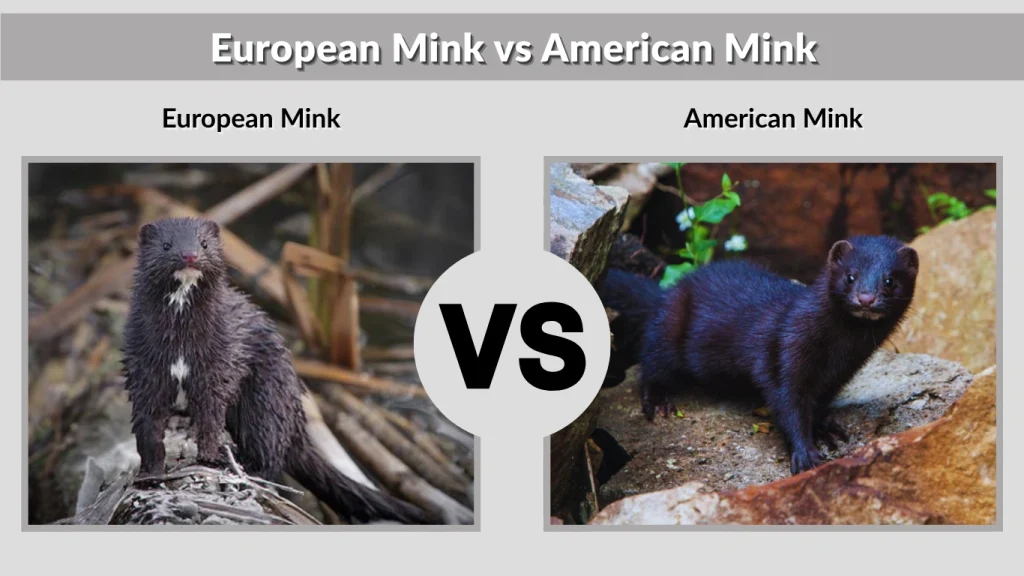
Although they look similar at first glance, there are important differences between the European mink and the American mink.
The European mink is generally smaller and has a more delicate build. Its most recognizable feature is the white marking on both the upper and lower lips, while the American mink typically has white only on the lower lip.
Behaviorally, the American mink is more adaptable. It thrives in a wider range of environments, including coastal areas and human-altered landscapes. This flexibility gives it a competitive advantage.
The introduction of the American mink has not only reduced European mink numbers but has also disrupted native ecosystems. As an invasive species, it alters predator-prey relationships and contributes to biodiversity loss.
Understanding these differences is crucial for conservation programs, as controlling American mink populations is often necessary to protect the European mink.
European Mink Population and Conservation Efforts
With only a few thousand individuals estimated to remain in the wild, urgent conservation action is essential.
Current Population Estimates
The European mink population has declined by more than 90% over the last century. Today, it survives in small, scattered populations across parts of Spain, France, and Eastern Europe. Due to its critically endangered status, it is protected under international conservation agreements.
Conservation Programs
Several conservation strategies are underway to prevent extinction:
- Captive breeding programs
- Reintroduction into suitable habitats
- Habitat restoration projects
- Control of invasive American mink
Captive breeding programs aim to increase population numbers and maintain genetic diversity. Some individuals have been successfully reintroduced into protected areas.
How Conservationists Are Helping
Conservationists monitor wild populations, restore wetlands, and remove invasive mink where possible. International cooperation between governments and wildlife organizations is critical because the species’ range spans multiple countries.
Public awareness also plays an important role. Protecting wetlands benefits not only the European mink but many other plant and animal species that depend on these ecosystems.
Why the European Mink Matters
The European mink is more than just a rare mammal; it is an important part of wetland ecosystems. As a predator, it helps regulate populations of fish, amphibians, and small mammals.
Its presence also serves as an indicator of environmental health. Because it depends on clean water and intact habitats, a stable European mink population suggests a healthy ecosystem. Protecting this species supports broader biodiversity conservation across Europe.
FAQs
How many European mink are left in the wild?
It is estimated that only a few thousand European mink remain in the wild. Populations are small and fragmented, mainly found in parts of Spain, France, Romania, and Eastern Europe. Due to ongoing threats, the species is classified as Critically Endangered.
Where do the European mink live today?
Today, the European mink survives in isolated areas of southwestern Europe and parts of Eastern Europe. It prefers wetlands, riverbanks, marshes, and freshwater ecosystems with dense vegetation for shelter and hunting.
What is the main reason for its decline?
The primary reason for the European mink’s decline is competition with the invasive American mink. Habitat destruction, pollution, disease, and genetic isolation have also significantly contributed to its dramatic population reduction.
Conclusion
The European mink is one of Europe’s most endangered mammals, facing threats from habitat loss, invasive species, and environmental degradation. Once widespread, it now survives only in fragmented populations. However, conservation efforts offer hope. By protecting wetlands, managing invasive species, and supporting breeding programs, it may still be possible to prevent extinction. Safeguarding the European mink ultimately means preserving Europe’s rich biodiversity for future generations.