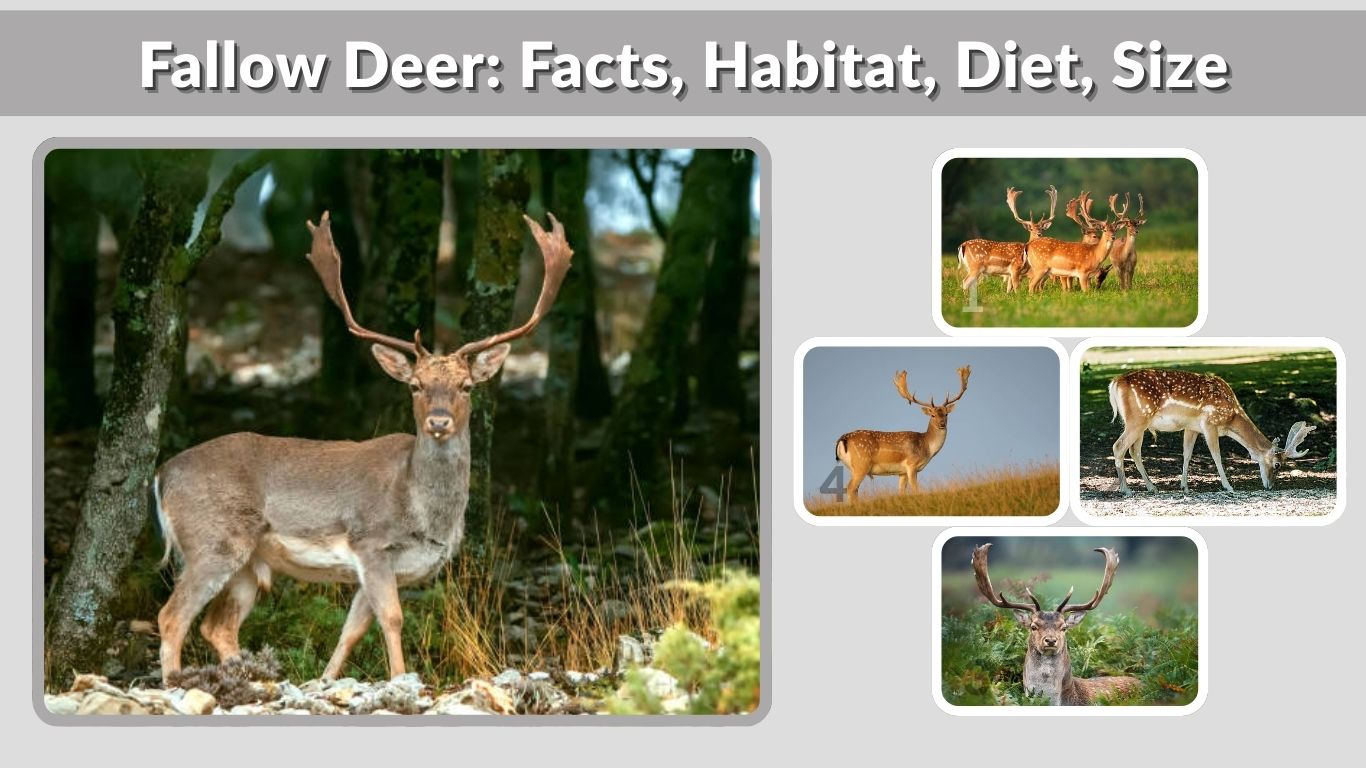
The fallow deer (Dama dama) is one of the most visually distinctive deer species in the world. Recognized for its spotted coat, palmate antlers, and wide range of coat color variations, the fallow deer has a long history of association with humans. Originally native to the Mediterranean region, this species has been widely introduced across Europe and other parts of the world. Understanding fallow deer characteristics, size, habitat, and distribution helps explain why they thrive in both natural and managed landscapes.
What Is a Fallow Deer?
A fallow deer is a medium-sized deer species known for its elegant appearance and social behavior. Unlike many other deer species, fallow deer commonly live in herds throughout much of the year. These herds often consist of females and young, while adult males may form separate groups outside the breeding season.
Fallow deer are generally calm and adaptable animals. They are active mainly during early morning and late evening, which helps them avoid predators and human disturbance.
Fallow Deer Scientific Name and Classification
The fallow deer scientific name is Dama dama. This species belongs to the deer family Cervidae and is the only living member of the genus Dama. It is closely related to other Old World deer species, such as red deer and sika deer.
Taxonomic classification:
- Kingdom: Animalia
- Phylum: Chordata
- Class: Mammalia
- Order: Artiodactyla
- Family: Cervidae
- Genus: Dama
- Species: Dama dama
There are two recognized subspecies: the European fallow deer and the Persian fallow deer, the latter being much rarer.
Fallow Deer Physical Characteristics
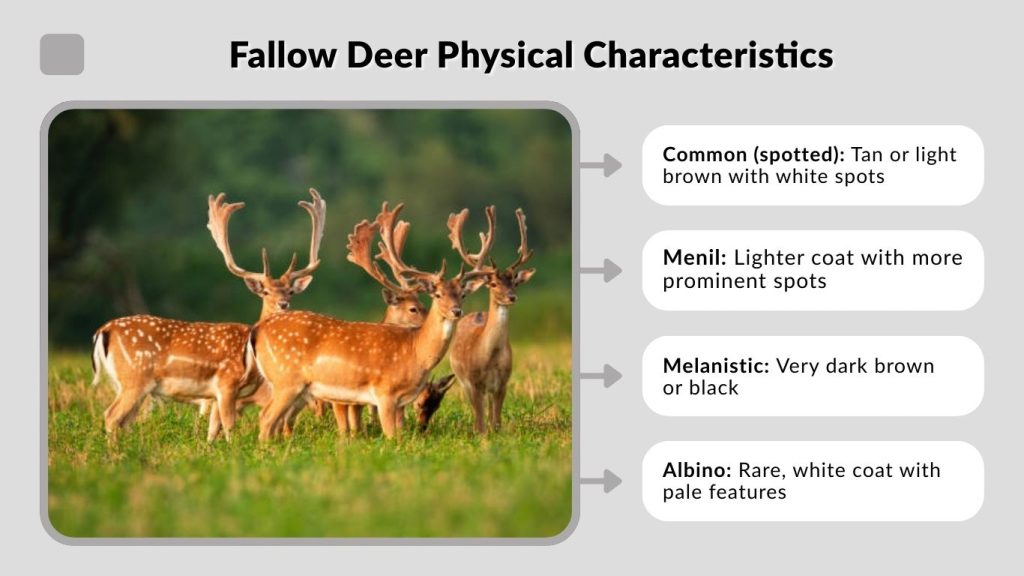
Fallow deer are best known for their striking physical features. One of the most recognizable fallow deer characteristics is the palmate shape of the antlers found on males, known as bucks. These broad, flattened antlers set fallow deer apart from other deer species with branching antlers.
Another defining feature is their coat, which comes in several color variations:
- Common (spotted): Tan or light brown with white spots
- Menil: Lighter coat with more prominent spots
- Melanistic: Very dark brown or black
- Albino: Rare, white coat with pale features
The coat typically darkens in winter, and spots may become less visible.
Fallow Deer Size and Weight
Fallow deer size places them between smaller species like roe deer and larger species like red deer. Their moderate size contributes to their adaptability and success in a wide range of environments.
On average:
- Adult fallow deer stand about 2.8 to 3.2 feet tall at the shoulder
- Body length ranges from 4.5 to 6 feet
In terms of weight:
- Females typically weigh between 90 and 150 pounds
- Males usually weigh 130 to 220 pounds
Bucks are noticeably larger and heavier than does, especially during the breeding season.
Fallow Deer Habitat
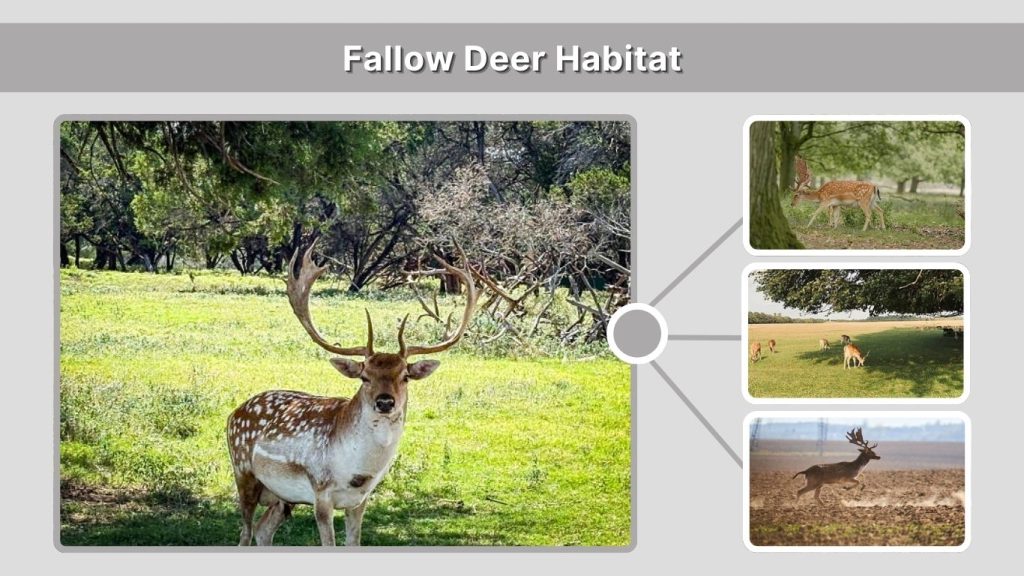
The fallow deer habitat includes a variety of environments, but they show a strong preference for areas that offer both open grazing land and nearby cover. This makes mixed woodlands and grasslands ideal.
Typical fallow deer habitats include:
- Deciduous and mixed forests
- Parklands and estates
- Grasslands and open fields
- Agricultural landscapes
Their tolerance of human-managed environments has allowed fallow deer to thrive in parks and private lands.
Fallow Deer Range and Distribution
The fallow deer range originally covered parts of the eastern Mediterranean and Middle East. Over centuries, fallow deer were introduced to many other regions by humans for hunting and ornamental purposes.
Today, fallow deer are commonly found in:
- Much of Europe, especially the United Kingdom
- Parts of North America
- Australia and New Zealand
Introduced populations are often well established and carefully managed to balance ecological impact and land use.
Fallow Deer Diet and Feeding Behavior
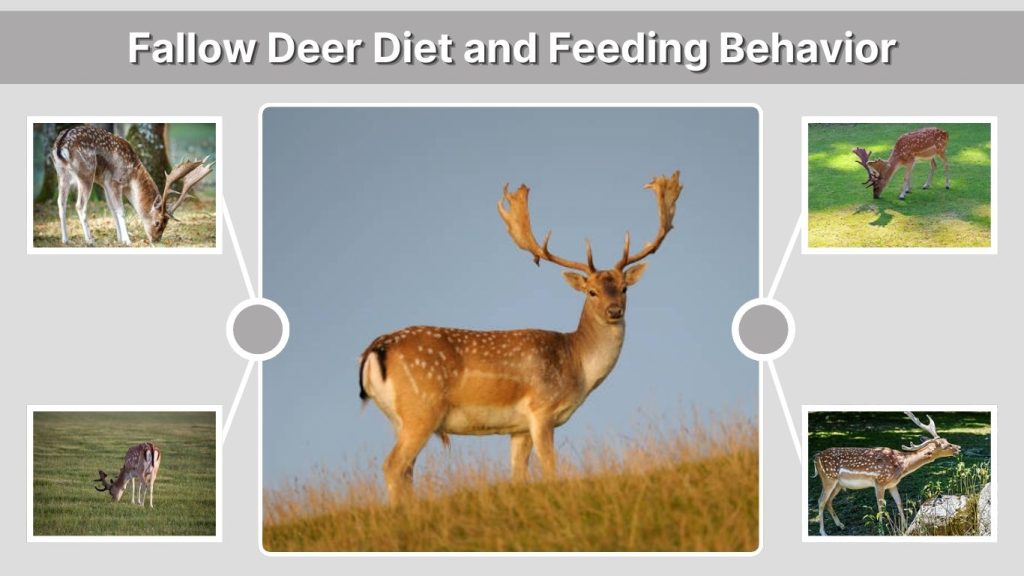
Fallow deer are herbivores with flexible feeding habits, allowing them to thrive in both natural and human-managed environments. They are considered mixed feeders, meaning they graze on grasses and also browse on leaves and shoots depending on availability.
A typical fallow deer diet includes:
- Grasses and herbs
- Leaves, buds, and young shoots
- Acorns, chestnuts, and other nuts
- Agricultural crops when accessible
Seasonal changes influence feeding behavior. In spring and summer, fallow deer rely on fresh vegetation rich in nutrients. During autumn, they consume energy-dense foods to build fat reserves. In winter, they feed on woody plants, bark, and stored plant matter.
Fallow Deer Life Cycle
The fallow deer life cycle follows a seasonal pattern similar to other deer species. Fawns are usually born in late spring or early summer when food resources are abundant.
The main stages of the life cycle include:
- Fawn – Born after a gestation period of about 230 days
- Juvenile – Rapid growth during the first year
- Adult – Sexual maturity reached at around 16 months
- Older adult – Gradual physical decline
In the wild, fallow deer typically live between 12 and 16 years, though many individuals have shorter lifespans due to predation and human activity.
Fallow Deer Reproduction and Rutting Season
The breeding season, known as the rut, usually occurs in autumn. During this time, male fallow deer, called bucks, become highly vocal and territorial. One of the most distinctive behaviors during the rut is the buck’s loud, groaning call used to attract females and warn rival males.
Unlike some deer species that defend harems, fallow deer often use a lek-like mating system, where bucks display in specific areas to attract females. After mating, females carry their young through winter and give birth the following spring.
Fallow Deer vs Other Deer Species
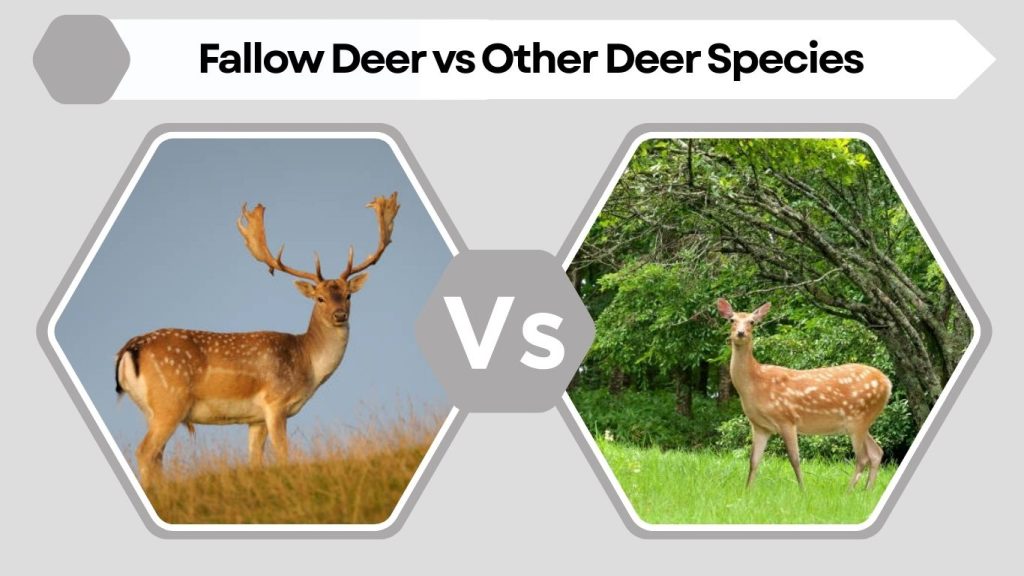
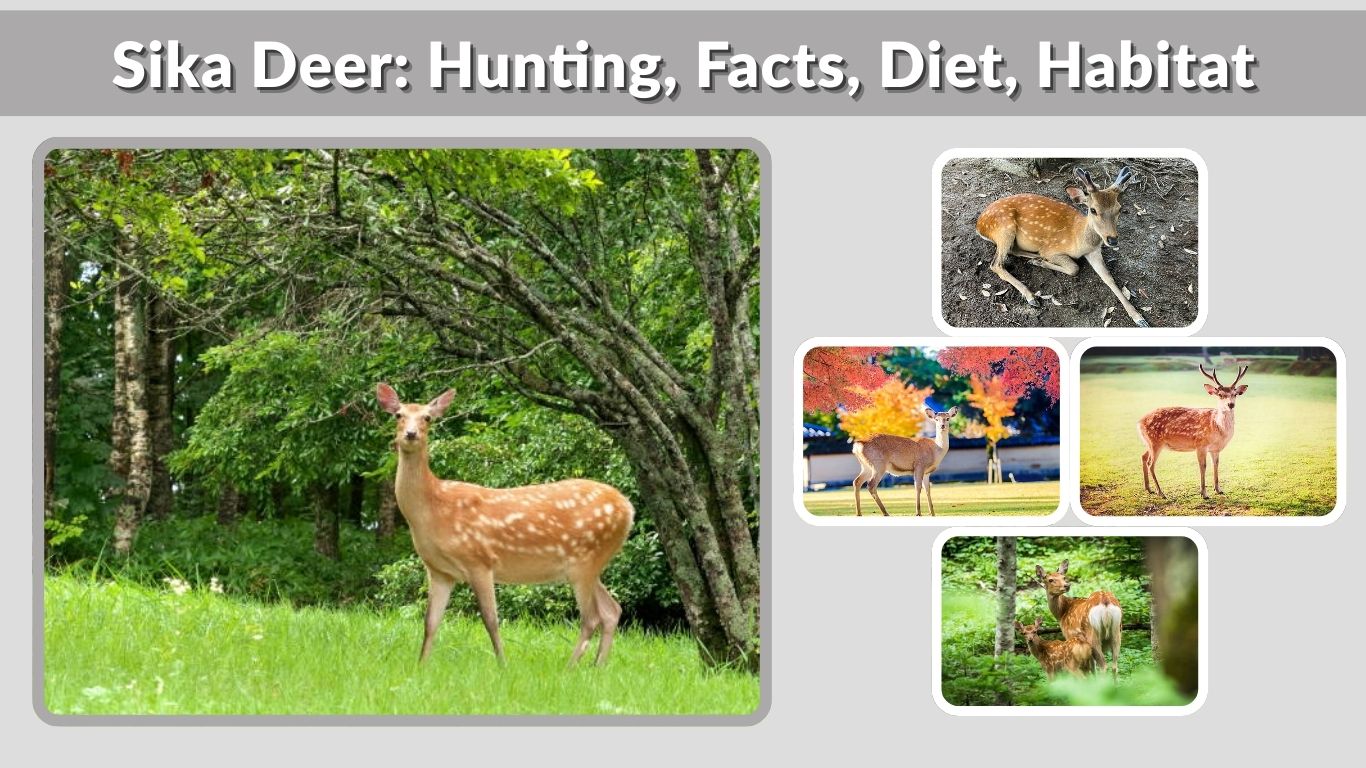
Comparing fallow deer with other species highlights their unique traits. When looking at fallow deer vs red deer, fallow deer are smaller and have palmate antlers, while red deer are larger with branching antlers. Compared to sika deer, fallow deer are heavier and less spotted year-round.
These differences in size, antler shape, and behavior allow fallow deer to coexist with other species in overlapping habitats.
Fallow Deer and Humans
Fallow deer have a long history of interaction with humans, particularly in Europe. They were commonly kept in royal parks and estates for hunting and ornamental purposes. Today, fallow deer are still found in managed parks, nature reserves, and private lands.
While they are admired for their appearance, high population densities can lead to overgrazing and crop damage. As a result, population control through regulated hunting and habitat management is often necessary.
Conservation and Population Management
Globally, fallow deer populations are stable or increasing, especially in regions where they have been introduced. However, the Persian fallow deer is considered endangered and requires targeted conservation efforts.
Management strategies focus on:
- Habitat protection and monitoring
- Population control where numbers are high
- Conservation breeding programs for endangered subspecies
These efforts help maintain healthy fallow deer populations while reducing ecological impact.
FAQs
What is a fallow deer?
A fallow deer is a medium-sized deer species known for its spotted coat and distinctive palmate antlers found on males. Native to the Mediterranean region, fallow deer have been widely introduced elsewhere and are commonly found in woodlands, parklands, and managed landscapes.
What is the scientific name of the fallow deer?
The scientific name of the fallow deer is Dama dama. It belongs to the deer family Cervidae and is the only living species in the genus Dama, making it unique among Old World deer species.
Where do fallow deer live?
Fallow deer live in mixed woodlands, grasslands, parks, and agricultural areas. Although originally native to the eastern Mediterranean, they are now widespread across Europe, the United Kingdom, North America, Australia, and New Zealand due to human introduction.
What do fallow deer eat?
Fallow deer are herbivores that eat grasses, leaves, shoots, nuts, and agricultural crops. Their diet changes seasonally, focusing on fresh vegetation in spring and summer and shifting to woody plants, bark, and stored food sources during winter.
How can you identify a fallow deer?
Fallow deer can be identified by their palmate antlers, spotted or dark-colored coats, white rump patch with a black outline, and relatively small size compared to red deer. Their coat color varies widely, which also helps distinguish them from other species.