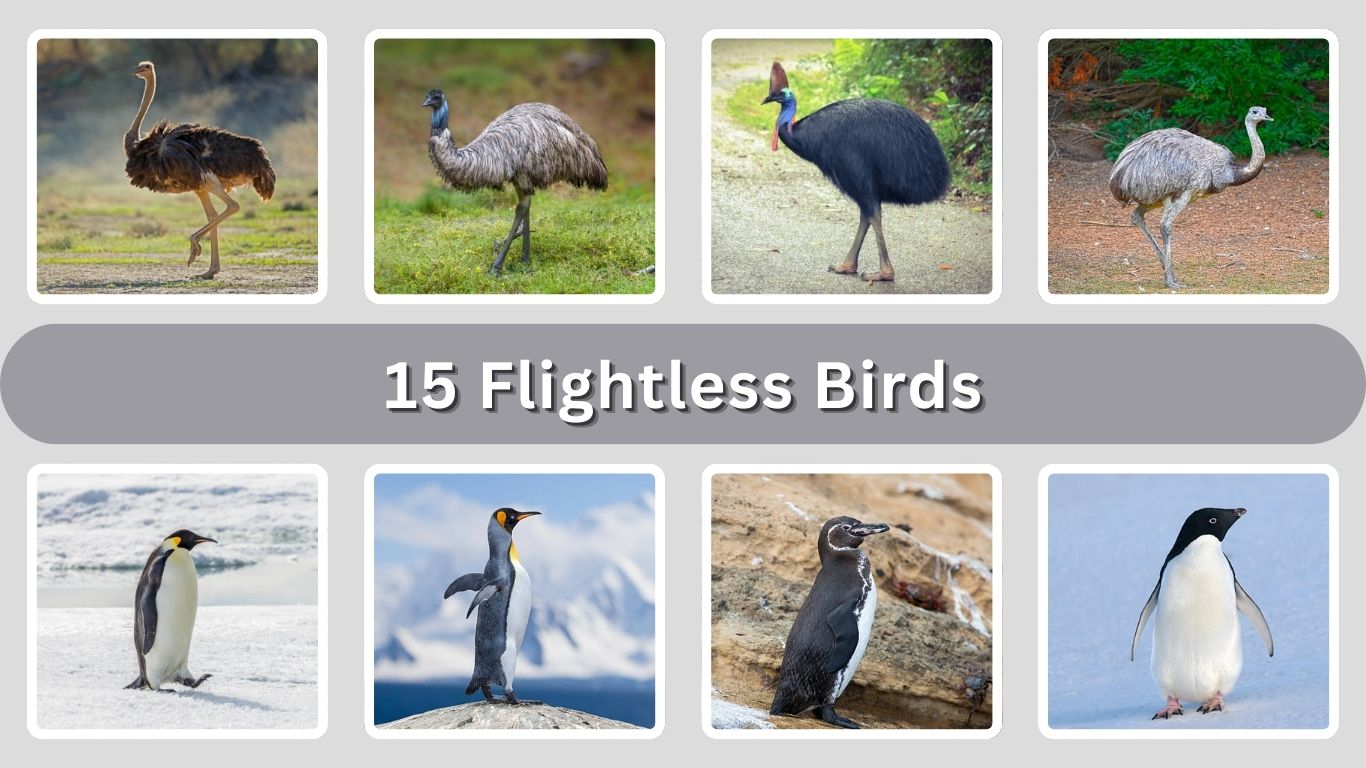
Flightless birds are fascinating examples of how species adapt to their environments. Unable to fly, these birds have evolved strong legs, powerful bodies, or excellent swimming abilities to survive. Found across continents and isolated islands, flightless birds range from the massive ostrich to the tiny Inaccessible Island Rail. Each species has unique behaviors, diets, and habitats shaped by evolution. Despite their differences, many flightless birds face similar challenges today, including habitat loss and introduced predators.
1. Ostrich
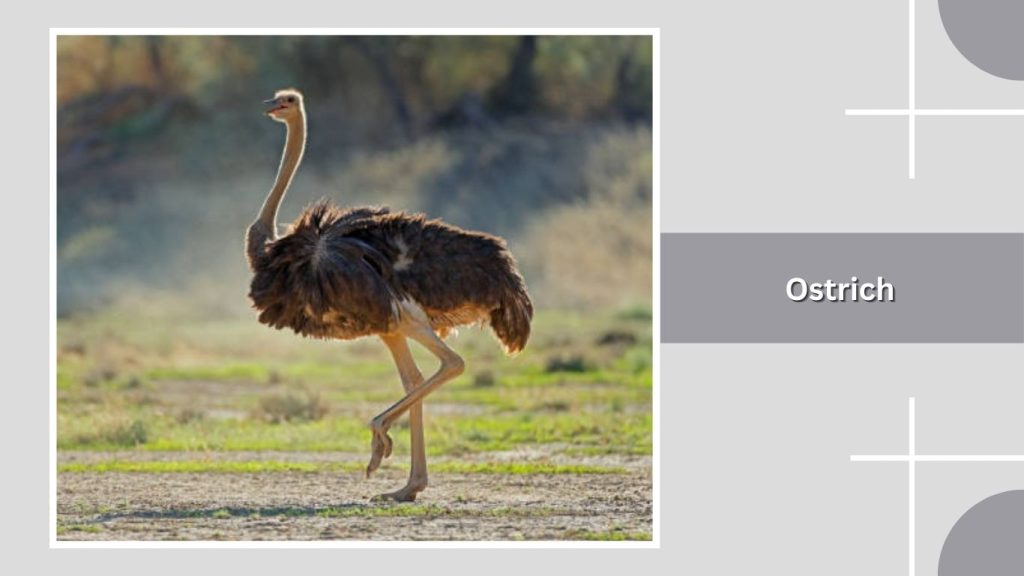
The Ostrich is the largest and heaviest living bird in the world and is completely flightless. Known for its powerful legs and incredible running speed, the ostrich is a remarkable example of adaptation to life on open land.
Identification
- Very large body size, tallest of all birds
- Long neck and long bare legs
- Small head with large eyes
- Males have black feathers with white wing and tail feathers
- Females are brownish-gray
Habitat
Ostriches inhabit open landscapes such as savannas, grasslands, deserts, and semi-arid plains. They prefer wide, open areas that allow them to spot predators from a distance and rely on speed for escape.
Behavior
Ostriches are social birds and often live in small groups or mixed herds with grazing mammals. When threatened, they can run at speeds up to 70 km/h (43 mph). They also use powerful kicks to defend themselves against predators.
Diet
Their diet consists mainly of plants, seeds, grasses, roots, and leaves. They also eat insects and small animals occasionally. Ostriches swallow stones to help grind food in their gizzard.
Lifespan
In the wild, ostriches typically live between 30 and 40 years, while individuals in captivity may live even longer under proper care.
2. Emu
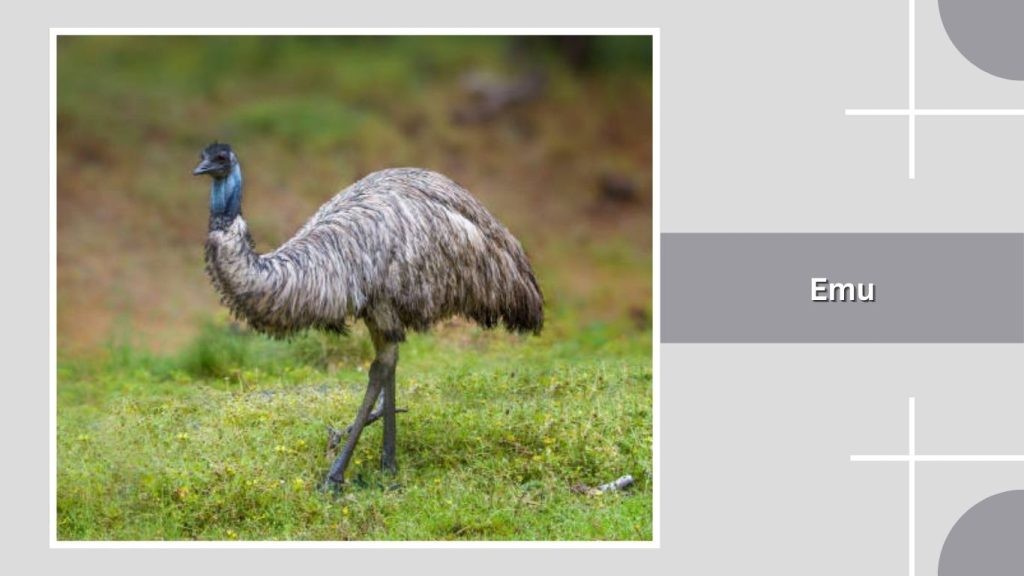
The Emu is the second-largest living bird in the world and one of the most well-known flightless birds. Native to Australia, it is famous for its long legs, fast running ability, and nomadic lifestyle across vast open landscapes.
Identification
- Large, tall body with shaggy brown feathers
- Long neck and strong legs
- Small wings hidden beneath feathers
- Large feet with three toes
- Dark eyes and long beak
Habitat
Emus are found in a wide range of environments including grasslands, savannas, open woodlands, shrublands, and semi-arid regions. They avoid dense forests and extremely dry deserts, preferring areas where food and water are seasonally available.
Behavior
Emus are mostly solitary but may form loose groups during migration or feeding. They are excellent runners and can reach speeds of up to 50 km/h (31 mph). Emus are known for their deep drumming and booming calls, produced using a specialized throat pouch.
Diet
Their diet includes grasses, seeds, fruits, flowers, and insects. Emus play an important role in seed dispersal across Australia, as many seeds pass through their digestive system intact.
Lifespan
In the wild, Emus typically live around 10 to 20 years, though some individuals can live longer under favorable conditions.
3. Cassowary

The Cassowary is a large, powerful flightless bird known for its striking appearance and reputation as one of the most dangerous birds in the world. It plays a vital role in rainforest ecosystems as a major seed disperser.
Identification
- Large, heavy body with coarse black feathers
- Bright blue and red skin on the head and neck
- Prominent casque (helmet-like structure) on the head
- Strong legs with sharp claw on each foot
- Short, reduced wings
Habitat
Cassowaries inhabit dense tropical rainforests, forest edges, and swampy areas. They prefer thick vegetation that provides cover and an abundance of fallen fruit.
Behavior
Cassowaries are usually solitary and shy but can become aggressive if threatened. They are capable of delivering powerful kicks with their sharp claws. Despite their fearsome reputation, they generally avoid humans and rely on stealth to move through forests.
Diet
Their diet consists mainly of fallen fruits, berries, seeds, and fungi. Cassowaries are crucial for dispersing the seeds of many rainforest plants, some of which depend almost entirely on them.
Lifespan
In the wild, cassowaries typically live around 20 to 40 years, depending on species and environmental conditions.
4. Kiwi
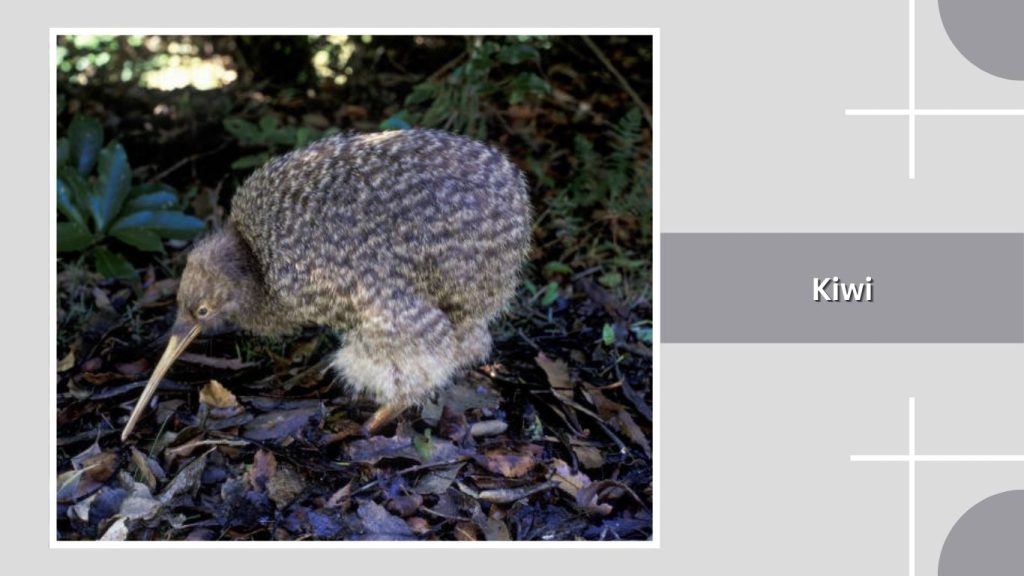
The Kiwi is a small, nocturnal, flightless bird native to New Zealand. Despite its tiny wings, it is well adapted to life on the forest floor and is famous for its long bill and strong sense of smell.
Identification
- Small, round body covered with hair-like feathers
- Very small, hidden wings
- Long, slender bill with nostrils at the tip
- Short, strong legs
- Brown to gray plumage
Habitat
Kiwis live in forests, scrublands, grasslands, and coastal areas. They prefer dense vegetation and soft soil, which make it easier to probe for food and dig burrows.
Behavior
Kiwis are nocturnal and highly territorial. They use their strong sense of smell to locate food at night and spend the day resting in burrows or hollow logs. Mated pairs often maintain long-term territories.
Diet
Their diet includes insects, worms, larvae, spiders, and small crustaceans. They locate prey by sniffing the ground rather than relying on sight.
Lifespan
In the wild, kiwis can live 25 to 50 years, though many face threats from predators and habitat loss.
5. Rhea
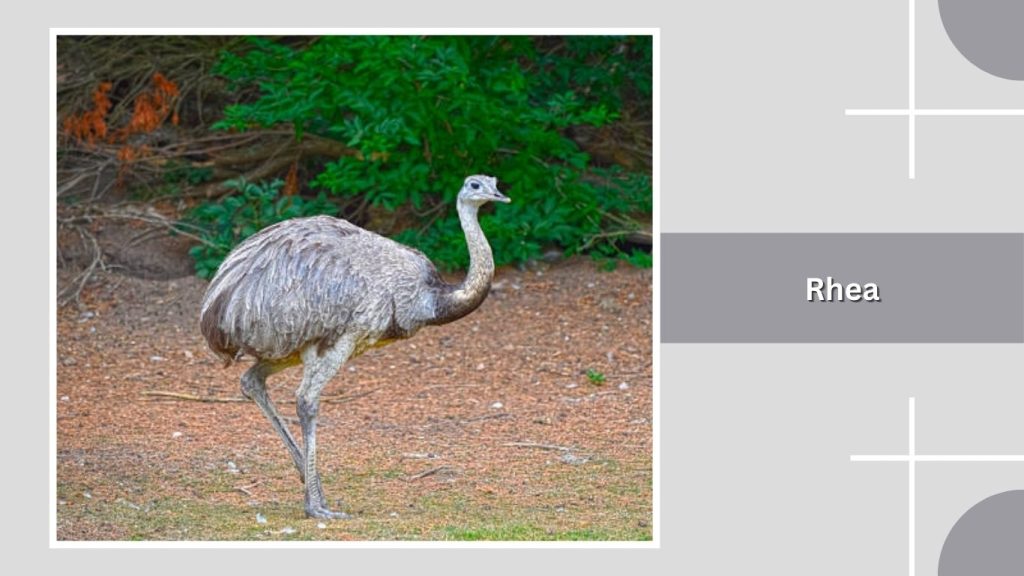
The Rhea is a large, flightless bird native to South America and is often compared to the ostrich due to its size and long legs. Although smaller than an ostrich, rheas are fast runners and well adapted to open landscapes.
Identification
- Large, tall body with long legs and neck
- Gray, brown, or white feathers depending on species
- Broad wings used for balance while running
- Long, powerful legs with three toes
- Medium-sized head with a flat bill
Habitat
Rheas inhabit open grasslands, pampas, savannas, scrublands, and agricultural areas. They prefer wide, open spaces that allow them to detect predators early and escape by running.
Behavior
Rheas are generally social and may form small groups outside the breeding season. During breeding, males become territorial and are responsible for building nests, incubating eggs, and raising chicks from multiple females.
Diet
Their diet includes grasses, seeds, fruits, roots, insects, and small vertebrates. Rheas are opportunistic feeders and adjust their diet based on seasonal availability.
Lifespan
In the wild, rheas typically live around 10 to 15 years, though they may live longer in protected environments.
6. Emperor Penguin
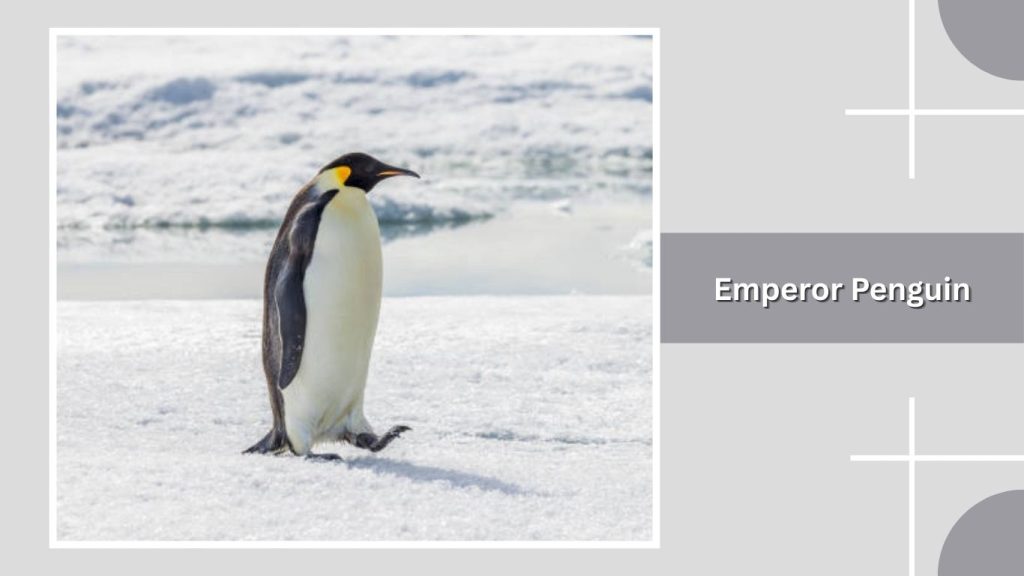
The Emperor Penguin is the tallest and heaviest of all penguin species and is perfectly adapted to life in extreme Antarctic conditions. As a flightless seabird, it uses its wings as powerful flippers for swimming rather than flying.
Identification
- Large, robust body with upright posture
- Black head and back with white belly
- Yellow to orange patches on the sides of the neck and ears
- Short, stiff wings adapted as flippers
- Thick layer of fat for insulation
Habitat
Emperor Penguins live exclusively in Antarctica, spending most of their lives at sea and returning to stable sea ice to breed. They endure some of the coldest temperatures on Earth, often breeding during the harsh Antarctic winter.
Behavior
These penguins are highly social and form large colonies for breeding. To survive extreme cold, they huddle together and rotate positions to share warmth. Males are famous for incubating eggs on their feet for about two months while fasting.
Diet
Their diet mainly consists of fish, squid, and krill. Emperor Penguins are excellent divers and can dive to great depths, holding their breath for extended periods while hunting.
Lifespan
In the wild, Emperor Penguins typically live around 15 to 20 years, though some individuals may live longer under favorable conditions.
7. King Penguin
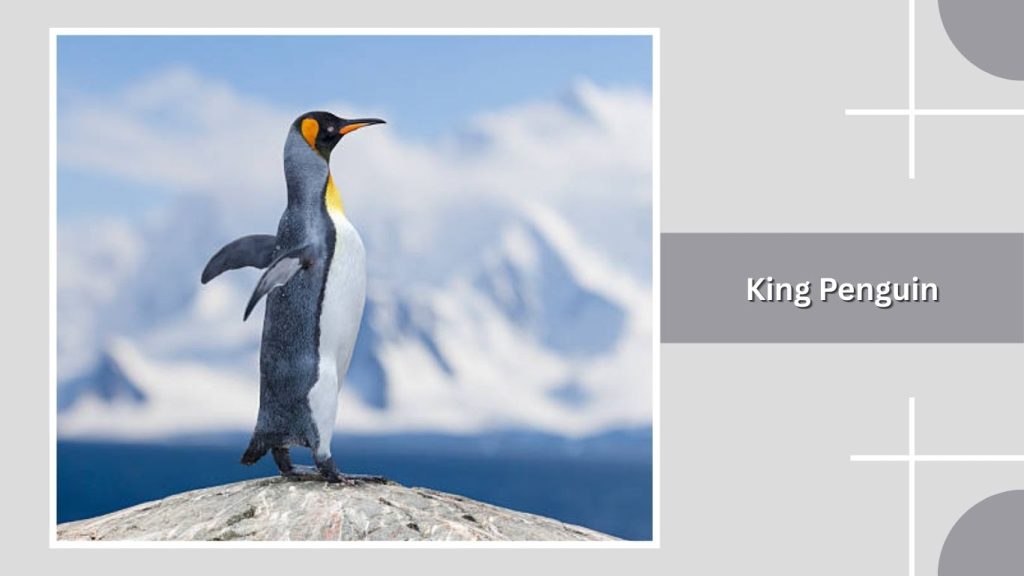
The King Penguin is the second-largest penguin species and is known for its elegant appearance and vibrant orange markings. Like all penguins, it is flightless and uses its wings as flippers to move swiftly through the water.
Identification
- Tall, sleek body with upright posture
- Black head and back with a white belly
- Bright orange patches on the neck and upper chest
- Long, slender flippers
- Thick layer of insulating fat
Habitat
King Penguins are found on subantarctic islands and coastal areas, breeding on beaches, rocky shores, and open plains rather than ice. They prefer cold oceans rich in fish and usually stay close to productive feeding grounds.
Behavior
These penguins are highly social and breed in large colonies that can number in the thousands. Their breeding cycle is unusually long, lasting over a year. They communicate using loud, trumpet-like calls that help individuals recognize mates and chicks among dense colonies.
Diet
Their diet consists mainly of small fish, especially lanternfish, along with squid and crustaceans. King Penguins are strong swimmers and skilled deep divers.
Lifespan
In the wild, King Penguins typically live around 15 to 25 years, depending on environmental conditions and food availability.
8. Galápagos Penguin
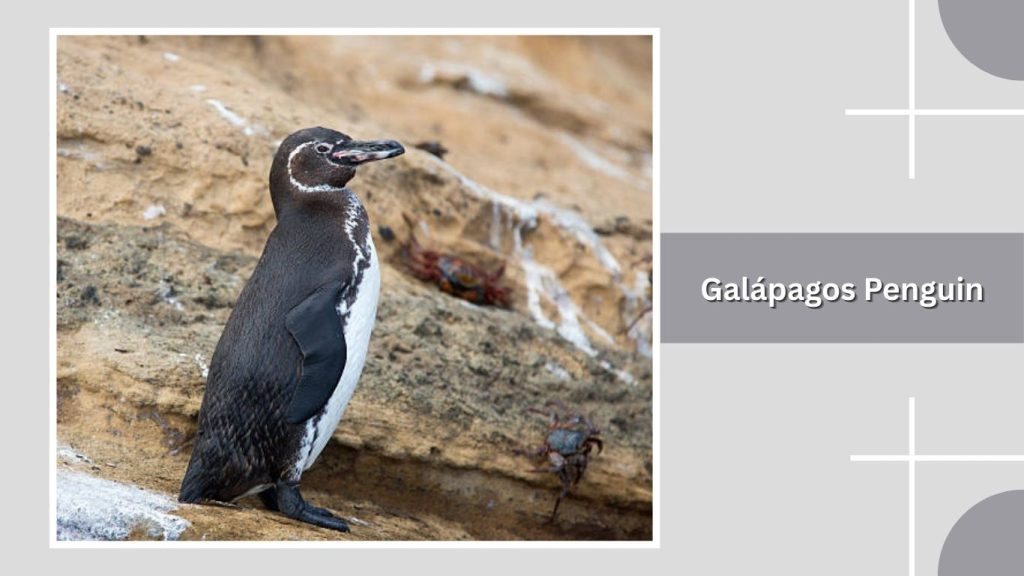
The Galápagos Penguin is the only penguin species found north of the equator. It is the smallest penguin in the Americas and is uniquely adapted to warm, tropical conditions while remaining completely flightless.
Identification
- Small, compact body compared to other penguins
- Black head and back with white belly
- Thin white stripe running from the eye to the chin
- Short, stiff flippers used for swimming
- Slim bill adapted for catching small fish
Habitat
Galápagos Penguins live along rocky coastlines, lava shores, and sheltered bays of the Galápagos Islands. They rely on cold ocean currents that bring nutrient-rich waters, allowing them to survive in an otherwise warm climate.
Behavior
These penguins are agile swimmers and spend much of their time in the water hunting. They rest and nest in shaded crevices, caves, or lava cracks to avoid overheating. Galápagos Penguins are generally seen in small groups or pairs rather than large colonies.
Diet
Their diet consists mainly of small fish such as sardines and mullet, along with crustaceans. Food availability is closely tied to ocean conditions, especially changes caused by El Niño events.
Lifespan
In the wild, Galápagos Penguins typically live around 15 to 20 years, though survival rates can vary greatly due to climate fluctuations and food supply.
9. Adélie Penguin
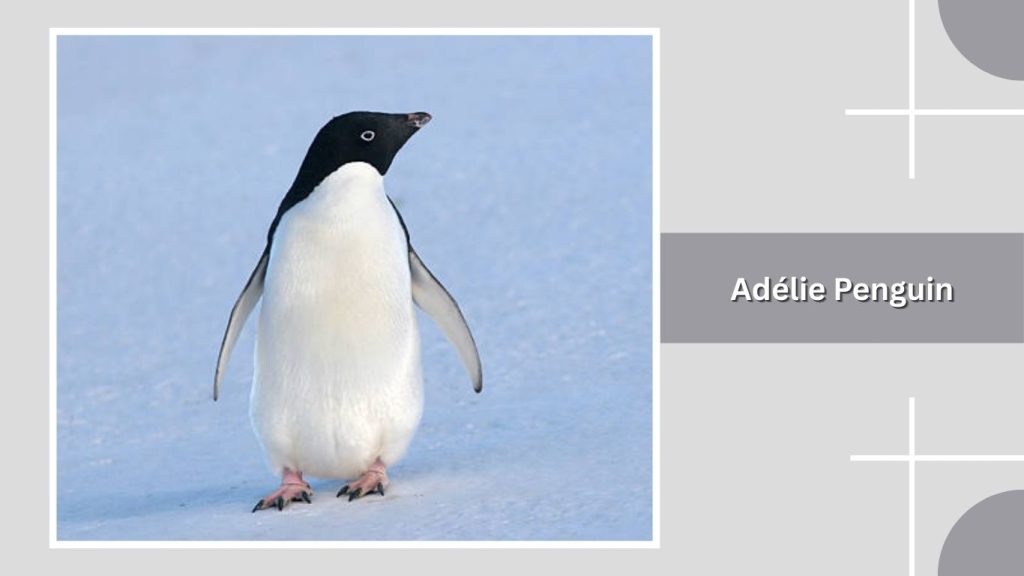
The Adélie Penguin is a small, hardy flightless bird best known for its bold black-and-white appearance and its ability to thrive in some of the harshest conditions on Earth. It is one of the most studied penguin species in Antarctica.
Identification
- Compact body with upright stance
- Black head and back with a clean white belly
- Distinct white ring around the eyes
- Short, stiff flippers
- Strong, short bill
Habitat
Adélie Penguins live along the Antarctic coastline and nearby islands. They breed on ice-free rocky shores and spend much of the year at sea, returning to land only during the breeding season.
Behavior
These penguins are highly social and form large breeding colonies that can include thousands of individuals. They are energetic on land and skilled swimmers in the water. Adélies are known for their loud calls and aggressive defense of nesting sites.
Diet
Their diet mainly consists of krill, fish, and squid. They rely heavily on sea ice ecosystems, where much of their prey is found.
Lifespan
In the wild, Adélie Penguins typically live around 10 to 20 years, depending on environmental conditions and food availability.
10. Southern Rockhopper Penguin
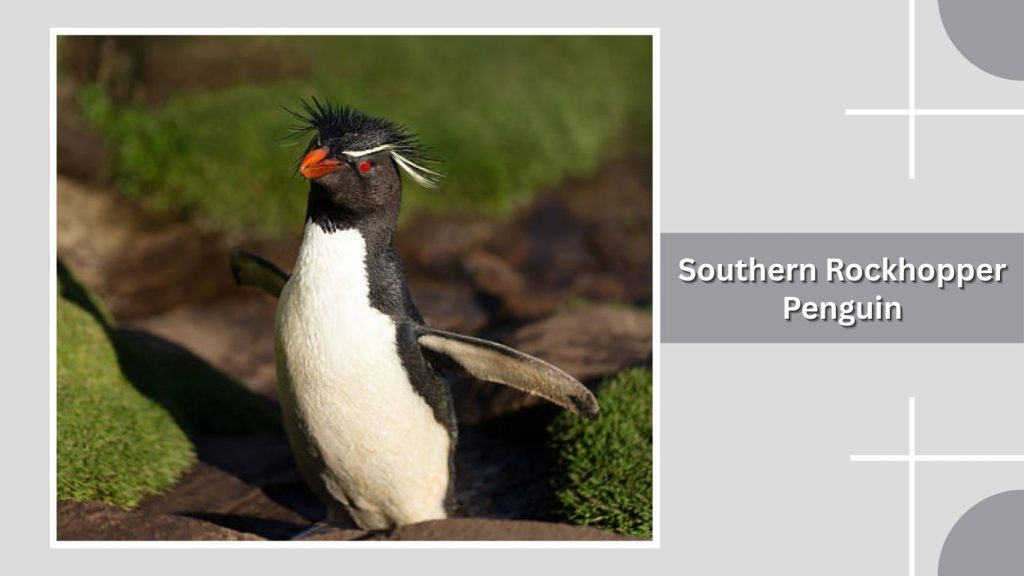
The Southern Rockhopper Penguin is a small but tough flightless bird known for its spiky yellow crest feathers and energetic personality. It gets its name from its habit of hopping over rocks rather than sliding on its belly like many other penguins.
Identification
- Small, compact body
- Black head and back with white underparts
- Bright yellow eyebrow-like crests extending behind the eyes
- Red eyes and short, thick bill
- Strong flippers adapted for swimming
Habitat
This species breeds on rocky, windswept subantarctic islands and coastal cliffs. It prefers rugged shorelines with access to nutrient-rich cold waters for feeding.
Behavior
Southern Rockhopper Penguins are highly active and aggressive compared to other penguins. They are excellent climbers and jumpers, using their strong legs to navigate steep, rocky terrain. During the breeding season, they form dense, noisy colonies.
Diet
Their diet includes krill, small fish, squid, and other marine crustaceans. They forage close to shore but can travel long distances at sea in search of food.
Lifespan
In the wild, Southern Rockhopper Penguins typically live around 10 to 15 years, though many face threats from climate change and overfishing.
11. Takahe
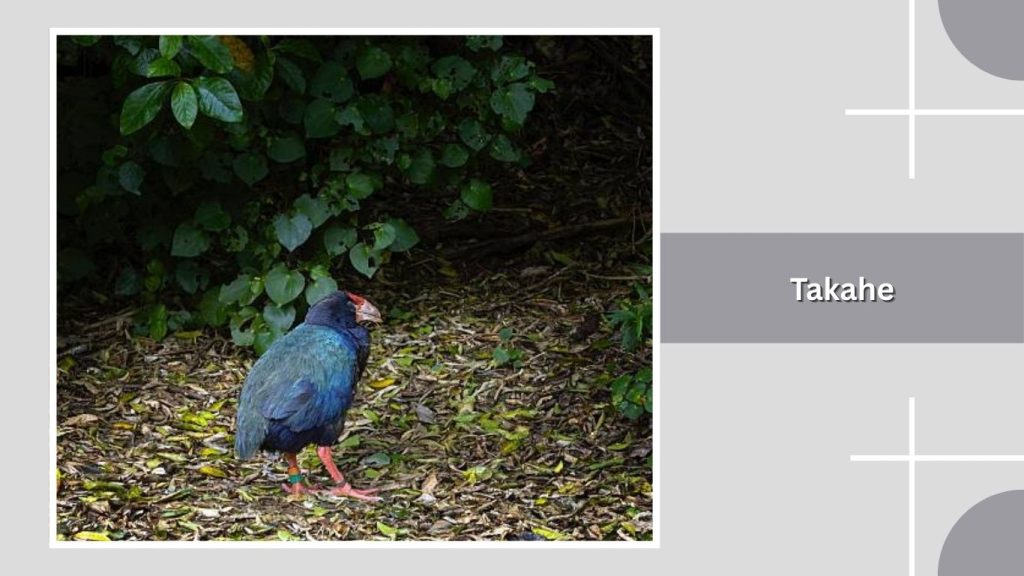
The Takahe is a large, colorful, flightless rail native to New Zealand. Once thought to be extinct, it is now one of the country’s most famous conservation success stories due to intensive protection efforts.
Identification
- Large, stocky body
- Deep blue and green plumage
- Bright red, thick bill and frontal shield
- Short wings and strong legs
- Robust, chicken-like appearance
Habitat
Takahē inhabit alpine grasslands, tussock fields, and subalpine valleys. Today, they are mostly restricted to protected reserves and predator-free islands where suitable vegetation and safety are available.
Behavior
Takahē are mostly ground-dwelling and move slowly while foraging. They are territorial birds, usually found in pairs or small family groups. They communicate using loud, resonant calls and are most active during daylight hours.
Diet
Their diet consists mainly of grasses, leaves, shoots, seeds, and stems. Takahē use their strong bills to strip nutritious parts from plants, especially tussock grasses.
Lifespan
In the wild, takahē can live 15 to 20 years, and some individuals may live longer in managed conservation environments.
12. Kakapo
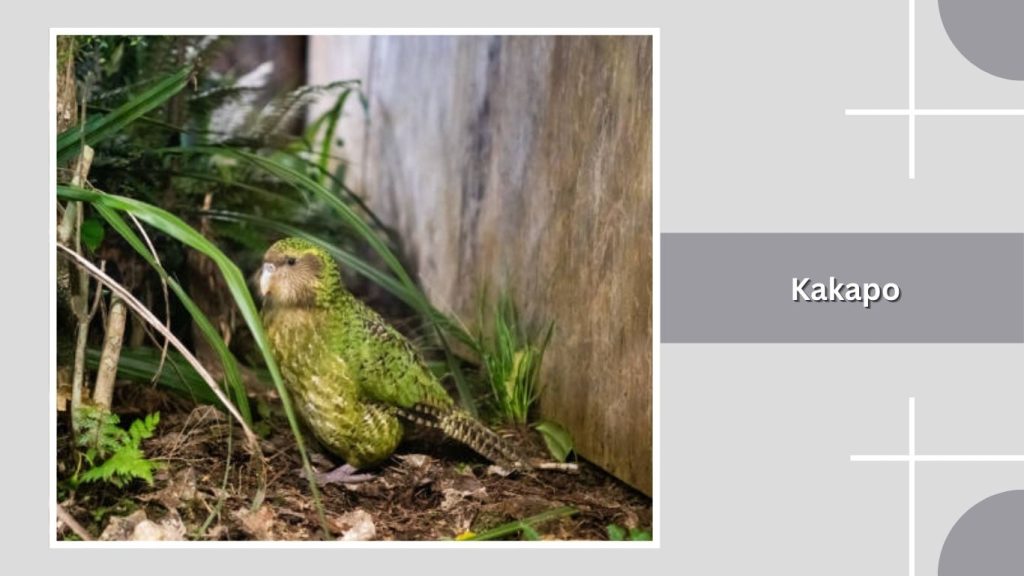
The Kakapo is a unique, nocturnal, flightless parrot native to New Zealand. Known for its owl-like face and gentle nature, it is one of the rarest birds in the world and a major focus of conservation efforts.
Identification
- Large, heavy-bodied parrot
- Green and yellow mottled feathers for camouflage
- Rounded face with forward-facing eyes
- Short wings and long tail
- Strong, curved bill
Habitat
Kakapos live in forests, shrublands, and alpine regions, mainly on predator-free islands. They prefer areas with dense vegetation that provide shelter and access to native plants.
Behavior
Kakapos are nocturnal and spend most of their time on the ground. They are excellent climbers, using their beaks and claws to move through trees. Males perform booming calls at night during the breeding season to attract females.
Diet
Their diet consists of leaves, shoots, seeds, fruits, roots, and bark. Kakapos have a slow metabolism and rely heavily on seasonal food availability.
Lifespan
Kakapos are long-lived birds and can live 60 to 90 years, making them one of the longest-living bird species.
13. Weka
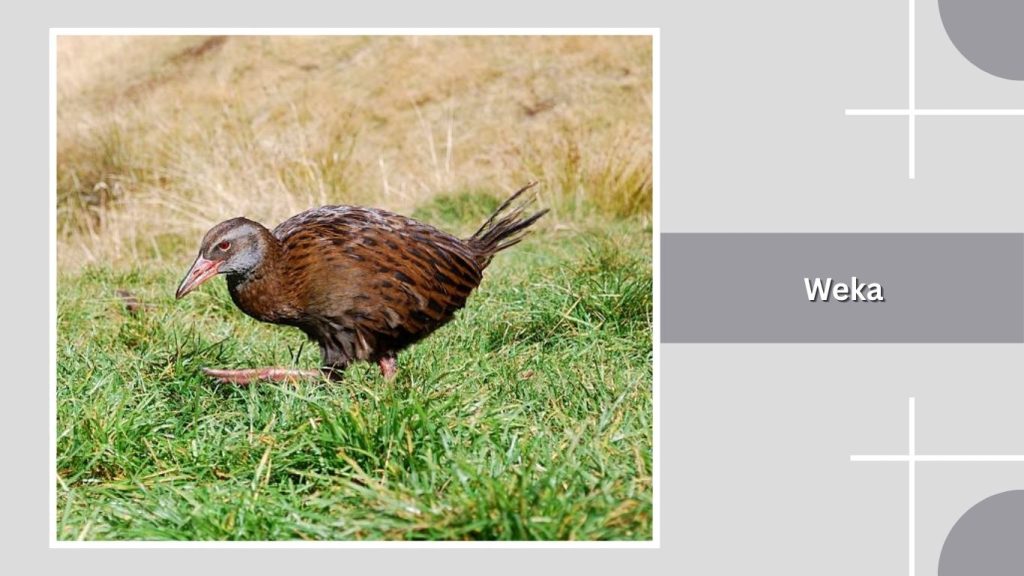
The Weka is a curious, ground-dwelling, flightless bird native to New Zealand. Known for its bold and inquisitive nature, it often interacts with humans and is famous for stealing shiny or unattended objects.
Identification
- Medium-sized, stocky body
- Brown, gray, or reddish-brown plumage
- Short, sturdy wings
- Strong legs and feet adapted for walking
- Long, slightly curved bill
Habitat
Wekas inhabit forests, grasslands, coastal areas, scrublands, and even farmland. They are highly adaptable and can live in both natural and human-modified environments.
Behavior
Wekas are intelligent and highly curious birds. They are mostly active during the day and spend much of their time walking, running, and probing the ground. They are territorial and can be aggressive when defending their space or food.
Diet
Their diet is omnivorous and includes insects, worms, fruits, seeds, carrion, eggs, and small animals. This flexible diet helps them survive in varied habitats.
Lifespan
In the wild, Wekas typically live around 7 to 10 years, though some individuals may live longer under favorable conditions.
14. Flightless Cormorant
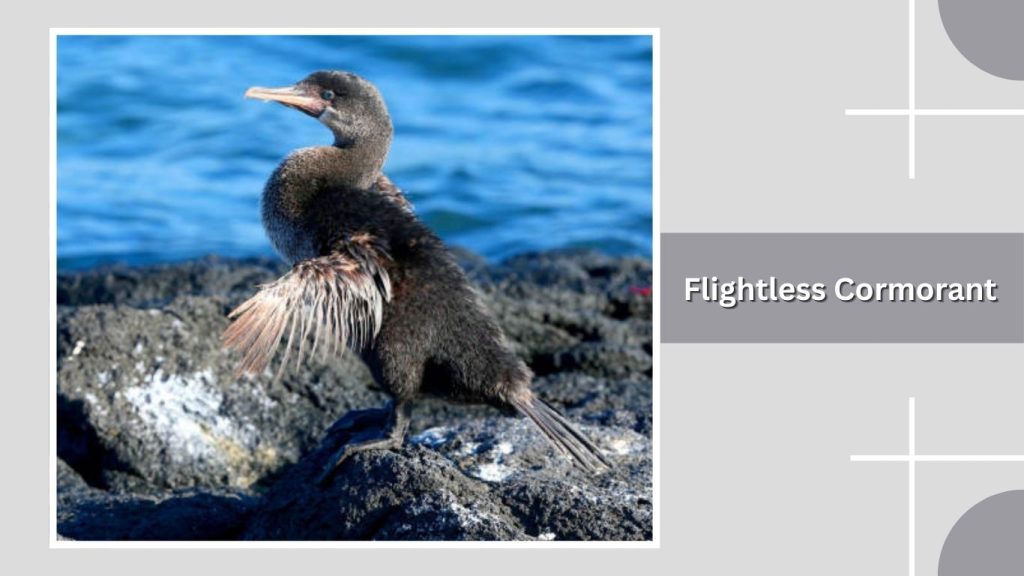
The Flightless Cormorant is a rare seabird found only in the Galápagos Islands. Unlike other cormorants, it has lost the ability to fly and instead relies entirely on swimming and diving to survive.
Identification
- Large, bulky body
- Short, stubby wings unsuitable for flight
- Dark blackish-brown upperparts
- Pale underside and throat
- Long neck with a hooked bill
Habitat
This species inhabits rocky coastlines and shallow coastal waters of the Galápagos Islands. It prefers areas with rich marine life and calm waters for efficient diving.
Behavior
Flightless Cormorants are excellent swimmers and divers, using their strong legs and webbed feet to chase prey underwater. They often perch on rocks with wings spread to dry after diving. They are generally solitary or seen in pairs.
Diet
Their diet consists mainly of fish, octopus, eels, and other marine animals. They forage close to shore and usually dive to shallow depths compared to other cormorants.
Lifespan
In the wild, Flightless Cormorants typically live around 15 to 20 years, though their restricted range makes them vulnerable to environmental changes.
15. Inaccessible Island Rail
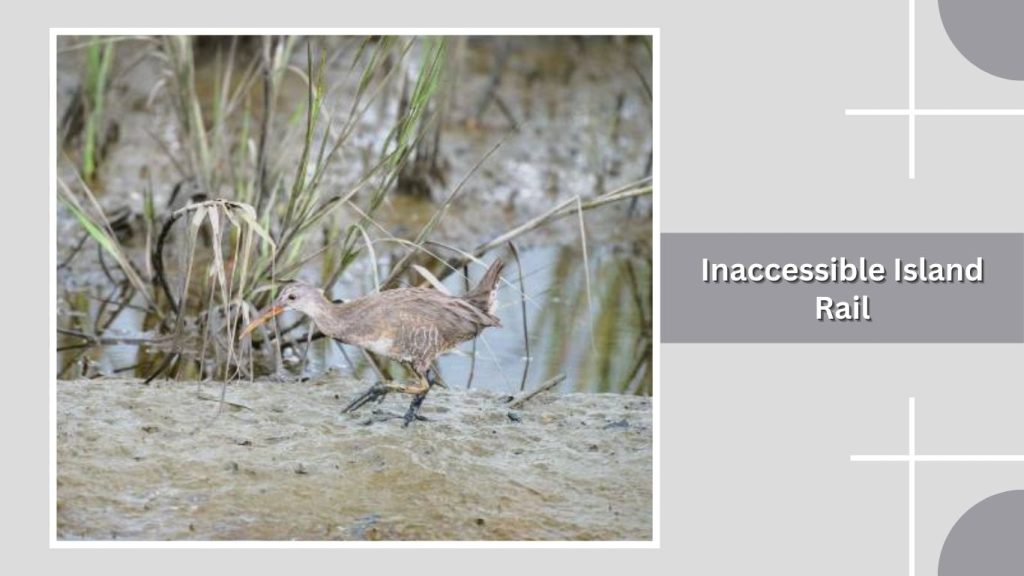
The Inaccessible Island Rail is the smallest living flightless bird in the world. It is found only on Inaccessible Island in the South Atlantic Ocean and is a remarkable example of evolution in isolation.
Identification
- Very small, compact body
- Dark brown to blackish plumage
- Short tail and rounded wings
- Strong legs adapted for running
- Short, pointed bill
Habitat
This species inhabits dense grasslands, reed beds, ferns, and rocky areas across Inaccessible Island. It relies on thick vegetation for cover and nesting and is never found outside this remote island.
Behavior
Inaccessible Island Rails are secretive and fast-moving birds. They spend most of their time on the ground, running through vegetation rather than flying. They are usually solitary or seen in pairs and are most active during the day.
Diet
Their diet consists mainly of insects, worms, small invertebrates, seeds, and plant material. They forage by probing soil and leaf litter.
Lifespan
In the wild, Inaccessible Island Rails are believed to live around 5 to 10 years, though detailed lifespan data is limited due to their remote habitat.
FAQs
Why can’t flightless birds fly?
Flightless birds have evolved in environments where flying was unnecessary or less advantageous. Over time, their wings became smaller while their legs and bodies adapted for running, swimming, or ground living.
Are flightless birds completely wingless?
No. Most flightless birds still have wings, but the wings are reduced and not strong enough for flight. In many species, wings are used for balance, swimming, or display.
Where are most flightless birds found?
Many flightless birds are found on islands or isolated regions such as New Zealand, Antarctica, South America, and the Galápagos Islands, where there were historically fewer predators.
Are flightless birds endangered?
Some flightless birds are highly endangered due to habitat loss, introduced predators, and climate change. Species like the Kakapo and Takahē survive mainly because of conservation efforts.
What is the largest flightless bird in the world?
The ostrich is the largest and heaviest living flightless bird, capable of running at very high speeds to escape predators.