


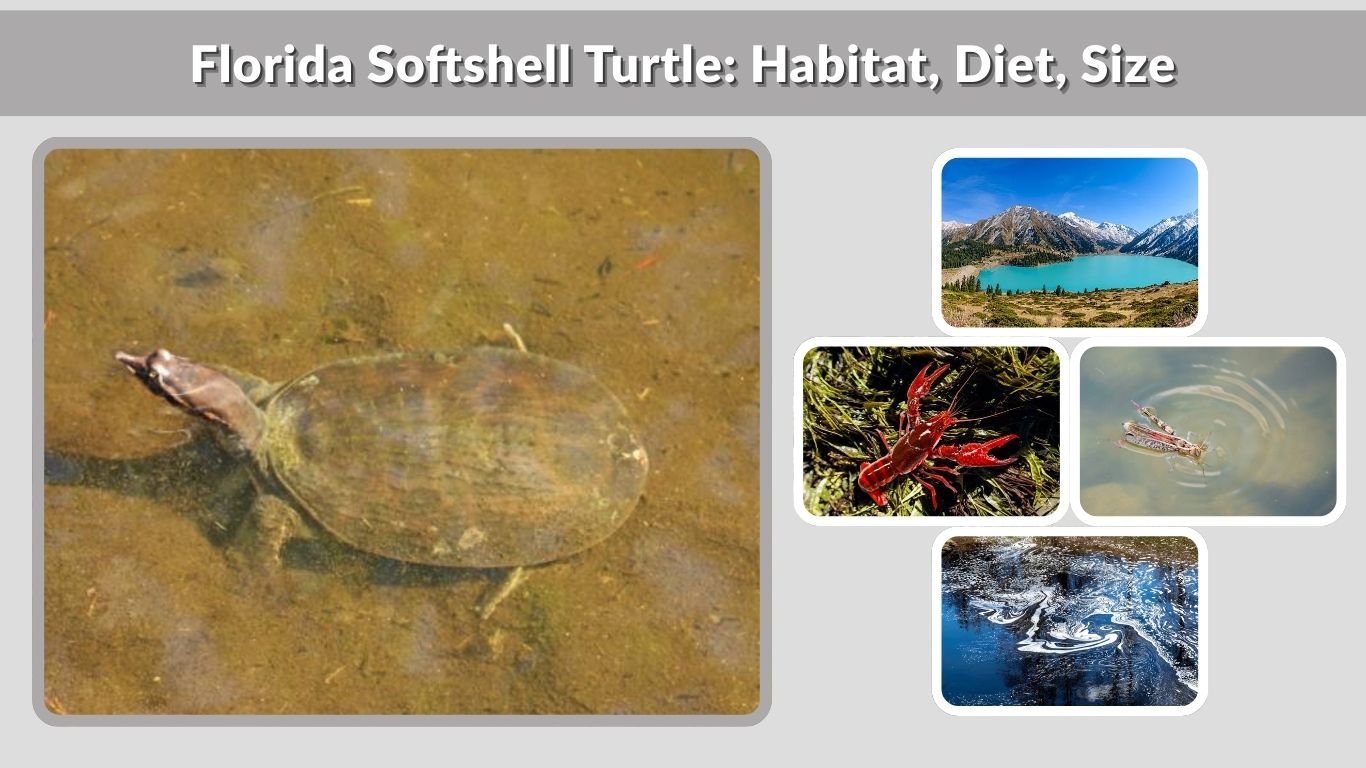
The Florida softshell turtle (Apalone ferox) is the largest softshell turtle species in North America. Recognized by its flat, leathery shell and long snorkel-like nose, this freshwater turtle is built for speed and ambush hunting. Native primarily to Florida and parts of southern Georgia, it thrives in lakes, rivers, marshes, and even man-made canals. Highly aquatic and carnivorous, the Florida softshell turtle plays an important role as a predator in freshwater ecosystems.
Overview of the Florida Softshell Turtle
Scientific Classification
The Florida softshell turtle belongs to the family Trionychidae, a group of turtles known for their flexible shells and streamlined bodies. Its scientific name is Apalone ferox. Within North America, it is closely related to the spiny softshell (Apalone spinifera) and the smooth softshell (Apalone mutica).
Among these species, the Florida softshell stands out for its impressive size and broad, rounded shell shape. It is considered the largest softshell turtle native to the continent.
Geographic Range
The Florida softshell turtle is found primarily throughout the state of Florida. Its range also extends into southern Georgia and occasionally into nearby southeastern regions.
This species is highly adaptable and occupies a wide variety of freshwater systems, including:
- Lakes
- Rivers
- Marshes
- Swamps
- Canals
- Retention ponds
Because Florida has a warm climate, these turtles remain active for most of the year.
General Characteristics
The Florida softshell turtle is highly aquatic and rarely ventures far from water except during nesting season. It is a fast swimmer, capable of quick bursts of speed when hunting or escaping threats.
Unlike many basking turtles such as sliders or cooters, Florida softshell turtles spend more time submerged or partially buried in sand or mud. Their flattened body and long neck allow them to remain hidden while watching for prey.
Physical Characteristics and Identification
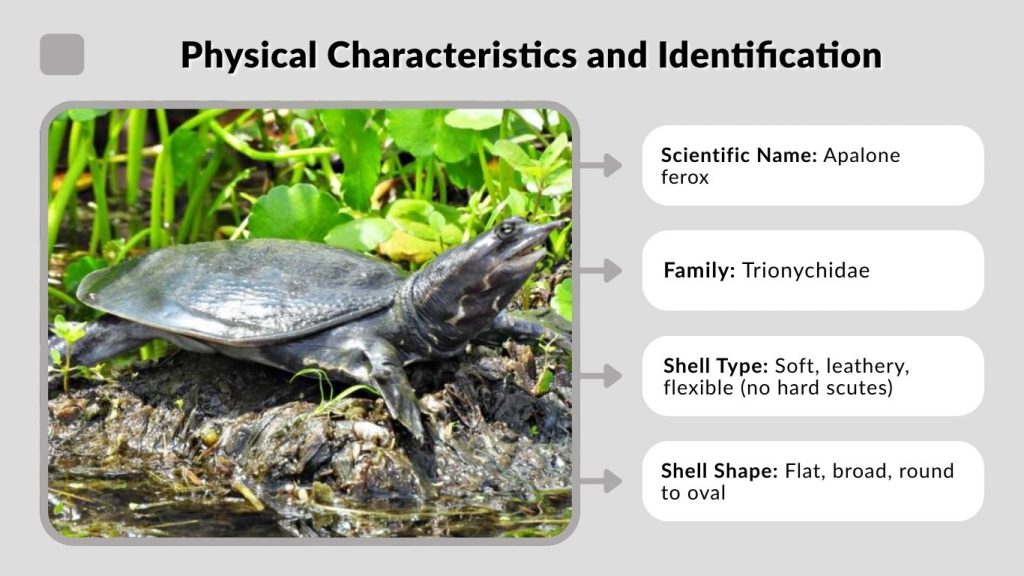
The Florida softshell turtle has a distinctive, flat, leathery shell and an elongated, snorkel-like snout that makes it easy to recognize. Unlike hard-shelled turtles, it lacks visible scutes and instead has a flexible, smooth carapace. Its large size—especially in females—along with its long neck and powerful limbs, sets it apart from most other freshwater turtles in Florida.
Key Identification Features
- Scientific Name: Apalone ferox
- Family: Trionychidae
- Adult Size:
- Males: 6–12 inches
- Females: 14–24+ inches
- Males: 6–12 inches
- Shell Type: Soft, leathery, flexible (no hard scutes)
- Shell Shape: Flat, broad, round to oval
- Shell Color: Olive, dark brown, or gray
- Shell Edge: Smooth front edge (no pronounced spines)
- Head: Narrow with pointed snout
- Nose: Tube-shaped, snorkel-like nostrils
- Neck: Long and highly extendable
- Feet: Fully webbed with sharp claws
- Defense: Strong bite and fast swimming ability
These features clearly distinguish the Florida softshell turtle from other softshell species and hard-shelled freshwater turtles.
Florida Softshell Turtle Habitat
Preferred Water Bodies
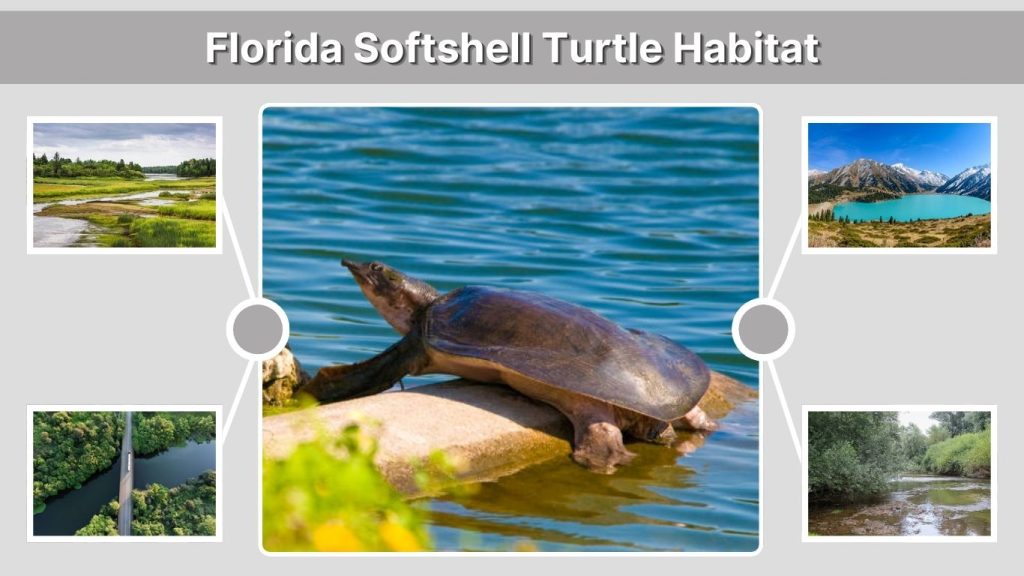
The Florida softshell turtle habitat includes a wide range of freshwater environments. It prefers:
- Large lakes
- Slow-moving rivers
- Marshes and swamps
- Man-made canals
- Retention ponds
They are especially common in areas with sandy or muddy bottoms.
Habitat Requirements
This species relies on soft substrates that allow it to bury itself for camouflage. Sandy shorelines are important for nesting, and relatively clean water supports healthy prey populations.
Unlike some turtles that require extensive basking sites, Florida softshell turtles spend much of their time submerged or resting just below the water’s surface.
Florida Softshell Turtle Diet
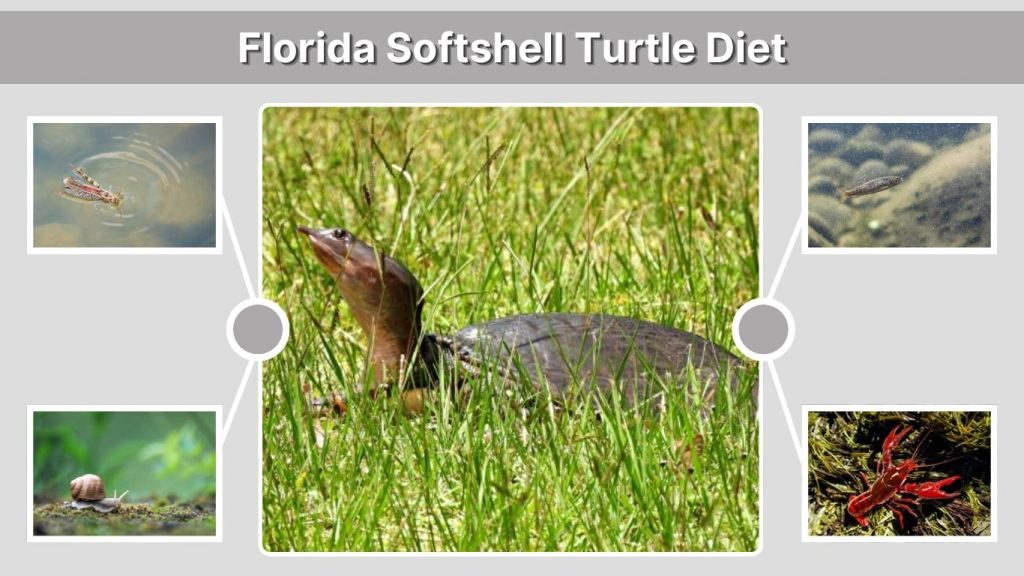
The Florida softshell turtle diet is primarily carnivorous. As an active aquatic predator, this species feeds on a wide variety of animal prey found in freshwater systems. Its speed, camouflage, and powerful jaws make it an efficient hunter.
What Do Florida Softshell Turtles Eat?
In the wild, their diet commonly includes:
- Small fish
- Crayfish
- Aquatic insects
- Snails and mollusks
- Tadpoles and amphibians
- Small crustaceans
Occasionally, they may consume carrion or other opportunistic food sources. Their sharp beak-like mouth allows them to grasp slippery prey with ease.
Feeding Strategy
Florida softshell turtles are ambush predators. They often bury themselves in sand or mud with only their eyes and snorkel-like nose visible. When prey swims nearby, they strike rapidly using their long neck.
This surprise attack strategy, combined with strong swimming ability, makes them highly effective hunters.
Diet Changes by Age
- Juveniles: Feed mostly on insects, small invertebrates, and tiny fish
- Adults: Consume larger fish, crayfish, and amphibians
As they grow, their stronger jaws allow them to handle tougher prey.
Florida Softshell Turtle Lifespan and Reproduction
Florida Softshell Turtle Lifespan
The Florida softshell turtle lifespan typically ranges from 20 to 30 years in the wild. In protected conditions with minimal threats, some individuals may live longer.
Longevity depends on factors such as water quality, food availability, predation pressure, and habitat stability.
Breeding Season
Mating usually occurs in spring and early summer. Courtship takes place in the water, where males pursue females.
Because females are much larger, they require substantial energy reserves to produce eggs.
Nesting and Hatchlings
Females leave the water to nest in sandy or loose soil, often near shorelines. Clutch sizes are large, typically ranging from 15 to 40 eggs.
After incubation, hatchlings emerge at about 1–1.5 inches long. Despite their strong instincts, hatchlings face high predation from birds, raccoons, and fish. Only a small percentage survive to adulthood.
Behavior and Temperament
Florida softshell turtles are highly aquatic and spend most of their time underwater. They are fast swimmers and can quickly dart away when disturbed.
They are also known for defensive behavior. When handled, they may hiss, lunge, or bite. Their long neck allows them to extend their head farther than many people expect, so caution is advised.
Unlike basking turtles such as sliders, they bask less frequently and rely more on warm water and shallow areas to regulate body temperature.
Florida Softshell Turtle vs Spiny Softshell
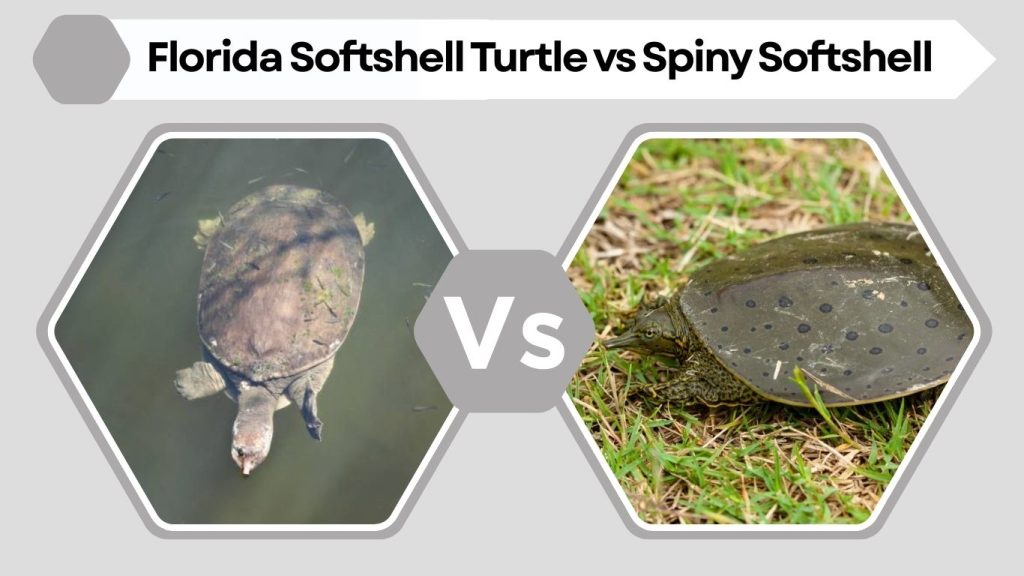
Because both species belong to the same genus (Apalone), they are often confused.
Key Differences
- Size:
- Florida softshell females grow much larger than spiny softshell females.
- Florida softshell females grow much larger than spiny softshell females.
- Shell Edge:
- Spiny softshell turtles have small spines along the front edge of the shell.
- Florida softshell turtles have a smoother front edge.
- Spiny softshell turtles have small spines along the front edge of the shell.
- Shell Shape:
- Florida softshell turtles tend to have a broader, more rounded shell.
- Florida softshell turtles tend to have a broader, more rounded shell.
- Range:
- Florida softshell turtles are mainly found in Florida and southern Georgia.
- Spiny softshell turtles have a much wider North American distribution.
- Florida softshell turtles are mainly found in Florida and southern Georgia.
These differences help with accurate identification in the wild.
Interesting Florida Softshell Turtle Facts
Here are some notable Florida softshell turtle facts:
- It is the largest softshell turtle in North America.
- Females can grow over 2 feet in shell length.
- They can absorb oxygen through specialized tissues in their throat while underwater.
- They are extremely fast swimmers.
- They are commonly seen in Florida canals and urban waterways.
Threats and Conservation
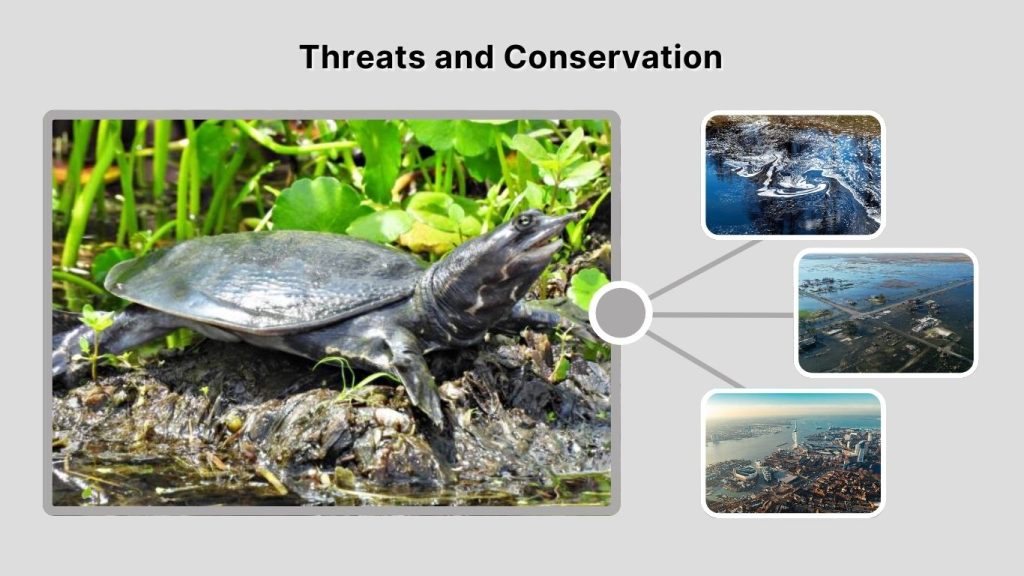
Florida softshell turtles face threats from water pollution, habitat destruction, and shoreline development. Road mortality during nesting season is also common when females travel onto land.
Although populations remain stable in many areas, protecting clean freshwater habitats is essential for their long-term survival.
Conclusion
The Florida softshell turtle (Apalone ferox) is a powerful and uniquely adapted freshwater predator native to Florida and nearby regions. Known for its large size, flat leathery shell, and snorkel-like nose, it thrives in lakes, rivers, and canals. With a lifespan of up to 30 years and impressive hunting skills, this species plays an important ecological role. Protecting clean water and natural shorelines ensures the continued survival of this remarkable turtle.