


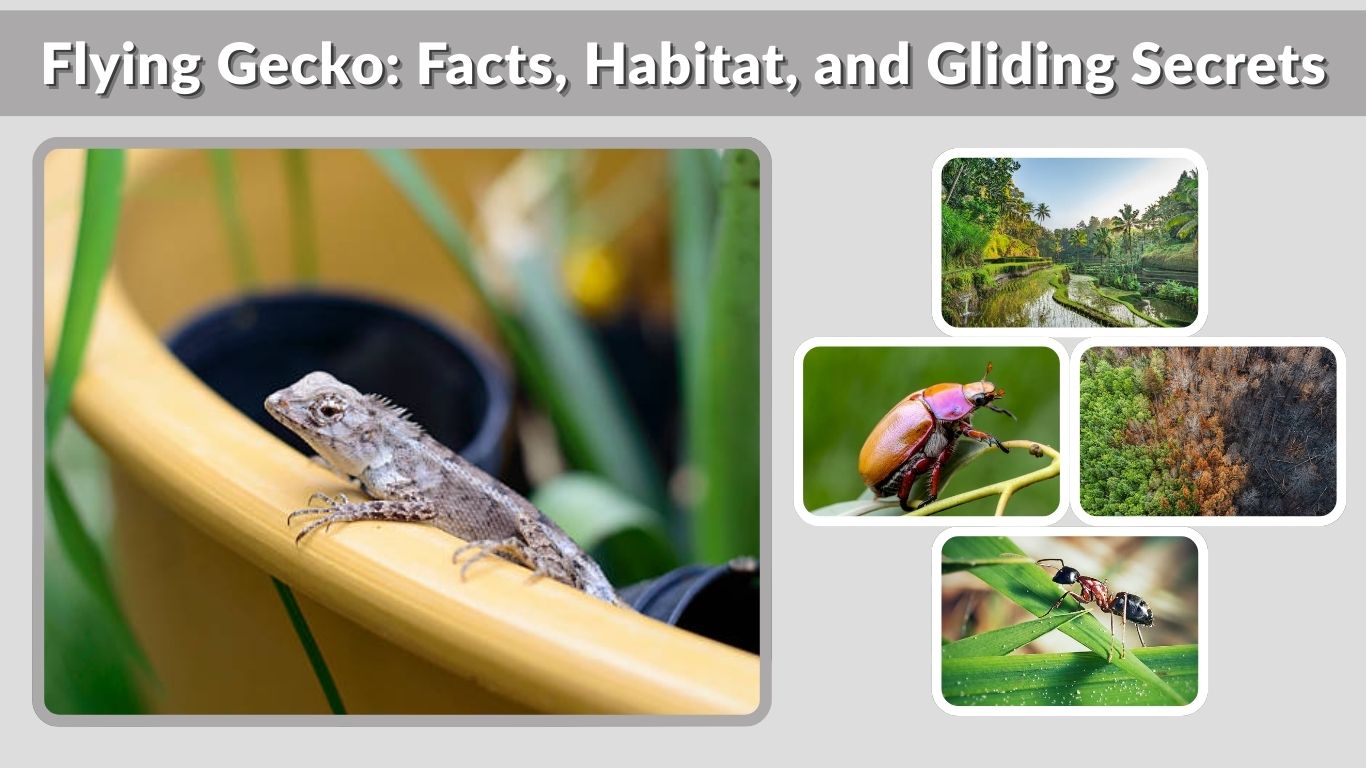
The flying gecko is one of nature’s most fascinating reptiles. Despite its name, it does not truly fly like a bird or bat. Instead, this remarkable lizard glides through the air using wing-like membranes attached to its body. Found mainly in the rainforests of Southeast Asia, the flying gecko has evolved special adaptations that allow it to move gracefully between trees. From its unique rib-supported “wings” to its impressive camouflage skills, this gliding reptile continues to amaze scientists and wildlife enthusiasts alike.
What Is a Flying Gecko?
The term flying gecko is commonly used to describe certain gliding lizards, especially those in the Draco genus. However, this name can be slightly misleading.
Scientific Classification
Flying geckos are most often associated with the genus Draco, a group of small arboreal lizards known for their gliding ability. One of the most well-known species is Draco volans, sometimes called the flying dragon lizard. These reptiles belong to the family Agamidae, not the true gecko family (Gekkonidae).
True geckos are known for their sticky toe pads and climbing abilities, while Draco species are better known for their rib-supported gliding membranes. Although people casually call them flying geckos, scientifically they are more accurately described as gliding lizards.
Why Is It Called a Flying Gecko?
The name likely comes from its small size and tree-dwelling habits, which resemble those of geckos. Additionally, its ability to leap from trees and glide through the air gives the illusion of flight. In many regions, local communities use common names interchangeably, which adds to the confusion.
In reality, the flying gecko is a specialized forest lizard with extraordinary gliding adaptations rather than a true flying reptile.
Can Flying Geckos Really Fly?
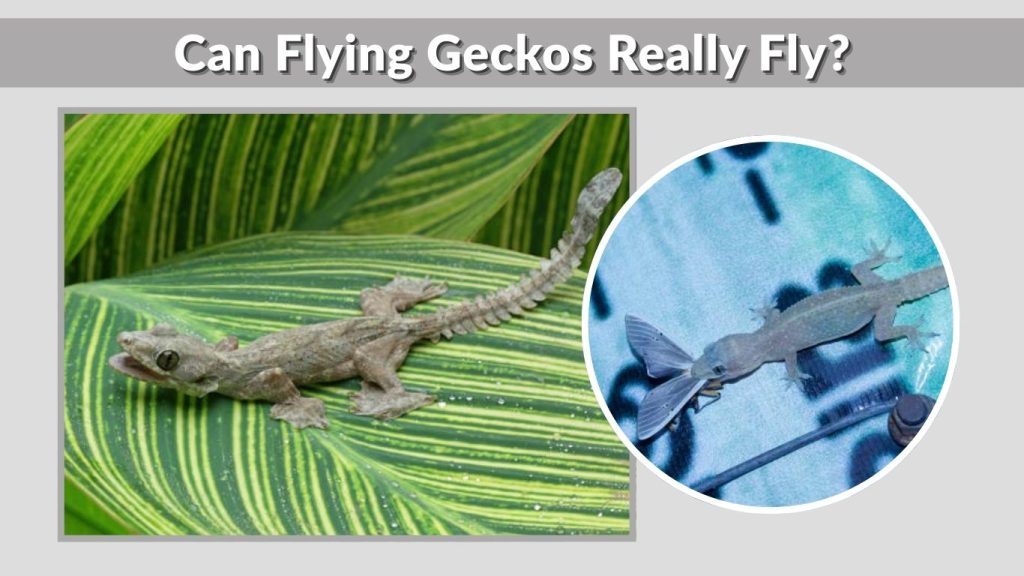
One of the most common questions people ask is whether flying geckos can truly fly. The short answer is no—they glide rather than perform powered flight.
Flying vs. Gliding — What’s the Difference?
Powered flight involves flapping wings to generate lift and thrust, as birds and bats do. Gliding, on the other hand, relies on gravity and body structure. The animal launches itself from a height and uses extended membranes to control descent and direction.
Flying geckos glide in a similar way to flying squirrels. They cannot gain altitude while airborne. Instead, they move from higher branches to lower ones, covering impressive horizontal distances while gradually descending.
How the Patagium Works
The flying gecko’s most remarkable feature is the patagium, a thin membrane supported by elongated ribs. When the lizard prepares to glide, it spreads its ribs outward, stretching the membrane into a wing-like shape.
Here’s how the process works:
- The gecko climbs to a high tree branch.
- It jumps off and spreads its ribs.
- The membrane catches air, creating lift.
- The tail helps stabilize and steer.
- It lands smoothly on another tree trunk.
This adaptation allows the flying gecko to glide distances of up to 20–30 feet (and sometimes farther), depending on height and conditions.
Physical Characteristics of a Flying Gecko
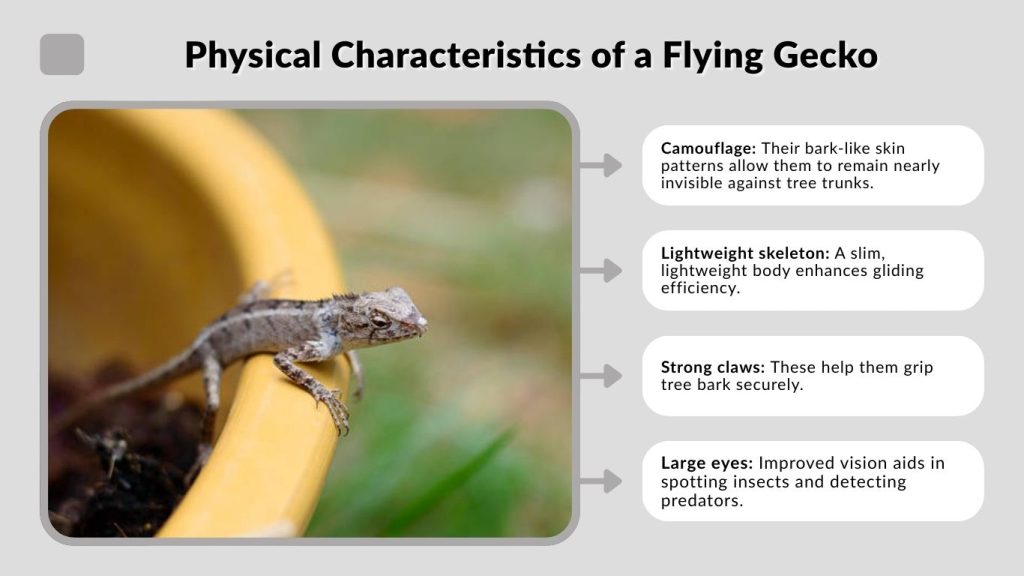
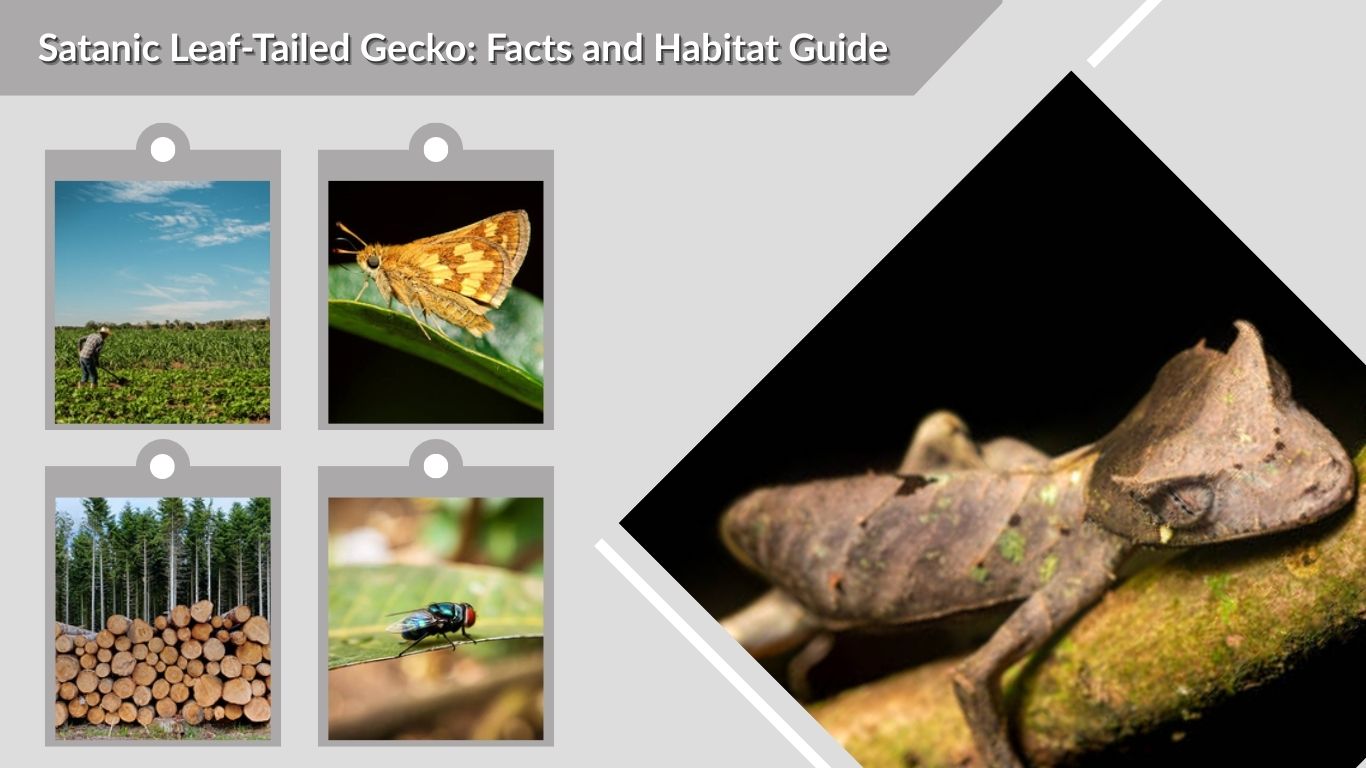
Flying geckos are relatively small reptiles, typically measuring between 7 and 8 inches in total length, including the tail. Their bodies are lightweight and flattened, which improves aerodynamics during gliding.
Their coloration is another remarkable feature. Most species display shades of brown, gray, or green, often with mottled patterns that resemble tree bark. This camouflage helps them blend seamlessly into their rainforest environment, making them difficult for predators to spot.
The patagium is usually brightly colored underneath, sometimes showing orange, yellow, or reddish tones. Males often have a more vivid throat flap, known as a dewlap, which they use for territorial displays and attracting mates.
Adaptations for Survival
Flying geckos possess several specialized adaptations that improve their survival in dense forest habitats:
- Camouflage: Their bark-like skin patterns allow them to remain nearly invisible against tree trunks.
- Lightweight skeleton: A slim, lightweight body enhances gliding efficiency.
- Strong claws: These help them grip tree bark securely.
- Large eyes: Improved vision aids in spotting insects and detecting predators.
These features work together to make the flying gecko highly suited to life in the treetops.
Flying Gecko Habitat and Distribution
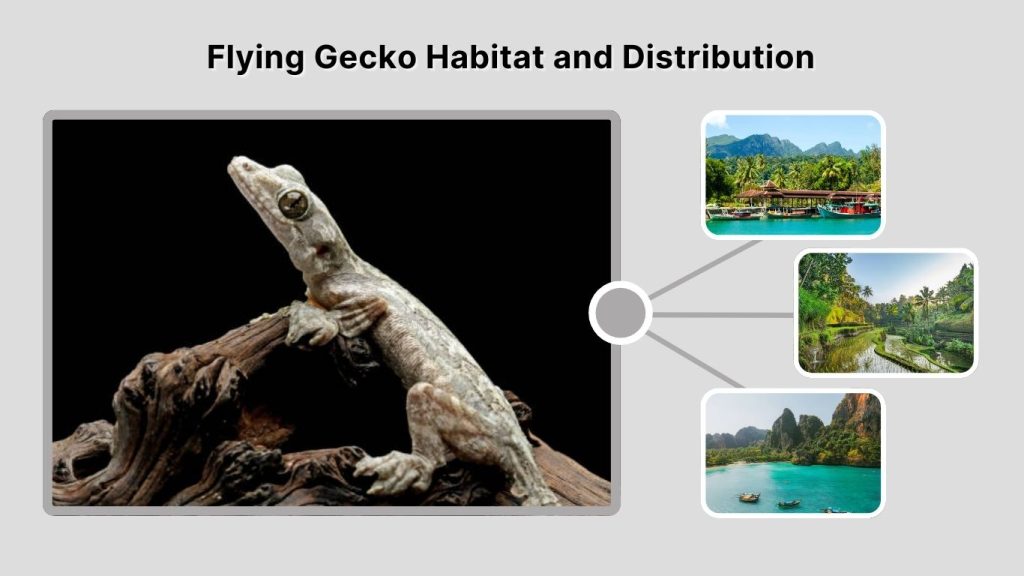
Flying geckos are native to Southeast Asia, including countries such as Malaysia, Indonesia, Thailand, and the Philippines. They thrive in tropical and subtropical rainforests where tall trees provide ideal launching points for gliding.
These lizards are strictly arboreal, meaning they spend nearly all their lives in trees. They rarely descend to the forest floor unless necessary. The dense canopy offers protection from predators and abundant food sources.
Why Rainforests Are Ideal
Rainforests provide several advantages for flying geckos:
- Tall trees: Greater height means longer gliding distances.
- Dense vegetation: Offers protection and camouflage.
- Warm climate: Supports reptile metabolism.
- Plentiful insects: Ensures a steady food supply.
The complex vertical structure of rainforest ecosystems makes gliding an efficient way to move without constantly climbing down and back up trees.
What Do Flying Geckos Eat?
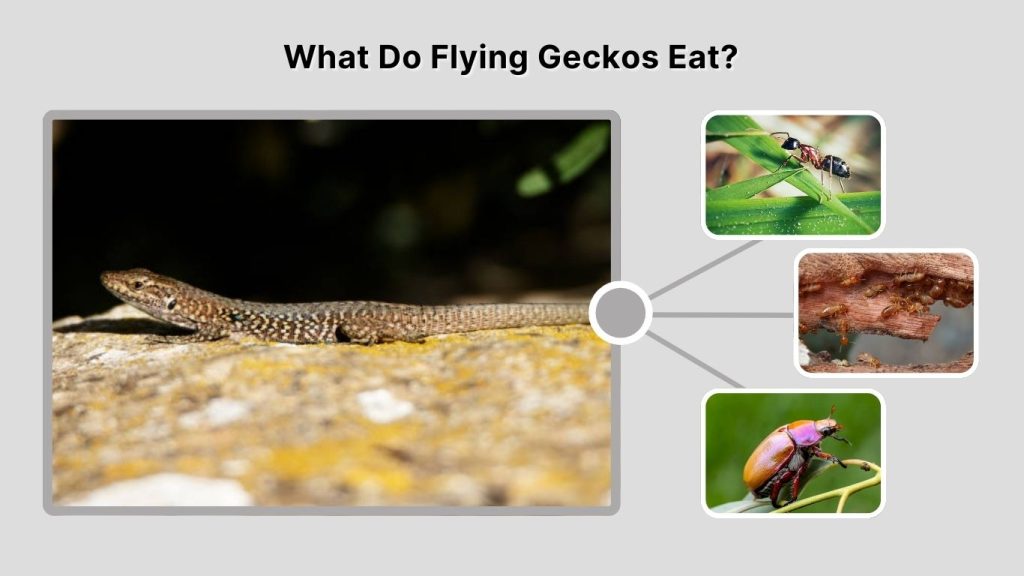
Flying geckos are insectivores, meaning their diet consists mainly of insects. They feed on ants, termites, beetles, moths, and other small invertebrates found in the forest canopy.
They typically hunt using an ambush strategy. Remaining still against tree bark, they wait for prey to approach before quickly snapping it up with their sharp jaws. Their camouflage plays a crucial role in this hunting technique, allowing them to remain undetected until the perfect moment.
Role in the Ecosystem
As insect predators, flying geckos help regulate insect populations in rainforest ecosystems. They also serve as prey for larger animals, including birds and snakes. This makes them an important link in the forest food chain.
How Far Can a Flying Gecko Glide?
One of the most impressive abilities of the flying gecko is its gliding distance. While it cannot flap its “wings,” it can travel surprisingly far through the air. On average, a flying gecko can glide between 20 and 30 feet (about 6 to 9 meters). In some cases, especially when launching from taller trees, they may glide even farther.
The distance depends on several factors:
- The height of the starting point
- The angle of descent
- Wind conditions
- The size and strength of the individual lizard
Flying geckos usually glide at a downward angle rather than straight across. This controlled descent allows them to land precisely on tree trunks or branches.
Benefits of Gliding
Gliding provides several survival advantages:
- Escaping predators: Instead of climbing down a tree to avoid danger, the gecko can leap and glide to safety.
- Energy efficiency: Gliding requires less energy than climbing down and back up trees repeatedly.
- Quick movement between trees: This allows them to search for food or territory efficiently.
These benefits make gliding a highly effective adaptation in dense rainforest environments.
Flying Gecko vs. Flying Lizard (Draco)
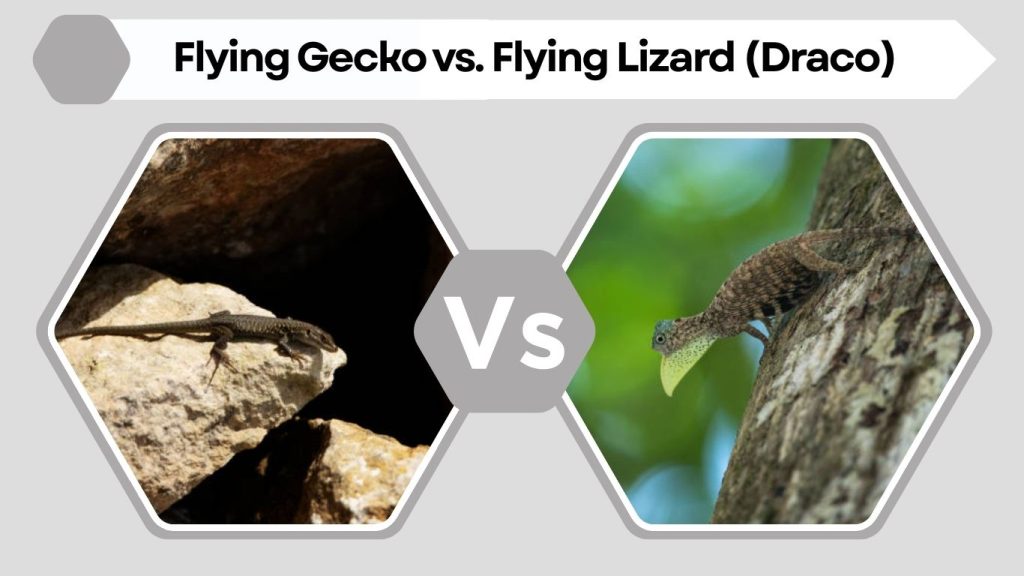
The terms “flying gecko” and “flying lizard” are often used interchangeably, but they can create confusion. Scientifically, most gliding reptiles commonly called flying geckos belong to the genus Draco, which are flying lizards rather than true geckos.
True geckos belong to a different family and are known for their adhesive toe pads that allow them to climb smooth surfaces like glass. In contrast, Draco species have strong claws for gripping bark and specialized ribs that support the gliding membrane.
Key Differences at a Glance
Here are the main distinctions:
- Family classification:
- Flying lizards (Draco) belong to Agamidae.
- True geckos belong to Gekkonidae.
- Flying lizards (Draco) belong to Agamidae.
- Toe structure:
- Geckos have sticky toe pads.
- Draco lizards rely more on claws.
- Geckos have sticky toe pads.
- Gliding membrane:
- Present and rib-supported in Draco.
- Absent in true geckos.
- Present and rib-supported in Draco.
Understanding this difference helps clarify that the “flying gecko” is more accurately a gliding lizard.
Are Flying Geckos Dangerous to Humans?
Flying geckos are not dangerous to humans. They are small, shy reptiles that prefer to avoid confrontation. When threatened, they are far more likely to flee by gliding away than to attack.
They are not venomous, and bites are extremely rare. Even if one were to bite in self-defense, it would typically cause only minor discomfort due to their small size.
In their natural habitat, flying geckos focus on survival, feeding, and reproduction rather than interacting with humans.
Can You Keep a Flying Gecko as a Pet?
While some reptile enthusiasts are fascinated by gliding lizards, keeping a flying gecko as a pet can be challenging. These reptiles require:
- A tall enclosure to simulate tree height
- Proper humidity levels
- A warm tropical environment
- Live insects for feeding
In addition, habitat destruction and illegal wildlife trade pose risks to wild populations. For this reason, conservation experts encourage protecting these animals in their natural environments rather than removing them from the wild.
Conservation Status and Threats
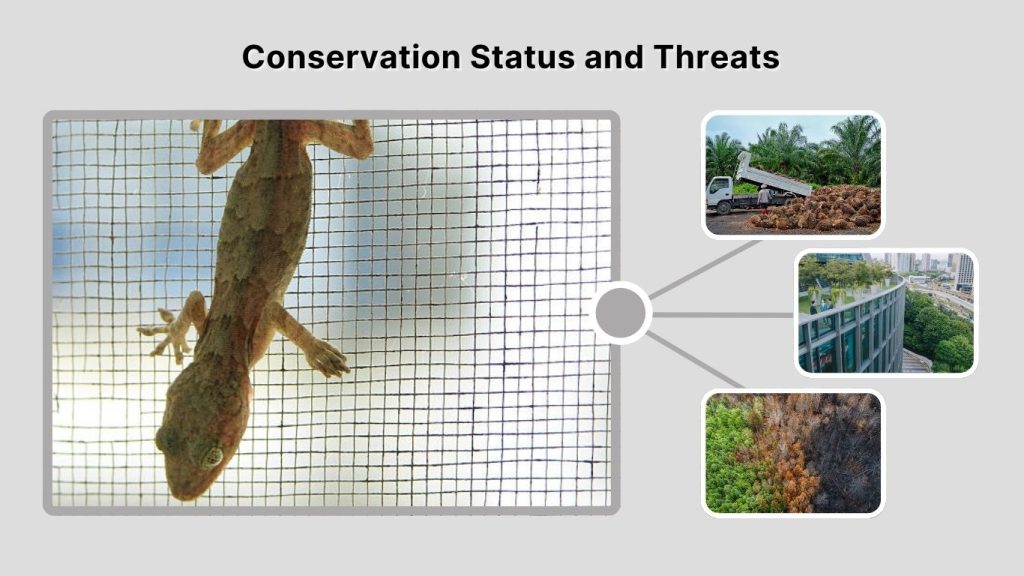
Although many species of flying geckos are not currently classified as endangered, they face increasing environmental pressures. The greatest threat is habitat loss due to deforestation in Southeast Asia.
Rainforests are often cleared for agriculture, palm oil plantations, and urban development. As trees disappear, flying geckos lose the height and canopy structure necessary for gliding.
Other potential threats include:
- Illegal pet trade
- Climate change affecting tropical ecosystems
- Fragmentation of forest habitats
Protecting rainforest ecosystems is essential for ensuring the survival of these unique gliding reptiles.
Interesting Flying Gecko Facts
Flying geckos have several fascinating traits that make them stand out among reptiles:
- They can glide up to 10 meters under ideal conditions.
- Their extended ribs create wing-like surfaces.
- Males use colorful throat flaps (dewlaps) to attract females.
- They flatten their bodies against tree bark to become nearly invisible.
- They can change direction mid-air using subtle body adjustments.
These adaptations demonstrate how evolution has shaped them for life in the forest canopy.
FAQs
Do flying geckos actually fly?
No, flying geckos do not truly fly. They glide by spreading a membrane supported by elongated ribs. After jumping from a tree, they use this membrane to control their descent and steer toward another tree.
Where are flying geckos found?
Flying geckos are native to Southeast Asia. They live in tropical rainforests in countries such as Malaysia, Indonesia, Thailand, and the Philippines, where tall trees provide ideal gliding conditions.
How long can a flying gecko glide?
A flying gecko can glide about 20 to 30 feet on average. The exact distance depends on the height of the launch point and environmental conditions such as wind and tree spacing.
What makes flying geckos unique?
Their rib-supported gliding membranes make them unique among reptiles. Unlike most lizards, they can travel through the air between trees, allowing them to escape predators and move efficiently in dense forests.
Are flying geckos rare?
Flying geckos are not extremely rare, but habitat loss threatens their populations. Protecting rainforest ecosystems is important to ensure their continued survival in the wild.
Conclusion
The flying gecko is a remarkable example of nature’s creativity. Although it does not truly fly, its ability to glide using rib-supported membranes sets it apart from most other reptiles. Living high in Southeast Asian rainforests, it relies on camouflage, agility, and aerial movement to survive. As deforestation continues to impact tropical ecosystems, protecting these habitats becomes increasingly important. The flying gecko reminds us that even small creatures can possess extraordinary adaptations shaped by millions of years of evolution.