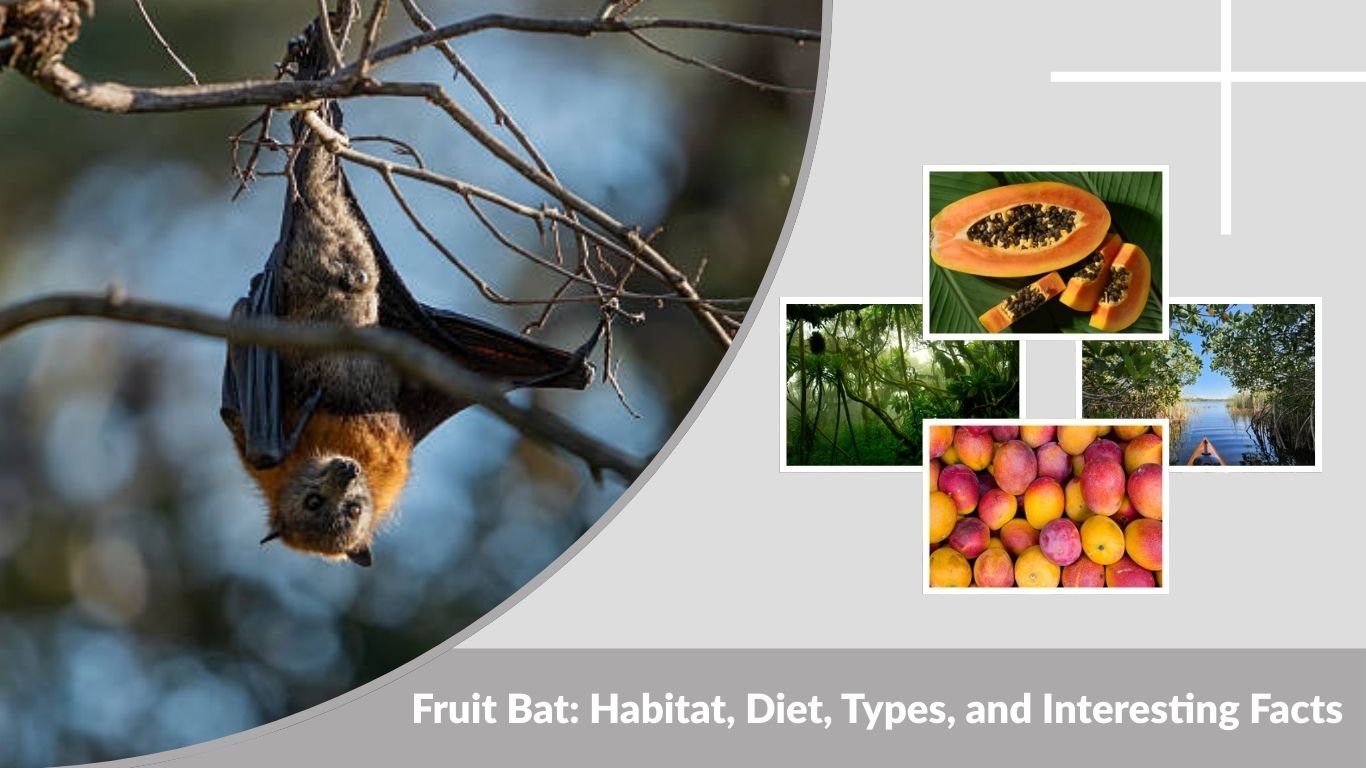
Fruit bats are fascinating flying mammals known for their fruit-based diet and large wingspans. Unlike many other bats that rely mainly on insects, fruit bats primarily eat fruits, nectar, and flowers. They play a vital role in maintaining healthy ecosystems by pollinating plants and spreading seeds across forests. Found mostly in tropical and subtropical regions, these bats are essential for forest regeneration and biodiversity. Understanding fruit bats helps people appreciate their ecological importance and reduce common misconceptions about them.
What Is a Fruit Bat?
A fruit bat is a type of bat that mainly feeds on fruits, nectar, and plant materials. These bats belong to the family Pteropodidae, which includes more than 190 species. Fruit bats are commonly known as megabats because they are generally larger than other bats.
Unlike many smaller bats that hunt insects at night using echolocation, fruit bats often rely more on their excellent eyesight and strong sense of smell to find food. Because of their fox-like faces, some species are also called flying foxes.
Fruit bats are mostly active during the night and spend their days resting or hanging upside down in large groups called colonies.
Scientific Classification
Fruit bats belong to the following scientific classification:
- Kingdom: Animalia
- Phylum: Chordata
- Class: Mammalia
- Order: Chiroptera
- Family: Pteropodidae
The order Chiroptera includes all bats, but fruit bats form a special group within this order due to their diet and physical characteristics.
Difference Between Fruit Bats and Other Bats
Fruit bats differ from insect-eating bats in several ways:
Diet:
Fruit bats eat fruits, nectar, and pollen, while most other bats feed on insects.
Vision:
Fruit bats have large eyes and excellent vision, whereas many insect bats depend heavily on echolocation.
Size:
Fruit bats are usually larger and may have wingspans reaching over 1.5 meters (about 5 feet) in some species.
Facial Appearance:
Their faces resemble small foxes or dogs, which is why they are often called flying foxes.
Why They Are Called Megabats
Fruit bats are often referred to as megabats because of their relatively large body size. Many species are significantly larger than typical microbats.
The largest fruit bats belong to the flying fox group, which can have a wingspan longer than many birds of prey. Despite their large size, these bats are gentle animals that mainly feed on plant materials.
Physical Characteristics of Fruit Bats
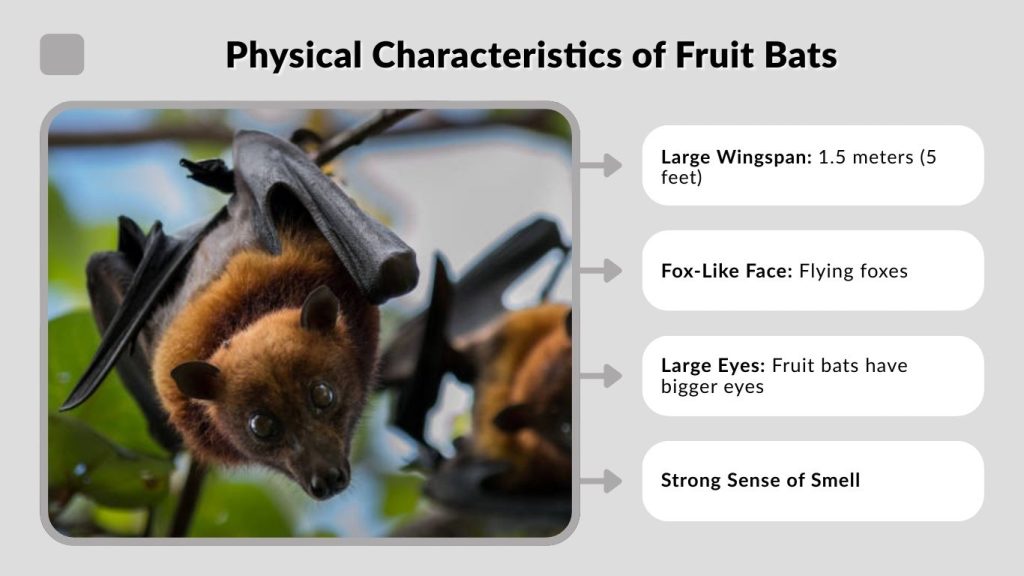
Fruit bats have several distinctive physical features that make them different from many other bat species. These bats are generally larger, have better eyesight, and possess strong wings that allow them to travel long distances while searching for food. Their bodies are well adapted for a fruit-based diet and a nocturnal lifestyle. Below are some key physical characteristics that help fruit bats survive in their natural habitats.
Key Physical Characteristics of Fruit Bats:
- Large Wingspan: Some fruit bats have wingspans that can reach up to 1.5 meters (5 feet), allowing efficient long-distance flight.
- Fox-Like Face: Many species have a face that resembles a fox, which is why some are called flying foxes.
- Large Eyes: Fruit bats have bigger eyes than most bats, helping them see clearly in low-light conditions.
- Strong Sense of Smell: They use their powerful sense of smell to locate ripe fruits and flowers.
- Soft Fur: Their bodies are covered with soft fur, often in shades of brown, gray, or reddish colors.
- Long, Flexible Wings: Their wings are made of thin skin stretched over elongated finger bones.
- Sharp Claws: Strong claws help them grip tree branches while hanging upside down.
- Lightweight Body: Despite their large wings, their bodies remain relatively light, which helps them stay airborne easily.
Where Do Fruit Bats Live?
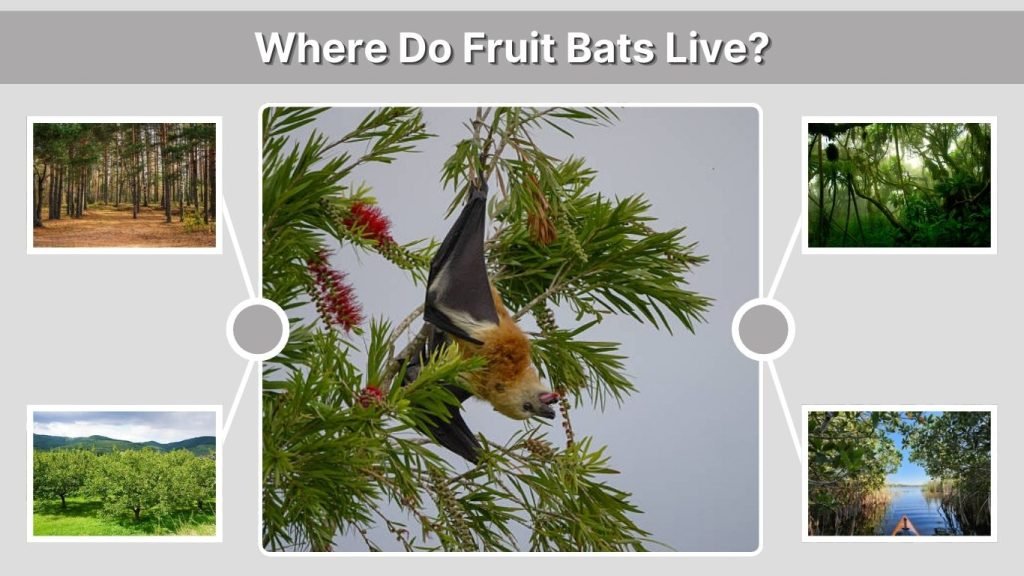
Fruit bats mainly live in tropical and subtropical regions where fruit trees and flowering plants are abundant.
Fruit Bat Habitat
These bats prefer environments with plenty of food sources, such as:
- Tropical rainforests
- Mangrove forests
- Woodlands
- Agricultural areas with fruit trees
- Coastal forests
Because they depend on fruit and nectar, they often live near forests or orchards where these resources are available.
Countries and Regions Where They Are Found
Fruit bats are commonly found in many parts of the world, including:
- Southeast Asia
- South Asia
- Australia
- Africa
- Pacific islands
Some well-known species live in countries such as India, Bangladesh, Indonesia, Thailand, and Australia.
Preferred Roosting Locations
During the daytime, fruit bats rest in places known as roosts. They typically hang upside down in large groups in tall trees or dense forest areas.
Common roosting locations include:
- Tall forest trees
- Mangrove trees
- Palm trees
- Cave entrances
- Urban parks with large trees
Large colonies may contain hundreds or even thousands of bats, creating impressive natural gatherings.
What Do Fruit Bats Eat?

As their name suggests, fruit bats mainly feed on fruits. However, their diet also includes nectar and pollen.
Main Diet of Fruit Bats
Common foods eaten by fruit bats include:
- Mangoes
- Bananas
- Figs
- Guavas
- Dates
- Papayas
They also drink nectar from flowers, which provides energy-rich sugars.
Feeding Habits
Fruit bats usually feed at night. They fly long distances in search of ripe fruits and flowering plants.
Instead of swallowing whole fruits, they often chew the fruit to extract the juice and then spit out the remaining pulp.
This feeding habit helps spread seeds across forests.
Types of Fruit Bats
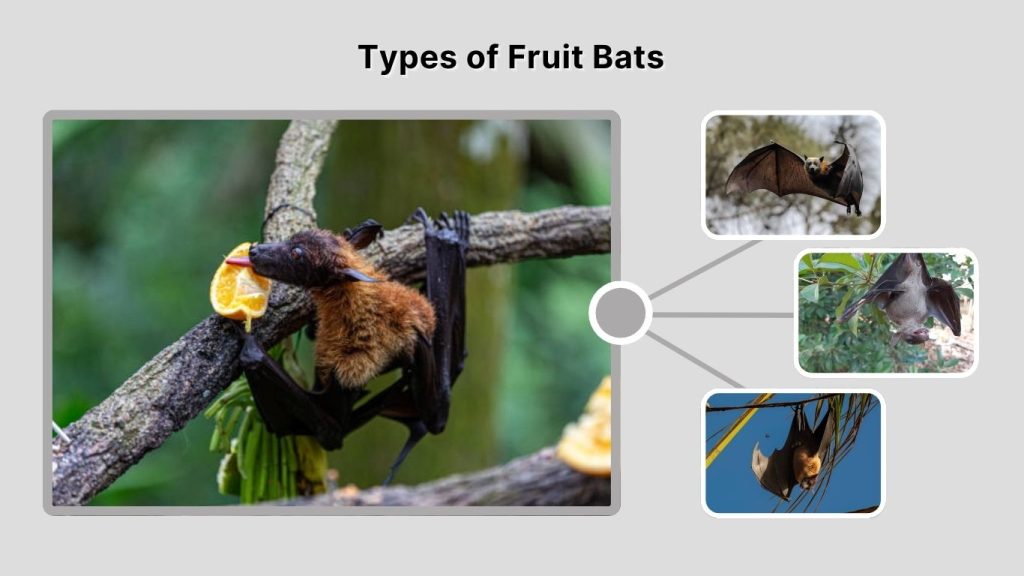
There are more than 190 species of fruit bats found across the world. These bats vary in size, habitat, and behavior, but they all share similar diets and ecological roles. Some of the most well-known fruit bat species are described below.
Flying Fox Bats
Flying foxes are the largest fruit bats in the world. They belong to the genus Pteropus and are known for their large wingspans and fox-like faces.
Some flying foxes can have wingspans reaching 1.5 meters (5 feet). These bats live mainly in Australia, Southeast Asia, and Pacific islands. They often form huge colonies in trees, sometimes containing thousands of individuals.
Flying foxes play an essential role in spreading seeds across large distances.
Egyptian Fruit Bat
The Egyptian fruit bat (Rousettus aegyptiacus) is one of the most widely known fruit bat species. It is found in Africa, the Middle East, and parts of South Asia.
Unlike many fruit bats, Egyptian fruit bats use a simple form of echolocation along with their eyesight. They often live in caves and feed on fruits such as figs, dates, and other soft fruits.
Straw-Colored Fruit Bat
The straw-colored fruit bat is another large species commonly found in Africa. It is famous for forming some of the largest bat colonies in the world, sometimes numbering in the millions.
These bats migrate seasonally in search of fruiting trees, making them important seed dispersers in African forests.
Other Popular Species
Many other fruit bat species exist around the world, including:
- Indian flying fox
- Little red flying fox
- Rodrigues fruit bat
- Grey-headed flying fox
Each species contributes to the health of forest ecosystems by helping plants reproduce and spread.
Behavior and Lifestyle
Fruit bats have unique behaviors that help them survive and thrive in their natural environments.
Nocturnal Activity
Fruit bats are nocturnal animals, meaning they are active during the night. After sunset, they leave their roosts to search for fruits, flowers, and nectar.
They may travel many kilometers in a single night while looking for food.
Social Behavior and Colonies
Fruit bats are highly social animals. They usually live in large groups called colonies. These colonies may contain hundreds, thousands, or even millions of bats depending on the species.
Living in groups provides several advantages:
- Protection from predators
- Better communication
- Shared information about food sources
Migration Patterns
Some fruit bat species migrate long distances depending on seasonal fruit availability. These migrations help distribute seeds over wide areas and support forest regeneration.
Are Fruit Bats Dangerous?
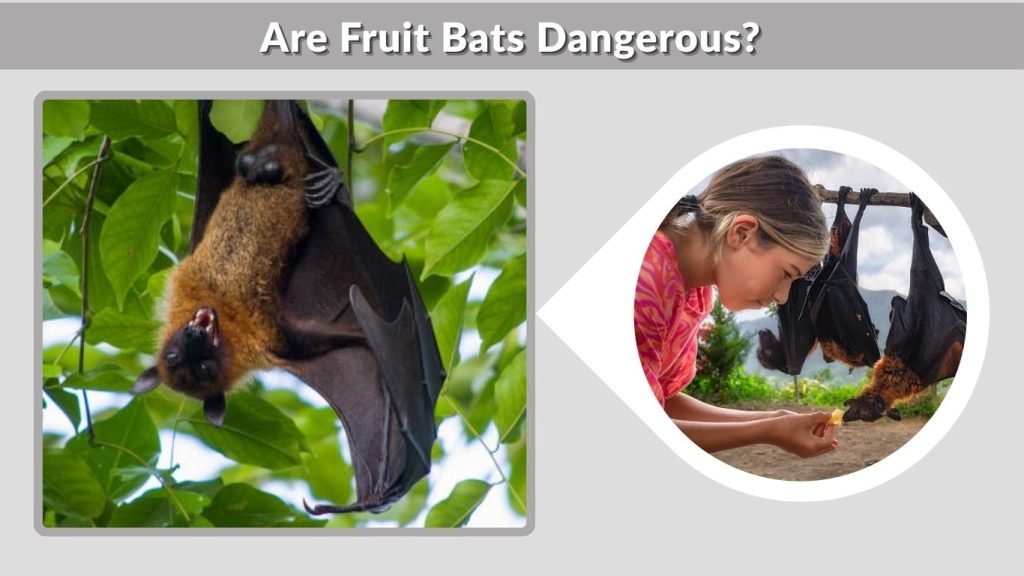
Fruit bats are generally not dangerous to humans. They are shy animals that prefer to avoid human contact.
Interaction with Humans
Fruit bats rarely attack humans. They typically fly away if people approach them. However, like any wild animal, they may bite if handled or threatened.
It is always best to observe bats from a distance.
Diseases and Safety Concerns
Although most fruit bats are harmless, some species can carry viruses such as rabies or other zoonotic diseases. These diseases are rarely transmitted to humans but can occur if someone handles an infected bat.
For safety, people should avoid touching bats in the wild.
Common Myths About Fruit Bats
There are many myths about bats that are not true. For example:
- Fruit bats do not drink blood.
- They do not attack humans.
- They are important animals for ecosystems, not pests.
Understanding the truth helps reduce fear and encourages conservation.
Importance of Fruit Bats in the Ecosystem
Fruit bats are extremely important for maintaining healthy ecosystems, especially in tropical forests.
Natural Pollinators
Many plants depend on fruit bats for pollination. When bats drink nectar from flowers, pollen sticks to their bodies and spreads to other flowers.
This process helps plants reproduce.
Forest Regeneration
Fruit bats play a key role in seed dispersal. After eating fruit, they drop or spit out seeds in different locations. These seeds can grow into new plants and trees.
Without fruit bats, many forests would struggle to regenerate naturally.
Maintaining Biodiversity
By spreading seeds and pollinating plants, fruit bats support the growth of diverse plant species. This helps maintain balanced ecosystems that support many animals and insects.
Threats to Fruit Bats

Despite their importance, fruit bats face several threats in the wild.
Habitat Loss
Deforestation and urban expansion destroy many natural bat habitats. When forests are cut down, fruit bats lose their food sources and roosting sites.
Hunting and Human Conflict
In some areas, fruit bats are hunted for food or killed because they are seen as pests in fruit farms.
Climate Change
Climate change can affect flowering and fruiting seasons, making it harder for bats to find food.
Fruit Bat Conservation Efforts
Many organizations and governments are working to protect fruit bats.
Wildlife Protection Laws
Some countries have introduced laws that protect bat species and restrict hunting.
Conservation Programs
Wildlife groups monitor bat populations and protect important habitats. Some programs also educate communities about the benefits of fruit bats.
How Humans Can Help
People can support fruit bat conservation by:
- Protecting forests
- Planting fruit trees
- Avoiding disturbance of bat colonies
- Supporting wildlife conservation programs
Interesting Facts About Fruit Bats
Fruit bats have many fascinating features:
- They are among the largest bats in the world.
- Some species have wingspans over 1.5 meters.
- They have excellent eyesight compared to most bats.
- Fruit bats help grow forests by spreading seeds.
- Some colonies contain millions of bats.
FAQs
Are fruit bats blind?
No, fruit bats are not blind. In fact, they have very good eyesight, especially at night.
How big can fruit bats grow?
Some fruit bats can grow quite large. The biggest flying fox bats can have a wingspan of about 1.5 meters (5 feet).
Do fruit bats drink blood?
No. Fruit bats eat fruits, nectar, and pollen. Only a few bat species called vampire bats drink blood, and they are completely different from fruit bats.
Why are fruit bats important?
Fruit bats are important because they pollinate plants and spread seeds, helping forests grow and maintain biodiversity.
Conclusion
Fruit bats are remarkable animals that play a crucial role in maintaining healthy ecosystems. Their ability to pollinate flowers and disperse seeds helps forests grow and thrive. Although they sometimes face threats such as habitat loss and human conflict, conservation efforts are helping protect these important creatures. By understanding and appreciating fruit bats, people can help ensure that these unique mammals continue to support nature for generations to come.