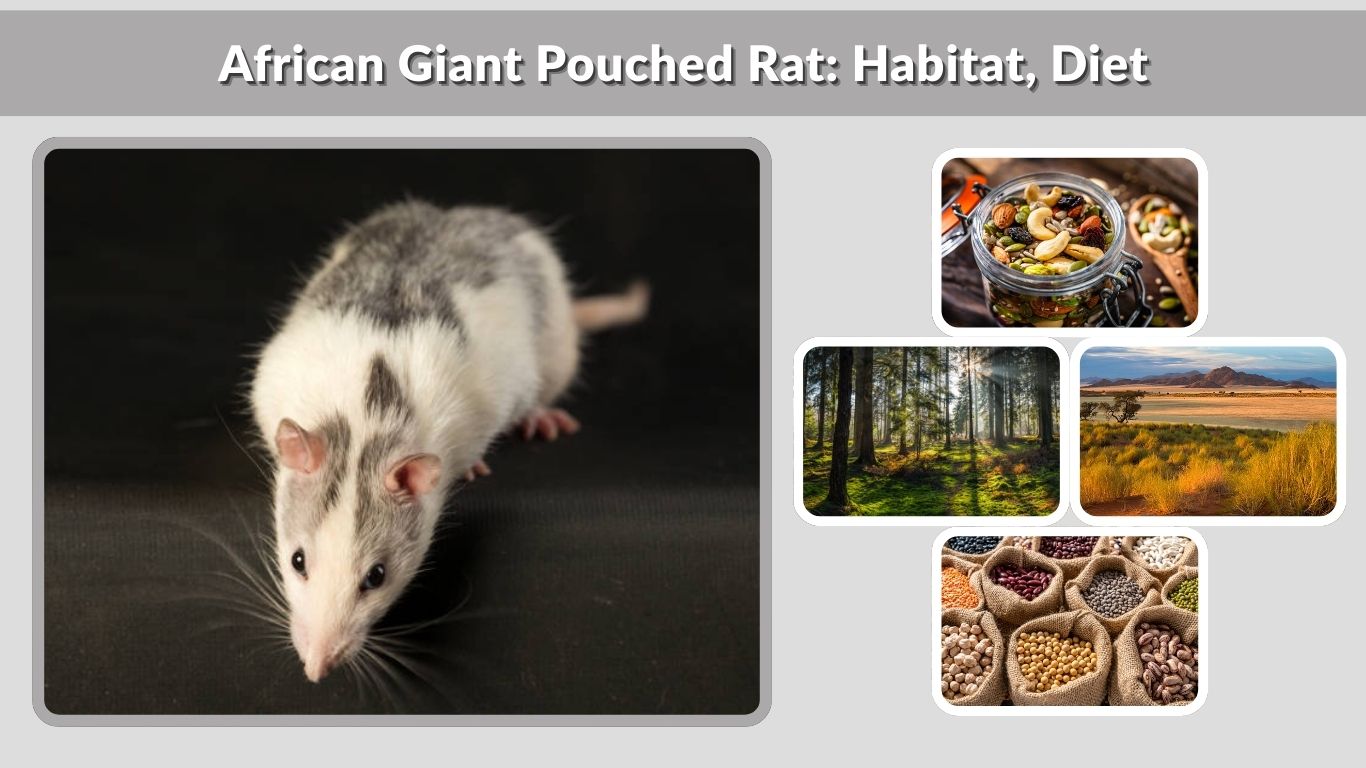




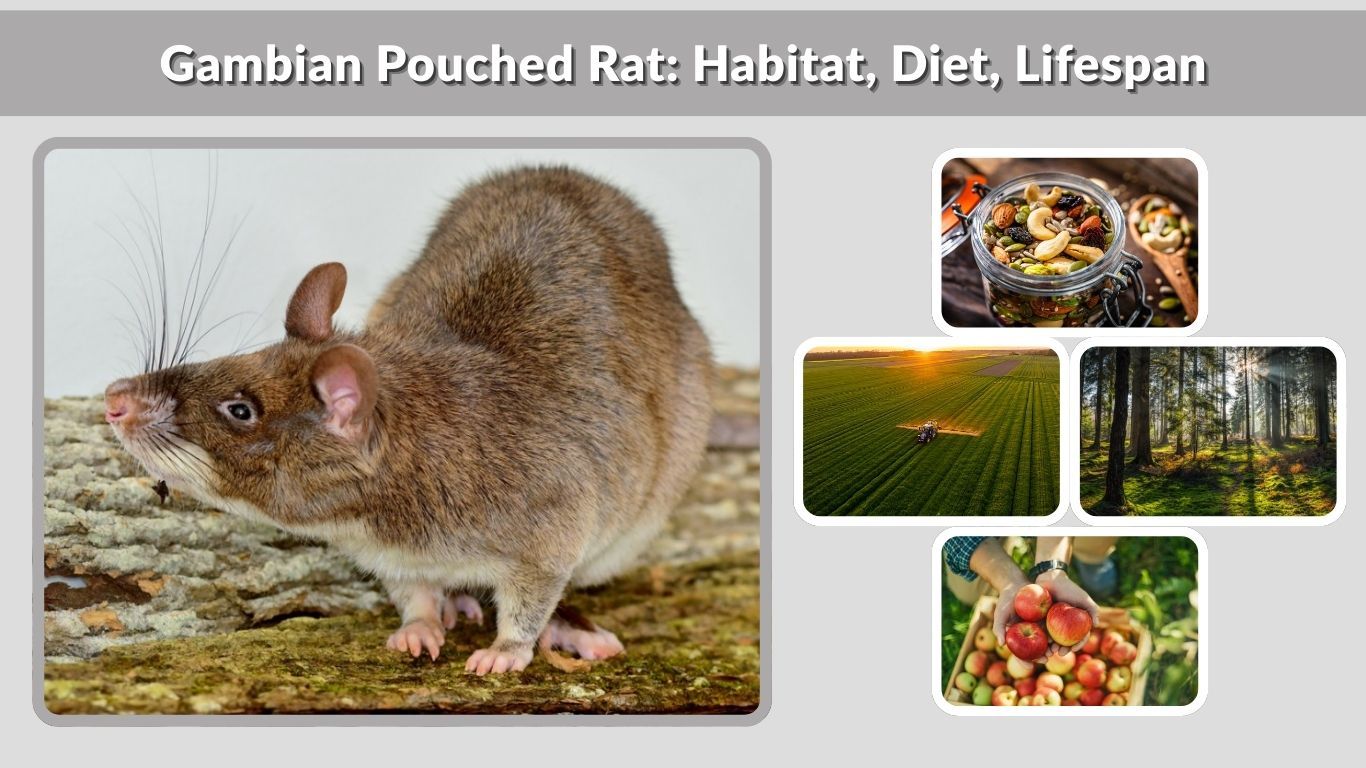
The Gambian pouched rat is a large rodent native to sub-Saharan Africa and is known for its impressive size, intelligence, and unique cheek pouches. Unlike common household rats, this species belongs to a different rodent family and has several distinctive characteristics. The Gambian pouched rat has gained global attention not only for its unusual appearance but also for its role in scientific research and detection work. From its diet and natural habitat to its lifespan and potential as a pet, this fascinating animal has many remarkable traits worth exploring.
What Is a Gambian Pouched Rat
Scientific Classification
The Gambian pouched rat, scientifically known as Cricetomys gambianus, belongs to the family Nesomyidae. Although it is commonly called a rat, it is not closely related to the typical rats found in cities or homes. Instead, it belongs to a group of African rodents that evolved separately from common rats.
This species is often referred to as the African giant pouched rat because of its large size and the distinctive cheek pouches it uses to carry food. Scientists have studied this rodent extensively because of its strong sense of smell and its ability to be trained for various detection tasks.
Physical Characteristics
The Gambian pouched rat is significantly larger than most rats. Adult individuals typically measure between 25 and 45 centimeters in body length, with an additional tail length that can reach up to 45 centimeters. Their weight can range from about 1 to 1.5 kilograms, making them one of the largest rat species in the world.
Their fur is usually brown or grayish with a lighter-colored underside. They have large ears, a long scaly tail, and strong claws that help them dig burrows. One of the most noticeable features of this rodent is its expandable cheek pouches. These pouches allow the animal to store and transport food, which is how it earned the name “pouched rat.”
Why It Is Called a Pouched Rat
The Gambian pouched rat gets its name from the large cheek pouches located inside its mouth. These pouches function like small storage bags that can hold a considerable amount of food.
When the rat finds food in the wild, it often collects it quickly and stores it in its cheek pouches. Later, it carries the food back to its burrow where it can safely eat or store it. This behavior helps the rat reduce the amount of time it spends exposed to predators while searching for food.
Natural Habitat and Distribution
Where Gambian Pouched Rats Live
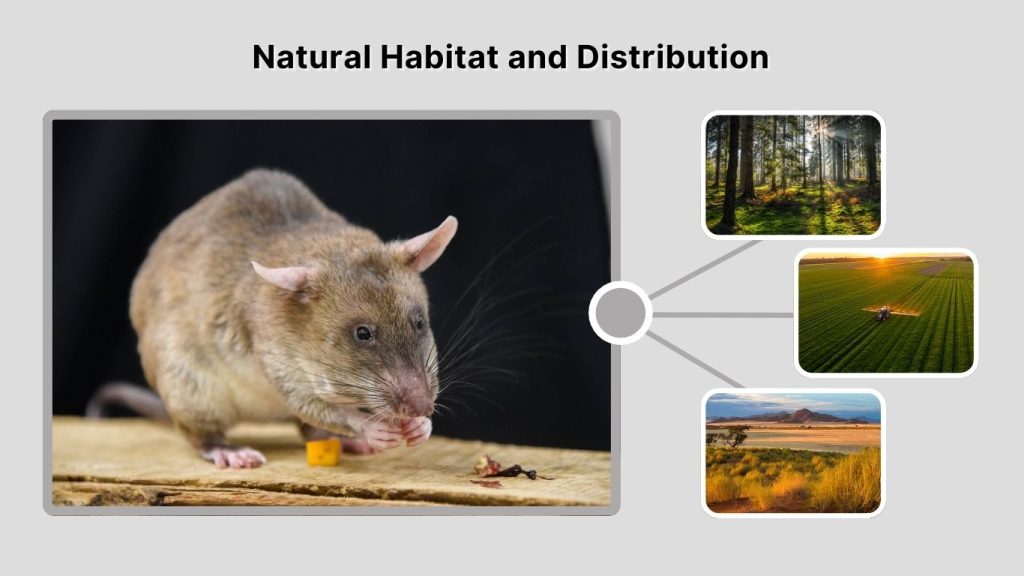
Gambian pouched rats are widely distributed throughout sub-Saharan Africa. They can be found in several countries including Tanzania, Ghana, Mozambique, Kenya, and Angola. Their wide distribution shows how adaptable they are to different environments.
Because they can survive in various habitats, they are able to thrive in both wild landscapes and areas close to human settlements. This adaptability allows them to find food and shelter in many different regions.
Preferred Habitat
These rodents live in a variety of habitats, including forests, savannas, and farmland. Forest environments provide dense vegetation that offers protection from predators, while savannas provide access to seeds, fruits, and other food sources.
Agricultural areas also attract Gambian pouched rats because crops and stored food are easily accessible. In some regions, this has caused them to be considered pests by farmers.
Burrowing and Shelter
Gambian pouched rats are skilled burrowers and spend much of their time underground. They create complex burrow systems that include several chambers and entrances. These burrows serve multiple purposes such as providing shelter, storing food, and raising their young.
The underground burrows protect them from predators and harsh weather conditions. Their strong claws and powerful limbs allow them to dig efficiently and maintain their shelters over time.
Gambian Pouched Rat Diet
What Do Gambian Pouched Rats Eat
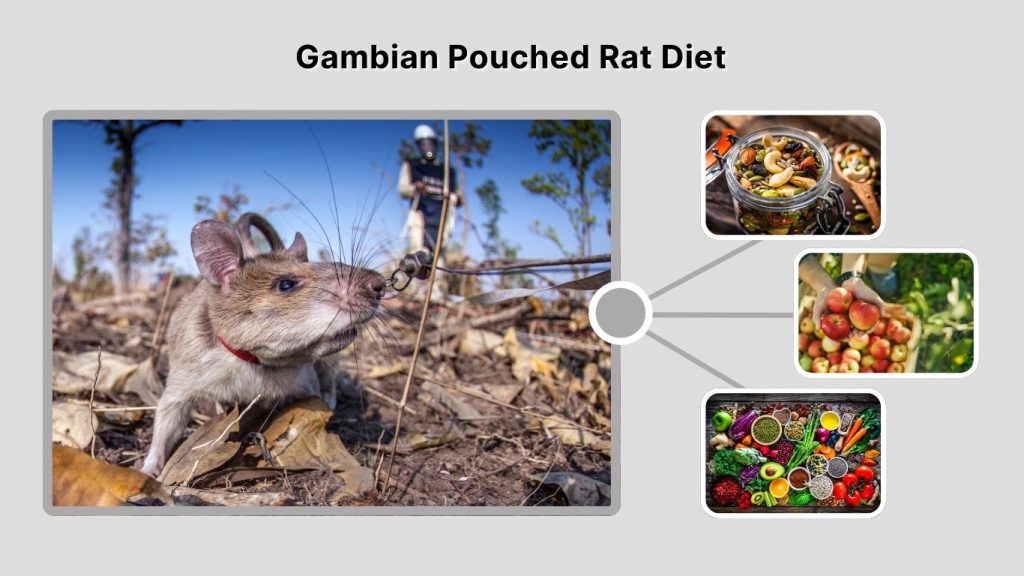
The Gambian pouched rat has an omnivorous diet, meaning it eats both plant-based and animal-based foods. In the wild, its diet mainly consists of fruits, seeds, nuts, roots, and vegetables. These foods provide essential nutrients and energy for survival.
They are also known to eat grains and crops when living near farmland. Their flexible diet helps them adapt to different environments and seasonal food availability.
Omnivorous Feeding Behavior
In addition to plant foods, Gambian pouched rats may occasionally eat insects and small invertebrates. This behavior allows them to obtain additional protein and nutrients when plant-based food is scarce.
Because they are opportunistic feeders, they tend to eat whatever food sources are available in their surroundings. This ability to adapt their diet plays an important role in their survival.
Food Storage Using Cheek Pouches
One of the most interesting aspects of the Gambian pouched rat’s feeding habits is its use of cheek pouches. When the rat discovers food, it often gathers as much as possible and stores it inside these expandable pouches.
After collecting the food, the rat carries it back to its burrow where it can safely store or eat it. This strategy allows the animal to gather large quantities of food quickly while reducing the risk of being exposed to predators.
Diet in Captivity
When Gambian pouched rats are kept in captivity, their diet needs to be carefully managed to maintain good health. A balanced diet usually includes commercial rodent food, fresh fruits, vegetables, and grains.
Providing a varied diet helps ensure they receive the vitamins and minerals necessary for proper growth and long-term health. Clean water must also be available at all times.
Gambian Pouched Rat Lifespan
Lifespan in the Wild
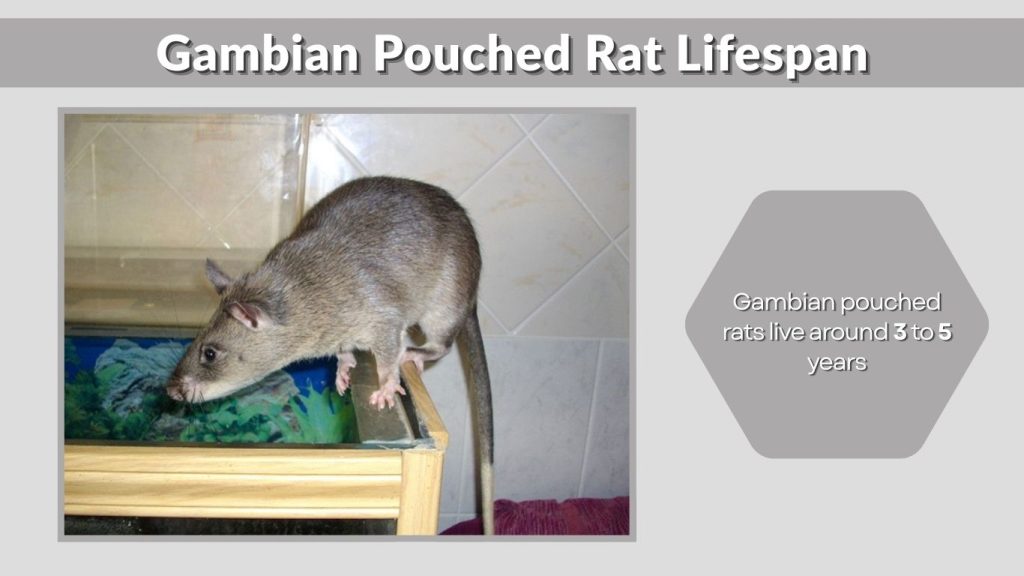
The lifespan of a Gambian pouched rat in the wild is generally shorter than in captivity due to environmental challenges and natural predators. On average, these rodents live around 3 to 5 years in their natural habitat. Factors such as food availability, disease, and predation from snakes, birds of prey, and wild cats can greatly influence their survival.
Despite these risks, Gambian pouched rats have strong survival instincts. Their nocturnal lifestyle and underground burrows help protect them from many dangers.
Lifespan in Captivity
When kept in controlled environments such as research facilities or private homes, Gambian pouched rats often live longer. With proper nutrition, veterinary care, and safe housing, their lifespan can extend to 6 to 8 years.
Captive rats benefit from regular feeding, protection from predators, and a stable environment. These factors significantly increase their chances of living a longer and healthier life.
Factors Affecting Lifespan
Several factors can affect how long a Gambian pouched rat lives. Diet is one of the most important elements, as a balanced and nutritious diet supports overall health.
Environmental conditions also play a key role. Clean living spaces, reduced stress, and protection from diseases can improve their quality of life. In the wild, predators and habitat loss may shorten their lifespan, while in captivity, proper care can help them live much longer.
Gambian Pouched Rat Behavior and Intelligence
Nocturnal Lifestyle
Gambian pouched rats are primarily nocturnal animals, meaning they are most active during the night. During the daytime, they usually stay inside their burrows to rest and avoid predators.
At night, they emerge to search for food. Their excellent sense of smell and hearing allow them to navigate in the dark and locate food sources efficiently. This nighttime activity pattern also helps them avoid many daytime predators.
Social Behavior
These rodents are generally solitary creatures. Each individual usually maintains its own territory and burrow system. They may become territorial when competing for food or shelter.
However, during the breeding season, males and females interact for mating. After birth, young rats remain with their mother for a short period before becoming independent and establishing their own territories.
Intelligence and Trainability
One of the most remarkable characteristics of the Gambian pouched rat is its intelligence. These animals have strong learning abilities and can be trained to perform specific tasks using reward-based methods.
Because of their excellent sense of smell, Gambian pouched rats have been trained for important detection work. In some programs, they are used to locate buried landmines or detect diseases such as tuberculosis in medical samples. Their ability to learn quickly and work efficiently has made them valuable partners in scientific and humanitarian efforts.
Gambian Pouched Rat as a Pet
Can Gambian Pouched Rats Be Kept as Pets
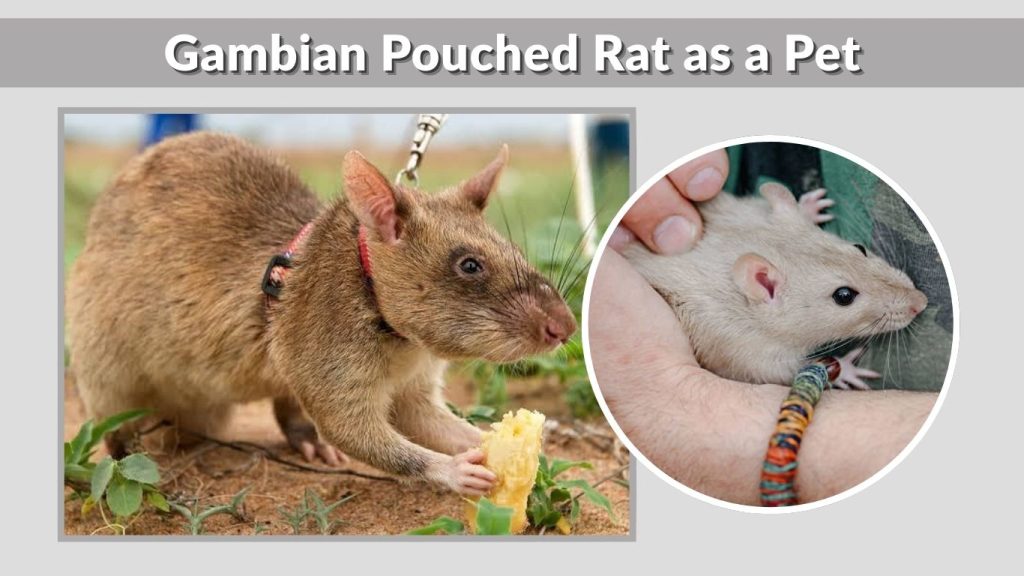
In some parts of the world, Gambian pouched rats are kept as exotic pets. Their intelligence and ability to bond with humans make them interesting companions for experienced animal owners.
However, they are not as common as other pet rodents like hamsters or guinea pigs. Their larger size and special care requirements mean they are better suited for owners who are prepared to meet their needs.
Legal Considerations
Before keeping a Gambian pouched rat as a pet, it is important to check local laws and regulations. In some countries, the import or ownership of these rats is restricted or banned.
These regulations were introduced in certain regions after concerns about disease transmission and the potential impact of escaped animals on local ecosystems.
Housing Requirements
Gambian pouched rats require large and secure enclosures because of their size and activity level. The enclosure should provide enough space for climbing, digging, and exploring.
They also benefit from environmental enrichment such as tunnels, wooden structures, and chew toys. These items help keep them mentally stimulated and prevent boredom.
Pet Care and Handling
Regular interaction is important when keeping a Gambian pouched rat as a pet. With gentle handling and consistent socialization, they can become comfortable around humans.
They also require a balanced diet that includes fruits, vegetables, grains, and specially formulated rodent food. Clean water and proper hygiene are essential for maintaining their health.
Pros and Cons of Keeping One as a Pet
Owning a Gambian pouched rat can be rewarding because they are intelligent and capable of learning simple behaviors. They can form bonds with their caretakers and may even respond to training.
However, they also require significant care and attention. Their large size, strong teeth, and need for space make them more demanding than typical small pet rodents. Potential owners should carefully consider these factors before deciding to keep one as a pet.
Interesting Facts About Gambian Pouched Rats
The Gambian pouched rat is one of the largest rat species in the world. Despite its size, it is known for being calm and highly trainable. These rats have an extremely powerful sense of smell, which allows them to detect certain scents far better than humans.
In fact, some trained Gambian pouched rats are used in humanitarian programs to detect buried landmines and identify tuberculosis in medical samples. Their ability to perform these tasks has helped save lives and improve medical screening in several countries.
Another interesting fact is that their cheek pouches can carry large amounts of food at once, allowing them to transport supplies back to their burrows efficiently.
Conclusion
The Gambian pouched rat is a fascinating and intelligent rodent with many unique features. From its distinctive cheek pouches and adaptable diet to its impressive lifespan and remarkable sense of smell, this species stands out among rodents. Whether living in the wild, assisting scientists in detection programs, or being kept as an exotic pet, the Gambian pouched rat continues to attract attention for its abilities and adaptability. Understanding this remarkable animal helps highlight its importance in both nature and human society.