

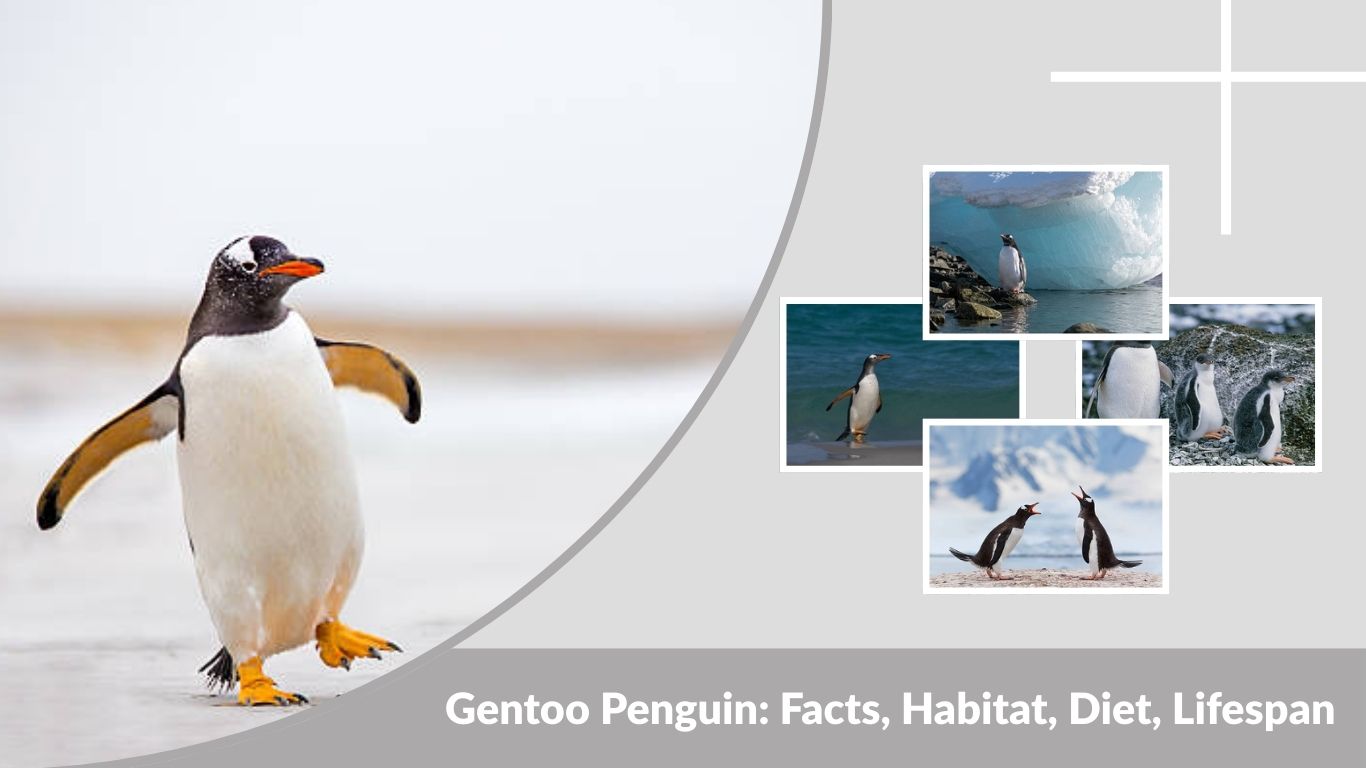
The gentoo penguin is one of the most recognizable penguin species in the Southern Hemisphere. Known for its bright orange beak and the wide white stripe stretching across the top of its head, this energetic bird is also the fastest swimming penguin in the world. Gentoo penguins are adaptable, social, and skilled hunters that thrive in cold coastal environments. In this guide, we’ll explore gentoo penguin facts, habitat, diet, size, and how they compare to Adélie penguins.
What Is a Gentoo Penguin?
The gentoo penguin (Pygoscelis papua) is the third-largest penguin species, after the emperor and king penguins. It belongs to the brush-tailed penguin group, which also includes Adélie and chinstrap penguins.
Gentoos are known for their confident behavior and strong swimming ability. Unlike some Antarctic species that migrate long distances, gentoo penguins often stay relatively close to their breeding colonies year-round.
Physical Appearance and Identification
Gentoo penguins are easy to identify because of several distinct features:
- A wide white stripe that stretches like a bonnet across the top of the head
- Bright orange-red beak
- Orange feet
- Long, stiff tail
Their bodies are streamlined for speed in the water. On land, they waddle like other penguins, but underwater they are graceful and agile swimmers.
Gentoo Penguin Size
Gentoo penguins are larger than Adélie and chinstrap penguins. On average, they stand about 30 to 35 inches (75–90 cm) tall.
Their weight typically ranges between 10 and 19 pounds (4.5–8.5 kg), depending on food availability and the season. Before breeding season, adults often gain weight to prepare for fasting periods during incubation.
Although they are not as large as emperor penguins, gentoos are noticeably bulkier than many other penguin species.
Where Do Gentoo Penguins Live?
Gentoo penguins live in the Southern Ocean region, mainly along coastal areas and nearby islands.
Gentoo Penguin Habitat
Their habitat includes:
- The Antarctic Peninsula
- Falkland Islands
- South Georgia
- Kerguelen Islands and other subantarctic regions
They prefer ice-free coastal areas with access to the ocean. Unlike Adélie penguins, which are strongly linked to sea ice, gentoo penguins often inhabit slightly milder subantarctic environments.
They typically build nests on rocky shores, grassy slopes, or cliffs close to the sea. Easy access to water is essential because they must frequently return from feeding trips to care for their chicks.
Seasonal Behavior and Movement
Gentoo penguins are less migratory than many other penguin species. While some individuals may move short distances during winter, they generally remain near their breeding sites throughout the year.
This limited migration is possible because they often live in areas where ocean conditions remain suitable for feeding even during colder months.
Fascinating Gentoo Penguin Facts
Gentoo penguins hold the title of the fastest swimming penguin species. They can reach speeds of up to 22 miles per hour (36 km/h) in short bursts. This speed helps them catch prey and escape predators.
Another interesting fact is their strong pair bonds. During breeding season, males often present pebbles to females as part of courtship. These stones are used to build nests, and offering a well-chosen pebble can strengthen a pair’s bond.
Gentoo penguins are also highly vocal. Each bird has a unique call, allowing mates and chicks to recognize one another in crowded colonies.
Compared to some penguin species, gentoos are known to be curious and less shy around humans, especially in areas where they are protected and undisturbed.
Gentoo Penguin Diet and Feeding Habits
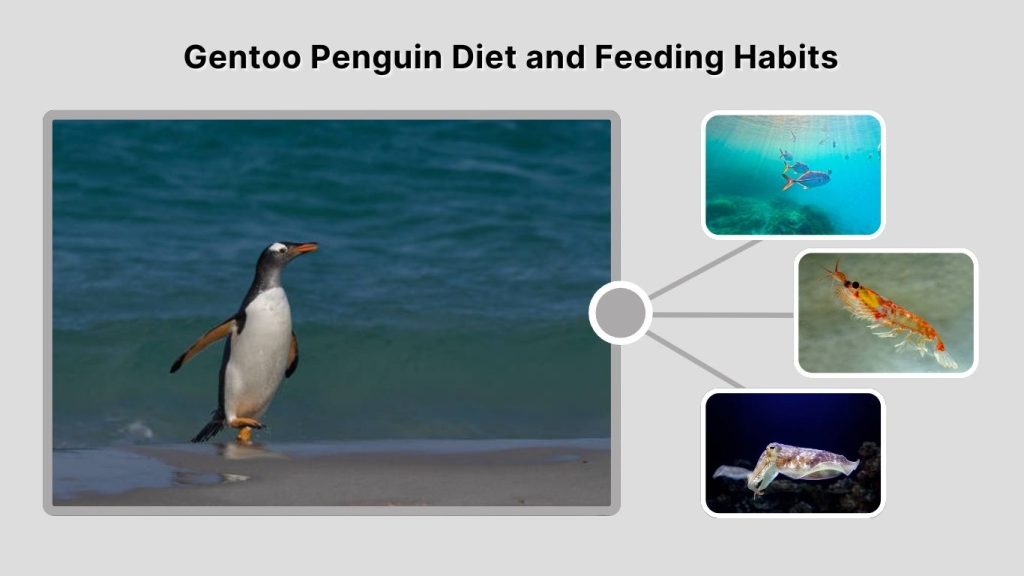
Gentoo penguins are carnivorous seabirds that depend entirely on marine life for survival. Their diet varies depending on location and seasonal food availability.
What Do Gentoo Penguins Eat?
The main components of a gentoo penguin’s diet include:
- Fish (often the largest portion)
- Antarctic krill
- Squid
In many regions, fish make up the majority of their diet, which is one key difference between gentoo and Adélie penguins. The high protein content of fish supports their active lifestyle and fast swimming ability.
Hunting Techniques
Gentoo penguins are skilled divers. Most of their dives are relatively shallow compared to emperor penguins, but they are capable of reaching significant depths when necessary.
They use their powerful flippers to propel themselves underwater and steer with precision. Their streamlined shape reduces drag, allowing them to move quickly while chasing fish or krill.
Gentoos often forage in coastal waters rather than traveling far into open ocean. During breeding season, adults make repeated feeding trips to supply their chicks with regurgitated food.
Seasonal Diet Changes
Diet composition can shift throughout the year. In some regions, krill may dominate the diet, while in others, fish are more abundant.
These seasonal changes demonstrate the gentoo penguin’s adaptability. Their flexible feeding habits help them survive in varying environmental conditions.
Gentoo Penguin vs Adélie Penguins
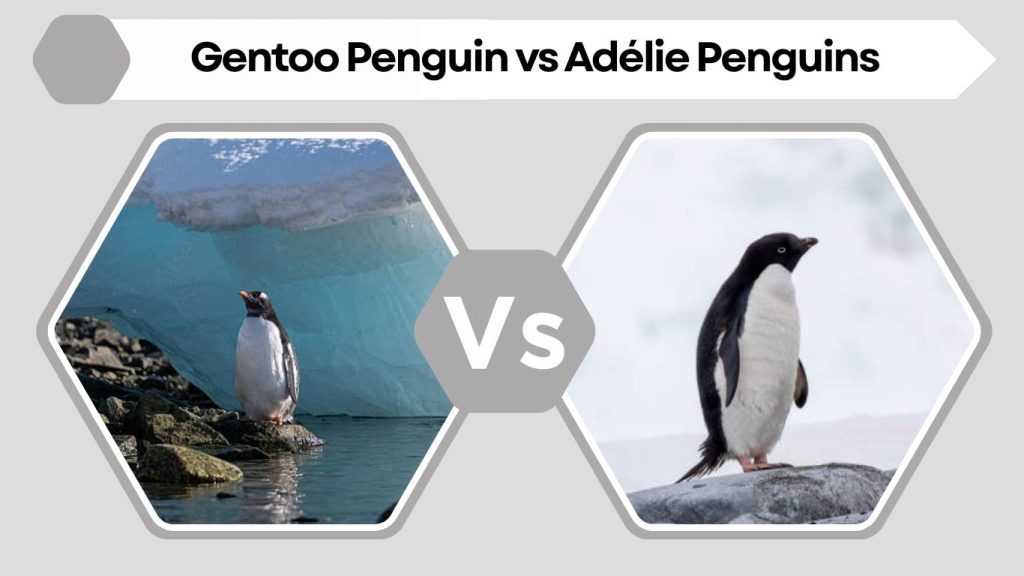
Gentoo and Adélie penguins are closely related and sometimes share overlapping habitats, but they have clear differences.
Size and Appearance Differences
Gentoo penguins are larger and heavier than Adélie penguins. The most obvious visual difference is the head marking:
- Gentoo: wide white stripe across the head
- Adélie: white ring around the eye
Gentoo penguins also have a brighter orange beak compared to the darker beak of Adélies.
Habitat Differences
Adélie penguins are more closely associated with Antarctic sea ice and mainland coastal areas. Gentoo penguins prefer subantarctic islands and ice-free coastal zones.
This difference allows gentoos to live in slightly milder climates compared to Adélies.
Diet and Behavioral Differences
Another key difference between gentoo and Adélie penguins lies in their diet and feeding behavior. Gentoo penguins tend to eat more fish, while Adélie penguins rely heavily on Antarctic krill.
Because gentoos consume a higher proportion of fish, they often forage in coastal waters and make shorter feeding trips. Adélies, in contrast, may travel farther into sea ice zones where krill is abundant.
Behaviorally, gentoo penguins are often considered slightly less aggressive than Adélies or chinstraps during breeding season. Their colonies are typically smaller and less densely packed.
Reproduction and Nesting
Gentoo penguins breed during the Antarctic summer, usually between October and March. Breeding colonies are established on ice-free land close to the sea.
Nest Construction
Gentoo penguins build large nests out of pebbles, stones, grass, and other available materials. Pebbles are particularly valuable because they elevate eggs above damp ground.
Males often collect and present pebbles to females as part of courtship. A carefully chosen stone can help strengthen a pair bond. However, pebble stealing between neighbors is common, leading to noisy disputes within colonies.
Egg Laying and Incubation
A female gentoo penguin typically lays two eggs per breeding season. Both parents share incubation duties, taking turns keeping the eggs warm while the other forages at sea.
The incubation period lasts about 34 to 37 days. Eggs are incubated on the parents’ feet and covered with a brood patch that transfers body heat.
After hatching, chicks are covered in soft gray down and depend entirely on their parents for food and protection.
Chick Rearing
In the early weeks, one parent usually remains with the chicks while the other hunts. Adults feed their young by regurgitating partially digested fish, krill, or squid.
As chicks grow, they form groups known as crèches. These nursery groups help protect them from predators such as skuas and allow both parents to forage at the same time.
Gentoo Penguin Life Cycle
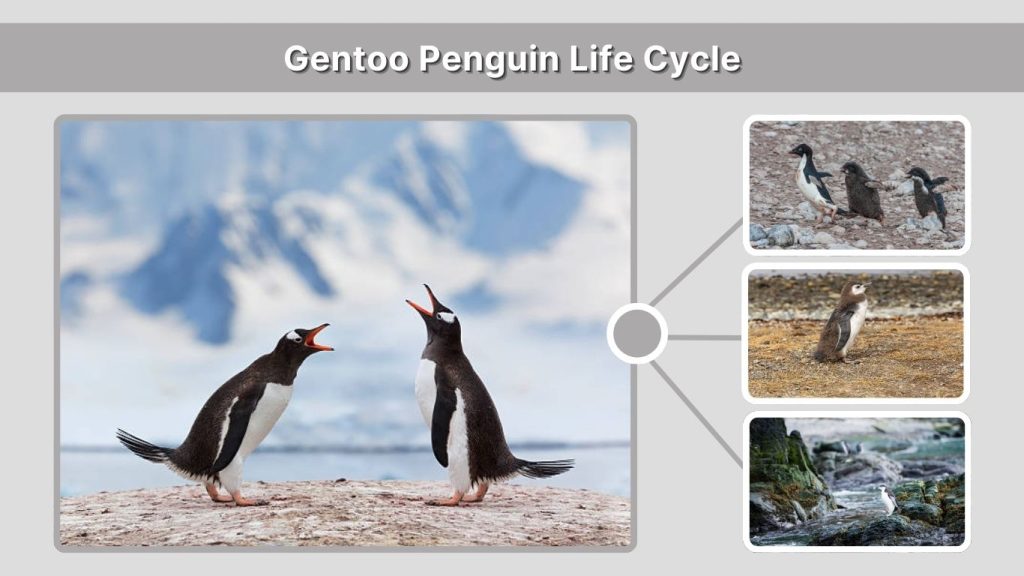
The life cycle of a gentoo penguin follows a clear progression from egg to adulthood.
Chick Stage
Newly hatched chicks are small, fluffy, and unable to regulate their body temperature effectively. Parental warmth and regular feeding are critical during this stage.
Rapid growth occurs over several weeks as chicks build the strength needed for independence.
Juvenile Stage
After about two to three months, chicks begin molting their down feathers and develop waterproof juvenile plumage. This change enables them to enter the ocean and start swimming.
Once fledged, juvenile gentoo penguins head to sea and may spend several years maturing before returning to breeding colonies.
Adult Stage
Gentoo penguins typically reach breeding maturity between 3 and 4 years of age. Many return to the same nesting sites each year, demonstrating strong site fidelity.
Adults repeat the seasonal breeding cycle annually if environmental conditions and food availability are favorable.
Gentoo Penguin Lifespan and Survival
In the wild, gentoo penguins generally live 15 to 20 years, though some individuals may survive longer.
Their longevity depends on access to food, stable environmental conditions, and protection from predators.
Natural Predators
Gentoo penguins face several natural threats:
- Leopard seals
- Orcas (killer whales)
- Skuas that prey on eggs and chicks
While adult penguins are relatively safe in large groups, young chicks remain vulnerable to aerial predators.
Environmental Threats
Climate change poses ongoing challenges for gentoo penguins. Changes in ocean temperatures can shift fish and krill populations, affecting food availability.
In some regions, gentoo populations have expanded as warming temperatures reduce sea ice. However, long-term ecosystem changes remain uncertain. Human fishing activity may also create competition for marine resources.
Scientists monitor gentoo penguin populations as indicators of environmental change in the Southern Ocean.
Conclusion
The gentoo penguin is a remarkable seabird known for its speed, adaptability, and distinctive appearance. From its bright orange beak to its impressive swimming ability, this species stands out among Antarctic penguins.
Living along coastal regions and subantarctic islands, gentoo penguins rely on marine ecosystems for survival. Their flexible diet, strong parental care, and relatively stable populations highlight their resilience.
Understanding where gentoo penguins live, what they eat, how long they live, and how they differ from Adélie penguins helps deepen our appreciation for these fascinating birds and the fragile environments they inhabit.