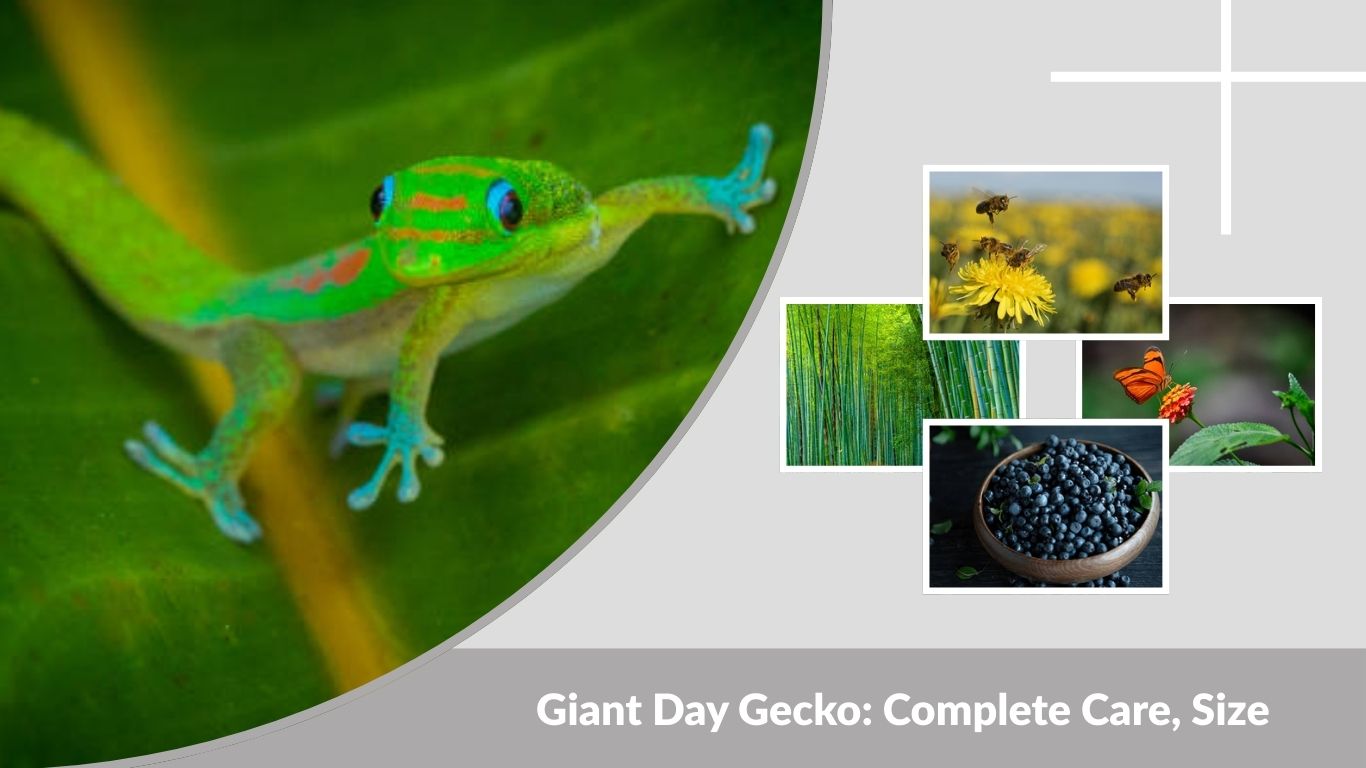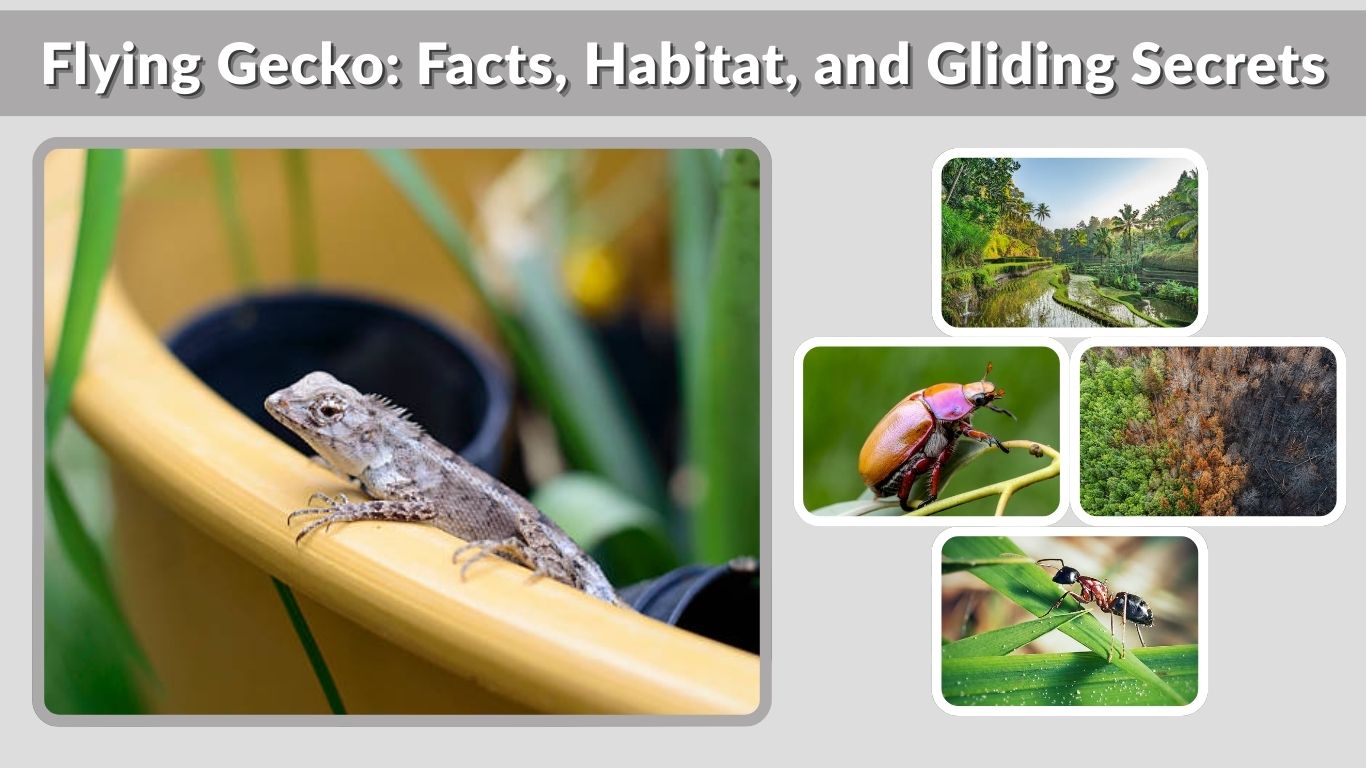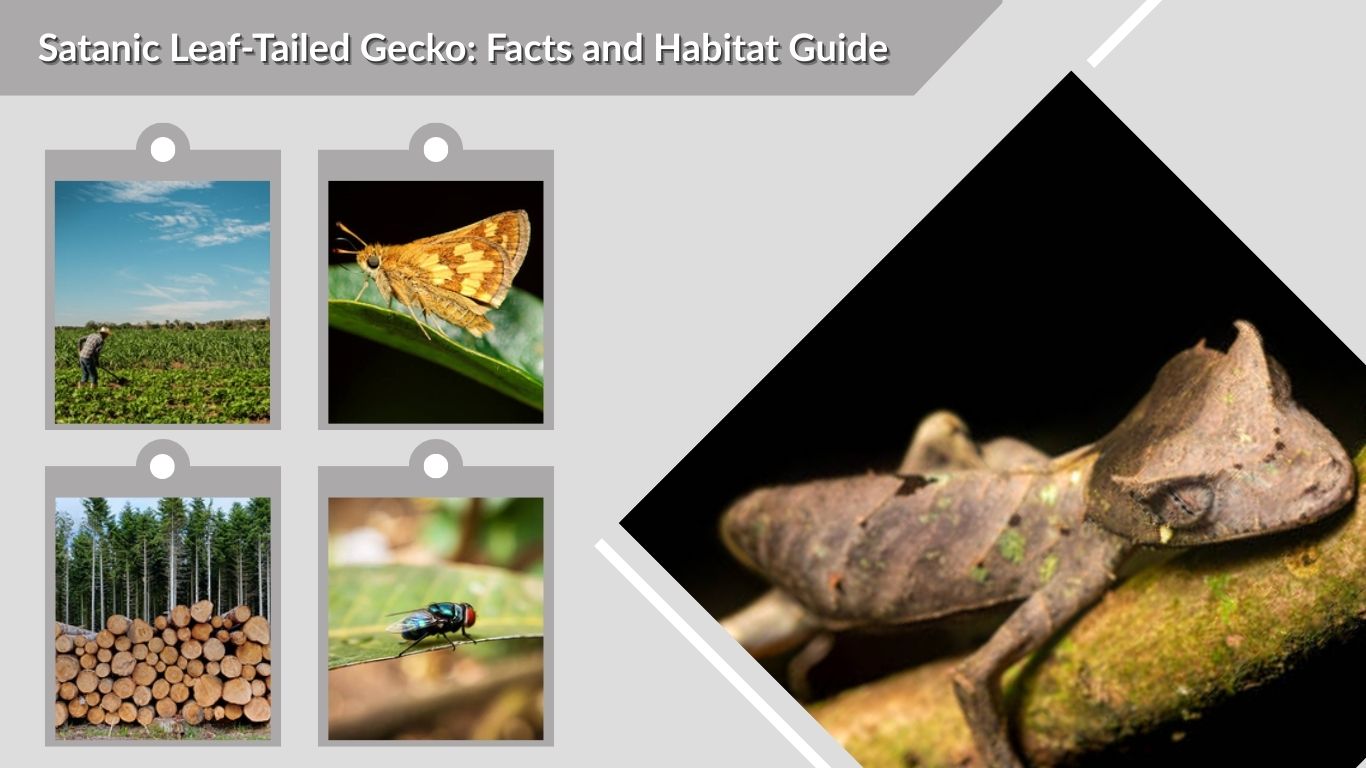


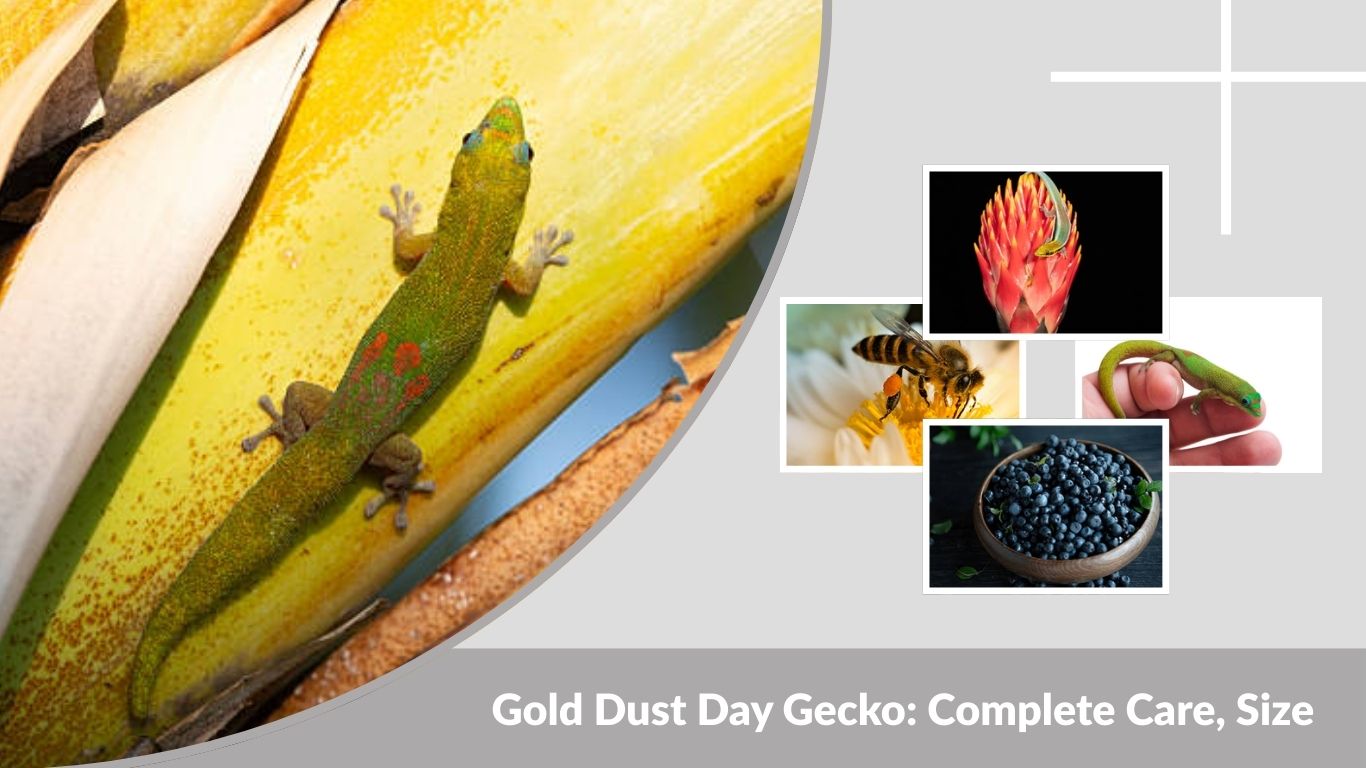
The Gold Dust Day Gecko is one of the most eye-catching reptiles in the pet trade. With its bright green body, sparkling gold speckles, and bold red markings, this small tropical lizard instantly stands out. Native to Madagascar, it has become popular among reptile enthusiasts for its beauty and active daytime behavior. However, despite its small size, this species has specific care requirements. In this guide, you’ll learn about its size, lifespan, temperament, and essential care needs.
What Is a Gold Dust Day Gecko?
Scientific Name and Origin
The Gold Dust Day Gecko’s scientific name is Phelsuma laticauda. It belongs to the Phelsuma genus, commonly known as day geckos. Unlike many other gecko species that are nocturnal, Gold Dust Day Geckos are active during the day.
They are native to northern Madagascar but have also been introduced to places like Hawaii and other tropical regions. In the wild, they thrive in warm, humid environments with plenty of trees and vegetation.
Natural Habitat
Gold Dust Day Geckos are arboreal, meaning they spend most of their time in trees and shrubs. In their natural habitat, they live in tropical forests, plantations, and even near human dwellings.
These environments provide:
- Warm temperatures year-round
- High humidity levels
- Abundant climbing surfaces
- Access to insects and fruit
Because they are tree-dwellers, vertical space is far more important than floor space when setting up an enclosure.
Physical Appearance
This species is famous for its vibrant coloration. Adults typically display:
- Bright emerald green skin
- Gold or yellow speckles scattered across the back
- Red or orange markings between the eyes and on the snout
- Large, lidless eyes
- Sticky toe pads for climbing smooth surfaces
Their toe pads allow them to cling to glass and vertical surfaces with ease. Unlike some other geckos, they do not have eyelids and instead lick their eyes to keep them clean.
Gold Dust Day Gecko Size and Lifespan
How Big Do Gold Dust Day Geckos Get?
Gold Dust Day Geckos are considered small to medium-sized geckos. Adults typically reach between 4 and 6 inches in total length, including the tail.
The tail makes up a significant portion of their body length. Like many gecko species, they can drop their tail if threatened, a defense mechanism known as autotomy. While the tail can regrow, it may not look exactly the same as the original.
How Long Do They Live?
With proper care, a Gold Dust Day Gecko can live between 8 and 15 years in captivity. Lifespan depends heavily on factors such as:
- Proper temperature and humidity
- Balanced diet
- Access to UVB lighting
- Low stress environment
Poor husbandry can significantly shorten their lifespan, especially if calcium deficiencies or chronic dehydration occur.
Growth Rate and Maturity
Juvenile Gold Dust Day Geckos grow relatively quickly. Under optimal conditions, they typically reach near-adult size within their first year.
Sexual maturity is usually reached between 8 and 12 months of age. During this stage, males begin to show more visible femoral pores and may display territorial behavior.
Gold Dust Day Gecko Temperament and Behavior
Are They Good Pets?
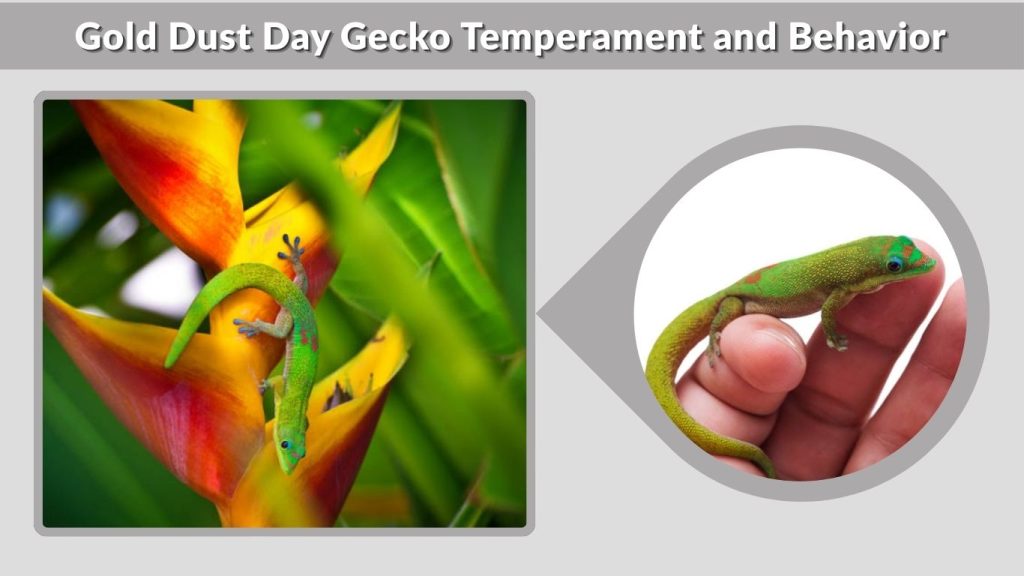
Gold Dust Day Geckos can make excellent pets for reptile enthusiasts who enjoy observing natural behaviors. They are active during the day, which makes them more engaging to watch compared to nocturnal species.
However, they are best considered display pets rather than handling pets. Their delicate skin and quick movements make them better suited for visual enjoyment inside a well-designed enclosure.
Can You Handle a Gold Dust Day Gecko?
Handling is generally not recommended. Their skin is extremely fragile and can tear easily if grabbed or restrained.
In addition:
- They become stressed when handled frequently
- They can drop their tail if frightened
- They move very quickly and can escape easily
If handling is necessary, it should be minimal and done carefully to avoid injury.
Social Behavior
Males are highly territorial and should not be housed together. Housing two males in the same enclosure will almost always result in fighting.
A single male and female pair can sometimes be kept together in a properly sized enclosure. Groups of females may coexist, but space and hiding areas are important to prevent stress.
Understanding their social dynamics is crucial for maintaining a peaceful and healthy setup.
Gold Dust Day Gecko Care Guide
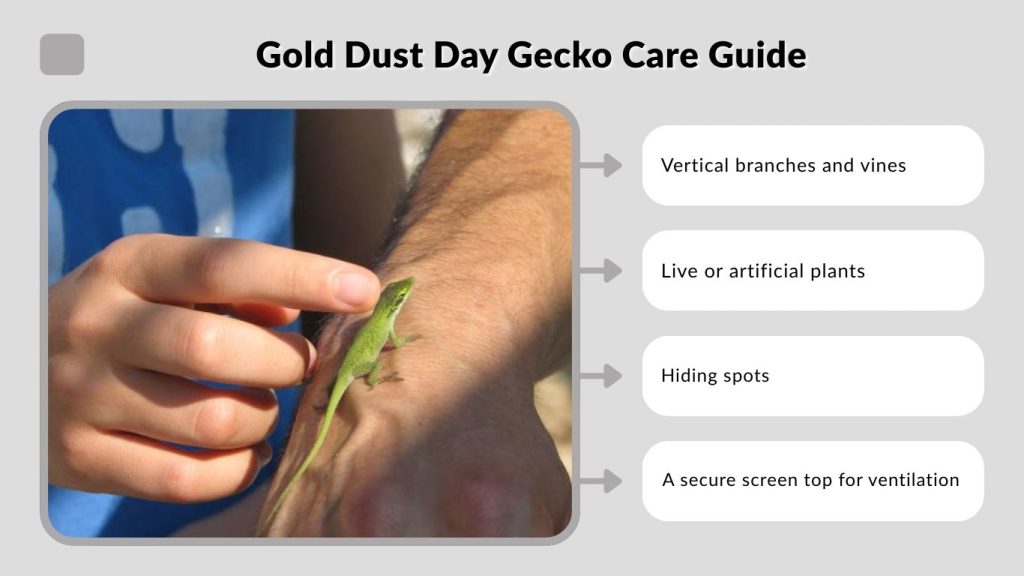
Providing proper care is essential for maintaining your gecko’s health and vibrant coloration.
Enclosure Size and Setup
Because they are arboreal, Gold Dust Day Geckos require a vertical enclosure. The minimum recommended size for one adult is 12x12x18 inches, though larger enclosures are always better.
An ideal setup should include:
- Vertical branches and vines
- Live or artificial plants
- Hiding spots
- A secure screen top for ventilation
Live plants not only improve the natural look of the enclosure but also help maintain humidity levels.
Temperature Requirements
Maintaining the correct temperature gradient is essential. During the day, ambient temperatures should range between 75–85°F.
A basking spot should reach around 88–90°F. At night, temperatures can safely drop slightly but should remain above 70°F.
Using a digital thermometer helps ensure accuracy and consistency.
Humidity Levels
Gold Dust Day Geckos require moderate to high humidity to stay healthy. The ideal range is between 60% and 80%. Proper humidity supports healthy shedding, hydration, and overall skin condition. Inadequate humidity often leads to stuck shed, dehydration, and long-term stress.
Daily misting is usually necessary, especially in dry climates. Light misting in the morning and evening helps replicate tropical conditions. At the same time, proper ventilation is essential to prevent stagnant air and mold growth. A hygrometer should be used to monitor humidity levels accurately.
Lighting and UVB Needs
Lighting plays a crucial role in the health of a Gold Dust Day Gecko. Since they are active during the day, they need a consistent light cycle of about 10 to 12 hours daily. Full-spectrum lighting that includes UVB is highly recommended.
UVB exposure helps them synthesize vitamin D3, which is essential for proper calcium absorption. Without UVB, they are at risk of developing metabolic bone disease. Even if you supplement calcium, proper lighting significantly improves long-term health outcomes. Replacing UVB bulbs according to manufacturer recommendations ensures consistent output.
Gold Dust Day Gecko Diet and Feeding
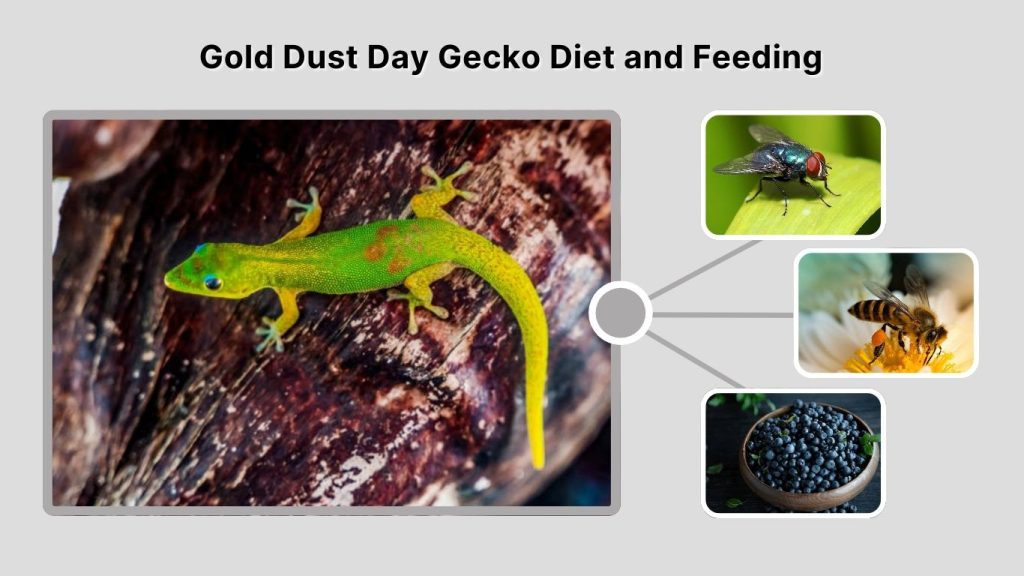
A balanced diet is key to maintaining vibrant coloration and strong bone health. In the wild, these geckos consume small insects, nectar, and soft fruits. In captivity, their diet should replicate this variety as closely as possible.
They typically eat small feeder insects such as crickets, fruit flies, and small roaches. Many keepers also provide a high-quality commercial crested gecko diet, which supplies balanced nutrition and essential vitamins. Occasional fruit purees can be offered as a treat, but sugary fruits should not dominate their diet.
Juveniles generally eat daily because they are growing rapidly. Adults can be fed three to four times per week. Calcium supplementation with vitamin D3 should be provided regularly, and a reptile multivitamin can be added periodically to prevent deficiencies.
Male vs Female Gold Dust Day Gecko
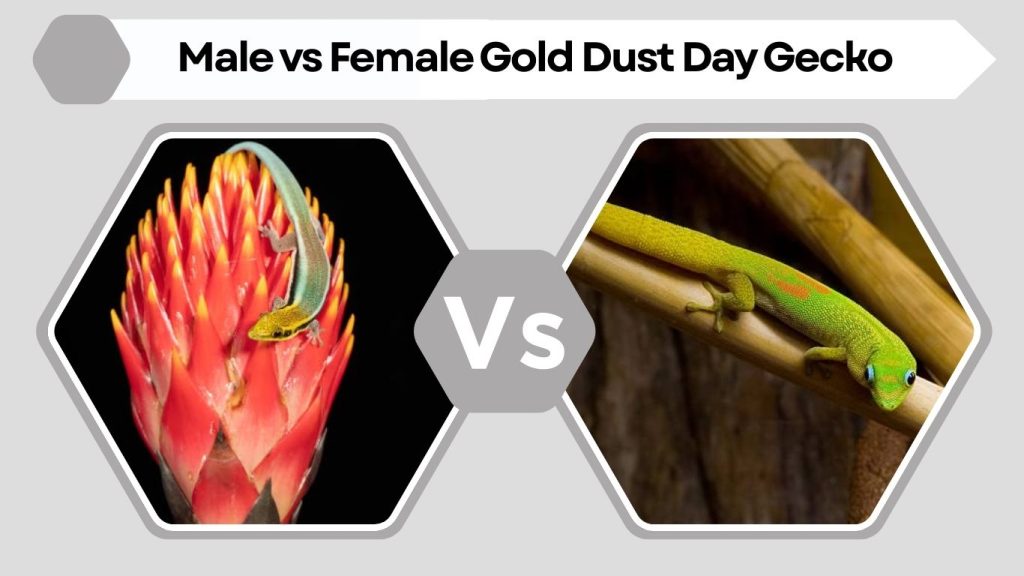
Distinguishing between male and female Gold Dust Day Geckos becomes easier as they mature. Males usually display brighter coloration and have visible femoral pores along the underside of their hind legs. These pores appear as small dots in a V-shaped line and are much more pronounced in males.
Females tend to have slightly softer coloration and lack prominent pores. When housing multiple geckos, only one male should be kept per enclosure. Male territorial behavior can lead to aggression and injury. A male and female pair may coexist successfully in a properly sized enclosure, but breeding may occur if conditions are suitable.
Gold Dust Day Gecko Price and Where to Buy
The cost of a Gold Dust Day Gecko typically ranges between forty and one hundred dollars, depending on age, breeder reputation, and geographic location. Juveniles are often slightly less expensive than fully grown adults.
When purchasing, it is important to choose a reputable breeder or specialized reptile store. Healthy individuals should have clear eyes, smooth skin, alert behavior, and a well-filled tail. Avoid geckos that appear lethargic, thin, or dehydrated. Buying from responsible sources increases the likelihood of receiving a healthy and well-started animal.
Common Health Problems
Gold Dust Day Geckos are generally hardy when cared for properly, but they can develop health issues if husbandry is incorrect. Metabolic bone disease is one of the most serious concerns and is usually caused by inadequate calcium intake or lack of UVB lighting. Symptoms may include weakness, soft jawbones, and difficulty climbing.
Shedding problems can occur if humidity levels are too low. Stuck shed around the toes can restrict circulation and lead to injury. Dehydration is another risk in dry environments. Maintaining correct temperature, humidity, and nutrition greatly reduces the likelihood of these problems.
Pros and Cons of Owning a Gold Dust Day Gecko
Owning a Gold Dust Day Gecko can be highly rewarding for reptile enthusiasts who appreciate vibrant coloration and active daytime behavior. Their relatively small size makes them suitable for compact spaces, and their striking appearance makes them excellent display animals.
However, they are not ideal for frequent handling. Their delicate skin and fast movements require careful management. They also need consistent humidity and proper lighting, which demands attention to detail. Prospective owners should be prepared to provide stable environmental conditions for many years.
FAQs
Are Gold Dust Day Geckos good for beginners?
Gold Dust Day Geckos can be suitable for beginners who are willing to research proper care requirements. They are not difficult to maintain, but they do require attention to humidity, temperature, and lighting. Beginners who prefer interactive pets may find them less suitable due to limited handling.
Do Gold Dust Day Geckos bite?
Biting is rare but possible if the gecko feels threatened. They are generally more likely to flee than bite. Most defensive behavior results from stress or improper handling rather than aggression.
How often should I mist the enclosure?
Misting is usually required once or twice daily to maintain humidity between 60% and 80%. The exact frequency depends on room conditions and ventilation. Monitoring with a hygrometer helps determine whether adjustments are needed.
Can Gold Dust Day Geckos live together?
Two males should never be housed together because they are territorial. A male and female pair may coexist, and small groups of females can sometimes live together if space is adequate. Proper enclosure size and hiding areas reduce stress.
Do they need UVB lighting?
Yes, UVB lighting is strongly recommended. It supports vitamin D3 production and proper calcium absorption. Without UVB, the risk of metabolic bone disease increases significantly, even when supplements are provided.