




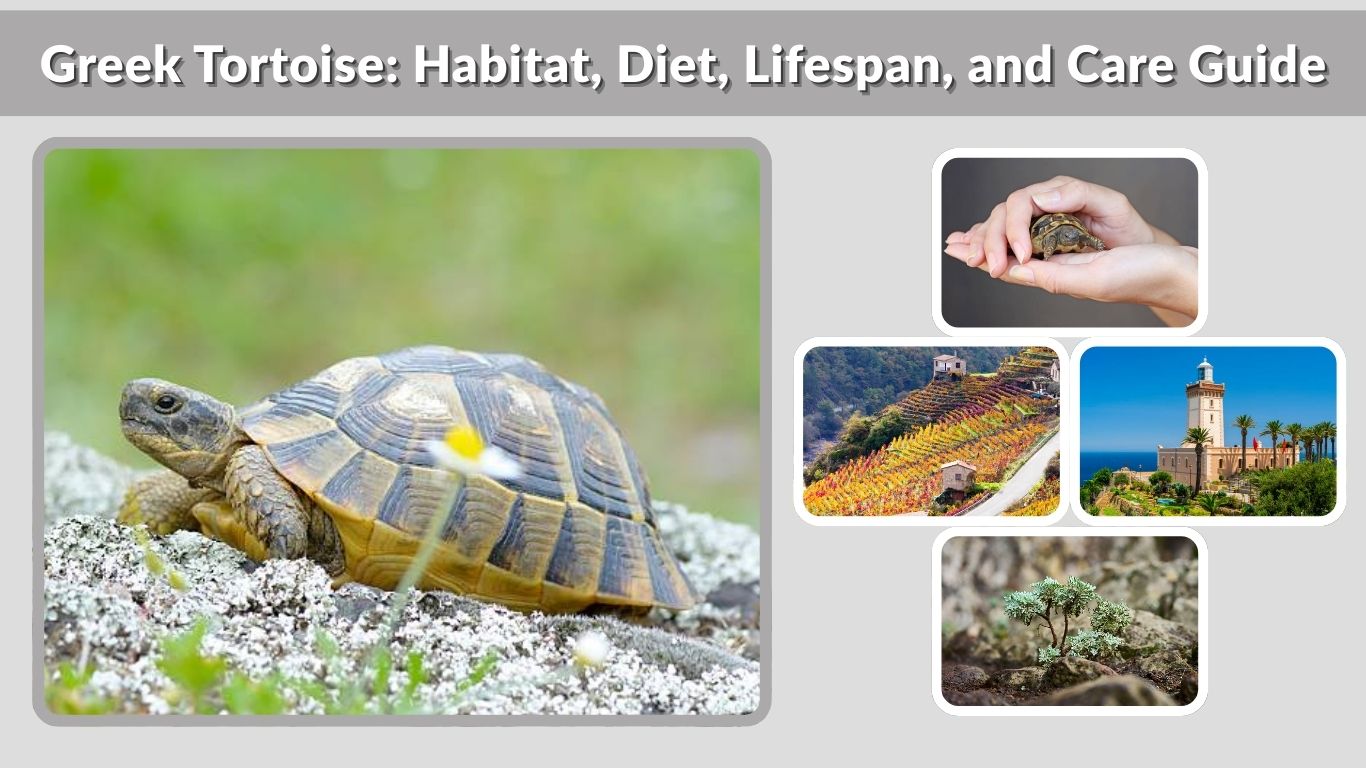
The Greek tortoise (Testudo graeca) is one of the most well-known tortoise species found in Europe, North Africa, and parts of Asia. This small to medium-sized land tortoise is admired for its beautiful shell patterns and hardy nature. Greek tortoises are commonly kept as pets, but they also thrive in the wild across Mediterranean regions. Known for their long lifespan and plant-based diet, these tortoises play an important role in their natural ecosystems. Understanding their habitat, diet, and behavior helps people better appreciate and care for this fascinating reptile species.
What Is a Greek Tortoise?
The Greek tortoise is a terrestrial reptile belonging to the family Testudinidae, which includes all land tortoises. It is sometimes called the Mediterranean tortoise or spur-thighed tortoise because of the small spurs located on its thighs. These tortoises have lived in Mediterranean environments for thousands of years and have adapted well to dry, rocky landscapes.
Greek tortoises are known for their calm temperament and relatively manageable size compared to larger tortoise species. Because of these characteristics, they have become popular among reptile enthusiasts. However, like all tortoises, they require proper care and a suitable environment to remain healthy.
Scientific Classification
Greek tortoises are part of the reptile order Testudines, which includes turtles and tortoises. Unlike aquatic turtles, tortoises spend their entire lives on land and have strong legs designed for walking rather than swimming.
The scientific classification of the Greek tortoise includes:
- Kingdom: Animalia
- Phylum: Chordata
- Class: Reptilia
- Order: Testudines
- Family: Testudinidae
- Genus: Testudo
- Species: Testudo graeca
This classification helps scientists understand the evolutionary relationships between Greek tortoises and other tortoise species around the world.
Overview of the Species
Greek tortoises are considered medium-sized tortoises with strong bodies and protective shells. They are well adapted to dry Mediterranean climates where summers are hot and winters are mild.
These tortoises spend much of their time searching for food, basking in the sun, and resting in shaded areas. In the wild, they may also dig shallow burrows or hide under rocks and vegetation to protect themselves from extreme temperatures.
Their ability to survive in rugged environments makes them one of the most resilient tortoise species in the Mediterranean region.
Greek Tortoise Physical Characteristics
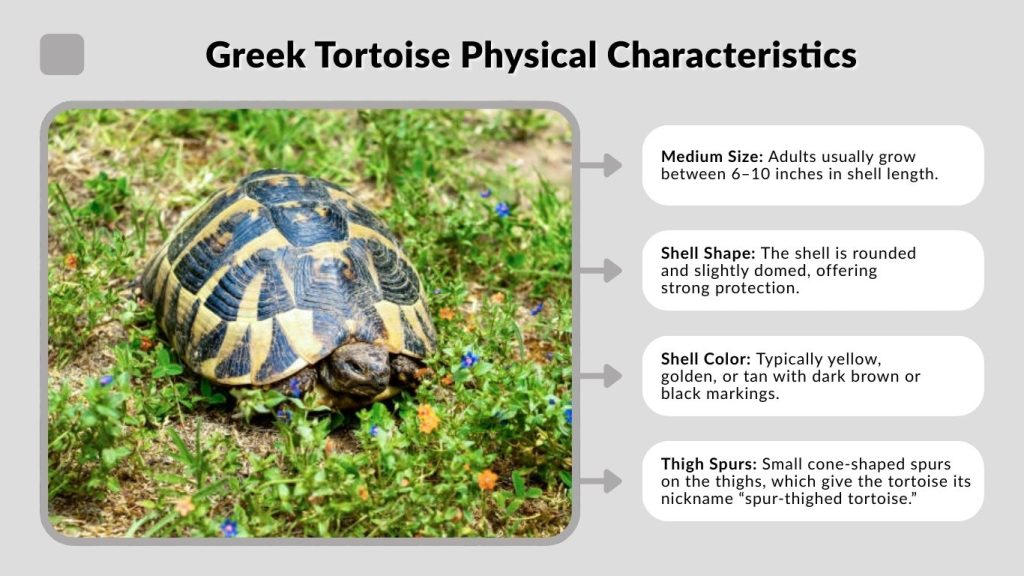
The Greek tortoise is a medium-sized land tortoise known for its strong shell, compact body, and distinctive markings. Its physical features help it survive in dry Mediterranean environments where temperatures can be high and terrain is often rocky. The tortoise’s sturdy legs allow it to move easily across rough ground, while its hard shell provides protection from predators and environmental hazards. Below are some key physical characteristics of the Greek tortoise.
- Medium Size: Adults usually grow between 6–10 inches in shell length.
- Shell Shape: The shell is rounded and slightly domed, offering strong protection.
- Shell Color: Typically yellow, golden, or tan with dark brown or black markings.
- Thigh Spurs: Small cone-shaped spurs on the thighs, which give the tortoise its nickname “spur-thighed tortoise.”
- Strong Legs: Thick, powerful legs adapted for walking and digging in soil.
- Rough, Scaly Skin: Helps protect the body and reduce moisture loss in dry climates.
- Short Tail: A small tail that is usually tucked beneath the shell.
- Protective Shell: The hard shell acts as natural armor against predators.
These physical traits allow the Greek tortoise to thrive in dry, rocky habitats while supporting its long lifespan and active lifestyle.
Greek Tortoise Habitat
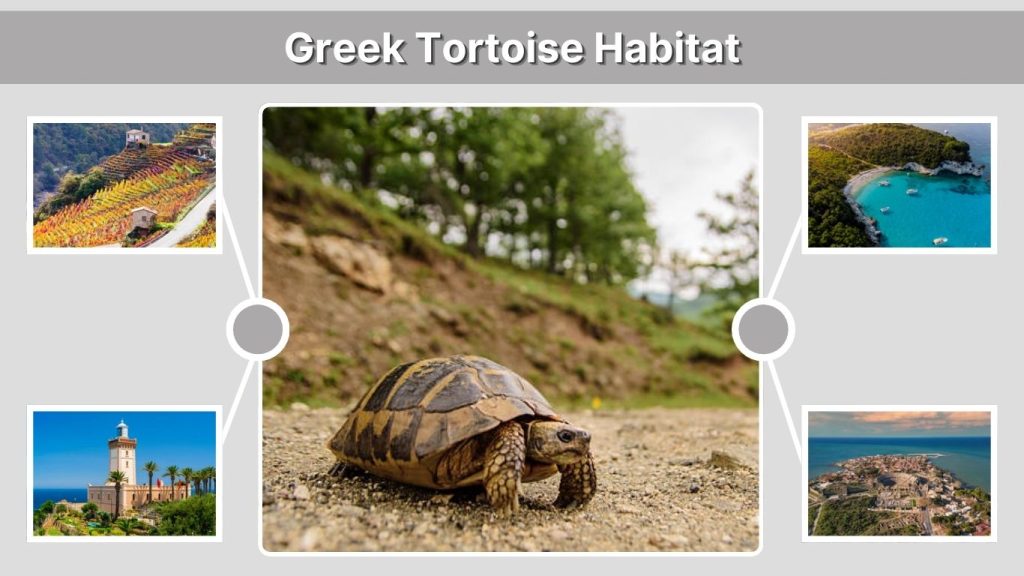
Greek tortoises are native to regions surrounding the Mediterranean Sea, where the climate is generally warm and dry. These environments provide the conditions necessary for tortoises to find food, bask in sunlight, and shelter from predators.
Natural Habitat in the Wild
In the wild, Greek tortoises are distributed across several parts of Southern Europe, North Africa, and Western Asia. Their natural range includes countries such as:
- Greece
- Turkey
- Spain
- Morocco
- Iran
These regions typically feature dry landscapes with scattered vegetation and rocky terrain.
Preferred Environment
Greek tortoises prefer habitats that offer both food sources and safe hiding places. Their ideal environments often include:
- Dry grasslands
- Mediterranean scrublands
- Rocky hillsides
- Forest edges with sunlight
These habitats provide a variety of plants that tortoises eat while also offering natural shelter from predators and harsh weather.
Climate Adaptations
Greek tortoises are well adapted to Mediterranean climates, which include hot summers and cooler winters. To avoid overheating during the hottest parts of the day, they often rest in shaded areas such as under bushes, rocks, or fallen logs.
During colder months, Greek tortoises may enter a period of hibernation, slowing their metabolism and remaining inactive until temperatures become warmer again.
Greek Tortoise Diet
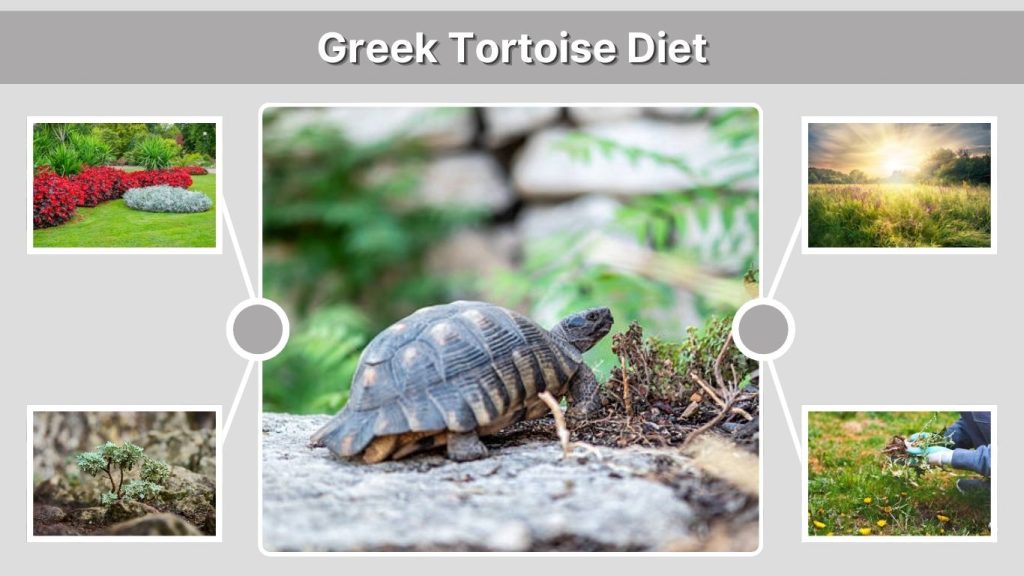
Greek tortoises are herbivores, meaning their diet consists almost entirely of plant material. In the wild, they feed on a variety of grasses, leafy plants, and flowers that grow in their natural habitat. Their digestive system is designed to process high-fiber plant foods, which provide the nutrients needed for healthy growth and shell development.
Because Greek tortoises live in dry environments, they have adapted to eat tough vegetation that grows in Mediterranean landscapes. Their strong beaks allow them to bite and chew fibrous plants efficiently.
What Do Greek Tortoises Eat in the Wild?
In the wild, Greek tortoises mainly consume low-growing plants and natural vegetation. These foods provide fiber, vitamins, and minerals necessary for their health.
Common foods in their natural diet include:
- Wild grasses
- Leafy weeds
- Flowers and flowering plants
- Small shrubs and plant shoots
These plants also provide small amounts of moisture, which helps tortoises stay hydrated in dry climates.
Common Foods for Greek Tortoises
When Greek tortoises are kept as pets, their diet should resemble the foods they eat in the wild. Providing a variety of plant foods ensures they receive balanced nutrition.
Healthy food options include:
- Dandelion greens
- Collard greens
- Mustard greens
- Clover
- Plantain leaves
- Hibiscus flowers
A high-fiber, plant-based diet helps maintain healthy digestion and strong shell growth.
Foods to Avoid
Some foods can harm Greek tortoises and should be avoided or offered only rarely.
These include:
- High-protein foods
- Animal products
- Excess sugary fruits
- Processed human foods
Maintaining a natural, plant-based diet is the best way to keep Greek tortoises healthy.
Greek Tortoise Lifespan
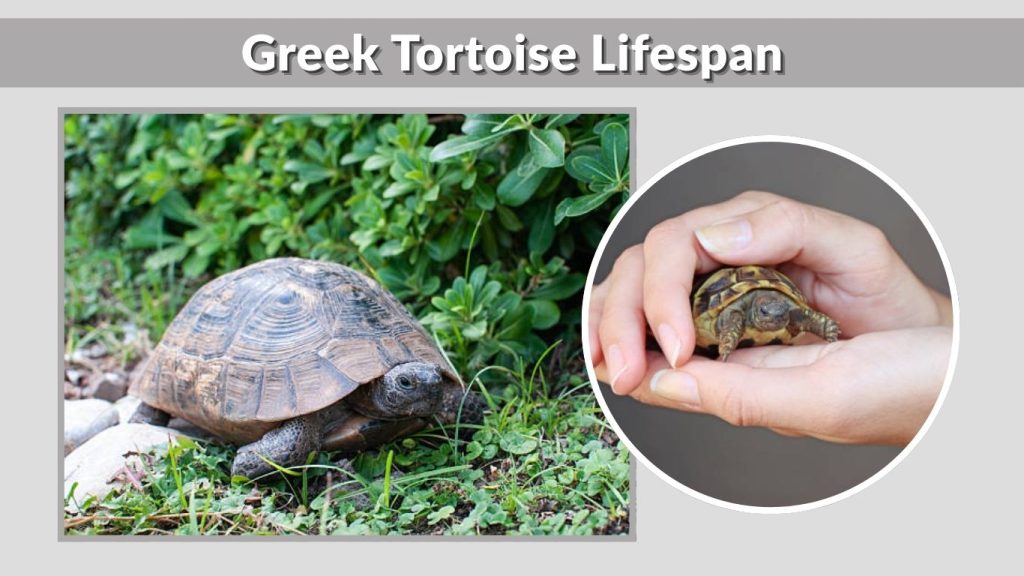
Greek tortoises are known for their long lifespan, which makes them a long-term commitment for pet owners. With proper care and a suitable environment, these tortoises can live for several decades.
How Long Does a Greek Tortoise Live?
On average, Greek tortoises live 50 to 60 years. In some cases, individuals have been known to live over 70 years when kept in ideal conditions.
Their slow metabolism and strong shell contribute to their long lifespan.
Factors That Affect Lifespan
Several factors influence how long a Greek tortoise will live.
Important factors include:
- A balanced and nutritious diet
- Proper exposure to sunlight or UVB lighting
- A safe and spacious habitat
- Protection from disease and predators
Tortoises that receive proper care and nutrition are more likely to live long and healthy lives.
Greek Tortoise Behavior
Greek tortoises display a range of behaviors that help them survive in their natural environments. They are generally calm reptiles but can be quite active during certain times of the day.
Daily Activity
Greek tortoises are most active during the morning and late afternoon when temperatures are cooler. During these times, they often search for food, explore their surroundings, and bask in sunlight.
In the hottest part of the day, they usually rest in shaded areas to avoid overheating.
Seasonal Behavior
During colder months, Greek tortoises may enter hibernation, a period where their metabolism slows and they remain inactive for several weeks or months.
Hibernation helps them conserve energy when food is scarce and temperatures drop.
Greek Tortoise Facts
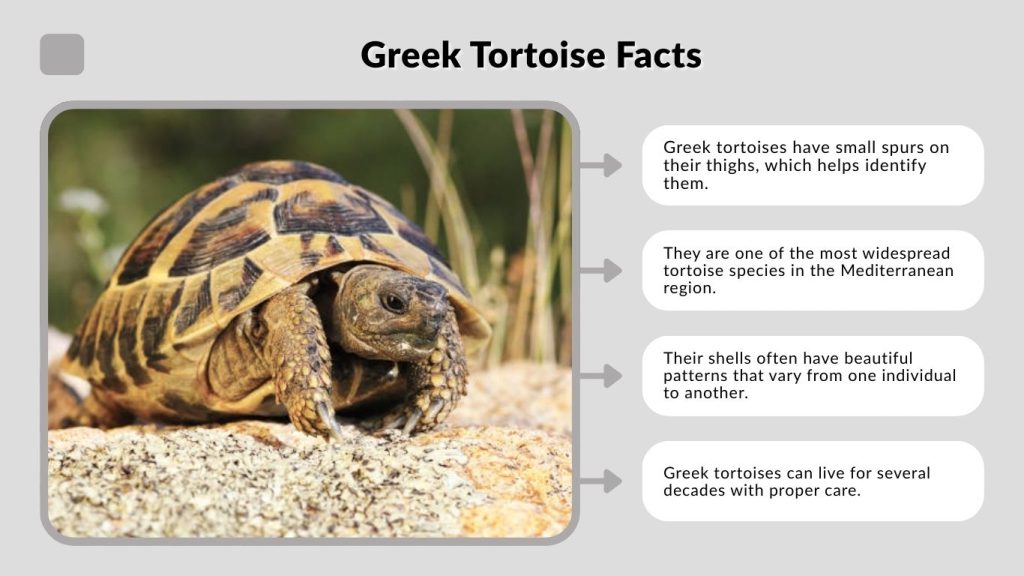
Greek tortoises are fascinating reptiles with many interesting characteristics. Here are some notable facts about this species:
- Greek tortoises have small spurs on their thighs, which helps identify them.
- They are one of the most widespread tortoise species in the Mediterranean region.
- Their shells often have beautiful patterns that vary from one individual to another.
- Greek tortoises can live for several decades with proper care.
- They are well adapted to dry and rocky environments.
Conclusion
The Greek tortoise is a remarkable reptile known for its attractive shell patterns, hardy nature, and long lifespan. Native to Mediterranean regions, this tortoise has adapted to survive in dry climates through its plant-based diet and behavioral adaptations. Its manageable size and calm temperament have made it a popular pet among reptile enthusiasts. However, proper care, a balanced diet, and a suitable habitat are essential for maintaining its health. By understanding the habitat, diet, lifespan, and behavior of the Greek tortoise, people can better appreciate and protect this fascinating species.