
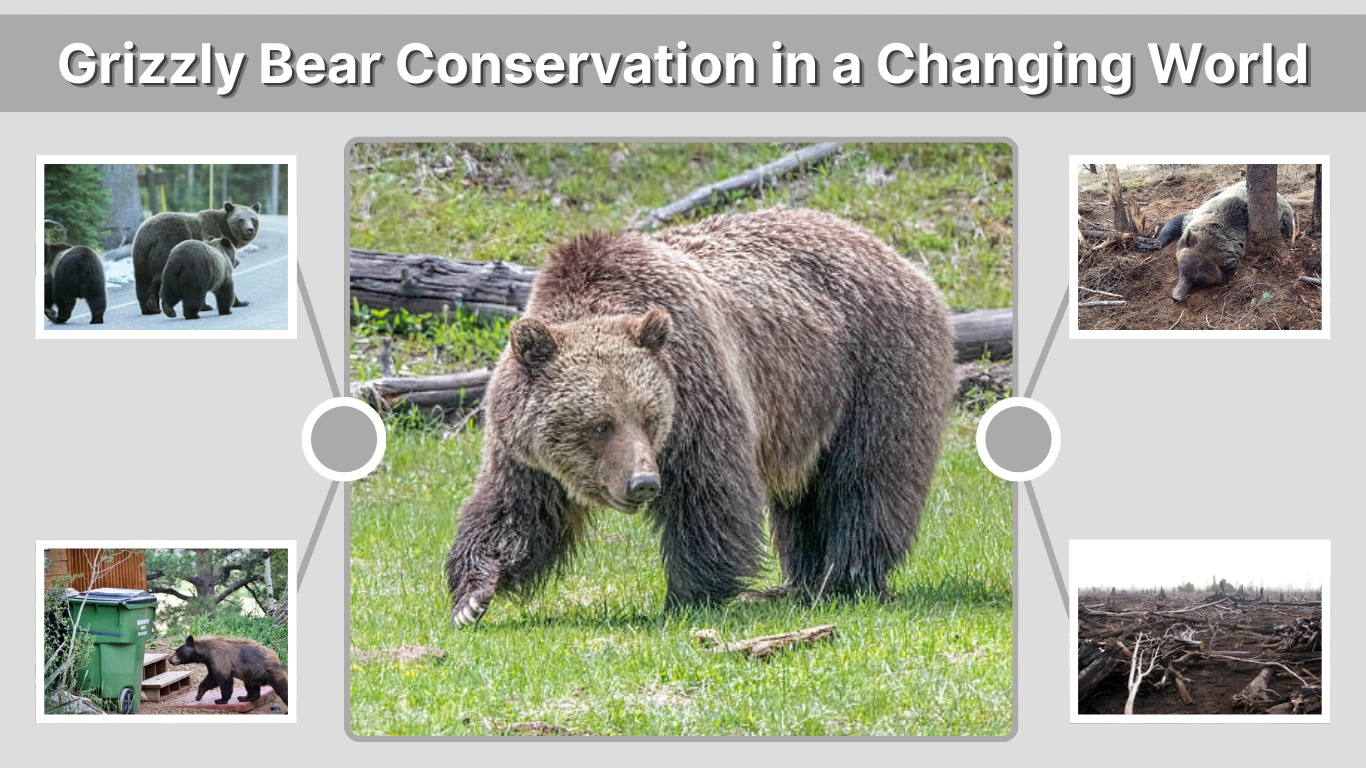
Grizzly bears are among North America’s most powerful and symbolic wildlife species. Once roaming freely across vast stretches of the continent, their populations have declined due to habitat loss, human conflict, and environmental change. Conservation efforts over the past several decades have helped stabilize some populations, yet significant challenges remain. Protecting grizzly bears requires science-based management, habitat preservation, and cooperation between governments, communities, and conservation organizations.
Understanding the Grizzly Bear
The grizzly bear (Ursus arctos horribilis) is a subspecies of the brown bear found primarily in Alaska, western Canada, and parts of the northwestern United States. Adult males can weigh between 400 and 800 pounds, while females are typically smaller. Grizzlies are recognizable by their distinctive shoulder hump, long claws, and varying fur colors ranging from blond to dark brown.
Grizzly bears are omnivores. Their diet includes berries, roots, grasses, insects, fish (especially salmon), and occasionally large mammals such as elk or moose. As apex predators and scavengers, they play a vital ecological role by regulating prey populations, dispersing seeds, and recycling nutrients across ecosystems.
Historical Decline and Range Reduction
Before European settlement, grizzly bears occupied much of western North America, including the Great Plains. However, westward expansion in the 19th and early 20th centuries brought large-scale habitat destruction, hunting, and predator control campaigns. Grizzlies were often killed to protect livestock or out of fear.
By the mid-1900s, grizzlies had lost up to 98% of their historic range in the contiguous United States. Today, they survive in isolated populations, primarily in the Greater Yellowstone Ecosystem and the Northern Continental Divide Ecosystem. In Canada and Alaska, populations remain larger but still face pressures from development and resource extraction.
Major Threats to Grizzly Bears
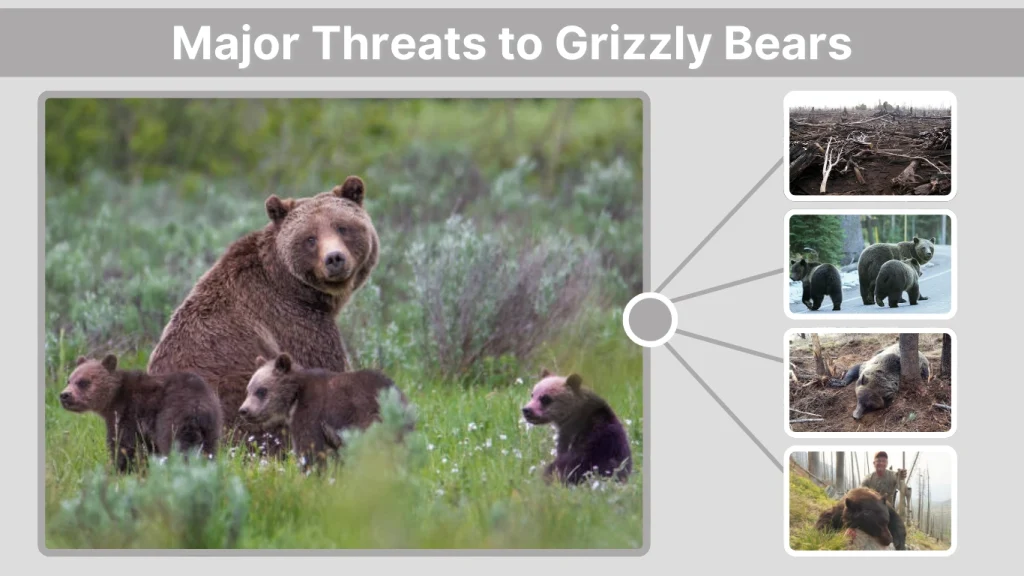
1. Habitat Loss and Fragmentation
Urban expansion, agriculture, logging, mining, and road construction reduce and divide bear habitat. Fragmentation isolates populations, limiting genetic diversity and increasing the risk of inbreeding. Roads also increase human access, raising the likelihood of human-bear encounters.
2. Human-Bear Conflict
As human communities expand into bear territory, encounters become more frequent. Grizzlies attracted to garbage, livestock, or crops may be relocated or euthanized. Defensive killings by hunters or property owners also contribute to mortality.
3. Climate Change
Climate change affects grizzlies by altering food availability. For example, warming temperatures can reduce whitebark pine seeds, an important food source in some regions. Changes in salmon runs and plant growth cycles further impact nutrition and survival.
4. Illegal Hunting and Poaching
Although regulated hunting is allowed in parts of Canada and Alaska, illegal poaching remains a concern in some areas. Even low levels of adult female mortality can significantly impact population stability because grizzlies reproduce slowly.
Conservation Strategies
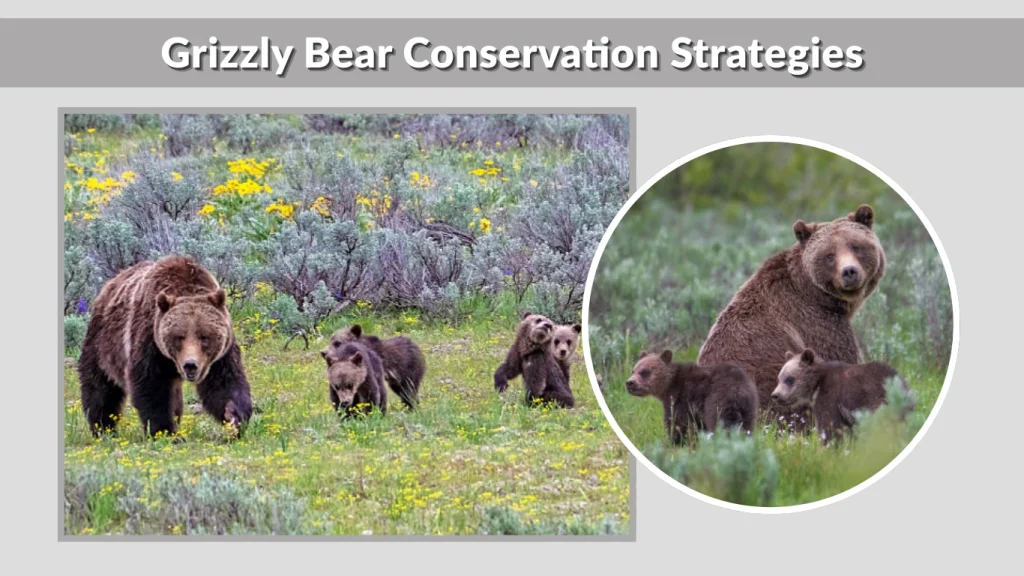
Legal Protection
In the United States, grizzly bears were listed as threatened under the Endangered Species Act (ESA) in 1975. This designation led to habitat protections, recovery planning, and stricter management of human-caused mortality. Although some populations have shown recovery, debates continue about delisting and state-level management.
Canada manages grizzly populations at the provincial level. Some provinces classify them as species of special concern, while others regulate hunting quotas carefully to maintain stable populations.
Habitat Preservation
Protected areas such as national parks and wildlife reserves are essential for grizzly conservation. Yellowstone and Glacier National Parks provide secure core habitats. Wildlife corridors connecting fragmented habitats are also crucial. These corridors allow bears to move safely between regions, promoting genetic diversity.
Land-use planning plays a major role in conservation. Limiting road density and restricting development in key bear habitats help reduce human-bear conflict and mortality.
Conflict Prevention Programs
Education and prevention strategies significantly reduce bear-related incidents. These include:
- Bear-resistant garbage containers
- Electric fencing for livestock and crops
- Public awareness campaigns on food storage
- Guidelines for hikers and campers
When communities adopt proactive measures, conflicts decrease, and fewer bears are killed.
Scientific Monitoring and Research
Researchers use GPS collars, DNA sampling, and population modeling to track grizzly numbers and movements. Monitoring helps wildlife managers understand population trends, reproduction rates, and mortality causes.
Data-driven management ensures that conservation policies remain adaptive and responsive to changing environmental conditions.
Indigenous Leadership and Collaboration
Many Indigenous communities across North America have deep cultural connections to grizzly bears. Increasingly, conservation efforts incorporate Indigenous knowledge and leadership. Collaborative stewardship models blend traditional ecological knowledge with scientific research to protect both wildlife and cultural heritage.
Success Stories
The Greater Yellowstone Ecosystem offers a notable conservation success. From an estimated low of around 136 bears in 1975, the population has grown to more than 700 individuals in recent years. Careful management, habitat protection, and conflict mitigation contributed to this recovery.
Similarly, the Northern Continental Divide population in Montana has expanded in both number and range. These improvements demonstrate that long-term conservation efforts can yield measurable results when supported by policy, funding, and public cooperation.
Ongoing Challenges
Despite progress, conservation remains complex. Expanding populations sometimes move beyond protected areas into agricultural or suburban zones, increasing conflicts. Climate-driven changes to ecosystems may create new pressures that current management strategies must adapt to.
Balancing economic interests—such as energy development, tourism, and forestry—with wildlife protection is an ongoing policy challenge. Effective conservation requires continued investment, political commitment, and community engagement.
How Individuals Can Help
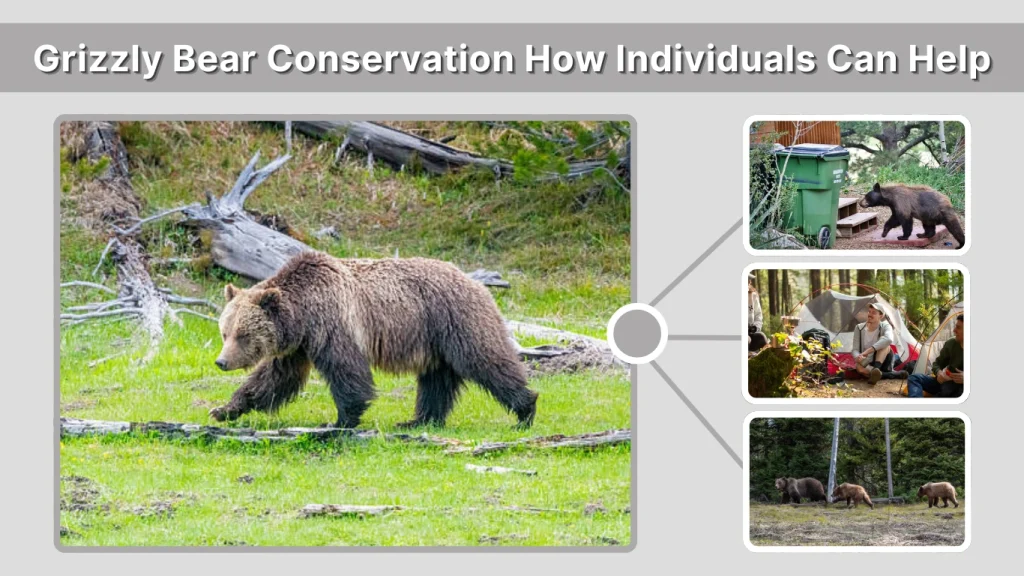
While large-scale conservation depends on governments and organizations, individuals also play an important role:
- Secure garbage and compost in bear country
- Support conservation organizations
- Practice safe hiking and camping habits
- Advocate for wildlife-friendly land-use policies
- Reduce carbon footprints to combat climate change
Public awareness and responsible behavior significantly influence the long-term survival of grizzly populations.
The Future of Grizzly Bear Conservation
The future of grizzly bears depends on maintaining large, connected habitats and minimizing human-caused mortality. As ecosystems shift due to climate change and development pressures increase, conservation strategies must evolve.
With continued research, collaboration, and education, grizzly bears can remain a thriving symbol of North America’s wilderness. Their survival reflects not only ecological health but also society’s commitment to coexist with large predators.
FAQs
What is the current conservation status of grizzly bears?
In the contiguous United States, grizzly bears are listed as threatened under the Endangered Species Act, though some populations have recovered significantly. In Canada and Alaska, they are not federally endangered but are managed at provincial or state levels. Conservation status varies by region depending on population stability.
Why are grizzly bears important to ecosystems?
Grizzly bears are apex predators and ecosystem engineers. They regulate prey populations, disperse seeds through their diet, and redistribute nutrients by scavenging and fishing. Their presence supports biodiversity and reflects a healthy, functioning ecosystem with intact food webs and habitat connectivity.
What causes most grizzly bear deaths today?
Most grizzly bear mortality is linked to human activity. This includes vehicle collisions, conflicts over food or livestock, illegal poaching, and management removals after repeated human interactions. Adult female deaths are especially concerning because grizzlies reproduce slowly and have small litters.
Can grizzly populations fully recover in the U.S.?
Full recovery across their historic U.S. range is unlikely due to extensive development and land-use changes. However, expanding and reconnecting current populations is possible through habitat corridors, careful management, and continued legal protections that reduce human-caused mortality and support genetic diversity.
How can communities reduce human-bear conflicts?
Communities can reduce conflicts by using bear-resistant trash containers, securing livestock with electric fencing, removing attractants, and educating residents about safe practices. Proactive prevention programs are more effective than reactive responses and significantly decrease the need to relocate or euthanize bears.