
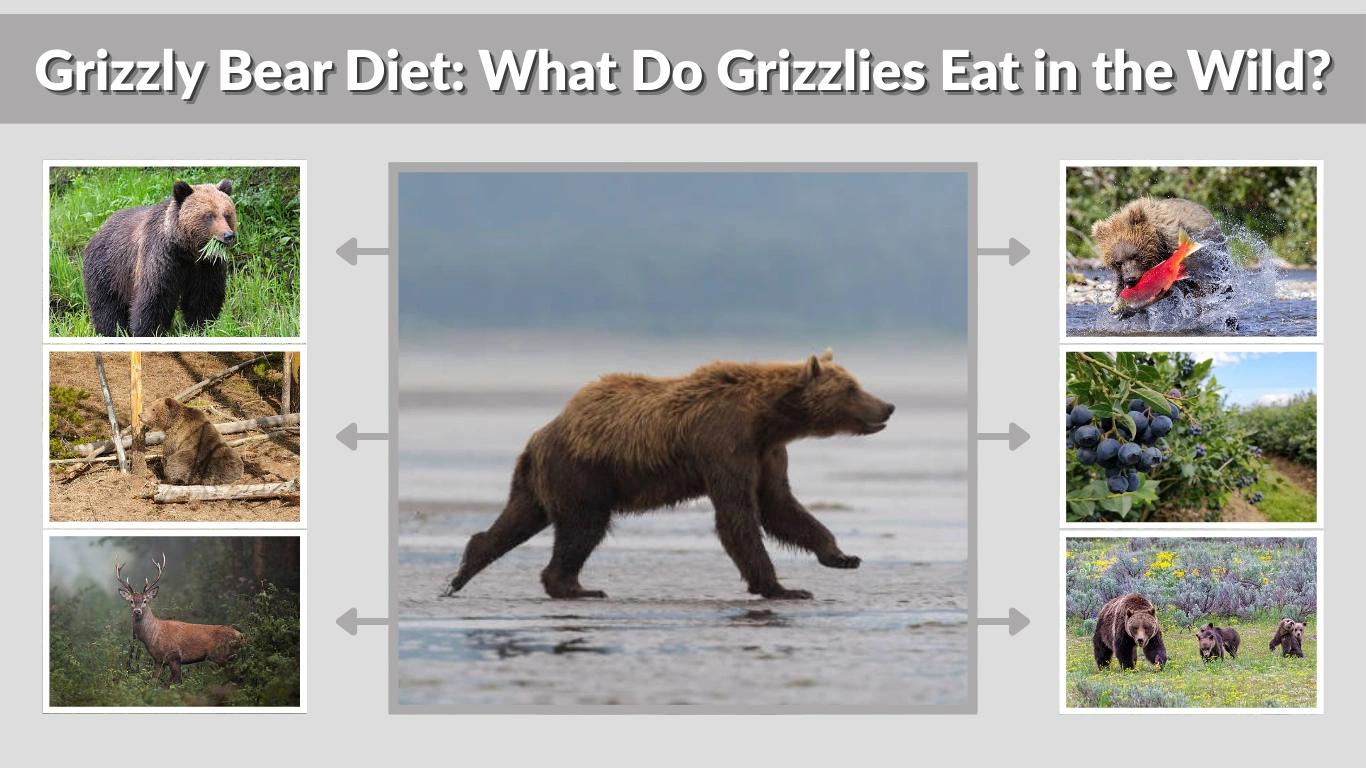
The grizzly bear is one of North America’s most powerful and fascinating predators, but its diet may surprise you. Despite their fearsome reputation, grizzlies are not strict meat-eaters. They are highly adaptable omnivores that consume a wide variety of foods depending on season and location. From salmon and elk to berries and grasses, their feeding habits shift throughout the year. Understanding the grizzly bear diet helps explain their behavior, survival strategies, and vital role in the ecosystem.
Are Grizzly Bears Carnivores or Omnivores?
Grizzly bears are classified as omnivores, meaning they eat both plant and animal matter. Although they belong to the order Carnivora, their diet is far more diverse than that of true carnivores like wolves or mountain lions.
Their physical features support this mixed diet. Grizzlies have sharp canine teeth for catching and killing prey, but they also have large, flat molars designed for grinding plant material. Their powerful shoulder muscles and long claws help them dig up roots, bulbs, and small mammals. In addition, their digestive system is flexible enough to process a broad range of foods.
In many inland regions, up to 70–90% of a grizzly’s diet can come from plant sources. However, in coastal areas rich in salmon, animal protein may make up a much larger portion of their intake. This adaptability is one reason grizzly bears have survived in diverse habitats ranging from Alaska’s coastline to the Rocky Mountains.
What Do Grizzly Bears Eat? Main Food Sources
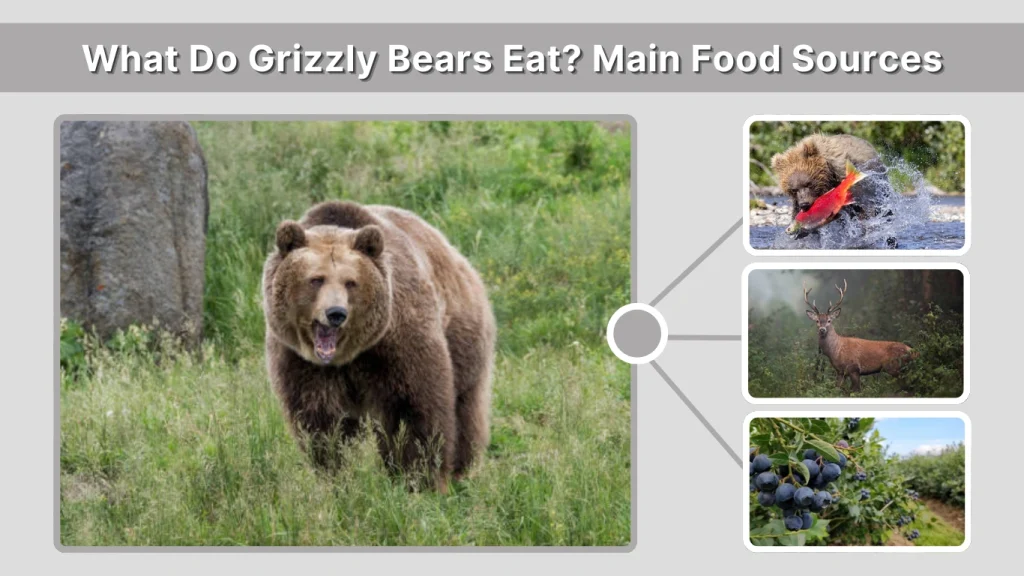
Grizzly bears consume a remarkably wide variety of foods. Their diet depends largely on availability, season, and geographic location.
Fish (Especially Salmon)
In coastal regions of Alaska and British Columbia, salmon is one of the most important foods in the grizzly bear diet. During salmon runs, bears gather along rivers and waterfalls to catch fish swimming upstream to spawn.
Salmon are extremely rich in fat and protein, making them a high-calorie food source. Bears often target the fattiest parts of the fish—such as the skin, brain, and roe—to maximize energy intake. A single large salmon can provide thousands of calories, helping bears build fat reserves for winter.
Grizzlies use patience and strength when fishing. They may stand in rushing water, swipe fish from the air, or pin them against rocks with their powerful paws.
Large and Small Mammals
Although plant matter makes up much of their diet, grizzly bears are capable hunters. They prey on large mammals such as elk, deer, caribou, and moose calves, particularly in the spring when young animals are more vulnerable.
They also hunt smaller mammals like ground squirrels, marmots, and rodents. In many cases, grizzlies rely on their keen sense of smell to locate prey hidden underground.
Scavenging is another important feeding strategy. Grizzly bears frequently feed on carcasses left behind by wolves or animals that died during winter. This opportunistic behavior allows them to conserve energy while still obtaining valuable protein.
Berries, Fruits, and Nuts
Berries are a major food source during late summer and early fall. Grizzlies consume blueberries, huckleberries, raspberries, and other wild fruits in large quantities. In some ecosystems, they may spend hours grazing on berry patches.
In areas like Yellowstone, whitebark pine nuts are also an essential high-fat food. These nuts provide critical energy before hibernation. Because berries and nuts are rich in carbohydrates and sugars, they help bears rapidly gain weight during feeding season.
Vegetation and Insects
Grizzly bears also eat grasses, sedges, roots, and bulbs, particularly in spring when green plants first emerge. These foods may not be high in calories, but they are widely available and easy to obtain.
Insects such as ants, termites, and moth larvae are another surprisingly important part of the grizzly bear diet. Bears will dig into anthills or flip over rocks to access protein-rich insect colonies. In some mountainous areas, army cutworm moths provide a concentrated seasonal food source.
Seasonal Changes in the Grizzly Bear Diet
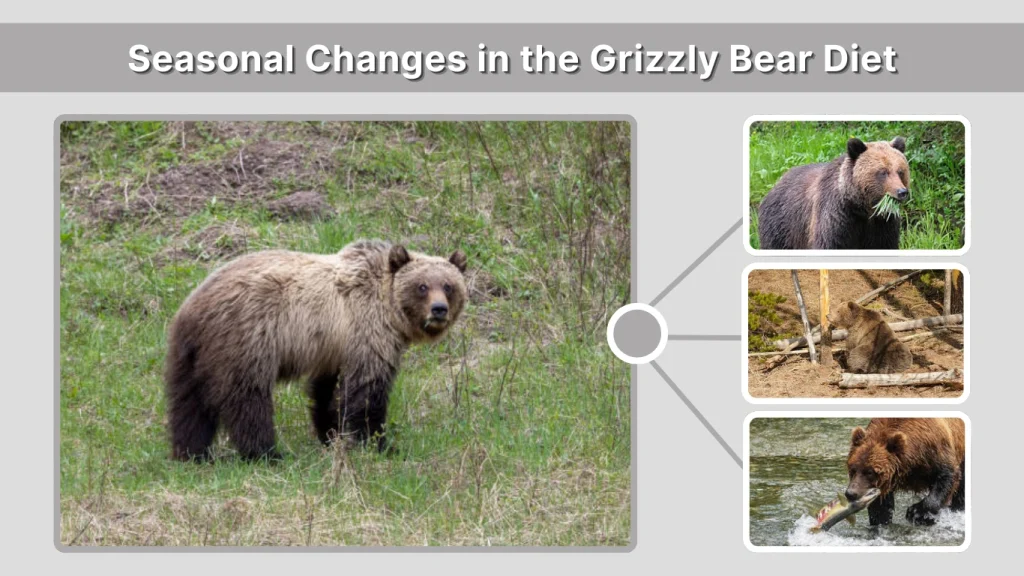
The grizzly bear diet shifts dramatically throughout the year. Seasonal availability determines what and how much they eat.
Spring Feeding Habits
When grizzlies emerge from hibernation in early spring, food is limited. At this time, they often feed on winter-killed animal carcasses, newly sprouted grasses, and roots. Moose or elk calves may also become targets because they are easier to catch.
Spring is generally a lean period, and bears must rebuild strength after months without eating.
Summer Abundance
Summer brings greater food variety. Salmon runs begin in coastal regions, while berries ripen across forests and meadows. Protein intake increases significantly, especially for bears near rivers.
This period allows grizzlies to steadily gain weight and prepare for the intense feeding phase of fall.
Fall Hyperphagia (Pre-Hibernation)
In autumn, grizzly bears enter a stage called hyperphagia, a biological drive to eat almost constantly. During this time, a bear may consume 20,000 calories or more per day.
They focus on high-energy foods such as salmon, berries, and nuts. Rapid fat accumulation is essential, as these fat reserves will sustain them through winter hibernation.
Winter and Hibernation
During winter, grizzly bears enter a state of hibernation that can last five to seven months, depending on climate and location. Contrary to popular belief, they do not eat, drink, urinate, or defecate during this time. Instead, they survive entirely on the fat reserves built up during hyperphagia in the fall.
Their metabolism slows dramatically, heart rate drops, and body temperature decreases slightly to conserve energy. Adult males and females without cubs typically den up later and emerge earlier than mothers with newborn cubs. The success of a grizzly bear’s winter survival depends heavily on how much nutritious food it consumed during the active seasons.
How Much Does a Grizzly Bear Eat Per Day?
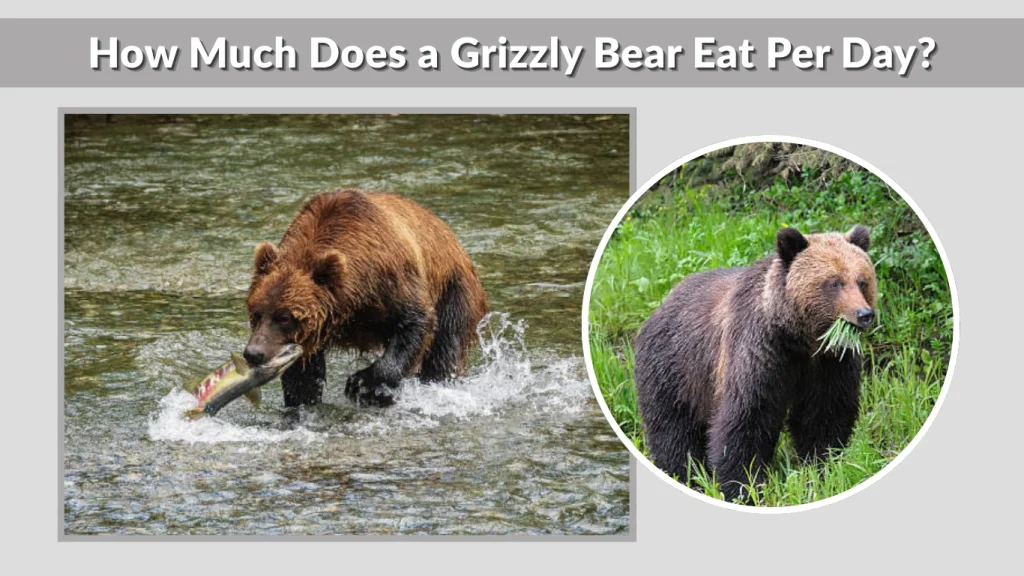
The amount a grizzly bear eats varies widely throughout the year. In spring and early summer, intake may be moderate due to limited food supply. However, during peak feeding periods—especially in fall—a grizzly can consume 20,000 calories or more per day.
In extreme cases, a large adult male may eat up to 90 pounds of food in a single day when high-calorie foods are abundant. This intense feeding allows them to gain as much as 3–4 pounds of body weight daily before hibernation.
Males generally eat more than females due to their larger size, though pregnant females must also consume enough calories to support cub development during winter dormancy.
Grizzly Bear Hunting and Feeding Behavior
Grizzly bears are typically solitary feeders, except for mothers with cubs. Their feeding behavior is opportunistic and highly strategic.
One of their greatest advantages is their extraordinary sense of smell, which is far stronger than that of humans and even dogs. They can detect carcasses or food sources from miles away. This ability makes them efficient scavengers.
When hunting, grizzlies rely on strength rather than speed. They may ambush prey, chase young animals over short distances, or overpower them with powerful forelimbs. Along salmon streams, dominant bears often claim the best fishing spots, forcing smaller bears to wait or scavenge leftovers.
Bears sometimes cache food by covering it with vegetation or soil to protect it from other scavengers. This behavior allows them to return later and finish feeding.
Regional Differences in Diet
The grizzly bear diet varies significantly depending on habitat and geographic region.
Coastal Grizzlies
Coastal grizzlies, particularly those in Alaska, benefit from nutrient-rich salmon runs. Because salmon are high in fat and protein, coastal bears tend to grow larger and heavier than their inland counterparts.
Access to abundant fish allows these bears to build substantial fat reserves quickly, improving survival and reproductive success.
Inland Grizzlies
Inland grizzlies, such as those in Yellowstone or the Canadian Rockies, rely more heavily on plant material, roots, berries, and small mammals. While they may still eat fish or large prey, these foods are less consistently available.
As a result, inland bears are often smaller than coastal bears due to lower overall protein intake.
How Diet Impacts the Ecosystem
Grizzly bears play a vital ecological role through their feeding habits. As they consume berries and fruits, they disperse seeds across wide areas through their scat, helping plants regenerate and spread.
When feeding on salmon, bears often carry fish into forested areas. The remains decompose and release marine-derived nutrients into the soil, enriching plant growth. This process connects aquatic and terrestrial ecosystems in a powerful way.
By preying on or scavenging large mammals, grizzlies also influence prey populations and contribute to natural population balance. For these reasons, they are considered a keystone species in many North American habitats.
Grizzly Bear Diet vs. Other Bears
Although all bears are omnivores (except polar bears), their diets differ based on habitat.
Black bears generally consume more plant material and fewer large mammals than grizzlies. They are also more likely to climb trees to access food.
Polar bears, on the other hand, are primarily carnivorous and depend heavily on seals and marine mammals. Unlike grizzlies, they consume very little vegetation.
These dietary differences highlight how the environment shapes feeding behavior among bear species.
FAQs
What do grizzly bears eat most?
Grizzly bears eat a mix of plant and animal foods, but in many inland areas, plant material such as berries, grasses, and roots makes up the majority of their diet. In coastal regions, salmon can become their primary food source during spawning season.
Do grizzly bears eat only meat?
No, grizzly bears are omnivores. While they do hunt and scavenge animals, a large portion of their diet consists of vegetation, berries, nuts, and insects, depending on availability.
How much can a grizzly bear eat in one day?
During fall hyperphagia, a grizzly bear may consume over 20,000 calories per day and eat up to 90 pounds of food when resources are abundant.
What do grizzly bears eat before hibernation?
Before hibernation, grizzlies focus on high-calorie foods such as salmon, berries, and nuts. This intense feeding period helps them build the fat reserves needed to survive winter without eating.