
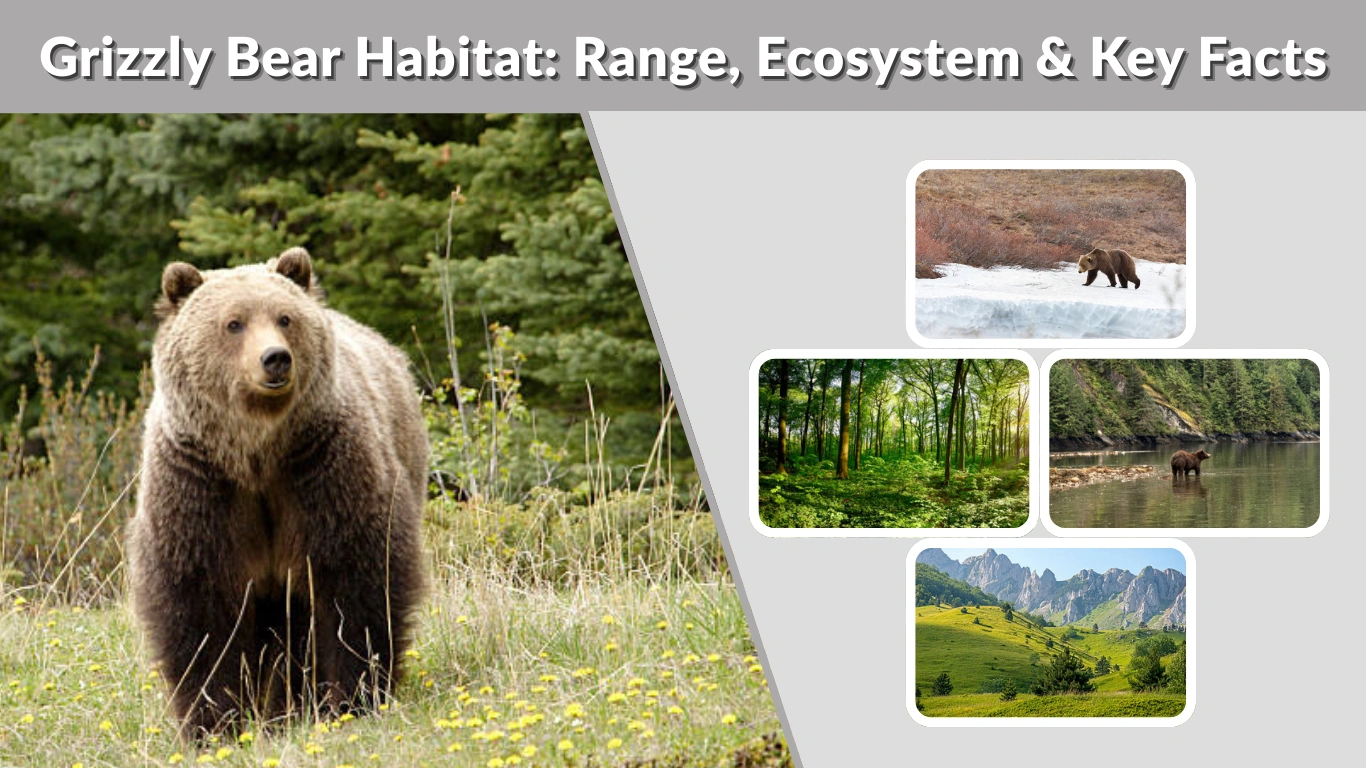
Grizzly bear habitat stretches across some of the wildest landscapes in North America, from the rugged mountains of Alaska to the forests of western Canada and the northern United States. These powerful bears require vast, food-rich environments to survive and reproduce. Understanding where grizzly bears live and what their habitat includes helps explain their behavior, seasonal movements, and conservation needs. In this guide, we’ll explore their geographic range, preferred ecosystems, and the essential elements that make a habitat suitable for grizzlies.
Where Do Grizzly Bears Live?
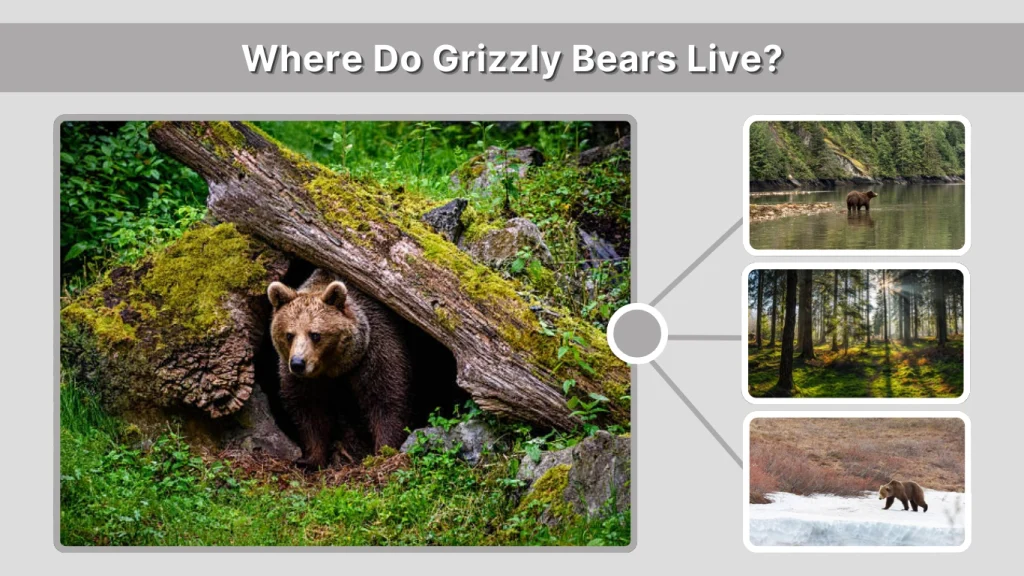
Grizzly bears (Ursus arctos horribilis) are a subspecies of the brown bear found primarily in North America. While they once roamed across much of the continent, today their range is more limited and concentrated in remote wilderness areas.
Grizzly Bear Habitat in Alaska
Alaska is home to the largest population of grizzly bears in the world. The state’s vast, undeveloped wilderness provides ideal habitat conditions, including abundant food sources and minimal human disturbance.
In coastal Alaska, grizzlies benefit from nutrient-rich salmon streams, tidal flats, and lush vegetation. These areas support high bear densities because food is plentiful during the summer and fall. Inland Alaska, by contrast, consists of boreal forests, tundra, and mountain regions. While food may be more spread out, these habitats still provide berries, roots, small mammals, and carrion that sustain bear populations.
Grizzly Bears in Western Canada
Western Canada supports a significant number of grizzly bears, particularly in British Columbia, Alberta, and the Yukon. These regions contain mountain forests, alpine meadows, and river valleys—ideal environments for grizzlies.
The Canadian Rockies offer remote terrain with limited development, allowing bears to maintain large territories. Protected parks such as Banff and Jasper play a key role in preserving habitat and providing wildlife corridors that connect fragmented landscapes.
Grizzly Bears in the Lower 48 States
In the contiguous United States, grizzly bears occupy a much smaller range than they once did. Today, they are primarily found in:
- Northwestern Montana
- Northern Idaho
- Northwestern Wyoming (Greater Yellowstone Ecosystem)
- Parts of Washington State
The Greater Yellowstone Ecosystem and Glacier National Park are two of the most well-known grizzly habitats in the U.S. These protected areas provide forests, meadows, rivers, and mountainous terrain necessary for feeding and denning.
Historical vs. Current Range
Historically, grizzly bears ranged from Alaska down through much of western North America and even into parts of Mexico. However, habitat loss, hunting, and human expansion drastically reduced their numbers and territory.
Today, their habitat represents only a fraction of their original range. Conservation efforts have helped some populations recover, but grizzlies still depend heavily on protected wilderness areas and connected ecosystems to survive.
What Type of Habitat Do Grizzly Bears Prefer?
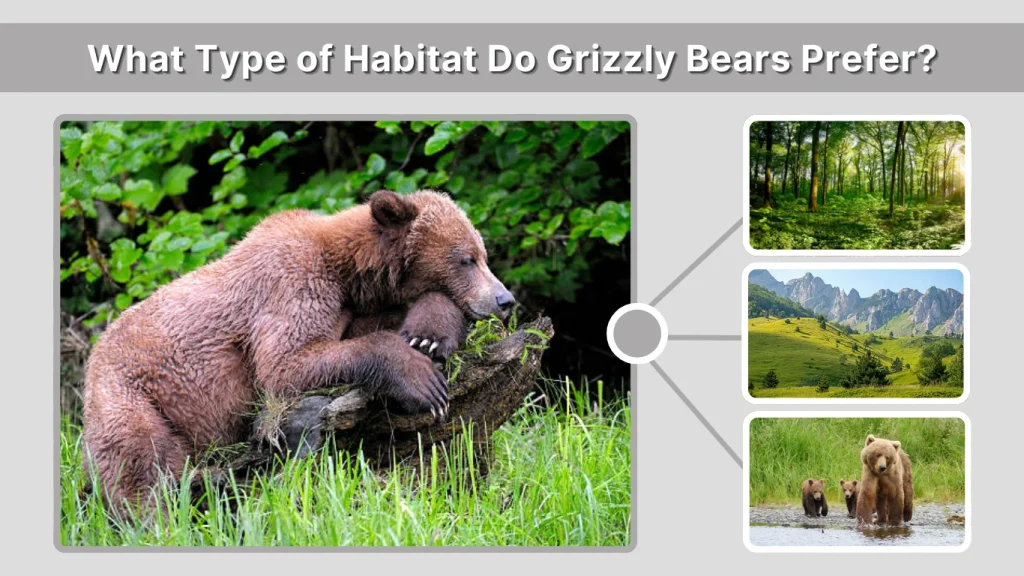
Grizzly bears are highly adaptable, but they thrive best in environments that provide diverse food sources, access to water, and safe denning areas. Their preferred habitats vary by region and season.
Forest Ecosystems
Forests form a major component of grizzly bear habitat. In temperate rainforests and boreal forests, bears find berries, nuts, roots, insects, and small mammals. Dense vegetation also provides cover and protection, especially for females raising cubs.
In forested regions, grizzlies often travel along natural corridors such as riverbanks and game trails. These areas allow them to move efficiently while foraging for food.
Mountain and Alpine Regions
Mountain landscapes are another key habitat type for grizzly bears. In the spring and summer, alpine meadows produce grasses, wildflowers, and berries that attract bears to higher elevations.
Rocky slopes and remote valleys provide ideal denning sites during winter. Female grizzlies, in particular, select secure mountain locations to dig dens where they give birth and hibernate during colder months.
Coastal Habitats
Coastal habitats are among the most productive environments for grizzly bears. In areas where salmon runs are strong, bears gather along rivers and streams to feed on fish rich in fat and protein.
This abundance of food often results in larger body sizes and smaller territory ranges compared to inland grizzlies. Coastal ecosystems also include tidal flats and estuaries where bears forage for clams and vegetation.
Grasslands and River Valleys
Grizzly bears also utilize open grasslands and river valleys. These areas provide early spring vegetation and attract prey species such as elk and deer.
River valleys are particularly important because they offer both water and concentrated food sources. They also serve as natural travel routes connecting different parts of a bear’s territory.
Essential Elements of a Grizzly Bear Habitat
Regardless of location, all grizzly bear habitats share several critical features that support survival.
Abundant Food Sources
Grizzly bears are omnivores with a highly varied diet. Their habitat must provide seasonal access to:
- Salmon and other fish
- Berries and fruits
- Roots and grasses
- Insects
- Large mammals such as elk or deer
Food availability directly influences territory size, reproduction rates, and population density.
Access to Water
Water is essential for hydration and feeding. Rivers, lakes, and streams not only sustain plant life but also support fish populations that are crucial in many regions. Bears often establish home ranges near reliable water sources.
Shelter and Denning Areas
Secure denning sites are vital for winter survival. Grizzlies typically dig dens into mountain slopes where deep snow provides insulation. These dens protect bears during hibernation and offer a safe place for mothers to give birth.
Large Territory and Space Requirements
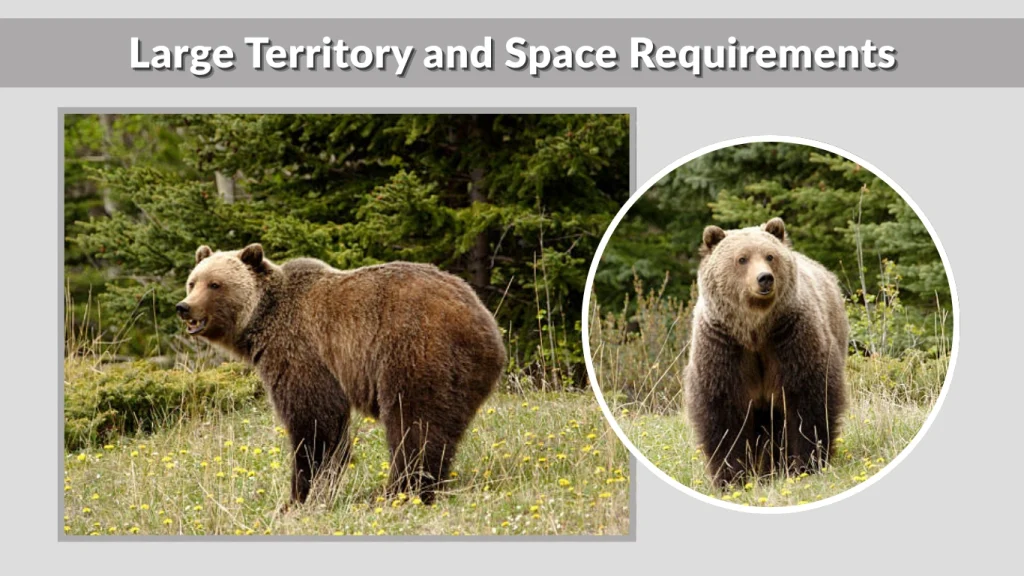
One of the most important features of grizzly bear habitat is space. Grizzlies require extensive territories to meet their nutritional needs and avoid competition with other bears. Adult males may roam across 200 to 500 square miles or more, while females generally occupy smaller home ranges, especially when raising cubs.
Territory size often depends on food availability. In coastal regions with abundant salmon, bears can survive within smaller areas. In contrast, inland bears may travel long distances to locate seasonal food sources. Because of these large spatial needs, habitat fragmentation from roads and development poses a serious challenge to grizzly populations.
Seasonal Changes in Grizzly Bear Habitat Use
Grizzly bears do not use their habitat the same way year-round. Instead, they shift locations based on seasonal food availability and weather conditions.
Spring Feeding Grounds
After emerging from hibernation in early spring, grizzlies seek low-elevation areas where snow melts first. These regions provide early plant growth, roots, and winter-killed carcasses. Bears focus on rebuilding strength after months of fasting.
River valleys and open slopes are especially important during this time because they offer accessible vegetation and scavenging opportunities.
Summer Foraging Areas
In summer, grizzlies expand their range to take advantage of ripening berries, insects, and spawning fish. Many bears move to higher elevations where alpine meadows produce abundant plant life.
In coastal habitats, salmon runs become a primary food source. Bears may gather in large numbers along streams, taking advantage of this seasonal abundance to gain weight.
Fall Hyperphagia
During fall, grizzlies enter a phase known as hyperphagia—a period of intense feeding before winter hibernation. They consume massive amounts of calories each day to build fat reserves.
Food sources during this time include late-season berries, nuts, and salmon. Habitat areas with concentrated food supplies become critical, and bears may travel long distances to access them.
Winter Denning Habitat
As temperatures drop and snow accumulates, grizzlies retreat to dens typically located on mountain slopes. These dens are dug into soil or snowpack in areas that provide insulation and protection from disturbance.
Pregnant females give birth during hibernation, usually in January or February. Secure, undisturbed denning habitat is essential for cub survival and overall population health.
Threats to Grizzly Bear Habitat
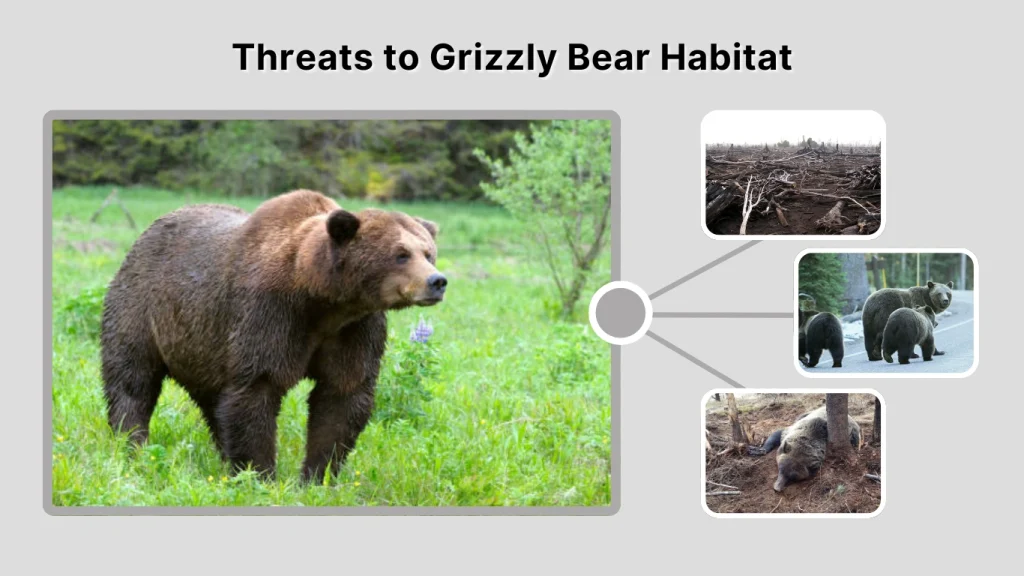
Although grizzlies still inhabit vast wilderness areas, their habitat faces increasing pressure from human activity and environmental change.
Habitat Fragmentation
Road construction, logging, mining, and urban expansion divide large wilderness areas into smaller, isolated sections. This fragmentation limits bear movement, reduces access to food, and increases the risk of human encounters.
Wildlife corridors are essential for connecting fragmented habitats and allowing bears to safely migrate between feeding and breeding areas.
Climate Change Impacts
Climate change is altering grizzly bear habitat in several ways. Rising temperatures affect vegetation growth, berry production, and snowpack levels. Earlier snowmelt may shift denning cycles and reduce insulation for winter dens.
In coastal ecosystems, warming waters can impact salmon populations, a critical food source for many grizzlies. As food availability changes, bears may move closer to human communities in search of alternatives.
Human-Wildlife Conflict
As development expands into bear territory, encounters between humans and grizzlies become more common. Improperly stored food, garbage, and livestock can attract bears, leading to dangerous conflicts.
Reducing attractants and promoting bear-aware practices are key strategies for protecting both people and bears.
Conservation and Protected Areas
National parks, wildlife reserves, and conservation programs play a major role in preserving grizzly bear habitat. Protected areas such as Yellowstone and Glacier National Park provide secure environments where bear populations can stabilize and grow.
Ongoing conservation efforts include habitat restoration, road management, and long-term population monitoring to ensure healthy ecosystems.
Grizzly Bear Habitat vs. Black Bear Habitat
Although grizzly bears and black bears share some overlapping regions, their habitat preferences differ in several important ways.
Geographic Differences
Grizzlies are primarily found in remote areas of Alaska, western Canada, and parts of the northwestern United States. Black bears, however, have a much broader distribution across North America and are commonly found in forested regions closer to human settlements.
Elevation and Terrain Preferences
Grizzlies often prefer mountainous terrain, alpine meadows, and open landscapes where they can forage across wide areas. Black bears tend to favor dense forests that provide climbing opportunities and cover.
Behavioral Differences Related to Habitat
Because grizzlies require larger territories and are more dominant, they generally avoid heavily populated regions. Black bears are more adaptable and may live near towns or suburban areas if food sources are available.
Why Protecting Grizzly Bear Habitat Matters
Grizzly bears play a crucial role in maintaining ecological balance. As apex predators and scavengers, they help regulate prey populations and distribute nutrients throughout ecosystems. For example, when bears carry salmon into forests, they transfer marine nutrients into terrestrial environments, supporting plant growth.
Protecting grizzly bear habitat also safeguards countless other species that share the same ecosystems. Healthy bear populations are often indicators of intact wilderness and sustainable land management practices.
What Is the Habitat of a Grizzly Bear?
Grizzly bears live in large, undeveloped wilderness areas across Alaska, western Canada, and parts of the northwestern United States. Their habitat includes forests, mountains, alpine meadows, river valleys, and coastal regions with abundant food, water, and secure denning sites.
FAQs
Where is the main habitat of the grizzly bear?
The primary habitat of grizzly bears is in Alaska and western Canada, with smaller populations in Montana, Wyoming, Idaho, and Washington. They prefer remote wilderness areas that provide diverse food sources, access to water, and minimal human disturbance.
How large is a grizzly bear’s territory?
A male grizzly bear may occupy a territory ranging from 200 to over 500 square miles, depending on food availability. Females generally maintain smaller ranges, particularly when raising cubs. Coastal bears often require less space due to concentrated food sources like salmon.
What type of ecosystem do grizzly bears live in?
Grizzly bears inhabit a variety of ecosystems, including temperate rainforests, boreal forests, alpine meadows, tundra, and coastal environments. Their habitat must support seasonal food availability, water access, and secure denning areas for winter hibernation.
How does climate change affect grizzly bear habitat?
Climate change impacts grizzly habitat by altering vegetation patterns, reducing snowpack, and affecting salmon populations. These changes can disrupt feeding cycles and denning conditions, potentially increasing competition for food and human-bear conflicts.