




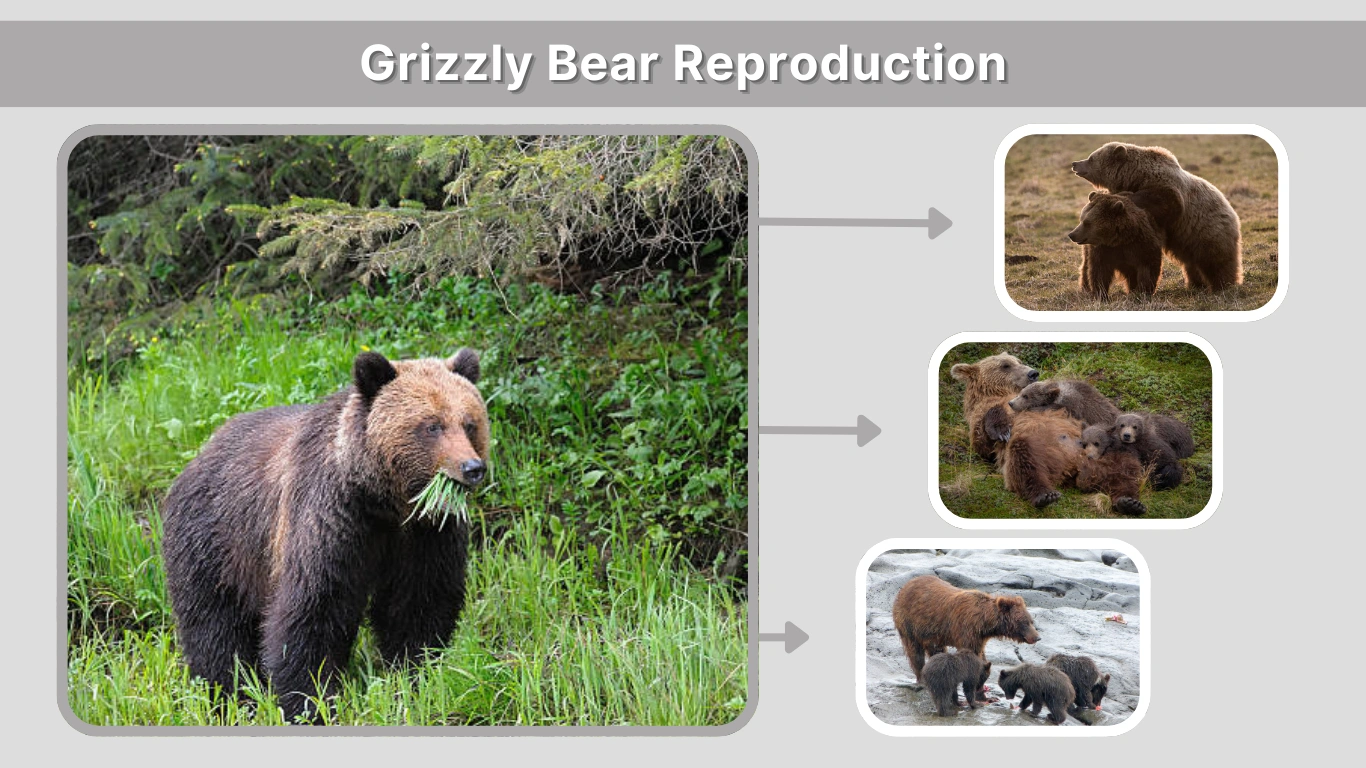
Grizzly bear reproduction is a remarkable process shaped by seasonal rhythms, survival pressures, and the demands of raising cubs in harsh environments. From courtship in late spring to the birth of tiny cubs in winter dens, each stage is carefully timed to maximize survival. Female grizzlies invest heavily in raising their young, often dedicating years to a single litter. Understanding this reproductive cycle reveals how these powerful mammals maintain their populations in the wild.
Overview of Grizzly Bear Breeding
Grizzly bears (Ursus arctos horribilis) are a subspecies of brown bears found in North America. Their reproductive strategy is relatively slow compared to many other mammals. They mature late, produce small litters, and provide extended parental care. This low reproductive rate makes population recovery slow if numbers decline.
Both males and females reach sexual maturity at different ages. Females typically mature between 4½ and 8½ years old, depending on nutrition and habitat quality. Males may become sexually mature around the same time but often do not successfully breed until they are older and larger, usually between 8 and 10 years old.
Grizzlies generally breed every three years, though this can vary. The long gap between litters allows mothers to devote significant time and energy to raising cubs.
Mating Season and Courtship
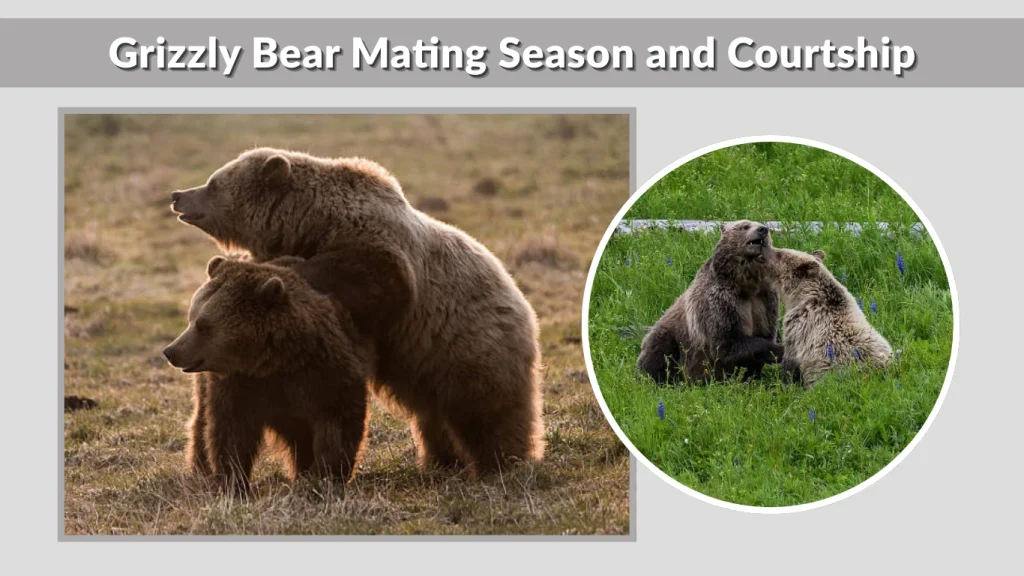
Grizzly bear mating season usually occurs between May and July. During this time, bears that are normally solitary become more social. Males travel long distances searching for receptive females, sometimes engaging in fierce competition with other males.
Courtship can last several days or even weeks. A male and female may stay together, feeding and resting in close proximity. The pair often mate multiple times to increase the likelihood of fertilization. Despite this temporary bond, grizzlies do not form lasting partnerships. Once mating is over, the bears separate and return to their solitary lives.
Male grizzlies do not participate in raising cubs. Their sole role in reproduction is to compete for mating opportunities.
Delayed Implantation: A Unique Adaptation
One of the most fascinating aspects of grizzly bear reproduction is delayed implantation, also known as embryonic diapause.
Although fertilization occurs during the summer, the embryo does not immediately implant in the uterine wall. Instead, it remains in a suspended state of development for several months. Implantation typically occurs in late fall, around November, when the female has entered her winter den.
This adaptation allows the female’s body to assess her physical condition. If she has accumulated enough fat reserves during the summer and fall, the embryo implants and continues to develop. If she is undernourished, implantation may not occur, and the pregnancy ends naturally. This strategy ensures that cubs are only born when the mother has sufficient energy to support them.
Denning and Birth
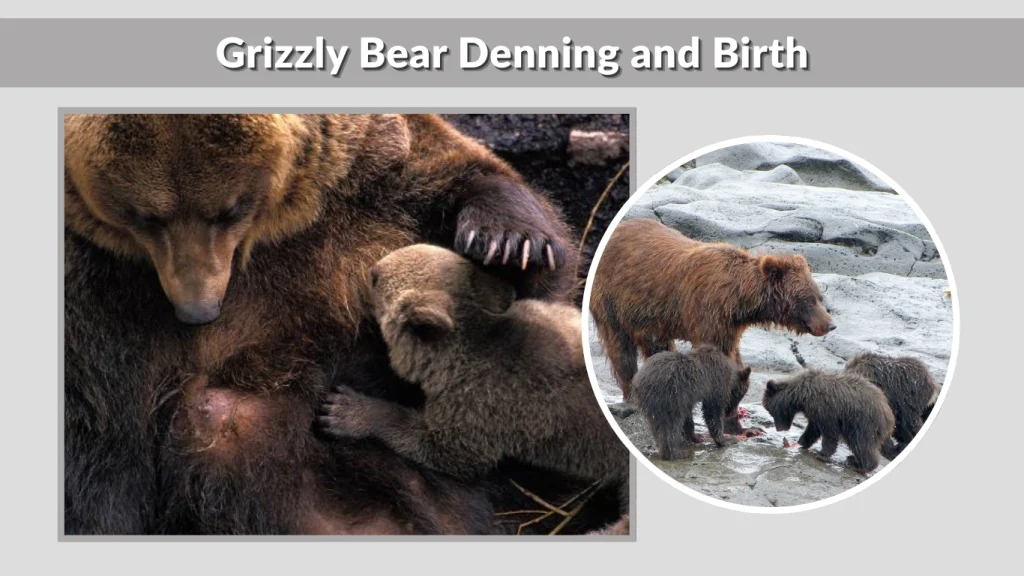
Grizzly bears enter winter dens between October and December, depending on climate and food availability. Dens may be dug into hillsides, under tree roots, or in natural caves. The den provides protection from harsh weather and predators.
Cubs are born during hibernation, typically in January or February. At birth, they are extremely small—about the size of a guinea pig—usually weighing less than one pound (around 450 grams). They are blind, nearly hairless, and completely dependent on their mother.
A typical litter consists of one to three cubs, though twins are most common. Triplets occur occasionally, and single cubs are also possible.
Despite the mother’s hibernating state, she remains attentive. She nurses her cubs throughout the winter using her stored body fat to produce rich milk. During this period, she does not eat, drink, urinate, or defecate.
Emergence from the Den
Mother grizzlies and their cubs emerge from the den between March and May. By this time, cubs have grown significantly, usually weighing 10 to 20 pounds (4.5 to 9 kilograms).
Upon leaving the den, the mother’s primary focus is feeding. She must replenish her depleted fat reserves while also producing milk for her cubs. Early spring diets often include grasses, roots, carrion, and winter-killed animals.
The cubs stay close to their mother, learning critical survival skills such as:
- Identifying food sources
- Climbing trees
- Avoiding danger
- Recognizing other bears
Maternal Care and Protection
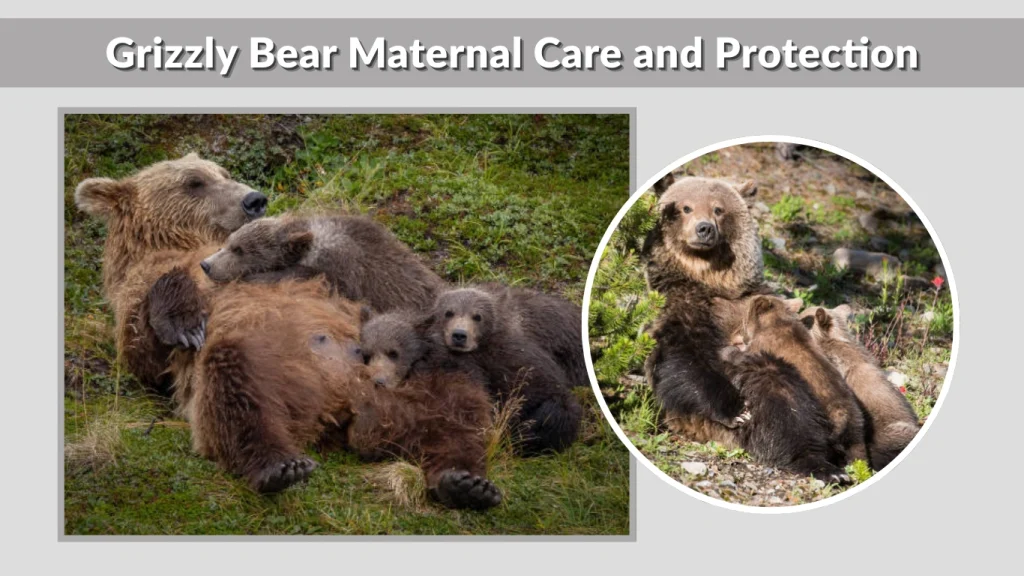
Grizzly bear mothers are highly protective. Raising cubs in the wild is risky, and mortality rates can be high. Predators may include wolves, other bears, and even adult male grizzlies.
Male grizzlies sometimes kill unrelated cubs, a behavior known as infanticide. This may bring the female back into estrus (heat), allowing the male an opportunity to mate. As a result, mothers are extremely vigilant and may avoid areas with large males.
Cubs usually remain with their mother for two to three years. During this time, she teaches them how to forage efficiently and navigate their territory. The long dependency period is essential for survival, as young bears must learn complex behaviors.
Weaning and Independence
Cubs begin eating solid food within a few months but continue nursing for up to two years. Gradually, they become more independent and capable of finding food on their own.
When the mother is ready to breed again, she separates from her cubs. This separation often occurs in late spring or early summer. The young bears, now called subadults, may stay together for a short time before going their separate ways.
Subadult bears face significant challenges. Without their mother’s protection, they must establish their own home ranges while avoiding dominant adults. Survival during this stage can be difficult.
Reproductive Rate and Population Impact
Grizzly bears have one of the slowest reproductive rates among North American mammals. With small litters, delayed maturity, and long intervals between births, population growth is naturally slow.
Factors affecting reproductive success include:
- Food availability
- Habitat quality
- Human disturbance
- Climate conditions
In areas where food is abundant—such as regions rich in salmon or berry crops—females may reproduce more successfully. Conversely, habitat loss and human conflict can significantly reduce reproductive rates.
Because of their slow reproduction, conservation efforts are critical. Protecting habitat and reducing human-caused mortality help ensure that female grizzlies can successfully raise cubs.
Environmental Influences on Reproduction
Climate change and shifting food patterns may influence grizzly reproduction. For example, changes in berry production or salmon runs can affect a female’s ability to accumulate sufficient fat reserves before denning.
Warmer temperatures may also alter denning periods and food availability. Since successful reproduction depends heavily on the mother’s body condition, environmental changes can directly impact cub survival rates.
Wildlife biologists closely monitor reproductive trends to assess the health of grizzly populations.
Conclusion
Grizzly bear reproduction is a carefully timed process that balances survival, environmental conditions, and maternal investment. From delayed implantation to years of dedicated cub-rearing, female grizzlies play a central role in sustaining their populations. Although powerful and resilient, grizzlies reproduce slowly, making them vulnerable to environmental changes and human pressures. Understanding their reproductive cycle highlights the importance of conservation and habitat protection for these iconic North American bears.
FAQs
How often do grizzly bears have cubs?
Female grizzly bears typically give birth once every three years. This extended interval allows mothers to raise their cubs until they are independent. If a litter does not survive, a female may breed again sooner. However, successful cub-rearing usually delays the next pregnancy.
How many cubs does a grizzly bear usually have?
Grizzly bears most commonly give birth to two cubs per litter. Litters may range from one to three cubs, with twins being the most frequent outcome. The number of cubs often depends on the mother’s age, health, and food availability before denning.
When are grizzly bear cubs born?
Cubs are typically born in January or February while the mother is in her winter den. They are born during hibernation and remain in the den for several months, nursing and growing until spring, when the family emerges.
Do male grizzly bears help raise the cubs?
Male grizzly bears do not participate in raising cubs. After mating season, males return to solitary lives. All parental care, including nursing, protection, and teaching survival skills, is provided entirely by the mother for up to three years.