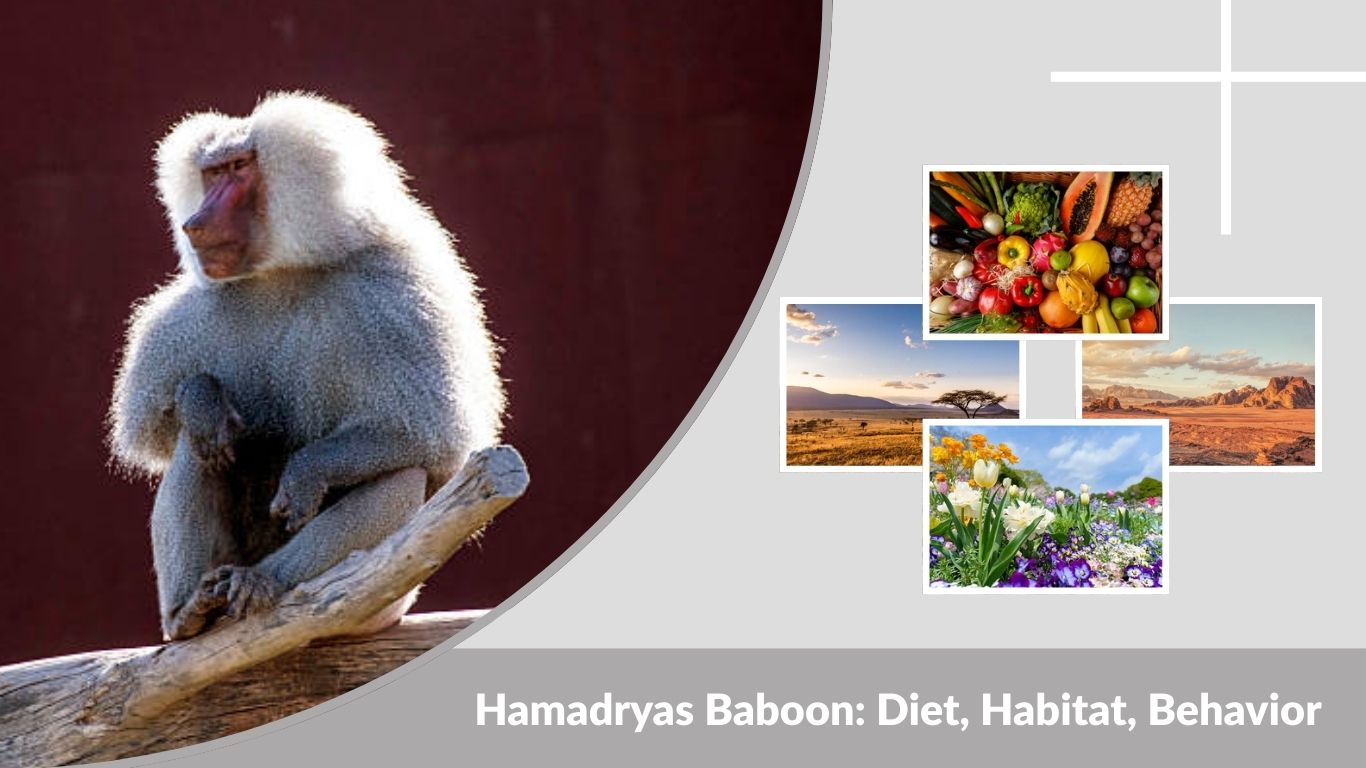
The hamadryas baboon is one of the most recognizable primates in the world, famous for the long silver mane of adult males and its complex social organization. These monkeys live mainly in parts of Northeast Africa and the Arabian Peninsula, where they inhabit rocky deserts and dry savanna landscapes. Hamadryas baboons are highly adaptable animals that can survive in harsh environments with limited food and water. In this guide, you will learn about their habitat, diet, size, behavior, and some fascinating facts about these intelligent primates.
What Is a Hamadryas Baboon?
The hamadryas baboon (Papio hamadryas) is a species of baboon belonging to the Old World monkey family. It is one of five baboon species and is often considered one of the most socially complex primates.
Scientific Classification
- Kingdom: Animalia
- Phylum: Chordata
- Class: Mammalia
- Order: Primates
- Family: Cercopithecidae
- Genus: Papio
- Species: Papio hamadryas
Why They Are Called Sacred Baboons
Hamadryas baboons are sometimes called sacred baboons because of their historical association with ancient Egyptian culture. Ancient Egyptians believed these baboons were connected to Thoth, the god of wisdom and writing. Because of this belief, baboons were sometimes depicted in Egyptian art and even mummified.
Key Characteristics
Hamadryas baboons have several physical traits that make them easy to identify.
- Adult male baboons have a large silver-white mane around their shoulders.
- They have pink or reddish faces and rumps with little hair.
- Their tails curve upward, forming a distinctive shape.
- Males are much larger than females, a trait known as sexual dimorphism.
These features make the hamadryas baboon one of the most visually striking primates.
Where Do Hamadryas Baboons Live?
Hamadryas baboons live mainly in Northeast Africa and parts of the Arabian Peninsula. Their distribution includes several countries across these regions.
Native Range
Their natural range includes areas such as:
- The Horn of Africa
- Parts of Northeast Africa
- Regions of the Middle East
Countries Where They Are Found
Hamadryas baboons are commonly found in the following countries:
- Ethiopia
- Eritrea
- Sudan
- Somalia
- Saudi Arabia
- Yemen
These areas provide the rocky terrain and dry climates that baboons prefer.
Hamadryas baboons often travel long distances during the day while searching for food, but they typically return to specific sleeping cliffs at night. These cliff areas provide protection from predators.
Hamadryas Baboon Habitat
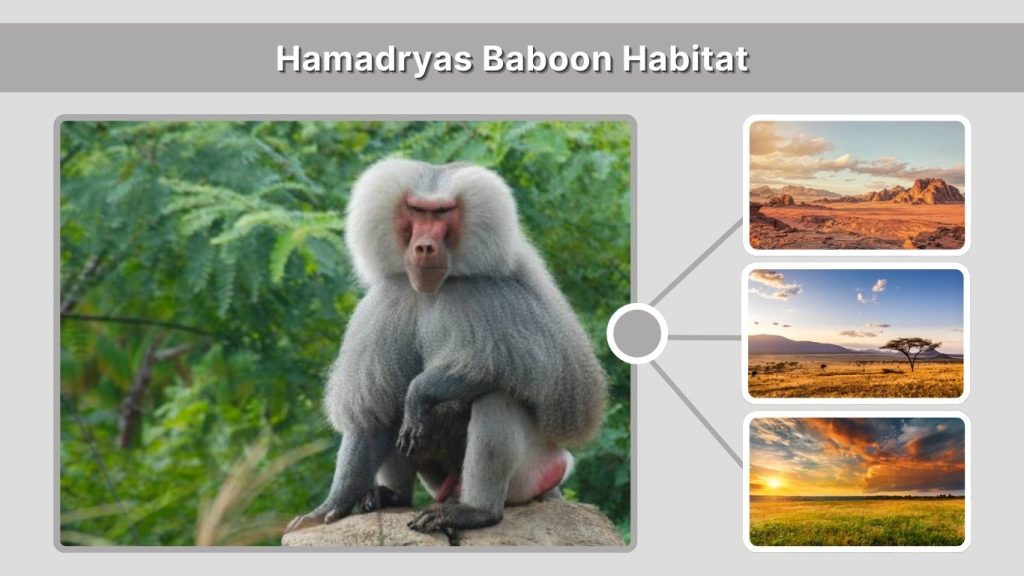
The hamadryas baboon habitat is quite different from the forest habitats of many other primates. Instead, these baboons are adapted to dry and rugged environments.
Typical Environments
They usually live in:
- Rocky deserts
- Dry savannas
- Open grasslands
- Bushland areas
- Mountain cliffs
These environments may appear harsh, but hamadryas baboons are extremely adaptable animals.
Why Cliffs Are Important
Cliffs play a major role in their daily life.
- They serve as sleeping sites at night.
- The steep rock faces provide protection from predators.
- Baboons gather in large groups on cliffs for safety.
By sleeping in elevated areas, baboons reduce the risk of attacks from animals such as leopards and hyenas.
Habitat Adaptations
Hamadryas baboons have developed several adaptations that help them survive in dry habitats:
- They can travel long distances to find food.
- Their diet is flexible and includes many plant types.
- They can survive with limited water sources.
These adaptations allow them to live in environments where many other primates could not survive.
Hamadryas Baboon Size and Physical Characteristics
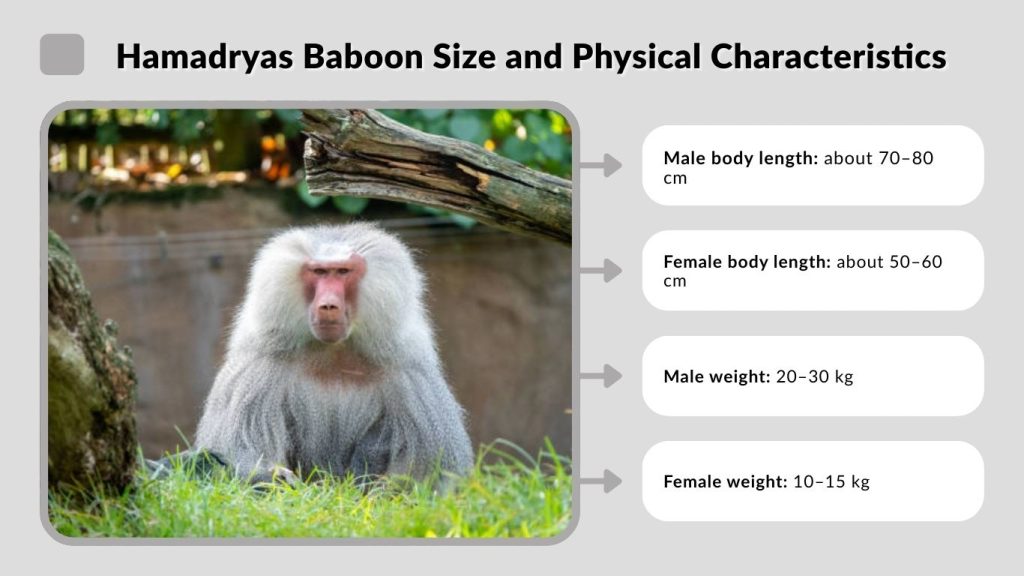
The hamadryas baboon size varies greatly between males and females, making them one of the primates with the most noticeable gender differences.
Average Body Size
Adult hamadryas baboons can reach impressive sizes.
- Male body length: about 70–80 cm (27–31 inches)
- Female body length: about 50–60 cm (20–24 inches)
Their long tails add another 40–60 cm to their total length.
Weight Differences
Males are significantly heavier than females.
- Male weight: 20–30 kg (44–66 pounds)
- Female weight: 10–15 kg (22–33 pounds)
This size difference plays an important role in their social structure.
Sexual Dimorphism
Sexual dimorphism is very obvious in hamadryas baboons.
Male baboons have:
- Large silver manes
- Bigger bodies
- Longer canine teeth
Females are:
- Smaller
- Brownish in color
- Without the long mane
Lifespan
Hamadryas baboons typically live:
- 20–30 years in the wild
- Up to 35 years in captivity
Their lifespan can vary depending on food availability, predators, and environmental conditions.
What Do Hamadryas Baboons Eat?
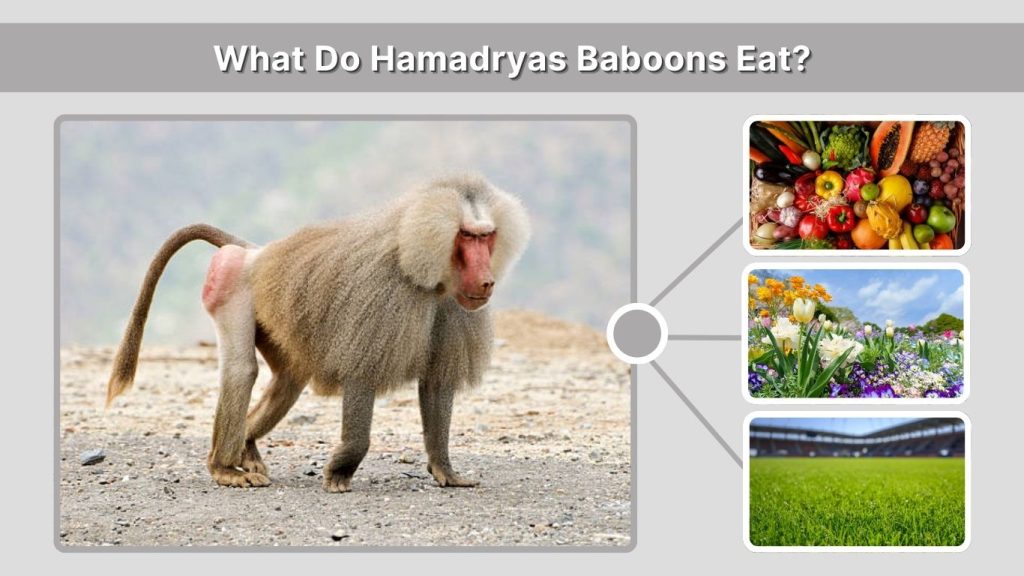
The hamadryas baboon diet is very flexible, which helps these primates survive in harsh and dry environments. They are omnivores, meaning they eat both plant and animal foods. Because their habitats often have limited resources, hamadryas baboons must search widely for food and adapt their diet depending on the season.
Main Plant Foods
Most of the hamadryas baboon diet comes from plant materials. Their common foods include:
- Fruits
- Grass
- Seeds
- Leaves
- Roots and tubers
- Flowers
Roots and underground plants are particularly important because they contain moisture, which helps baboons survive in areas where water is scarce.
Animal Food Sources
Although plants make up the majority of their diet, hamadryas baboons will also eat animal foods when available.
These may include:
- Insects
- Small reptiles
- Bird eggs
- Small mammals
Occasionally, they may scavenge leftover meat from other predators. This opportunistic feeding behavior helps them obtain extra protein.
Seasonal Feeding Habits
Food availability changes throughout the year, so baboons adjust their feeding habits.
- During wet seasons, they eat more fruits, grasses, and fresh vegetation.
- During dry seasons, they rely more on roots, seeds, and tougher plants.
Their ability to adapt their diet is one of the key reasons they can survive in difficult environments.
Social Structure and Behavior
Hamadryas baboons are famous for having one of the most complex social systems among primates. Unlike many other monkey species, they live in a multi-level society with several layers of social organization.
One-Male Units
The basic social group is called a one-male unit (OMU).
This group usually includes:
- One dominant male
- Several females
- Their young offspring
The male protects and leads the group while keeping the females together.
Clans, Bands, and Troops
Several one-male units combine to form larger groups.
Their social structure usually looks like this:
- One-male unit – one male and several females
- Clan – several units related to each other
- Band – multiple clans traveling together
- Troop – a very large gathering of bands
Some troops can include hundreds of baboons, especially when they gather at sleeping cliffs.
Grooming and Social Bonds
Grooming plays an important role in baboon society.
- It strengthens relationships between individuals.
- It helps remove parasites from fur.
- It reduces tension within groups.
Strong social bonds help maintain stability in their complex communities.
Reproduction and Life Cycle
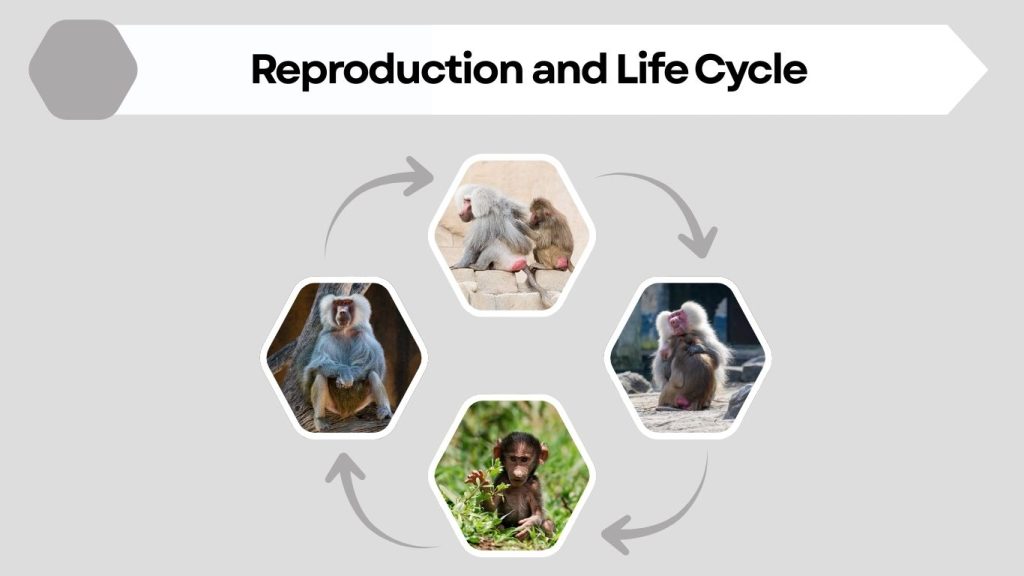
The reproduction process of hamadryas baboons is influenced by their unique social structure.
Mating System
In most cases, the dominant male in a one-male unit mates with the females in his group. Males actively guard their females from other males.
Gestation Period
The pregnancy period for hamadryas baboons lasts about 6 months (around 180 days).
Usually, a female gives birth to one baby at a time.
Birth and Infant Care
Newborn baboons are born with dark fur, which gradually changes color as they grow.
During the early months:
- Infants stay very close to their mothers.
- Mothers carry babies on their chest or back.
- Other females in the group may help care for the young.
Development Stages
As young baboons grow, they become more independent.
- Young baboons start exploring their surroundings.
- They play with other juveniles to develop social and physical skills.
- Males eventually leave their birth group to join new groups.
This process helps maintain genetic diversity in baboon populations.
Hamadryas Baboon Facts
There are many fascinating hamadryas baboon facts that make these primates unique among monkeys.
Interesting Facts
- Hamadryas baboons are also known as sacred baboons because of their connection to ancient Egypt.
- Adult males grow an impressive silver mane that resembles a lion’s mane.
- They can live in large social groups of several hundred individuals.
- They travel long distances every day while searching for food.
- Their communication includes facial expressions, vocal calls, and body language.
Unique Behavioral Traits
One unusual behavior of hamadryas baboons is female herding. Dominant males guide and control the movement of females within their group.
They also communicate using many signals, including:
- Vocal sounds
- Lip smacking
- Facial expressions
- Body posture
These communication methods help maintain order in their complex society.
Predators and Threats
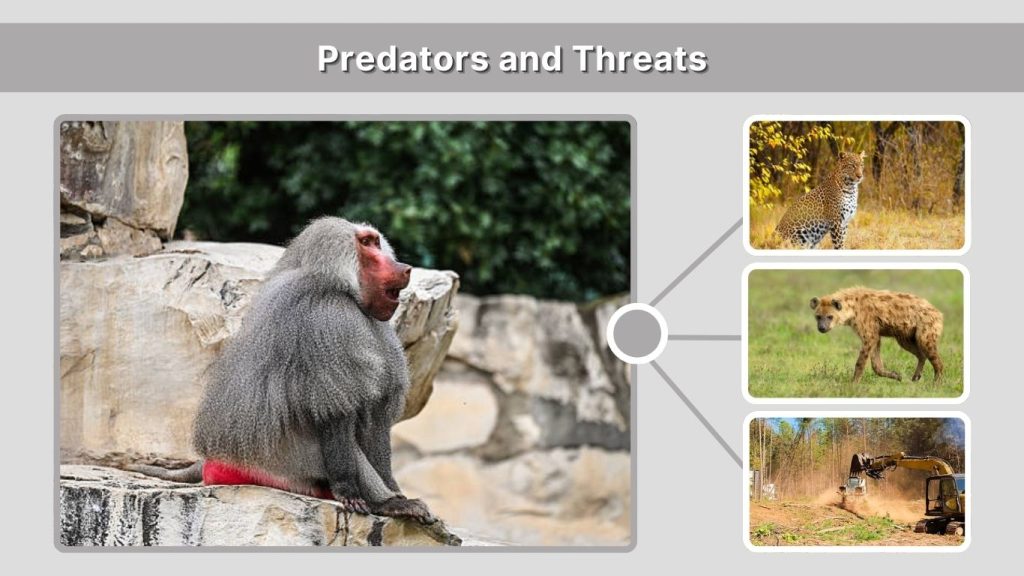
Like many wild animals, hamadryas baboons face threats from both predators and human activities.
Natural Predators
The main predators of hamadryas baboons include:
- Leopards
- Hyenas
- Large birds of prey (especially targeting young baboons)
Sleeping on cliffs helps protect them from many ground predators.
Human Threats
Human activities can also affect baboon populations.
Some of the major threats include:
- Habitat destruction
- Hunting
- Conflict with farmers when baboons raid crops
As human populations grow, these conflicts can become more common.
Conservation Status
The International Union for Conservation of Nature (IUCN) currently lists the hamadryas baboon as Least Concern. This means the species is not currently considered endangered.
Population Trends
Although they are still widespread, local populations can decline due to habitat loss and human conflict.
Conservation Efforts
Several efforts help protect hamadryas baboons:
- Wildlife protection laws
- Protected national parks
- Conservation programs focused on habitat preservation
Maintaining healthy ecosystems is important for the long-term survival of these primates.
FAQs
Are hamadryas baboons dangerous?
Hamadryas baboons are generally not dangerous to humans, but like all wild animals, they can become aggressive if threatened or provoked.
How big do hamadryas baboons get?
Adult males can weigh up to 30 kg (66 pounds) and reach about 80 cm (31 inches) in body length, while females are smaller.
What do hamadryas baboons eat in the wild?
They eat a variety of foods including fruits, grasses, seeds, roots, insects, and small animals.
Where do hamadryas baboons live?
Hamadryas baboons live mainly in Northeast Africa and the Arabian Peninsula, including countries like Ethiopia, Sudan, and Saudi Arabia.
How long do hamadryas baboons live?
They typically live 20–30 years in the wild, and sometimes longer in captivity.