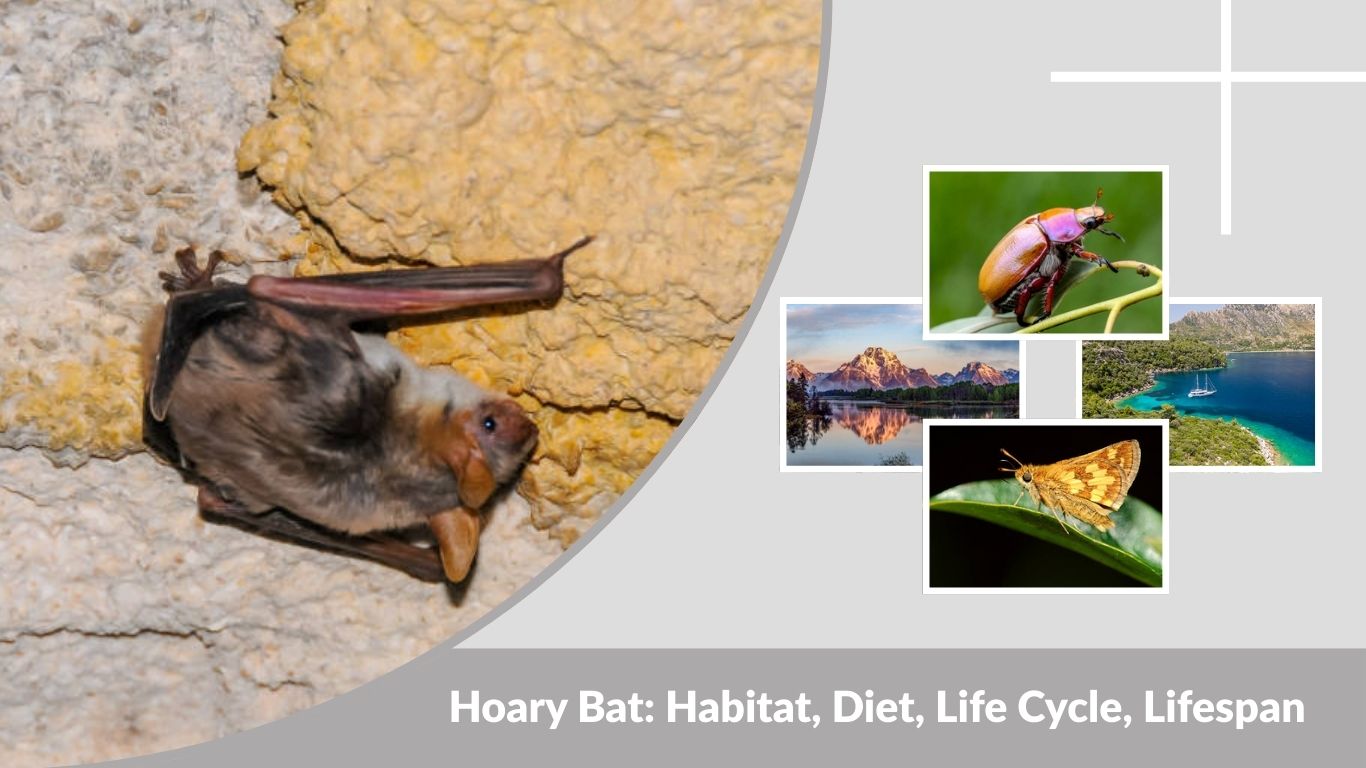
The hoary bat is one of the largest and most widespread bat species in the Americas. Scientifically known as Lasiurus cinereus, this bat is easily recognized by its frosted or “hoary” fur that gives it a silver-gray appearance. Hoary bats are insect-eating mammals that play an important role in controlling insect populations. Unlike many other bats that live in caves, hoary bats usually roost in trees and often live alone. Their unique lifestyle and wide distribution make them one of the most fascinating bat species in the world.
What Is a Hoary Bat?
The hoary bat is a medium-to-large insect-eating bat that belongs to the family Vespertilionidae, also known as evening bats. It is known for its distinctive frosted fur and its habit of roosting in tree foliage rather than caves.
Hoary bats are mostly solitary animals, meaning they prefer to live alone instead of forming large colonies. They spend the daytime resting in tree branches and become active at night to hunt flying insects.
This species is widely distributed across North America and parts of Central and South America, making it one of the most common tree-roosting bats in the Western Hemisphere.
Scientific Classification
The hoary bat belongs to the following scientific classification:
- Kingdom: Animalia
- Phylum: Chordata
- Class: Mammalia
- Order: Chiroptera
- Family: Vespertilionidae
- Genus: Lasiurus
- Species: Lasiurus cinereus
The order Chiroptera includes all bat species, while the family Vespertilionidae contains many insect-eating bats found across the world.
Scientific Name (Lasiurus cinereus)
The scientific name Lasiurus cinereus describes the bat’s physical appearance.
- Lasiurus means “hairy tail,” referring to the fur that covers the bat’s tail membrane.
- Cinereus means “ashy” or “gray,” describing the bat’s frosted gray fur.
These terms perfectly describe the hoary bat’s distinctive look.
Meaning of the Name “Hoary”
The word “hoary” means covered with gray or white hair, giving something a frosted or aged appearance.
Hoary bats have dark brown fur with white tips, which creates a silvery or frosted effect across their bodies. This unique coloration helps them blend into tree foliage during the day.
Physical Characteristics of the Hoary Bat
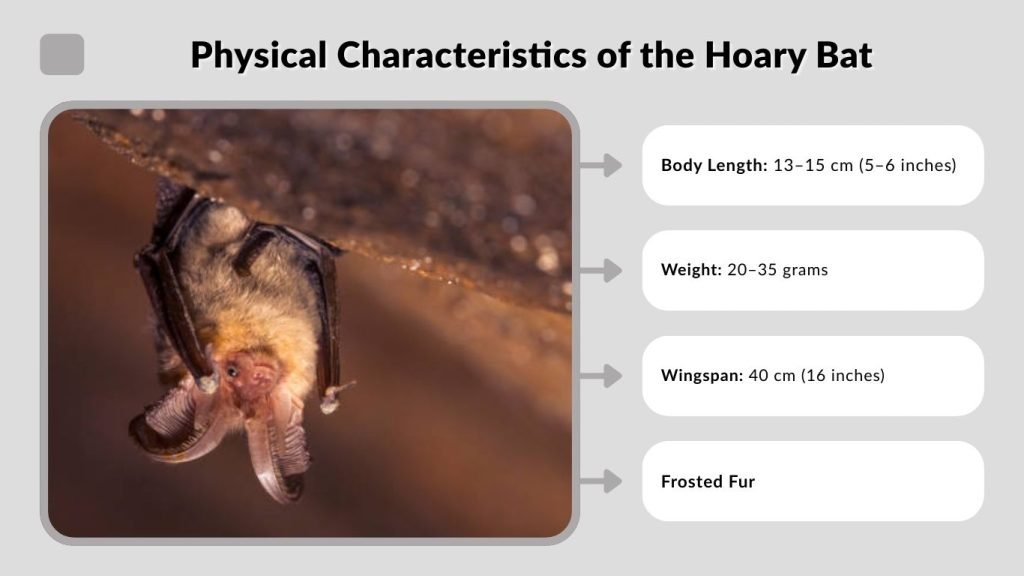
The hoary bat is one of the largest bat species in North America. Its body structure is well adapted for fast and efficient flight while hunting insects at night.
These bats have strong wings and dense fur that help them survive in different climates.
Key Physical Characteristics
- Body Length: Usually about 13–15 cm (5–6 inches)
- Weight: Around 20–35 grams
- Wingspan: Approximately 40 cm (16 inches)
- Frosted Fur: Brown fur with white tips that creates a silver appearance
- Yellowish Collar: Many hoary bats have a pale yellow patch around the neck
- Hairy Tail Membrane: Fur extends onto the tail membrane
- Rounded Ears: Short ears adapted for echolocation
These features make hoary bats easy to identify compared with other bat species.
Hoary Bat Habitat
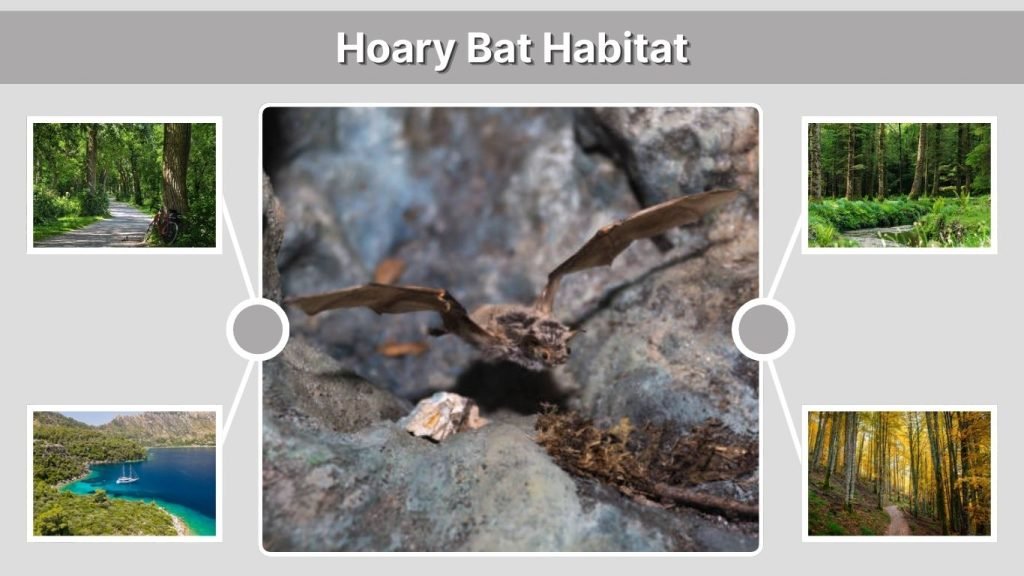
Hoary bats are known as tree-roosting bats because they usually live in trees rather than caves. They prefer areas with dense foliage that provide shelter and protection.
Preferred Natural Habitats
Hoary bats can live in a variety of environments, including:
- Forests
- Woodlands
- Parks and suburban areas
- Open countryside with scattered trees
- Coastal forests
They often choose tall trees that provide good cover and protection during the daytime.
Tree Roosting Behavior
Unlike many bats that gather in large groups, hoary bats are usually solitary roosters. They hang from tree branches and hide within the leaves.
Their frosted fur helps them blend into the surrounding foliage, making them harder for predators to detect.
During the day, hoary bats remain quiet and still while resting in their tree shelters.
Habitats Across Different Regions
Hoary bats can adapt to many different climates. They are found in:
- Temperate forests
- Mountain regions
- Tropical forests
- Urban green spaces with large trees
Their ability to adapt to different habitats contributes to their wide geographic distribution.
Where Do Hoary Bats Live?
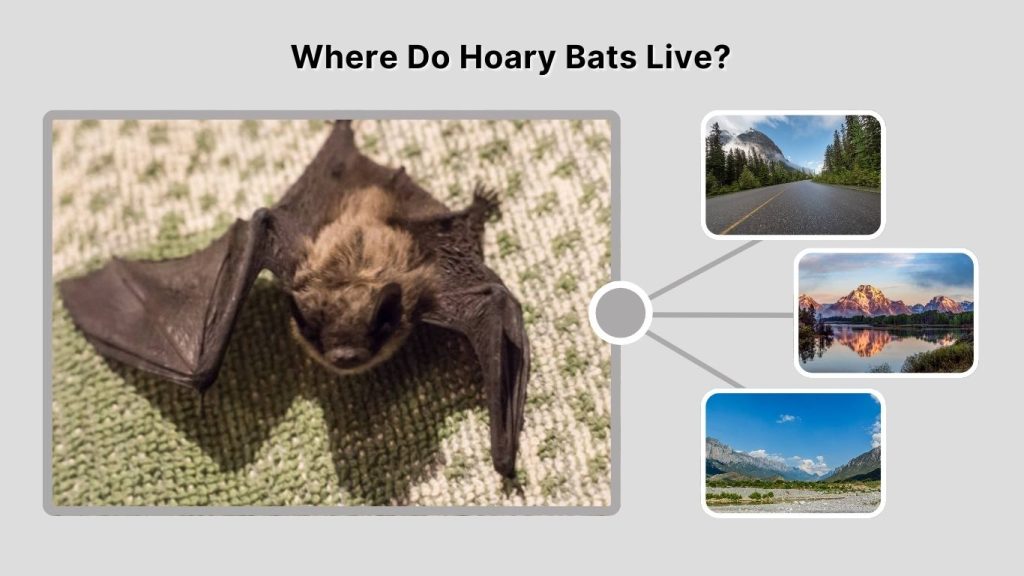
Hoary bats are widely distributed throughout the Americas. Their range extends from Canada in the north to South America in the south.
Distribution in North America
In North America, hoary bats are commonly found in:
- Canada
- The United States
- Northern Mexico
They are especially common in forested regions and areas with large trees.
Presence in Central and South America
Hoary bats also live in parts of:
- Central America
- Northern South America
- Some Caribbean islands
In these regions, they typically inhabit tropical forests and wooded landscapes.
Where Do Galápagos Hoary Bats Live?
A special subspecies known as the Galápagos hoary bat lives in the Galápagos Islands, located in the Pacific Ocean near Ecuador.
These bats inhabit forested areas and coastal regions of the islands. Like other hoary bats, they roost in trees and feed on flying insects during the night.
Hoary Bat Diet
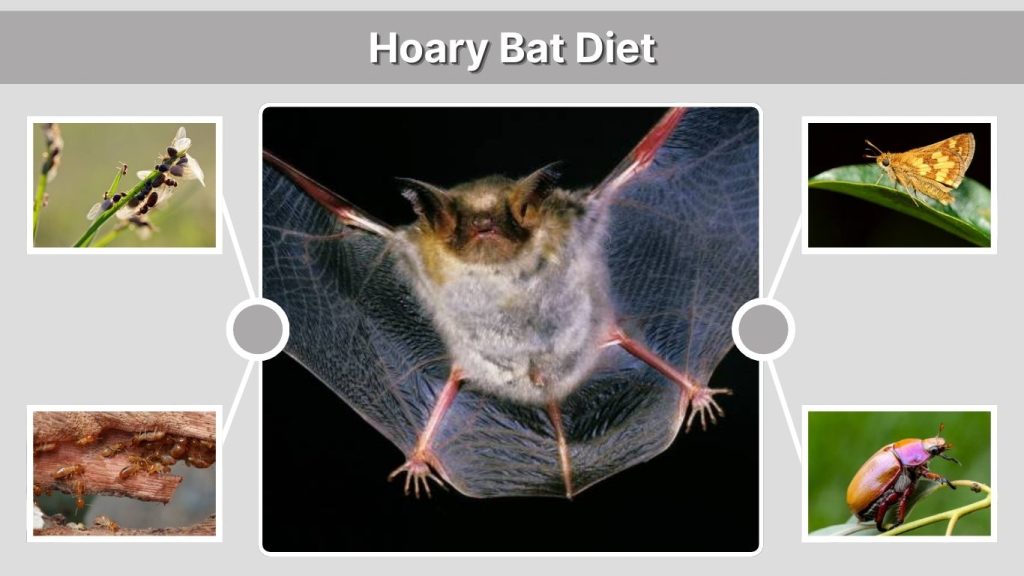
The hoary bat is an insectivorous bat, meaning it feeds mainly on insects.
Main Foods They Eat
Their diet typically includes:
- Moths
- Beetles
- Flying ants
- Termites
- Mosquitoes
Many of these insects are agricultural pests, which means hoary bats help control insect populations naturally.
Hunting Behavior
Hoary bats hunt while flying through open areas and forest edges. They usually begin hunting shortly after sunset.
They use echolocation, producing high-frequency sounds that bounce off objects. By listening to the returning echoes, the bat can detect insects in complete darkness.
Hoary bats often fly high above the ground while searching for prey, catching insects directly in midair.
Behavior and Lifestyle
Hoary bats have unique behaviors that distinguish them from many other bat species. Unlike cave-dwelling bats that form large colonies, hoary bats are mostly solitary animals and prefer to live alone.
Nocturnal Activity
Hoary bats are nocturnal mammals, meaning they are active during the night. After sunset, they leave their tree roosts and begin searching for insects.
They usually fly over open areas, forest edges, and clearings, where flying insects are abundant. Their strong wings allow them to travel long distances while hunting.
Solitary Living Habits
Most hoary bats live alone rather than in groups. Each bat typically selects its own roosting spot in a tree.
However, during migration or breeding seasons, a few bats may temporarily gather in the same area.
Migration Patterns
Hoary bats are also migratory bats. Many populations travel long distances depending on the season.
During the summer, they move to northern regions such as Canada and the northern United States. When colder weather arrives, they migrate south to warmer regions of Mexico, Central America, and South America.
Hoary Bat Life Cycle
The life cycle of a hoary bat begins with mating and continues through several stages of development.
Mating Season
Mating usually occurs during late summer or early autumn before migration. After mating, females store sperm until the following spring.
This delayed fertilization ensures that babies are born when food is plentiful.
Birth and Development of Pups
Female hoary bats usually give birth to two pups, although sometimes one or three may be born.
The pups are born during late spring or early summer. At birth, the young bats are small, hairless, and completely dependent on their mother.
The mother cares for the pups while roosting in trees and feeds them milk until they grow stronger.
Growth and Independence
Within a few weeks, the young bats begin developing fur and stronger wings. They soon start practicing flight and eventually learn to hunt insects on their own.
After gaining independence, they begin living the same solitary lifestyle as adult hoary bats.
Hoary Bat Lifespan
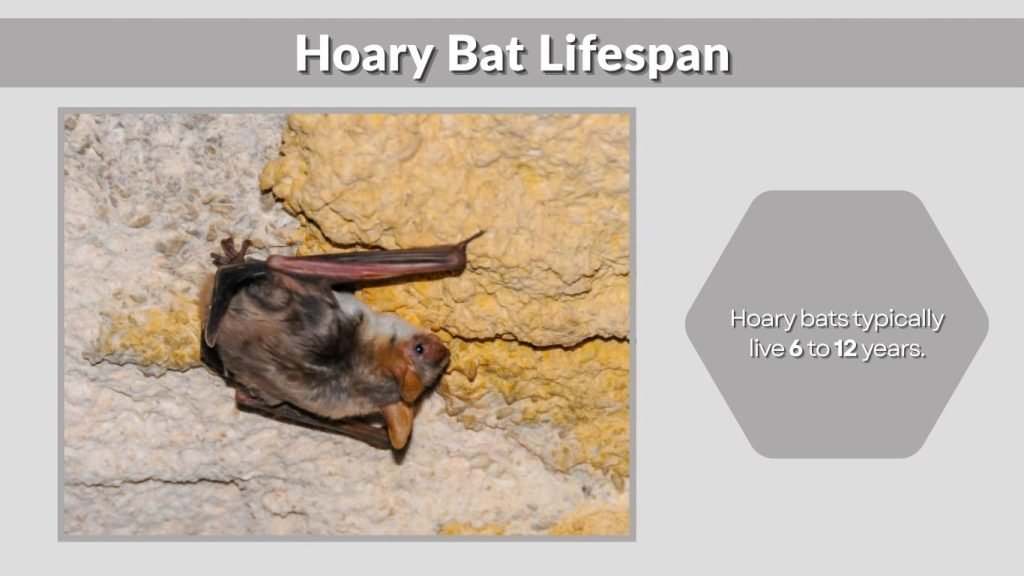
Hoary bats can live relatively long lives for small mammals.
Average Lifespan
In the wild, hoary bats typically live 6 to 12 years.
Some individuals may live even longer under favorable environmental conditions.
Factors Affecting Lifespan
Several factors can influence their lifespan, including:
- Food availability
- Habitat quality
- Predators
- Environmental changes
- Human-related threats such as wind turbines
Healthy habitats with abundant insects help increase their survival chances.
Importance of Hoary Bats in the Ecosystem
Hoary bats play a crucial role in maintaining ecological balance.
Natural Insect Control
Because they eat large numbers of insects, hoary bats help reduce insect populations. Many of the insects they eat are pests that damage crops.
This natural pest control benefits both ecosystems and agriculture.
Maintaining Ecological Balance
By controlling insect populations, hoary bats help maintain balanced food chains within forest ecosystems.
Their presence helps support healthy plant and animal communities.
Benefits for Agriculture
Farmers benefit from bats because they reduce the number of insects that attack crops. This natural pest control can help reduce the need for chemical pesticides.
Threats to Hoary Bats
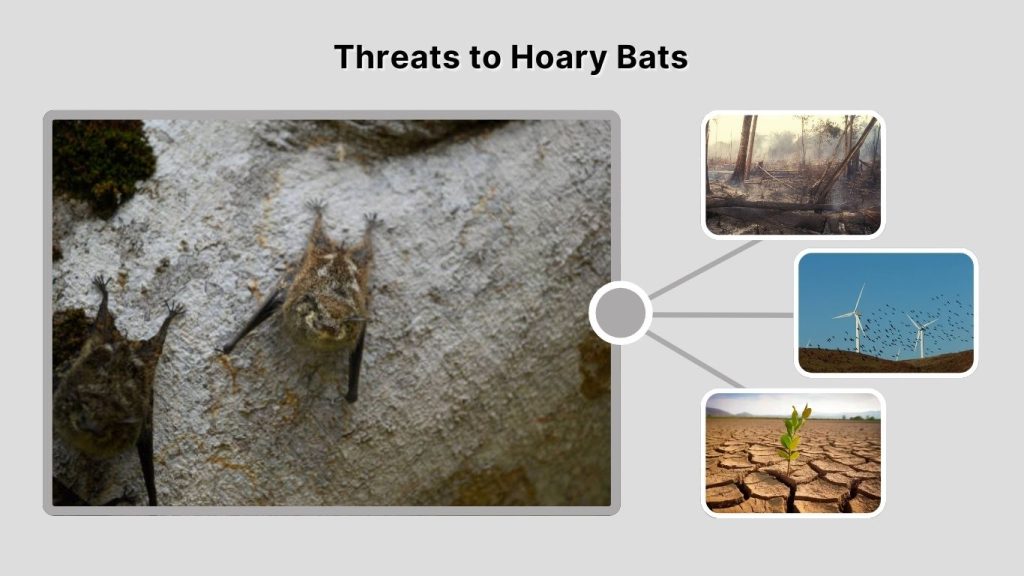
Despite their ecological importance, hoary bats face several threats.
Habitat Loss
Deforestation and urban development reduce the number of trees that hoary bats rely on for roosting.
Wind Turbines and Bat Mortality
Wind turbines have become one of the major threats to hoary bats. Many migrating bats are accidentally killed when they collide with turbine blades.
Environmental Changes
Climate change and environmental disturbances may affect insect populations and migration patterns.
Conservation Efforts
Many researchers and conservation groups are working to protect bat populations.
Wildlife Protection Programs
Conservation programs study hoary bat populations and track their migration patterns to better understand their needs.
Research and Monitoring
Scientists use tracking technology and field studies to monitor bat populations and protect their habitats.
How People Can Help Protect Hoary Bats
People can help by:
- Protecting forests and trees
- Supporting wildlife conservation programs
- Reducing habitat destruction
- Raising awareness about the importance of bats
Interesting Hoary Bat Facts
Here are some fascinating facts about hoary bats:
- They are one of the largest bat species in North America.
- Their fur has white tips that create a frosted appearance.
- Hoary bats usually live alone rather than in colonies.
- They are long-distance migratory bats.
- They play an important role in controlling insect populations.
FAQs
Where do hoary bats live?
Hoary bats live across North America, Central America, and parts of South America, usually in forested areas with large trees.
What do hoary bats eat?
They mainly eat flying insects, including moths, beetles, termites, and mosquitoes.
How long do hoary bats live?
Hoary bats typically live 6 to 12 years in the wild.
Where do Galápagos hoary bats live?
Galápagos hoary bats live in the Galápagos Islands near Ecuador, where they roost in trees and hunt insects at night.
Conclusion
The hoary bat is a remarkable bat species known for its frosted fur, solitary lifestyle, and wide distribution across the Americas. These bats play a vital role in controlling insect populations and supporting healthy ecosystems. Although they face threats such as habitat loss and wind turbine collisions, conservation efforts can help protect their populations. By understanding and appreciating the hoary bat, people can contribute to preserving this fascinating species and the ecosystems it supports.