
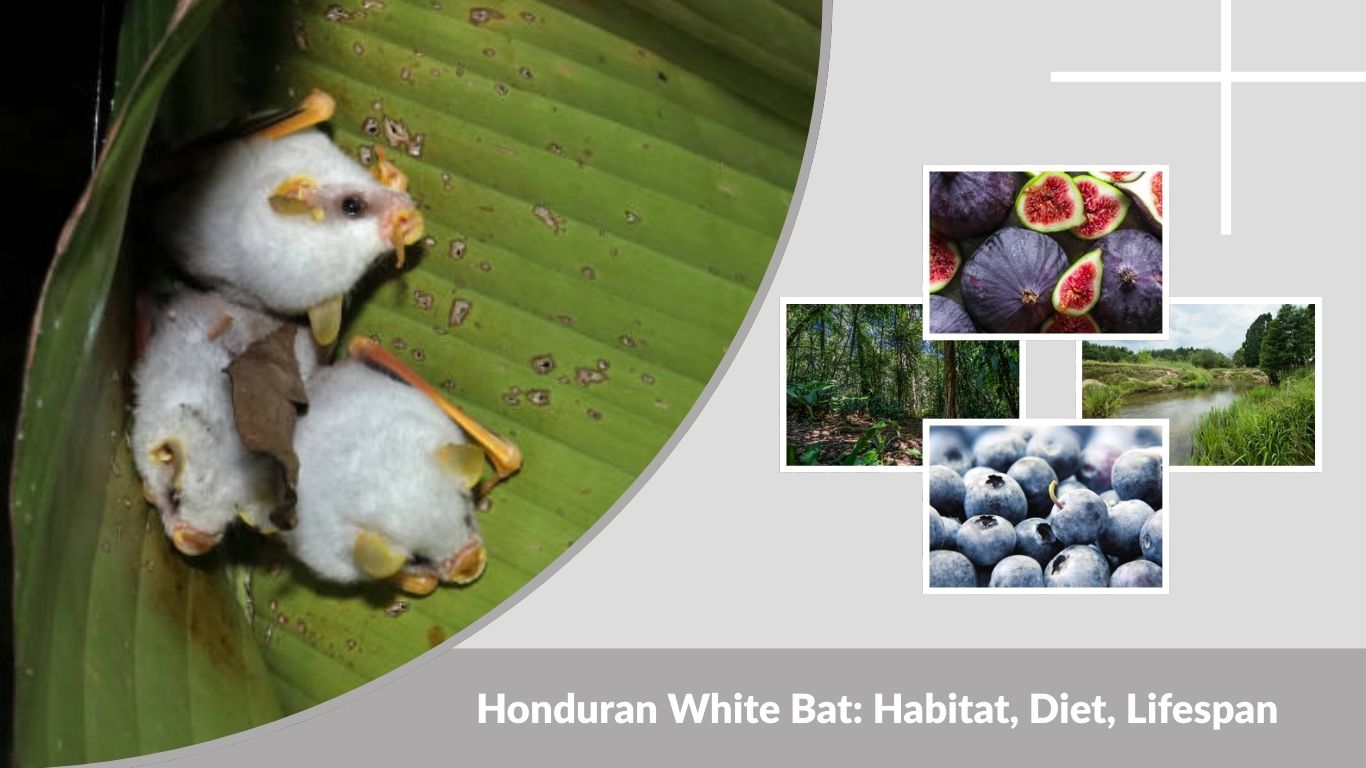
The Honduran white bat is one of the most unique and visually striking bat species in the world. Scientifically known as Ectophylla alba, this small fruit bat is famous for its bright white fur and distinctive yellow nose and ears. Native to Central America, the Honduran white bat lives mainly in tropical forests where it feeds on fruits and builds shelters using large leaves. Despite its tiny size, this bat plays an important role in forest ecosystems by helping disperse seeds and maintain plant diversity.
What Is the Honduran White Bat?
The Honduran white bat is a small fruit-eating bat belonging to the family Phyllostomidae, which includes many species of leaf-nosed bats. It is best known for its unusual appearance and its unique habit of creating “leaf tents” for shelter.
Unlike many bats that live in caves or hollow trees, Honduran white bats build their own shelters by cutting the veins of large leaves so that the leaves fold downward, forming a tent-like structure. These leaf tents protect them from rain, sunlight, and predators.
Because of their small size and rare appearance, Honduran white bats are considered one of the most fascinating bat species found in tropical forests.
Scientific Classification
The Honduran white bat belongs to the following classification:
- Kingdom: Animalia
- Phylum: Chordata
- Class: Mammalia
- Order: Chiroptera
- Family: Phyllostomidae
- Genus: Ectophylla
- Species: Ectophylla alba
The order Chiroptera includes all bats, while the family Phyllostomidae contains many New World bats found in Central and South America.
Scientific Name (Ectophylla alba)
The scientific name Ectophylla alba comes from Latin and Greek roots.
- Ectophylla refers to its unique facial and structural features.
- Alba means white, referring to the bat’s bright white fur.
This name perfectly describes the bat’s most noticeable physical characteristic.
Why It Is Called the Honduran White Bat
The Honduran white bat gets its name from two main features:
- It was first discovered and studied in Honduras.
- Its body is covered in pure white fur, which is extremely rare among bat species.
The bat’s nose, ears, and facial skin are bright yellow or orange, creating a striking contrast with its white body.
Physical Characteristics of the Honduran White Bat
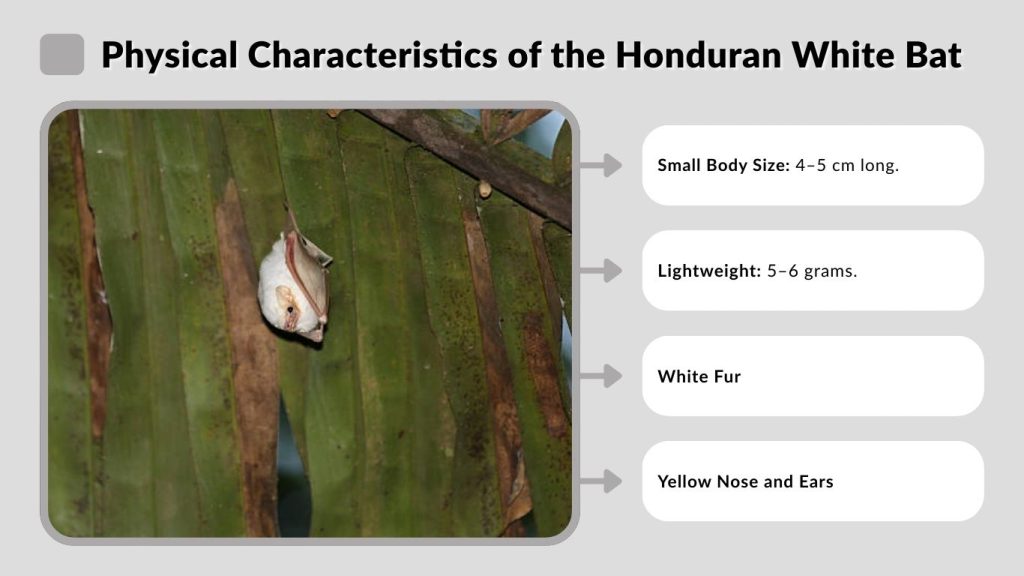
The Honduran white bat is one of the smallest fruit bats in the world. Its tiny size and unique coloring make it easy to recognize.
These bats are well adapted for life in dense tropical forests. Their light body weight and strong wings allow them to move easily between trees while searching for fruit.
Key Physical Characteristics
- Small Body Size: Usually about 4–5 cm long.
- Light Weight: Typically weighs around 5–6 grams.
- White Fur: One of the few bat species with bright white fur.
- Yellow Nose and Ears: Distinctive yellow or orange facial features.
- Leaf-Nosed Structure: A small nose leaf that helps with sensing surroundings.
- Short Wings: Adapted for flying through dense forest vegetation.
- Sharp Claws: Used for gripping leaf tents and branches.
These unique characteristics help the Honduran white bat blend into the light that filters through green leaves, which can give the bat a greenish appearance when resting inside its leaf shelter.
Where Do Honduran White Bats Live?
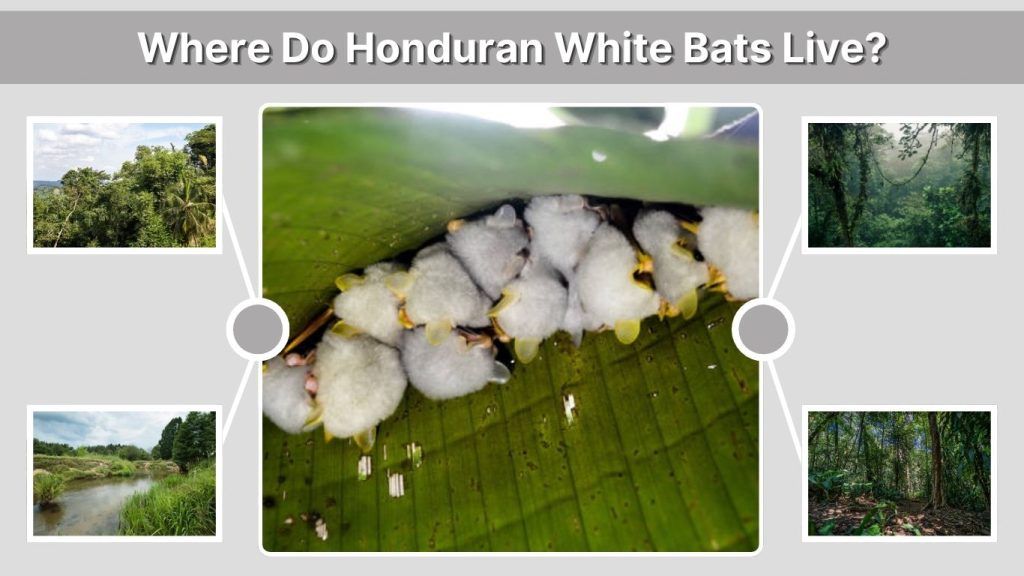
Honduran white bats are found mainly in Central America, where tropical rainforests provide ideal conditions for their survival.
Geographic Distribution
This species is commonly found in several Central American countries, including:
- Honduras
- Costa Rica
- Nicaragua
- Panama
These regions provide warm climates, dense vegetation, and plenty of fruiting plants that support the bats’ diet.
Honduran White Bat Habitat
Honduran white bats prefer humid tropical forests where large-leaf plants grow abundantly. Their habitats typically include:
- Tropical rainforests
- Dense jungle vegetation
- Forest areas with large palm or heliconia plants
- Regions near rivers and streams
The presence of large leaves is especially important because these bats rely on them to create their shelters.
Leaf Tent Roosting Behavior
One of the most fascinating behaviors of the Honduran white bat is its ability to build leaf tents.
The bats chew along the veins of large leaves, causing the leaf to fold downward and form a tent-like shelter. These tents protect them from:
- Rain
- Sunlight
- Predators
A single leaf tent usually houses a small group of bats, often consisting of one male and several females.
Honduran White Bat Diet
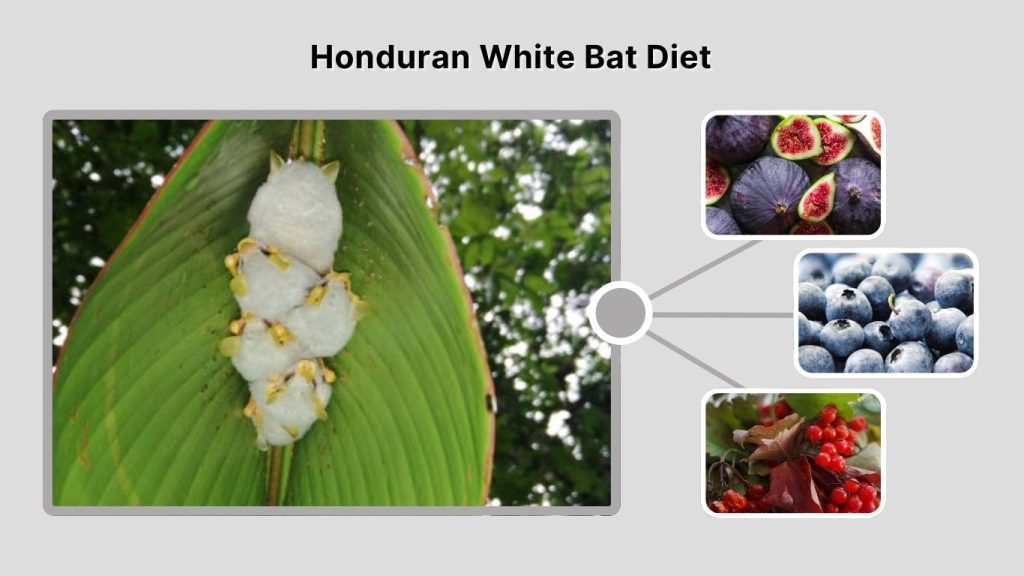
The Honduran white bat is primarily a fruit-eating bat, meaning its diet mainly consists of fruits.
Main Foods They Eat
Their diet commonly includes fruits from tropical plants such as:
- Figs
- Small berries
- Tropical fruits from forest plants
They usually select soft and ripe fruits that are easy to chew and digest.
Feeding Behavior
Honduran white bats are nocturnal, which means they become active after sunset.
At night, they leave their leaf tents and fly through the forest to search for fruiting trees. They often bite into fruits to extract the juice and soft pulp while leaving the seeds behind.
This feeding behavior helps spread plant seeds throughout the forest.
Behavior and Social Structure
Honduran white bats have interesting behaviors that help them survive in tropical forests. They are social animals that usually live in small groups and depend on their leaf tents for protection and rest.
Nocturnal Activity
Like most bats, Honduran white bats are nocturnal, meaning they are active during the night. After sunset, they leave their leaf tents and fly through the forest in search of food.
Their small size and agile wings allow them to move easily through dense vegetation while looking for fruit.
Small Group Colonies
Honduran white bats usually live in small colonies rather than large groups. A typical colony may contain 5 to 15 bats.
These groups often consist of:
- One adult male
- Several females
- Their young pups
Living in small groups helps them stay safe and maintain social bonds.
Communication and Interaction
Honduran white bats communicate using soft sounds, body movements, and grooming behavior. Grooming helps strengthen social bonds within the group and keeps their fur clean.
Members of the colony often rest closely together inside their leaf tents during the daytime.
Honduran White Bat Life Cycle
The life cycle of the Honduran white bat begins with mating and continues through several stages of growth and development.
Mating and Reproduction
Breeding usually occurs during times when fruit is abundant in the forest. This ensures that mothers have enough food to support their young.
After mating, the female bat carries the developing baby during the gestation period, which lasts several months.
Birth and Development of Pups
Female Honduran white bats usually give birth to one pup at a time.
At birth, the baby bat is very small and depends entirely on its mother for warmth and food. The pup clings to the mother while she rests in the leaf tent.
As the young bat grows, it begins to:
- Hang independently in the tent
- Practice wing movements
- Learn to fly and find food
Eventually, the young bat becomes independent and joins the colony’s nightly feeding trips.
Honduran White Bat Lifespan
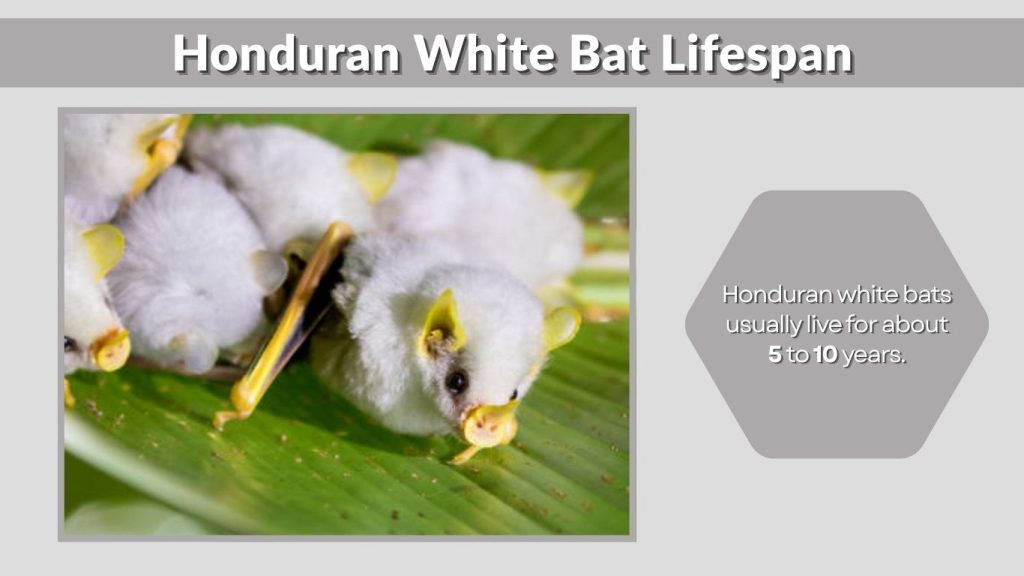
The lifespan of the Honduran white bat is relatively short compared to larger bat species.
Average Lifespan
In the wild, Honduran white bats usually live for about 5 to 10 years.
Their lifespan depends on factors such as:
- Food availability
- Habitat conditions
- Presence of predators
- Environmental changes
Factors Affecting Lifespan
Several factors can affect how long these bats live, including:
- Habitat destruction
- Climate changes
- Natural predators such as birds and snakes
- Loss of suitable leaf plants for building tents
Protecting their natural habitats helps improve their survival chances.
Importance of Honduran White Bats in the Ecosystem
Although they are small, Honduran white bats play an important role in maintaining healthy forest ecosystems.
Seed Dispersal
When these bats eat fruit, they often drop or spit out the seeds in different areas of the forest. This helps spread plants across wide distances.
Seed dispersal allows new trees and plants to grow in different locations.
Maintaining Tropical Forests
By spreading seeds, Honduran white bats help support forest regeneration. New plants grow from the seeds they disperse, which keeps forests healthy and diverse.
Supporting Biodiversity
Healthy forests support many animals, insects, and plants. By helping plants reproduce, Honduran white bats indirectly support the entire ecosystem.
Threats to Honduran White Bats
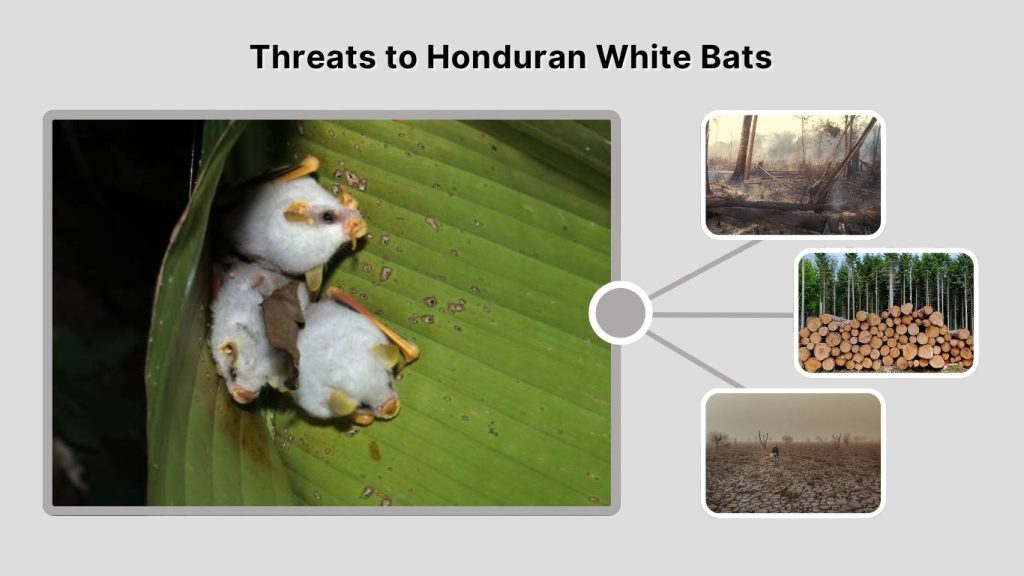
Despite their ecological importance, Honduran white bats face several threats in the wild.
Habitat Loss
Deforestation is one of the biggest threats to these bats. When forests are cleared for agriculture or development, bats lose both food sources and places to build leaf tents.
Deforestation
The removal of tropical forests reduces the number of large-leaf plants that these bats depend on for shelter.
Without these plants, Honduran white bats struggle to survive.
Climate Change
Climate change may affect fruit production and forest habitats, which can reduce food availability for bats.
Conservation Efforts
Protecting the Honduran white bat requires conserving the forests where they live.
Protecting Tropical Forest Habitats
Conservation programs focus on preserving tropical forests and protecting the plants that bats use for shelter.
Wildlife Protection Programs
Researchers and conservation organizations study bat populations and promote awareness about their ecological importance.
How Humans Can Help
People can help protect Honduran white bats by:
- Supporting forest conservation programs
- Protecting natural habitats
- Reducing deforestation
- Learning about the importance of bats in ecosystems
Interesting Honduran White Bat Facts
Here are some fascinating facts about the Honduran white bat:
- It is one of the smallest fruit bats in the world.
- Its bright white fur and yellow nose make it very unique.
- It builds leaf tents for shelter instead of living in caves.
- Colonies usually contain 5–15 bats.
- When resting inside green leaves, their white fur can appear greenish due to filtered sunlight.
FAQs
Where do Honduran white bats live?
Honduran white bats live mainly in Central America, including Honduras, Costa Rica, Nicaragua, and Panama. They prefer tropical rainforest habitats.
What do Honduran white bats eat?
They mostly eat fruits such as figs and berries, which provide them with energy and nutrients.
How long do Honduran white bats live?
In the wild, Honduran white bats typically live 5 to 10 years, depending on environmental conditions.
Why are Honduran white bats white?
Their white fur helps reflect sunlight and may help them blend into the light filtering through green leaves inside their leaf tents.
Conclusion
The Honduran white bat is a remarkable and unique species known for its bright white fur, yellow facial features, and unusual leaf tent shelters. Found in the tropical forests of Central America, these small bats play an important role in seed dispersal and forest regeneration. Although they face threats such as habitat loss and deforestation, conservation efforts can help protect their populations. Understanding and protecting the Honduran white bat ensures that these fascinating creatures continue to thrive in their natural habitats.