


The horned lark is a small, ground-dwelling songbird best known for the tiny black “horns” on its head and its preference for wide-open landscapes. Unlike many birds that live in trees, this species spends most of its life on bare ground, open fields, deserts, and tundra. Found across several continents, the horned lark is one of the most widespread larks in the world. Its soft colors, musical flight song, and unique nesting habits make it a fascinating bird to observe and study.
What Is a Horned Lark?
The horned lark (Eremophila alpestris) is a member of the lark family, Alaudidae. It is the only true lark native to much of North America, though related populations also live across Europe, Asia, and parts of North Africa. The bird gets its name from the small black feather tufts on the head of adults, which resemble tiny horns.
Horned larks are specially adapted to life in open, treeless areas. They thrive where vegetation is short or sparse, allowing them to walk and run easily along the ground while searching for food. This open-country lifestyle sets them apart from many songbirds that depend on shrubs or forests.
Despite their modest size, horned larks are strong fliers. They are known for their beautiful aerial songs, often delivered while fluttering high above the ground. These songs play an important role in territory defense and courtship during the breeding season.
Physical Appearance and Size
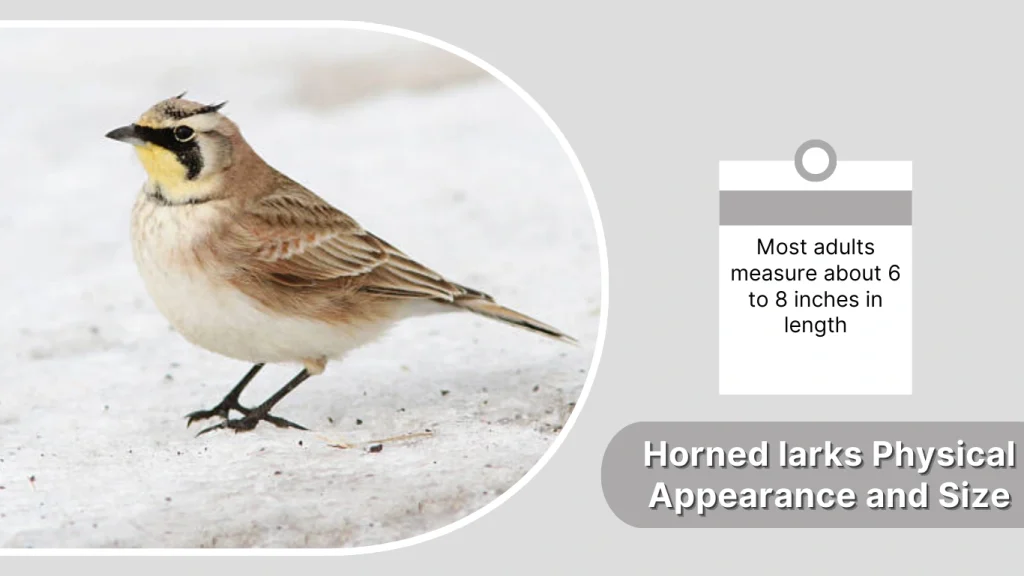
Horned larks are small, slim birds with long wings and a short tail. Most adults measure about 6 to 8 inches in length, with a wingspan that allows quick, buoyant flight over open land. Their bodies are built for walking, and they are often seen running rather than hopping.
Their coloring blends well with soil and dry grass. The back is usually pale brown, gray, or sandy, while the underparts are whitish. This camouflage helps them avoid predators in exposed habitats. The face pattern is one of their most noticeable features, with a dark mask, black throat patch in many males, and light eyebrow lines.
Males are typically more boldly marked than females, especially during the breeding season. In winter, both sexes may appear paler, with softer contrasts. Young horned larks look more mottled and lack the distinct black facial markings of adults.
Horned Lark Identification Guide
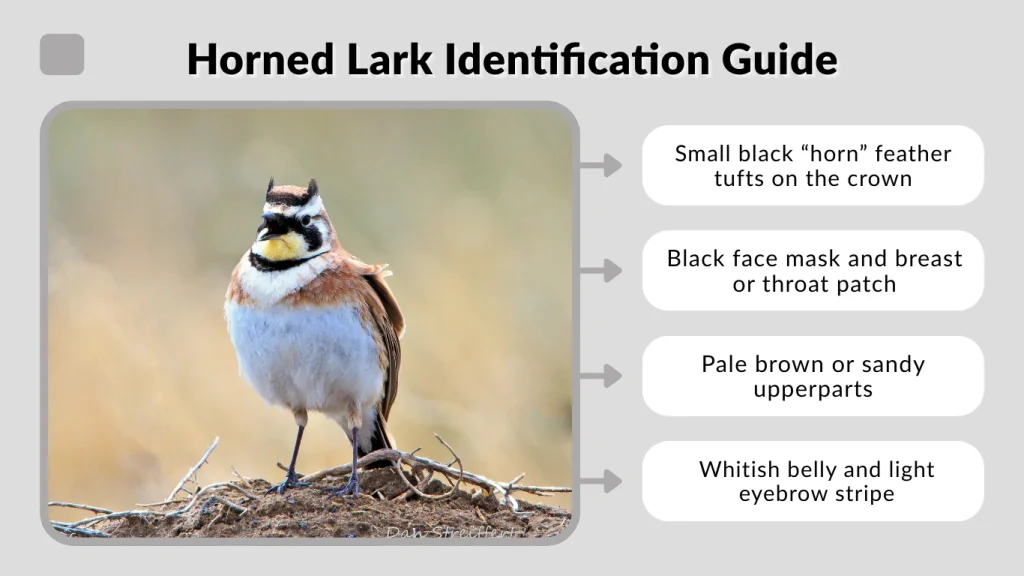
Horned larks can be recognized by a combination of size, shape, and facial markings. Key identification features include:
- Small black “horn” feather tufts on the crown
- Black face mask and breast or throat patch (stronger in males)
- Pale brown or sandy upperparts
- Whitish belly and light eyebrow stripe
- Long, pointed wings adapted for open flight
- White outer tail feathers visible in flight
- Slim bill suited for seeds and insects
- Juveniles with speckled, less sharply marked plumage
Habitat and Geographic Range
Horned larks are birds of open space. They favor habitats where grass is short or the ground is partly bare, such as prairies, tundra, deserts, coastal flats, farmland, and even airfields. They avoid dense forests and thick shrublands because these environments limit their ground-foraging lifestyle.
Geographically, horned larks have an enormous range. They are found across most of North America, from Alaska and Canada down into the southern United States and Mexico. Outside the Americas, they inhabit parts of Europe, central and eastern Asia, and northern Africa. Few songbirds are spread across so many different climates.
Seasonal changes strongly influence where they live. In summer, many populations breed in northern or high-altitude regions. During winter, they often move southward or into lower elevations, gathering in open agricultural fields, grasslands, and dry plains where food remains accessible.
Diet and Feeding Behavior
What Horned Larks Eat
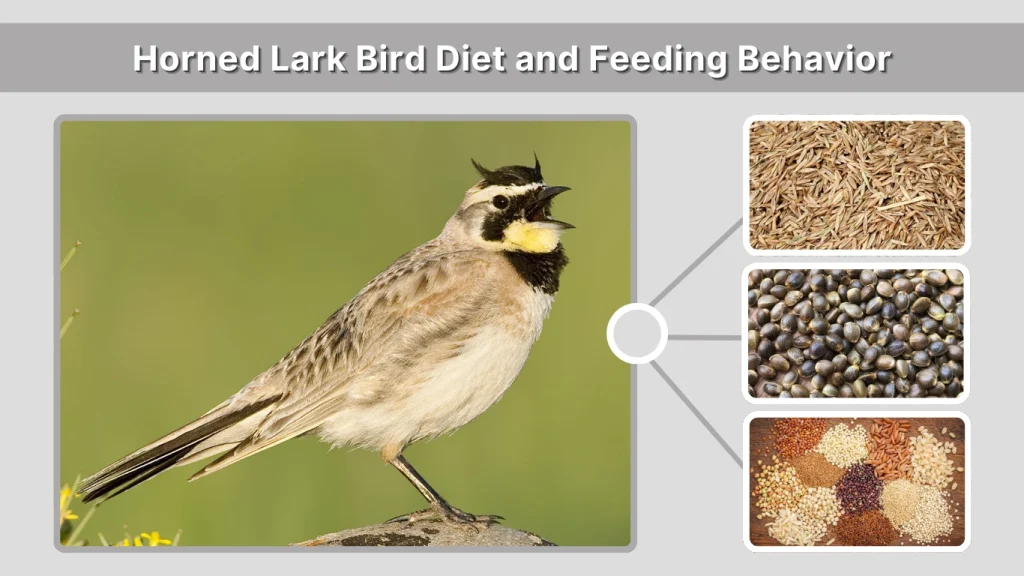
Horned larks are primarily seed eaters, especially outside the breeding season. They feed on grass seeds, weed seeds, grains, and other small plant materials found on open ground. During spring and summer, insects become an important part of their diet, including beetles, ants, caterpillars, and other small invertebrates.
This seasonal shift helps provide extra protein, which is essential for egg production and chick growth. Young nestlings are fed mostly insects until they are strong enough to digest harder seeds.
How They Forage
Horned larks forage almost entirely on the ground. They walk or run in short bursts, stopping frequently to pick up seeds or capture insects. In winter, they often form loose flocks and feed together in open fields, sometimes mixing with other ground-feeding birds.
During the breeding season, pairs or individuals are more territorial. Adults search for food close to their nesting areas, carrying insects back to hidden ground nests to feed their chicks.
Behavior and Daily Lifestyle
Horned larks show many behaviors shaped by their open-habitat lifestyle:
- Spend much of the day walking or running on bare ground
- Use dust bathing to clean feathers and control parasites
- Perform aerial displays, especially during breeding season
- Defend feeding and nesting territories in spring and summer
- Form winter flocks for protection and efficient feeding
- Rely on camouflage and early flight to escape predators
Breeding Season and Reproduction
Courtship and Mating
As breeding season approaches, male horned larks become more vocal and active. One of their most striking behaviors is the flight display. The male rises high into the air, hovering and circling while delivering a long, musical song. This aerial performance serves both to attract a mate and to warn rival males to stay away.
On the ground, courtship may include chasing, short runs, and soft calls between pairs. Once a female chooses a mate, the pair begins to defend a small breeding territory, usually centered around a suitable nesting site with open visibility and nearby feeding areas.
Nest Construction
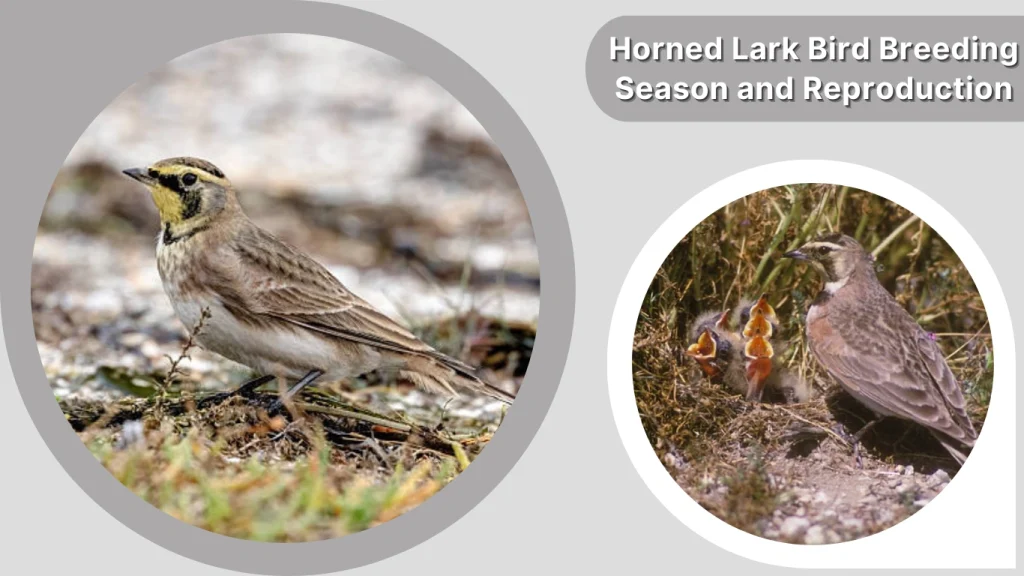
Horned larks build their nests directly on the ground, often in small depressions, hoof prints, or natural hollows. The female does most of the construction, weaving together dry grasses, plant fibers, and sometimes animal hair. The nest is lined with softer materials to protect the eggs and chicks.
To reduce heat and exposure, nests are frequently placed beside small clumps of grass, stones, or soil ridges. In some regions, horned larks even decorate the area around the nest with pebbles, bits of plant matter, or droppings, possibly to provide camouflage or regulate temperature.
Eggs and Chicks
A typical clutch contains two to five eggs. The eggs are pale gray or whitish, marked with brown or purple speckles that blend well with surrounding soil. Incubation usually lasts around 11 to 12 days, performed mainly by the female while the male stands guard and brings food.
Once hatched, the chicks are helpless and depend completely on their parents. Both adults bring insects and soft-bodied prey to the nest. The young grow quickly and usually leave the nest within 9 to 12 days, although they remain dependent on the parents for some time after fledging.
Horned Lark Song and Communication
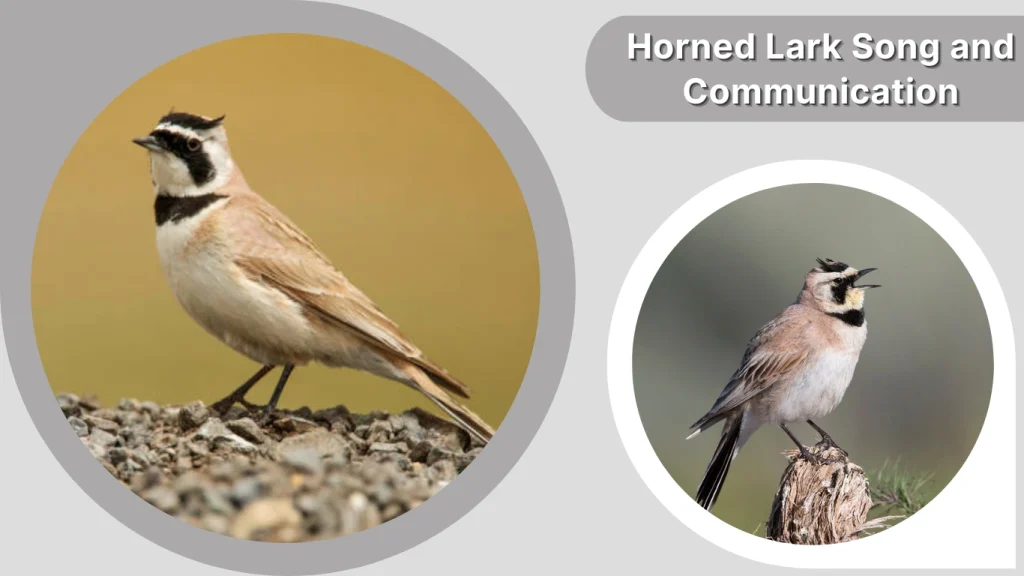
Horned larks are best known for their flight song, a thin, tinkling, and often complex series of notes delivered while the bird circles high overhead. These songs can last several minutes and are one of the earliest bird sounds heard in late winter and early spring across open landscapes.
On the ground, horned larks use shorter calls to communicate. These include soft contact notes between mates and sharper alarm calls when predators appear. During nesting season, calls help coordinate feeding trips and warn chicks to remain still.
Vocal activity is strongest during breeding months, when song plays a major role in attracting mates and defending territories. Outside this season, horned larks are generally quieter, relying more on flock behavior and visual cues than on elaborate songs.
Migration and Seasonal Movement
Horned larks show flexible movement patterns depending on region and climate:
- Northern and high-altitude populations migrate south in winter
- Southern populations may remain year-round residents
- Many groups shift only short distances to find snow-free feeding areas
- Some populations perform altitudinal migration, moving downhill in winter
- Winter flocks often gather in large, open agricultural fields
- Spring migration begins early, sometimes while snow still covers the ground
Predators, Threats, and Lifespan
Horned larks face many natural predators, especially because they nest on the ground. Eggs and chicks are vulnerable to snakes, foxes, raccoons, skunks, and domestic cats. Adult birds may be taken by hawks, falcons, and owls in open country.
In the wild, horned larks typically live two to five years, although some individuals survive longer under favorable conditions. Their greatest challenges come not only from predators but also from habitat changes.
Modern agriculture, urban development, and land conversion have reduced some natural grasslands and tundra areas. Pesticide use can lower insect populations, affecting food availability during breeding season. Despite these pressures, horned larks remain widespread, though some regional populations are declining.
Ecological Role of Horned Larks
Horned larks play an important role in open-land ecosystems. By feeding on seeds, they help influence plant distribution and contribute to the natural cycling of vegetation. Their insect consumption also helps regulate populations of small invertebrates, some of which are agricultural pests.
As prey animals, horned larks support a wide range of predators, from snakes to birds of prey. Their presence helps maintain balanced food webs across grasslands, deserts, and tundra regions.
Because they depend on open, sparsely vegetated land, horned larks are also considered indicator species. Healthy populations often reflect healthy grassland or tundra ecosystems, making them valuable subjects for ecological monitoring.
FAQs
What makes the horned lark different from other larks?
The horned lark is unique because of the small black feather tufts on its head that resemble horns. It is also one of the most widespread larks in the world and the only true lark commonly found across much of North America, thriving in extremely open, treeless environments.
Where are horned larks most commonly found?
Horned larks are usually found in open habitats such as grasslands, tundra, deserts, coastal flats, and farmland. They prefer areas with short vegetation or bare ground, where they can walk easily and spot predators from a distance.
What do horned larks eat throughout the year?
Horned larks mainly eat seeds and grains, especially in fall and winter. During spring and summer, they switch to a more insect-rich diet, feeding on beetles, ants, caterpillars, and other small invertebrates to support breeding and chick growth.
Do horned larks migrate or stay year-round?
Some horned larks migrate, while others remain in the same area year-round. Northern populations usually move south in winter, whereas birds in milder regions may stay local, shifting only short distances to find open, snow-free feeding grounds.
Are horned larks endangered?
Horned larks are not globally endangered and remain widespread. However, some local populations are declining due to habitat loss, agricultural intensification, and pesticide use. Conservation of open landscapes is important for maintaining healthy horned lark numbers.