




House geckos are small, nocturnal lizards commonly found living on walls, ceilings, and near lights in homes around the world. From the Mediterranean house gecko in Florida and Texas to the Asian house gecko in tropical regions, these reptiles have adapted remarkably well to human environments. While some people consider them pests, others keep them as pets. This complete guide covers house gecko species, habitat, identification, diet, lifespan, and essential care information.
What Is a House Gecko?
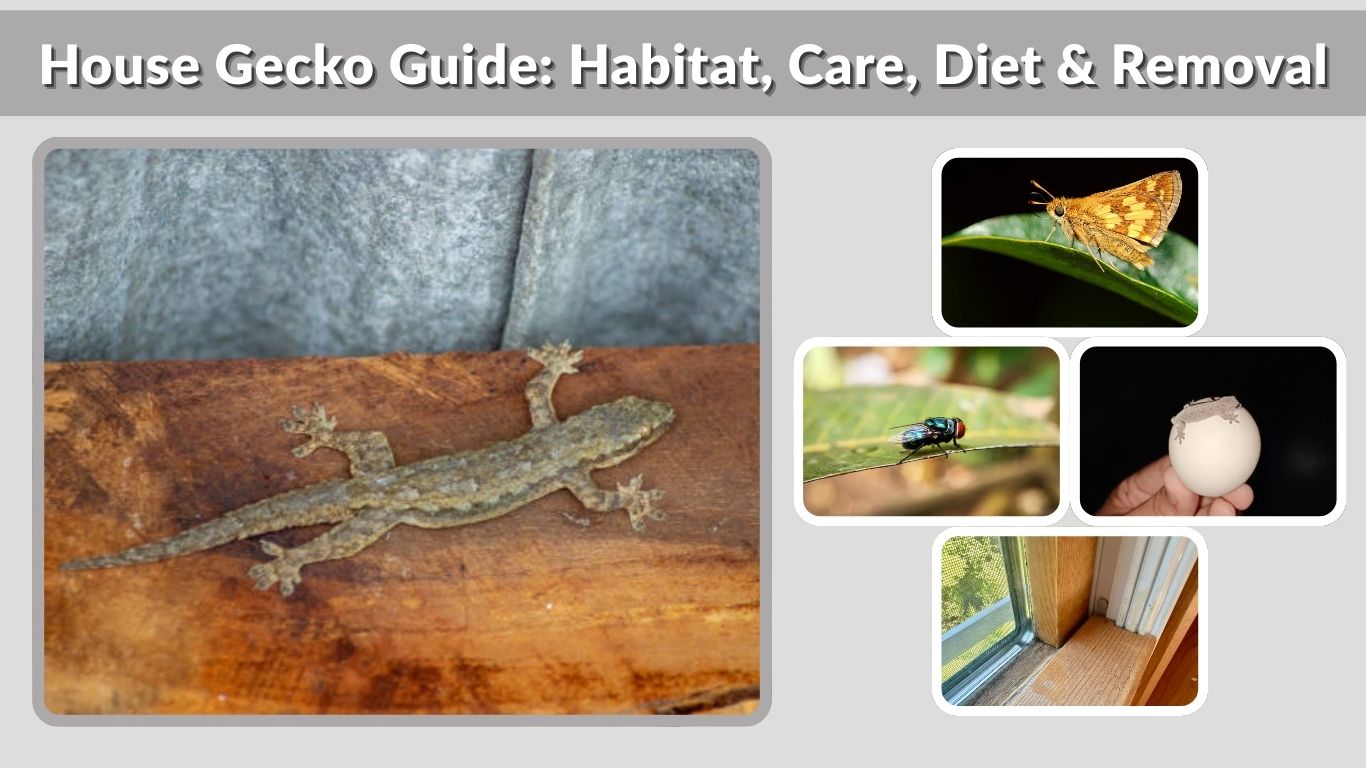
A house gecko is a small, insect-eating lizard that belongs to the genus Hemidactylus. The most common species is the Common House Gecko (Hemidactylus frenatus), also known as the Asian house gecko or tropical house gecko.
These geckos are known for:
- Nocturnal behavior
- Sticky toe pads for climbing
- Chirping sounds at night
- Living near lights to catch insects
There are many house gecko species worldwide, but most share similar features — small size, pale coloring, and excellent climbing ability. They are harmless to humans and actually help control mosquito and fly populations.
Types of House Geckos Around the World
House geckos are found in warm regions across the globe. Below are the most common species you may encounter.
Mediterranean House Gecko (Hemidactylus turcicus)
The Mediterranean house gecko is widely seen in the southern United States, especially in Florida, Texas, and Oklahoma. Originally native to Europe and North Africa, it has spread through trade and shipping.
Key features:
- Pale pink or translucent skin
- Bumpy texture
- Large lidless eyes
- 4–5 inches long
They are frequently spotted near porch lights at night hunting insects.
Asian / Tropical House Gecko (Hemidactylus frenatus)
The Asian house gecko, also called the common house gecko, is native to Southeast Asia but now lives in Australia, the Philippines, South Africa, and other tropical areas.
This species is slightly more aggressive toward other geckos and is highly adaptable to urban environments. It thrives in warm, humid climates and reproduces quickly.
Flat-Tailed House Gecko
The flat-tailed house gecko is less common but recognizable by its flatter, broader tail. It shares similar habits with other house gecko species but may prefer slightly different microhabitats, such as under bark or in crevices.
House Gecko Habitat
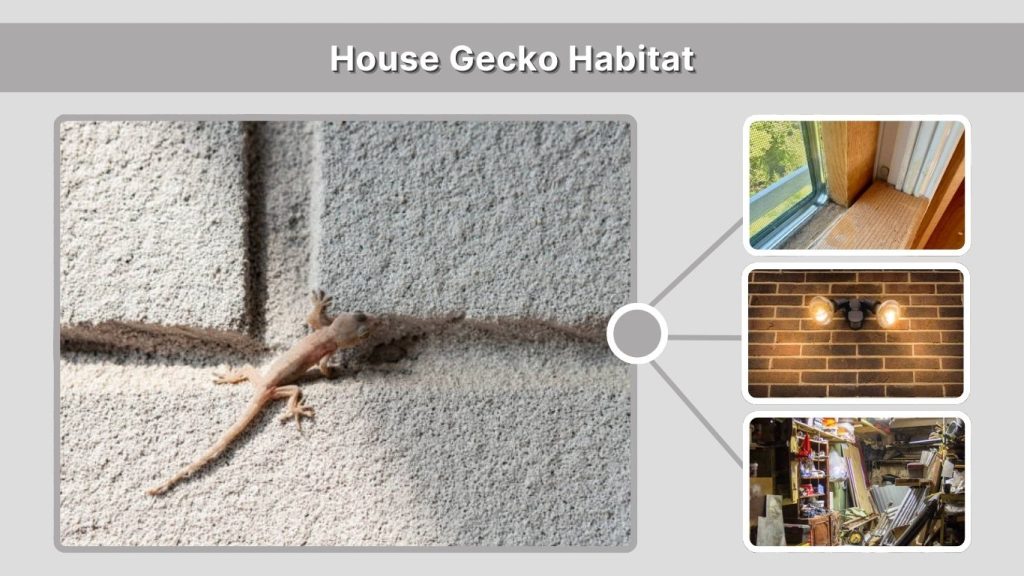
The natural house gecko habitat includes tropical and subtropical regions where temperatures stay warm year-round. However, these geckos are highly adaptable and often live inside human homes.
They are commonly found:
- On walls and ceilings
- Near windows and door frames
- Around outdoor lights
- In garages and sheds
Why do house geckos live in houses? The answer is simple — food and shelter. Artificial lighting attracts insects, which creates an easy feeding ground. Homes also provide protection from predators and harsh weather.
In places like Florida, Texas, Australia, and the Philippines, house geckos are extremely common due to warm climates.
House Gecko Identification
Correct house gecko identification helps determine whether you’re dealing with a harmless insect-eater or a different reptile species.
Size
Most house geckos measure between 3 to 6 inches long, including the tail.
Color
They are usually:
- Pale gray
- Tan
- Light brown
- Slightly translucent
Their color may darken or lighten depending on temperature and mood.
Physical Features
- Large lidless eyes
- Vertical pupils
- Sticky toe pads
- Soft, slightly bumpy skin
House Gecko Sound
One unique trait is the house gecko sound — a soft chirping or clicking noise. Males often chirp to defend territory or attract females.
If you search for house gecko images, you’ll notice their slim bodies and curved tails, which they can drop if threatened.
What Do House Geckos Eat?
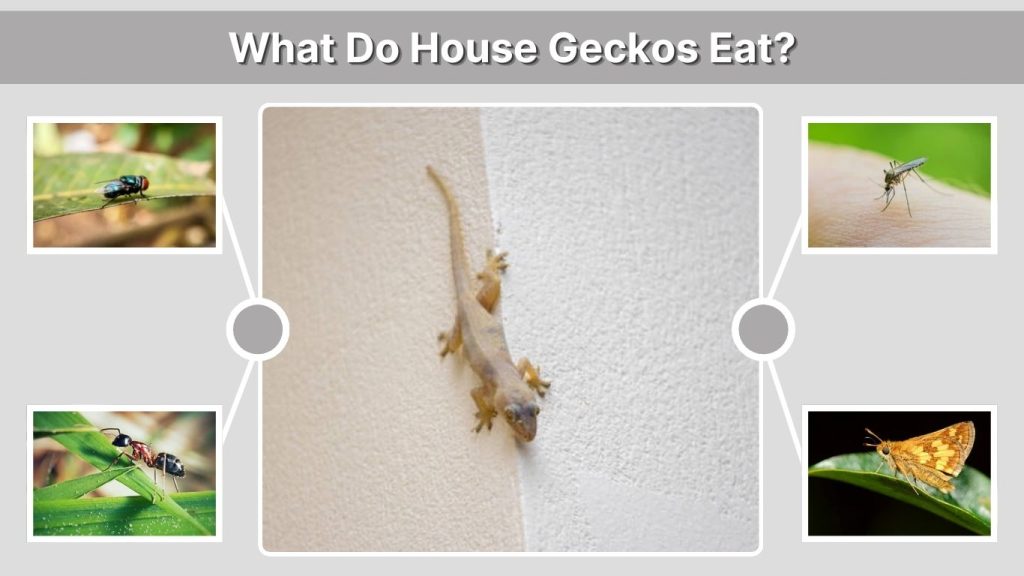
Understanding the house gecko diet explains why they prefer living near lights and windows.
Diet in the Wild
In their natural habitat, house geckos eat:
- Mosquitoes
- Moths
- Flies
- Ants
- Small beetles
- Roaches
They are carnivorous insectivores and play an important role in the food web of a common house gecko, acting as pest controllers while serving as prey for birds and snakes.
House Gecko Food in Captivity
If kept as a pet, house gecko food typically includes:
- Small crickets
- Mealworms
- Fruit flies (for babies)
- Waxworms (occasionally)
For a Mediterranean house gecko, feeding small gut-loaded insects dusted with calcium powder is ideal.
If you’re wondering what to feed a baby house gecko, small fruit flies and pinhead crickets are best, as they are easier to catch and digest.
Avoid feeding:
- Processed human food
- Vegetables
- Fruit
- Dead insects
House geckos rely on live prey to trigger their hunting instinct.
House Gecko Lifespan
The average house gecko lifespan depends on environment and care.
- In the wild: 3–5 years
- In captivity: 5–10 years with proper care
Factors affecting lifespan include:
- Temperature stability
- Access to food
- Predator exposure
- Proper supplementation (in captivity)
With consistent care, a house gecko pet can live significantly longer than one in the wild.
House Gecko as a Pet
Keeping a house gecko as a pet can be a rewarding experience, especially for beginners interested in reptiles. However, they are more of a “look but don’t handle” pet, as they are quick, fragile, and easily stressed.
Is a House Gecko a Good Pet?
Pros:
- Low maintenance
- Small enclosure needs
- Natural pest control
- Interesting nocturnal behavior
Cons:
- Not ideal for frequent handling
- Fast and can escape easily
- Require live insects
A Mediterranean house gecko or common house gecko can adapt well to captivity if provided proper housing, diet, and environmental conditions.
House Gecko Care Guide
Proper house gecko care is essential for health and longevity. Below is a complete care breakdown.
House Gecko Enclosure Setup
A proper house gecko enclosure mimics a warm, humid environment.
Tank Size:
- Minimum 10–20 gallon tank for one gecko
- Vertical space is important since they climb
When planning a house gecko terrarium, choose a tall glass tank with secure mesh ventilation.
Substrate Options:
- Paper towels (easy cleaning)
- Coconut fiber
- Reptile carpet
Avoid loose sand, as it can cause impaction.
Temperature & Humidity
House geckos require:
- Day temperature: 75–85°F
- Night temperature: 70–75°F
- Humidity: 60–70%
Light misting once daily helps maintain humidity levels.
Unlike some reptiles, they do not require strong UVB lighting but benefit from a natural light cycle.
House Gecko Tank Size for Multiple Geckos
If considering more than one gecko, increase tank size significantly. However, most house geckos are territorial.
Can You House 2 Geckos Together?
Many people ask: Can you house 2 crested geckos together? or Can you house 2 leopard geckos together?
For house geckos specifically:
- Males should never be housed together
- A male and female may coexist
- Two females may sometimes tolerate each other
However, even with compatible pairs, aggression can occur. Always monitor behavior closely.
Crested and leopard geckos follow different social rules, so never mix species in the same enclosure.
House Gecko Breeding
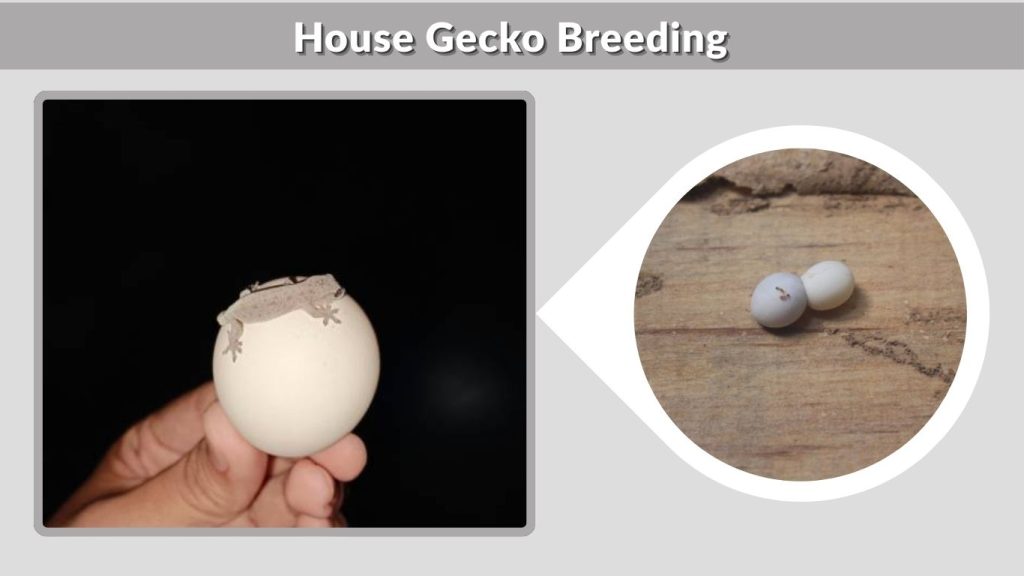
House gecko breeding occurs naturally in warm conditions.
House Gecko Egg Information
Females typically lay:
- 1–2 eggs at a time
- Multiple clutches per year
House gecko eggs are small, white, and slightly hard-shelled. They are often hidden in cracks or under objects.
Incubation lasts about:
- 30–60 days depending on temperature
Baby geckos are independent immediately after hatching.
House Gecko for Sale – What to Know
If you’re searching for a house gecko for sale, including a Mediterranean house gecko for sale or house geckos for sale cheap, consider these factors:
Wild-Caught vs Captive-Bred
Many house geckos sold in pet stores are wild-caught. Captive-bred geckos are healthier and better adapted to enclosure life.
Legal Considerations
In some states and countries, collecting wild geckos may be restricted. Always check local wildlife regulations before purchasing or capturing one.
Price Range
House geckos are generally inexpensive compared to exotic reptiles. However, extremely cheap options may indicate wild capture.
How to Catch a Gecko in My House
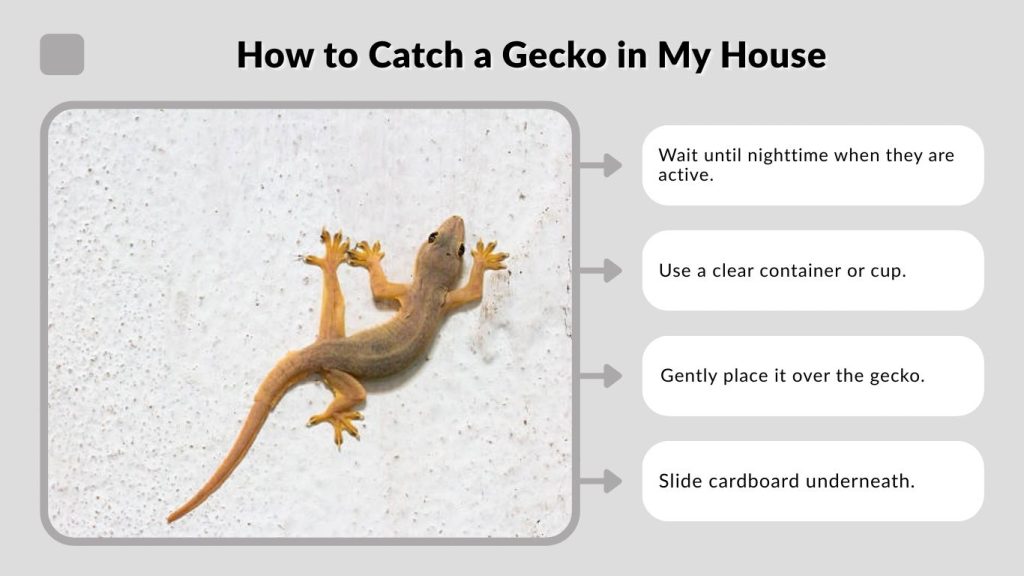
If you’re wondering how to get a gecko out of my house, humane removal is the safest option.
How to Catch a Gecko in My House (Step-by-Step)
- Wait until nighttime when they are active.
- Use a clear container or cup.
- Gently place it over the gecko.
- Slide cardboard underneath.
- Release it outside away from entry points.
Avoid using glue traps or chemicals, as they cause unnecessary suffering.
How to Remove Gecko from House Permanently
If geckos keep returning, focus on prevention.
Prevention Tips
- Seal cracks and wall gaps
- Install door sweeps
- Reduce outdoor lighting near entrances
- Control insect populations
- Keep windows screened
Learning how to remove gecko from house effectively usually means removing their food source — insects.
House Gecko Facts
Here are some interesting house gecko facts:
- They can regrow their tails after dropping them.
- They chirp to communicate.
- They can walk upside down due to microscopic hair-like structures on their toes.
- They help reduce mosquito populations.
- They are not poisonous or venomous.
In places like Florida, Texas, Australia, South Africa, and the Philippines, house geckos are considered beneficial.
FAQs
Are house geckos dangerous?
No, house geckos are harmless to humans. They do not carry venom and rarely bite. At most, they may startle you but pose no real threat.
Do house geckos bite?
House geckos may bite if handled roughly, but their bites are mild and rarely break the skin. They prefer escaping over confrontation.
Why do house geckos make noise?
House geckos chirp or click to communicate, defend territory, or attract mates. This sound is most common at night.
Are house geckos good for homes?
Yes, many homeowners appreciate house geckos because they reduce insect populations. However, some people dislike their droppings or nighttime noises.