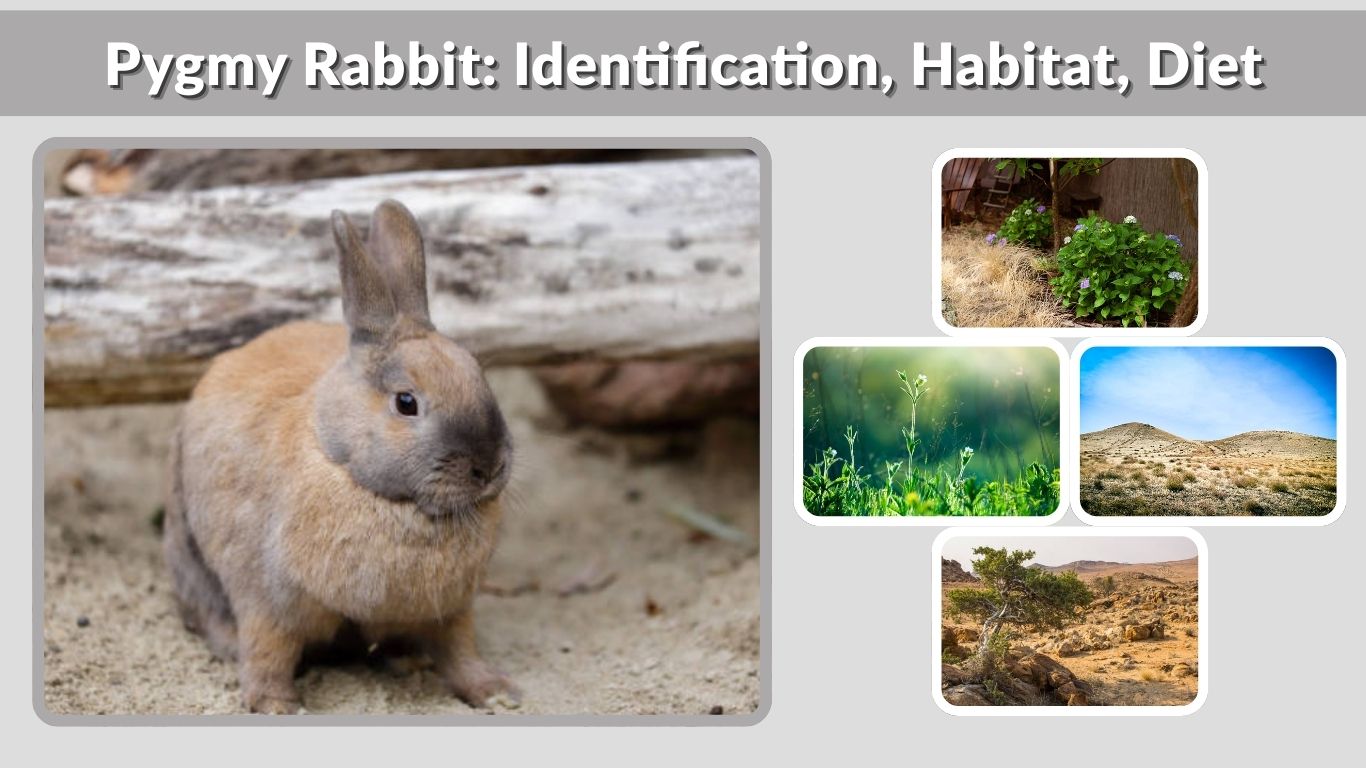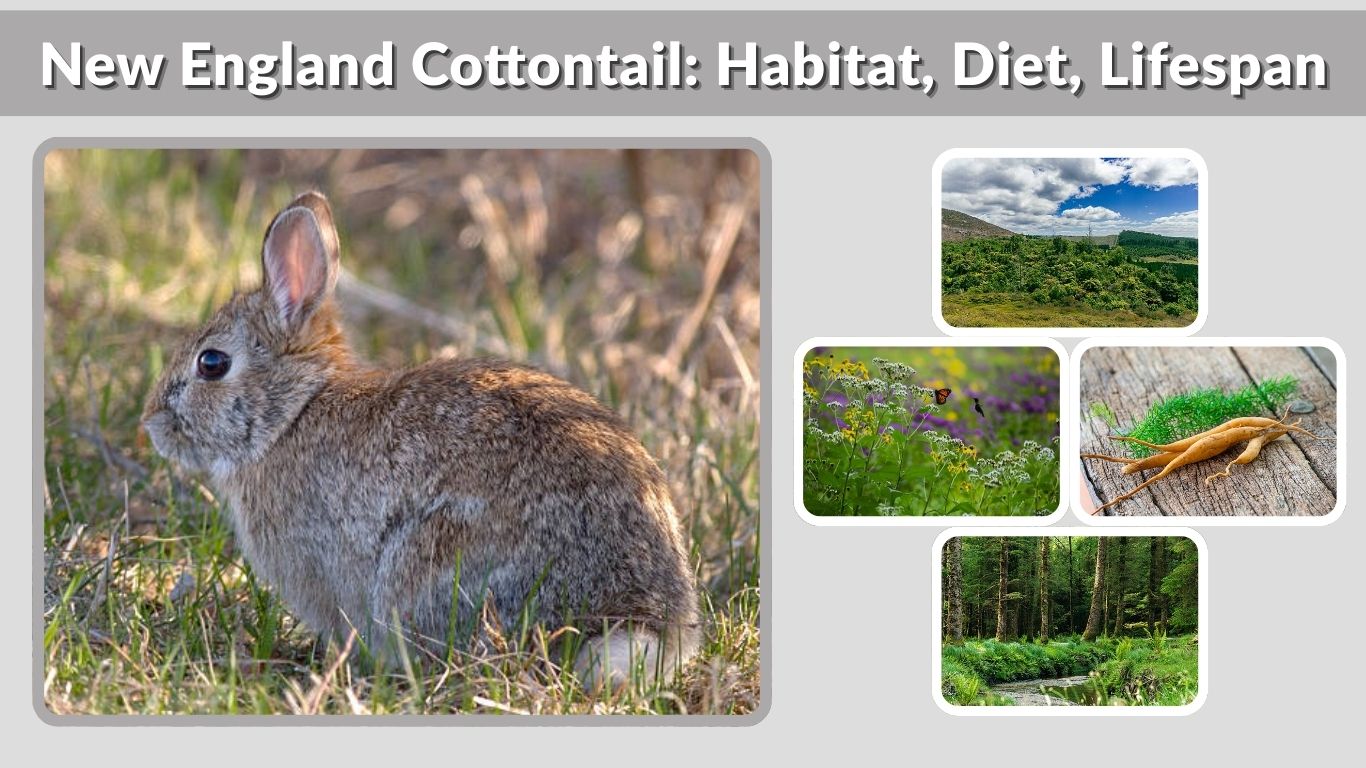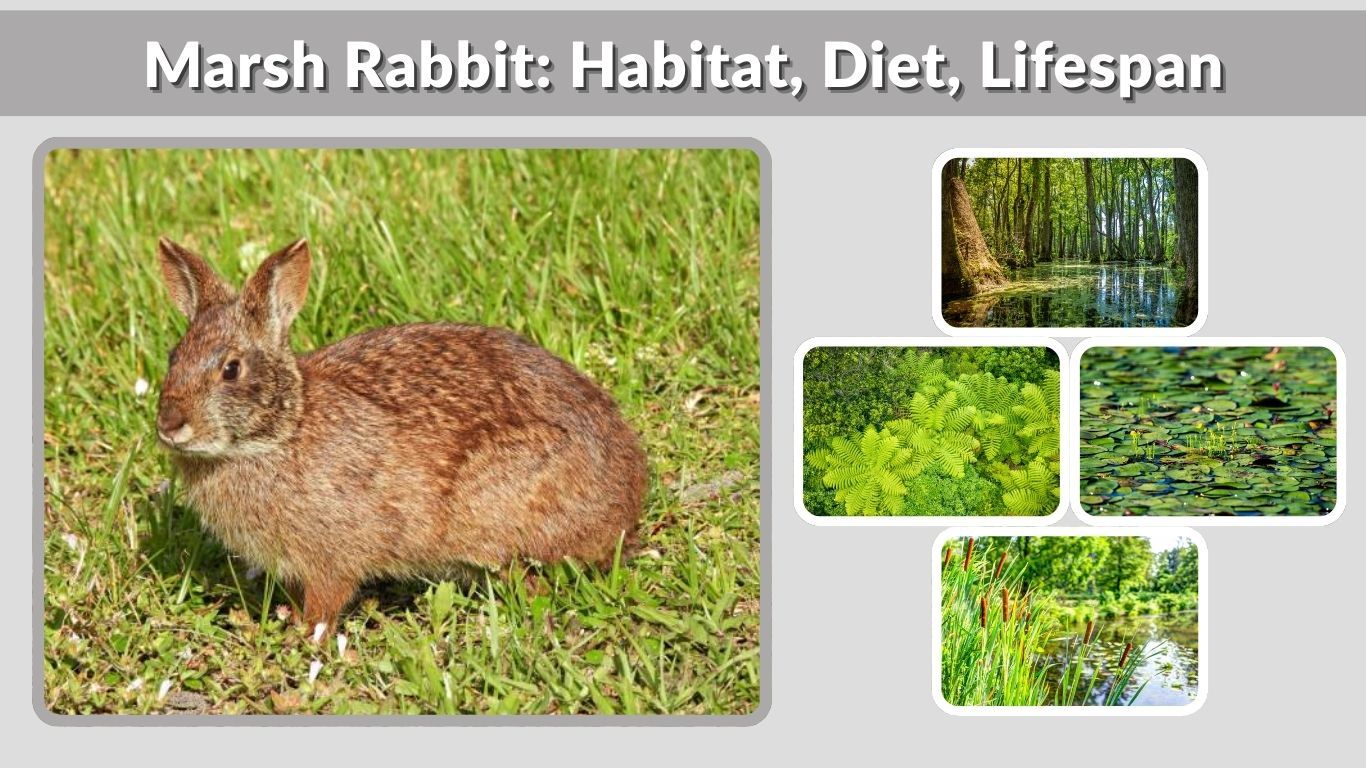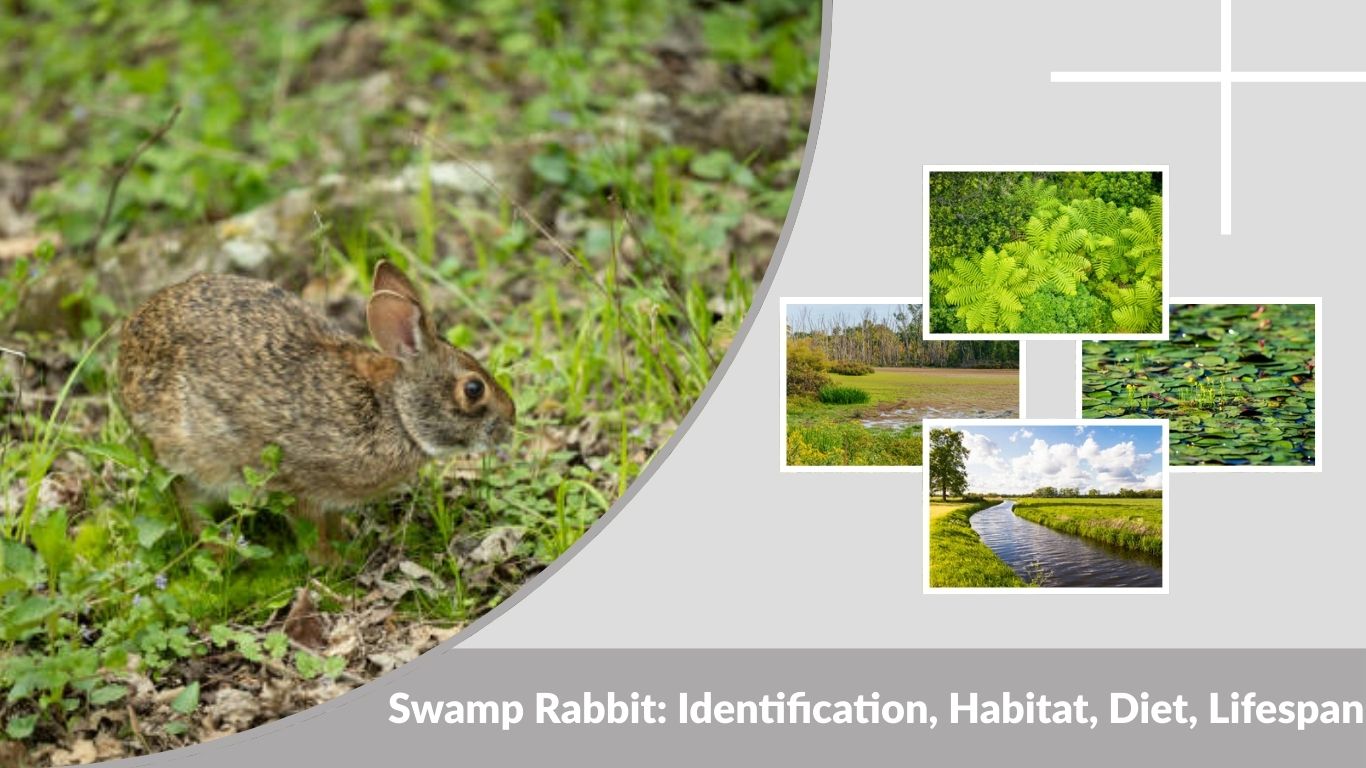





Few things are more frustrating for gardeners than finding your hard-grown vegetables and flowers nibbled down to stubs. If you’ve noticed clean-cut damage to leafy greens, flowers, or young shoots, you’re likely dealing with a rabbit problem. These cute but destructive visitors can quickly wipe out entire sections of a garden if left unchecked.
Fortunately, there are effective and humane ways to keep rabbits out of your garden without harming them—or your plants. This article offers a complete guide on how to prevent rabbit damage using natural repellents, physical barriers, habitat control, and more.
Understand What Attracts Rabbits
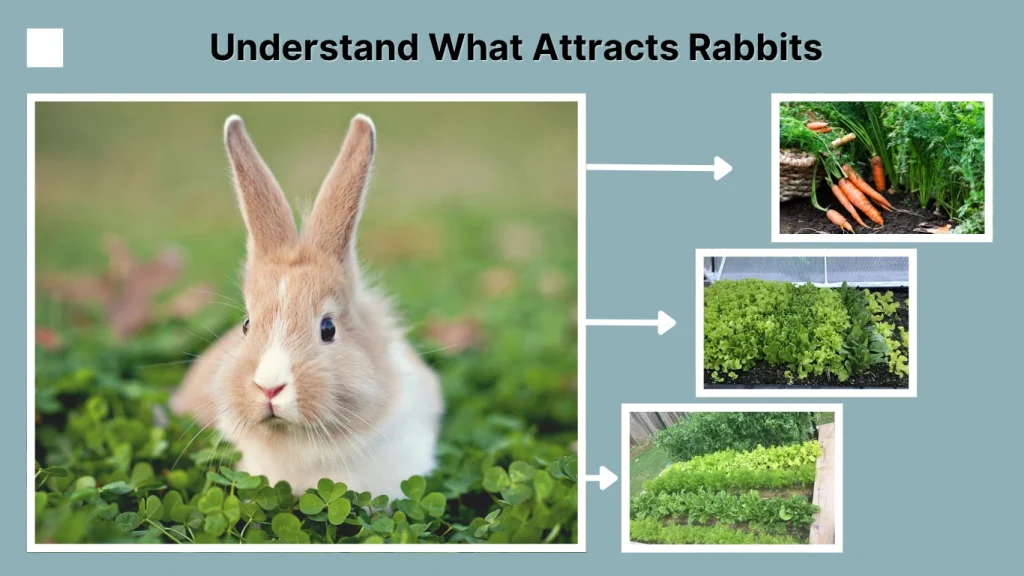
Before trying to repel them, it helps to know why rabbits are targeting your garden. Typically, wild rabbits are drawn to:
- Tender vegetables like lettuce, spinach, carrots, and peas
- Fruiting plants such as strawberries and beans
- Young shoots, flower buds, and soft stems
- Areas with tall grass, shrubs, or brush piles for hiding
Knowing their preferences allows you to anticipate where they’ll strike and focus your protective measures accordingly.
Install a Rabbit-Proof Fence
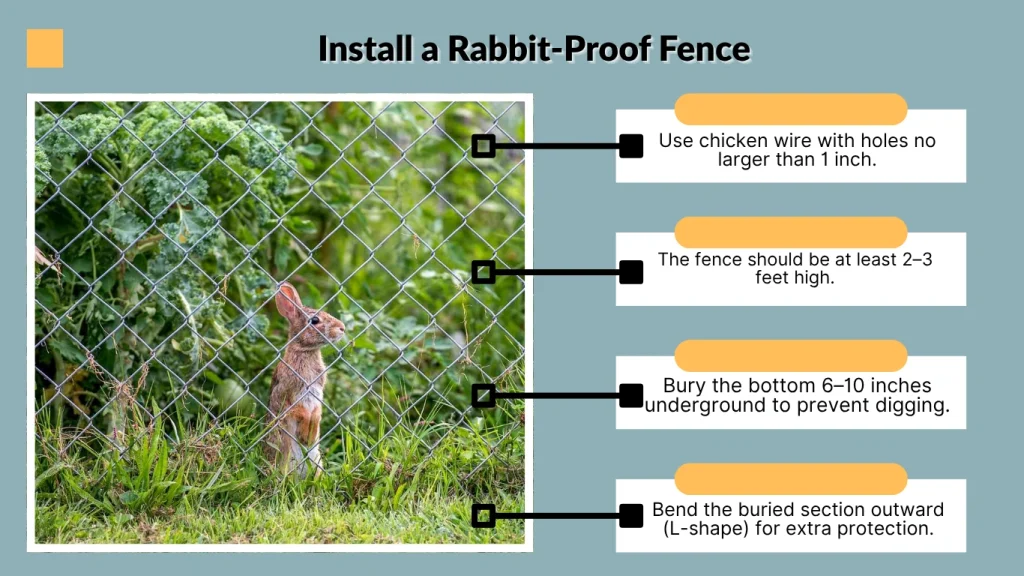
Fencing is the most reliable and long-term solution. However, it needs to be done correctly to keep persistent rabbits out.
How to build an effective rabbit fence:
- Use chicken wire with holes no larger than 1 inch.
- The fence should be at least 2–3 feet high.
- Bury the bottom 6–10 inches underground to prevent digging.
- Bend the buried section outward (L-shape) for extra protection.
- Secure the top with stakes or support posts to avoid sagging.
You can also add a second layer of mesh tilted outward at a 45-degree angle to deter rabbits from climbing or pushing through.
Use Natural Rabbit Repellents
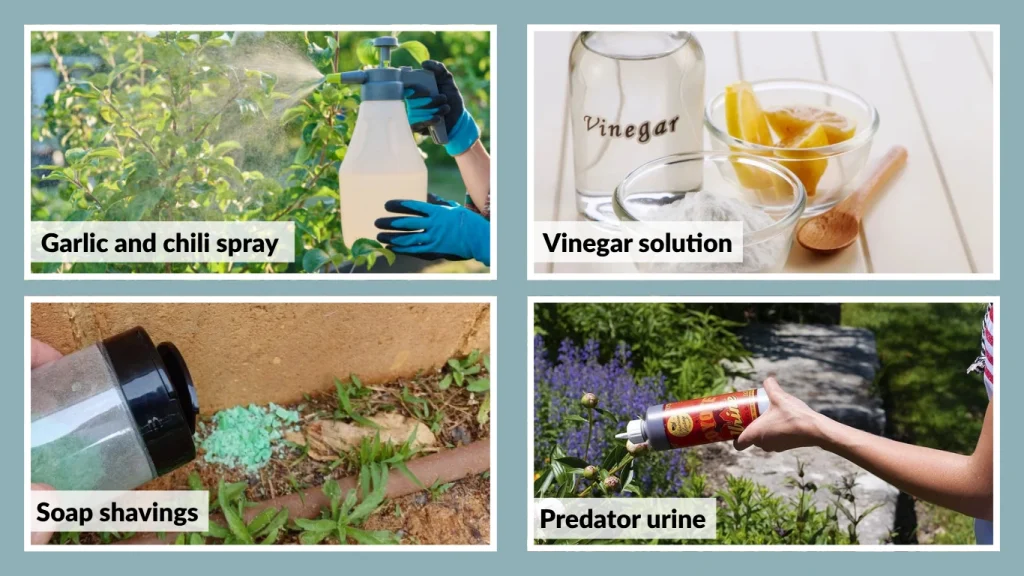
There are several scent-based repellents that rabbits find unpleasant. These are easy to make or buy and are non-lethal.
Common natural repellents include:
- Garlic and chili spray – Mix garlic, hot peppers, and water to spray around plants.
- Vinegar solution – Soak cotton balls in vinegar and place them near garden beds.
- Soap shavings – Grate strong-scented soap (like Irish Spring) and scatter it near plant bases.
- Predator urine – Products made with coyote or fox urine can be sprinkled along the garden’s edge.
Reapply repellents after rain or heavy watering for continued effectiveness.
Choose Rabbit-Resistant Plants
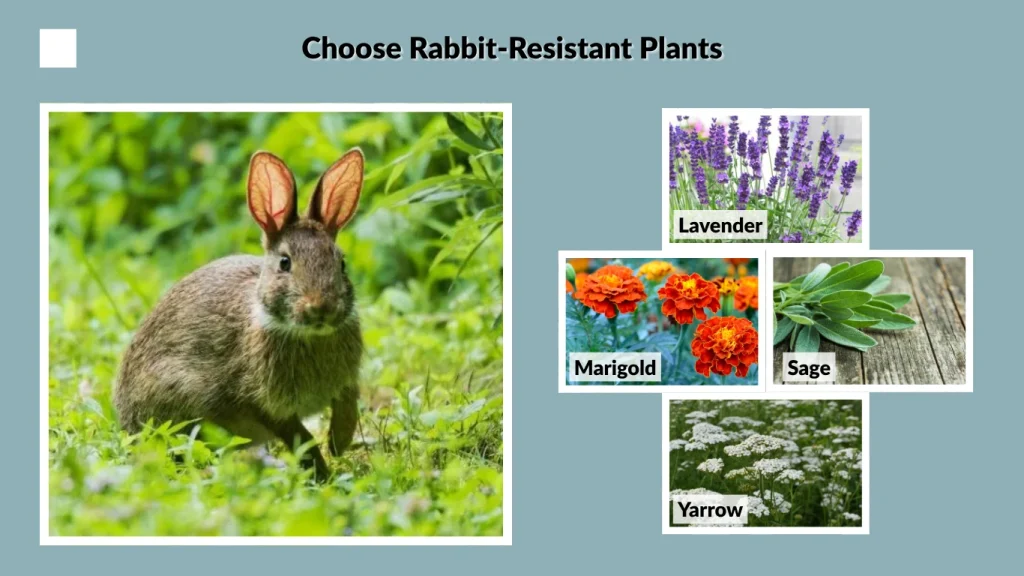
Rabbits are selective eaters and often avoid certain plants due to taste, texture, or scent. You can use this to your advantage by planting unappealing species around the edges of your garden.
Examples of rabbit-resistant plants:
- Lavender
- Sage
- Yarrow
- Marigold
- Snapdragons
- Onions and leeks
- Lamb’s ear
- Echinacea
These won’t guarantee complete protection but can act as a natural deterrent when used strategically.
Protect Individual Plants
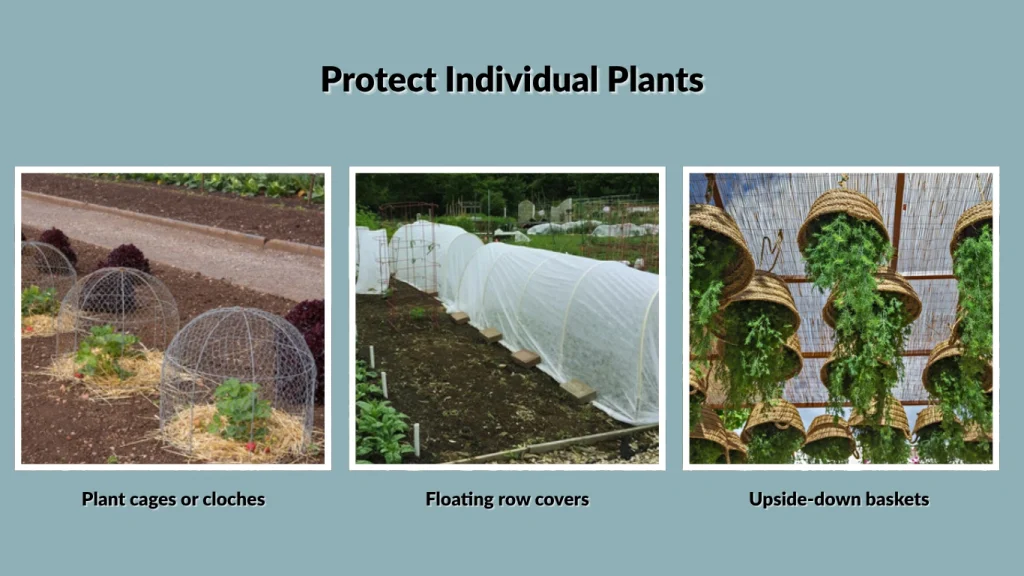
If you have specific high-value crops or newly planted seedlings, cover them individually for added defense.
Options for protection include:
- Plant cages or cloches – Made from wire or plastic, these cover the plant without restricting sunlight.
- Floating row covers – Lightweight fabric that creates a physical barrier while allowing water and air flow.
- Upside-down baskets – Simple and effective for young seedlings.
This is especially helpful during spring when rabbits are most active and food is still scarce.
Remove Hiding Places and Habitat
Rabbits feel safest when they can hide nearby. If your garden offers places to nest or hide, you’re more likely to attract them.
Eliminate or reduce these features:
- Tall grasses and weeds
- Low-hanging shrubs or overgrown borders
- Brush piles or stacked wood
- Unused sheds or decks with open access beneath
Keep your garden clean and tidy to discourage nesting or loitering.
Use Motion-Activated Deterrents
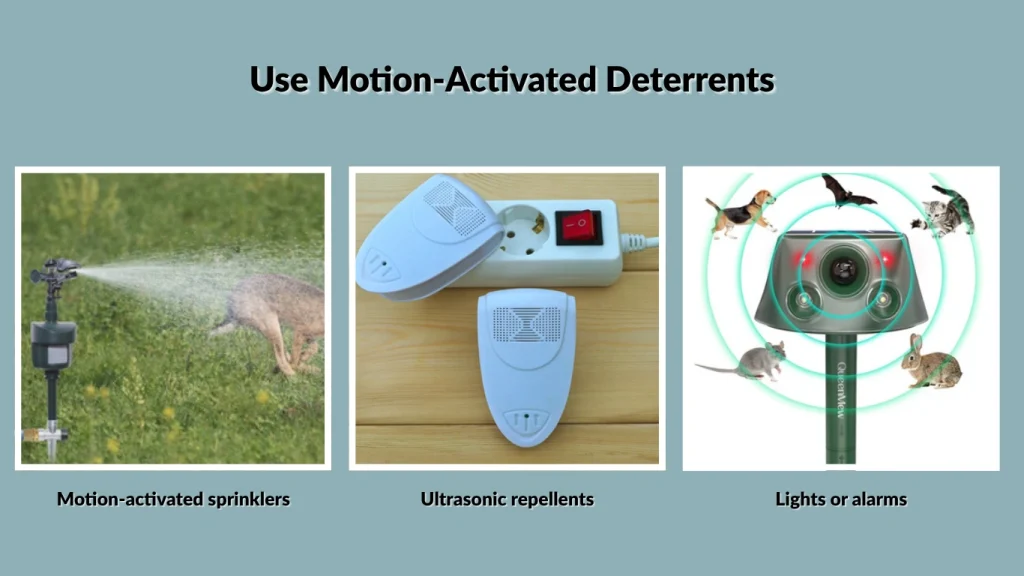
Technology can work in your favor by startling rabbits when they approach your plants.
Effective deterrents include:
- Motion-activated sprinklers – These blast water when movement is detected, scaring off intruders.
- Ultrasonic repellents – Emit high-frequency sounds rabbits dislike (inaudible to humans).
- Lights or alarms – Flashes or noises can also startle them, though rabbits may adapt over time.
These are best used in combination with other methods to prevent habituation.
Lay Down Gravel or Mulch Barriers
Rabbits prefer soft, grassy terrain. You can make your garden less appealing by creating rough or unpleasant surfaces.
Try using:
- Crushed gravel paths
- Coarse wood mulch
- Thorny branch trimmings
These materials feel uncomfortable underfoot, especially for small, sensitive paws.
Use Raised Garden Beds
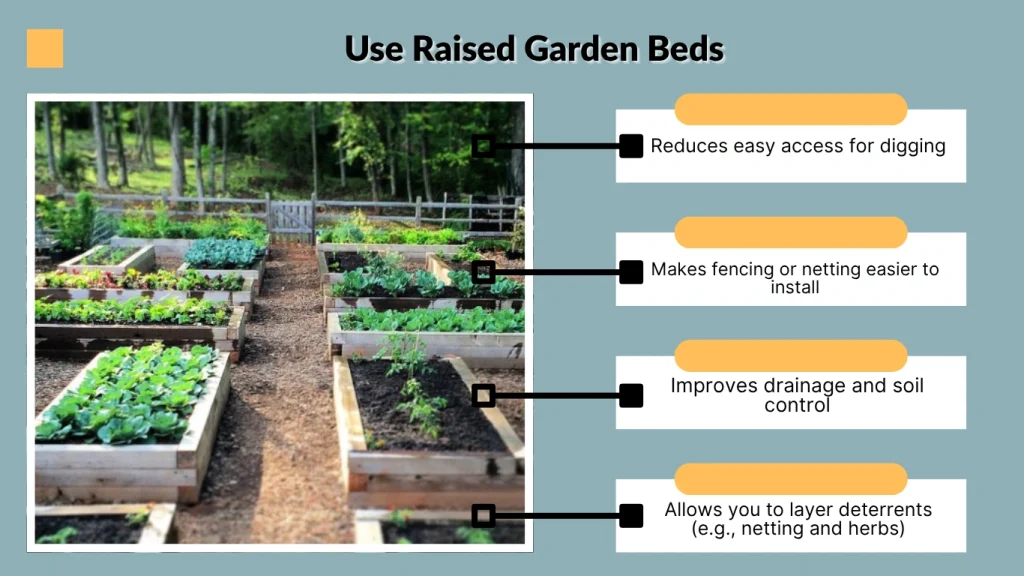
Elevating your crops puts a physical barrier between them and ground-level grazers like rabbits.
Benefits of raised beds:
- Reduces easy access for digging
- Makes fencing or netting easier to install
- Improves drainage and soil control
- Allows you to layer deterrents (e.g., netting and herbs)
The taller the raised bed, the better. Ideally, aim for 18–24 inches in height.
Trap and Relocate (As a Last Resort)
If other methods fail and rabbit damage is extreme, you may consider live trapping. However, this should be a last resort and done legally.
Key guidelines:
- Check local wildlife laws before trapping.
- Use humane live traps baited with apples or carrots.
- Relocate rabbits far from neighborhoods or farms—preferably in wild brushy areas.
- Never separate young rabbits from their mother.
Note: Trapping is not a long-term solution. If habitat conditions remain ideal, new rabbits will soon return.
Combine Multiple Strategies for Best Results
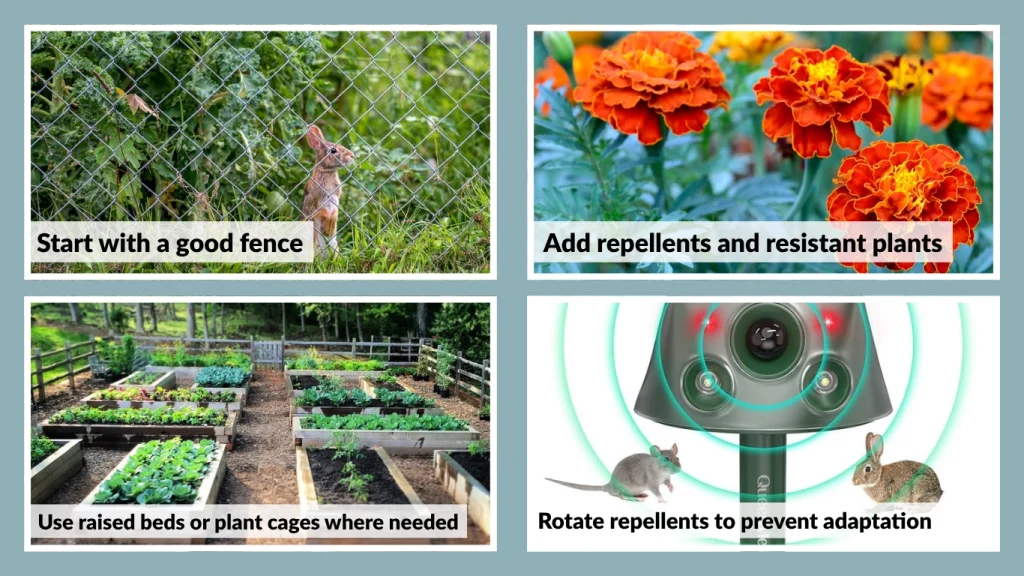
Rabbits are adaptive creatures. What works for one garden might not work for another. The key is layering methods:
- Start with a good fence
- Add repellents and resistant plants
- Remove shelter
- Use raised beds or plant cages where needed
- Rotate repellents to prevent adaptation
By combining several tactics, you’ll create an environment that rabbits find unwelcoming—without harming them or your crops.
Conclusion
Wild rabbits may be charming creatures, but their appetite for garden plants can quickly turn destructive. With a mix of smart planning, physical barriers, and natural deterrents, you can keep your garden safe without resorting to harmful methods.