

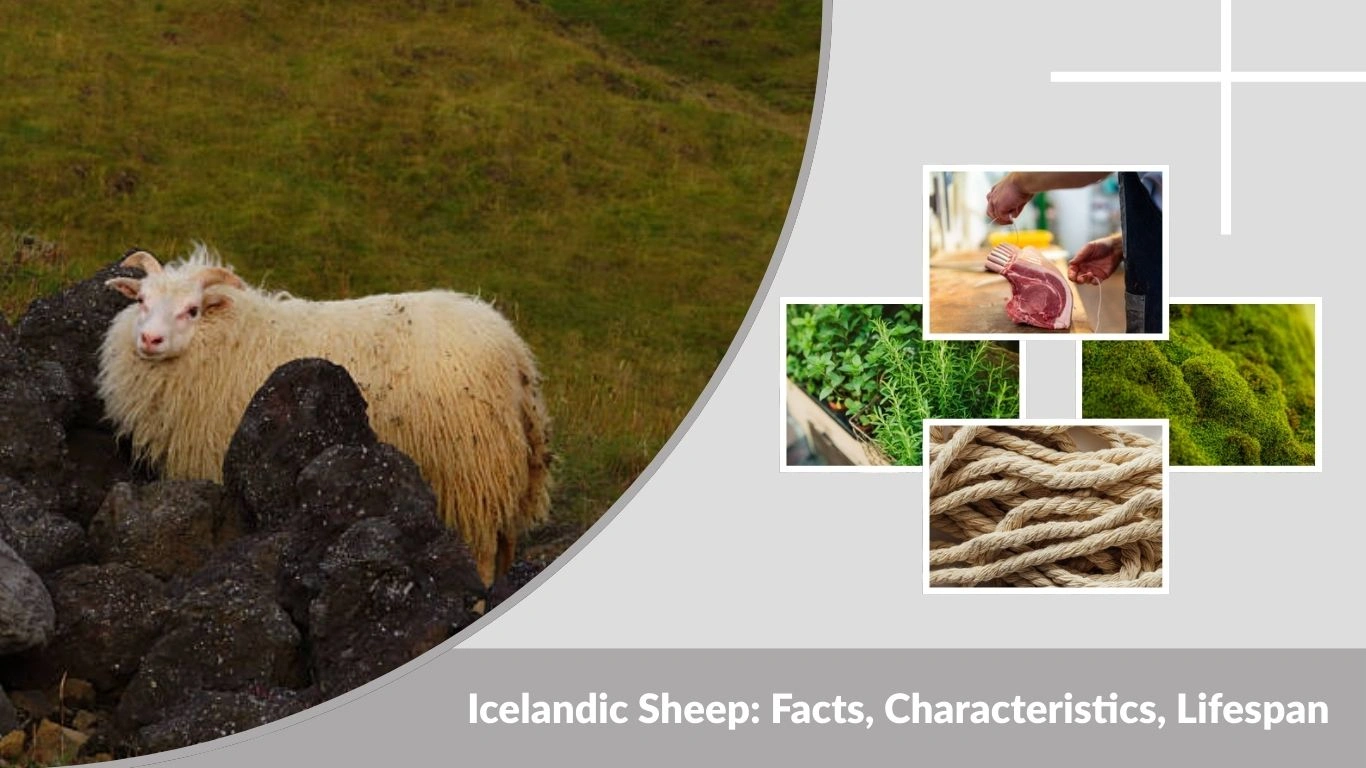
Icelandic sheep are one of the oldest and purest sheep breeds in the world. Brought to Iceland by Viking settlers more than 1,000 years ago, these sheep have remained largely unchanged due to strict breeding regulations and the island’s geographic isolation. Known for their hardiness, adaptability, and unique dual-coat wool, Icelandic sheep play a major role in Iceland’s agriculture and culture. In this article, we explore important Icelandic sheep facts, their characteristics, lifespan, diet, and how they relate to the Icelandic sheepdog breed.
What Are Icelandic Sheep?
Icelandic sheep are a northern European sheep breed that has been raised in Iceland for centuries. They belong to a group of sheep known as Northern short-tailed sheep, which are famous for their resilience and ability to survive harsh climates.
Unlike many modern sheep breeds that have been heavily crossbred, Icelandic sheep have remained genetically pure. Strict livestock import laws in Iceland prevent the introduction of foreign sheep, which helps preserve the original characteristics of the breed.
Origin and History of Icelandic Sheep
The breed dates back to around AD 874, when Norse Vikings brought sheep from Scandinavia to Iceland. These animals adapted to Iceland’s cold climate, rough terrain, and limited grazing conditions over many generations.
Because Iceland is geographically isolated, the sheep population evolved with minimal outside influence. This has helped maintain the breed’s original traits, making Icelandic sheep one of the oldest preserved sheep breeds in the world.
Importance of Sheep in Icelandic Farming
Sheep farming has long been a cornerstone of Icelandic agriculture. Farmers rely on Icelandic sheep for several products, including:
- Meat (Icelandic lamb)
- Wool
- Milk in some traditional uses
Each year, thousands of sheep are released to graze freely in Iceland’s mountains during the summer months before being gathered in the fall in a traditional event called “réttir.”
Icelandic Sheep Characteristics
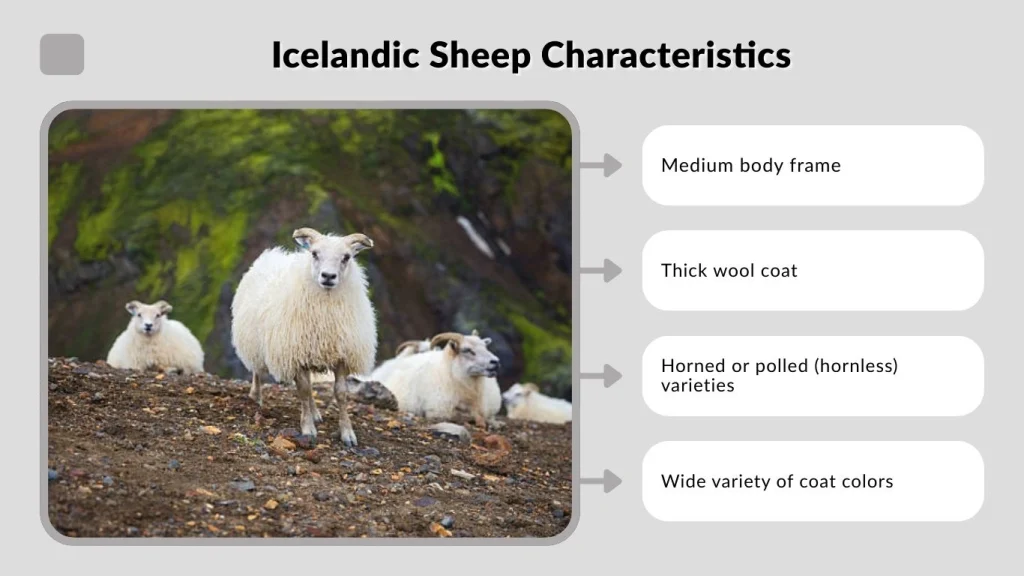
Icelandic sheep have several physical and behavioral traits that make them well suited to cold environments.
Physical Characteristics
Icelandic sheep are considered a medium-sized breed. They have sturdy bodies, strong legs, and thick wool coats that help them survive in challenging climates.
Common physical traits include:
- Medium body frame
- Thick wool coat
- Horned or polled (hornless) varieties
- Wide variety of coat colors
Their strong legs and agile bodies allow them to travel long distances while grazing on mountainous terrain.
Wool Characteristics
One of the most valuable features of Icelandic sheep is their high-quality wool.
Unlike many breeds that produce only one type of fiber, Icelandic sheep produce two types of wool fibers in a single fleece.
The outer layer (tog) protects the sheep from wind and rain, while the soft inner layer (thel) traps heat and keeps the animal warm during Iceland’s harsh winters.
Because of this natural insulation, Icelandic wool is often used to create clothing designed for cold climates.
Temperament and Behavior
Icelandic sheep are generally known for being independent and intelligent animals. Since many spend summers roaming freely in open landscapes, they develop strong survival instincts.
They are active grazers and can feed on a variety of plants found in rugged terrain. Their adaptability makes them suitable for both traditional farming systems and sustainable grazing practices.
Icelandic Sheep Lifespan
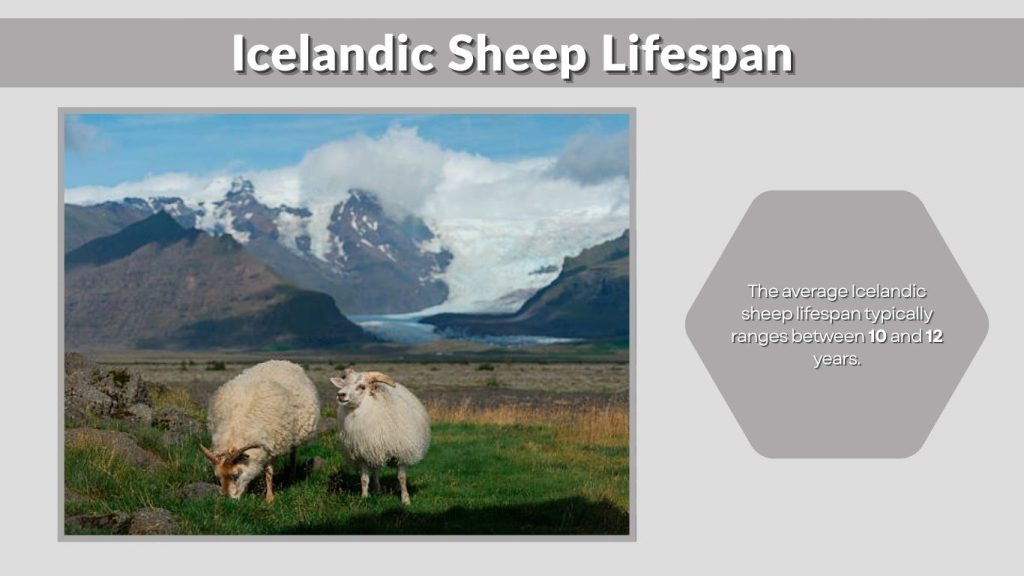
The average Icelandic sheep lifespan typically ranges between 10 and 12 years, although some individuals can live longer under proper care.
Several factors influence how long these sheep live, including diet, health care, and environmental conditions.
Factors Affecting Lifespan
Healthy Icelandic sheep usually live longer when they receive proper nutrition, regular veterinary care, and safe grazing conditions.
Important factors include:
- Balanced diet
- Access to clean water
- Protection from predators
- Proper shelter during extreme weather
Because Icelandic sheep evolved in tough environments, they are naturally disease-resistant and hardy, which helps them maintain good health compared to some modern sheep breeds.
What Do Icelandic Sheep Eat?
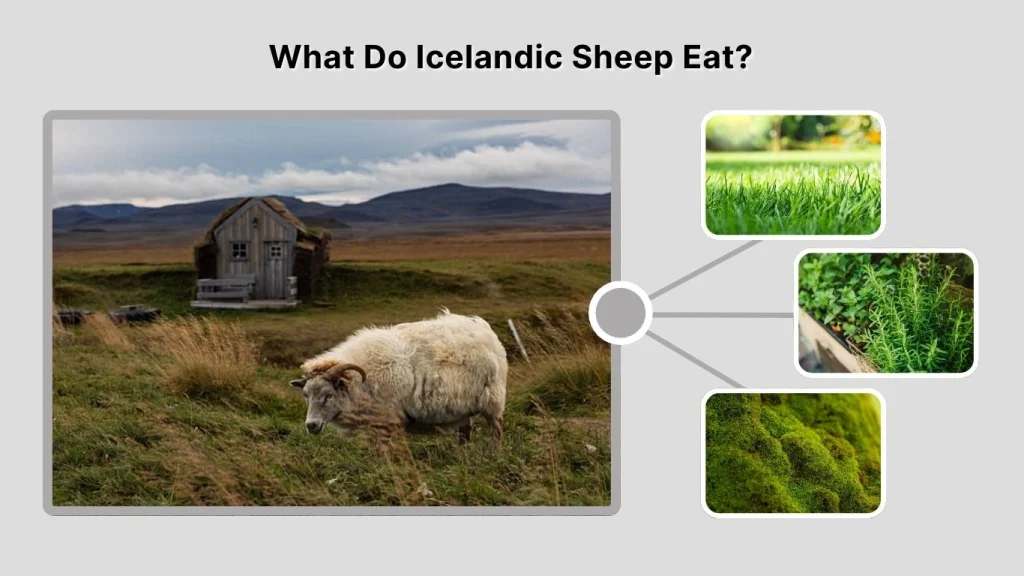
Icelandic sheep are natural grazers and are well adapted to feeding on a wide range of vegetation. Their diet mainly consists of grasses and plants found in open landscapes, which allows them to thrive in Iceland’s rugged environment.
Natural Diet of Icelandic Sheep
In natural grazing environments, Icelandic sheep eat a variety of plants, including:
- Grass
- Herbs
- Moss
- Shrubs
- Leaves from low-growing plants
These sheep are excellent foragers and can survive on vegetation that many other livestock animals cannot digest efficiently. Their strong grazing ability helps them obtain enough nutrients even in rough or mountainous terrain.
Seasonal Feeding Habits
The diet of Icelandic sheep often changes depending on the season.
Summer Grazing
During summer, Icelandic sheep are typically released into the mountains or open grazing areas. There, they roam freely and feed on natural vegetation. This traditional grazing method allows sheep to consume a diverse diet rich in nutrients.
Winter Feeding
During the colder months, when fresh grass is limited, farmers usually provide stored feed. This typically includes:
- Hay
- Silage (fermented grass)
- Mineral supplements
Some farmers also provide small amounts of grain to ensure the sheep receive sufficient energy during winter.
Water and Nutritional Requirements
Like all livestock, Icelandic sheep require constant access to clean drinking water. Proper nutrition is essential for maintaining their health, wool quality, and reproductive success.
Farmers often provide salt blocks and mineral supplements to prevent nutrient deficiencies, especially in regions where natural grazing may lack certain minerals.
Icelandic Sheep Farming
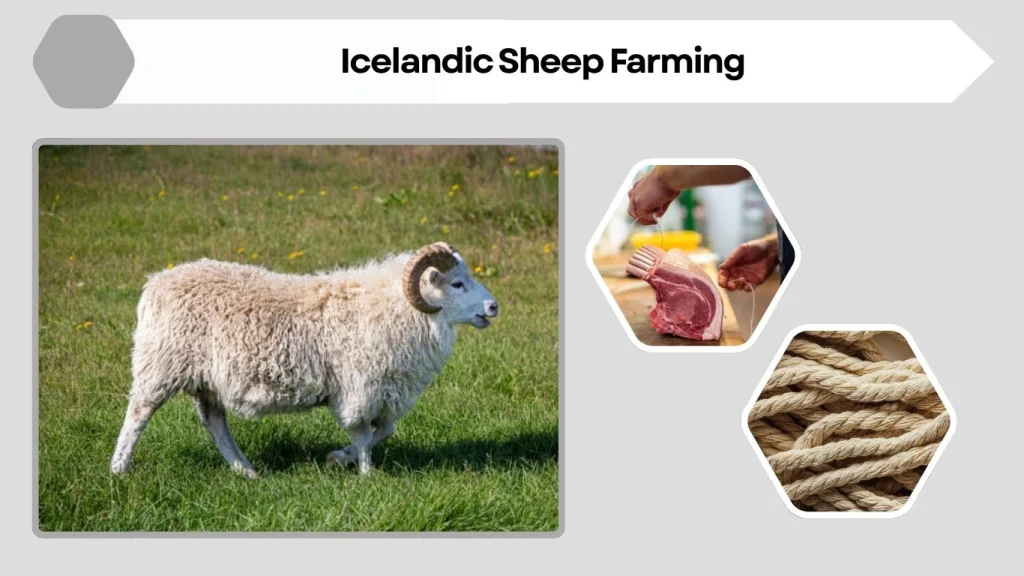
Icelandic sheep farming combines traditional methods with modern agricultural practices. Because of the breed’s hardiness, these sheep are relatively easy to manage compared to many other livestock animals.
Traditional Icelandic Sheep Farming
One of the most famous traditions in Icelandic agriculture is the autumn sheep roundup, known as réttir. During this event, farmers and local communities gather sheep that have been grazing freely in the mountains throughout the summer.
The sheep are sorted and returned to their respective farms in large communal gatherings that have been part of Icelandic culture for centuries.
Modern Sheep Farming Practices
While traditional grazing is still common, modern farmers also use improved farming techniques to ensure healthy flocks. These practices may include:
- Controlled breeding programs
- Regular health monitoring
- Improved winter feeding systems
- Predator protection
These methods help farmers maintain healthy sheep populations while continuing traditional grazing systems.
Role of Sheep in the Icelandic Economy
Sheep farming remains an important part of Iceland’s rural economy. Icelandic sheep are primarily raised for:
- High-quality lamb meat
- Warm and durable wool
Icelandic lamb is especially prized for its flavor because sheep graze freely on natural herbs and grasses during the summer months.
Icelandic Sheep Facts
Icelandic sheep have many unique qualities that set them apart from other breeds.
Quick Facts About Icelandic Sheep
Here are some key facts about the breed:
- Origin: Iceland
- Breed group: Northern short-tailed sheep
- Primary uses: Meat and wool
- Coat type: Dual-layer wool
- Color variations: White, black, brown, gray, and spotted patterns
- Adaptability: Extremely hardy and cold-tolerant
Interesting Facts About Icelandic Sheep
One fascinating feature of Icelandic sheep is their dual-coat fleece. Their wool consists of two layers:
- Tog: A long, coarse outer layer that protects against rain and wind
- Thel: A soft inner layer that provides insulation
This natural wool structure makes Icelandic wool both water-resistant and extremely warm, which is why it is widely used in traditional Icelandic sweaters known as lopapeysa.
Another interesting fact is that Icelandic sheep often have horns, although some are naturally hornless. Rams typically have large curved horns, while ewes may have smaller ones.
These sheep are also known for their strong maternal instincts and are generally good mothers, often producing healthy lambs without much assistance.
Icelandic Sheep Products
Icelandic sheep provide several valuable products that contribute to both the economy and traditional culture.
Icelandic Wool and Lopapeysa Sweaters
Icelandic wool is famous worldwide for its durability and warmth. The unique dual-layer fleece produces wool that is both insulating and water-resistant.
This wool is commonly used to create lopapeysa, the traditional Icelandic sweater known for its distinctive circular yoke patterns.
Because the wool retains its natural oils, it provides excellent protection against cold and wet weather.
Icelandic Lamb Meat
Icelandic lamb is another highly valued product. Since sheep graze naturally in the mountains, the meat often has a unique flavor influenced by the herbs and plants they eat.
The lamb is considered lean, tender, and high quality, making it popular both locally and internationally.
Icelandic Sheepdog Size and Breed Overview
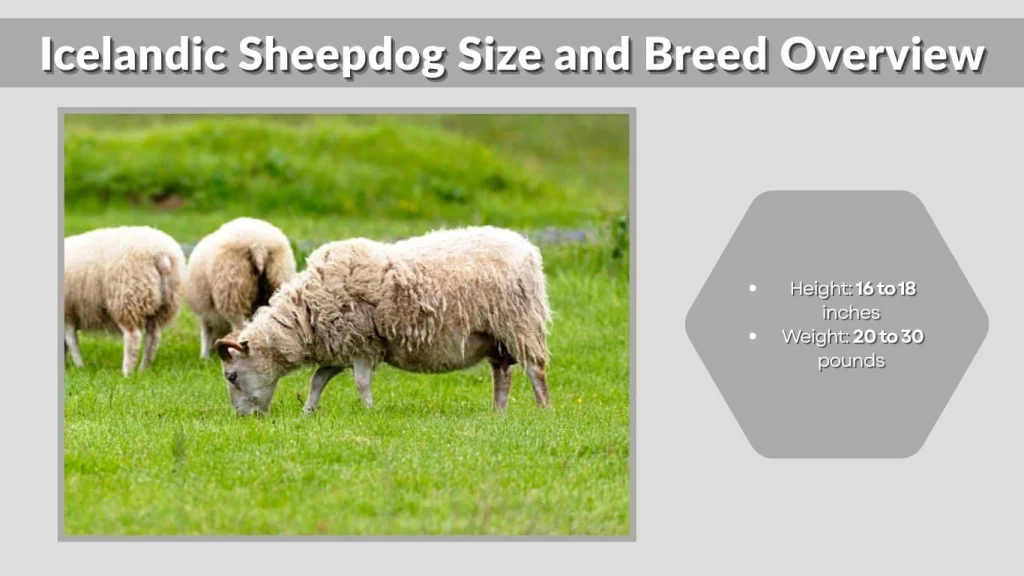
The Icelandic sheepdog is closely connected to Icelandic sheep farming. This energetic and friendly dog breed was historically used by farmers to herd and protect sheep.
Average Icelandic Sheepdog Size
Icelandic sheepdogs are medium-sized dogs with a sturdy build.
Typical size measurements include:
- Height: 16 to 18 inches (40–46 cm)
- Weight: 20 to 30 pounds (9–14 kg)
They have thick double coats that protect them from cold weather, similar to the sheep they help herd.
Role of Icelandic Sheepdogs in Herding
Icelandic sheepdogs are known for their intelligence, agility, and strong work ethic. Farmers traditionally relied on them to guide sheep across rugged landscapes and keep the flock together during grazing.
Their friendly temperament also makes them excellent family companions.
Advantages of Raising Icelandic Sheep
There are several reasons why farmers around the world are interested in raising Icelandic sheep.
Hardy and Low Maintenance
Because the breed developed in harsh environments, Icelandic sheep are naturally resilient. They can tolerate cold weather and rough terrain better than many other breeds.
High-Quality Wool Production
Their dual-coat fleece produces wool that is highly valued for knitting and textile production.
Sustainable Grazing Animals
Icelandic sheep are excellent grazers and can thrive on natural vegetation. This makes them suitable for sustainable and pasture-based farming systems.
FAQs
Are Icelandic sheep good for wool production?
Yes, Icelandic sheep are highly valued for their wool. Their fleece contains both soft and coarse fibers, making it suitable for a wide variety of textile products.
How long do Icelandic sheep live?
The typical lifespan of Icelandic sheep ranges from 10 to 12 years, although some individuals can live longer with proper care.
What do Icelandic sheep eat in winter?
During winter, Icelandic sheep usually eat hay, silage, and mineral supplements provided by farmers when natural grazing is unavailable.
Are Icelandic sheep easy to raise?
Yes, they are generally considered easy to raise because of their hardiness, adaptability, and strong maternal instincts.
Conclusion
Icelandic sheep are a remarkable breed with a long history that dates back to the Viking Age. Known for their hardiness, unique dual-coat wool, and adaptability to harsh climates, they remain an important part of Icelandic agriculture and culture. These sheep provide valuable products such as wool and lamb while thriving in rugged environments. With their resilience, efficient grazing habits, and relatively long lifespan, Icelandic sheep continue to be one of the most fascinating and sustainable sheep breeds in the world.