



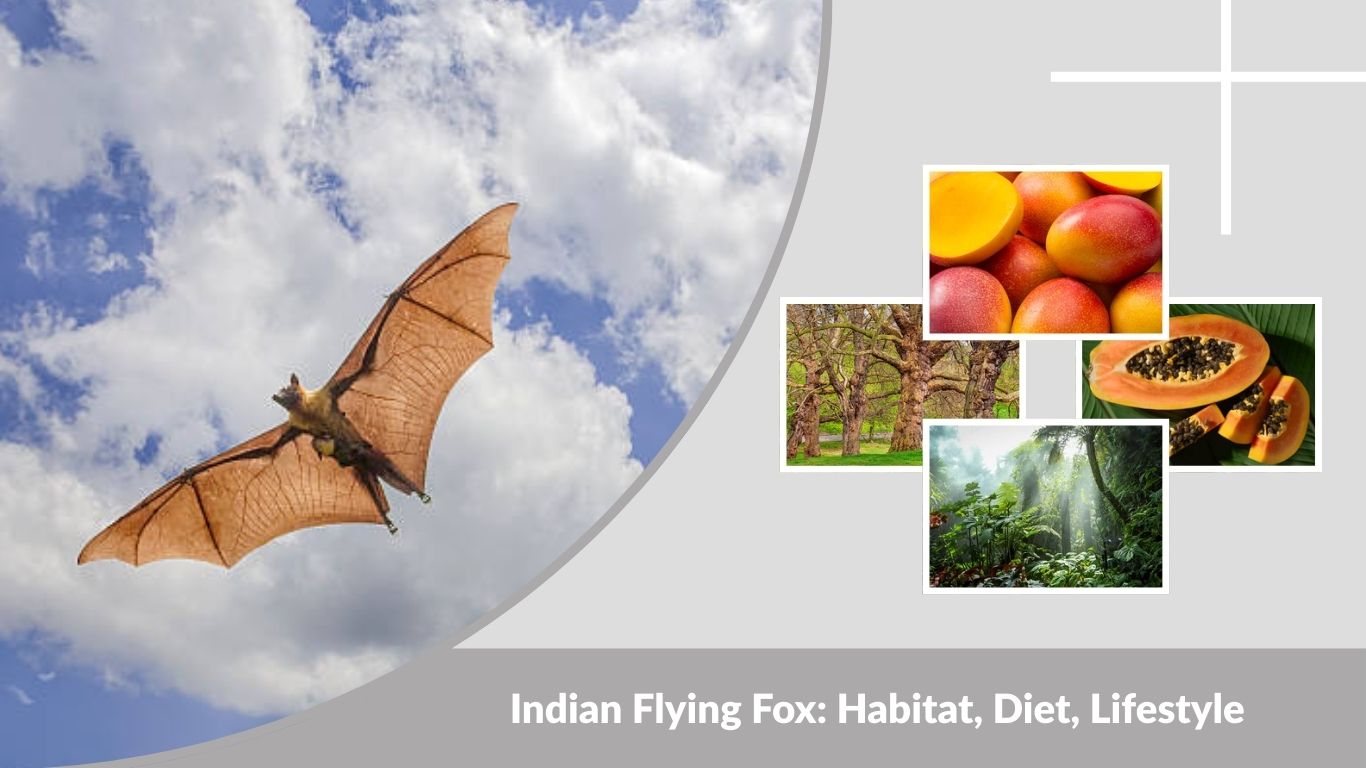
The Indian flying fox is one of the largest bat species in the world and is widely known for its impressive wingspan and important role in nature. Scientifically known as Pteropus medius, this large fruit bat is commonly found across South Asia, including India, Bangladesh, Nepal, and Sri Lanka. Indian flying foxes mainly feed on fruits, nectar, and flowers, which makes them vital for pollination and seed dispersal. Despite their large size, these bats are harmless and play a crucial role in maintaining healthy ecosystems and forest growth.
What Is the Indian Flying Fox?
The Indian flying fox is a large fruit bat that belongs to the family Pteropodidae, a group commonly known as megabats. These bats are famous for their fox-like faces, wide wings, and fruit-based diet. They are mostly active at night and spend their days hanging upside down in large colonies on tall trees.
Because of their size and appearance, Indian flying foxes are among the most recognizable bat species in South Asia. They are important for the environment because they help pollinate plants and spread seeds over long distances.
Scientific Classification
The Indian flying fox is classified as follows:
- Kingdom: Animalia
- Phylum: Chordata
- Class: Mammalia
- Order: Chiroptera
- Family: Pteropodidae
- Genus: Pteropus
- Species: Pteropus medius
The order Chiroptera includes all bats, but the family Pteropodidae specifically includes fruit bats and flying foxes.
Meaning of the Name Pteropus medius
The scientific name Pteropus medius comes from Greek and Latin words.
- Pteropus means “winged foot,” referring to the bat’s wing structure.
- Medius means “middle” or “medium,” describing its classification among similar species.
This name helps scientists identify and categorize the species within the flying fox group.
Why It Is Called a Flying Fox
The Indian flying fox gets its name because its face looks similar to that of a fox. It has:
- A pointed snout
- Large eyes
- Small ears
- Thick fur around the neck
These features make its face resemble a small fox or dog, which is why many people call it a flying fox.
Physical Characteristics of the Indian Flying Fox
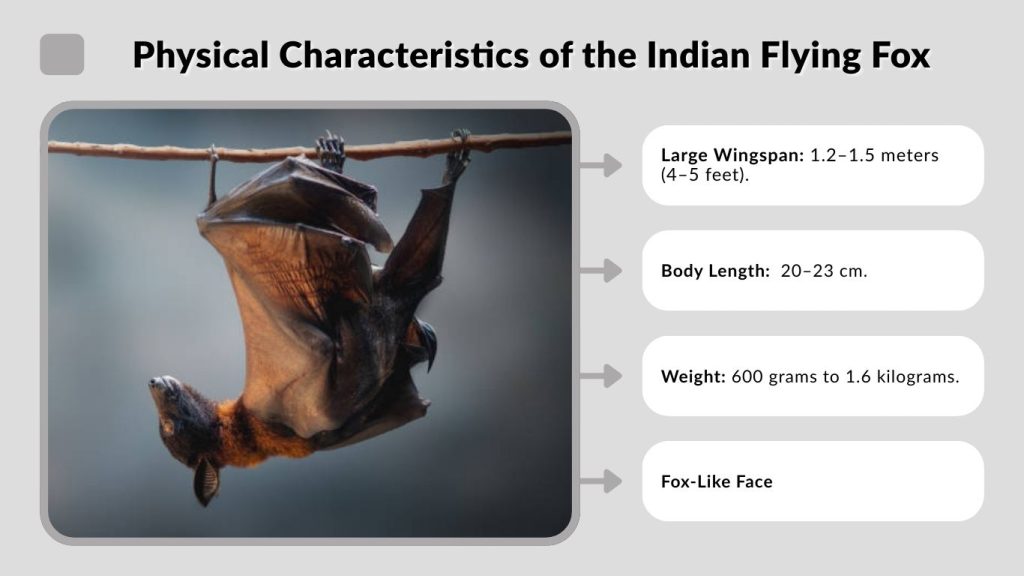
The Indian flying fox has several unique physical traits that make it one of the largest and most recognizable bats in the world.
These bats are well adapted for long-distance flight and fruit feeding. Their strong wings, sharp claws, and excellent senses help them survive in forests and urban environments.
Key Physical Characteristics
- Large Wingspan: Wings can stretch up to 1.2–1.5 meters (4–5 feet).
- Body Length: Usually around 20–23 cm.
- Weight: Typically ranges from 600 grams to 1.6 kilograms.
- Fox-Like Face: Their facial features resemble a fox.
- Large Eyes: They have excellent eyesight compared to many other bats.
- Strong Wings: Thin membranes connect elongated fingers to form powerful wings.
- Sharp Claws: Used for gripping branches while roosting.
- Dense Fur: Often brown, reddish-brown, or golden around the neck.
These characteristics allow Indian flying foxes to fly long distances while searching for food.
Habitat and Distribution
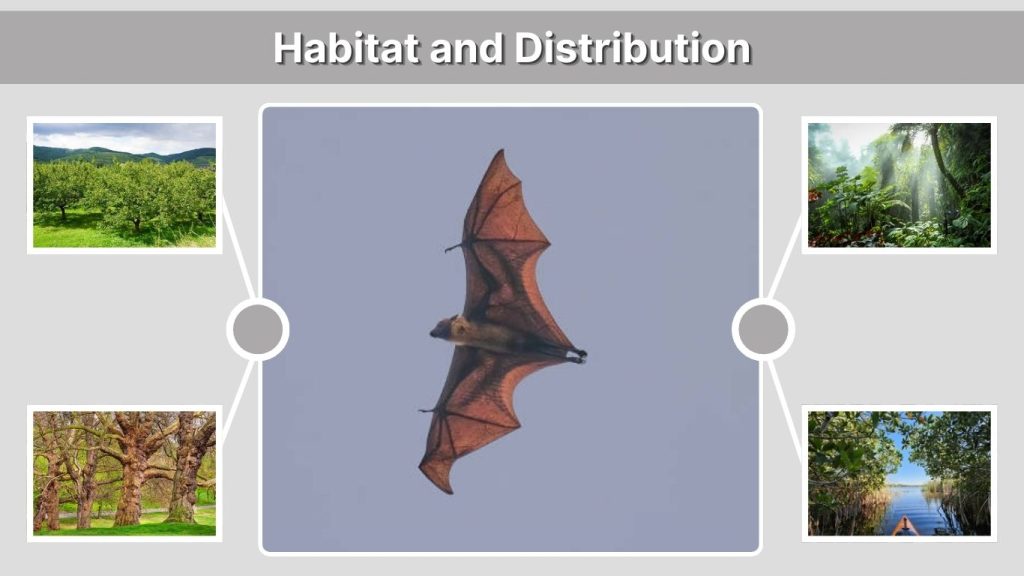
The Indian flying fox is widely distributed across South Asia. These bats prefer warm climates with plenty of fruit trees and flowering plants.
Natural Habitat of the Indian Flying Fox
Indian flying foxes usually live in areas where food sources are abundant. Their natural habitats include:
- Tropical forests
- Mangrove forests
- Agricultural lands with fruit trees
- Urban parks with large trees
- Riverbanks and coastal forests
Because fruit bats depend on fruit and nectar, they often stay near regions where fruiting trees grow throughout the year.
Countries Where It Is Found
The Indian flying fox can be found in several South Asian countries, including:
- India
- Bangladesh
- Nepal
- Sri Lanka
These bats are common in both rural and urban areas where large trees are available for roosting.
Roosting Locations
During the daytime, Indian flying foxes gather in large groups called colonies. They hang upside down from tree branches while resting.
Common roosting locations include:
- Tall banyan trees
- Mango trees
- Palm trees
- Forest canopy trees
- Large trees in city parks
Some colonies can contain hundreds or even thousands of bats, creating impressive gatherings.
Diet and Feeding Habits
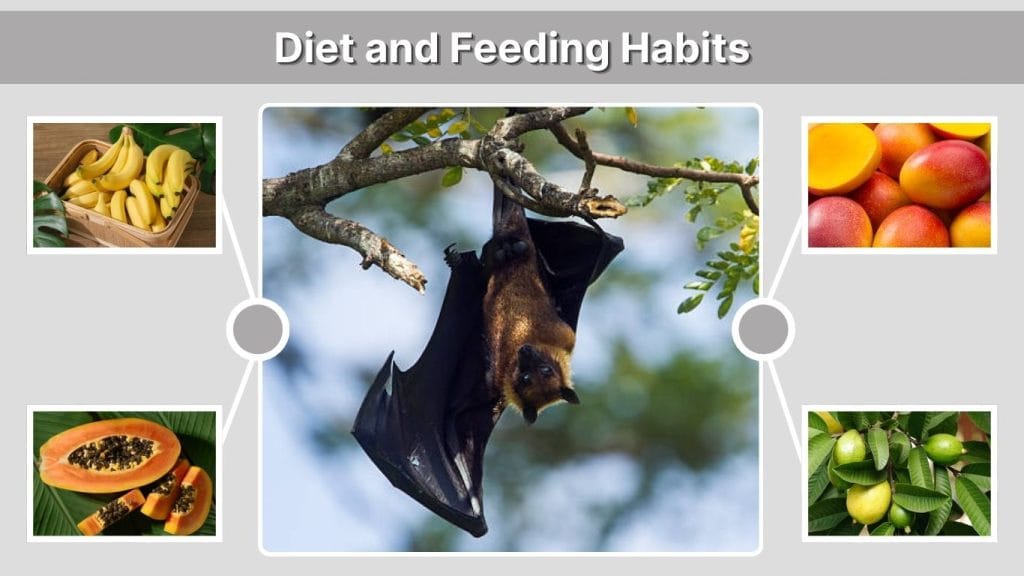
The Indian flying fox is a fruit-eating bat, which means its diet mainly consists of fruits, nectar, and flowers.
Main Foods of Indian Flying Foxes
These bats commonly eat a variety of fruits such as:
- Mangoes
- Guavas
- Bananas
- Figs
- Papayas
- Dates
They also feed on flower nectar and pollen, which provides them with energy.
Feeding Behavior
Indian flying foxes usually begin feeding after sunset. They leave their roosting trees and fly long distances in search of fruiting trees.
Instead of swallowing whole fruits, they often:
- Bite into the fruit
- Squeeze out the juice
- Spit out the remaining pulp and seeds
This feeding method helps spread seeds across large areas.
Role in Pollination and Seed Dispersal
While feeding on nectar and fruit, pollen sticks to the bats’ fur. As they travel between trees, they transfer pollen from one plant to another.
This process helps plants reproduce and supports forest regeneration.
Because they spread seeds over long distances, Indian flying foxes are extremely important for maintaining healthy ecosystems.
Behavior and Lifestyle
Indian flying foxes have interesting behaviors that help them survive in their natural environment. They are social animals and are usually seen living in large colonies. Their daily routine mostly includes resting during the day and searching for food at night.
Nocturnal Activity
The Indian flying fox is a nocturnal mammal, meaning it becomes active during the night. After sunset, these bats leave their roosting trees and fly out to search for food.
They can travel several kilometers in a single night while looking for fruiting trees and flowers. Their strong wings and good eyesight help them navigate in low-light conditions.
Social Behavior and Colonies
Indian flying foxes are highly social animals. They usually live in large groups called colonies, which may contain hundreds or even thousands of bats.
Living in colonies provides several benefits:
- Protection from predators
- Easier communication between bats
- Sharing information about food sources
Within these colonies, bats often groom each other and communicate using various sounds and body movements.
Daily Roosting Habits
During the daytime, Indian flying foxes hang upside down from tree branches while resting. This position allows them to quickly take flight if they sense danger.
Roosting trees are usually large and tall, providing enough space for many bats. These trees may be used by the same colony for many years.
Reproduction and Life Cycle
The reproduction process of the Indian flying fox is relatively slow compared to many other mammals. Typically, a female gives birth to only one baby each year.
Mating Season
The mating season usually occurs during late summer or early autumn. During this time, males compete for the attention of females.
After mating, the female carries the developing baby inside her body during the gestation period.
Birth and Development of Pups
Female Indian flying foxes usually give birth to a single pup. At birth, the baby bat is small and depends entirely on its mother.
For the first few weeks, the pup clings to the mother while she flies or rests. As it grows stronger, the young bat begins to hang independently in the colony.
Eventually, the young bat learns to fly and search for food on its own.
Lifespan
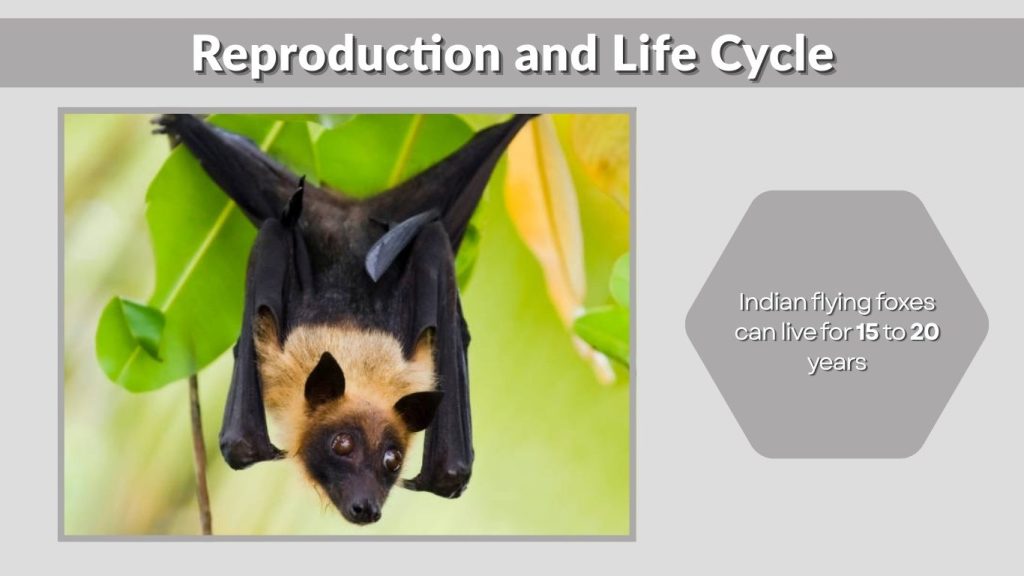
Indian flying foxes can live for 15 to 20 years in the wild if they are not affected by predators or environmental threats.
Their relatively long lifespan allows them to play an important role in ecosystems over many years.
Importance of Indian Flying Fox in the Ecosystem
Indian flying foxes are extremely valuable to nature. They contribute significantly to plant reproduction and forest health.
Pollination of Plants
While feeding on nectar, pollen sticks to the bats’ bodies. When they visit other flowers, the pollen is transferred, allowing plants to reproduce.
Many tropical plants depend on bats like the Indian flying fox for pollination.
Forest Regeneration
Fruit bats help spread seeds across wide areas. When they eat fruit and drop or spit out the seeds, new plants can grow in different locations.
This natural process helps forests regenerate and expand.
Maintaining Biodiversity
By supporting plant growth, Indian flying foxes help maintain ecosystems that support many other animals and insects.
Without fruit bats, many forests would struggle to survive.
Threats to Indian Flying Fox
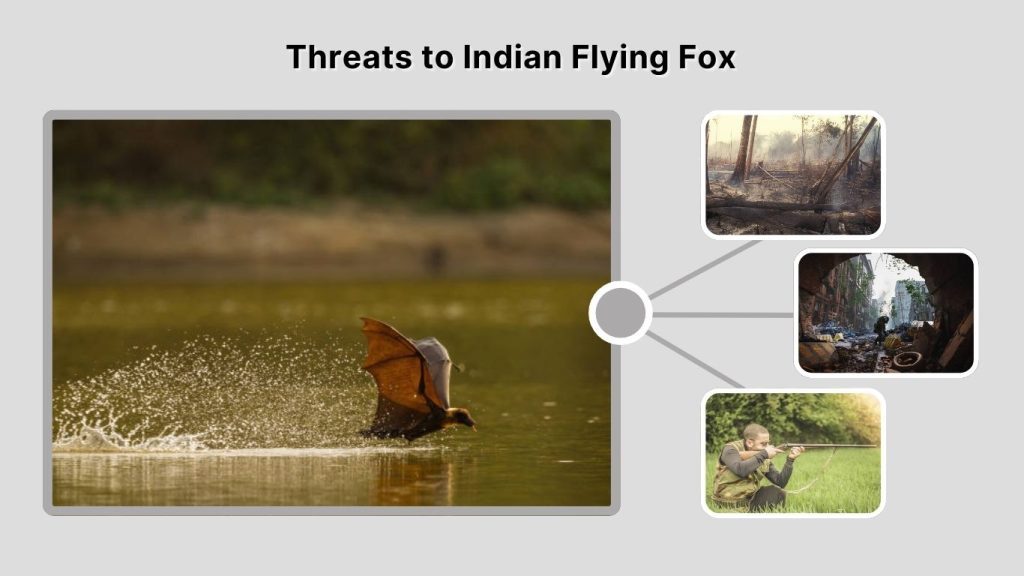
Despite their ecological importance, Indian flying foxes face several threats.
Habitat Loss
Deforestation and urban development destroy many of the trees that bats use for roosting and feeding.
When forests disappear, bats lose both their homes and food sources.
Human Conflict
Sometimes farmers consider fruit bats pests because they feed on cultivated fruits. This can lead to bats being chased away or harmed.
Hunting and Disturbance
In some areas, bats are hunted or disturbed by human activities. Large colonies may also be disrupted by noise, construction, or habitat destruction.
Conservation Status
Although the Indian flying fox is still relatively common, conservation efforts are important to protect its population.
Protection Laws
Some countries have wildlife protection laws that prevent the hunting or killing of bats.
These laws help protect important bat species and their habitats.
Conservation Efforts
Wildlife organizations work to protect roosting sites and educate communities about the importance of bats.
Research programs also monitor bat populations and migration patterns.
How People Can Help Protect Them
People can help protect Indian flying foxes by:
- Protecting forests and large trees
- Planting fruit trees
- Avoiding disturbance of bat colonies
- Supporting wildlife conservation programs
Interesting Facts About Indian Flying Fox
Here are some fascinating facts about the Indian flying fox:
- It is one of the largest bat species in the world.
- Its wingspan can reach up to 1.5 meters (5 feet).
- Unlike many bats, it relies heavily on good eyesight instead of echolocation.
- Colonies can contain thousands of bats.
- These bats help grow forests by spreading seeds over large distances.
FAQs
Are Indian flying fox bats dangerous?
No, Indian flying foxes are generally harmless to humans. They prefer to avoid contact with people and rarely cause problems.
How big is the Indian flying fox?
The Indian flying fox can have a wingspan of up to 1.5 meters (5 feet), making it one of the largest bats in the world.
What do Indian flying foxes eat?
They mainly eat fruits, nectar, and flowers, including mangoes, figs, guavas, and bananas.
Where can Indian flying foxes be found?
They are commonly found in South Asian countries, including India, Bangladesh, Nepal, and Sri Lanka.
Conclusion
The Indian flying fox is a remarkable species that plays a crucial role in maintaining healthy ecosystems. With its large wingspan and fruit-based diet, it helps pollinate plants and spread seeds across forests. Although these bats face threats such as habitat loss and human conflict, conservation efforts can help protect their populations. Understanding the importance of the Indian flying fox encourages people to appreciate and safeguard these fascinating flying mammals for future generations.