



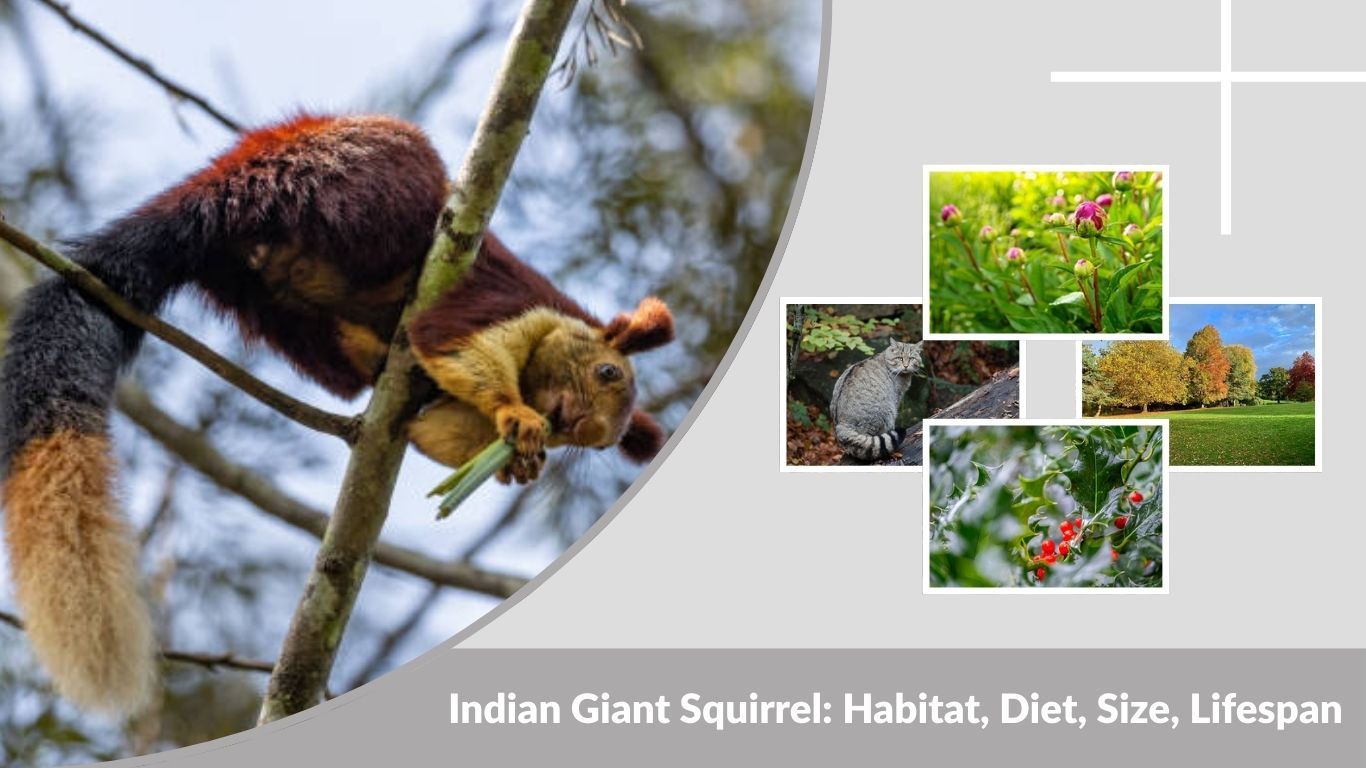
The Indian giant squirrel (Ratufa indica), also known as the Malabar giant squirrel, is one of the most colorful and largest squirrel species in the world. Native to the forests of India, this remarkable animal is known for its vibrant fur, long bushy tail, and impressive climbing abilities. The Indian giant squirrel spends most of its life high in the tree canopy and rarely comes to the ground. Understanding its habitat, physical characteristics, and behavior helps highlight the importance of protecting this unique forest species.
What Is the Indian Giant Squirrel?
Scientific Classification
The Indian giant squirrel belongs to the squirrel family Sciuridae, which includes tree squirrels, ground squirrels, and flying squirrels. Its scientific name is Ratufa indica, and it is part of the giant squirrel group, which includes several large squirrel species found in Asia.
Basic classification:
- Kingdom: Animalia
- Phylum: Chordata
- Class: Mammalia
- Order: Rodentia
- Family: Sciuridae
- Genus: Ratufa
- Species: Ratufa indica
Unlike many smaller squirrels, the Indian giant squirrel is fully arboreal, meaning it lives almost entirely in trees.
Overview of the Species
The Indian giant squirrel is famous for its large body size and striking fur colors. Its coat can include shades of deep brown, black, maroon, orange, and cream. These unique color patterns make it one of the most visually distinctive squirrel species.
This species lives mainly in tropical and subtropical forests of India, particularly in regions with dense tree cover. The squirrel spends most of its time moving through the forest canopy while searching for food.
Indian giant squirrels are generally solitary animals, meaning they prefer to live alone except during breeding seasons.
Why It Is Called the Malabar Giant Squirrel
The Indian giant squirrel is often called the Malabar giant squirrel because it was first widely described in the Malabar region of southwestern India, part of the Western Ghats.
The name “giant squirrel” comes from its large body size, which is much bigger than common tree squirrels. In fact, it is one of the largest squirrel species in the world.
Indian Giant Squirrel Physical Characteristics

The Indian giant squirrel has several unique physical features that help it live high in forest trees. Its body is strong, agile, and well adapted for climbing and jumping between branches.
Size and Body Structure
The Indian giant squirrel is significantly larger than most squirrel species.
Typical measurements include:
- Body length: 14–18 inches (36–45 cm)
- Tail length: 20–24 inches (50–60 cm)
- Weight: Around 3–4 pounds (1.4–2 kg)
Its long tail helps the squirrel maintain balance when moving through trees.
Unique Fur Colors
One of the most striking features of the Indian giant squirrel is its bright and varied fur coloration. Unlike many squirrels that are mostly gray or brown, this species can have multiple color shades.
Common colors include:
- Dark brown or black
- Reddish or maroon tones
- Cream or beige patches
- Orange or rust-colored areas
These color patterns vary slightly depending on the region and subspecies.
Key Identification Features
Several physical traits make the Indian giant squirrel easy to recognize.
Important features include:
- Very long bushy tail used for balance while climbing
- Strong hind legs that allow powerful jumps between branches
- Sharp curved claws for gripping tree bark
- Large rounded ears
- Bright multi-colored fur
These characteristics make the Indian giant squirrel perfectly suited for life in tall forest trees.
Indian Giant Squirrel Habitat

Geographic Range
The Indian giant squirrel is native to India and is mainly found in forest regions across the country.
Its primary range includes:
- The Western Ghats mountain range
- Central Indian forests
- Parts of southern and western India
These regions provide the dense forests and tall trees that the squirrel needs to survive.
Preferred Environment
Indian giant squirrels prefer tropical and subtropical forests with large trees and thick canopy cover. These environments allow them to travel through the trees without coming down to the ground.
Common habitats include:
- Evergreen forests
- Deciduous forests
- Mixed woodland areas
- Protected forest reserves
They are especially common in protected national parks and wildlife sanctuaries.
Nesting Locations
Indian giant squirrels build large nests high in tree branches. These nests are made from natural materials gathered from the forest.
Typical nest materials include:
- Twigs
- Leaves
- Grass
- Bark fibers
The nests are usually built in the upper canopy of tall trees, which helps protect them from predators.
These squirrels often build more than one nest within their territory and may move between them for safety or comfort.
Indian Giant Squirrel Diet
Main Foods
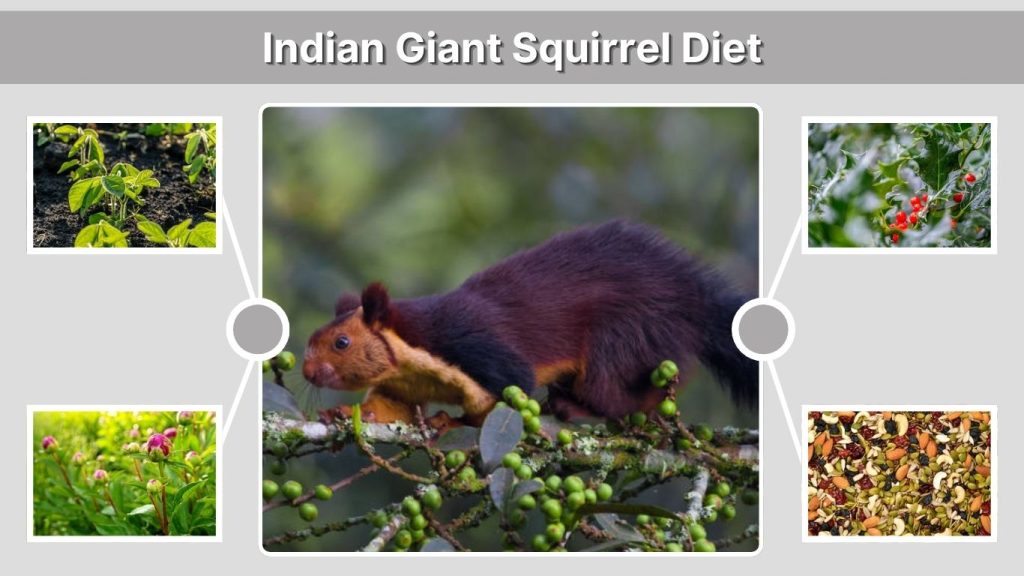
The Indian giant squirrel has a mostly herbivorous diet, meaning it mainly eats plant-based foods found in forest environments. Because it lives high in trees, it feeds on a variety of fruits, seeds, and plant materials available in the canopy.
Common foods include:
- Fruits from forest trees
- Nuts and seeds
- Leaves and tender shoots
- Tree bark
- Flowers and buds
These foods provide the energy and nutrients needed for the squirrel’s active tree-dwelling lifestyle.
Occasional Foods
Although plant foods form the majority of their diet, Indian giant squirrels sometimes consume small animal foods when available.
These may include:
- Insects
- Bird eggs
- Small invertebrates
Eating a variety of foods helps them survive when plant resources are limited.
Seasonal Feeding Behavior
The diet of the Indian giant squirrel may change throughout the year depending on food availability.
Spring and Summer:
Fresh fruits, flowers, and young leaves are common foods.
Monsoon Season:
Forest trees produce abundant fruits and seeds, which become an important part of the diet.
Winter:
They may rely more on bark, nuts, and stored food sources when fruits are less available.
Indian Giant Squirrel Behavior
Arboreal Lifestyle
The Indian giant squirrel is a fully arboreal animal, meaning it spends nearly its entire life in trees. It rarely comes down to the ground and moves through the forest canopy with impressive agility.
Their powerful legs allow them to jump distances of up to 20 feet (6 meters) between branches.
Daily Activity
Indian giant squirrels are diurnal animals, meaning they are active during the daytime. They usually search for food in the morning and late afternoon while resting during the hottest part of the day.
Because they live high in the tree canopy, they can often remain hidden from predators.
Social Behavior
These squirrels are generally solitary animals. Each individual usually occupies its own territory within the forest.
However, they may interact during:
- Mating season
- Territorial encounters
- Occasional feeding areas
Young squirrels remain with their mother for several weeks until they become independent.
Indian Giant Squirrel Lifespan

Lifespan in the Wild
In natural conditions, Indian giant squirrels typically live about 10 to 12 years. Their survival depends on factors such as habitat quality, predator presence, and food availability.
Lifespan in Captivity
In protected environments such as wildlife reserves or captivity, Indian giant squirrels may live up to 15–20 years with proper care.
Factors Affecting Lifespan
Several factors influence how long these squirrels can live:
- Predators in the forest
- Habitat destruction
- Food availability
- Disease or parasites
Interesting Indian Giant Squirrel Facts
One of the Largest Squirrels in the World
The Indian giant squirrel is considered one of the largest squirrel species globally, much bigger than the common tree squirrels found in many countries.
Bright Multi-Colored Fur
Its vibrant coat with shades of brown, maroon, orange, and cream makes it one of the most colorful mammals in the squirrel family.
Powerful Jumping Ability
Indian giant squirrels can leap over 20 feet between tree branches, allowing them to move quickly through dense forests.
Rarely Seen on the Ground
Because they spend most of their lives in trees, these squirrels rarely descend to the forest floor.
Predators and Threats

Natural Predators
Indian giant squirrels face several predators in the wild.
Common predators include:
- Birds of prey such as eagles and hawks
- Leopards
- Large snakes
- Wild cats
Living high in the tree canopy helps them avoid many ground predators.
Environmental Threats
Human activities pose the biggest threat to this species.
Major threats include:
- Deforestation
- Habitat fragmentation
- Forest fires
- Urban expansion
Loss of forest habitat can greatly reduce their population.
Importance in the Ecosystem
Seed Dispersal
Indian giant squirrels help forests grow by spreading seeds when they carry fruits and nuts to different locations.
Supporting Forest Biodiversity
By feeding on fruits and seeds and moving through tree canopies, they help maintain healthy forest ecosystems and contribute to biodiversity.
Conservation Status
Protection Efforts
The Indian giant squirrel is protected in several national parks and wildlife sanctuaries in India, especially within the Western Ghats region.
Conservation programs focus on protecting forest habitats and maintaining biodiversity.
Importance of Forest Conservation
Protecting tropical forests is essential for the survival of the Indian giant squirrel and many other wildlife species that depend on these ecosystems.
Conclusion
The Indian giant squirrel is a remarkable tree-dwelling mammal known for its large size, colorful fur, and incredible agility in forest canopies. Found mainly in the forests of India, this species plays an important role in maintaining healthy ecosystems through seed dispersal and forest regeneration. By understanding its habitat, diet, and behavior, we can better appreciate the importance of conserving the forests that support this unique and fascinating squirrel species.