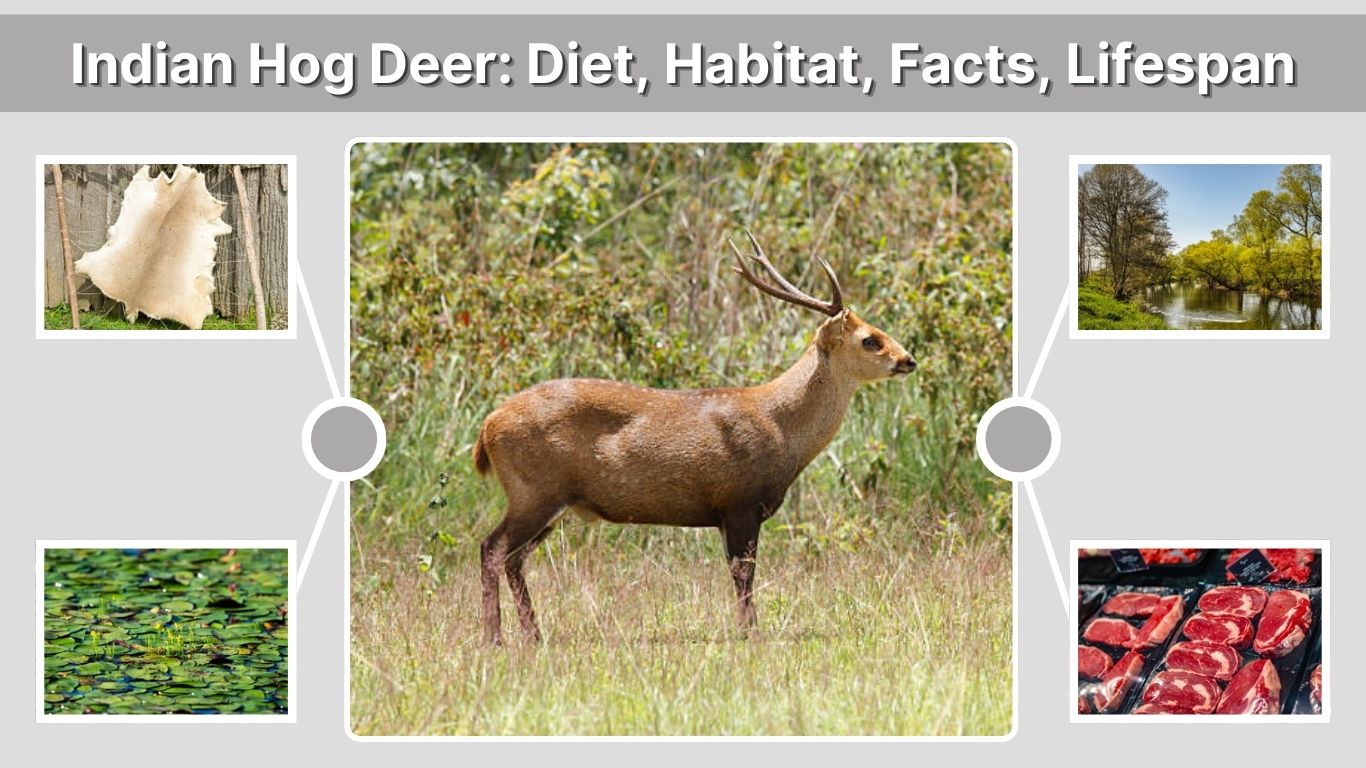
The Indian hog deer is a unique and fascinating species of deer found mainly in South and Southeast Asia. It gets its unusual name from the way it runs through forests and grasslands, keeping its head low like a wild hog instead of jumping like most other deer. This medium-sized deer is commonly found in river floodplains and tall grasslands. From its natural habitat and diet to its lifespan and distinctive characteristics, the Indian hog deer plays an important role in its ecosystem.
What Is an Indian Hog Deer?
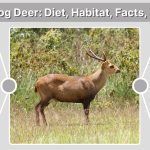
The Indian hog deer (Axis porcinus) is a medium-sized deer species belonging to the family Cervidae. It is mainly distributed across India, Nepal, Bangladesh, and parts of Southeast Asia. Unlike many deer species that leap when running, the hog deer moves with its head lowered, pushing through vegetation similar to a wild pig. This behavior is the main reason behind its name.
Adult hog deer usually weigh between 30 and 50 kilograms (66–110 pounds) and stand about 60–70 centimeters (24–28 inches) tall at the shoulder. Their bodies are compact with relatively short legs, which help them move easily through thick grasslands and forest undergrowth.
Male hog deer grow three-tined antlers that are typically shorter than those of many other deer species. These antlers are used during territorial fights and mating competition. Their coat color ranges from brown to reddish-brown, often becoming darker during winter months.
This species is well adapted to dense grassland environments, where its body shape and camouflage help it hide from predators.
Identification of Indian Hog Deer
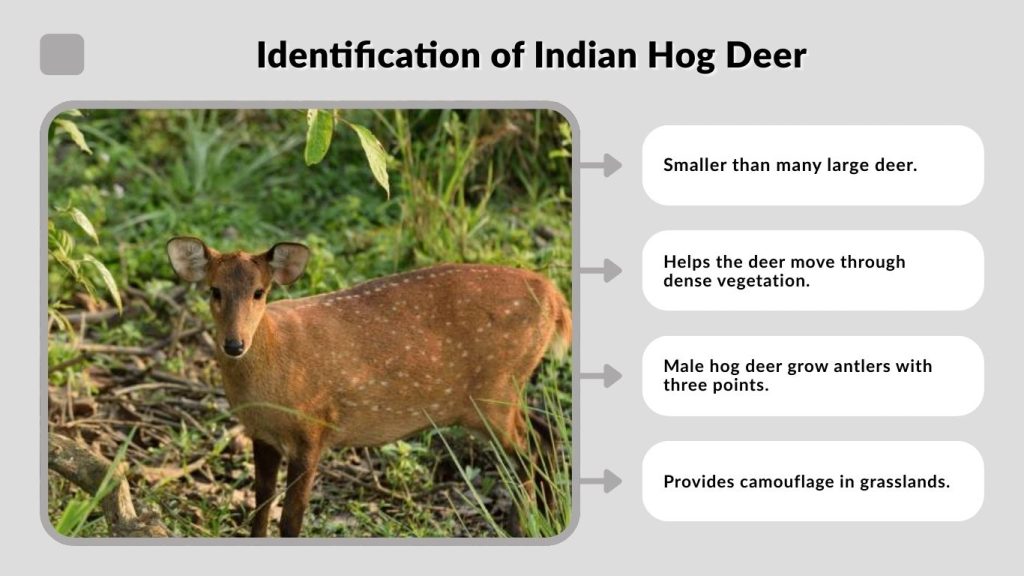
The Indian hog deer has several physical characteristics that make it easy to distinguish from other deer species. Its body structure, movement style, and antlers give it a unique appearance.
Compared to other deer that leap over obstacles, hog deer prefer to run with their heads down, pushing through tall grasses. This behavior is a key identification feature in the wild.
Key Identification Features
- Medium body size: Smaller than many large deer species but larger than some forest deer.
- Short legs and long body: Helps the deer move through dense vegetation.
- Three-tined antlers: Male hog deer grow antlers with three points.
- Brown or reddish-brown coat: Provides camouflage in grasslands.
- Rounded ears: Medium-sized ears that help detect predators.
- Hog-like running posture: Runs with its head low rather than jumping.
These features allow wildlife researchers and observers to identify hog deer even from a distance.
Indian Hog Deer Habitat
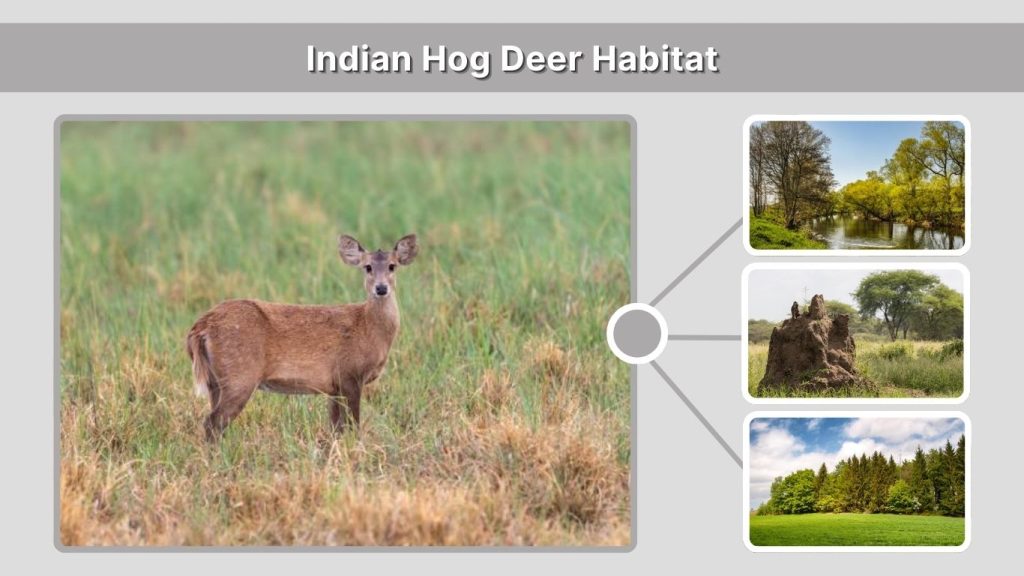
Indian hog deer prefer habitats with tall grasses, wetlands, and nearby water sources. These environments provide food, shelter, and protection from predators.
Native Range
The species is mainly found in several Asian countries, including:
- India
- Nepal
- Bangladesh
- Myanmar
- Thailand
- Cambodia
In many of these regions, hog deer are commonly seen in protected national parks and wildlife reserves.
Preferred Environment
Indian hog deer usually inhabit:
- River floodplains
- Tall grasslands
- Forest edges
- Wetlands and marshy areas
- Agricultural fields near forests
These habitats offer dense vegetation where the deer can hide from predators such as tigers and leopards.
Because they live in floodplain ecosystems, hog deer are also capable swimmers and can move across water channels when necessary.
Indian Hog Deer Diet
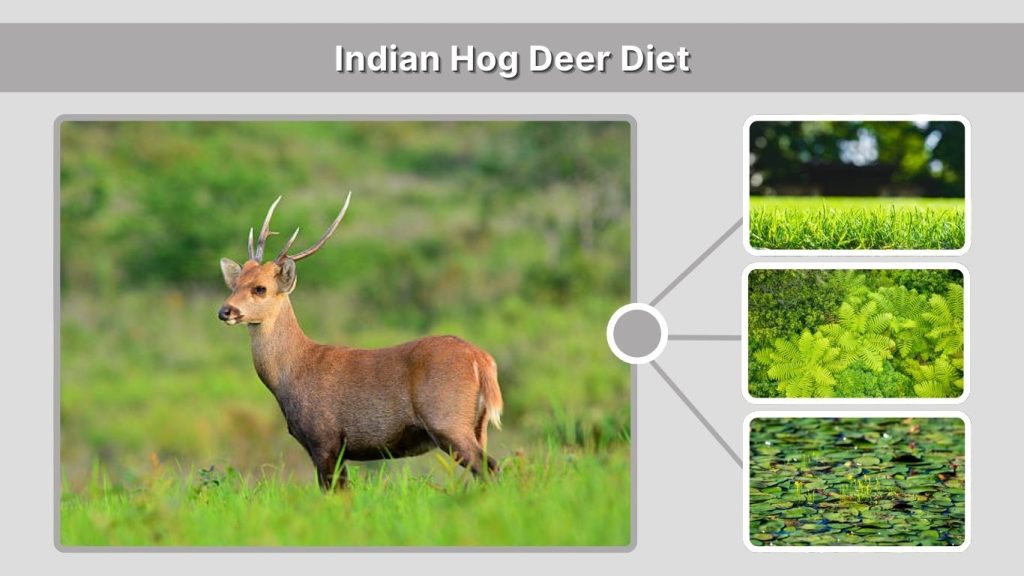
The Indian hog deer is a herbivore, meaning it feeds entirely on plant-based foods. Its diet mainly consists of grasses and other vegetation found in floodplain habitats.
What Do Indian Hog Deer Eat?
Hog deer typically eat a variety of plants that grow in grasslands and wetlands. Their diet commonly includes:
- Fresh grasses
- Leaves from shrubs
- Young shoots and herbs
- Aquatic plants
- Fruits and fallen seeds
In some areas, hog deer may also feed on agricultural crops, especially when natural vegetation becomes scarce.
Feeding Behavior
Indian hog deer are mostly crepuscular animals, which means they are most active during early morning and late evening. During these periods, they leave their hiding spots in tall grasses to graze.
Their diet changes slightly with the seasons:
- Spring and summer: Fresh grasses and young plants are the main food sources.
- Autumn: They eat more leaves, fruits, and seeds.
- Winter: They rely on tougher grasses and shrubs.
Because of their adaptable diet, hog deer can survive in a variety of grassland ecosystems.
Baby Indian Hog Deer
Baby Indian hog deer are called fawns, similar to the young of most deer species. These fawns are born with several natural adaptations that help them survive in the wild, especially in dense grassland environments.
Appearance of Baby Hog Deer
Newborn hog deer fawns are small and delicate, usually weighing around 1–2 kilograms (2–4 pounds) at birth. Their coats often have light-colored spots, which act as camouflage in tall grasses and vegetation.
This spotted pattern helps protect the fawn from predators during the early stages of life. As the fawn grows, these spots gradually fade and the coat becomes a uniform brown color.
Early Life and Development
Female hog deer typically give birth to one fawn, although twins may occasionally occur. After birth, the mother keeps the fawn hidden in dense grass or shrubs while she leaves briefly to feed.
During the first few weeks:
- The fawn remains hidden most of the time
- The mother returns regularly to nurse it
- The young deer gradually gains strength and mobility
Within a few weeks, the fawn begins following its mother and learning how to graze on vegetation. Most young hog deer become independent within several months.
Indian Hog Deer Lifespan
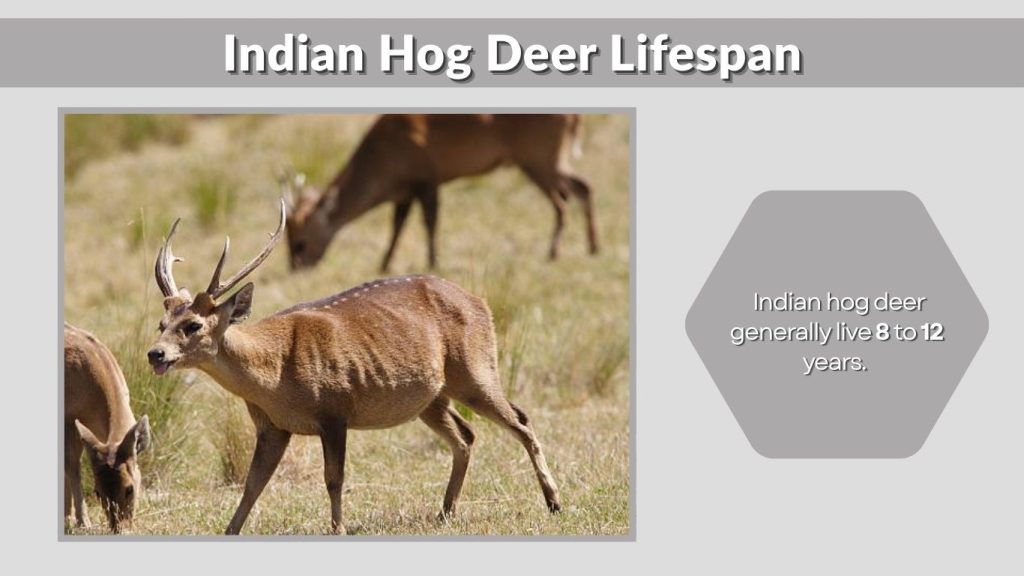
The lifespan of an Indian hog deer depends on environmental conditions, food availability, and the presence of predators.
In the wild, Indian hog deer generally live 8 to 12 years. In captivity, where they receive better protection and veterinary care, they may live up to 15 years or more.
Several factors influence how long hog deer survive.
Predators
In their natural habitat, hog deer are prey for several large carnivores, including:
- Tigers
- Leopards
- Wild dogs (dholes)
- Large crocodiles in wetland areas
Young fawns are especially vulnerable to predators during their early life.
Habitat Quality
Healthy grasslands and floodplain ecosystems provide the food and shelter hog deer need. When habitats are damaged by agriculture or development, survival rates may decrease.
Indian Hog Deer Behavior
Indian hog deer display several interesting behaviors that help them survive in grassland environments.
Running Style
One of the most distinctive behaviors of hog deer is their hog-like running posture. Instead of jumping over obstacles like many deer species, they run with their head lowered, pushing through dense vegetation.
This movement allows them to move quickly through tall grasses without exposing themselves to predators.
Social Structure
Hog deer are usually solitary animals or may live in small groups. Unlike some deer species that form large herds, hog deer prefer to remain alone or with a mate.
During the breeding season, males may compete with each other using their antlers to establish dominance.
Daily Activity
Indian hog deer are most active during dawn and dusk, when temperatures are cooler and predators may be less active. During the day, they often rest in thick vegetation.
Indian Hog Deer Hunting
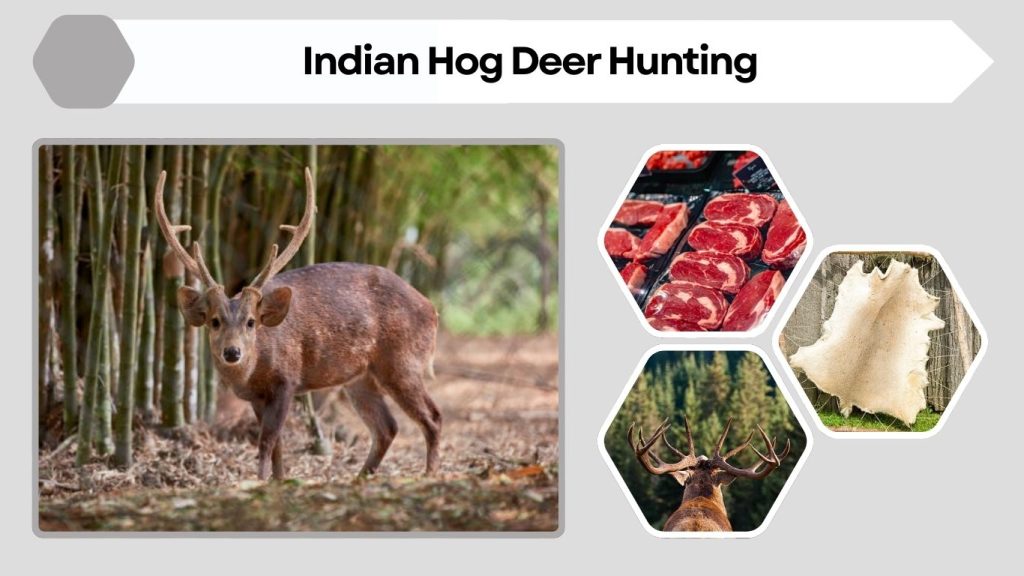
Historically, Indian hog deer were hunted for their meat, hide, and antlers in several parts of Asia. However, hunting pressure and habitat loss have caused population declines in some regions.
Hunting History
In the past, hog deer were a common target for hunters in many parts of India and Southeast Asia. Their presence in open grasslands made them easier to locate compared to forest-dwelling deer.
Legal Protection
Today, in many countries, Indian hog deer are protected by wildlife conservation laws. Hunting is either strictly regulated or completely prohibited in several areas.
Protected national parks and wildlife reserves now play an important role in conserving hog deer populations.
Interesting Indian Hog Deer Facts
The Indian hog deer has several fascinating traits that make it unique among deer species.
- The species gets its name from its hog-like running style.
- Hog deer prefer tall grass habitats rather than dense forests.
- Male hog deer grow three-pointed antlers used in territorial fights.
- They are excellent swimmers, especially in floodplain environments.
- Hog deer are an important prey species for large predators such as tigers.
Conservation Status
The Indian hog deer is considered Endangered or Vulnerable in some parts of its range due to habitat loss and illegal hunting. Grassland ecosystems, which are essential for their survival, have been reduced because of agriculture and human development.
Conservation efforts focus on:
- Protecting grassland and wetland habitats
- Enforcing anti-poaching laws
- Monitoring wildlife populations
- Expanding protected areas
These measures are important to ensure the long-term survival of the species.
Conclusion
The Indian hog deer is a distinctive and important species within Asian grassland ecosystems. Known for its unusual running style, compact body structure, and adaptability to floodplain habitats, this deer plays a key role in maintaining ecological balance. From its plant-based diet and unique behavior to the development of young fawns and its typical lifespan, the hog deer remains a fascinating animal to study. Continued conservation efforts will help protect this remarkable species and preserve its natural habitats for future generations.