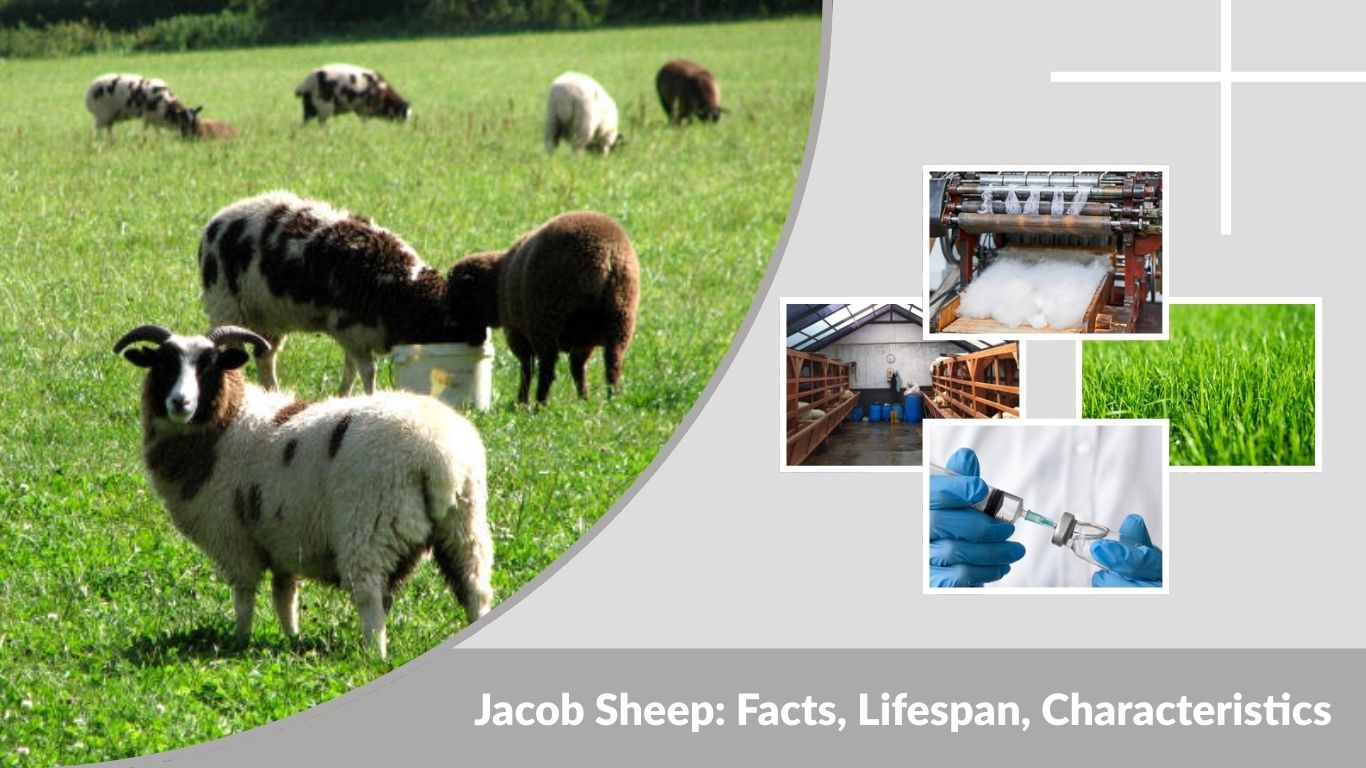
Jacob sheep are one of the most unique and visually striking sheep breeds in the world. They are easily recognized by their distinctive black-and-white spotted fleece and multiple horns. Unlike most sheep breeds that have only two horns, Jacob sheep often grow four horns and sometimes even six. This unusual appearance, along with their hardy nature and useful wool, makes them popular among farmers, hobby breeders, and livestock enthusiasts. In this guide, we will explore Jacob sheep characteristics, fascinating facts, and the lifespan of this remarkable heritage breed.
What is Jacob Sheep?
Jacob sheep are a rare and distinctive sheep breed known for their spotted coats and multiple horns. They are considered a heritage breed, meaning they have been preserved for their historical and genetic importance. Jacob sheep are often raised for their wool, meat, and ornamental value.
Origin and History
The exact origin of Jacob sheep is not completely clear, but many historians believe they have ancient Middle Eastern roots. Some stories link the breed to the biblical figure Jacob, which is where the breed is believed to have received its name.
Jacob sheep were later introduced to Europe, especially in England, where the breed became more established. Over time, breeders worked to maintain their unique appearance and strong genetic traits.
Today, Jacob sheep are raised in many parts of the world, including:
- United Kingdom
- United States
- Europe
- Australia
Although they are not as common as commercial meat breeds, Jacob sheep are highly valued for their unique characteristics and historical significance.
Why Jacob Sheep is Unique
Jacob sheep stand out from other sheep breeds because of several remarkable features.
Some of the most distinctive traits include:
- A unique black-and-white spotted coat
- Multiple horns, usually four
- Hardy and adaptable nature
- Medium-sized body structure
Their unusual appearance makes them one of the most recognizable sheep breeds in the world.
Jacob Sheep Characteristics
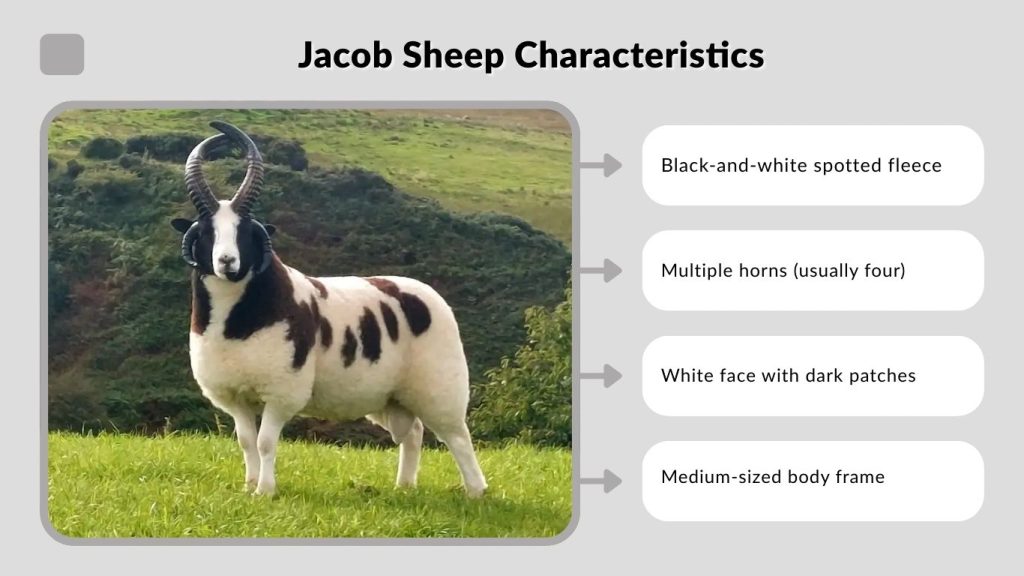
Jacob sheep have several physical and behavioral characteristics that make them different from many other sheep breeds.
Physical Appearance
One of the most striking features of Jacob sheep is their spotted fleece pattern. Their wool usually has a combination of white areas with dark brown or black spots.
Key physical features include:
- Black-and-white spotted fleece
- Multiple horns (usually four)
- White face with dark patches
- Medium-sized body frame
- Upright ears
The horns of Jacob sheep grow upward and outward, giving them a very distinctive look compared to other sheep breeds.
Body Size and Weight
Jacob sheep are considered a medium-sized breed. They are smaller than many commercial meat breeds but still strong and well-built.
Typical body weights include:
- Adult ram weight: 55–80 kg
- Adult ewe weight: 40–55 kg
Although they are not as large as some meat breeds, their size is suitable for small farms and hobby farming operations.
Wool Quality
Jacob sheep produce medium-quality wool that is often used by hand spinners and small textile producers. Their fleece is unique because it naturally contains two different colors.
Important wool characteristics include:
- Medium fiber diameter
- Spotted black-and-white fleece
- Good for hand spinning and weaving
- Annual fleece production of about 2–3 kilograms
The natural color variations make Jacob wool especially popular for craft and artisanal textile production.
Temperament
Jacob sheep are known for being alert, active, and hardy animals. They are capable of surviving in various environments and adapt well to pasture-based farming systems.
Common temperament traits include:
- Active and curious behavior
- Strong survival instincts
- Adaptability to different climates
Because of their hardy nature, Jacob sheep are often suitable for small farms and low-input farming systems.
Jacob Sheep Lifespan
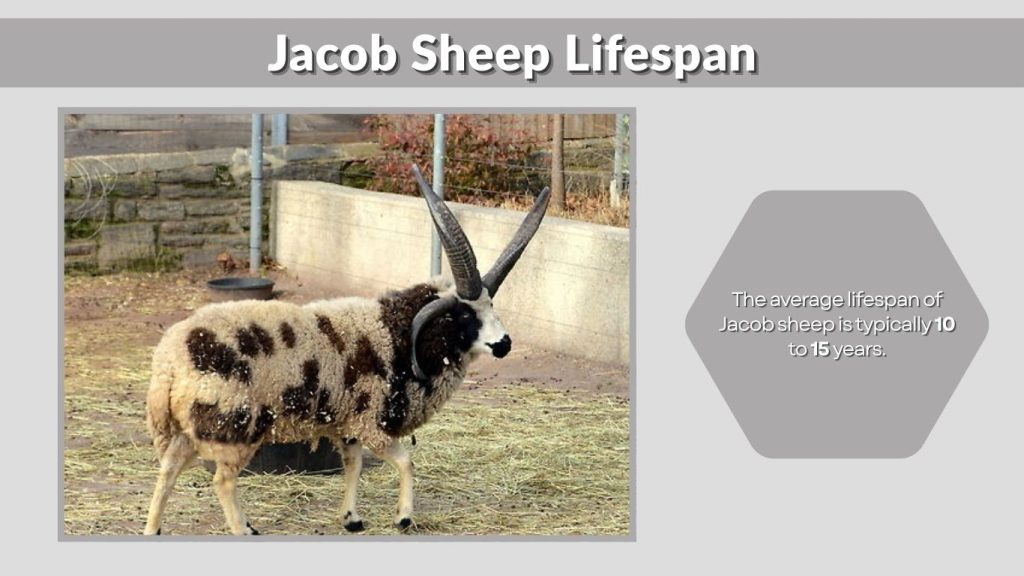
Jacob sheep generally live longer than many other livestock animals when they receive proper care. Their lifespan can vary depending on nutrition, environment, and overall health management.
Average Lifespan
The average lifespan of Jacob sheep is typically 10 to 15 years. Some sheep may live even longer if they are well cared for and protected from diseases.
During their lifetime, Jacob sheep can produce wool every year and reproduce multiple times.
Productive Years
Although Jacob sheep can live for many years, their most productive period usually occurs during the first 6 to 8 years of life. During this time, ewes can produce healthy lambs and maintain good wool production.
Farmers often focus on maintaining good nutrition and proper health care during these years to ensure strong productivity.
Jacob Sheep Facts
Jacob sheep have several fascinating features that make them one of the most unique sheep breeds in the world. Their unusual appearance and long history have attracted the interest of farmers, breeders, and livestock enthusiasts.
Known for Multiple Horns
One of the most famous facts about Jacob sheep is their multiple horns. While most sheep breeds have two horns or none at all, Jacob sheep commonly grow four horns. In rare cases, some animals may even develop six horns.
These horns grow upward and outward from the head, creating a distinctive and dramatic appearance that makes Jacob sheep easy to recognize.
Unique Spotted Coat
Another remarkable feature of Jacob sheep is their black-and-white spotted fleece. No two Jacob sheep have exactly the same pattern, making each animal visually unique.
Key coat characteristics include:
- White fleece with dark brown or black patches
- Irregular spotting patterns
- Naturally colored wool
Because of this natural color pattern, Jacob wool is often used in crafts and textile production without the need for dyeing.
Considered a Heritage Breed
Jacob sheep are classified as a heritage breed, meaning they are part of an important group of traditional livestock breeds that have been preserved over time.
Heritage breeds are valuable because they maintain genetic diversity and historical agricultural traditions. Jacob sheep have been maintained for centuries because of their unique traits and hardy nature.
Used for Wool and Ornamental Farming
Jacob sheep are often raised not only for wool and meat but also for their ornamental value. Their striking appearance makes them popular on small farms, hobby farms, and educational farms.
They are commonly kept for:
- Hand-spinning wool production
- Small-scale meat production
- Decorative livestock farming
- Conservation of rare breeds
Jacob Sheep Farming Guide
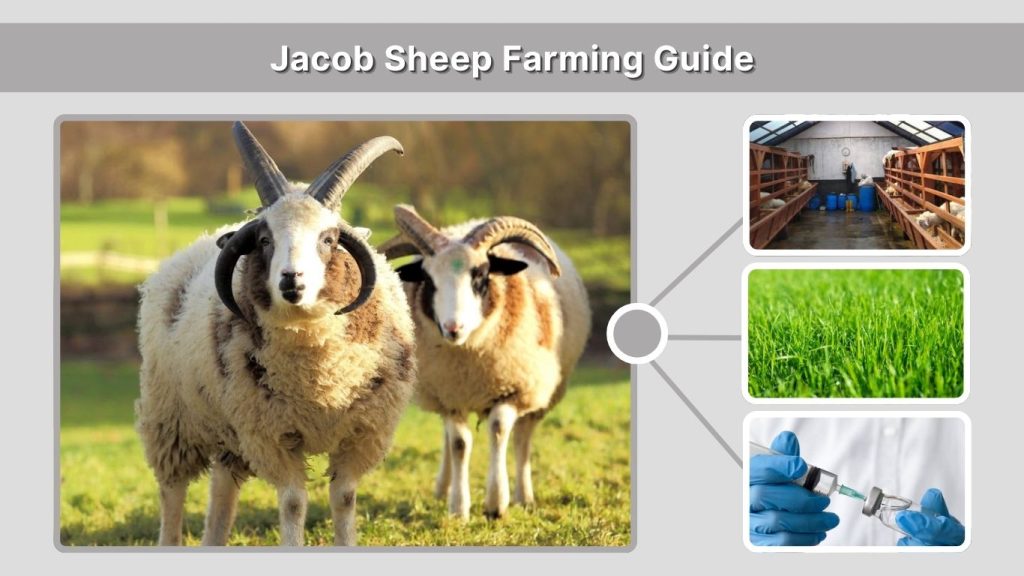
Although Jacob sheep are hardy animals, proper farm management is still important for maintaining a healthy flock.
Housing Requirements
Jacob sheep do not require extremely complex housing, but they need protection from harsh weather conditions.
Important housing features include:
- Clean and dry shelter
- Good ventilation
- Protection from rain and strong winds
- Safe fencing to prevent predators
Providing adequate shelter helps maintain the health and comfort of the flock.
Feeding Management
Jacob sheep are efficient grazers and can obtain most of their nutrition from pasture.
Common feed sources include:
- Natural grasses
- Legume plants such as clover
- Hay and silage during winter
- Mineral supplements
Access to clean drinking water is essential for maintaining proper digestion and overall health.
Health Management
Maintaining flock health is important for preventing disease and improving productivity.
Basic health management practices include:
- Regular deworming to control parasites
- Vaccination against common sheep diseases
- Maintaining clean housing conditions
- Monitoring sheep for signs of illness
Early detection of health problems helps farmers prevent serious losses.
Advantages of Raising Jacob Sheep
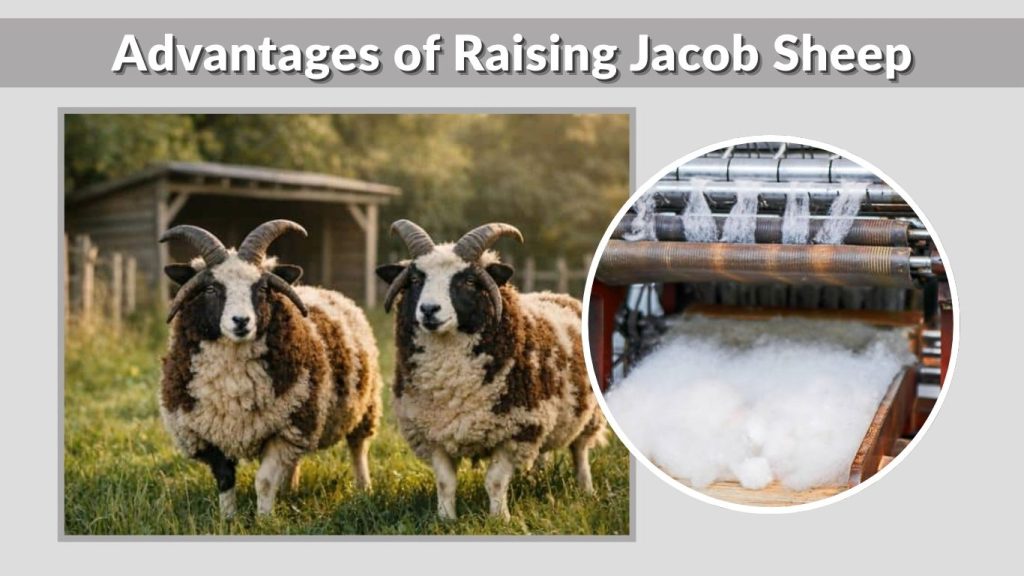
Jacob sheep provide several benefits for farmers and livestock enthusiasts.
Unique Appearance
Their spotted fleece and multiple horns make Jacob sheep one of the most visually distinctive sheep breeds. This unique appearance increases their value for ornamental farming.
Hardy and Adaptable
Jacob sheep are known for their ability to adapt to different climates and farming environments. Their hardy nature allows them to thrive in pasture-based systems.
Good Wool Production
Although they are not specialized wool breeds like Merino sheep, Jacob sheep still produce useful fleece that is popular among hand spinners and craft producers.
Suitable for Small Farms
Because of their medium size and hardy nature, Jacob sheep are often ideal for small farms and hobby farming operations.
Jacob Sheep vs Other Sheep Breeds
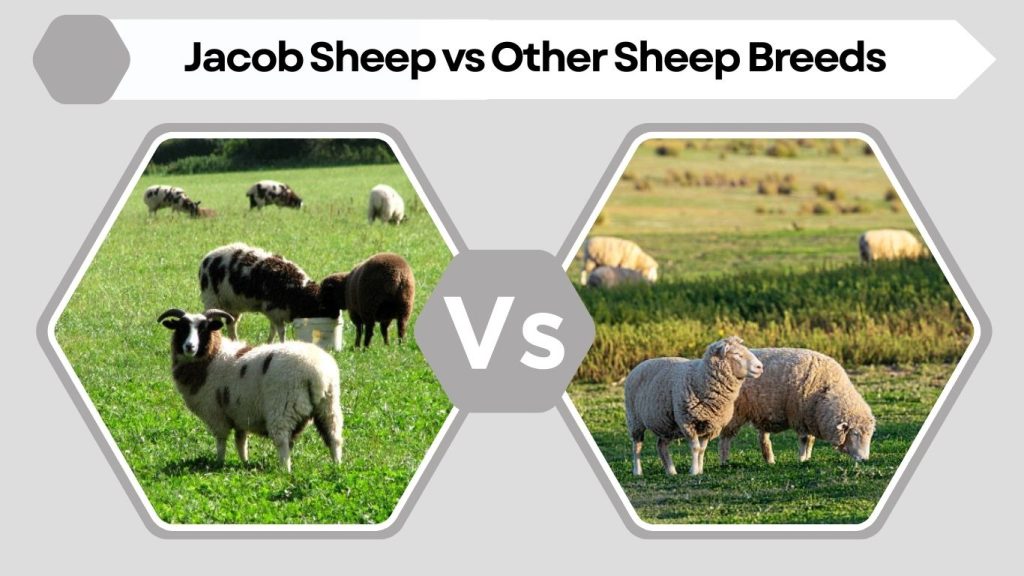
Farmers sometimes compare Jacob sheep with other breeds to understand their advantages and differences.
Jacob vs Merino
Merino sheep are known for producing extremely fine wool, while Jacob sheep produce medium-quality wool with natural color patterns.
Jacob sheep are usually raised for their unique appearance and heritage value, while Merino sheep are mainly raised for commercial wool production.
Jacob vs Dorset
Dorset sheep are popular meat sheep breeds known for their ability to breed throughout the year. Jacob sheep, on the other hand, are usually raised for wool, heritage conservation, and ornamental purposes.
Differences in Size and Purpose
Compared with many commercial meat breeds, Jacob sheep are smaller and produce less meat. However, their value lies in their distinctive appearance, historical importance, and specialty wool production.
Conclusion
Jacob sheep are one of the most distinctive and historically significant sheep breeds in the world. Their spotted fleece, multiple horns, and hardy nature make them highly recognizable and valued among farmers and breeders. In addition to their ornamental appeal, they also provide useful wool and moderate meat production. With proper care, feeding, and health management, Jacob sheep can thrive on small farms and contribute to the preservation of rare heritage livestock breeds.