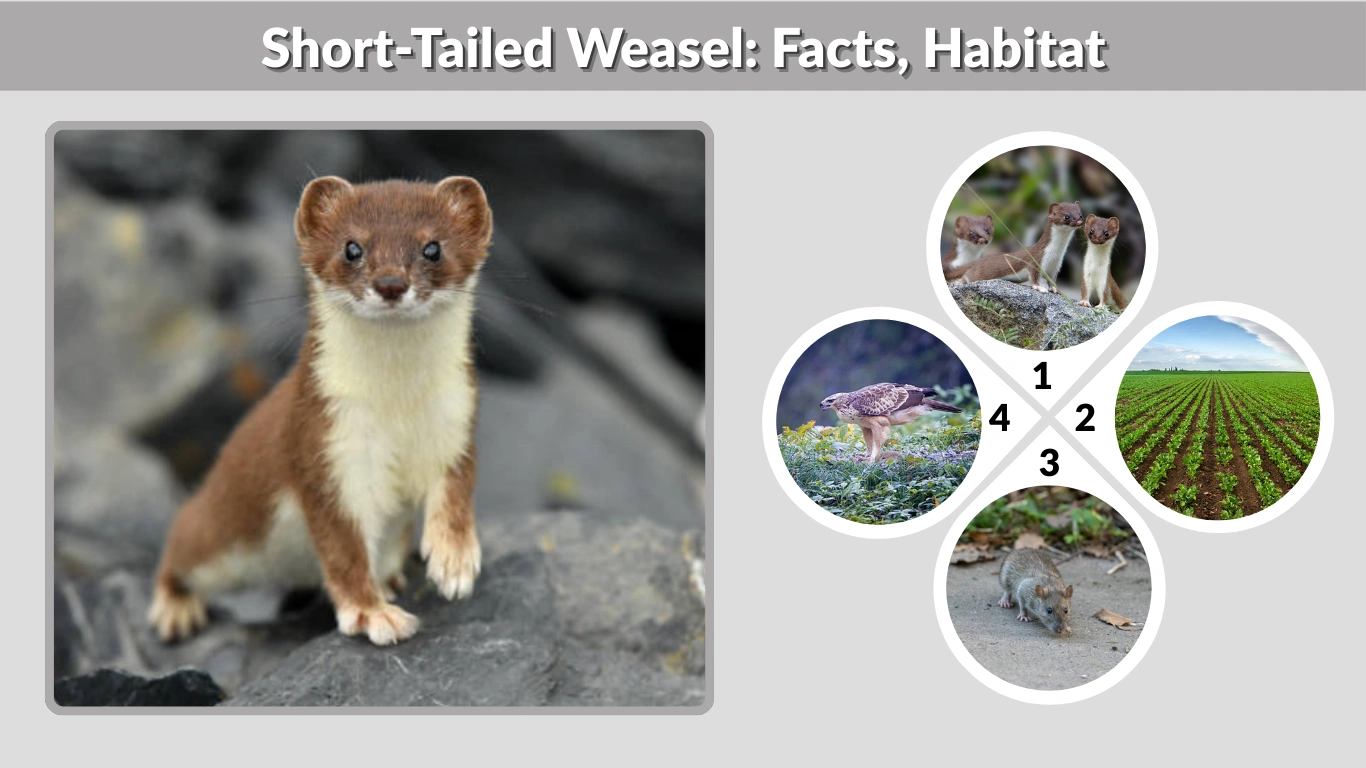






The Japanese weasel (Mustela itatsi) is a small but highly adaptable carnivorous mammal native to Japan. Known for its slender body, sharp hunting skills, and important role in controlling rodent populations, this species is a key part of Japan’s natural ecosystems. Although it closely resembles the Siberian weasel, the Japanese weasel has distinct physical traits and a unique ecological history. From forests and farmlands to riverbanks, this agile predator thrives in a variety of environments across the country.
What Is the Japanese Weasel?
The Japanese weasel is a member of the Mustelidae family, which includes ferrets, minks, martens, and otters. Like other weasels, it has a long, flexible body designed for chasing prey into narrow burrows. It is considered one of Japan’s native terrestrial carnivores and has evolved to fit the country’s varied landscapes.
Scientific Classification and Taxonomy
- Scientific name: Mustela itatsi
- Family: Mustelidae
- Order: Carnivora
For many years, the Japanese weasel was sometimes classified as a subspecies of the Siberian weasel (Mustela sibirica). However, genetic and morphological studies confirmed that it is a separate species. This distinction is important because the two species now overlap in some regions, leading to ecological competition.
As part of the Mustelidae family, the Japanese weasel shares characteristics such as sharp teeth, scent glands, and strong territorial instincts.
Physical Characteristics and Identification
The Japanese weasel is small but agile. Adult males are typically larger than females.
Average size:
- Body length: 35–45 cm
- Tail length: 12–17 cm
- Weight: 500–900 grams
Its body is slender and elongated, with short legs and a relatively long tail. The fur is usually reddish-brown or orange-brown on the upper body, with lighter cream or pale fur on the underside. One distinguishing feature is the clear boundary between the darker back and lighter belly.
Compared to the Siberian weasel, the Japanese weasel tends to be slightly smaller and has a shorter tail relative to its body length. These subtle differences help researchers identify the species in areas where both exist.
Japanese Weasel Habitat and Distribution
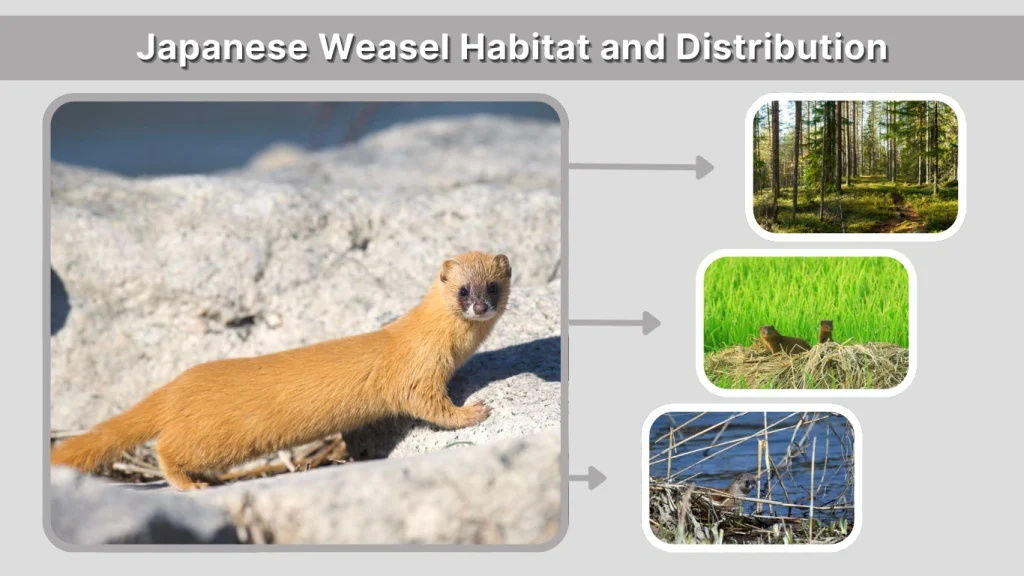
The Japanese weasel is endemic to Japan, meaning it is naturally found there and nowhere else in the wild.
Native Range in Japan
This species primarily inhabits:
- Honshu
- Shikoku
- Kyushu
It is not native to Hokkaido. However, related weasel species may be found in northern regions. Within its range, the Japanese weasel occupies both lowland and mountainous areas, depending on food availability and shelter.
Preferred Habitats
Japanese weasels are highly adaptable and can live in a wide range of environments, including:
- Forests (both deciduous and mixed)
- Grasslands
- Riverbanks and wetlands
- Farmland and agricultural areas
- Rural outskirts
They prefer areas with dense vegetation or natural cover, which provides protection from predators and good hunting opportunities. Proximity to water is often beneficial because it supports amphibians and small mammals that form part of their diet.
Adaptability to Human Environments
One reason the Japanese weasel has remained widespread is its ability to adapt to human-altered landscapes. It frequently inhabits farmland and rural villages where rodents are abundant.
In agricultural areas, Japanese weasels play a beneficial role by controlling rodent populations that might otherwise damage crops. However, their presence near poultry farms can sometimes lead to conflicts, as they may prey on chickens or eggs if given the opportunity.
Overall, their adaptability has helped them survive environmental changes, though modern development still presents challenges.
Diet and Hunting Behavior
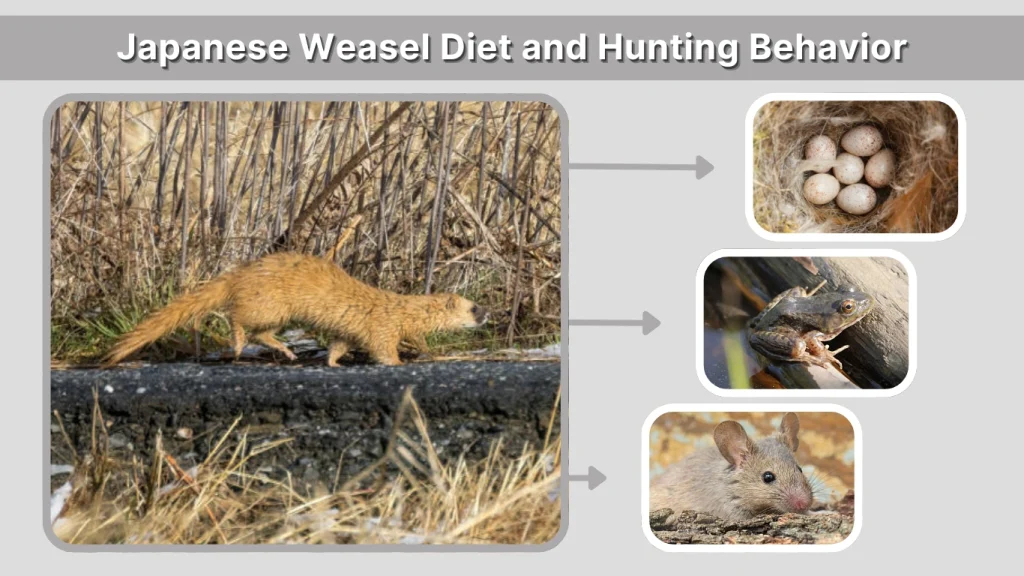
The Japanese weasel is a carnivore with a fast metabolism, meaning it must hunt regularly to survive. Its diet reflects its role as a small but efficient predator.
What Does a Japanese Weasel Eat?
The diet of the Japanese weasel mainly includes:
- Rodents (mice and rats)
- Small birds and bird eggs
- Amphibians such as frogs
- Reptiles like small lizards
- Insects
- Occasionally small mammals
Rodents make up the majority of their diet, especially in farmland areas. Seasonal changes can influence food choices. For example, amphibians may be more common in wetter seasons, while rodents dominate during colder months.
This varied diet helps the species adapt to different habitats and environmental conditions.
Hunting Techniques
Japanese weasels rely on speed, agility, and stealth when hunting. Their elongated bodies allow them to enter narrow burrows, making them especially effective at catching rodents underground.
Key hunting traits include:
- Quick reflexes
- Sharp teeth for delivering precise bites
- Strong sense of smell
- Ability to climb and swim
They are active hunters rather than scavengers. Their flexible spine allows them to twist and turn rapidly while chasing prey. In some cases, they may stalk silently before launching a sudden attack.
Because of their small size, Japanese weasels must be cautious and efficient. They often hunt alone and may store excess food for short periods if prey is abundant.
Behavior and Lifestyle
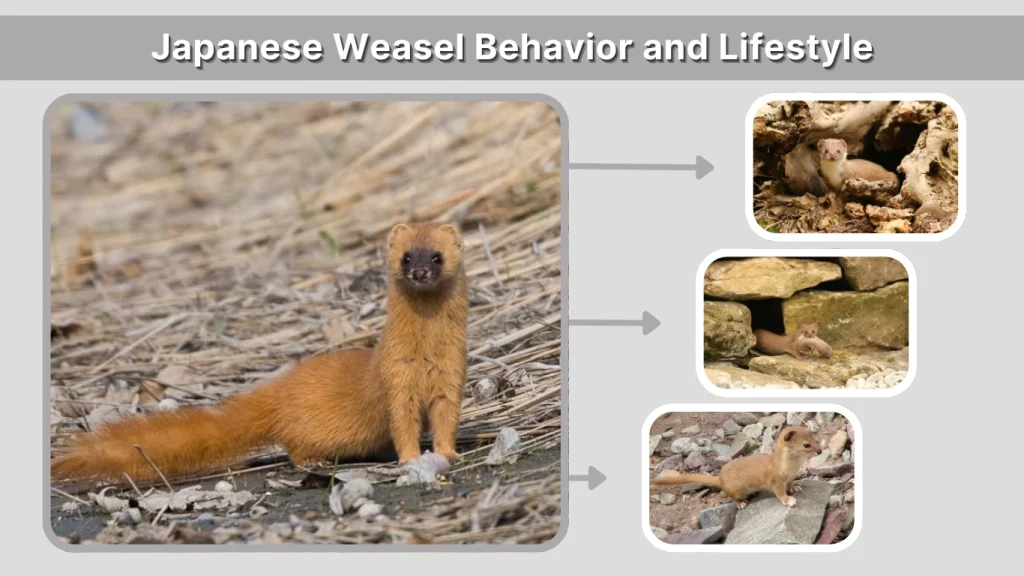
The Japanese weasel is generally solitary and highly territorial. Each individual maintains its own hunting range, which it marks using scent glands. These scent markings help communicate boundaries and reproductive status to other weasels.
Activity Patterns
Japanese weasels are primarily diurnal, meaning they are most active during the day. However, in areas with frequent human activity, they may become more active at dawn or dusk to avoid disturbance.
Their daily routine typically includes:
- Patrolling territory
- Hunting for prey
- Exploring burrows or dense vegetation
- Resting in sheltered spots
They often use hollow logs, rock crevices, or abandoned burrows as temporary dens. Unlike some larger carnivores, they do not usually build elaborate nests.
Communication and Territorial Behavior
Japanese weasels rely heavily on scent communication. Special scent glands near the base of the tail produce strong odors used to mark territory and signal reproductive readiness.
When threatened, they may:
- Emit sharp vocal sounds
- Arch their backs
- Release a strong-smelling defensive secretion
Direct physical confrontations are relatively rare but can occur during territorial disputes, especially between males.
Reproduction and Life Cycle
The breeding season typically occurs in spring. After mating, the female undergoes a gestation period of about one month.
Key reproductive facts include:
- Average litter size: 3–6 kits
- Kits are born blind and helpless
- Eyes open after several weeks
- Weaning occurs at around 6–8 weeks
Young weasels grow quickly and begin learning hunting skills from their mother. By late summer or early autumn, they are usually independent.
In the wild, the Japanese weasel’s lifespan is generally 2–5 years, although some individuals may live longer under favorable conditions.
Japanese Weasel vs Siberian Weasel
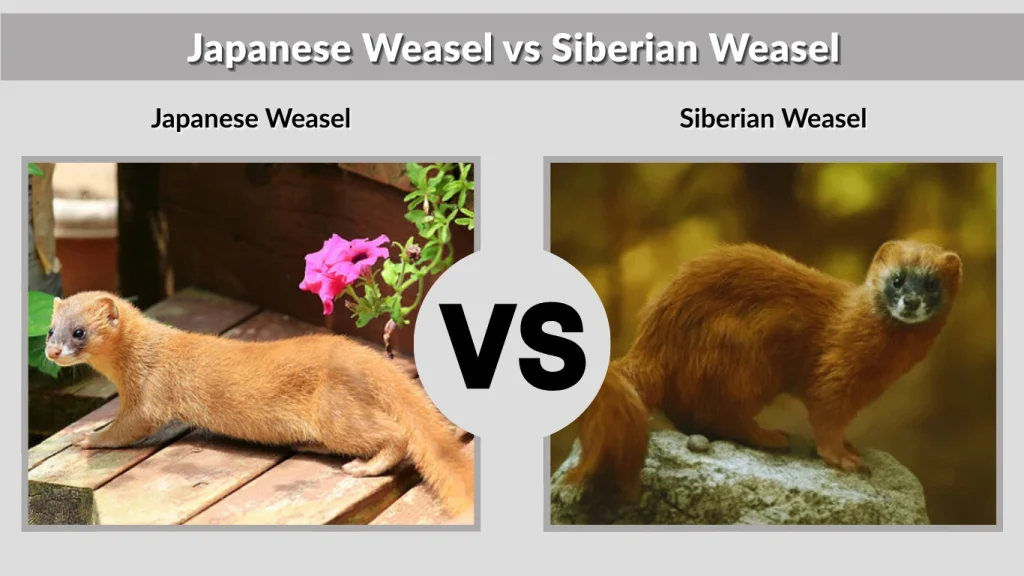
The Japanese weasel is often confused with the Siberian weasel (Mustela sibirica), especially in regions where both species are present. However, important differences exist between them.
Key Physical Differences
While both species have slender bodies and similar coloring, there are subtle distinctions:
- The Japanese weasel is typically smaller
- It has a shorter tail relative to body length
- Fur coloration may appear slightly lighter or more distinctly divided between back and belly
These differences can be difficult to notice without close observation, which contributes to frequent misidentification.
Habitat and Geographic Differences
The Japanese weasel is native to Japan’s main islands (Honshu, Shikoku, and Kyushu). In contrast, the Siberian weasel is native to mainland Asia and parts of Russia, China, and Korea.
The Siberian weasel was introduced to certain areas of Japan in the past. Since then, it has expanded its range, creating overlap between the two species.
Ecological Impact of Competition
In areas where both species coexist, competition for food and territory can occur. Some research suggests that the introduced Siberian weasel may outcompete the native Japanese weasel in certain regions.
This competition is a growing conservation concern, as it may affect population stability and local biodiversity. Monitoring these interactions is important for wildlife management efforts in Japan.
Predators and Threats
Although the Japanese weasel is a skilled predator, it is not at the top of the food chain. Several natural and human-related threats impact its survival.
Natural Predators
Predators of the Japanese weasel include:
- Birds of prey such as hawks and owls
- Larger carnivorous mammals
- Snakes (particularly a threat to juveniles)
Their small size makes them vulnerable, especially in open habitats.
Human-Related Threats
Human activities pose significant challenges, including:
- Habitat destruction from urban expansion
- Road mortality
- Agricultural chemicals that reduce prey populations
While adaptable, excessive habitat fragmentation can isolate populations and reduce genetic diversity.
Invasive Species and Competition
As mentioned earlier, the introduction of the Siberian weasel has added pressure on native populations. Competition for food and territory may gradually alter ecosystem balance in affected regions.
Conservation Status and Population Trends
The Japanese weasel is not currently considered globally endangered. However, regional population trends may vary depending on habitat quality and competition with invasive species.
Key conservation considerations include:
- Protecting natural habitats
- Monitoring competition with Siberian weasels
- Promoting biodiversity-friendly farming practices
Because the species plays an important role in rodent control, maintaining stable populations benefits both ecosystems and agriculture.
Interesting Facts About the Japanese Weasel
- They are excellent swimmers and can hunt near water.
- Their flexible spine allows rapid twists while chasing prey.
- They have a very fast metabolism and must eat frequently.
- Despite their small size, they are bold and aggressive hunters.
- They are one of Japan’s few native small carnivorous mammals.
FAQs
How big is a Japanese weasel?
Adult Japanese weasels typically measure 35–45 cm in body length, with tails around 12–17 cm long. Males are generally larger than females and may weigh up to 900 grams.
Are Japanese weasels dangerous to humans?
Japanese weasels are not dangerous to humans. They are shy and avoid confrontation. However, like most wild animals, they may bite if cornered or handled.
What is the difference between Japanese and Siberian weasels?
The Japanese weasel is smaller and has a shorter tail compared to the Siberian weasel. The Japanese species is native to Japan, while the Siberian weasel was introduced from mainland Asia.
Are Japanese weasels endangered?
They are not currently classified as endangered, but habitat loss and competition from introduced species may affect local populations.
Where do Japanese weasels live?
Japanese weasels live on Honshu, Shikoku, and Kyushu. They prefer forests, grasslands, riverbanks, and farmland areas with abundant prey.
Conclusion
The Japanese weasel (Mustela itatsi) is a small yet vital predator in Japan’s ecosystems. With its slender body, sharp hunting instincts, and adaptability, it thrives in forests, farmlands, and riverbanks across the country. Although often confused with the Siberian weasel, it remains a distinct native species with unique ecological importance. Continued habitat protection and careful management of invasive competitors will help ensure that this agile carnivore remains a stable part of Japan’s wildlife for generations to come.