




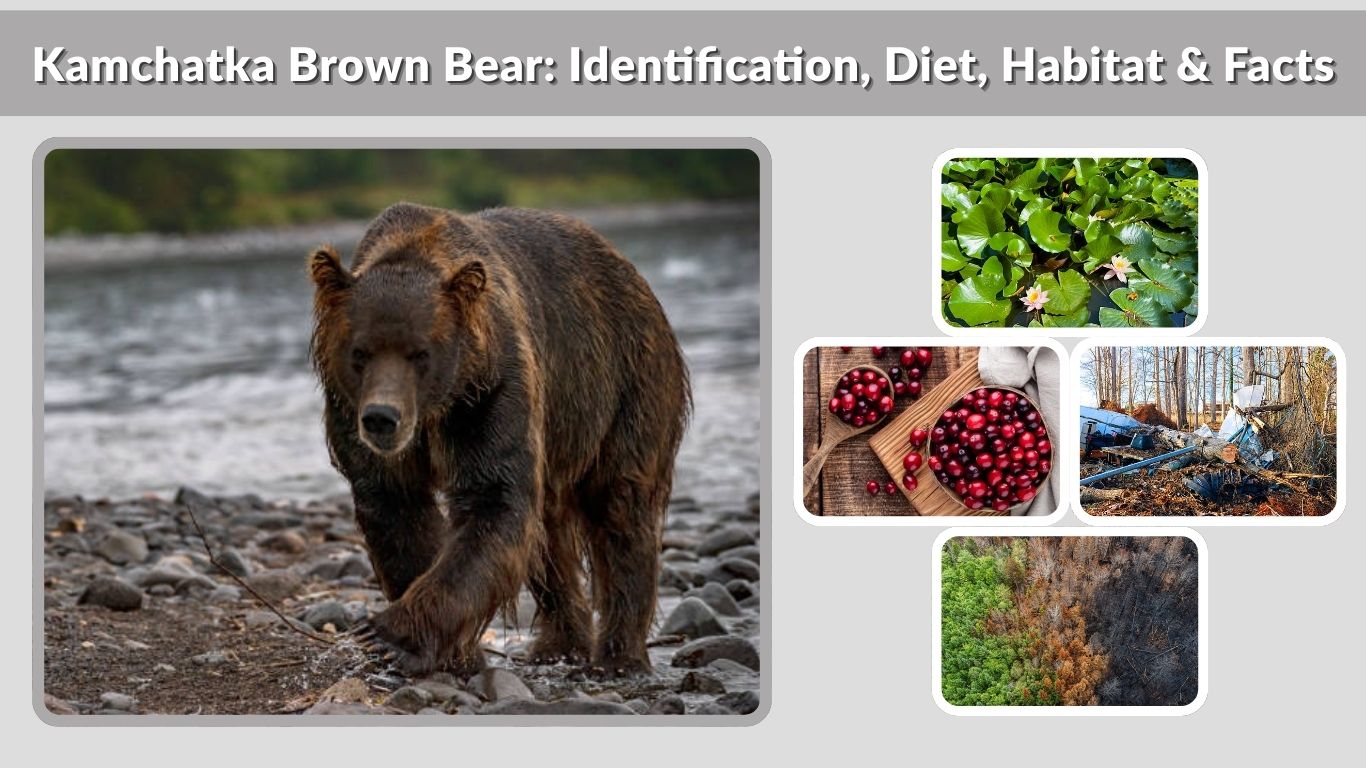
The Kamchatka brown bear is one of the largest and most powerful brown bear subspecies in the world. Native to Russia’s remote Kamchatka Peninsula, this massive predator thrives in a rugged landscape of volcanoes, forests, rivers, and salmon-rich lakes. Known for its enormous size, thick fur, and impressive fishing skills, the Kamchatka brown bear has become famous for gathering in large numbers around spawning salmon lakes. Understanding its identification, diet, habitat, and unique lake behaviors helps reveal why this bear is considered one of nature’s most remarkable giants.
What Is the Kamchatka Brown Bear?
The Kamchatka brown bear (Ursus arctos beringianus) is a subspecies of the brown bear found primarily on the Kamchatka Peninsula in the Russian Far East. It belongs to the same species as the grizzly bear and the Kodiak bear, though it differs slightly in size, distribution, and skull structure.
Scientific Classification and Background
Scientifically classified as Ursus arctos beringianus, the Kamchatka brown bear is closely related to the Kodiak bear of Alaska. Some researchers believe the two share common ancestry due to geographic proximity across the Bering region. However, the Kamchatka subspecies evolved in relative isolation, adapting to the peninsula’s volcanic terrain and abundant salmon rivers.
Kamchatka’s low human population density and extensive wilderness have allowed these bears to thrive in large numbers compared to many other bear populations worldwide.
Size and Physical Strength
The Kamchatka brown bear is among the largest brown bears on Earth. Adult males typically weigh between 600 and 1,400 pounds (270–635 kg), though exceptionally large individuals may exceed this range. Females are smaller, generally weighing between 300 and 650 pounds (135–295 kg).
When standing on their hind legs, these bears can reach heights of up to 8–10 feet (2.4–3 meters). Their massive shoulder hump, composed of powerful muscles, allows them to dig, run, and overpower prey. Combined with strong jaws and thick limbs, their physical strength makes them dominant predators within their habitat.
Kamchatka Brown Bear Identification
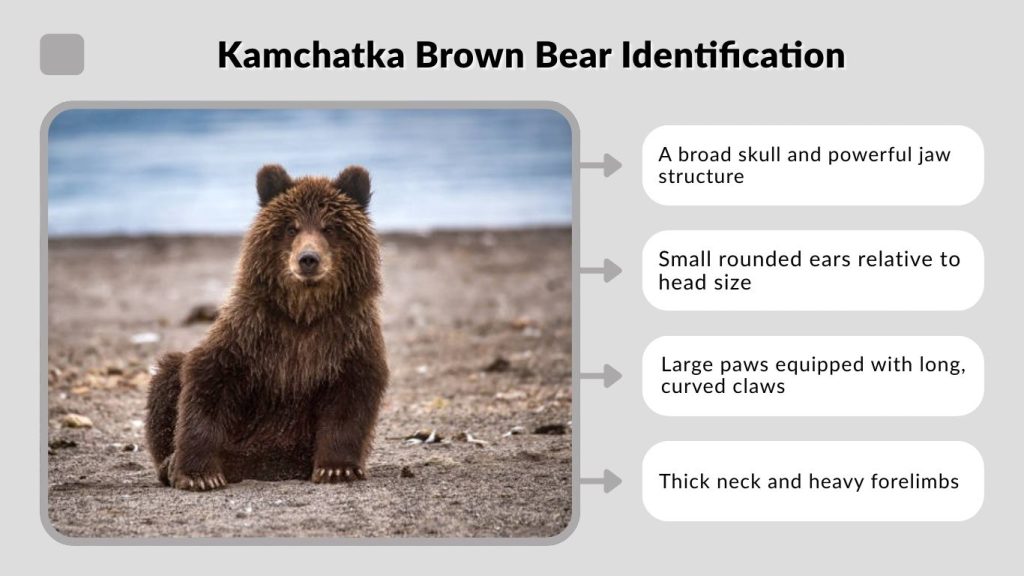
Correct Kamchatka brown bear identification requires observing several distinctive physical features and comparing them to other brown bear subspecies.
Key Physical Characteristics
One of the most noticeable features of the Kamchatka brown bear is its large, muscular build. The pronounced shoulder hump is a defining trait of brown bears in general, but in this subspecies it appears particularly well developed due to their immense size.
Their fur is thick and dense, providing insulation against harsh winters. Coat color ranges from dark brown to lighter brown shades, sometimes with golden highlights on the tips. Cubs are often darker than adults.
Other identifying features include:
- A broad skull and powerful jaw structure
- Small rounded ears relative to head size
- Large paws equipped with long, curved claws
- Thick neck and heavy forelimbs
Their tracks are also massive. Front paw prints can measure over 12 inches across, making them noticeably larger than many other Eurasian brown bears.
Differences From Other Brown Bears
Although similar to Kodiak bears, Kamchatka brown bears are generally slightly leaner but equally massive. Compared to Eurasian brown bears found in Europe and central Asia, Kamchatka bears are significantly larger and more robust.
The skull of the Kamchatka brown bear tends to be broader, with strong jaw muscles suited for crushing bones and processing tough food sources. Their larger size is largely attributed to the rich food supply available in the Kamchatka Peninsula, especially salmon.
Kamchatka Brown Bears Habitat
The Kamchatka brown bears habitat is one of the wildest and most pristine environments in the Northern Hemisphere. The Kamchatka Peninsula stretches between the Pacific Ocean and the Sea of Okhotsk, featuring volcanoes, tundra, dense forests, wetlands, and glacier-fed rivers.
Geographic Range
These bears are found throughout the Kamchatka Peninsula and nearby coastal areas. The region supports one of the densest brown bear populations in Eurasia, with thousands of individuals spread across protected and remote lands.
Important protected areas include:
- Kronotsky Nature Reserve
- South Kamchatka Wildlife Sanctuary
- Kuril Lake region
These reserves help preserve both the bears and their salmon-rich ecosystems.
Preferred Natural Environment
Kamchatka brown bears thrive in diverse habitats. During warmer months, they are often found near rivers, streams, and lakes where salmon spawn in large numbers. River valleys and coastal wetlands provide ideal feeding grounds.
Inland forests and alpine tundra areas offer additional plant food sources such as berries, grasses, and roots. During winter, bears retreat to dens dug into hillsides, forested slopes, or volcanic terrain. These dens protect them from extreme cold and heavy snowfall while they enter hibernation.
Their habitat diversity plays a major role in their survival, allowing them to access food year-round and store enough fat to sustain long winter months.
Kamchatka Brown Bears Diet
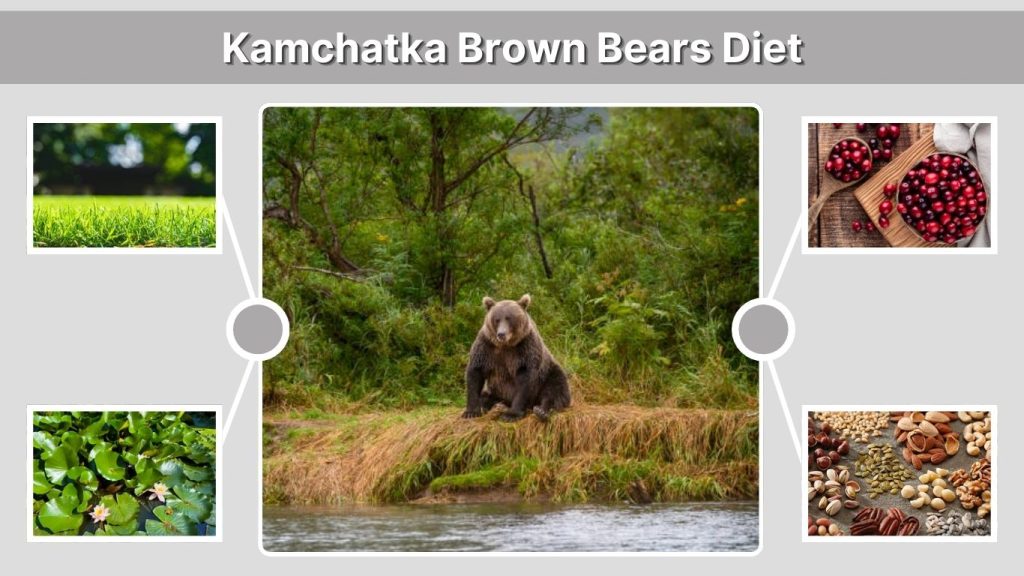
The Kamchatka brown bears diet is one of the main reasons these animals grow so large. Their environment provides an exceptionally rich food supply, especially during salmon spawning season. Like all brown bears, they are omnivores, meaning they eat both plant and animal matter. However, in Kamchatka, salmon plays a central role in their nutrition.
Primary Food Sources
Pacific salmon is the most important food source for Kamchatka brown bears. During summer and early autumn, millions of salmon migrate up rivers and into lakes to spawn. This seasonal abundance provides bears with high-protein, high-fat meals that allow them to gain massive weight before winter hibernation.
In addition to salmon, their diet includes:
- Berries such as blueberries and crowberries
- Nuts and seeds
- Roots and grasses
- Aquatic plants
During spring, when salmon are not yet available, bears rely more heavily on vegetation and leftover carcasses from the previous year.
Hunting and Feeding Behavior
Kamchatka brown bears are highly skilled fishers. They position themselves along riverbanks, waterfalls, and shallow lake areas where salmon gather. Using quick swipes of their powerful paws or precise bites, they capture fish with remarkable efficiency.
Interestingly, when salmon are abundant, bears often eat only the fattiest parts of the fish, such as the skin and brain, leaving the rest behind. This selective feeding helps them maximize calorie intake with minimal effort.
Although fish dominate their diet in peak season, they may occasionally prey on small mammals or scavenge carrion. However, large prey hunting is relatively rare compared to North American grizzlies because salmon provides such an energy-rich food source.
Seasonal Diet Changes
Their diet shifts significantly throughout the year:
- Spring: Mostly vegetation, emerging grasses, and carrion
- Summer: Berries and early salmon runs
- Late Summer to Autumn: Heavy salmon consumption
- Pre-winter: Intense feeding to build fat reserves
By autumn, a large male can gain several hundred pounds, ensuring enough stored fat to survive months of hibernation without eating.
Kamchatka Lake Bears Facts
One of the most fascinating wildlife spectacles in Russia is the gathering of Kamchatka lake bears around salmon-rich lakes. These gatherings attract wildlife photographers and researchers from around the world.
Why Bears Gather at Kamchatka Lakes
The main reason bears gather in large numbers is the salmon spawning season. Lakes such as Kuril Lake receive millions of salmon annually, creating a concentrated food supply. When food is abundant, bears tolerate each other’s presence more than usual, reducing aggressive territorial behavior.
This temporary social tolerance allows dozens of bears to fish within close proximity, something rarely seen in other regions.
Famous Bear Locations
Two of the most well-known locations for observing Kamchatka brown bears are:
- Kuril Lake – One of the largest salmon spawning sites in Eurasia
- Kronotsky Lake – Located within a protected reserve
These areas are carefully regulated to balance wildlife tourism with conservation. Strict rules limit human disturbance to protect the bears and their habitat.
Unique Behavioral Facts
Several remarkable behaviors are observed at Kamchatka lakes:
- Mother bears teaching cubs how to fish
- Large males dominating prime fishing spots
- Young bears waiting patiently for opportunities
- High bear density rarely seen elsewhere in Eurasia
Some areas may host dozens of bears within a relatively small radius during peak season, making Kamchatka one of the most extraordinary bear-watching destinations in the world.
Reproduction and Life Cycle
The mating season for the Kamchatka brown bear occurs in late spring to early summer. After mating, females experience delayed implantation, meaning the fertilized egg does not immediately develop. This ensures cubs are born during winter hibernation when the mother is safely in her den.
Cubs are typically born between January and March. A litter usually consists of one to three cubs. They are small, blind, and completely dependent on their mother.
Cubs remain with their mother for about two to three years, learning essential survival skills such as fishing, foraging, and avoiding danger. In the wild, Kamchatka brown bears can live 20–30 years, depending on environmental conditions and human impact.
Conservation Status and Threats
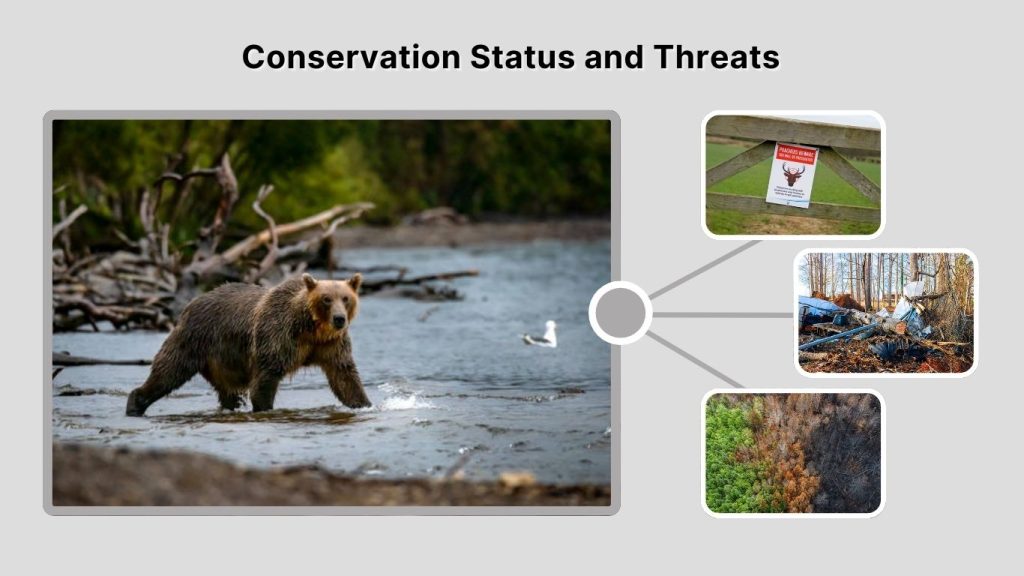
The Kamchatka Peninsula supports one of the healthiest brown bear populations in Eurasia, with estimates suggesting thousands of individuals inhabit the region. Large protected reserves play a major role in maintaining stable numbers.
However, threats still exist. Illegal poaching, habitat disturbance, and climate change can impact salmon populations and, in turn, bear survival. Fortunately, strict conservation laws and regulated ecotourism help minimize these risks.
Maintaining healthy salmon ecosystems is critical to the long-term survival of the Kamchatka brown bear.
FAQs
How big is a Kamchatka brown bear?
A male Kamchatka brown bear can weigh between 600 and 1,400 pounds and stand up to 10 feet tall on its hind legs. Females are smaller but still extremely large compared to many other brown bear populations.
What do Kamchatka brown bears eat?
Their diet mainly consists of Pacific salmon during spawning season. They also eat berries, grasses, roots, and occasionally small mammals. Seasonal food availability strongly influences their feeding habits.
Where do Kamchatka brown bears live?
They live primarily on Russia’s Kamchatka Peninsula, inhabiting forests, tundra, wetlands, river valleys, and salmon-rich lakes within protected reserves and remote wilderness areas.
Why are Kamchatka lake bears so famous?
They are famous because large numbers gather at salmon-spawning lakes like Kuril Lake. This creates rare wildlife viewing opportunities where dozens of massive bears can be seen fishing together.
Conclusion
The Kamchatka brown bear is one of the most impressive bear subspecies in the world. Its massive size, powerful build, and salmon-based diet allow it to thrive in the rugged landscapes of the Kamchatka Peninsula. From identifying its physical traits to understanding its habitat and unique lake gatherings, this remarkable animal represents one of Eurasia’s greatest wildlife treasures. Protecting its ecosystem ensures that future generations can continue to witness the extraordinary sight of Kamchatka lake bears in the wild.