




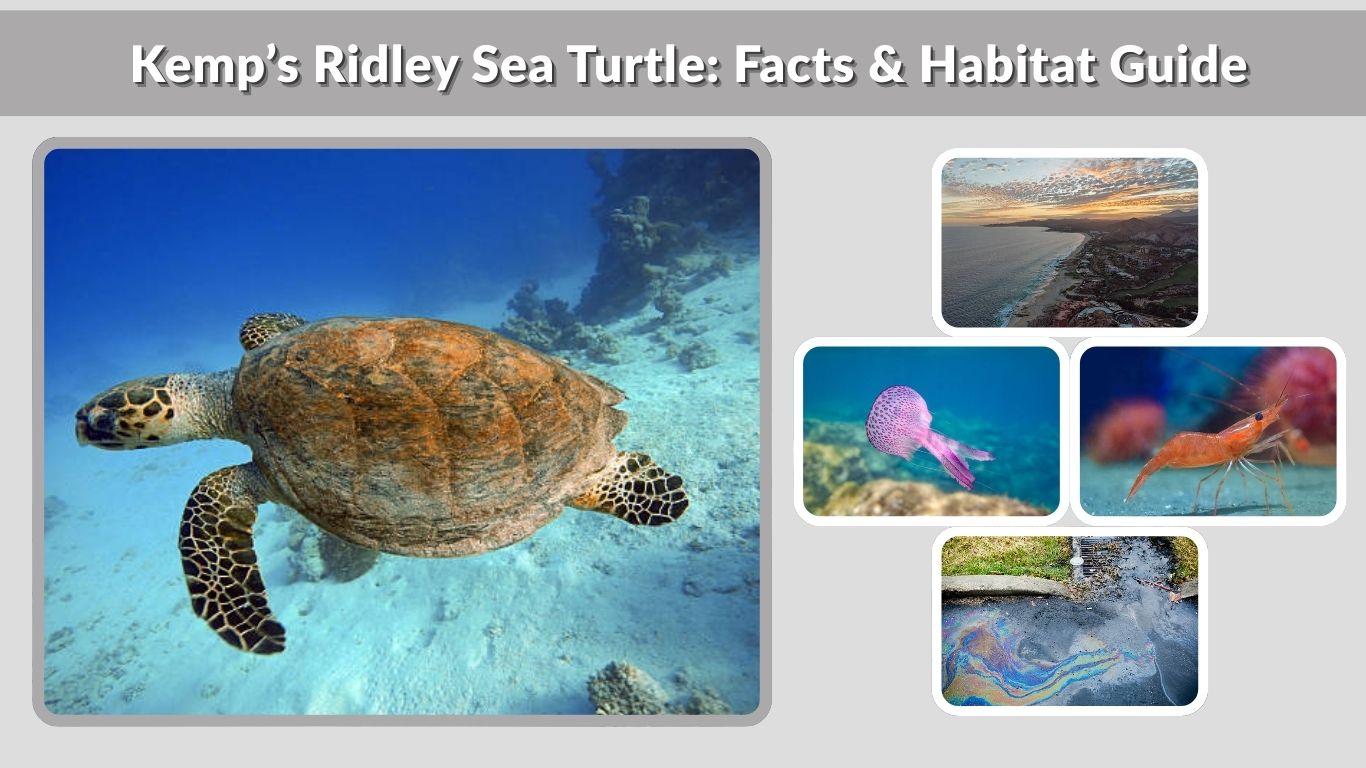
The Kemp’s ridley sea turtle is the smallest and most endangered sea turtle species in the world. Known for its olive-gray shell and unique mass nesting behavior, this rare marine reptile lives primarily in the Gulf of Mexico. Over the years, conservation efforts have helped its population slowly recover, but it remains at risk. In this guide, you’ll learn essential Kemp ridley sea turtle facts, where they live, their habitat preferences, and what makes this species so unique.
What Is the Kemp’s Ridley Sea Turtle?
The Kemp’s ridley sea turtle (Lepidochelys kempii) is a small, coastal sea turtle species named after Richard Kemp, who helped identify the turtle in the early 1900s. It is closely related to the olive ridley sea turtle but has a more limited range and smaller population.
Unlike larger sea turtles such as the green or leatherback, the Kemp’s ridley is compact and round in shape. Its shell, or carapace, is almost circular and typically olive-gray in color. The underside is lighter, usually pale yellow or cream.
This species is classified as critically endangered, largely due to past egg harvesting, accidental capture in fishing gear, habitat destruction, and environmental disasters such as oil spills. Thanks to international conservation programs, nesting numbers have improved compared to historic lows, but the species still requires strong protection.
Kemp Ridley Sea Turtle Facts
Here are some important Kemp ridley sea turtle facts that highlight what makes this species special:
- It is the smallest sea turtle species.
- Adults grow to about 2 feet (60 cm) in length.
- They typically weigh between 70 and 100 pounds.
- Their shell is nearly round and olive-colored.
- They are known for unique mass nesting events called arribadas.
- Most of the population nests in a very small geographic area.
Their strong front flippers allow them to swim efficiently in coastal waters. Although they are capable of long-distance travel, they generally remain within the Gulf of Mexico and nearby Atlantic coastal areas.
Quick Facts Snapshot
- Scientific Name: Lepidochelys kempii
- Average Length: About 2 feet
- Weight: 70–100 pounds
- Primary Diet: Crabs
- Habitat Range: Gulf of Mexico
- Conservation Status: Critically endangered
These quick facts show just how unique and geographically restricted this sea turtle species is.
Where Do Kemp’s Ridley Sea Turtles Live?
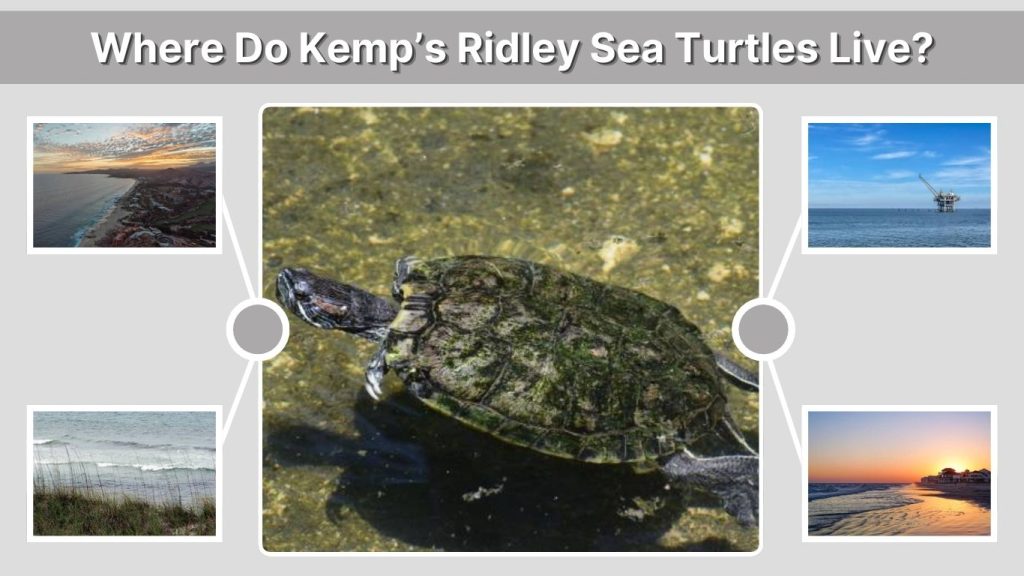
If you’re wondering, where do Kemp’s ridley sea turtles live? The answer is primarily the Gulf of Mexico.
This species has one of the smallest geographic ranges of all sea turtles. The majority of the population lives in the coastal waters of:
- The Gulf of Mexico
- Texas coastal waters
- Northeastern Mexico
- Parts of western Florida
Juveniles may drift into the Atlantic Ocean and are sometimes seen along the eastern United States coastline, even as far north as New England. However, the Gulf of Mexico remains their core habitat.
Kemp’s ridley sea turtles prefer shallow, nearshore waters rather than the open ocean. These coastal environments provide abundant food sources and suitable temperatures.
Main Nesting Locations
One of the most remarkable aspects of this species is its highly concentrated nesting area. The primary nesting beach is:
- Rancho Nuevo, Mexico
This stretch of beach supports the majority of the world’s Kemp’s ridley nests. Smaller nesting populations are also found along:
- The Texas Gulf Coast
- Other limited beaches in northeastern Mexico
Because nesting occurs in such a restricted area, the species is especially vulnerable to storms, human disturbance, and environmental changes.
Kemp’s Ridley Sea Turtle Habitat
The Kemp’s ridley sea turtle habitat consists mainly of shallow coastal waters, including bays, lagoons, and estuaries. These areas provide ideal feeding grounds and protection from strong ocean currents.
They prefer:
- Warm waters
- Sandy or muddy ocean bottoms
- Coastal regions rich in crabs and shellfish
Unlike some sea turtles that travel across entire oceans, Kemp’s ridleys tend to remain close to shore. Their habitat is closely linked to food availability and nesting beach access.
Hatchling Habitat
After emerging from their nests, hatchlings make their way to the ocean, usually at night to avoid predators. Once in the water, young turtles may drift offshore in ocean currents. This early life stage is sometimes referred to as the “lost years” because scientists historically knew little about their movements.
During this time, hatchlings rely on floating seaweed mats and ocean currents for shelter and food.
Adult Habitat
As they mature, Kemp’s ridley sea turtles move into nearshore coastal habitats. Adults are commonly found in:
- Shallow Gulf waters
- Coastal feeding areas
- Estuaries and bays
These habitats offer abundant prey and relatively warm temperatures year-round.
Diet and Feeding Behavior
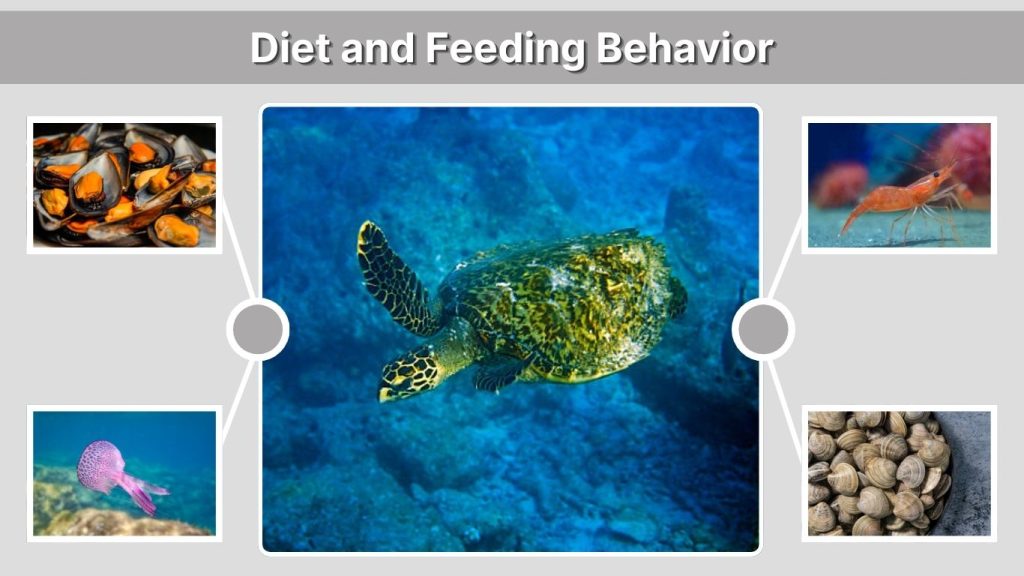
The Kemp’s ridley sea turtle diet is specialized compared to some other sea turtles. These turtles are primarily carnivorous, and their favorite food is crabs. In fact, blue crabs make up a large portion of their diet in the Gulf of Mexico.
In addition to crabs, they may also eat:
- Shrimp
- Mollusks
- Clams
- Mussels
- Small fish
- Jellyfish
Their strong, crushing jaws are perfectly adapted for breaking open hard shells. Kemp’s ridleys usually forage along the ocean floor in shallow coastal waters, searching for prey among sandy or muddy bottoms.
Because they feed in nearshore environments, they are especially vulnerable to accidental capture in shrimp trawling nets and other fishing gear. Conservation efforts have focused heavily on reducing this threat.
Life Cycle and Reproduction
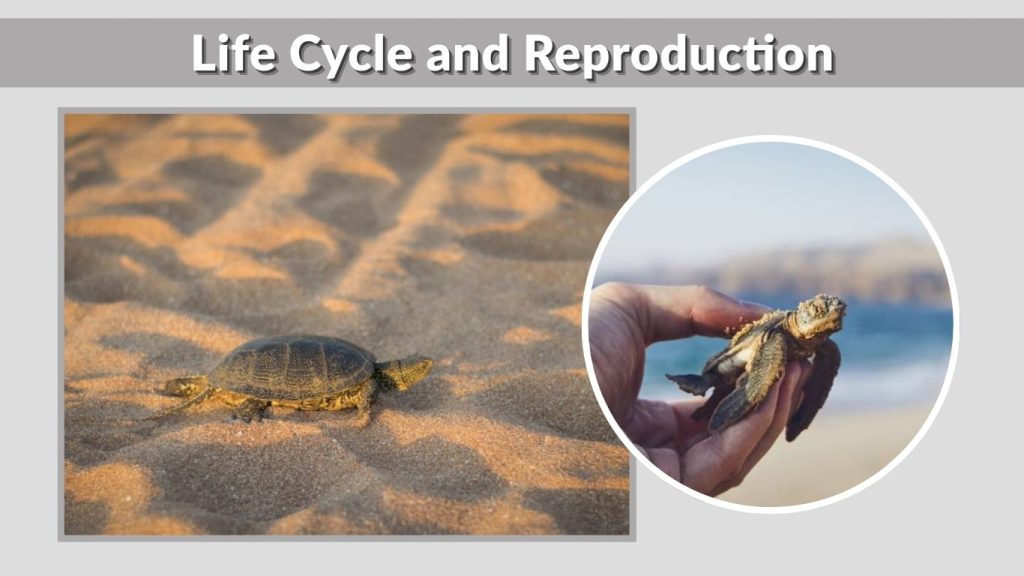
The life cycle of the Kemp’s ridley sea turtle begins with one of the most fascinating nesting behaviors in the animal kingdom: the arribada.
Arribada Nesting Behavior
Unlike most sea turtles that nest individually at night, Kemp’s ridleys often nest during the day in large synchronized groups called arribadas. During an arribada, hundreds or even thousands of females may come ashore at the same time to lay eggs.
This rare mass nesting event occurs primarily at Rancho Nuevo, Mexico, and usually takes place between April and July.
Egg Laying and Incubation
After selecting a nesting spot above the high-tide line, the female digs a deep hole using her rear flippers. She lays a clutch of about 80 to 100 eggs, covers the nest with sand, and returns to the ocean.
The eggs incubate for approximately 45 to 60 days, depending on sand temperature. Like other sea turtles, the temperature of the nest influences the sex of the hatchlings. Warmer sand typically produces more females, while cooler sand results in more males.
When the hatchlings emerge, usually at night, they instinctively head toward the ocean. Artificial lighting from buildings can sometimes confuse them, leading them away from the water and increasing mortality risk.
Growth and Maturity
Young turtles spend their early years developing in ocean waters before moving into coastal habitats. Kemp’s ridleys grow relatively quickly compared to some sea turtle species but still require many years to reach sexual maturity.
They typically become capable of reproducing at around 10 to 15 years of age. Once mature, females return to the same nesting beaches where they were born, continuing the life cycle.
Threats and Conservation Efforts
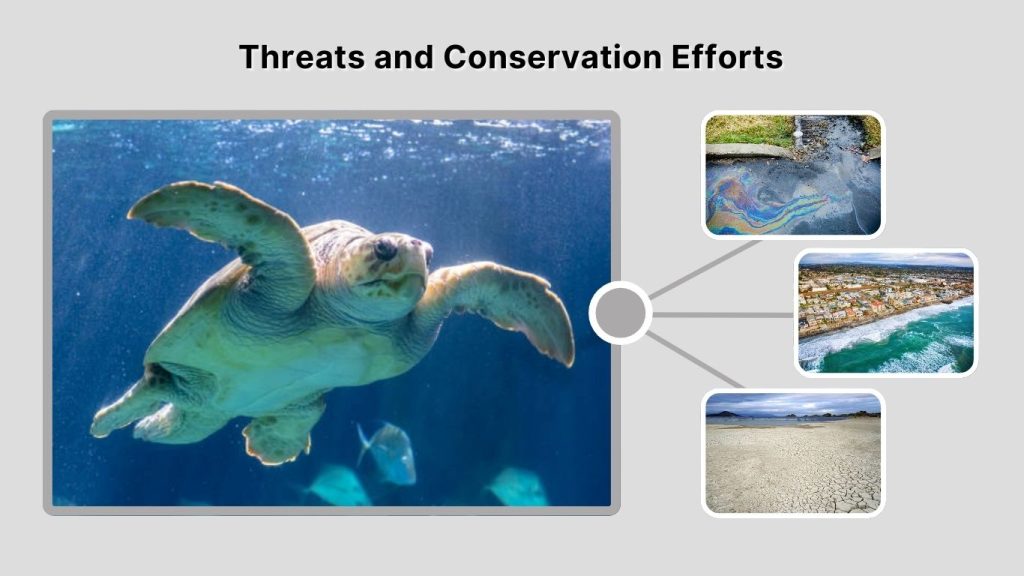
The Kemp’s ridley sea turtle was once pushed close to extinction. In the mid-20th century, massive egg harvesting and habitat destruction severely reduced nesting numbers.
Today, several threats still affect the species:
- Accidental capture (bycatch) in fishing nets
- Oil spills and marine pollution
- Coastal development
- Climate change
- Artificial lighting near nesting beaches
One major conservation breakthrough has been the use of Turtle Excluder Devices (TEDs) in shrimp trawling nets. These devices allow captured turtles to escape while keeping the shrimp catch intact.
Conservation programs in Mexico and the United States have also focused on:
- Protecting nesting beaches
- Relocating vulnerable nests
- Monitoring hatchling success
- Public education efforts
These combined efforts have helped increase nesting numbers compared to historic lows, though the species remains endangered and requires continued protection.
Why Kemp’s Ridley Sea Turtles Are Important
Kemp’s ridley sea turtles play a valuable role in maintaining healthy marine ecosystems. By feeding heavily on crabs, they help regulate crustacean populations, which can influence the balance of seafloor habitats.
They also serve as an indicator species, meaning their health reflects the overall condition of coastal marine environments. A decline in Kemp’s ridleys can signal broader ecological problems such as pollution or overfishing.
Additionally, their recovery story represents an important example of international cooperation in wildlife conservation. Joint efforts between Mexico and the United States demonstrate how coordinated action can help protect endangered species.
Conclusion
The Kemp’s ridley sea turtle is a remarkable and rare marine species found mainly in the Gulf of Mexico. As the smallest sea turtle, it is known for its olive-colored shell, crab-based diet, and unique arribada nesting behavior. Although once nearly extinct, conservation programs have helped stabilize parts of its population. Still, habitat threats and human activity continue to pose risks. Understanding where Kemp’s ridley sea turtles live, their habitat needs, and their life cycle is essential to ensuring their survival for generations to come.