

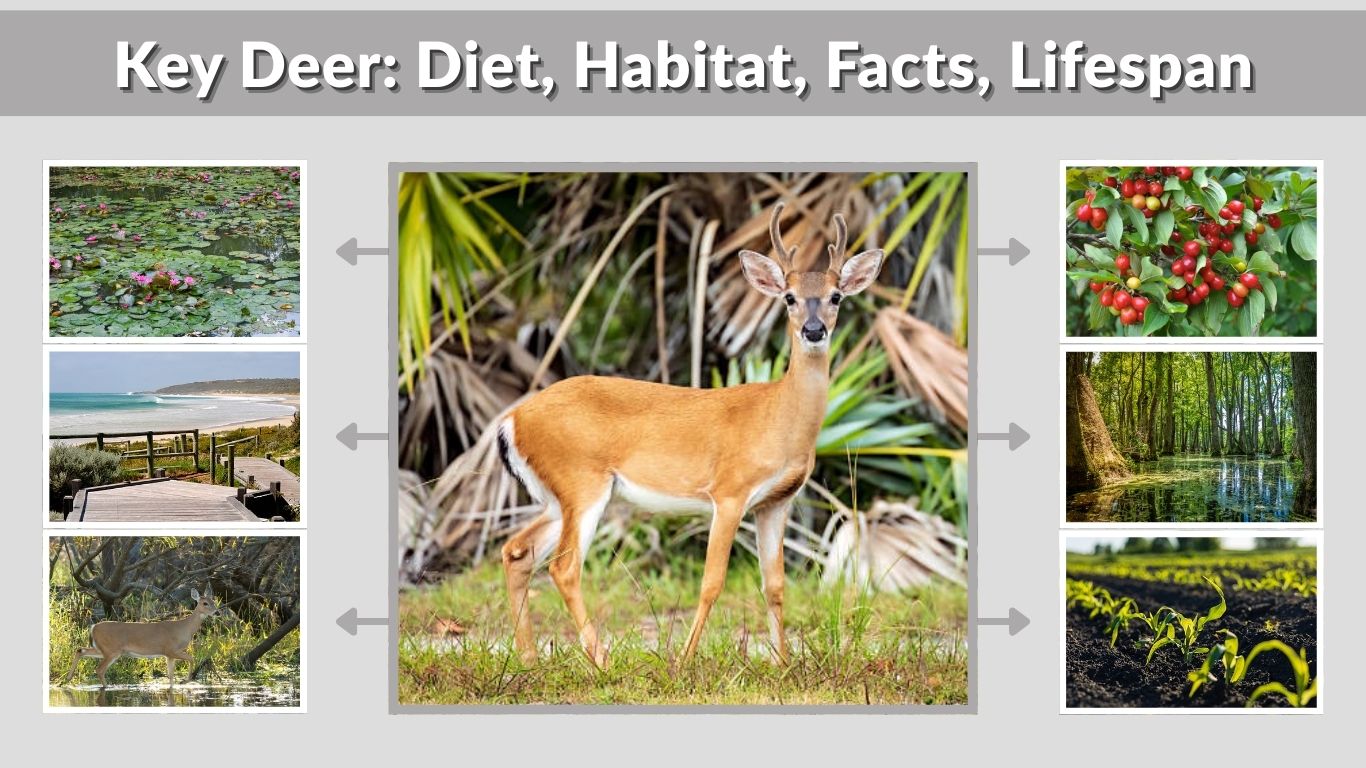
The Key deer is a unique and endangered subspecies of white-tailed deer found only in the Florida Keys in the United States. Known for its small size and gentle nature, the Key deer has become an important symbol of wildlife conservation in the region. These deer live in island habitats that include forests, wetlands, and mangrove areas. From their feeding habits and habitat to their lifespan and interesting behaviors, the Key deer is a fascinating species that plays an important role in its local ecosystem.
What Is a Key Deer?
The Key deer (Odocoileus virginianus clavium) is the smallest subspecies of the white-tailed deer. It is native to the Florida Keys, a chain of islands located off the southern coast of Florida in the United States.
Key deer are closely related to the common white-tailed deer found across North America, but they are much smaller in size due to their adaptation to island environments. This process, known as island dwarfism, occurs when animals evolve smaller bodies because of limited food and habitat resources.
Adult male Key deer typically weigh 25 to 35 kilograms (55–75 pounds), while females usually weigh 20 to 30 kilograms (45–65 pounds). They stand about 60 to 80 centimeters (24–31 inches) tall at the shoulder.
Male Key deer grow small antlers, which they shed and regrow each year. These antlers are used during mating season when males compete for access to females.
Their coat is usually brown to reddish-brown, which helps them blend into their natural environment. Like other white-tailed deer, Key deer have a white underside on their tail, which becomes visible when the tail is raised as a warning signal.
Identification of Key Deer
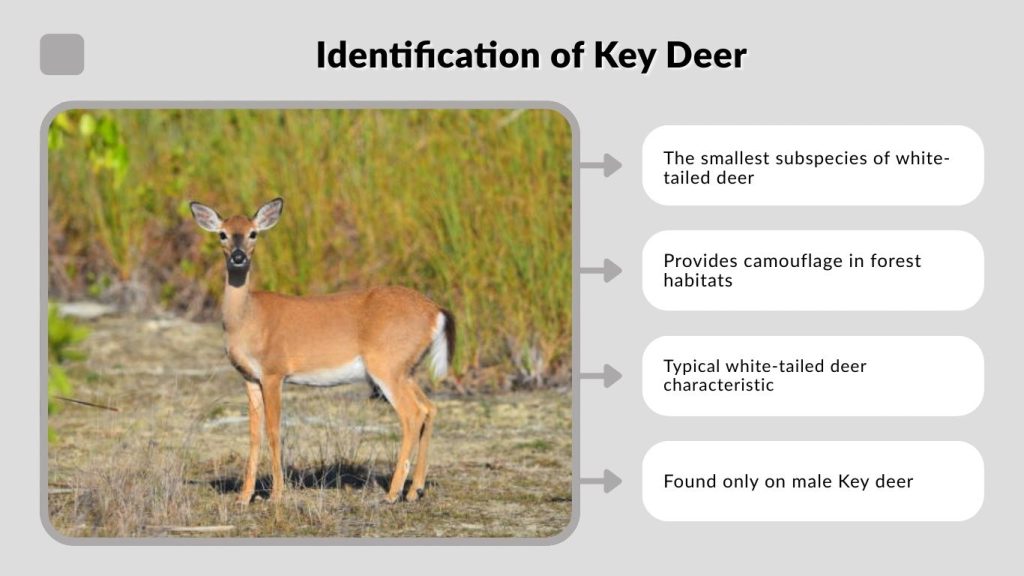
The Key deer can be easily identified by its small body size and physical resemblance to the white-tailed deer. However, its compact body and shorter legs make it distinct from larger deer species.
Because they live in the Florida Keys, Key deer are usually the only deer species found in that region, making identification easier for wildlife observers.
Key Identification Features
- Small body size: The smallest subspecies of white-tailed deer
- Brown or reddish coat: Provides camouflage in forest habitats
- White tail underside: Typical white-tailed deer characteristic
- Small antlers: Found only on male Key deer
- Short legs and compact body: Adapted for island environments
- Large ears: Help detect predators and environmental sounds
These physical traits help researchers and wildlife enthusiasts recognize Key deer in their natural habitats.
Key Deer Habitat
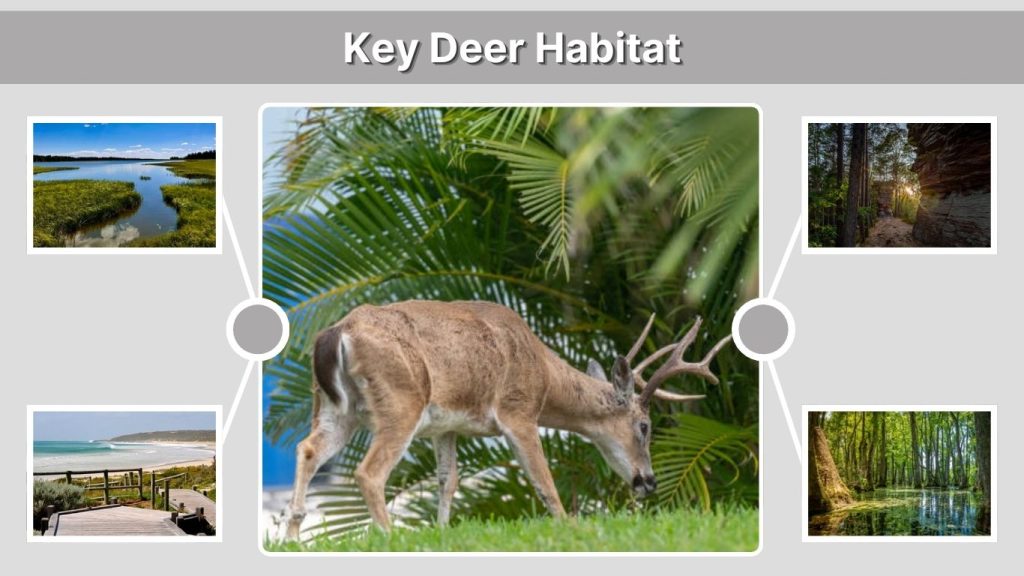
Key deer live in a very limited geographic area compared to most other deer species. Their natural habitat is restricted to several islands in the Florida Keys, particularly on Big Pine Key, where the National Key Deer Refuge protects much of their population.
Native Range
The Key deer is found only in a small region of the United States, mainly in:
- Big Pine Key
- No Name Key
- Lower Florida Keys islands
Because of this limited distribution, the species is considered highly vulnerable to environmental changes.
Preferred Environment
Key deer inhabit a variety of ecosystems within the Florida Keys, including:
- Pine rockland forests
- Mangrove swamps
- Tropical hardwood hammocks
- Freshwater wetlands
- Coastal shrub areas
These habitats provide the deer with food, shelter, and freshwater sources that are essential for survival.
Freshwater is particularly important for Key deer because the island environment contains limited natural water sources.
Key Deer Diet
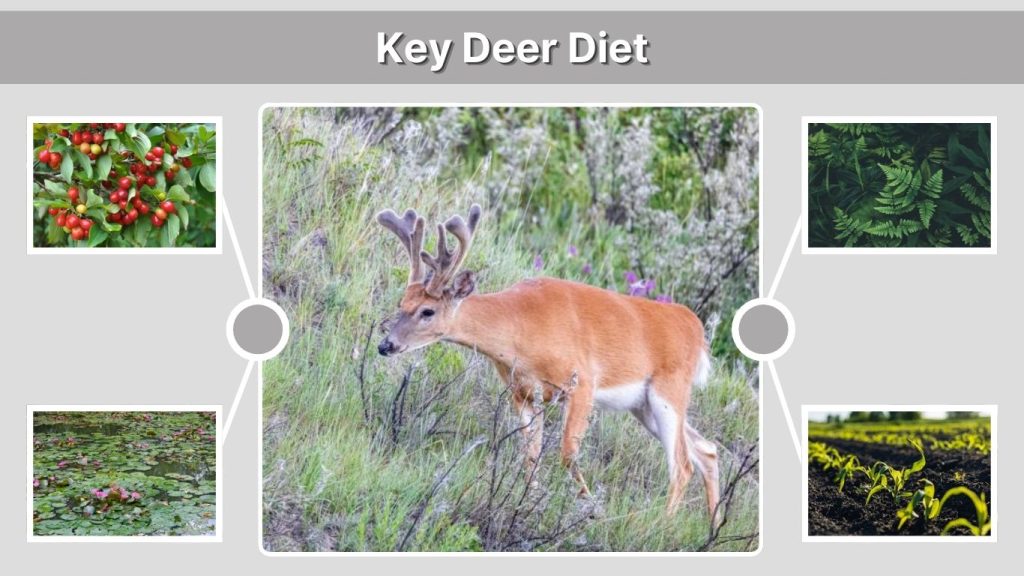
The Key deer is a herbivore, meaning it feeds entirely on plant materials. Because they live in a small island ecosystem, their diet includes many types of vegetation found in the Florida Keys.
What Do Key Deer Eat?
Key deer eat a wide variety of plants depending on seasonal availability. Their diet commonly includes:
- Leaves from shrubs and trees
- Grasses and young shoots
- Fruits and berries
- Mangrove leaves
- Aquatic plants near wetlands
In areas close to human settlements, Key deer may also eat garden plants and ornamental vegetation.
Feeding Behavior
Key deer are usually crepuscular, meaning they are most active during early morning and late evening. During these times, they leave forest cover to search for food.
Their feeding patterns may change throughout the year:
- Spring and summer: Fresh grasses and leaves are the main food sources.
- Autumn: Fruits, seeds, and shrubs become important parts of their diet.
- Winter: They rely more on woody plants and available vegetation.
Because of their adaptable feeding habits, Key deer are able to survive within the limited resources of their island habitat.
Baby Key Deer
Baby Key deer are called fawns, just like the young of other deer species. These small fawns are born with natural camouflage that helps protect them from predators during their early life.
Appearance of Baby Key Deer
Newborn Key deer fawns usually weigh around 2–3 kilograms (4–7 pounds) at birth. Their coats are typically reddish-brown with white spots, which help them blend into grasses and forest vegetation.
These spots serve as camouflage, making it difficult for predators to spot them. As the fawn grows older, the spots gradually fade and the coat becomes a solid brown color similar to adult Key deer.
Early Life and Development
Female Key deer generally give birth to one fawn at a time, though twins can occasionally occur. After birth, the mother hides the fawn in thick vegetation while she searches for food.
During the first few weeks:
- The fawn remains hidden most of the time
- The mother returns regularly to nurse it
- The young deer slowly gains strength and mobility
Within a few months, the fawn begins following its mother and learning how to graze on vegetation. Most young Key deer become independent within several months.
Key Deer Lifespan
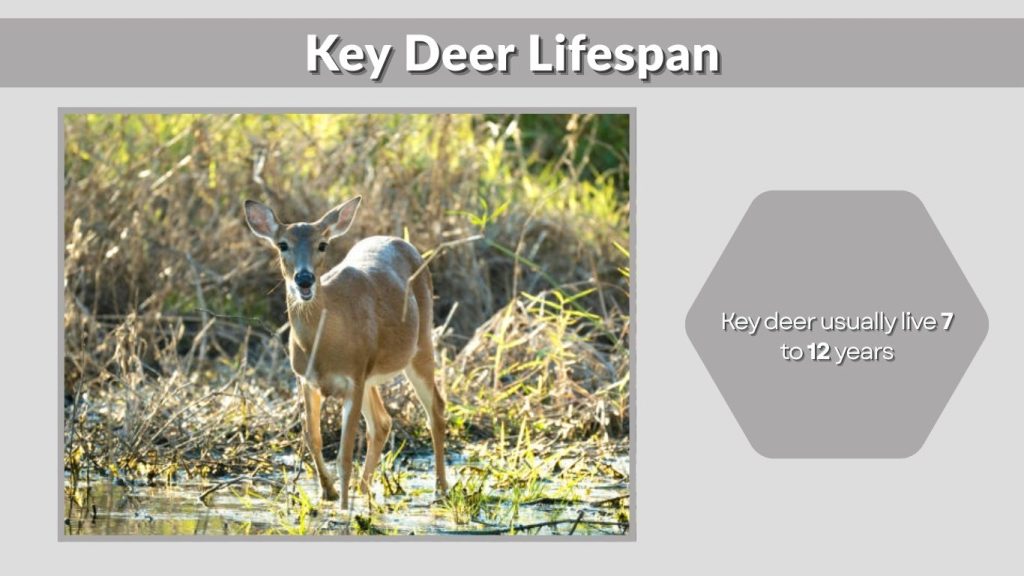
The lifespan of a Key deer depends on environmental conditions and human-related threats. In the wild, Key deer usually live 7 to 12 years, although some individuals may live longer under favorable conditions.
In protected areas such as wildlife refuges, they may survive slightly longer because of reduced threats and conservation management.
Threats to Survival
Several factors can affect the lifespan of Key deer.
Vehicle Collisions
Because Key deer live near roads in the Florida Keys, vehicle collisions are one of the leading causes of death.
Habitat Loss
Development and human expansion in the Florida Keys can reduce the available habitat for these deer.
Disease and Environmental Changes
Diseases, parasites, and hurricanes can also affect Key deer populations.
Key Deer Behavior
Key deer display several behaviors that help them adapt to island environments.
Social Structure
Key deer are generally solitary animals or may live in small groups consisting of a female and her young. Males tend to live alone except during the breeding season.
Movement Patterns
Because the Florida Keys consist of multiple islands, Key deer sometimes swim between islands in search of food and freshwater. They are surprisingly strong swimmers.
Daily Activity
Key deer are most active during dawn and dusk, when temperatures are cooler and human activity is lower. During the daytime, they often rest in shaded vegetation.
Key Deer Hunting
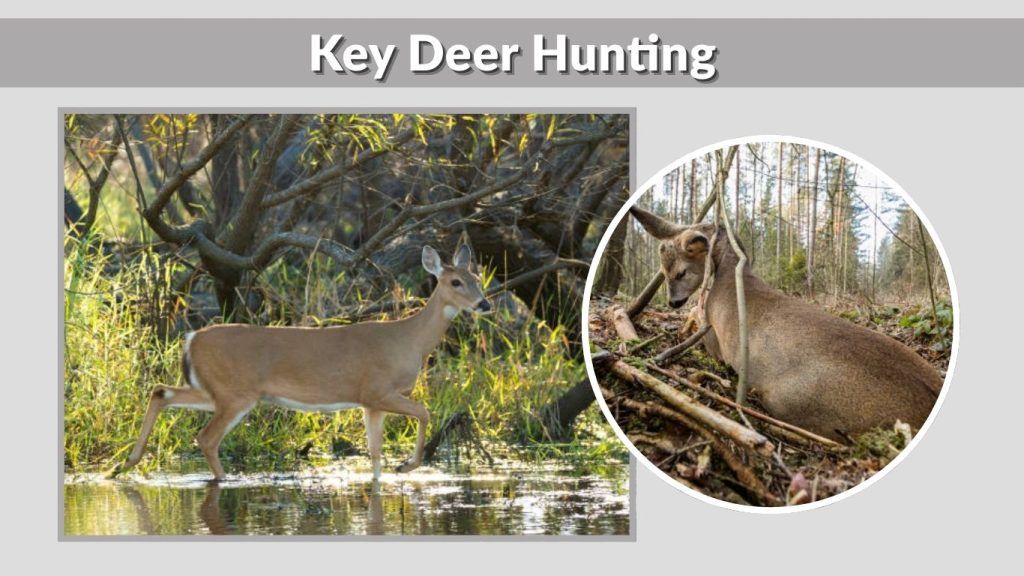
Historically, Key deer were hunted in the Florida Keys during the early 20th century. However, excessive hunting and habitat loss caused the population to decline dramatically.
Today, hunting Key deer is illegal because the species is protected under United States wildlife laws.
Legal Protection
Key deer are protected by several conservation measures, including:
- The Endangered Species Act
- Protection within the National Key Deer Refuge
- Local wildlife conservation regulations
These protections help ensure the survival of the species.
Interesting Key Deer Facts
Key deer have several fascinating characteristics that make them unique among deer species.
- They are the smallest subspecies of white-tailed deer in North America.
- Key deer are found only in the Florida Keys.
- They are excellent swimmers and can move between islands.
- The species became endangered due to habitat loss and hunting.
- Conservation efforts have helped their population slowly recover.
Conservation Status
The Key deer is classified as an endangered species, meaning it faces a high risk of extinction in the wild. Conservation programs have been implemented to protect the species and its habitat.
Important conservation efforts include:
- Protecting habitat within wildlife refuges
- Monitoring deer populations
- Reducing vehicle collisions through road management
- Educating the public about wildlife protection
These efforts have helped increase the Key deer population in recent decades.
Conclusion
The Key deer is a remarkable and rare subspecies of white-tailed deer that lives only in the Florida Keys. Known for its small size and adaptability to island environments, this deer has become an important symbol of wildlife conservation. From its plant-based diet and island habitat to the development of baby fawns and its typical lifespan, the Key deer demonstrates how animals can adapt to unique ecosystems. Continued conservation efforts are essential to protect this special species for future generations.