


King penguins are among the most striking and recognizable birds in the Southern Hemisphere. Known for their sleek bodies and vibrant orange markings, they are the second-largest penguin species in the world. These remarkable seabirds thrive in some of the harshest environments on Earth, yet they display incredible adaptability, strong parenting instincts, and impressive swimming skills. In this guide, we’ll explore king penguin facts, their diet, reproduction, life cycle, and how they compare to the larger emperor penguin.
What Is a King Penguin?
The king penguin (Aptenodytes patagonicus) is a large, flightless seabird that belongs to the same genus as the emperor penguin. Although they cannot fly in the air, they are exceptionally skilled swimmers, using their flipper-like wings to glide effortlessly through ocean waters.
King penguins are social animals that live and breed in massive colonies, sometimes numbering in the hundreds of thousands. Their streamlined bodies and thick layers of blubber help them survive in cold, windy climates.
Where Do King Penguins Live?
King penguins live on subantarctic islands rather than the Antarctic mainland. You can find large colonies on islands such as South Georgia, the Falklands, Crozet, and Kerguelen Islands.
These locations provide access to open ocean feeding grounds while remaining relatively free from land predators. The climate is cold but generally milder than Antarctica, which plays an important role in their breeding cycle.
Physical Characteristics
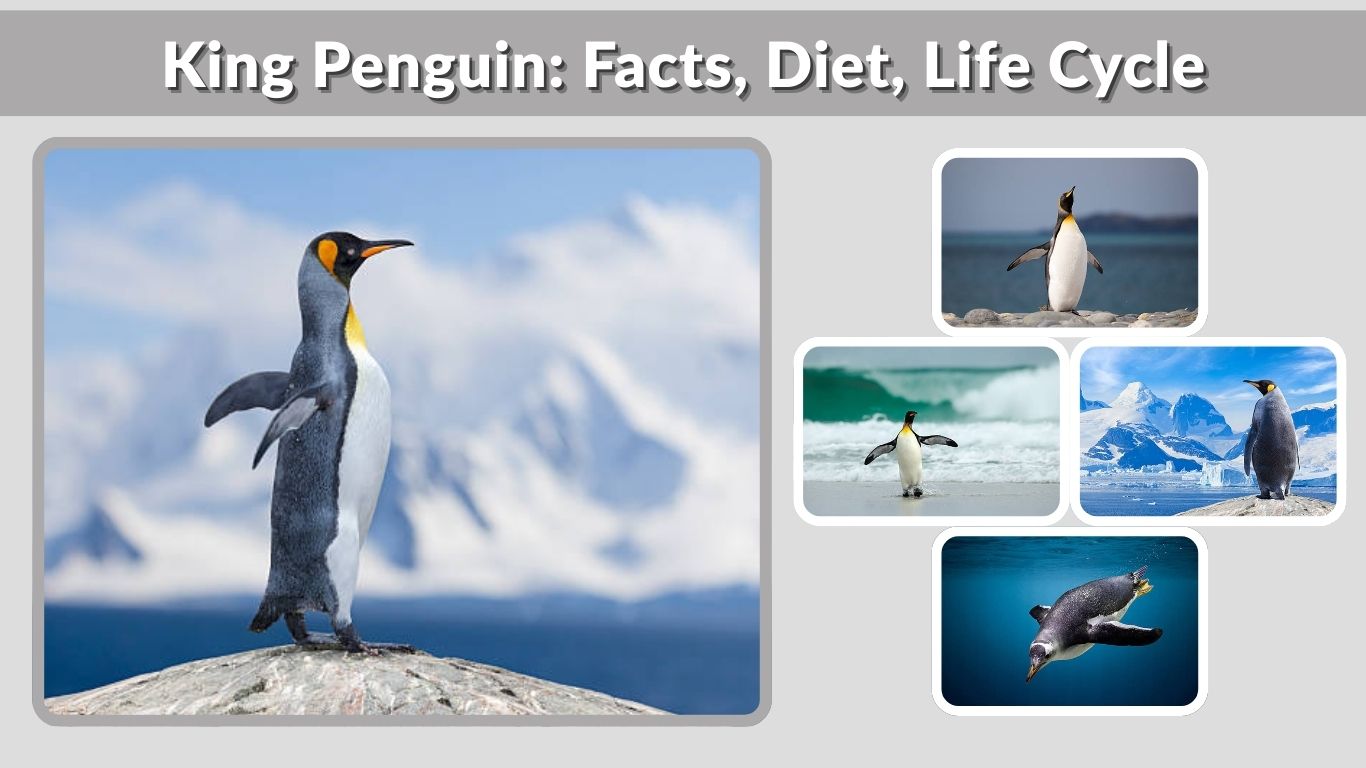
King penguins are impressive in size, typically standing about 35 to 39 inches (90–100 cm) tall and weighing between 20 and 35 pounds (9–16 kg).
They are easily recognized by:
- Bright orange patches on the sides of their heads and upper chest
- A sleek black back and white belly
- Long, slender beaks with orange accents
Their dense feathers provide waterproof insulation, while a thick layer of fat keeps them warm in icy waters. Their bodies are perfectly shaped for swimming, allowing them to reach speeds of up to 6 miles per hour (10 km/h).
King Penguin vs Emperor Penguin
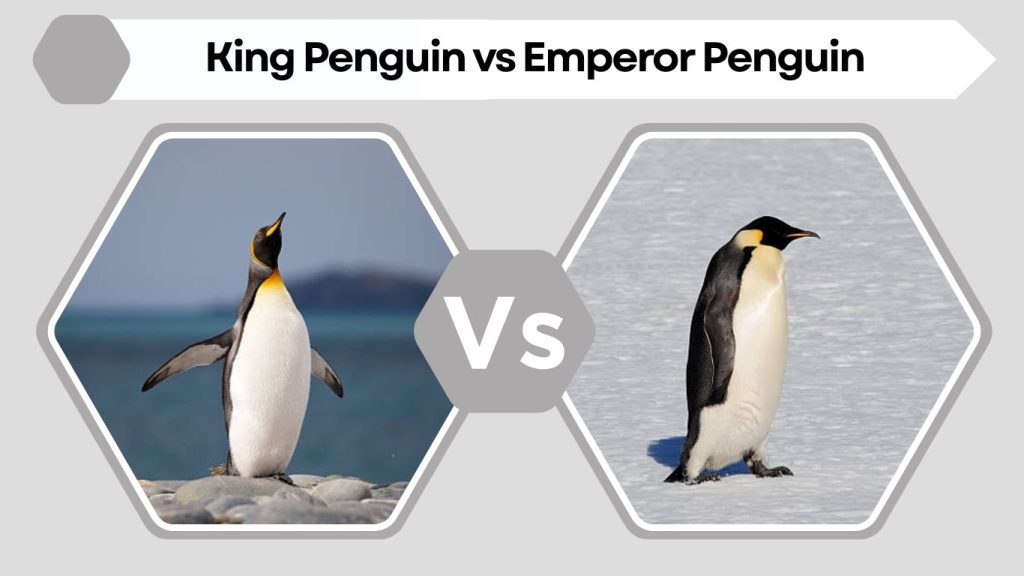
King penguins are often confused with emperor penguins because they look similar. However, there are clear differences between the two species.
Size and Appearance Differences
The most obvious difference is size. Emperor penguins are the largest penguin species, standing up to 45 inches (115 cm) tall and weighing as much as 88 pounds (40 kg). King penguins are slightly smaller and lighter.
In terms of appearance, emperor penguins have broader yellow ear patches, while king penguins display more vivid orange coloring that extends down their chest.
Habitat and Climate Differences
Emperor penguins live exclusively on the Antarctic mainland and breed during the extreme winter. King penguins, on the other hand, inhabit subantarctic islands where temperatures are less severe.
Because of this difference, emperor penguins endure harsher weather conditions, including months of darkness and freezing temperatures.
Breeding and Incubation Differences
One of the most significant differences lies in breeding cycles. Emperor penguins breed during winter and incubate their eggs in brutal Antarctic conditions.
King penguins have a much longer breeding cycle, lasting about 14 to 16 months from egg-laying to chick independence. This extended cycle means they do not breed every single year.
Fascinating King Penguin Facts
King penguins are full of surprising traits that make them unique among seabirds.
They are exceptional divers, capable of reaching depths of over 300 meters (1,000 feet) while hunting for food. Some dives can last nearly 10 minutes.
Their colonies are among the largest bird gatherings in the world. In places like South Georgia, colonies can include hundreds of thousands of birds packed closely together.
Another fascinating feature is their vocal recognition system. In crowded colonies, chicks and parents locate each other through unique calls. Each penguin has a distinct vocal pattern, allowing family members to reunite even among thousands of birds.
King penguins also go through an annual molting period. During this time, they shed and replace their feathers. Because their waterproofing is temporarily lost, they must remain on land and fast for several weeks until their new feathers grow in.
King Penguin Diet and Eating Habits
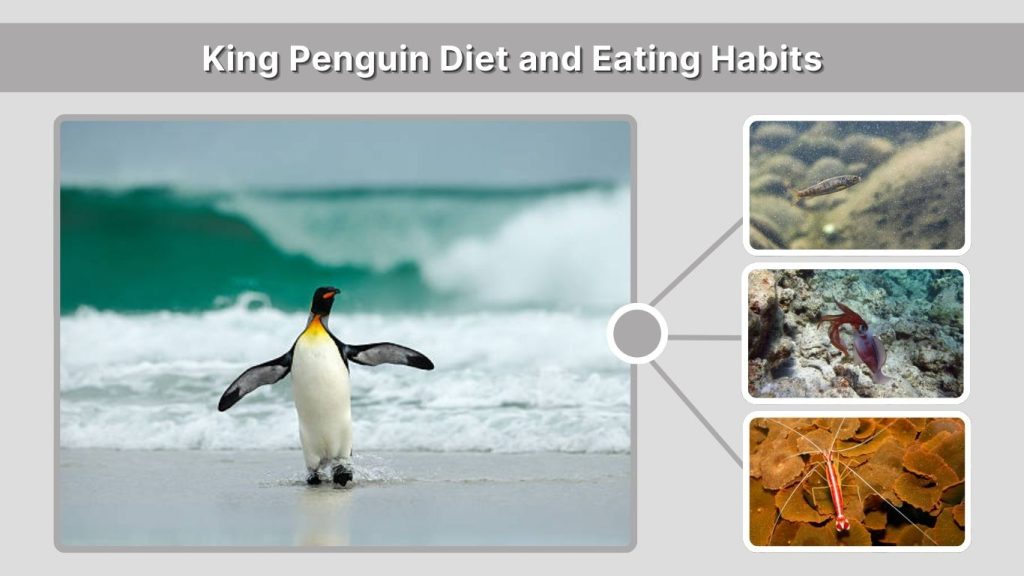
King penguins are carnivorous and rely entirely on marine life for survival. They spend much of their lives at sea hunting for food.
What Do King Penguins Eat?
Their primary diet consists of small fish, particularly lanternfish. They also eat squid and krill when available.
Fish make up the majority of their meals because they provide high energy, which is essential for surviving cold temperatures and long fasting periods during breeding.
How Do King Penguins Hunt?
King penguins are deep divers and skilled hunters. They use their powerful flippers to propel themselves underwater, steering with precision as they chase prey.
Unlike some seabirds, they swallow their prey whole. When feeding chicks, adults store partially digested food in their stomachs and later regurgitate it for their young.
Hunting trips can last several days, depending on food availability. During breeding season, one parent often stays with the chick while the other travels long distances at sea to find food.
King Penguin Egg and Reproduction
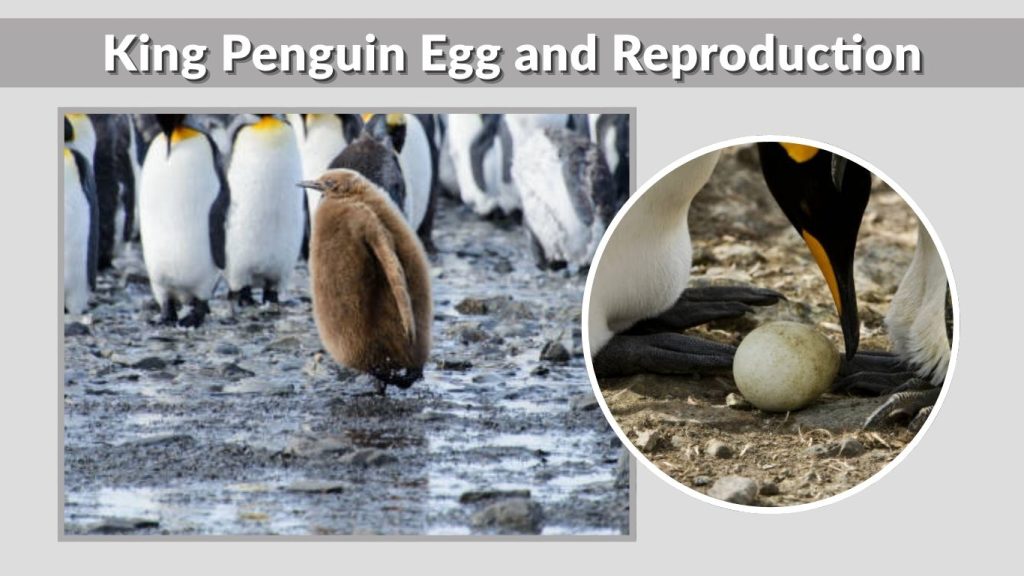
King penguins have one of the longest and most unusual breeding cycles of any penguin species. Unlike many birds that build nests, king penguins do not construct traditional nests from sticks or stones.
A female king penguin lays one egg per breeding cycle. Because their full breeding process takes more than a year, they typically do not breed annually.
Egg Incubation Process
After laying the egg, the female carefully transfers it to the male. The egg is balanced on the parent’s feet and covered with a warm fold of skin called a brood pouch. This pouch keeps the egg insulated from the cold ground and harsh winds.
Incubation lasts about 54 to 55 days. During this time, parents take turns keeping the egg warm while the other travels to sea to feed. This rotation allows both adults to maintain their strength.
If the egg slips off the feet and touches the cold ground for too long, the embryo may not survive. Because of this, balance and coordination are essential during incubation.
Parental Care
Once the chick hatches, both parents share feeding responsibilities. Adults return from the ocean with food stored in their stomachs and regurgitate it for the chick.
In the early weeks, one parent usually remains with the chick for warmth and protection. Later, chicks gather in groups called crèches. These nursery groups help protect them from predators and provide warmth while both parents hunt for food.
King penguins are highly devoted parents, investing significant time and energy into raising a single chick.
King Penguin Life Cycle
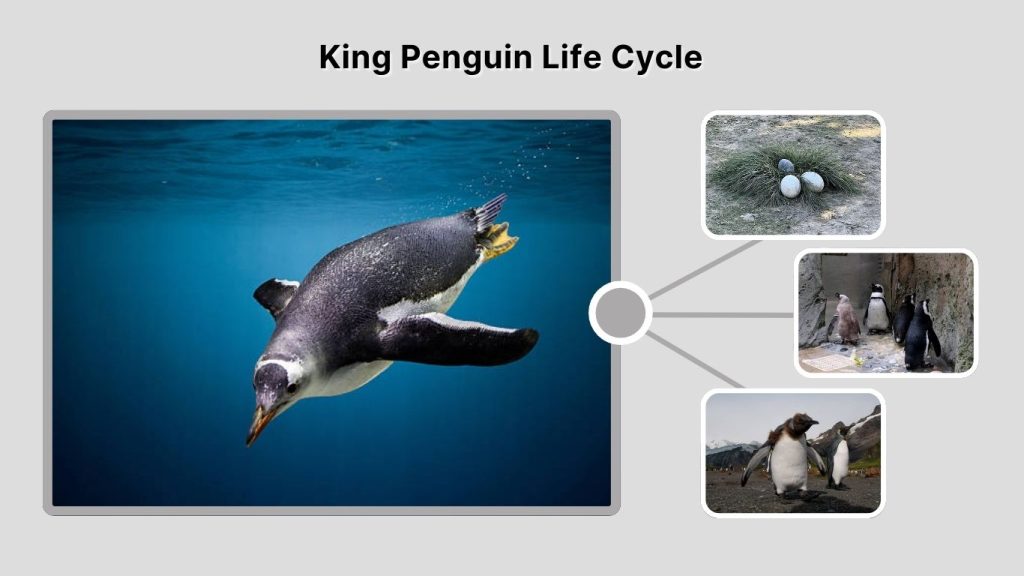
The king penguin life cycle is longer and slower than many other penguin species. From egg to full independence, the process can take over a year.
Egg Stage
The cycle begins when the female lays a single egg. As mentioned, incubation lasts around 55 days. Both parents alternate incubation duties to ensure the egg remains warm and protected.
Chick Stage
When chicks hatch, they are covered in thick brown down feathers rather than the black-and-white plumage of adults. This fluffy coat helps insulate them against cold temperatures.
Chicks rely completely on their parents for food. As they grow stronger, they join crèches with other young penguins. These groups reduce the risk of predation and help conserve heat.
Unlike emperor penguin chicks, king penguin chicks may remain dependent on their parents through winter. Their slow development is one reason the breeding cycle lasts so long.
Juvenile to Adult Stage
Eventually, young penguins molt their brown down and develop waterproof adult feathers. This transformation allows them to swim and hunt independently.
After molting, juveniles head to sea for the first time. They may spend several years maturing before returning to a breeding colony to reproduce.
King Penguin Life Span and Survival
King penguins are relatively long-lived birds compared to many other seabirds.
In the wild, they typically live 15 to 20 years, although some individuals may live longer under favorable conditions. In captivity, where food is consistent and predators are absent, they may exceed 20 years.
Natural Predators
Despite their size, king penguins face several natural threats. In the water, their main predators include:
- Leopard seals
- Orcas (killer whales)
On land, chicks may be vulnerable to large seabirds such as giant petrels and skuas.
Adult penguins are generally safer on land because of their colony size, which provides safety in numbers.
Environmental Threats
Beyond natural predators, king penguins face increasing environmental challenges.
Climate change affects ocean temperatures and fish availability, which can reduce food supplies. Overfishing may also compete with penguins for essential prey species. Additionally, pollution and habitat disruption can threaten breeding colonies.
Because king penguins depend heavily on stable marine ecosystems, changes in ocean conditions can have serious long-term impacts on their populations.
Conclusion
King penguins are extraordinary seabirds that combine beauty, resilience, and remarkable survival skills. From their vivid orange markings to their deep-diving hunting abilities, they are perfectly adapted to life in cold ocean environments.
Although they resemble emperor penguins, king penguins have distinct differences in size, habitat, and breeding behavior. Their long life cycle, strong parental care, and dependence on marine ecosystems make them a fascinating species to study and protect.
As climate patterns shift and oceans change, understanding and conserving king penguins becomes even more important. Protecting their feeding grounds and breeding habitats helps ensure these majestic birds continue to thrive for generations to come.