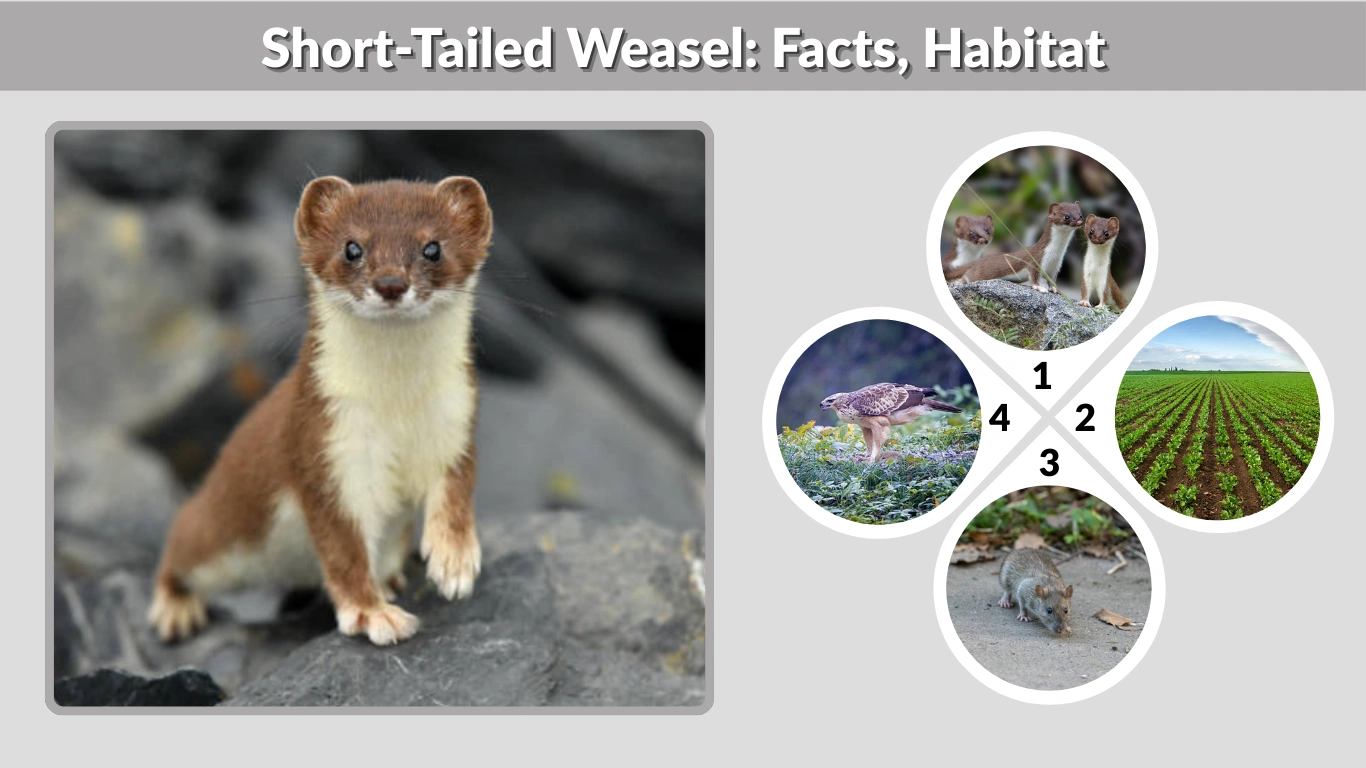





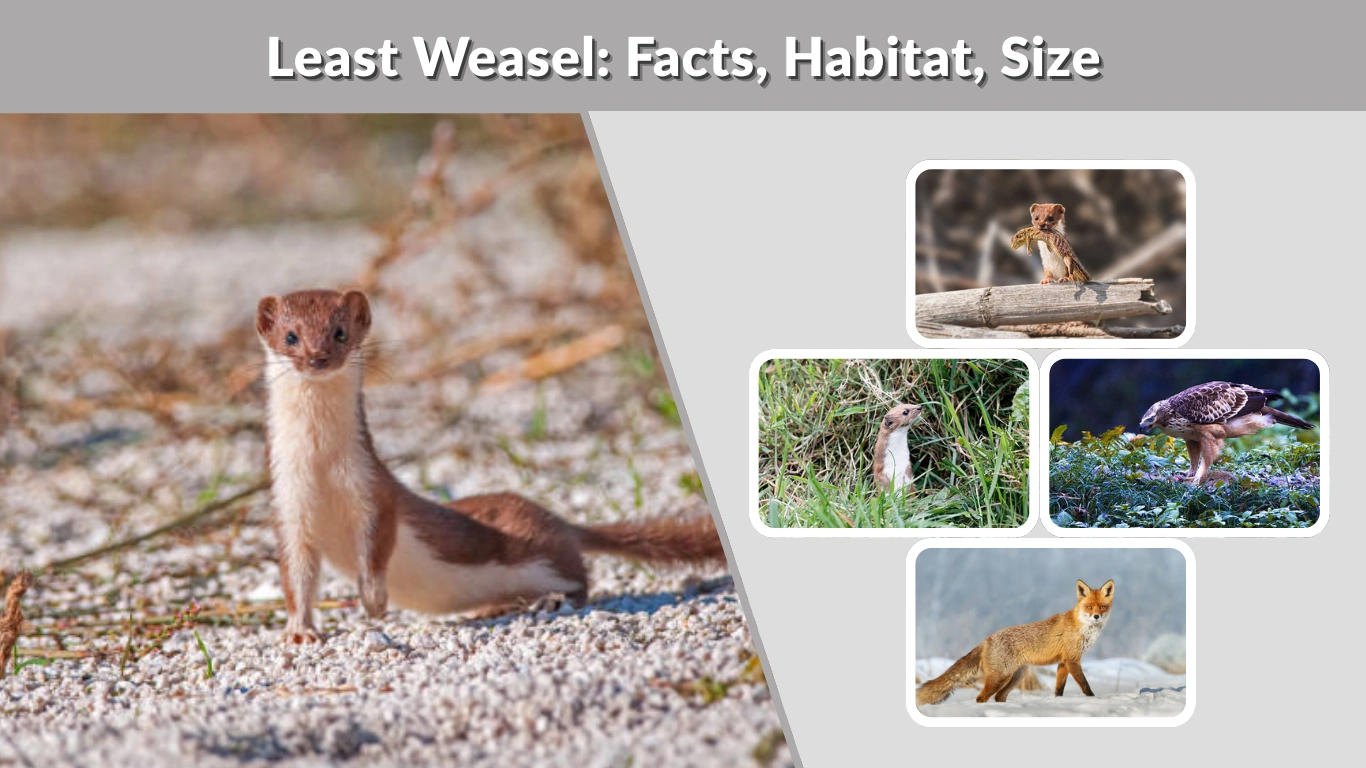
The least weasel (Mustela nivalis) may be tiny, but it is one of the most impressive predators in the animal kingdom. Known as the smallest carnivorous mammal in the world, this slender hunter is found across North America, Europe, and Asia. Despite its small size, the least weasel is bold, fast, and highly efficient at catching prey. Its ability to control rodent populations makes it an important part of many ecosystems. In this guide, we’ll explore its physical features, habitat, distribution, and the unique traits that make this miniature predator so remarkable.
What Is a Least Weasel?
The least weasel belongs to the Mustelidae family, a group of carnivorous mammals that also includes stoats, ferrets, minks, martens, and otters. Its scientific name is Mustela nivalis. While it shares similarities with other weasels, it stands out due to its exceptionally small body size and short tail.
Least weasels are agile predators built for hunting in tight spaces. Their long, narrow bodies allow them to follow rodents directly into burrows, giving them a significant advantage over many other predators. This physical adaptation has helped them thrive in diverse environments across much of the Northern Hemisphere.
Scientific Classification
- Kingdom: Animalia
- Phylum: Chordata
- Class: Mammalia
- Order: Carnivora
- Family: Mustelidae
- Genus: Mustela
- Species: Mustela nivalis
As members of the Carnivora order, least weasels are true carnivores. Their diet consists almost entirely of other animals, mainly small mammals. Unlike omnivores, they rely on meat to survive.
Why It’s Considered the Smallest Carnivore
The least weasel holds the title of the world’s smallest carnivorous mammal. Adult males typically measure about 6.5 to 8 inches (16–20 cm) in body length, while females are even smaller, usually between 5 to 7 inches (13–18 cm). Their tails are short, adding only about 1 to 2 inches (2–5 cm).
In terms of weight, males may weigh up to 250 grams (8.8 ounces), while females often weigh significantly less. This size difference between males and females is known as sexual dimorphism and is common in many mustelid species.
Despite its small frame, the least weasel is fearless and capable of taking down prey that may be nearly its own size. Its high metabolism requires frequent feeding, which drives its constant hunting activity.
Physical Characteristics
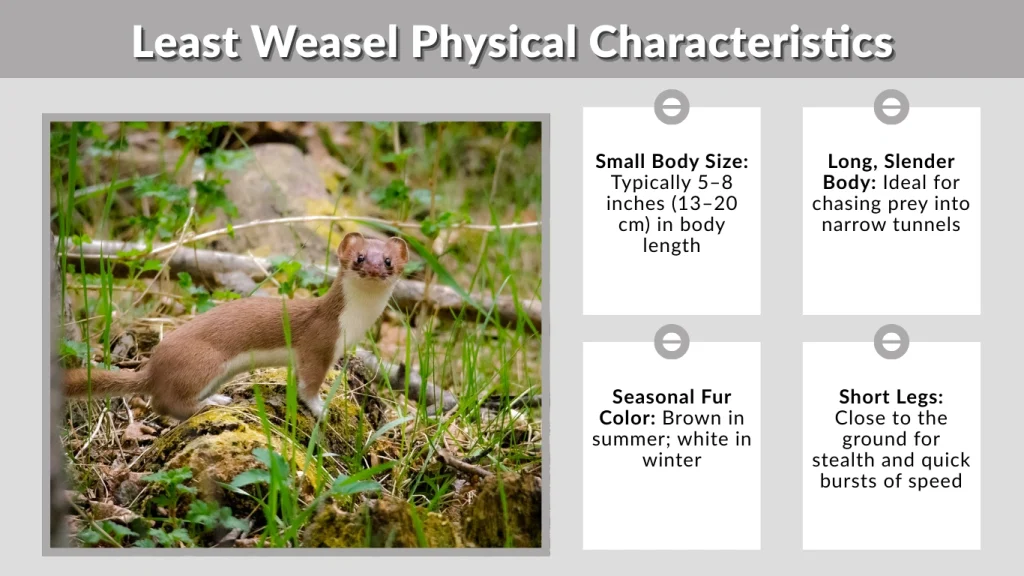
The least weasel may be the smallest carnivore in the world, but its body is perfectly engineered for hunting and survival. Every physical feature—from its elongated shape to its sharp teeth—helps it move quickly, enter tight burrows, and capture prey efficiently. Despite its delicate appearance, this species is muscular, agile, and highly adapted to life as a predator in grasslands, forests, and tundra environments.
Below is a quick overview of its key physical traits:
- Small Body Size: Typically 5–8 inches (13–20 cm) in body length
- Lightweight Build: Usually weighs between 25–250 grams, depending on sex
- Long, Slender Body: Ideal for chasing prey into narrow tunnels
- Short Legs: Close to the ground for stealth and quick bursts of speed
- Short Tail: Lacks the black tip seen in stoats
- Seasonal Fur Color: Brown in summer; white in winter (in colder regions)
- Sharp Teeth: Designed for delivering a precise killing bite
- Rounded Ears: Small and unobtrusive, reducing heat loss
- Dense Fur: Provides insulation in cold climates
- Sexual Dimorphism: Males are noticeably larger than females
These features combine to make the least weasel one of the most efficient small predators in the animal kingdom.
Habitat and Geographic Distribution
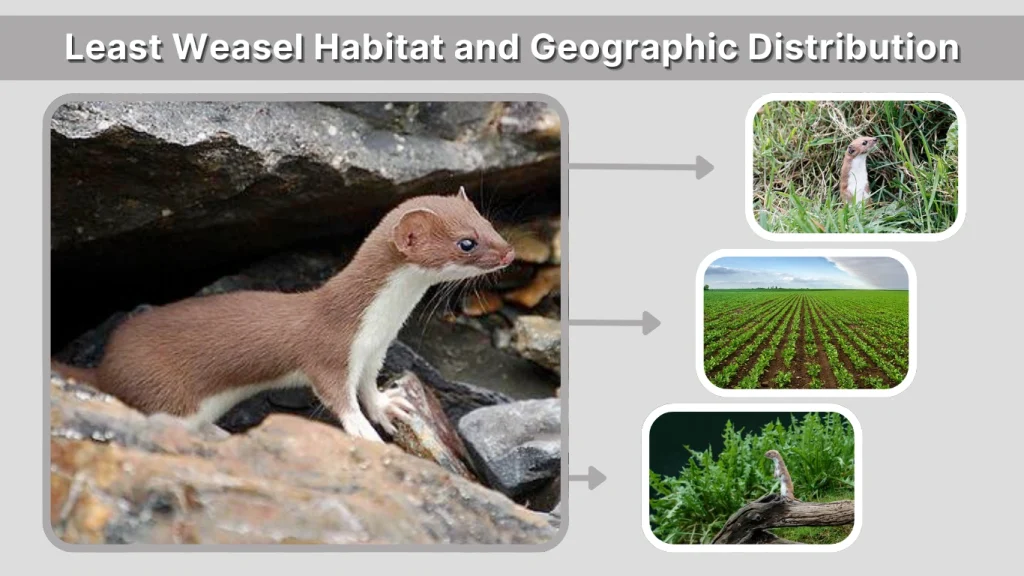
The least weasel has one of the widest distributions of any small carnivorous mammal. It is native to large parts of the Northern Hemisphere and thrives in a variety of environments.
Where Do Least Weasels Live?
Least weasels are found across much of North America, Europe, and Asia. Their range stretches from temperate regions to areas close to the Arctic Circle. This wide distribution highlights their adaptability and resilience.
In North America, they are present in Canada, Alaska, and many northern U.S. states. In Europe and Asia, they occupy grasslands, forests, and agricultural landscapes.
Preferred Habitats
Although highly adaptable, least weasels prefer habitats with abundant rodent populations. Common environments include:
- Grasslands and meadows
- Farmlands and pastures
- Forest edges
- Shrublands
- Tundra regions
They rely on existing burrows rather than digging extensive tunnels themselves. Since their primary prey consists of mice and voles, they tend to settle in areas where these animals are plentiful.
Diet and Hunting Behavior
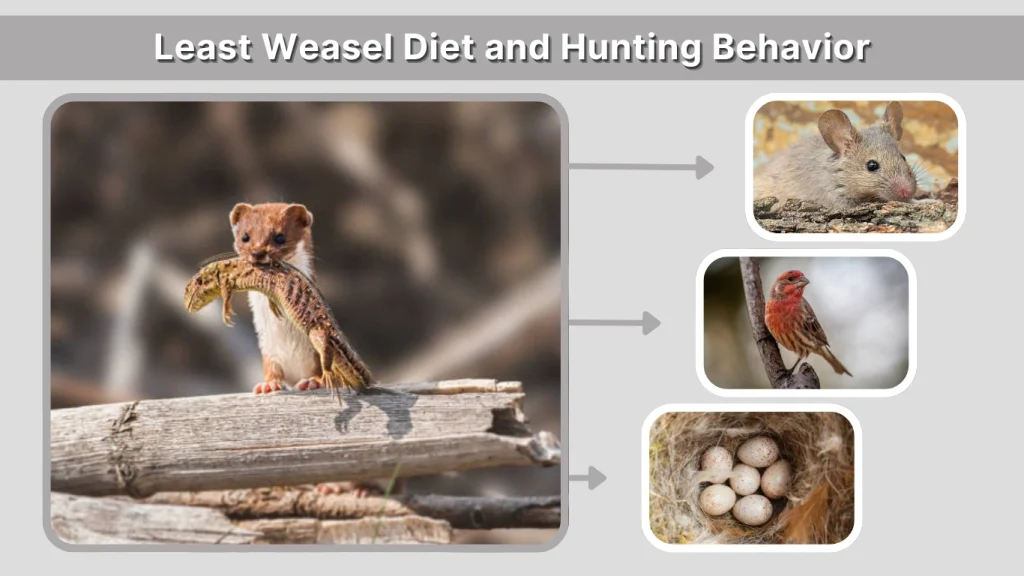
The least weasel is a highly specialized predator with a diet that consists almost entirely of small mammals. Its hunting skills are impressive, especially considering its tiny size. Unlike larger carnivores that may hunt less frequently, the least weasel must eat often to survive due to its extremely high metabolism.
What Do Least Weasels Eat?
The primary food source of the least weasel is small rodents, particularly mice and voles. These animals make up the majority of its diet throughout the year. In areas where rodent populations are abundant, least weasels can thrive and reproduce successfully.
In addition to mice and voles, they may also eat:
- Young rats
- Small birds
- Bird eggs
- Insects
- Occasionally amphibians
However, rodents remain their preferred and most important prey. Their population levels often rise and fall in response to changes in rodent numbers.
Hunting Strategy
Least weasels are active and relentless hunters. Their long, slender bodies allow them to chase prey directly into narrow burrows and tunnels. This gives them a major advantage over predators that cannot fit into tight underground spaces.
They typically kill with a swift, precise bite to the back of the neck or skull. Despite weighing only a few ounces, they are capable of overpowering prey nearly their own size. Their sharp teeth and strong jaws make them efficient killers.
Because of their high metabolic rate, weasels must consume food frequently. Some individuals may eat up to half their body weight in a single day. This constant need for energy keeps them active both during the day and at night.
Role in the Ecosystem
The least weasel plays a critical role in controlling rodent populations. By preying heavily on mice and voles, it helps prevent overpopulation that could otherwise damage crops and vegetation.
Farmers often benefit from their presence, even though least weasels may occasionally raid poultry nests. Overall, they serve as an important mid-level predator, supporting ecological balance within grasslands, forests, and agricultural systems.
Behavior and Lifestyle
Though small, the least weasel is bold and energetic. It spends much of its time hunting, exploring, and defending its territory.
Activity Patterns
Least weasels are active year-round and do not hibernate. They can be seen hunting during both the day and night, depending on prey availability. Their activity patterns often match the movements of rodents in their territory.
Even in winter, when temperatures drop significantly, they remain active beneath the snow, using rodent tunnels to travel and hunt. Their small size allows them to move easily through subnivean (under-snow) spaces.
Territorial Nature
Least weasels are solitary animals. Each individual maintains its own territory, which it marks using scent glands. These scent markings help reduce conflicts with other weasels.
Male territories are usually larger than those of females and may overlap with the territories of several females. However, they generally avoid direct confrontation unless competing for mates or resources.
Reproduction and Lifespan
Breeding typically occurs in spring and summer, though timing may vary depending on region and climate. After a gestation period of about one month, the female gives birth to a litter that can range from three to ten kits.
The young are born blind and helpless, relying entirely on their mother for warmth and nourishment. They grow quickly and are often ready to hunt on their own within a few months.
In the wild, least weasels generally live for about one to three years. Their short lifespan is influenced by predation, food availability, and environmental conditions.
Least Weasel vs Stoat: Key Differences
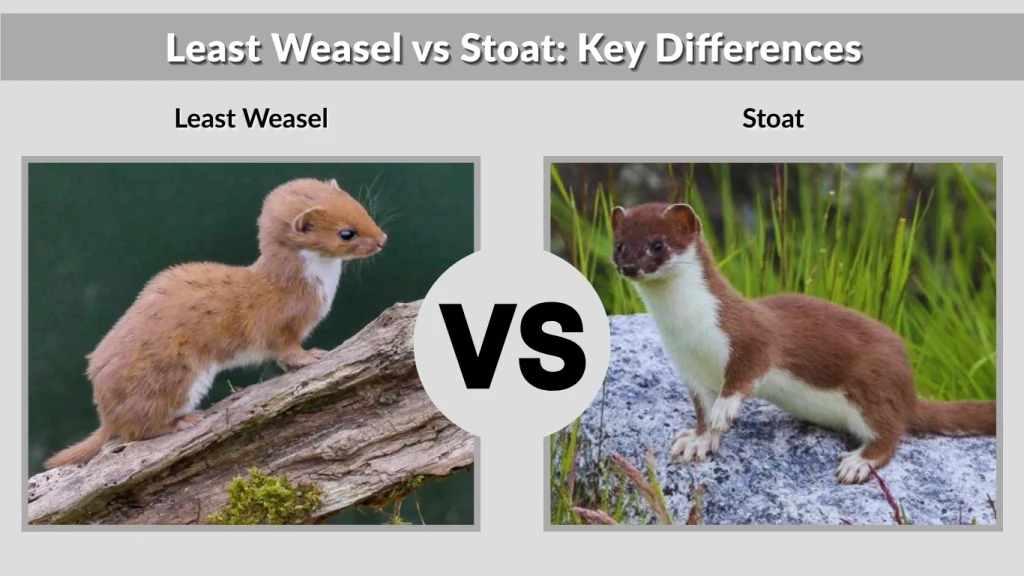
The least weasel is often confused with the stoat (Mustela erminea), as both species share similar body shapes and habitats. However, there are clear differences that help distinguish them.
Physical Differences
The most noticeable difference is the tail. Stoats have longer tails with a distinctive black tip, while least weasels have shorter tails without a black tip.
Stoats are also larger overall, with longer bodies and heavier builds. In comparison, the least weasel appears more compact and delicate.
Behavioral and Habitat Differences
Both species hunt rodents and live in similar habitats, but stoats may tackle slightly larger prey due to their size advantage. In regions where both species coexist, the least weasel often focuses on smaller rodents.
Understanding these differences is helpful for wildlife observers and nature enthusiasts trying to identify species in the field.
Predators, Threats, and Conservation
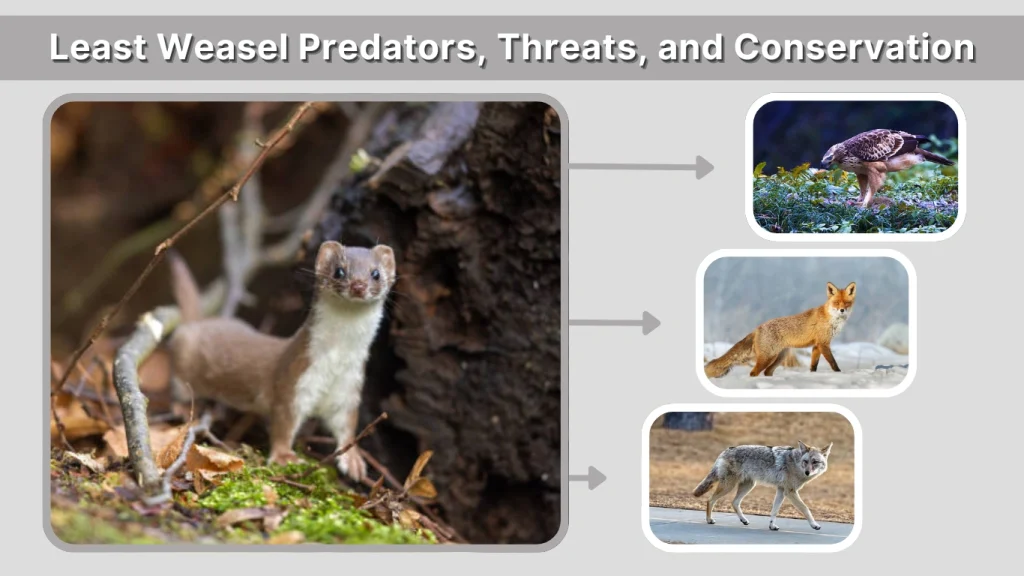
Despite being a skilled predator, the least weasel is also prey for larger animals.
Natural Predators
Common predators include:
- Hawks and owls
- Foxes
- Coyotes
- Larger mustelids
Birds of prey are especially dangerous, as they can easily spot and capture these small mammals from above.
Human-Related Threats
Human activities also pose risks. Habitat loss due to agriculture and urban development can reduce available shelter and prey. Pesticides may indirectly harm least weasels by reducing rodent populations or causing poisoning through contaminated prey.
In some areas, they are trapped or killed due to concerns about poultry predation.
Conservation Status
The least weasel is currently classified as a species of Least Concern on a global scale, thanks to its wide distribution and adaptability. However, local populations may experience declines where habitat destruction or environmental changes occur.
Ongoing monitoring is important to ensure this small predator continues to thrive across its range.
Conclusion
The least weasel proves that size does not determine strength or impact. As the smallest carnivorous mammal in the world, it is a fearless and efficient hunter capable of surviving in diverse environments. Its slender body, sharp instincts, and relentless hunting behavior make it a remarkable predator.
Beyond its fascinating physical traits, the least weasel plays a vital ecological role by controlling rodent populations and supporting balanced ecosystems. Though small and often unseen, it remains one of nature’s most impressive miniature hunters.