




Lincoln sheep are one of the largest and most famous longwool sheep breeds in the world. They are well known for their long, lustrous wool and impressive body size. Originating from Lincolnshire, England, this breed has been raised for centuries for both wool and meat production. Lincoln sheep are especially valued in the textile industry because their wool is strong, shiny, and durable. In this guide, we will explore Lincoln sheep characteristics, size, and interesting facts about this historic and productive sheep breed.
What is Lincoln Sheep?
Lincoln sheep, often called Lincoln Longwool, are a traditional British sheep breed developed primarily for wool production. Their long fleece and large body structure make them one of the most distinctive sheep breeds in the world.
Origin and History
The Lincoln sheep breed originated in Lincolnshire, England, where farmers began selectively breeding sheep with long wool and large body frames. Over time, the breed became known as the Lincoln Longwool, which is considered one of the oldest longwool sheep breeds.
During the 18th and 19th centuries, Lincoln sheep gained widespread popularity because of their exceptional fleece quality. Their wool was highly valued for making textiles, carpets, and durable fabrics.
Because of their excellent wool characteristics, Lincoln sheep were exported to many parts of the world, including:
- United States
- Australia
- New Zealand
- South America
In these regions, Lincoln sheep played an important role in developing other sheep breeds through crossbreeding programs.
Why Lincoln Sheep is Popular
Lincoln sheep have remained popular among farmers and breeders for several important reasons. Their large body size and high wool production make them valuable for both wool and meat production.
Some key reasons for their popularity include:
- Exceptional long wool production
- Large and strong body structure
- Valuable fleece used in textile industries
- Calm and manageable temperament
- Important genetic influence on other sheep breeds
Because of these advantages, Lincoln sheep have been used in breeding programs to improve wool quality and body size in other sheep breeds.
Lincoln Sheep Characteristics
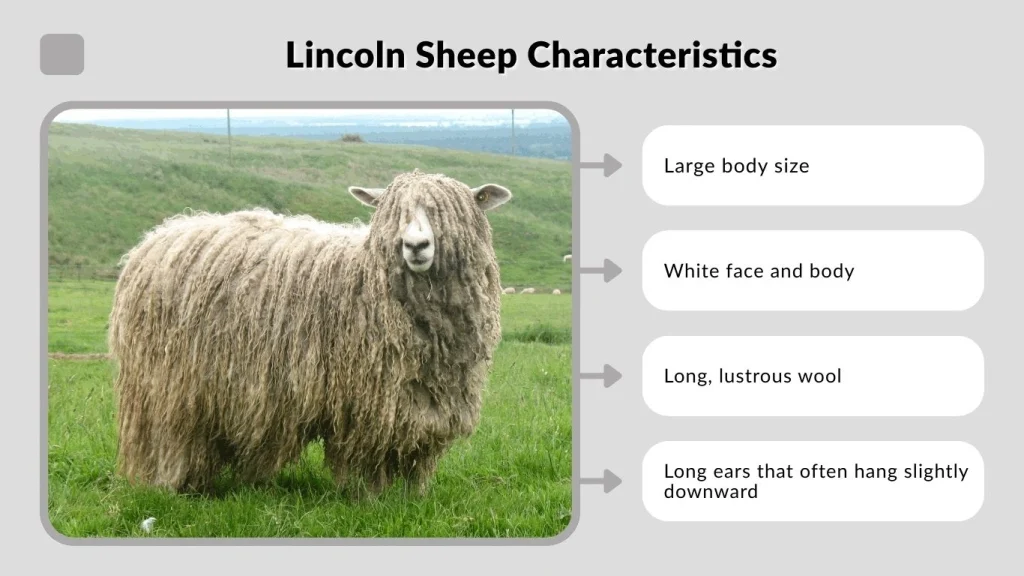
Lincoln sheep have several unique physical and behavioral characteristics that make them easy to recognize. Their long fleece and large body frame distinguish them from many other sheep breeds.
Physical Appearance
One of the most noticeable features of Lincoln sheep is their long, shiny fleece. Their wool hangs in long locks, giving them a distinctive and elegant appearance.
Common physical features include:
- Large body size
- White face and body
- Long, lustrous wool
- Long ears that often hang slightly downward
- Thick fleece covering the entire body
Their fleece often grows in long curls or locks, which is one reason Lincoln sheep are highly valued in wool production.
Body Structure
Lincoln sheep have a large and powerful body structure, making them one of the heaviest sheep breeds.
Important structural features include:
- Broad and deep chest
- Strong legs that support their large body
- Long body with heavy muscle development
- Large and strong skeletal frame
Because of their large body size, Lincoln sheep can also produce good meat in addition to wool.
Temperament
Lincoln sheep are generally known for their calm and gentle temperament. They are easy to handle and adapt well to farm environments.
Typical temperament traits include:
- Calm and manageable behavior
- Good adaptability to grazing systems
- Suitable for both small farms and commercial operations
Their gentle nature makes them easier to manage compared with some more active sheep breeds.
Lincoln Sheep Size
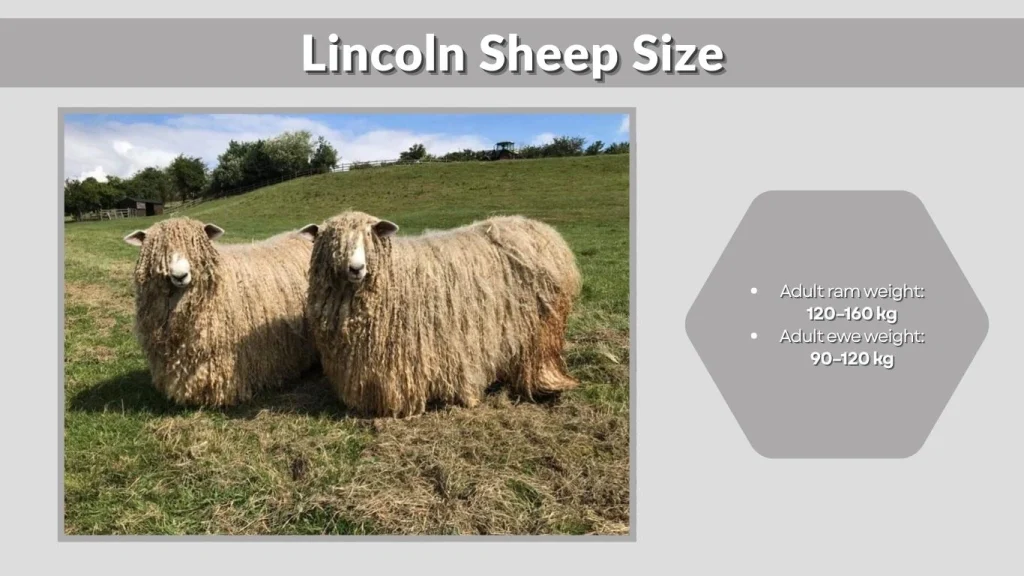
Lincoln sheep are considered one of the largest sheep breeds in the world. Their large frame and heavy body weight make them particularly impressive animals.
Adult Body Weight
The body weight of Lincoln sheep varies depending on feeding conditions, genetics, and farm management practices.
Typical body weights include:
- Adult ram weight: 120–160 kg
- Adult ewe weight: 90–120 kg
These weights make Lincoln sheep significantly larger than many other sheep breeds.
Growth Rate
Lincoln lambs grow steadily and develop strong body frames. Although they are mainly raised for wool production, their size also allows them to produce good-quality meat.
Some advantages of their growth include:
- Strong skeletal development
- Good feed conversion
- Suitable for both wool and meat production
Because of their size and fleece production, Lincoln sheep are often considered a dual-purpose breed.
Body Frame
Lincoln sheep have a long and heavy body frame, which contributes to their impressive appearance.
Important body frame features include:
- Long body structure
- Large skeletal frame
- Thick muscle and fleece coverage
This body structure supports their ability to produce heavy fleece and maintain strong physical condition.
Lincoln Sheep Wool
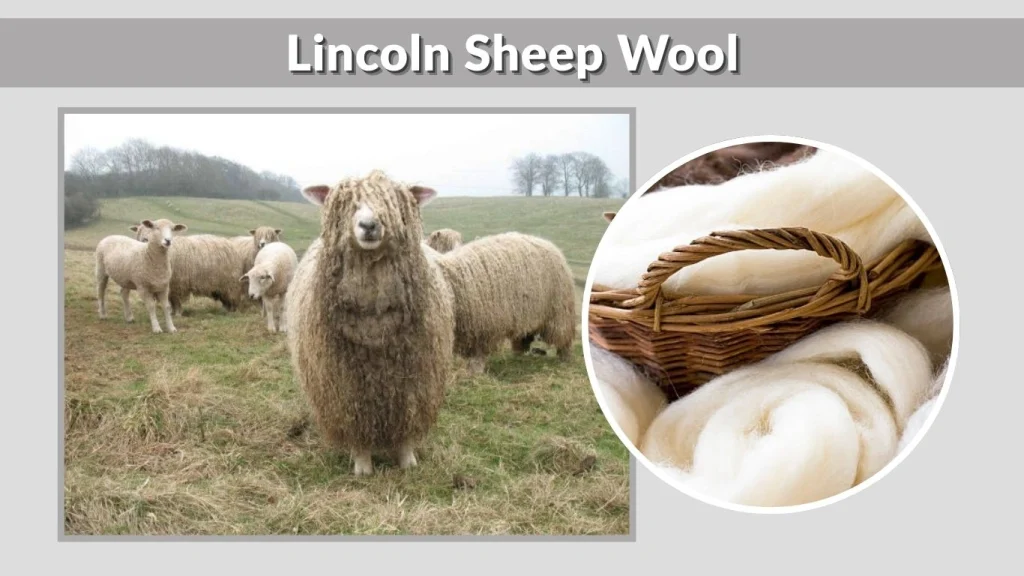
Lincoln sheep are especially famous for their long, lustrous wool, which is considered one of the most distinctive types of sheep fleece.
Wool Quality
Lincoln wool is known for its strength, shine, and durability. The fibers are longer than those of many other sheep breeds.
Important wool characteristics include:
- Long fiber length
- Strong and durable wool
- Natural shine and luster
- Medium to coarse fiber diameter
These qualities make Lincoln wool suitable for producing durable textiles and yarn.
Wool Production
Lincoln sheep produce a large amount of fleece each year, making them highly valuable for wool production.
Typical fleece production includes:
- Average fleece weight: 5–8 kilograms per year
- Long wool fibers used for spinning and weaving
- Suitable for carpets, fabrics, and yarn production
Their heavy fleece production is one of the main reasons farmers have raised Lincoln sheep for centuries.
Lincoln Sheep Facts
Lincoln sheep have several fascinating characteristics that make them one of the most distinctive longwool sheep breeds in the world. Their impressive size and valuable fleece have made them important in the history of sheep farming.
One of the Largest Sheep Breeds
One interesting fact about Lincoln sheep is that they are one of the largest domestic sheep breeds. Their large frame and heavy body weight make them stand out compared with many other sheep breeds.
Their size offers several benefits:
- Strong physical structure
- Ability to carry heavy fleece
- Good meat production potential
Because of their impressive size, Lincoln sheep are often used in breeding programs to increase body size in other breeds.
Famous for Long Wool
Lincoln sheep are widely recognized for producing some of the longest wool fibers among sheep breeds. Their fleece grows in long, shiny locks that can be easily identified.
Key wool characteristics include:
- Long staple length
- High luster and shine
- Durable fibers
These qualities make Lincoln wool popular for spinning and weaving strong yarns and fabrics.
Influenced Other Sheep Breeds
Lincoln sheep have played a major role in the development of several other sheep breeds. Their genetics have been used to improve wool quality and body size in crossbreeding programs.
Breeds influenced by Lincoln sheep include:
- Columbia sheep
- Corriedale sheep
- Other longwool breeds
This influence highlights the importance of Lincoln sheep in modern sheep breeding.
Valuable in the Textile Industry
Because of its strength and durability, Lincoln wool has been widely used in the textile industry for many years.
Common uses of Lincoln wool include:
- Carpet production
- Upholstery fabrics
- Durable wool textiles
- Hand-spun yarn
The natural shine and strength of Lincoln wool make it particularly useful for heavy-duty fabric production.
Lincoln Sheep Farming Guide
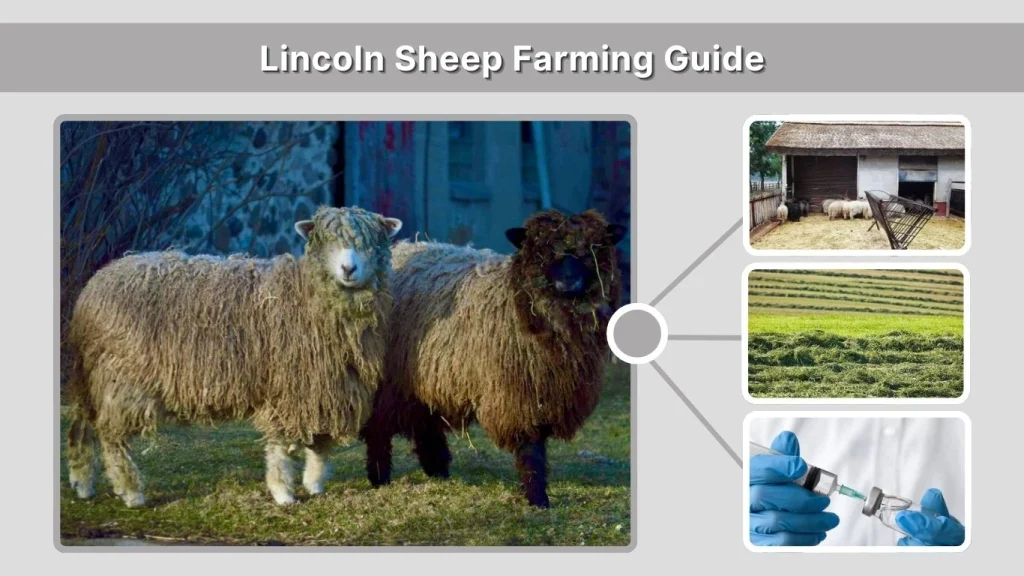
Raising Lincoln sheep can be profitable when farmers provide proper care and management. Good housing, nutrition, and health care are essential for maintaining a productive flock.
Housing Requirements
Lincoln sheep require proper shelter to protect them from harsh weather conditions. Because they have heavy fleece, they need dry housing to prevent wool damage and disease.
Important housing features include:
- Clean and dry shelter
- Good ventilation
- Protection from rain and extreme heat
- Enough space for movement
Proper housing helps maintain both sheep health and fleece quality.
Feeding Management
Lincoln sheep are good grazers and obtain most of their nutrition from pasture. However, farmers may provide supplementary feed during seasons when pasture is limited.
Common feed sources include:
- Natural grasses and pasture plants
- Legumes such as clover
- Hay and silage
- Grain supplements
Providing balanced nutrition helps maintain healthy body weight and supports wool production.
Health Management
Maintaining the health of Lincoln sheep is important for ensuring productive wool and meat output.
Basic health management practices include:
- Regular vaccination programs
- Deworming to control parasites
- Maintaining clean housing conditions
- Monitoring sheep for signs of illness
Early treatment of health problems helps prevent serious losses in sheep farming.
Advantages of Raising Lincoln Sheep
Lincoln sheep provide several benefits that make them attractive to farmers and breeders.
High Wool Production
Lincoln sheep produce heavy fleece with long fibers, making them one of the best breeds for wool production.
Large Body Size
Their large body frame allows them to produce good-quality meat in addition to wool.
Calm Temperament
Lincoln sheep are known for their gentle nature, which makes them easy to handle and manage.
Valuable Genetic Influence
Their genetics have been used in breeding programs to improve wool quality and body size in other sheep breeds.
Lincoln Sheep vs Other Sheep Breeds
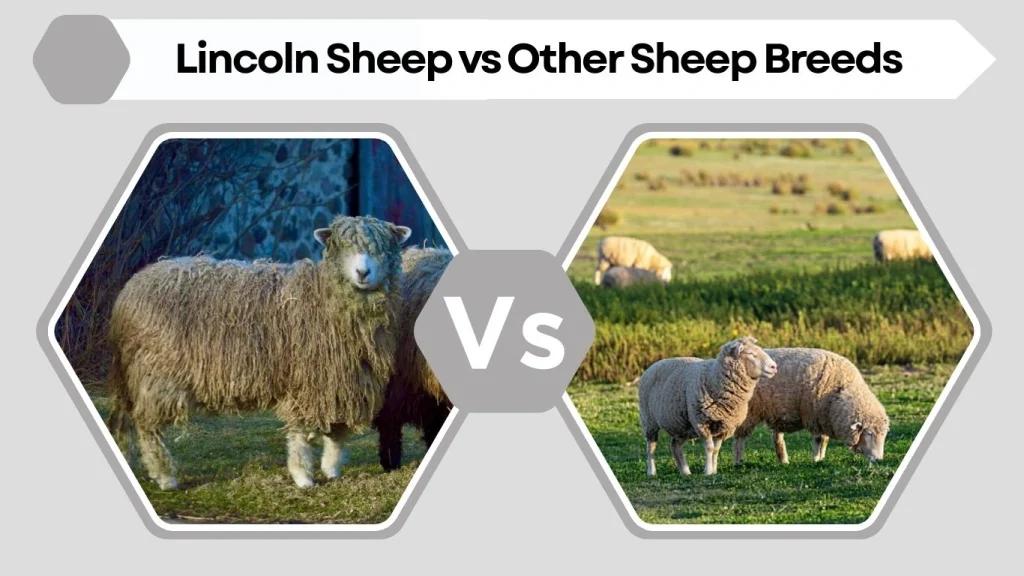
Farmers sometimes compare Lincoln sheep with other breeds to determine which breed best suits their farming goals.
Lincoln vs Merino
Merino sheep are famous for producing very fine wool, while Lincoln sheep produce longer and stronger wool fibers. Merino wool is used for fine clothing, whereas Lincoln wool is often used for heavier textiles.
Lincoln vs Leicester Longwool
Both Lincoln and Leicester Longwool sheep are longwool breeds. However, Lincoln sheep generally produce heavier fleece and have a larger body size.
Differences in Wool and Size
Different sheep breeds are developed for different purposes. Lincoln sheep are particularly valued for their long wool fibers and large body frame, making them unique among wool-producing breeds.
Conclusion
Lincoln sheep are one of the most historically important longwool sheep breeds in the world. Their large body size, long lustrous fleece, and calm temperament make them valuable for both wool and meat production. In addition, their genetics have played a major role in the development of several modern sheep breeds. With proper care, feeding, and management, Lincoln sheep can provide farmers with reliable wool production and long-term benefits in sheep farming.