
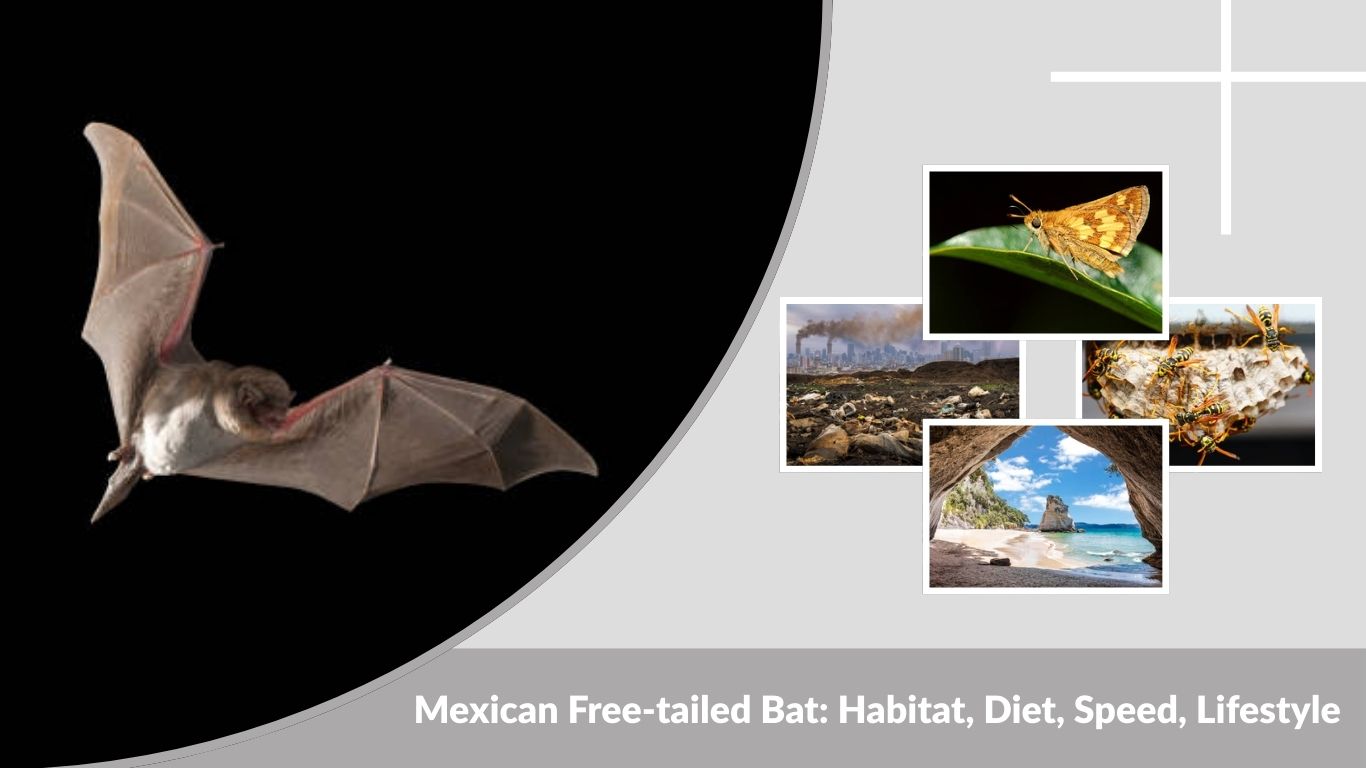
The Mexican free-tailed bat is one of the most remarkable bat species in North and Central America. Scientifically known as Tadarida brasiliensis, this bat is famous for its incredible flight speed and massive colonies that can include millions of individuals. Mexican free-tailed bats are insect-eating mammals that help control pest populations by consuming large numbers of insects every night. Because of their ecological importance and unique flying abilities, they are considered one of the most beneficial bat species in the world.
What Is the Mexican Free-tailed Bat?
The Mexican free-tailed bat is a medium-sized bat known for its fast flight and distinctive tail that extends beyond the wing membrane. It belongs to the family Molossidae, commonly known as free-tailed bats.
These bats are highly adaptable and can live in a variety of environments, including caves, buildings, bridges, and rocky cliffs. They are especially famous for forming extremely large colonies that may contain millions of bats, making them one of the most abundant bat species in the Americas.
Mexican free-tailed bats are also well known for their role in agriculture because they eat huge numbers of insects that can damage crops.
Scientific Classification
The Mexican free-tailed bat belongs to the following classification:
- Kingdom: Animalia
- Phylum: Chordata
- Class: Mammalia
- Order: Chiroptera
- Family: Molossidae
- Genus: Tadarida
- Species: Tadarida brasiliensis
The family Molossidae includes bats that have strong wings designed for fast and efficient flight.
Scientific Name (Tadarida brasiliensis)
The scientific name Tadarida brasiliensis reflects the species’ classification and early documentation.
- Tadarida refers to the genus of free-tailed bats.
- Brasiliensis refers to Brazil, where early scientific studies of this species were conducted.
Although the name references Brazil, these bats are widely distributed across the Americas.
Why It Is Called the Free-tailed Bat
The Mexican free-tailed bat gets its name from its distinctive tail, which extends beyond the membrane that connects its legs.
In most bats, the tail is fully enclosed within the wing membrane. However, in free-tailed bats, part of the tail is visible outside the membrane, giving them their unique name.
Physical Characteristics of the Mexican Free-tailed Bat
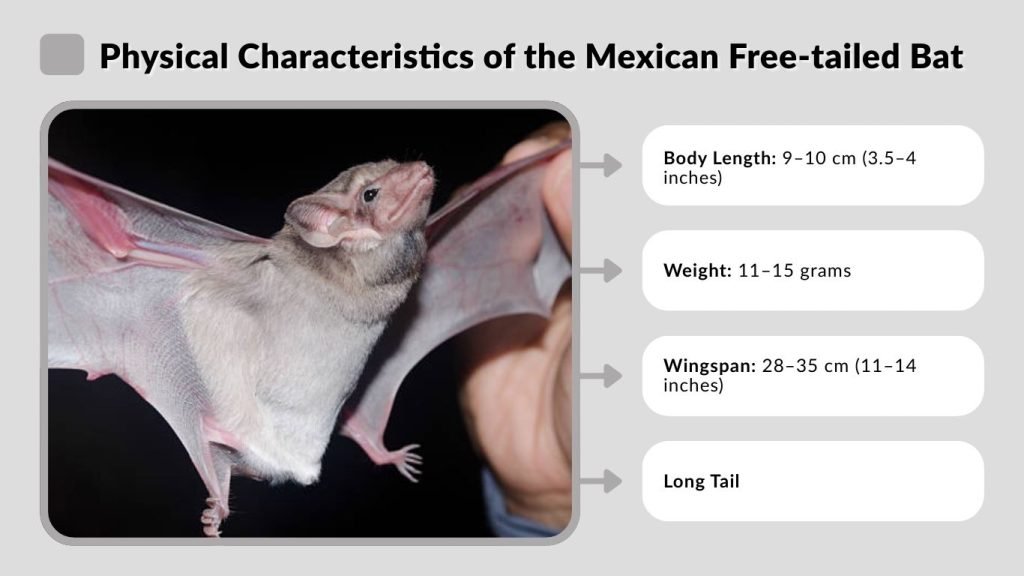
Mexican free-tailed bats have several physical features that help them fly quickly and hunt insects efficiently.
These bats are well adapted for long-distance flight and aerial hunting. Their strong wings and lightweight bodies allow them to move rapidly through the air.
Key Physical Characteristics
- Body Length: Usually around 9–10 cm (3.5–4 inches)
- Weight: Typically 11–15 grams
- Wingspan: About 28–35 cm (11–14 inches)
- Long Tail: Tail extends beyond the wing membrane
- Dark Fur: Usually brown or grayish-brown in color
- Large Ears: Rounded ears that help detect sounds
- Strong Wings: Narrow wings designed for fast flight
These characteristics make Mexican free-tailed bats highly efficient flyers capable of traveling long distances in search of food.
Habitat and Distribution
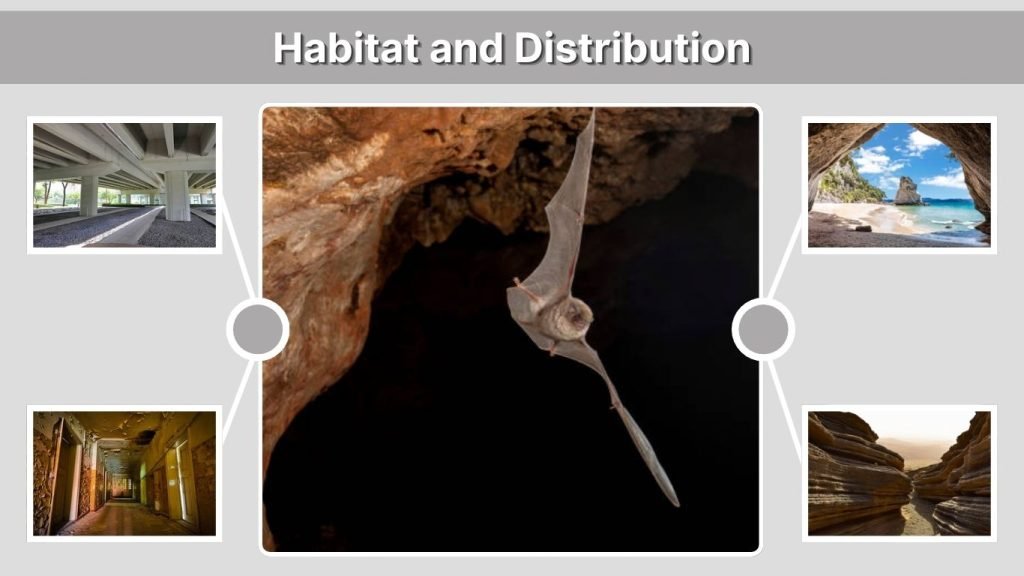
Mexican free-tailed bats are widely distributed throughout the Americas. They are highly adaptable and can live in many different types of environments.
Mexican Free-tailed Bat Habitat
These bats prefer habitats where insects are abundant and where suitable roosting locations are available.
Common habitats include:
- Desert regions
- Grasslands
- Forest edges
- Agricultural areas
- Urban environments
They are particularly common in areas with warm climates and open spaces that allow easy flight.
Countries and Regions Where They Are Found
Mexican free-tailed bats can be found in many parts of the Americas, including:
- United States (especially Texas and the southern states)
- Mexico
- Central America
- Parts of South America
One of the most famous populations lives in Bracken Cave in Texas, which hosts one of the largest bat colonies in the world.
Roosting Locations
During the day, Mexican free-tailed bats rest in large groups called colonies. They prefer dark and protected places where they can safely gather.
Common roosting sites include:
- Natural caves
- Rock crevices
- Under bridges
- Abandoned buildings
- Attics and structures
Some colonies can contain millions of bats, creating one of the largest gatherings of mammals on Earth.
Mexican Free-tailed Bat Diet
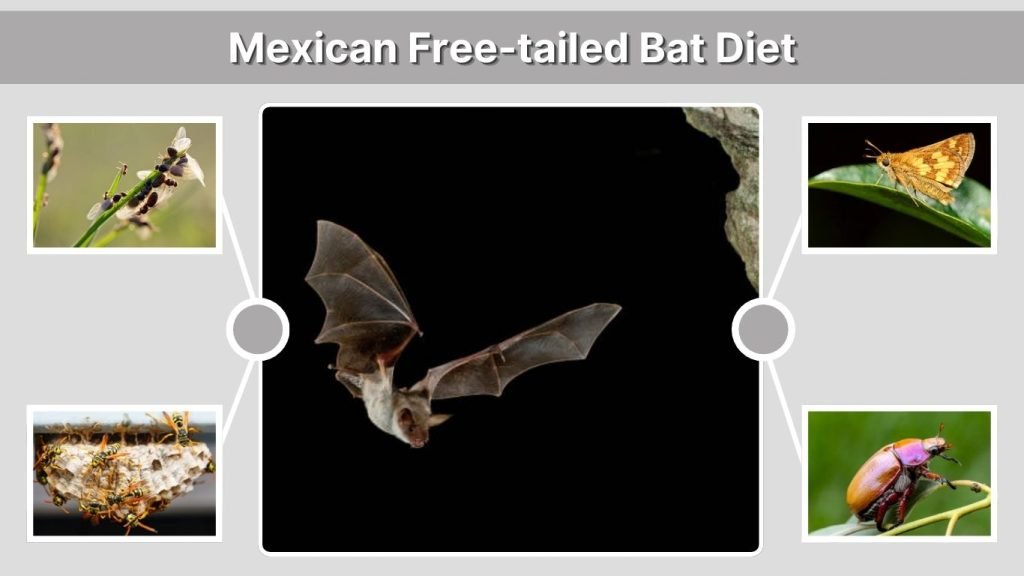
The Mexican free-tailed bat is an insectivorous bat, meaning it feeds mainly on insects.
Main Foods They Eat
Their diet includes many types of flying insects, such as:
- Moths
- Beetles
- Flying ants
- Wasps
- Mosquitoes
- Agricultural pests
These bats are extremely beneficial to farmers because they consume insects that damage crops.
Hunting Behavior
Mexican free-tailed bats hunt insects while flying through the air. They use echolocation, a system that allows them to detect objects using sound waves.
The bat produces high-frequency sounds that bounce off nearby objects. By listening to the returning echoes, the bat can locate insects even in complete darkness.
They can travel many kilometers each night while searching for food.
Role in Pest Control
Because they eat large numbers of insects, Mexican free-tailed bats provide natural pest control.
A single bat can eat hundreds of insects in one night, and large colonies may consume tons of insects every evening.
This helps reduce insect populations and protects agricultural crops.
Behavior and Lifestyle
Mexican free-tailed bats have unique behaviors that help them survive and thrive in different environments. They are social animals and are often found living in extremely large colonies. Their daily activities usually include resting during the day and hunting insects at night.
Nocturnal Activity
Mexican free-tailed bats are nocturnal mammals, meaning they are active during the night. After sunset, they leave their roosting sites and fly into the open sky to search for insects.
They can travel long distances every night while hunting. Their fast flight and strong wings allow them to chase insects high above the ground.
Massive Colonies
One of the most impressive features of Mexican free-tailed bats is their enormous colony size. Some colonies contain millions of bats, making them among the largest gatherings of mammals on Earth.
These colonies offer several benefits:
- Protection from predators
- Better warmth during cooler weather
- Easier communication between bats
A famous example is Bracken Cave in Texas, which hosts one of the largest bat colonies in the world.
Migration Patterns
Mexican free-tailed bats are also migratory animals. Many populations move between regions depending on the season.
During warmer months, they travel north to areas like the southern United States to breed and feed. When temperatures drop, they migrate south to Mexico and Central America where the climate is warmer.
Flight Speed and Unique Abilities
Mexican free-tailed bats are known for their incredible flying abilities and are considered one of the fastest flying mammals.
One of the Fastest Mammals
These bats can reach speeds of up to 160 kilometers per hour (about 100 mph) during fast flight.
Their narrow wings and aerodynamic bodies help them move quickly through the air while chasing insects.
High-Altitude Flight
Mexican free-tailed bats can fly very high in the sky, sometimes reaching altitudes of over 3,000 meters (10,000 feet).
Flying at higher altitudes helps them find large groups of flying insects.
Echolocation for Navigation
Like many insect-eating bats, Mexican free-tailed bats use echolocation to navigate and locate prey.
They produce high-frequency sound waves that bounce off objects. By listening to the returning echoes, they can detect insects and avoid obstacles even in total darkness.
Reproduction and Life Cycle
The reproduction process of Mexican free-tailed bats is closely linked to seasonal changes and food availability.
Mating Season
Mating usually occurs during the winter months when bats gather in warmer regions.
After mating, females store the sperm until conditions are suitable for pregnancy and development.
Birth and Development of Pups
Female Mexican free-tailed bats usually give birth to one pup per year.
Large colonies often create nursery groups, where thousands of baby bats stay together while their mothers go out to hunt.
When mothers return, they can identify their own babies among thousands using unique vocal sounds and scent recognition.
Growth and Independence
Young bats grow rapidly and begin practicing flight within a few weeks.
Eventually, they learn to hunt insects and become independent members of the colony.
Mexican Free-tailed Bat Lifespan
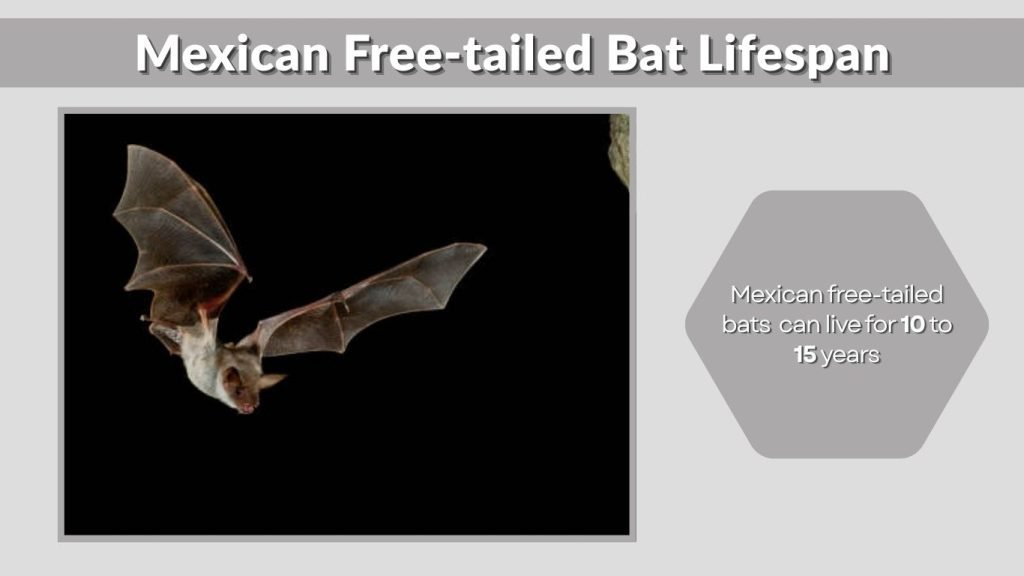
Mexican free-tailed bats can live relatively long lives for animals of their size.
Average Lifespan in the Wild
In the wild, these bats can live for 10 to 15 years, although some individuals may live even longer.
Factors Affecting Longevity
Several factors influence how long these bats live, including:
- Availability of food
- Habitat conditions
- Predators
- Environmental changes
Healthy habitats and abundant food sources increase their chances of survival.
Importance of Mexican Free-tailed Bats in the Ecosystem
Mexican free-tailed bats play a vital role in maintaining ecological balance.
Natural Pest Control
These bats consume enormous numbers of insects every night. Many of these insects are agricultural pests that damage crops.
This natural pest control helps farmers protect their crops without relying heavily on chemical pesticides.
Agricultural Benefits
Because they reduce pest populations, Mexican free-tailed bats save farmers millions of dollars each year in crop protection.
Their presence is extremely beneficial to agricultural ecosystems.
Maintaining Ecological Balance
By controlling insect populations, these bats help maintain balanced ecosystems that support a wide variety of plants and animals.
Threats to Mexican Free-tailed Bats
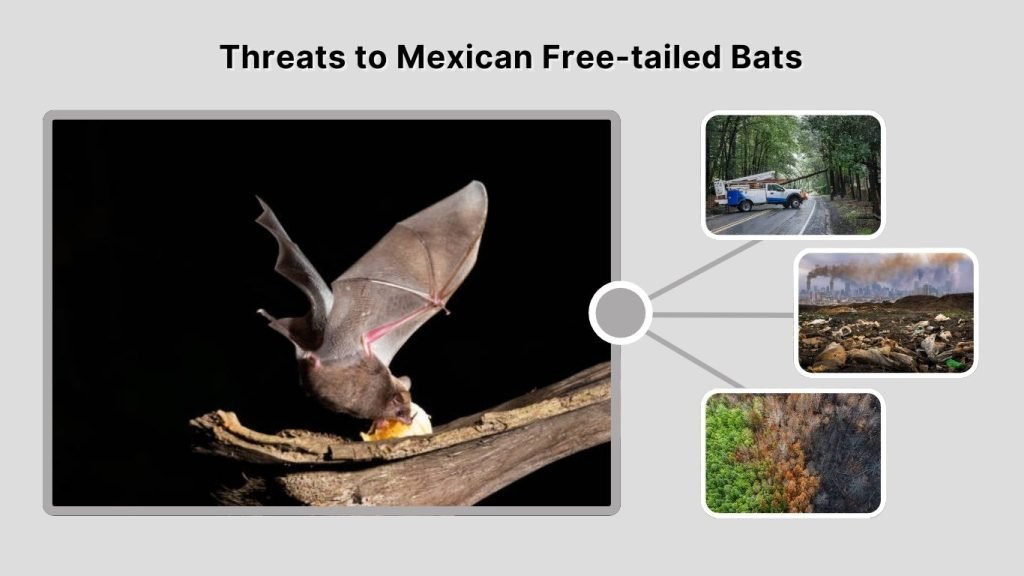
Despite their benefits, Mexican free-tailed bats face several threats.
Habitat Disturbance
Human activities such as construction and cave disturbances can disrupt bat colonies.
Environmental Pollution
Pesticides and pollution may reduce insect populations, which affects the bats’ food supply.
Climate Change
Changes in climate may alter migration patterns and insect availability.
Conservation Efforts
Many conservation programs aim to protect bat populations and their habitats.
Protection of Bat Habitats
Protecting caves and roosting areas helps ensure that large bat colonies can continue to thrive.
Bat Conservation Programs
Wildlife organizations study bat populations and work to raise awareness about their importance.
Public Awareness
Educational programs help people understand that bats are beneficial animals rather than pests.
Interesting Mexican Free-tailed Bat Facts
Here are some fascinating facts about Mexican free-tailed bats:
- They are among the fastest flying mammals in the world.
- Some colonies contain millions of bats.
- They can fly over 160 km/h during fast flight.
- They can fly high above the ground to hunt insects.
- Their colonies provide important natural pest control.
FAQs
Where do Mexican free-tailed bats live?
Mexican free-tailed bats live throughout the United States, Mexico, Central America, and parts of South America.
What do Mexican free-tailed bats eat?
They mainly eat flying insects, including moths, beetles, mosquitoes, and other agricultural pests.
How fast can Mexican free-tailed bats fly?
They can reach speeds of up to about 160 km/h (100 mph), making them one of the fastest flying mammals.
How long do Mexican free-tailed bats live?
Mexican free-tailed bats typically live 10 to 15 years in the wild.
Conclusion
The Mexican free-tailed bat is a remarkable species known for its speed, large colonies, and important role in controlling insect populations. Found across the Americas, these bats contribute greatly to agriculture and ecosystem balance by consuming large numbers of pests every night. Although they face threats such as habitat disturbance and environmental changes, conservation efforts can help protect their populations. Understanding and appreciating the Mexican free-tailed bat is essential for preserving these beneficial mammals and the ecosystems they support.