
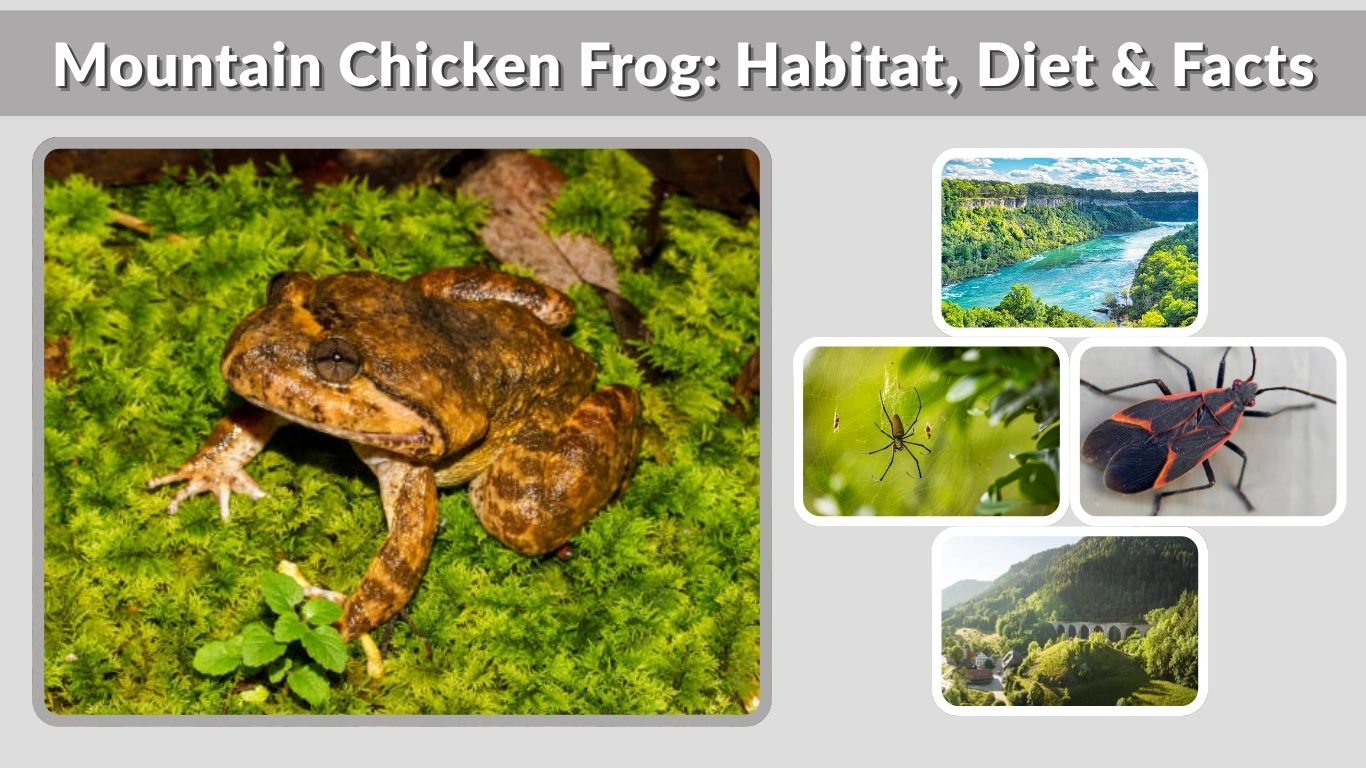
The Mountain Chicken Frog is one of the largest and rarest frogs in the world. Native to the Caribbean islands of Dominica and Montserrat, this remarkable amphibian is known for its unusual name and impressive size. Once abundant in its forest habitats, the species has suffered dramatic population declines in recent decades. Today, it stands as a powerful symbol of both biodiversity and conservation challenges in the Caribbean region.
What Is the Mountain Chicken Frog?
The Mountain Chicken Frog, scientifically known as Leptodactylus fallax, belongs to the family Leptodactylidae. It is widely recognized as one of the largest frog species on Earth. Adult frogs can grow up to 20 centimeters (8 inches) in length and weigh over 1 kilogram (2.2 pounds), making them true giants among amphibians.
This species has a robust body, long muscular legs, and a broad head with large, alert eyes. Its skin is typically brown, olive, or mottled with darker markings, helping it blend into forest floors and rocky terrain. Unlike brightly colored tropical frogs, the Mountain Chicken Frog relies on camouflage rather than warning colors for protection.
Despite its size, it is a secretive and shy animal. It spends much of its time hidden in burrows or under vegetation, emerging mainly at night to hunt. Its powerful hind legs allow it to leap impressive distances, both to capture prey and to escape predators.
Why Is It Called “Mountain Chicken”?
The unusual name “Mountain Chicken” often surprises people. The frog earned this nickname because its meat reportedly tastes similar to chicken. For generations, it has been considered a traditional delicacy in Dominica and Montserrat.
Historically, local communities hunted the frog for food, and it became culturally significant in Caribbean cuisine. In Dominica, it was even regarded as a national dish at one point. While the name may sound humorous, it reflects the frog’s deep connection to local traditions and livelihoods.
Unfortunately, heavy hunting pressure contributed significantly to the species’ population decline. Combined with other environmental threats, this cultural practice became unsustainable over time. Today, hunting the Mountain Chicken Frog is strictly regulated or banned in order to protect the few remaining wild populations.
Habitat and Distribution
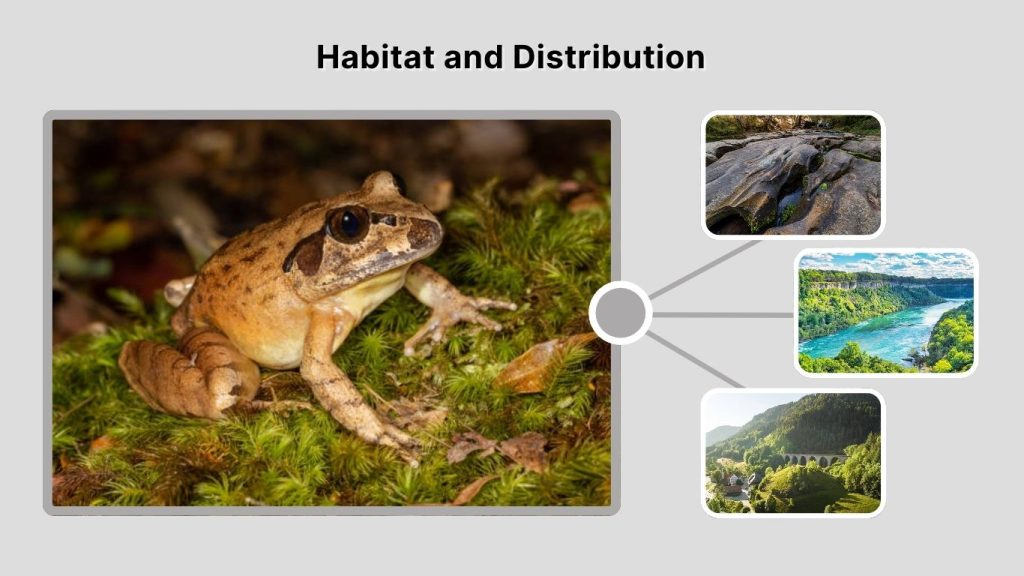
The Mountain Chicken Frog is native to just two Caribbean islands: Dominica and Montserrat. This extremely limited range makes the species especially vulnerable to environmental changes and natural disasters.
It prefers moist tropical forests, particularly mountainous regions with plenty of cover. The frog is commonly found near streams, ravines, and dense vegetation, where humidity levels remain high. It often digs burrows in soft soil or hides in natural crevices among rocks and tree roots.
Unlike many frog species that depend heavily on open water, the Mountain Chicken Frog is more terrestrial. It spends most of its life on land rather than in ponds or lakes. However, it still requires damp environments to prevent its skin from drying out, as amphibians absorb moisture directly through their skin.
Because the species exists in such a small geographic area, events like hurricanes, volcanic eruptions, and habitat destruction can have devastating effects. In Montserrat, volcanic activity in the 1990s destroyed large portions of its habitat, dramatically reducing local populations.
Diet and Feeding Behavior
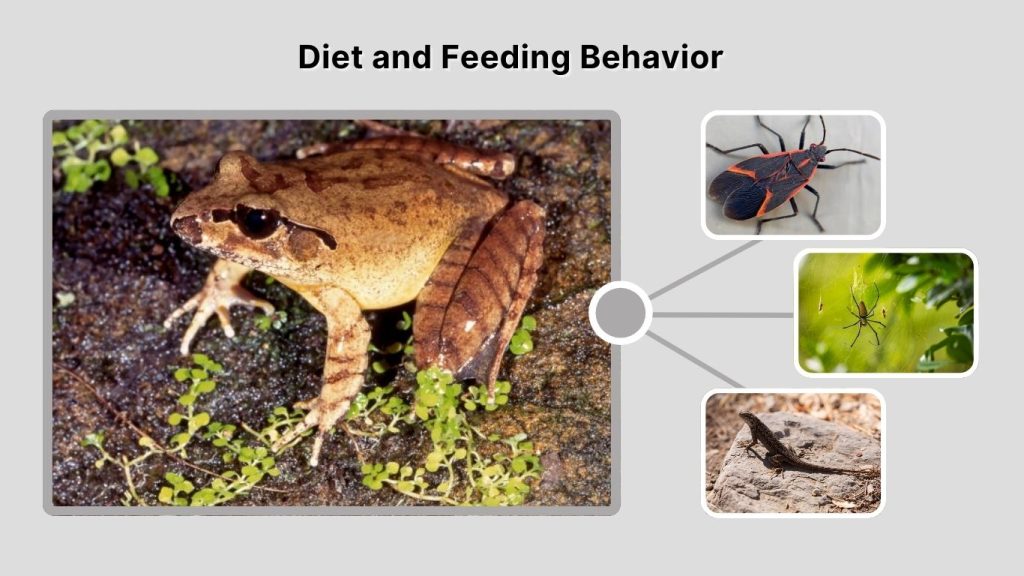
The Mountain Chicken Frog is a carnivorous predator with a varied diet. It feeds on insects, spiders, small reptiles, and even other frogs. Its large size allows it to consume prey much bigger than what most frog species can handle.
This frog is an ambush hunter. It remains still and well-camouflaged, waiting patiently for prey to approach. When an opportunity arises, it uses its powerful legs to lunge forward and capture its meal with a quick snap of its jaws.
Its diet plays an important ecological role. By controlling insect and small animal populations, the Mountain Chicken Frog helps maintain balance within its forest ecosystem. The loss of such a predator can disrupt food chains and affect other species within the same habitat.
Unique Behavior and Reproduction
The Mountain Chicken Frog has one of the most fascinating reproductive strategies among amphibians. Unlike many frogs that lay eggs directly in water, this species breeds in underground burrows. During the rainy season, males call loudly to attract females, producing deep, booming sounds that can travel long distances through the forest.
After mating, the female lays her eggs inside a burrow chamber. When the eggs hatch, the tadpoles remain in the burrow rather than moving into open water. What makes this process remarkable is the mother’s role in feeding them. She produces unfertilized eggs specifically as food for her developing young. The tadpoles feed on these nutrient-rich eggs until they are ready to transform into fully formed froglets.
This level of parental care is rare among frogs and gives the Mountain Chicken Frog a reproductive advantage in environments where standing water may be limited. However, because the species produces relatively small numbers of offspring compared to other frogs, population recovery can be slow when numbers decline.
Threats to the Mountain Chicken Frog
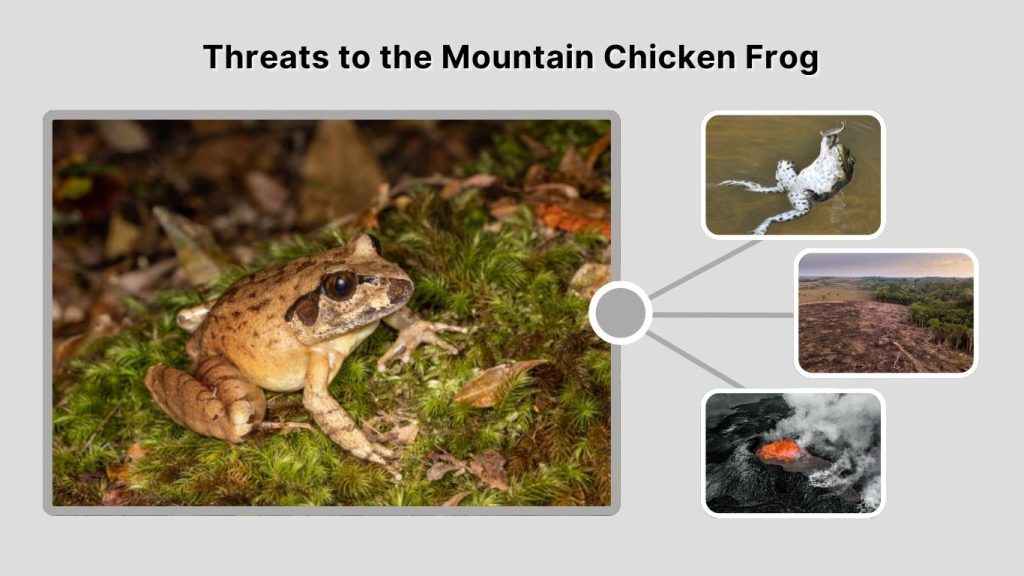
The Mountain Chicken Frog faces several serious threats, many of which have pushed it to the brink of extinction.
Overhunting
For many years, the frog was heavily hunted for food. Its large size made it an easy and desirable target. While hunting was once culturally important, excessive harvesting significantly reduced wild populations.
Habitat Destruction
Deforestation, agriculture, and land development have reduced the frog’s natural habitat. Because it exists only on two islands, even small habitat losses can have a major impact on overall population numbers.
Volcanic Activity
In Montserrat, volcanic eruptions during the 1990s destroyed large areas of forest habitat. Entire populations were wiped out, leaving only scattered survivors in unaffected regions.
Chytridiomycosis
The most devastating threat has been a fungal disease known as chytridiomycosis. Caused by the chytrid fungus (Batrachochytrium dendrobatidis), this disease affects amphibian skin and interferes with their ability to absorb water and electrolytes. Since amphibians rely on their skin for essential bodily functions, infection can quickly become fatal.
When the fungus reached Dominica and Montserrat in the early 2000s, it caused catastrophic population crashes. In some areas, more than 80–90% of the frogs disappeared within a short period. Today, this disease remains the primary challenge to the species’ survival.
Conservation Status and Efforts
The Mountain Chicken Frog is currently classified as Critically Endangered on the IUCN Red List. This designation means it faces an extremely high risk of extinction in the wild.
Conservation efforts are ongoing and involve both local governments and international organizations.
Captive Breeding Programs
Zoos and conservation centers have established captive breeding programs to protect remaining individuals. These programs aim to maintain healthy populations in controlled environments while scientists research disease resistance and potential reintroduction strategies.
Disease Monitoring and Research
Researchers are studying chytrid fungus to better understand how it spreads and how frogs might develop resistance. Biosecurity measures, including disinfecting equipment and limiting human movement between habitats, help reduce further transmission.
Legal Protection and Public Awareness
Hunting bans and wildlife protection laws are now in place. Public education campaigns in Dominica and Montserrat encourage communities to protect the species and support conservation initiatives.
Saving the Mountain Chicken Frog requires long-term commitment, but ongoing efforts provide hope that the species can recover.
Interesting Facts About the Mountain Chicken Frog
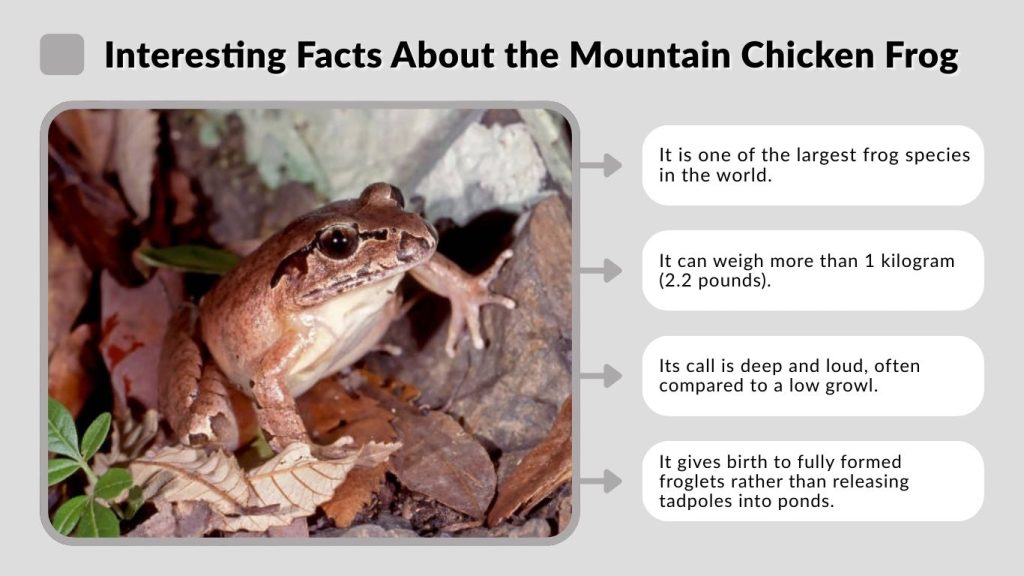
- It is one of the largest frog species in the world.
- It can weigh more than 1 kilogram (2.2 pounds).
- Its call is deep and loud, often compared to a low growl.
- It gives birth to fully formed froglets rather than releasing tadpoles into ponds.
- It was once considered a national dish in Dominica.
- Its population declined by more than 80% in some regions due to disease.
FAQs
What is the scientific name of the Mountain Chicken Frog?
The scientific name of the Mountain Chicken Frog is Leptodactylus fallax. It belongs to the Leptodactylidae family and is one of the largest frog species in the world. This species is native only to the Caribbean islands of Dominica and Montserrat.
Why is the Mountain Chicken Frog endangered?
The Mountain Chicken Frog is endangered due to overhunting, habitat destruction, volcanic activity, and especially a fungal disease called chytridiomycosis. The disease caused rapid population declines, wiping out large numbers of frogs within just a few years.
Where can the Mountain Chicken Frog be found?
This frog is found only on the Caribbean islands of Dominica and Montserrat. It lives in moist tropical forests, particularly in mountainous areas with high humidity and access to shelter such as burrows and dense vegetation.
How big is the Mountain Chicken Frog?
The Mountain Chicken Frog can grow up to 20 centimeters (8 inches) long and weigh over 1 kilogram (2.2 pounds). Its large size makes it one of the biggest frog species in the world.
What does the Mountain Chicken Frog eat?
The Mountain Chicken Frog is carnivorous. It eats insects, spiders, small reptiles, and even other frogs. It hunts by ambushing prey and uses its powerful legs to quickly capture its meal.