




Mourning geckos are small, fascinating reptiles best known for their ability to reproduce without males. These tiny tropical lizards are easy to care for, highly active, and perfect for bioactive setups. Whether you’re researching mourning gecko care, enclosure setup, diet, or reproduction, this complete guide covers everything beginners and experienced keepers need to know before bringing one home.
What Is a Mourning Gecko?
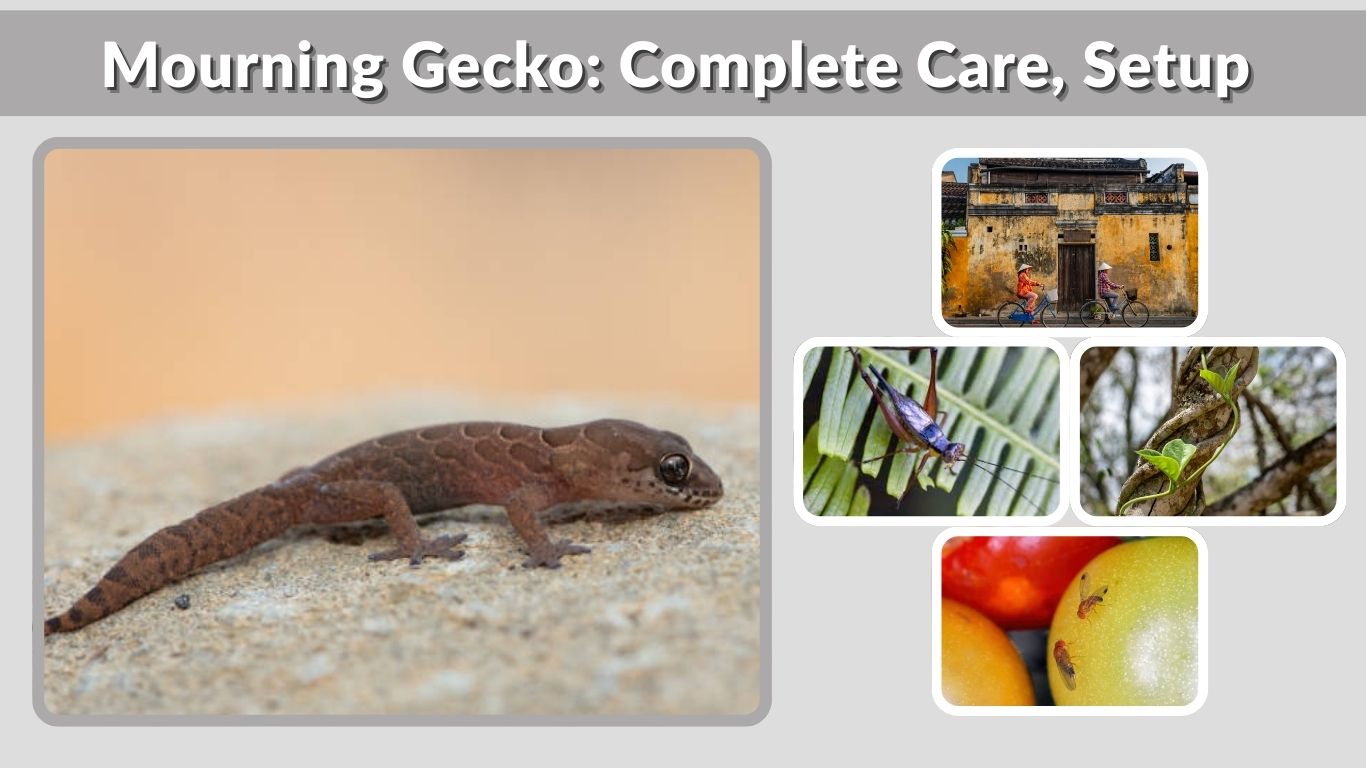
The mourning gecko (Lepidodactylus lugubris) is a small, tropical gecko species native to the Pacific Islands. They’re commonly called the Hawaiian mourning gecko due to their presence in Hawaii, though they are widespread throughout tropical regions.
What makes the mourning gecko truly unique is that nearly all individuals are female.
Mourning Gecko Scientific Name
- Scientific name: Lepidodactylus lugubris
- Common name: Mourning gecko
- Family: Gekkonidae
They are sometimes referred to as the “asexual gecko” because of their unusual reproduction method.
Mourning Gecko Facts
- Fully capable of asexual reproduction (parthenogenesis)
- Small adult size (3–4 inches)
- Nocturnal and highly active climbers
- Communicate using soft chirping sounds
- Thrive in tropical, humid environments
Their hardy nature and fascinating biology make them a popular choice for both beginners and advanced reptile keepers.
Mourning Gecko Size & Lifespan
Understanding mourning gecko size and lifespan helps you prepare for long-term care.
How Big Do Mourning Geckos Get?
Adult mourning geckos reach:
- 3 to 4 inches in total length
- Slender body with long tail
- Lightweight and delicate build
Because of their small size, they can escape through very small gaps, so secure enclosures are essential.
Mourning Gecko Lifespan
With proper care, a mourning gecko typically lives:
- 5 to 10 years
- Occasionally longer in optimal conditions
Proper temperature, humidity, diet, and supplementation significantly impact lifespan.
Mourning Gecko Habitat in the Wild
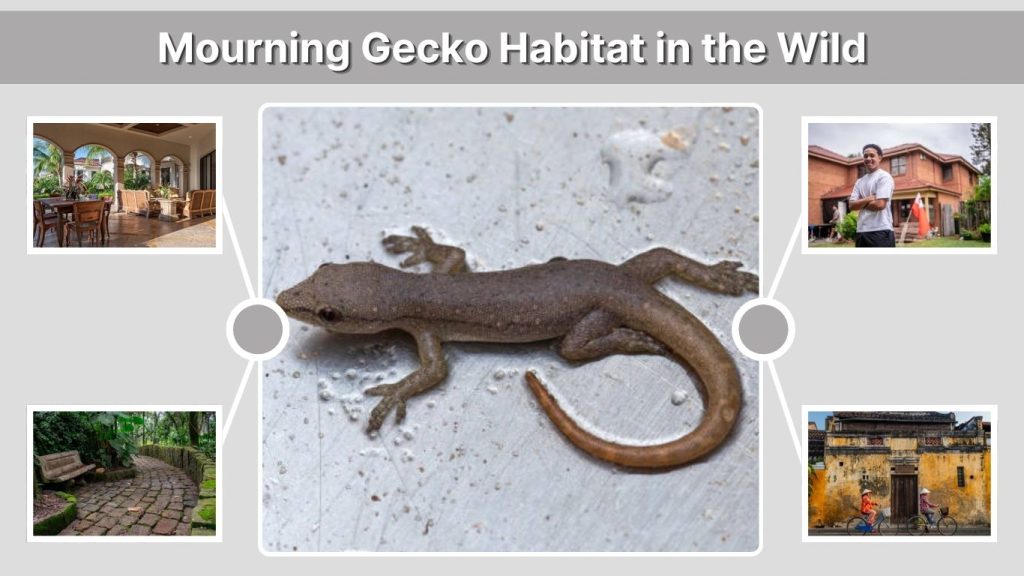
Mourning geckos originate from:
- Pacific Islands
- Southeast Asia
- Hawaii
- Parts of Central and South America (introduced populations)
They thrive in:
- Tropical forests
- Coastal regions
- Urban areas in warm climates
In the wild, they prefer:
- Warm temperatures
- High humidity
- Vertical surfaces for climbing
- Dense vegetation
Replicating this tropical habitat is key to successful mourning gecko care in captivity.
Mourning Gecko Care Guide
Mourning geckos are relatively low-maintenance but require proper tropical conditions.
Mourning Gecko Enclosure Size
Because they are small but active climbers, vertical space is more important than floor space.
Minimum enclosure size:
- 12″x12″x18″ (30x30x45 cm) for a small colony
Since mourning geckos reproduce easily, most keepers house them in small colonies rather than individually.
For larger groups:
- 18″x18″x24″ terrarium is ideal
Mourning Gecko Tank Size vs Terrarium vs Vivarium
You may see different terms used:
- Tank – Basic glass enclosure
- Terrarium – Designed for reptiles with ventilation
- Vivarium – Often bioactive with live plants
A planted bioactive vivarium works exceptionally well for mourning geckos.
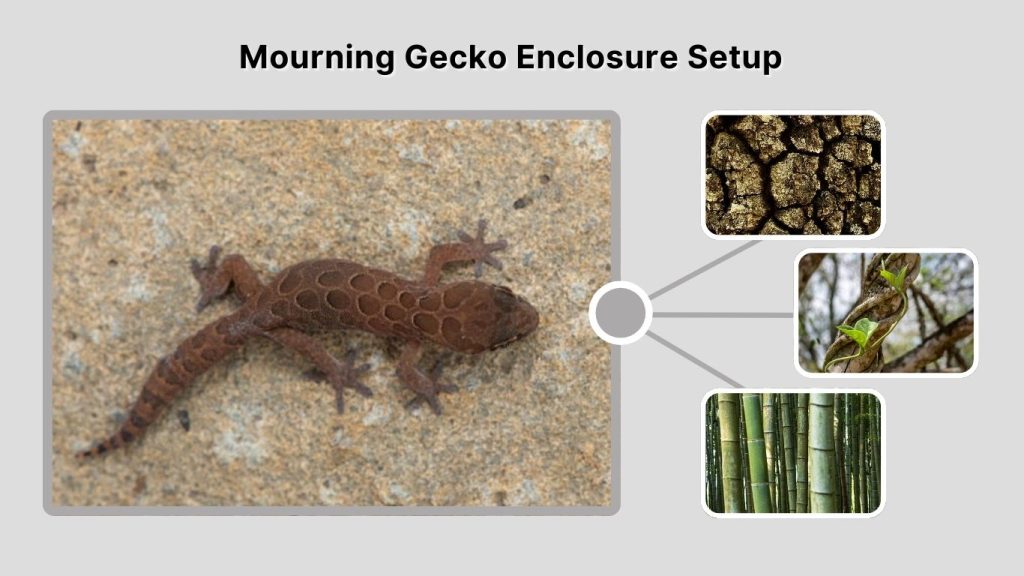
Mourning Gecko Enclosure Setup
Creating a naturalistic setup keeps them active and stress-free.
Vertical Climbing Space
- Cork bark backgrounds
- Branches and vines
- Bamboo sections
They spend most of their time climbing rather than on the ground.
Mourning Gecko Plants
Live plants help maintain humidity and provide hiding spots. Great options include:
- Pothos
- Bromeliads
- Ficus pumila
- Philodendron
Bioactive setups also help manage waste and support egg-laying.
Egg Tubes
Mourning geckos lay eggs in tight spaces. Many keepers provide:
- Bamboo tubes
- Cork rounds
- Commercial egg tubes
These make egg collection easier if you plan on breeding.
Mourning Gecko Temperature & Humidity
Maintaining correct environmental conditions is essential.
Mourning Gecko Temperature
Ideal range:
- Daytime: 22–28°C (72–82°F)
- Night: Slight drop is fine (20–22°C)
They do not require intense heat lamps. A low-wattage heat source or warm room temperature often works.
Mourning Gecko Humidity
Target humidity:
- 60–80%
Mist the enclosure:
- Light mist in the morning
- Heavier mist at night
Proper ventilation prevents mold while maintaining moisture.
Do Mourning Geckos Need UVB?
This is a common question.
Mourning geckos do not strictly require UVB lighting if they receive proper calcium and vitamin D3 supplementation. However:
- Low-level UVB (2–5%) is beneficial
- Supports natural behaviors
- Improves overall health
If using UVB, ensure they have shaded areas to avoid overexposure.
Mourning Gecko Diet
A proper diet is simple but must be balanced.
Mourning Gecko Food Options
Their diet consists of:
- Commercial Gecko Diet (CGD) – Primary food source
- Small insects – Fruit flies, pinhead crickets
- Occasional fruit puree
Feed 3–4 times per week.
Dust insects with calcium supplements regularly.
Baby Mourning Gecko Care
Baby mourning geckos are extremely small and delicate.
Baby Mourning Gecko Feeding
- Feed tiny fruit flies
- Provide small amounts of commercial gecko diet
- Ensure easy access to food ledges
Preventing Escape
Because babies are tiny:
- Use fine mesh ventilation
- Seal all enclosure gaps
- Avoid large front-opening gaps
Keeping humidity stable is especially important for hatchlings.
This completes the first half of the article, covering:
- Overview
- Size & lifespan
- Habitat
- Complete enclosure setup
- Temperature & humidity
- UVB needs
- Diet
- Baby care
Mourning Gecko Reproduction & Breeding
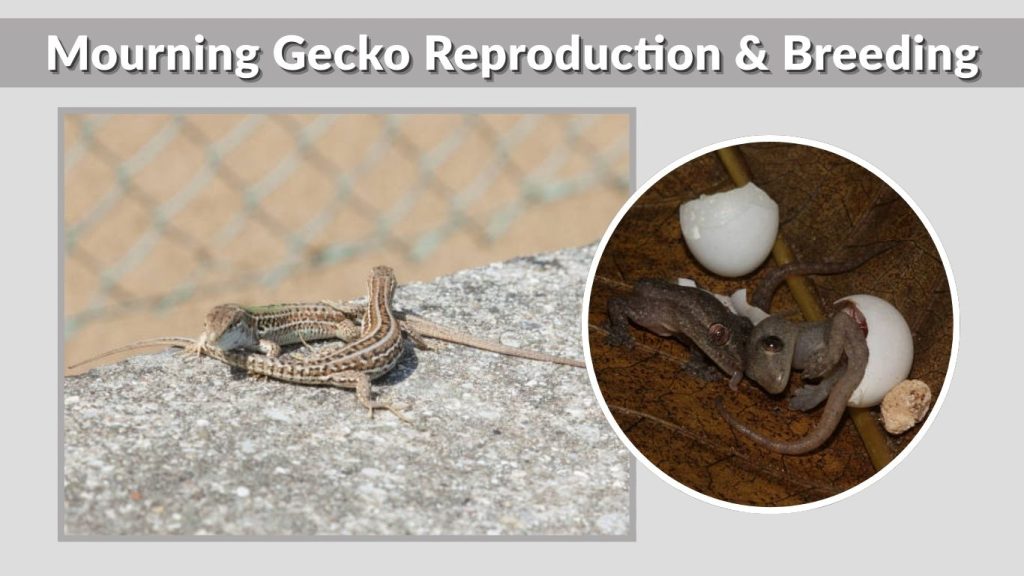
One of the most fascinating aspects of the mourning gecko is its ability to reproduce without males.
Mourning Gecko Parthenogenesis Explained
Mourning geckos reproduce through parthenogenesis, a form of asexual reproduction. This means:
- Almost all individuals are female
- No male is required for reproduction
- Offspring are genetic clones of the mother
This is why mourning geckos reproduce on their own in captivity.
However, despite being clones, slight variations can occur due to environmental influences and rare hybridization events in the wild.
How Do Mourning Geckos Reproduce?
Mourning geckos:
- Lay eggs every 4–6 weeks
- Usually lay two eggs at a time
- Often glue eggs to surfaces inside the enclosure
Because they reproduce frequently, population control becomes important in colony setups.
Mourning Gecko Eggs
Understanding mourning gecko egg care is essential if you plan to breed them.
How Long Do Mourning Gecko Eggs Take to Hatch?
Incubation typically lasts:
- 45 to 70 days
- Warmer temperatures = faster hatching
- Cooler temperatures = slower development
Eggs are usually hard-shelled and attached to decor.
Mourning Gecko Egg Care
There are two approaches:
1. Leave Eggs in the Enclosure
- Most common method
- Works well in stable colony setups
2. Remove Eggs to an Incubation Box
- Use egg tubes or removable bamboo
- Maintain 70–80% humidity
- Keep temperature stable
Avoid trying to forcibly remove glued eggs, as this can damage them.
Mourning Gecko Breeding Tips
If you want to intentionally breed mourning geckos:
- Provide egg tubes for easier collection
- Maintain consistent warmth (24–26°C ideal)
- Feed well and supplement calcium
- Prepare grow-out enclosures in advance
Since mourning geckos breed easily, many keepers quickly end up with baby mourning geckos.
Mourning Gecko Morphs & Types
While mourning geckos are genetically similar due to parthenogenesis, there are recognized variations.
Type C Mourning Geckos
Type C mourning geckos are one of the more commonly referenced forms in the hobby.
They may show:
- Slight pattern variations
- Differences in coloration
- Regional genetic differences
Other Mourning Gecko Morphs
You may see variations labeled as:
- Hawaiian mourning gecko
- Yellowish or darker pattern types
- Line-bred pattern differences
True “morphs” are limited compared to other reptile species, but subtle variations exist.
Mourning Gecko Tank Mates
Because they are small and peaceful, some keepers experiment with cohabitation.
Mourning Gecko and Dart Frog
Mourning geckos are sometimes housed with dart frogs in large, well-established bioactive vivariums.
Pros:
- Similar humidity needs
- Similar temperature range
Risks:
- Competition for food
- Stress
- Egg predation
Cohabitation should only be attempted by experienced keepers with proper monitoring.
Mourning Gecko Price & Cost
If you’re searching for mourning geckos for sale, pricing can vary depending on location and availability.
Mourning Gecko Price
Average prices:
- UK: £25–£60 per gecko
- US: $30–$80 per gecko
Type C or rarer lines may cost more.
Mourning Gecko Cost (Full Setup)
Initial setup costs typically include:
- Terrarium or vivarium
- Lighting
- Plants & decor
- Commercial gecko diet
- Supplements
Estimated total setup cost:
- £150–£350 depending on enclosure quality
Mourning Geckos for Sale
If you’re looking for live mourning geckos for sale, here’s what to consider.
What to Look for in Healthy Mourning Geckos
- Clear eyes
- Full tail
- Active climbing behavior
- No visible injuries
- Healthy body weight
Avoid lethargic or thin individuals.
Mourning Gecko for Sale UK
Mourning geckos for sale in the UK are commonly available through:
- Reptile expos
- Local reptile shops
- Private breeders
- Online reptile marketplaces
Always check:
- Breeder reputation
- Feeding history
- Age of the gecko
Mourning Gecko Breeders UK
When choosing a breeder:
- Ask about hatch dates
- Confirm feeding on commercial gecko diet
- Ask about lineage (especially Type C lines)
Reputable breeders will answer care questions confidently.
Mourning Geckos for Sale Near Me
To find mourning geckos for sale near you:
- Search local reptile groups
- Visit reptile expos
- Check regional classified listings
Buying locally reduces shipping stress and allows you to inspect the gecko in person.
Mourning Geckos for Sale Cornwall
If you are located in Cornwall, options may include:
- Local reptile breeders
- UK-wide breeders offering safe courier shipping
- Reptile expos within travel distance
When buying in Cornwall:
- Confirm overnight reptile courier use
- Check live arrival guarantees
- Verify temperature-controlled shipping
Since mourning geckos are small and delicate, proper packaging is critical.
Mourning Gecko Habitat Summary (Quick Reference)
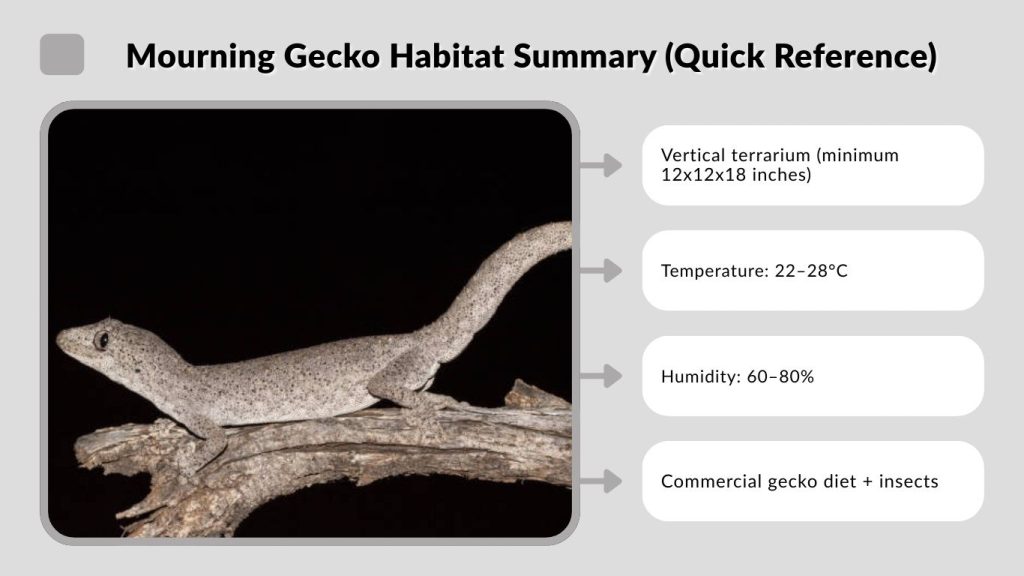
To successfully keep mourning geckos:
- Vertical terrarium (minimum 12x12x18 inches)
- Temperature: 22–28°C
- Humidity: 60–80%
- Commercial gecko diet + insects
- Optional low-level UVB
- Provide egg-laying tubes
FAQs
Do Mourning Geckos Need UVB?
Mourning geckos do not strictly require UVB if properly supplemented with calcium and vitamin D3. However, low-level UVB lighting can support natural behavior and long-term health. If used, provide shaded areas to prevent overexposure and maintain a natural day-night cycle.
How Do Mourning Geckos Reproduce?
Mourning geckos reproduce through parthenogenesis, meaning females produce fertile eggs without males. The offspring are genetic clones of the mother. They typically lay two eggs every 4–6 weeks under proper temperature and feeding conditions.
How Long Do Mourning Gecko Eggs Take to Hatch?
Mourning gecko eggs usually hatch within 45–70 days. Warmer incubation temperatures speed up development, while cooler temperatures slow it down. Maintaining stable humidity and avoiding egg disturbance increases hatch success.
What Size Tank Do Mourning Geckos Need?
A minimum enclosure size of 12″x12″x18″ is recommended for a small colony. Vertical space is more important than floor space. Larger groups benefit from 18″x18″x24″ enclosures to prevent overcrowding as they reproduce.