
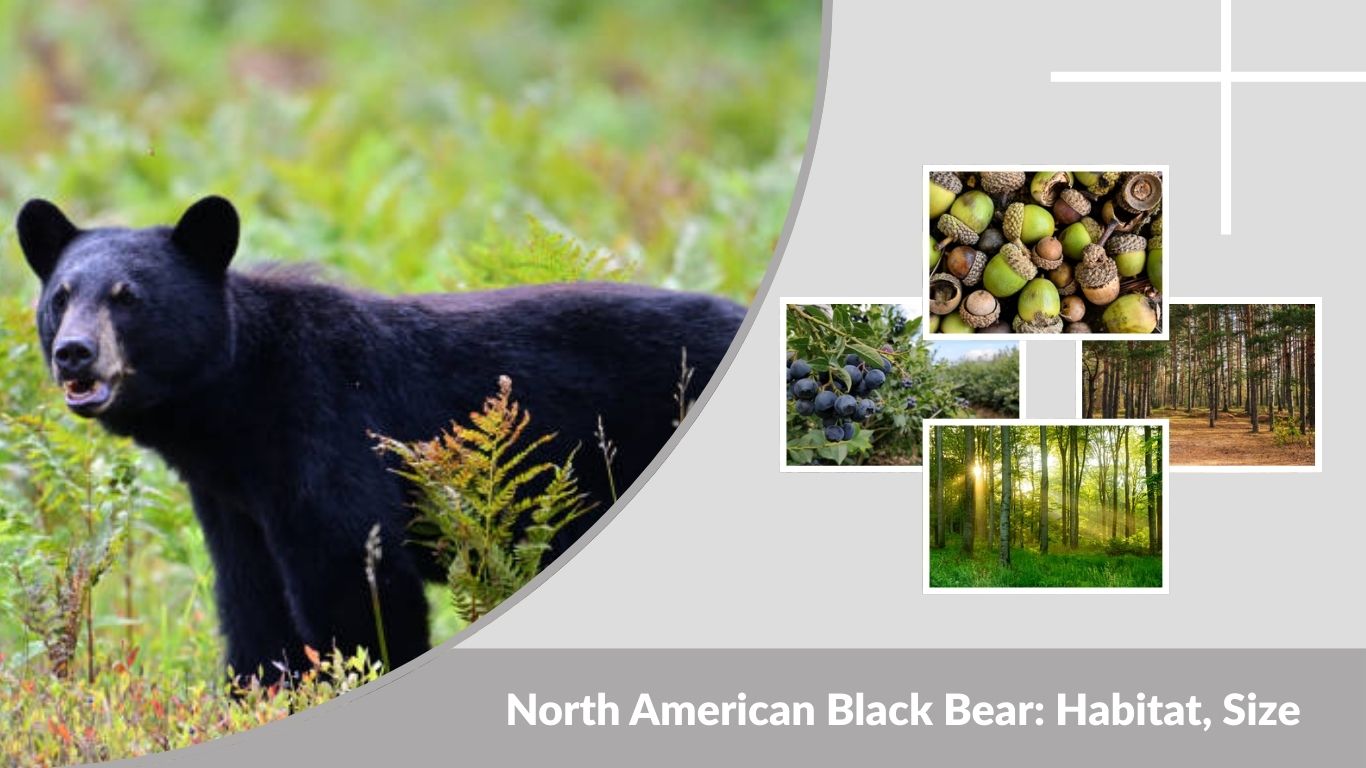
The North American black bear is one of the most widespread and adaptable large mammals on the continent. Known scientifically as Ursus americanus, this species lives across Canada, the United States, and parts of northern Mexico. Although often called simply the black bear, it shows surprising variation in size, color, and behavior depending on location. From dense forests to mountain ranges, the North American black bear has developed remarkable survival skills that allow it to thrive in diverse environments.
What Is the North American Black Bear?
Scientific Name and Classification
The scientific name of the North American black bear is Ursus americanus. It belongs to the family Ursidae, which includes other bear species such as the grizzly bear and polar bear. As a member of the order Carnivora, it is technically classified as a carnivore, but in reality, its diet is largely omnivorous.
This species is native only to North America and has several recognized subspecies, each adapted to specific regions. Its long evolutionary history has shaped it into a highly flexible and resilient animal capable of surviving in a wide range of climates.
Why It’s Called the “Black” Bear
Despite its name, the North American black bear is not always black. While many individuals do have glossy black fur, others may appear brown, cinnamon, blonde, or even bluish-gray. In parts of British Columbia, a rare white-coated variation known as the Kermode or “spirit bear” can be found.
The name “black bear” mainly distinguishes it from the larger brown bear (often called the grizzly). Unlike grizzly bears, black bears have a straight facial profile, rounded ears, and lack the prominent shoulder hump.
North American Black Bear Size and Physical Characteristics
Average Size and Height
The North American black bear varies significantly in size depending on age, sex, and geographic location. Adult males are typically much larger than females. On average, these bears measure between 4 and 6 feet long from nose to tail.
When walking on all fours, they stand about 2 to 3 feet tall at the shoulder. However, when standing upright on their hind legs, they may reach heights of 5 to 7 feet. Standing upright is usually a sign of curiosity rather than aggression, as bears use this posture to improve their sense of smell and sight.
North American Black Bear Weight
North American black bear weight ranges widely. Adult males generally weigh between 130 and 660 pounds, while females usually weigh between 90 and 300 pounds. Bears living in areas with abundant food sources tend to grow larger than those in regions where food is less available.
Weight also changes throughout the year. In fall, black bears enter a period known as hyperphagia, during which they consume large amounts of food to build fat reserves for winter. During this time, they may gain substantial weight in preparation for months of dormancy.
Distinct Physical Features
The North American black bear has a muscular body covered in thick fur that helps insulate it during cold winters. Its short, curved claws are well suited for climbing trees, digging, and tearing apart logs in search of insects.
One of its most powerful tools is its sense of smell, which is far stronger than that of humans. This keen sense allows the bear to locate food from long distances. Combined with strong limbs and flexible paws, these physical features make it an efficient climber, swimmer, and forager.
North American Black Bear Habitat
Preferred Habitat Types
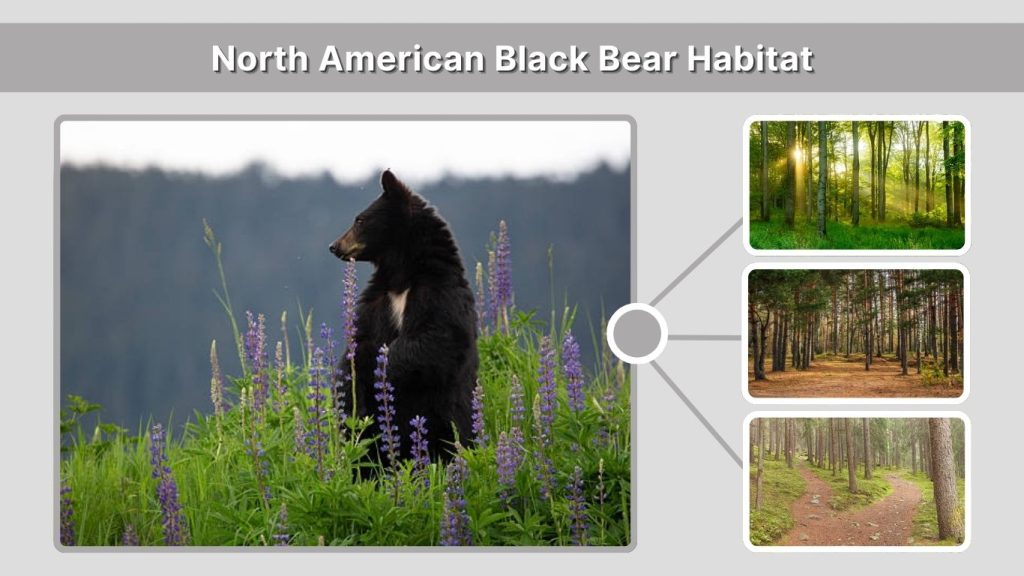
The North American black bear primarily inhabits forested areas. Deciduous forests, coniferous forests, and mixed woodlands provide the best conditions because they offer both shelter and food. Dense vegetation helps bears remain concealed, while trees supply fruits, nuts, and insects.
They are also found in mountainous regions, swamps, and wetlands. In many areas, they adapt to environments near human settlements, especially where forests border suburban communities.
Geographic Range and Locations
The geographic range of the North American black bear is extensive. Canada supports some of the largest populations due to its vast forest landscapes. In the United States, significant populations exist in Alaska, the Appalachian Mountains, the Rocky Mountains, and parts of the West Coast.
Small populations are also found in northern Mexico. This wide distribution highlights the species’ adaptability to different climates, from cold northern forests to warmer southern regions.
Denning and Winter Shelter
As winter approaches, the North American black bear prepares for a period of dormancy. It creates a den in a sheltered location, such as a hollow tree, rock crevice, or ground cavity lined with leaves and vegetation.
During winter, the bear’s heart rate and metabolism slow dramatically. Although often described as hibernation, black bears remain somewhat alert and can awaken if disturbed. This adaptation allows them to survive months without eating, drinking, or eliminating waste.
North American Black Bear Diet
What Do North American Black Bears Eat?
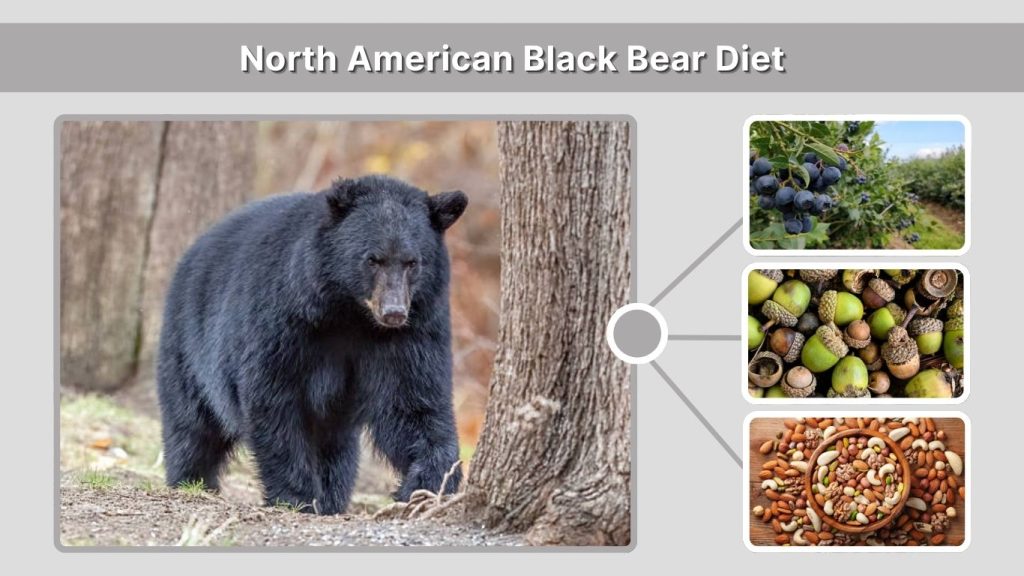
The North American black bear is an omnivore, meaning it eats both plant and animal matter. In fact, the majority of its diet—often 70 to 80 percent—comes from plant-based foods. This flexible diet is one of the main reasons the species has been so successful across different regions.
Common plant foods include berries, acorns, nuts, grasses, roots, and leaves. In forested habitats, seasonal fruits and mast crops such as acorns are especially important. Black bears also consume insects like ants, termites, and beetle larvae, which provide valuable protein.
Although they are not active predators in the same way as large cats or wolves, North American black bears may eat fish, small mammals, bird eggs, and carrion when available. In coastal regions, some bears feed heavily on salmon during spawning seasons.
Seasonal Feeding Patterns
The diet of the North American black bear changes with the seasons. In spring, bears focus on tender vegetation, grasses, and leftover carcasses from winter. As summer arrives, berries and fruits become major food sources.
Fall is the most critical feeding period. During this time, black bears enter hyperphagia, consuming massive amounts of food to build fat reserves. They may eat up to 20,000 calories per day. These fat stores sustain them throughout winter dormancy, when they may go several months without eating.
Role in the Ecosystem
North American black bears play an important ecological role. By consuming fruits and berries, they help disperse seeds across large areas, contributing to forest regeneration. Their feeding habits also help control insect populations and clean up carrion, which supports ecosystem balance.
North American Black Bear Behavior
Daily Activity Patterns
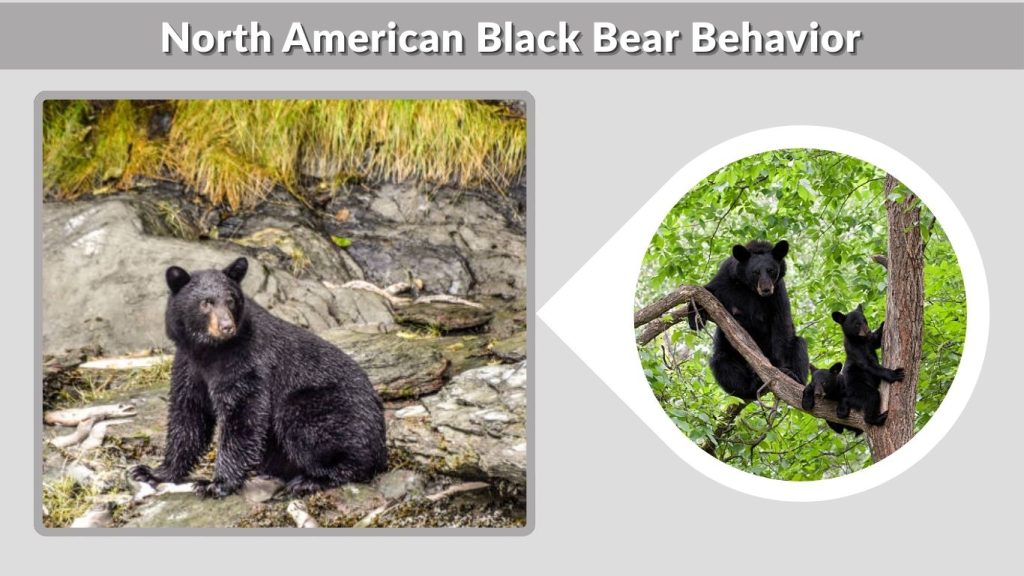
The North American black bear is generally solitary. Adult bears prefer to live and forage alone, except during mating season or when a mother is raising cubs. Each bear occupies a home range that may overlap with others, but direct interaction is usually limited.
They are most active during early morning and late evening, a pattern known as crepuscular behavior. In remote areas with little human disturbance, they may also be active during the day.
Hibernation Behavior
One of the most fascinating aspects of North American black bear behavior is winter dormancy. As temperatures drop and food becomes scarce, they retreat to their dens. During this period, their heart rate slows, and their metabolism decreases significantly.
Unlike some small mammals, black bears do not enter a deep hibernation from which they are impossible to wake. They remain in a lighter state of dormancy and can respond to threats if necessary. Female bears give birth to cubs during winter, usually in January or February, while still in the den.
Communication and Intelligence
Black bears communicate through body language, vocalizations, and scent marking. They may rub against trees, leave claw marks, or deposit scent to signal their presence. When feeling threatened, they may huff, growl, or swat the ground as a warning.
The North American black bear is considered highly intelligent. It demonstrates strong memory and problem-solving skills, especially when locating food sources. This intelligence contributes to its ability to adapt to changing environments, including areas near human development.
Life Cycle and Reproduction
Mating Season
Mating season typically occurs in late spring or early summer. A unique reproductive adaptation called delayed implantation allows the fertilized egg to remain dormant until fall. If the female has not accumulated enough fat reserves, pregnancy may not continue.
Cubs and Maternal Care
Cubs are born during winter dormancy and usually number between one and three. At birth, they are tiny, blind, and helpless, weighing less than a pound. The mother nurses and protects them inside the den until spring.
Cubs remain with their mother for about 16 to 18 months. During this time, she teaches them how to forage, climb, and avoid danger. After separating, young bears establish their own territories.
Lifespan
The average lifespan of a North American black bear in the wild is around 20 years, though many face risks that shorten their lives. In protected environments or captivity, they may live beyond 25 years.
Threats and Conservation
Natural Threats
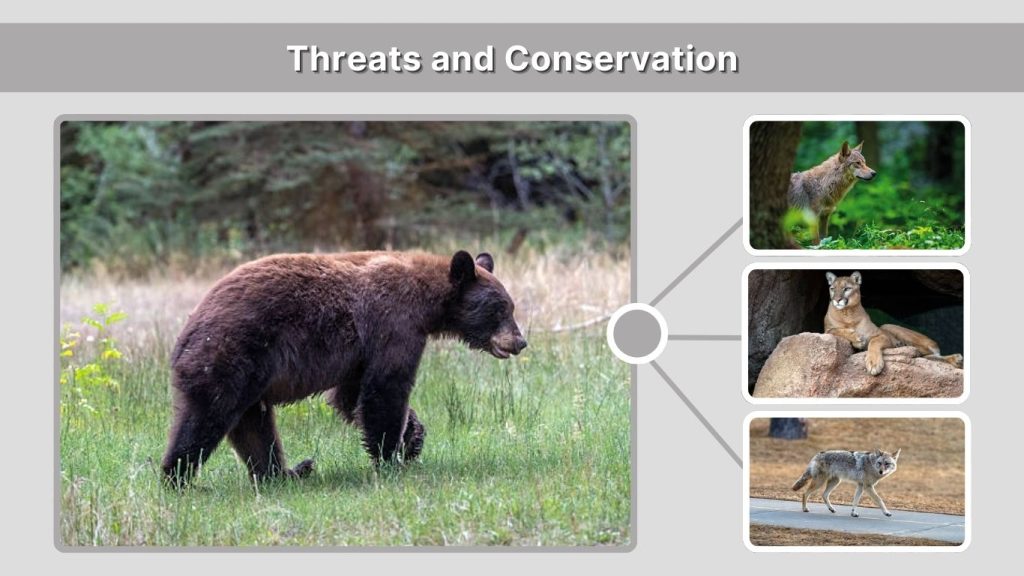
Adult North American black bears have few natural predators. However, cubs may be vulnerable to wolves, coyotes, mountain lions, and even adult male bears. Disease and harsh weather can also impact survival.
Human-Related Threats
The primary threats to the North American black bear come from human activity. Habitat loss due to urban expansion reduces natural living space. Vehicle collisions are a significant cause of mortality in some regions.
Hunting is legal in many areas but is typically regulated to maintain stable populations. Improper waste management can also lead to food-conditioned bears, increasing the likelihood of human-bear conflicts.
Conservation Status
Overall, the North American black bear is considered a species of Least Concern in most regions, thanks to healthy and stable populations. Conservation efforts focus on habitat preservation, wildlife corridors, and public education programs that promote coexistence between humans and bears.
FAQs
How big is a North American black bear?
A North American black bear typically measures 4 to 6 feet long and stands about 2 to 3 feet tall at the shoulder. When upright, it can reach up to 7 feet in height. Males are usually much larger and heavier than females.
What is the average weight of a North American black bear?
Adult males generally weigh between 130 and 660 pounds, while females range from 90 to 300 pounds. Weight varies depending on region, food availability, and season, especially before winter when bears gain fat for dormancy.
Where do North American black bears live?
North American black bears live across Canada, the United States, and parts of northern Mexico. They prefer forested habitats but can also be found in mountains, wetlands, and areas near human settlements where food is accessible.
What do North American black bears eat?
They are omnivores and eat mostly plant-based foods such as berries, nuts, grasses, and roots. They also consume insects, fish, small mammals, and carrion. Their diet changes with the seasons depending on available food sources.
Are North American black bears dangerous to humans?
North American black bears are generally shy and avoid people. Attacks are rare and usually occur when a bear feels threatened or becomes accustomed to human food. Proper food storage and maintaining distance help reduce conflicts.