


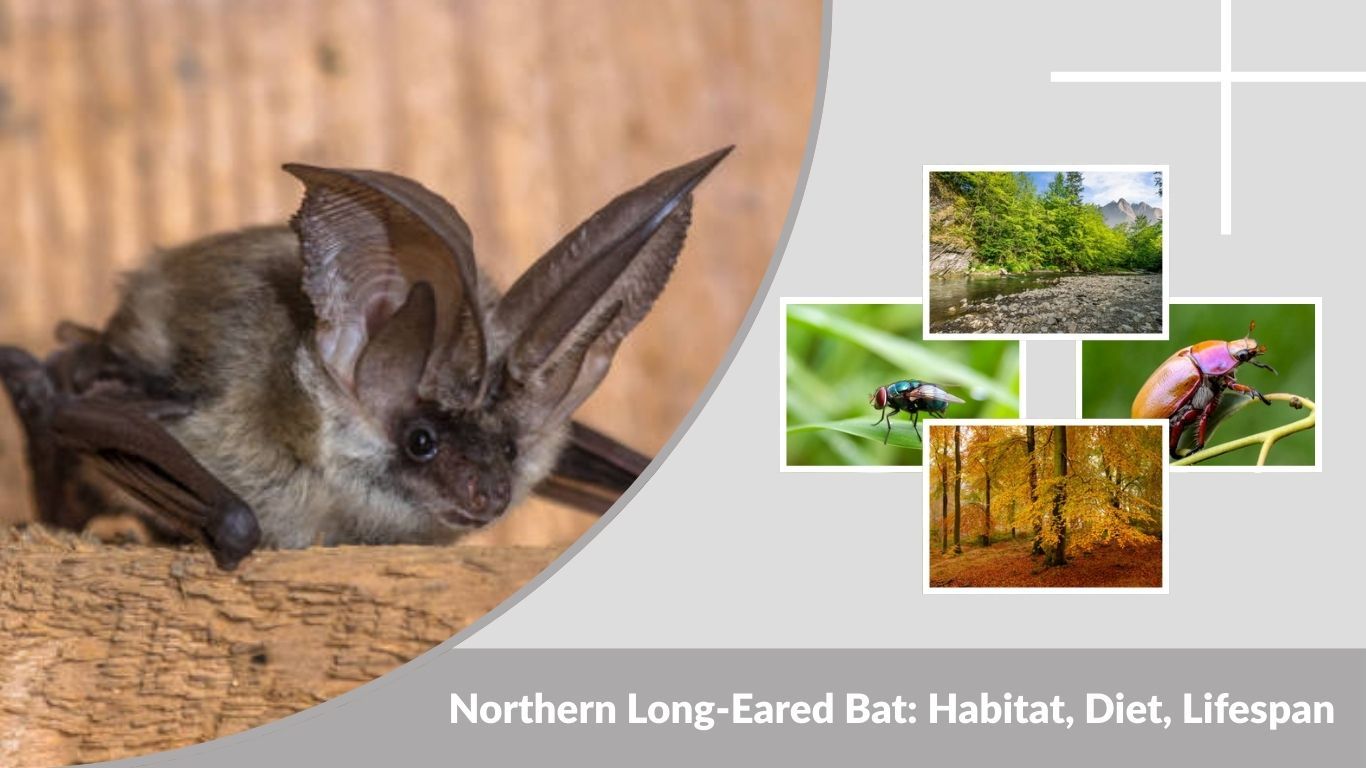
The Northern long-eared bat is a small insect-eating bat known for its distinctive long ears and secretive forest lifestyle. Scientifically named Myotis septentrionalis, this species is commonly found in North America, particularly in forested regions. Northern long-eared bats play an important role in controlling insect populations, helping maintain ecological balance. However, their populations have declined in recent years due to disease and habitat loss, making conservation efforts increasingly important for this unique bat species.
What Is the Northern Long-Eared Bat?
The Northern long-eared bat is a small bat belonging to the family Vespertilionidae, a group that includes many insect-eating bats. It is best known for its unusually long ears, which are longer than those of many other bat species.
These bats are primarily forest-dwelling animals and often roost beneath loose tree bark or inside tree cavities during the summer. In winter, they move to caves or abandoned mines to hibernate until warmer weather returns.
Northern long-eared bats are mostly active at night, leaving their roosts after sunset to hunt insects.
Scientific Classification
The Northern long-eared bat belongs to the following scientific classification:
- Kingdom: Animalia
- Phylum: Chordata
- Class: Mammalia
- Order: Chiroptera
- Family: Vespertilionidae
- Genus: Myotis
- Species: Myotis septentrionalis
The order Chiroptera includes all bats, while Vespertilionidae contains many species of insect-eating bats commonly found across temperate regions.
Scientific Name (Myotis septentrionalis)
The scientific name Myotis septentrionalis describes both the group of bats it belongs to and its geographic distribution.
- Myotis means “mouse-eared,” referring to the small ears common among bats in this genus.
- Septentrionalis means “northern,” indicating the bat’s presence in northern regions of North America.
Meaning of the Name “Long-Eared Bat”
The Northern long-eared bat gets its name from its long ears, which are noticeably larger than those of many other bats in the Myotis group.
When the ears are folded forward, they may extend beyond the bat’s nose, making them one of the species’ most recognizable features.
Physical Characteristics of the Northern Long-Eared Bat

The Northern long-eared bat is a small bat with features well suited for life in forests and nighttime hunting.
Key Physical Characteristics
- Body Length: Around 8–9 cm (3–3.5 inches)
- Weight: Usually 5–8 grams
- Wingspan: About 23–26 cm (9–10 inches)
- Long Ears: Ears extend beyond the nose when folded forward
- Brown Fur: Soft brown fur with slightly lighter underparts
- Short Tail: Tail enclosed within the wing membrane
- Large Wing Membranes: Adapted for slow, maneuverable flight in forests
These features help Northern long-eared bats move easily through dense vegetation while hunting insects.
Distinctively Long Ears
The most noticeable feature of this bat is its long ears, which are longer than those of many similar bat species.
These ears improve the bat’s ability to detect sounds and locate insects during hunting.
Fur Color and Body Structure
Northern long-eared bats typically have light to medium brown fur. Their fur is soft and dense, which helps keep them warm during cooler nights.
Their wings are thin and flexible, allowing them to fly slowly and carefully through forests while catching insects.
Differences From Other Myotis Bats
Although they belong to the same genus as many other bats, Northern long-eared bats can be identified by:
- Their longer ears
- Their slower, more maneuverable flight
- Their preference for forest habitats
These differences help researchers distinguish them from similar bat species.
Northern Long-Eared Bat Habitat
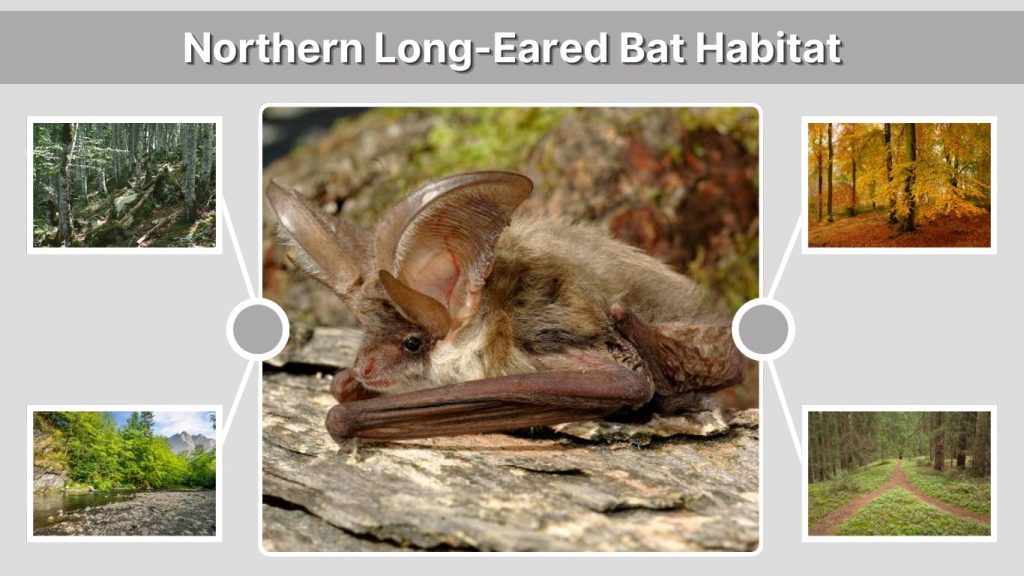
Northern long-eared bats prefer forested environments, where trees provide shelter and insects are abundant.
Preferred Forest Habitats
These bats are commonly found in:
- Deciduous forests
- Mixed forests
- Woodland areas
- Forest edges near water sources
Forests provide ideal conditions because they contain plenty of insects and suitable roosting sites.
Summer Roosting Sites
During the summer, Northern long-eared bats usually roost in:
- Tree cavities
- Under loose tree bark
- Dead or dying trees (called snags)
These locations provide protection from predators and harsh weather.
Female bats often gather in small maternity groups during the summer to raise their young.
Winter Hibernation Sites
When temperatures drop in winter, Northern long-eared bats move to caves and abandoned mines to hibernate.
During hibernation, their body temperature and metabolism slow dramatically, allowing them to survive the winter when insects are not available.
Where Do Northern Long-Eared Bats Live?
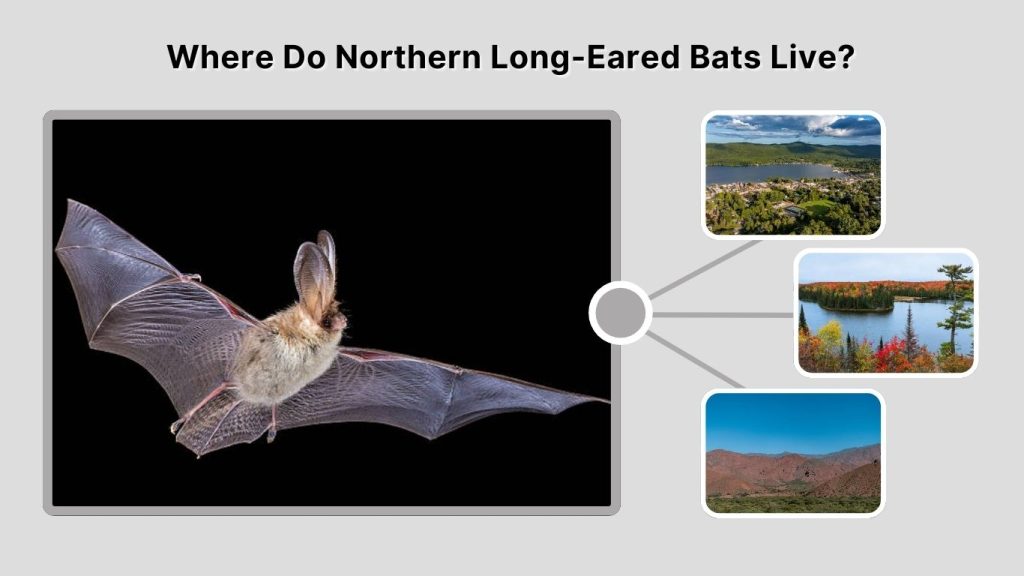
Northern long-eared bats are widely distributed across North America.
Distribution in North America
They can be found in:
- Canada
- The United States
- Parts of northern Mexico
They are especially common in forested regions of the eastern and central United States.
Regions Where They Are Common
Northern long-eared bats are frequently found in areas with:
- Mature forests
- Wetlands near forests
- Areas with abundant insects
These environments provide both shelter and food.
Seasonal Habitat Changes
Their habitat changes depending on the season. During summer they live in forests, while in winter they move to caves or mines where they can hibernate safely.
Northern Long-Eared Bat Diet
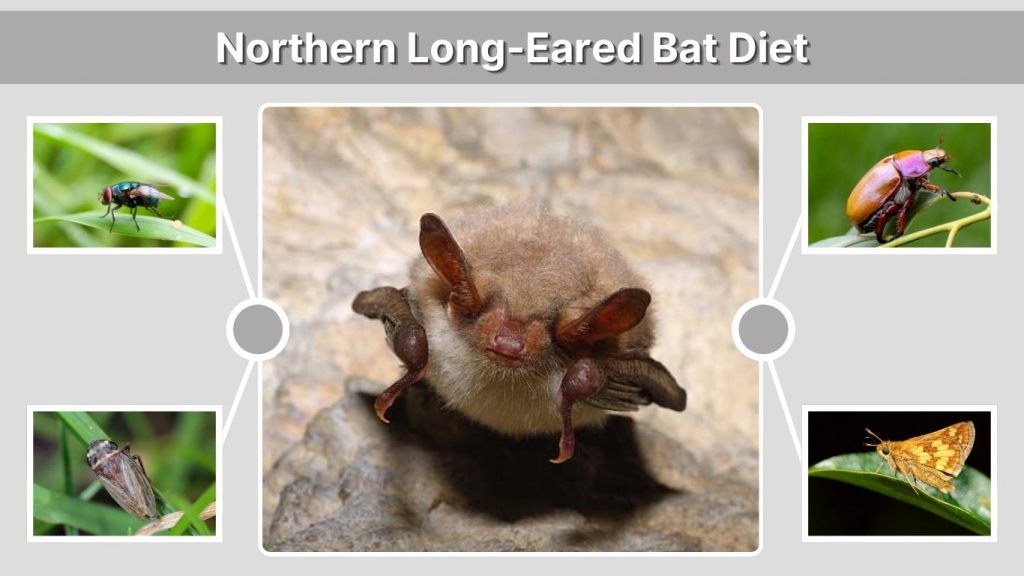
The Northern long-eared bat is an insectivorous species, meaning it feeds primarily on insects.
Main Foods They Eat
Their diet typically includes:
- Moths
- Beetles
- Flies
- Mosquitoes
- Leafhoppers
Many of these insects are agricultural pests.
Hunting Behavior
Northern long-eared bats hunt insects shortly after sunset. They often fly slowly through forest areas, catching insects either in midair or directly from surfaces such as leaves or tree bark.
Echolocation and Night Hunting
Like most bats, they use echolocation to find prey. By producing high-frequency sounds and listening to the echoes, they can detect insects even in complete darkness.
This ability makes them highly effective nighttime hunters.
Behavior and Lifestyle
Northern long-eared bats have several behaviors that help them survive in forest environments. They are primarily nocturnal animals and spend most of the daytime resting in sheltered roosts.
Nocturnal Activity
Northern long-eared bats are active at night. Shortly after sunset, they leave their roosts and begin searching for insects.
Unlike some bats that hunt in open skies, these bats often fly slowly through forested areas, weaving between trees and branches to catch insects.
Roosting Behavior
During the summer, Northern long-eared bats usually roost in trees, particularly:
- Under loose bark
- Inside tree cavities
- In cracks of dead or dying trees
Female bats often gather in small maternity colonies while raising their young.
Social Behavior
Although they sometimes form maternity groups, Northern long-eared bats are generally not highly social. Outside the breeding season, many individuals roost alone or in small groups.
Northern Long-Eared Bat Life Cycle
The life cycle of the Northern long-eared bat includes several stages, beginning with mating and ending with the independence of young bats.
Mating Season
Mating typically occurs during late summer and early autumn. After mating, females store sperm throughout the winter while they hibernate.
Fertilization occurs in the spring when the female becomes active again.
Birth and Development of Pups
Female Northern long-eared bats usually give birth to one pup each year.
The pups are born in late spring or early summer. At birth, they are hairless and completely dependent on their mother.
The mother nurses the pup and protects it while resting in tree roosts.
Growth and Independence
Young bats grow quickly and begin developing wings and fur within a few weeks.
By mid-summer, they learn to fly and hunt insects on their own, eventually becoming independent.
Northern Long-Eared Bat Lifespan
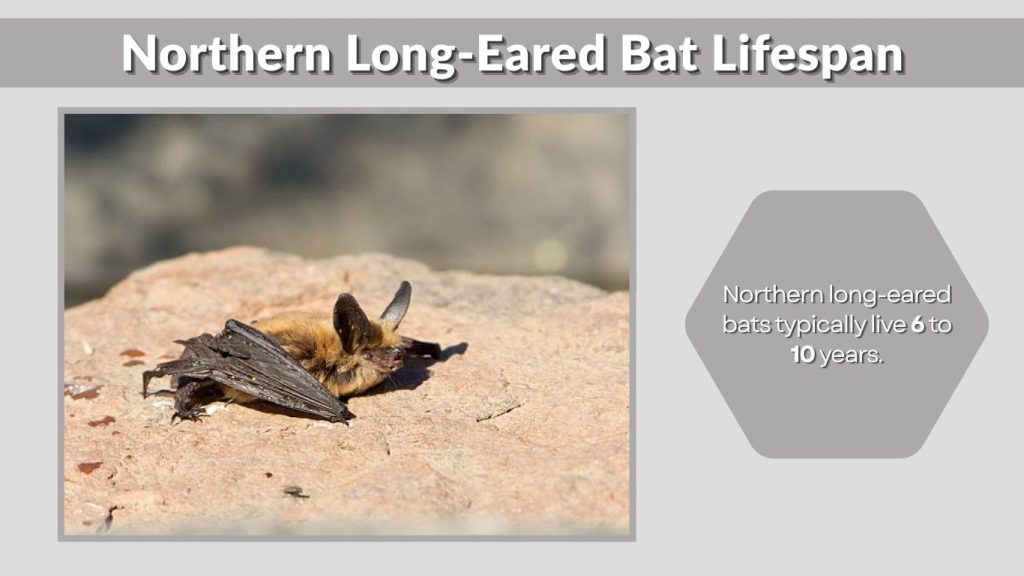
Northern long-eared bats can live several years in the wild, although their lifespan depends on environmental conditions.
Average Lifespan
In the wild, Northern long-eared bats typically live 6 to 10 years.
Some individuals may live longer if they avoid disease and environmental hazards.
Factors Affecting Lifespan
Several factors influence how long these bats live, including:
- Food availability
- Habitat quality
- Predators such as owls and snakes
- Disease outbreaks
- Human-related disturbances
Protecting their habitats can significantly improve survival rates.
Importance of Northern Long-Eared Bats in the Ecosystem
Northern long-eared bats play a vital role in maintaining healthy ecosystems.
Natural Pest Control
These bats eat large numbers of insects each night. Many of these insects are pests that damage crops and forests.
By consuming these insects, Northern long-eared bats help naturally control pest populations.
Role in Forest Ecosystems
In forest environments, bats help maintain balanced insect populations. This protects trees and plants from severe insect damage.
Benefits for Agriculture
Farmers benefit from bat activity because bats reduce harmful insect populations, which can lower the need for pesticides.
Threats to Northern Long-Eared Bats
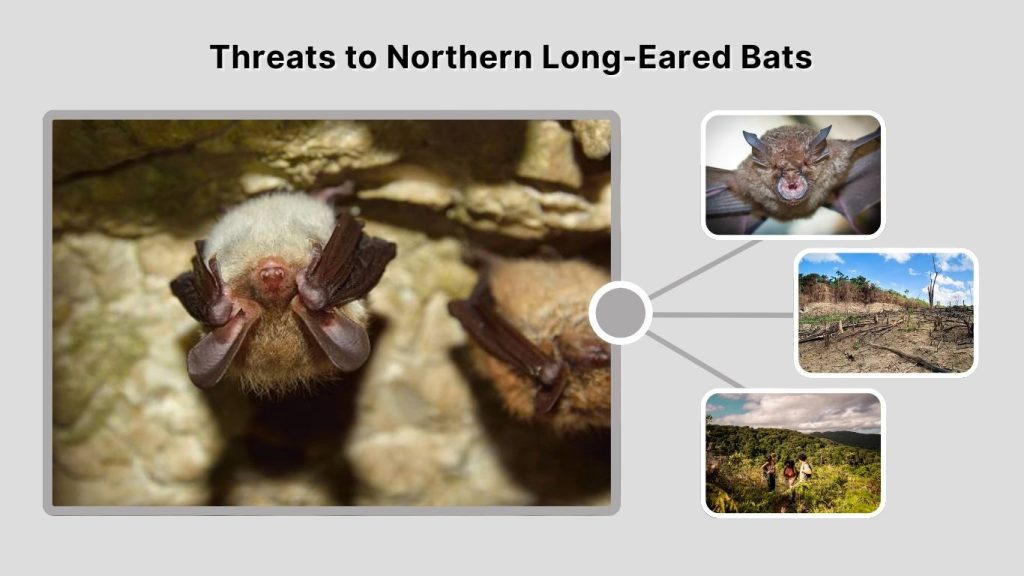
Northern long-eared bats face several serious threats that have caused population declines.
White-Nose Syndrome
One of the most dangerous threats is white-nose syndrome, a fungal disease that affects bats during hibernation.
This disease has killed millions of bats across North America.
Habitat Loss
Deforestation and land development reduce the number of trees and roosting sites available for bats.
Human Disturbance
Human activity in caves and mines can disturb bats during hibernation, which may cause them to wake up and use valuable energy reserves.
Conservation Status and Protection
Because of declining populations, the Northern long-eared bat has received increased conservation attention.
Endangered Species Status
In several regions, the Northern long-eared bat has been listed as threatened or endangered due to population declines caused by white-nose syndrome.
Conservation Programs
Wildlife organizations and government agencies work to protect bat habitats and monitor bat populations.
These programs include protecting caves, preserving forests, and studying bat migration and health.
How People Can Help Protect This Bat
People can help protect Northern long-eared bats by:
- Protecting forest habitats
- Avoiding disturbance of bat hibernation sites
- Supporting wildlife conservation programs
- Raising awareness about bat conservation
Interesting Northern Long-Eared Bat Facts
Here are some fascinating facts about the Northern long-eared bat:
- Their ears extend past the nose when folded forward.
- They are skilled insect hunters in forest environments.
- They hibernate in caves and abandoned mines during winter.
- They play an important role in controlling insect populations.
- Many populations have declined due to white-nose syndrome.
FAQs
Where do Northern long-eared bats live?
Northern long-eared bats live throughout North America, especially in forested areas of the United States and Canada.
What do Northern long-eared bats eat?
They mainly eat flying insects, including moths, beetles, flies, and mosquitoes.
Why are Northern long-eared bats endangered?
The main reason is white-nose syndrome, a fungal disease that affects bats during hibernation.
How long do Northern long-eared bats live?
Northern long-eared bats typically live 6 to 10 years in the wild.
Conclusion
The Northern long-eared bat is a fascinating forest-dwelling species known for its distinctive long ears and important role in controlling insect populations. These bats contribute greatly to ecosystem health by helping regulate insect numbers. However, threats such as white-nose syndrome and habitat loss have caused serious population declines. Continued conservation efforts are essential to protect Northern long-eared bats and ensure the survival of this valuable species.