



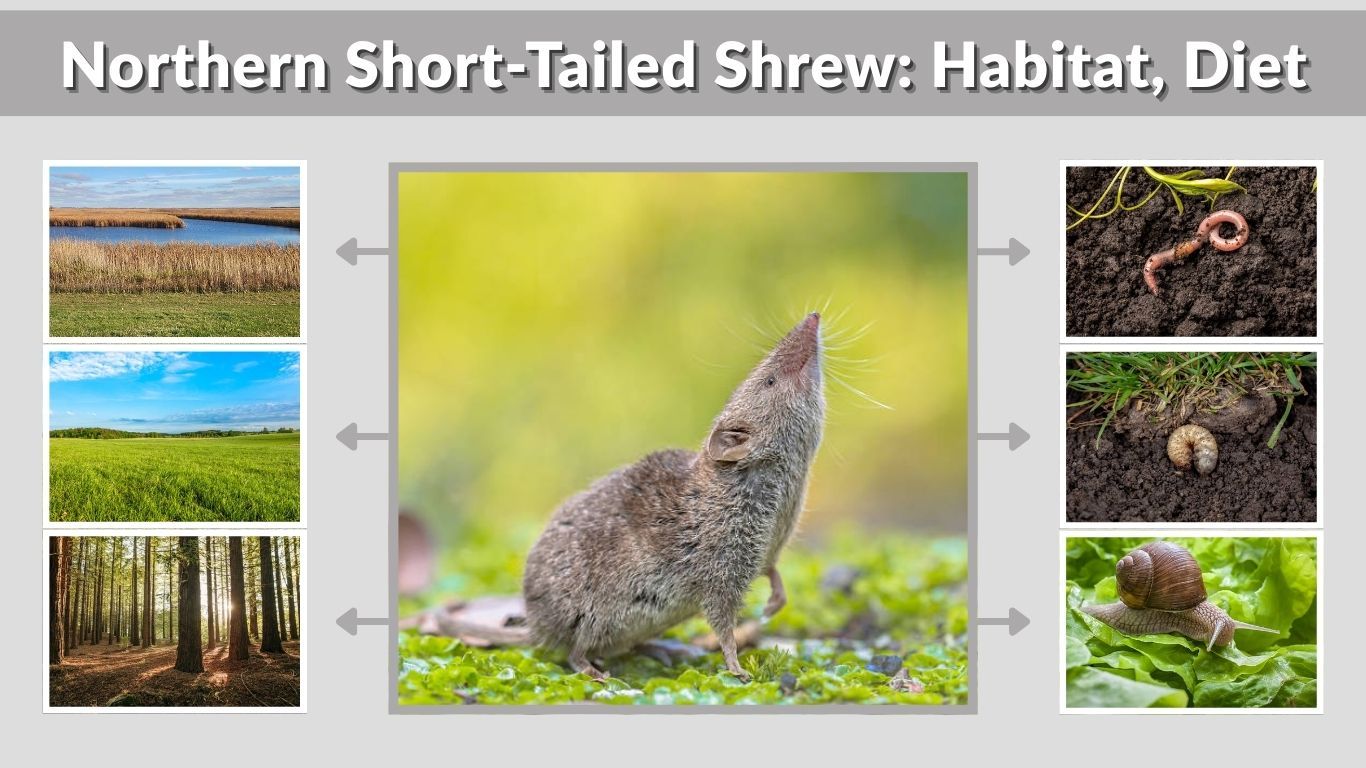
The northern short-tailed shrew (Blarina brevicauda) is one of the most fascinating small mammals found in North America. Despite its tiny size, this animal is known for its aggressive hunting behavior and unusual venomous bite, a rare trait among mammals. It plays an important role in controlling insect populations and maintaining ecosystem balance. Often hidden beneath leaf litter and underground tunnels, the northern short-tailed shrew is rarely seen but is widely distributed across forests, fields, and wetlands throughout its range.
Scientific Classification and Species Overview
Taxonomy
The northern short-tailed shrew belongs to a group of insect-eating mammals known for their small size and high metabolic rates. Its scientific classification is:
- Kingdom: Animalia
- Phylum: Chordata
- Class: Mammalia
- Order: Eulipotyphla
- Family: Soricidae
- Genus: Blarina
- Species: Blarina brevicauda
Members of the Soricidae family include more than 400 species of shrews found worldwide.
General Description of the Species
The northern short-tailed shrew is one of the largest shrews in North America. Unlike rodents such as mice, shrews belong to a different group of mammals and are more closely related to moles. This species is particularly notable for producing venom in its saliva, which helps it capture and subdue prey. Its strong predatory instincts and constant need for food make it a highly active hunter in its environment.
Physical Characteristics
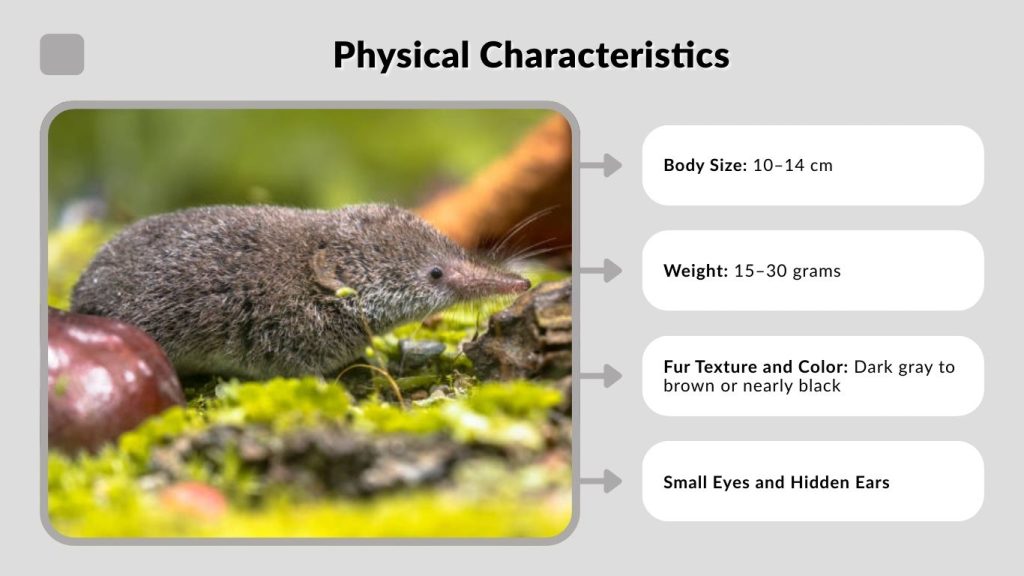
The northern short-tailed shrew (Blarina brevicauda) has several physical features that help it survive as an active underground predator. Although it is small, its body is well adapted for digging, hunting, and moving through tight tunnels under soil and leaf litter. Its dense fur, pointed snout, and strong forelimbs allow it to search efficiently for prey in dark environments. Below are some of the key physical traits of this species.
- Body Size: Typically measures about 10–14 cm (4–5.5 inches) in total length.
- Weight: Usually weighs between 15–30 grams, making it one of the larger shrew species in North America.
- Short Tail: Its tail is noticeably shorter than that of many other shrews and is covered with sparse hair.
- Fur Texture and Color: Dense, velvety fur that ranges from dark gray to brown or nearly black.
- Pointed Snout: A long, flexible snout with sensitive whiskers used to detect prey.
- Small Eyes and Hidden Ears: Very small eyes and nearly invisible ears, showing that the animal relies more on smell and touch than vision.
- Strong Forelimbs: Powerful front legs adapted for digging and moving through soil.
- Venomous Bite: Specialized salivary glands produce venom that helps immobilize prey.
These physical adaptations allow the northern short-tailed shrew to thrive as a highly efficient predator despite its tiny size.
Habitat and Geographic Distribution

Geographic Range
The northern short-tailed shrew is widely distributed across eastern and central North America. Its range includes large parts of the United States and southern Canada. It can be found from the Great Lakes region and northeastern United States down to parts of the Midwest and Appalachia.
Because of its adaptability, the species is relatively common in suitable habitats throughout this region.
Preferred Habitats
Northern short-tailed shrews thrive in environments that provide plenty of ground cover and moisture. Their preferred habitats include:
- Forests and woodland areas
- Grasslands and meadows
- Wetlands and marshy environments
- Areas with thick leaf litter
These habitats offer protection from predators and provide abundant insects and other small animals that serve as food.
Burrowing and Shelter
Although they are capable diggers, northern short-tailed shrews often use existing tunnels created by moles, mice, or other small animals. They also construct their own shallow burrows beneath the soil and leaf litter.
Inside these underground tunnels, the shrews build nests made of grass, leaves, and other plant material. These nests serve as resting areas and safe places for raising young. The network of tunnels also allows them to move around while staying hidden from predators.
Diet and Feeding Habits

Primary Food Sources
The northern short-tailed shrew is a carnivorous insectivore, meaning its diet mainly consists of small animals. Common food sources include:
- Insects such as beetles and larvae
- Earthworms
- Slugs and snails
- Spiders and other small invertebrates
Occasionally, they may also prey on small vertebrates like frogs, salamanders, or tiny rodents.
Hunting Behavior
Despite their small size, northern short-tailed shrews are aggressive predators. They constantly search for food while moving through tunnels or leaf litter. Their sensitive whiskers and strong sense of smell help them detect prey quickly.
When attacking larger prey, the shrew uses its venomous bite to paralyze the victim. This ability allows it to overpower animals that might otherwise be too large for such a small predator. In some cases, the shrew stores paralyzed prey in its burrow to eat later.
High Metabolism
Like many shrews, this species has an extremely high metabolic rate. As a result, it must eat frequently to survive. A northern short-tailed shrew may consume close to its own body weight in food each day. If it goes too long without eating, it can quickly become weak and may not survive.
Because of this constant need for food, the shrew spends much of its time actively searching for prey both day and night.
Behavior and Daily Activity
Activity Patterns
The northern short-tailed shrew is active throughout the day and night, although it tends to be more active during the night. Unlike many small mammals, it does not hibernate during winter. Instead, it continues searching for food under snow and within underground tunnels.
Because of its extremely high metabolism, the shrew must constantly move and hunt to survive. It often travels through a network of burrows and surface pathways, using them to search for insects and other prey while staying protected from predators.
Territorial Behavior
Northern short-tailed shrews are known for their aggressive and territorial nature. They typically live alone and defend their territories from other shrews. When two individuals encounter each other, they may display aggressive behavior, including biting and vocalizing.
To maintain territory boundaries, these animals use scent markings produced by specialized glands. These scent signals help communicate their presence and reduce unnecessary conflicts with other shrews.
Sensory Abilities
Although their eyesight is poor, northern short-tailed shrews have highly developed senses of smell and touch. Their whiskers are extremely sensitive and help them detect prey in dark or underground environments.
Researchers have also discovered that shrews produce high-frequency clicking sounds, which may function similarly to echolocation. These sounds help them navigate through tight tunnels and locate objects in their surroundings.
Reproduction and Life Cycle
Breeding Season
The breeding season for northern short-tailed shrews usually occurs from early spring to early fall. During this time, males actively search for females within their territories or nearby areas.
Breeding activity is strongly influenced by environmental conditions such as temperature and food availability.
Gestation and Birth
After mating, the female shrew has a gestation period of about 21 to 23 days, which is relatively short. She then gives birth to a litter that typically contains 4 to 8 young.
The newborn shrews are born blind, hairless, and completely dependent on their mother. The female builds a protected nest inside a burrow where she cares for and feeds her offspring.
Growth and Lifespan
Young shrews grow rapidly and begin exploring their surroundings within a few weeks. They usually become independent within about one month.
Despite their rapid development, northern short-tailed shrews have very short lifespans, typically living only one to two years in the wild. Their intense lifestyle and high metabolism contribute to this brief life cycle.
Predators and Survival Strategies

Natural Predators
Although northern short-tailed shrews are fierce hunters themselves, they are also prey for many larger animals. Some of their common predators include:
- Owls and other birds of prey
- Snakes
- Foxes and other carnivorous mammals
These predators often hunt shrews when they travel above ground.
Defense Mechanisms
The northern short-tailed shrew has several adaptations that help it survive. One of the most notable is its venomous bite, which can deter or injure potential predators.
Another defense is its strong musky odor, produced by scent glands. Many predators find this smell unpleasant, which may discourage them from eating the shrew after catching it.
Ecological Role

Pest Control
Northern short-tailed shrews play an important role in controlling populations of insects and other small invertebrates. By consuming large numbers of insects, they help maintain balance within their ecosystems.
This natural pest control benefits forests, grasslands, and agricultural environments.
Role in the Food Chain
Despite being predators, these shrews are also an important food source for larger animals. Their presence supports a wide variety of predators such as owls, snakes, and carnivorous mammals.
Because they occupy both predator and prey roles, they are a key part of the food web in many ecosystems.
Contribution to Soil Health
While digging and moving through underground tunnels, northern short-tailed shrews help aerate the soil. Their burrowing activity can improve soil structure and support plant growth by allowing air and water to penetrate the ground more easily.
Interesting Facts About the Northern Short-Tailed Shrew
The northern short-tailed shrew has several unusual traits that make it one of the most interesting small mammals in North America.
- It is one of the few venomous mammals in the world.
- Its venom allows it to paralyze prey and store it alive for later consumption.
- The species has an extremely fast metabolism, requiring frequent feeding.
- It is rarely seen by humans because it spends much of its time underground or hidden beneath leaf litter.
- Despite its tiny size, it is known for being bold and aggressive when hunting.
Conclusion
The northern short-tailed shrew is a remarkable small mammal that plays an important role in North American ecosystems. With its venomous bite, aggressive hunting behavior, and ability to survive in a wide range of habitats, it stands out among other small animals. Although it is rarely seen, this species helps control insect populations and supports many predators within the food chain. Understanding animals like the northern short-tailed shrew highlights the importance of even the smallest creatures in maintaining ecological balance.