
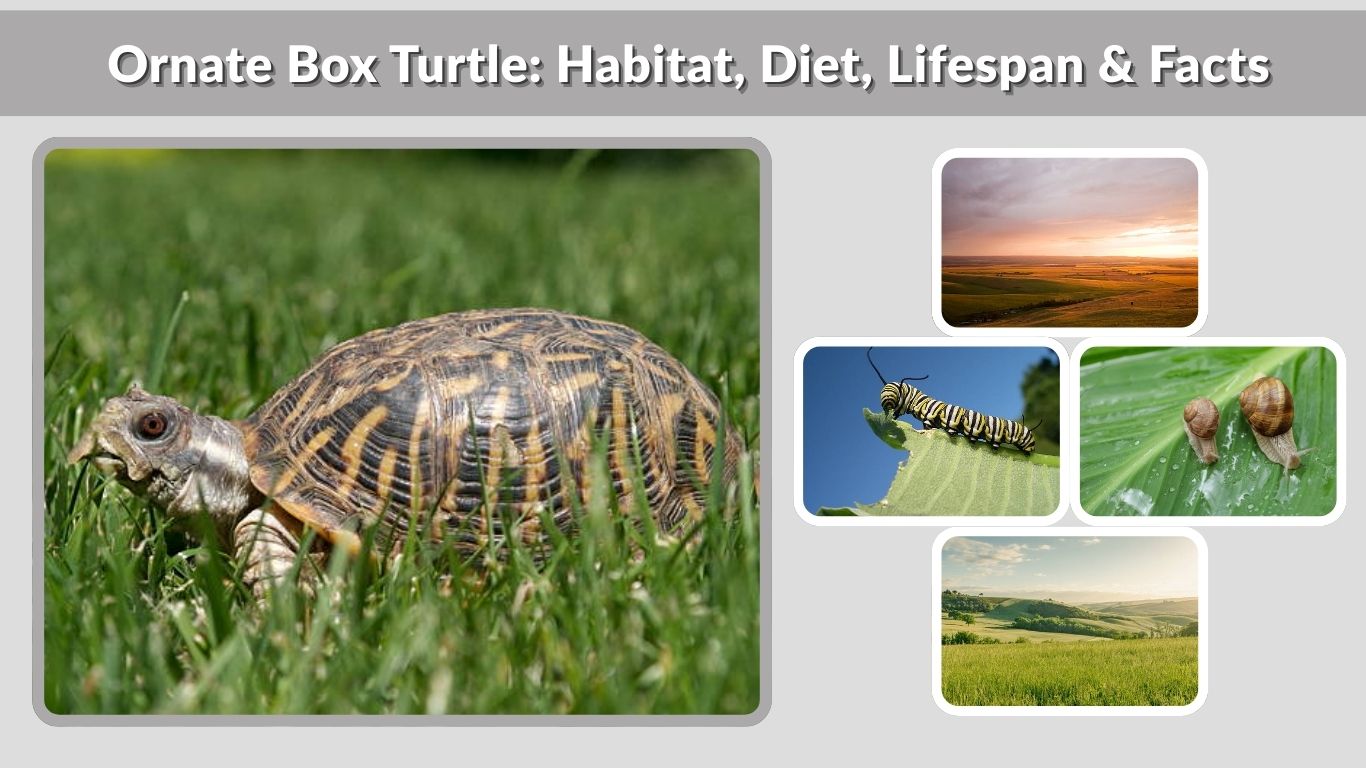
The ornate box turtle is a beautifully patterned land turtle native to the central United States. Known for its striking yellow starburst markings on a dark shell, this small reptile is specially adapted to life in grasslands and prairies. Unlike aquatic turtles, ornate box turtles spend nearly all their time on land, relying on burrowing and their hinged shell for protection. In this guide, you’ll learn key ornate box turtle facts, including their habitat, diet, behavior, and physical characteristics.
What Is an Ornate Box Turtle?
The ornate box turtle (Terrapene ornata) is one of several box turtle species found in North America. It belongs to the same genus as the eastern box turtle but differs in habitat preference and shell pattern.
There are two recognized subspecies:
- Ornate box turtle (Terrapene ornata ornata)
- Desert box turtle (Terrapene ornata luteola)
The ornate box turtle is most commonly found in the Great Plains and Midwest, including states such as Kansas, Nebraska, Oklahoma, South Dakota, and parts of Texas.
This species is named “ornate” because of the intricate, bright yellow lines that radiate across its shell in a star-like pattern. These markings help distinguish it from other box turtle species.
Ornate box turtles are fully terrestrial, meaning they rarely enter water except to drink or soak briefly. Their strong legs and claws allow them to move efficiently across dry ground and dig into loose soil.
Ornate Box Turtle Facts
Here are some important ornate box turtle facts that highlight what makes this species unique:
- Adults typically measure 4 to 5 inches in shell length.
- They have a high-domed shell with vivid yellow streaks or spots.
- Their plastron (bottom shell) is hinged, allowing them to close tightly for protection.
- They are active during the day (diurnal).
- They are well adapted to hot, dry grassland environments.
Unlike many turtles that rely on water for safety, ornate box turtles depend on camouflage and their ability to seal themselves inside their shell when threatened.
Quick Facts Snapshot
- Scientific Name: Terrapene ornata
- Average Size: 4–5 inches
- Habitat Type: Prairie and grassland
- Diet Type: Omnivorous (insect-focused)
- Average Lifespan: 30–50 years
- Activity Pattern: Diurnal
These turtles are well suited to the open plains, where they blend into dry grasses and sandy soils.
Ornate Box Turtle Habitat
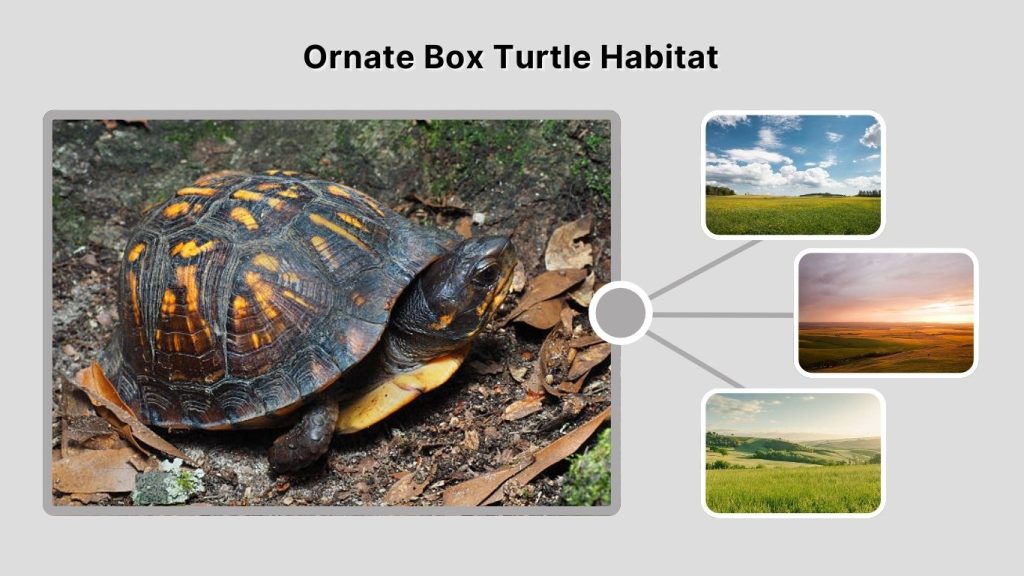
The ornate box turtle habitat consists mainly of prairie grasslands, open plains, and meadows. They thrive in regions with sandy or loose soil, which allows them to burrow easily.
Unlike forest-dwelling box turtles, ornate box turtles prefer open, sunlit environments. Native grasslands provide:
- Abundant insects for food
- Loose soil for nesting and burrowing
- Vegetation for shade and cover
They are commonly found in the central United States, particularly in areas with dry or semi-arid climates.
Burrowing is one of their most important survival strategies. They dig shallow depressions in the soil to escape extreme heat and avoid predators. During very hot weather, they may remain underground for extended periods.
Summer Habitat
In summer, ornate box turtles are active in open grasslands and prairie ecosystems. They forage during the day, especially in the morning and late afternoon when temperatures are milder.
During extreme heat, they seek shade beneath vegetation or dig into sandy soil to cool down. Their ability to burrow helps them survive the high temperatures typical of prairie environments.
Access to insects and plant matter is essential during the growing season, as turtles must build energy reserves.
Winter Habitat (Brumation)
As temperatures drop in fall, ornate box turtles prepare for brumation, a reptile form of hibernation. They dig deeper burrows into loose soil to protect themselves from freezing temperatures.
While underground, their metabolism slows significantly. They remain inactive throughout winter, emerging in spring when the ground warms.
Their burrowing ability is especially important in prairie regions, where winter conditions can be harsh and unpredictable.
Ornate Box Turtle Diet
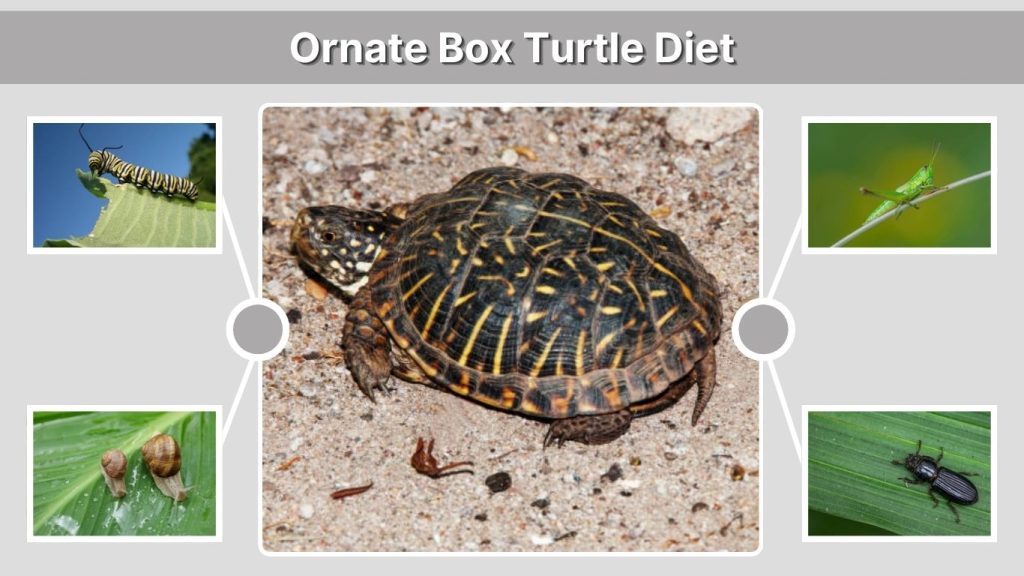
The ornate box turtle diet is omnivorous but tends to include a higher proportion of insects compared to some other box turtle species. These turtles are active foragers and search for food on land.
Because they live in grasslands, they rely heavily on insects and other small invertebrates found in prairie ecosystems.
Animal-Based Foods
Animal matter forms a major part of their diet, especially during warmer months. Common prey includes:
- Grasshoppers
- Beetles
- Caterpillars
- Earthworms
- Snails
Insects are rich in protein and provide essential nutrients for growth and reproduction. Ornate box turtles often patrol grassy areas where insects are abundant.
Plant-Based Foods
Although insects make up a large portion of their meals, ornate box turtles also eat plant material. This becomes especially important when insect populations fluctuate.
Common plant foods include:
- Berries
- Wildflowers
- Tender leaves
- Seeds
- Fallen fruit
Seasonal fruits provide extra energy, particularly in late summer and early fall. By consuming fruits and passing seeds through their digestive system, ornate box turtles may help with seed dispersal across prairie ecosystems.
Diet Changes by Age and Season
Diet varies throughout the turtle’s life.
- Hatchlings and juveniles rely more heavily on insects for protein to support rapid growth.
- Adults maintain a mixed diet of insects and plants.
- In late summer, turtles often increase feeding to store energy before winter brumation.
Their flexible diet allows them to adapt to the changing conditions of grassland habitats.
Ornate Box Turtle Lifespan
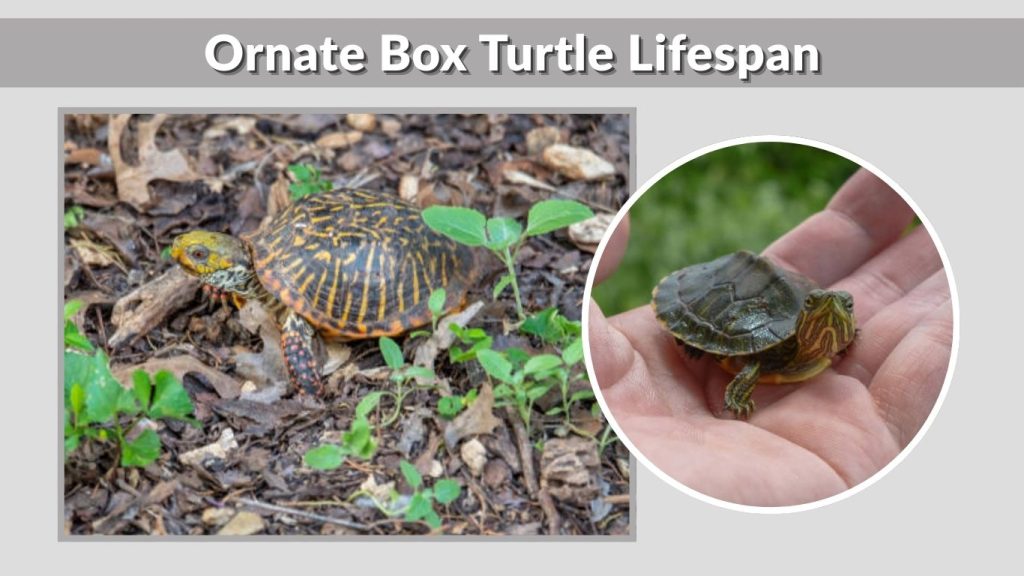
The ornate box turtle lifespan is relatively long for a small reptile. In the wild, these turtles commonly live 30 to 50 years, and some individuals may survive even longer under favorable conditions.
Because ornate box turtles grow slowly and reach sexual maturity later in life, their long lifespan helps maintain stable populations.
They typically reach reproductive maturity around 7 to 10 years of age. Slow development and low reproductive output mean that adult survival is especially important for population health.
Factors That Affect Lifespan
Several environmental and human-related factors can influence how long an ornate box turtle lives:
- Habitat destruction due to agriculture and development
- Road mortality during seasonal movements
- Predation on eggs and juveniles
- Collection for the pet trade
- Exposure to pesticides
Since they often live within small home ranges, habitat fragmentation can have a significant impact on local populations.
Behavior and Adaptations
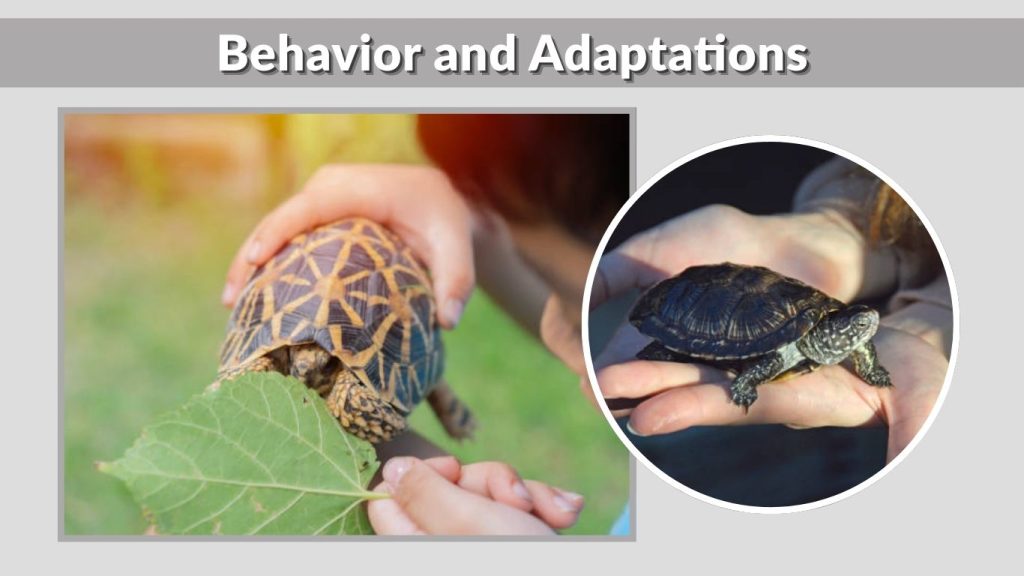
Ornate box turtles are diurnal, meaning they are active during the day. They spend much of their time foraging, basking in sunlight, or resting in shallow depressions in the soil.
One of their most important adaptations is their hinged plastron, which allows them to close their shell completely. When threatened, they pull in their head and legs and seal themselves tightly inside, protecting their soft body parts.
Burrowing is another key behavior. Ornate box turtles dig into loose soil to:
- Escape extreme heat
- Avoid predators
- Prepare for winter brumation
They typically maintain a small home range and may live their entire lives within a limited area. This strong attachment to a specific territory makes relocation risky and often harmful.
During drought conditions, ornate box turtles may become less active and spend more time underground to conserve moisture.
Reproduction and Life Cycle
The life cycle of the ornate box turtle follows the typical pattern of many land turtles: egg, hatchling, juvenile, and adult.
Mating usually occurs in spring or early summer. After mating, females search for sunny areas with loose soil to dig nests.
Key reproductive details include:
- Clutch size: Usually 3–8 eggs
- Incubation period: About 60–90 days
- Nesting season: Late spring to early summer
Once eggs are laid and covered, the female provides no further care. Incubation temperature influences hatchling sex, with warmer nests often producing more females.
Hatchlings emerge in late summer. At birth, they are small and vulnerable to predators such as raccoons, birds, and snakes. Many do not survive their first year.
Those that survive grow slowly over several years, gradually developing the vibrant starburst shell pattern characteristic of adults.
Threats and Conservation
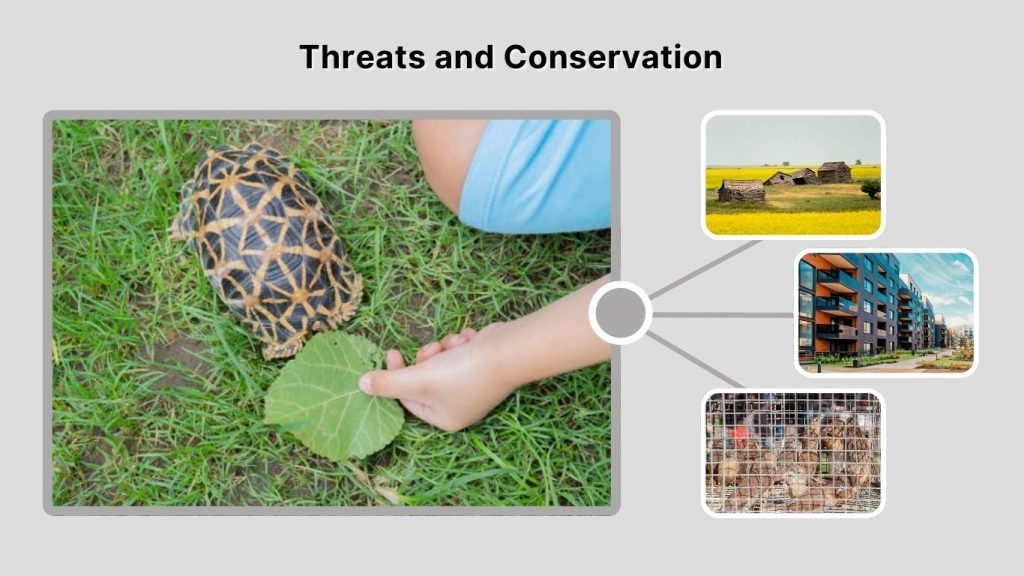
Ornate box turtles face several challenges across their native range. The decline of native grasslands is one of the biggest threats to their survival.
Major threats include:
- Conversion of prairie to farmland
- Urban development
- Road crossings
- Pet trade collection
- Pesticide exposure
Because they reproduce slowly and live long lives, population recovery can take many years if numbers decline.
In some states, ornate box turtles receive legal protection. Conservation efforts focus on preserving native grasslands, reducing road mortality, and educating the public about the importance of leaving wild turtles in their natural habitat.
Conclusion
The ornate box turtle is a distinctive prairie species recognized for its bright star-patterned shell and strong adaptation to grassland environments. Living primarily on land, it thrives in open plains where it feeds on insects and seasonal plant matter. With a lifespan that can exceed several decades, this resilient turtle depends on stable habitats and adult survival for long-term success. Protecting grasslands and reducing human-related threats are essential steps in ensuring that the ornate box turtle continues to inhabit North America’s prairies for generations to come.