




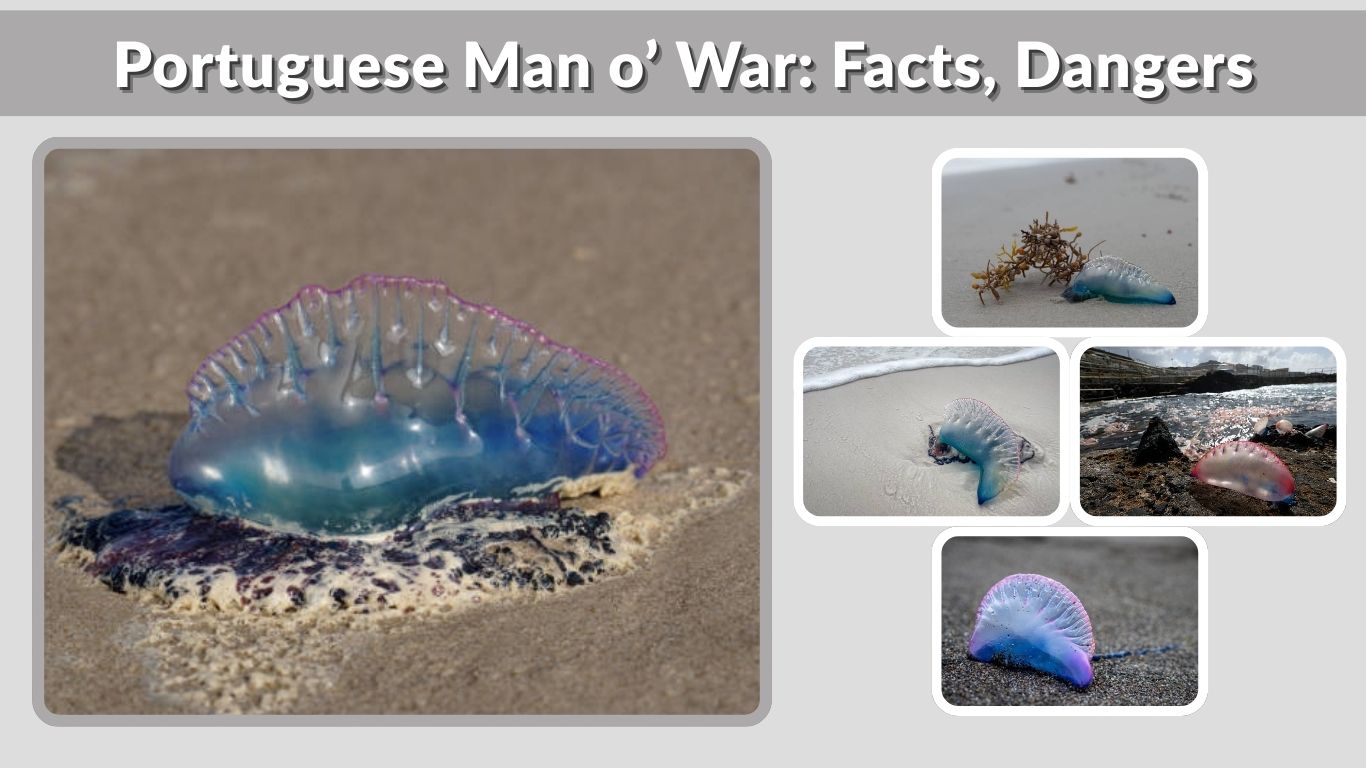
The Portuguese Man o’ War is one of the most misunderstood and feared marine creatures found in oceans around the world. Often mistaken for a jellyfish, this striking blue organism is actually far more complex—and potentially more dangerous—than many people realize. Encounters with the Portuguese Man o’ War are especially common in coastal areas, where it may wash ashore and pose a risk even when it appears lifeless. Understanding what it is, how it behaves, and why it can be hazardous is essential for anyone who spends time near the ocean.
What Is a Portuguese Man o’ War?
The Portuguese Man o’ War (Physalia physalis) is a marine organism known as a siphonophore, which means it is not a single animal but a colony of specialized organisms working together as one. Each part of the colony, called a zooid, has a specific role such as floating, feeding, reproduction, or defense. Individually, these zooids cannot survive, but together they function as a highly efficient predator.
Despite its jellyfish-like appearance, the Portuguese Man o’ War differs significantly in structure and biology. Rather than swimming freely, it relies on wind and ocean currents to move across the water’s surface. This passive movement is one reason why large numbers can suddenly appear near beaches.
Why It’s Often Mistaken for a Jellyfish
The confusion comes mainly from its shape and tentacles. Like jellyfish, the Portuguese Man o’ War has long, trailing tentacles capable of delivering painful stings. However, jellyfish are single organisms that propel themselves through the water, while the Man o’ War is a floating colony that drifts wherever the wind carries it. This distinction is important because the Man o’ War’s sting is generally more intense than that of most jellyfish species.
Physical Characteristics of the Portuguese Man o’ War
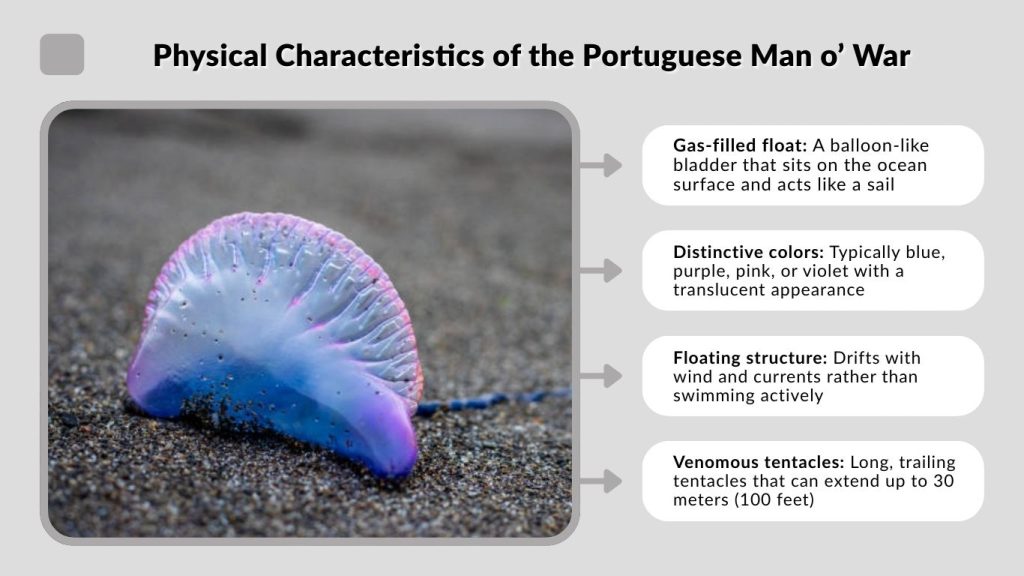
- Gas-filled float: A balloon-like bladder that sits on the ocean surface and acts like a sail
- Distinctive colors: Typically blue, purple, pink, or violet with a translucent appearance
- Floating structure: Drifts with wind and currents rather than swimming actively
- Venomous tentacles: Long, trailing tentacles that can extend up to 30 meters (100 feet)
- Nematocysts: Microscopic venom-filled cells used to sting prey and deter predators
- Colonial organism: Made up of multiple specialized zooids working together
- Soft, gelatinous body: Fragile structure easily damaged by waves or handling
- Persistent venom: Can still sting even when dead or washed ashore
Habitat and Distribution
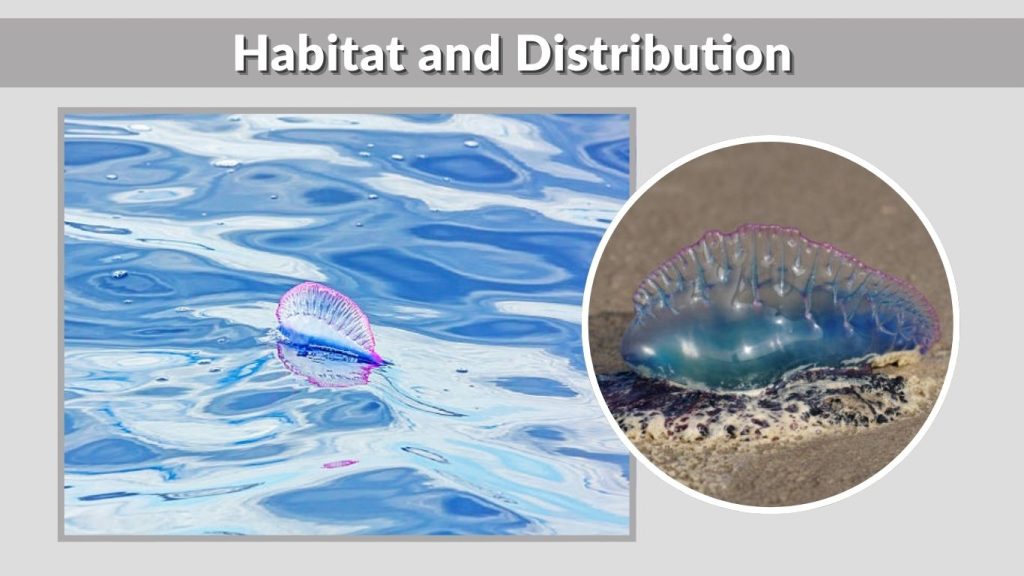
Portuguese Man o’ War are most commonly found in warm, tropical, and subtropical waters. They inhabit the Atlantic, Pacific, and Indian Oceans and are frequently spotted in large groups known as flotillas.
They are especially common in areas influenced by strong winds and currents, which can carry them thousands of miles from their original location. As a result, they may suddenly appear in regions where they are not typically expected.
Why Portuguese Man o’ War Wash Up on Beaches
Beach strandings often occur after storms or periods of strong onshore winds. Because the Portuguese Man o’ War cannot swim away, it is easily pushed toward land. Once ashore, it may appear harmless or dead, but its venom remains potent.
This lingering danger is one of the biggest risks to beachgoers, as people may accidentally step on or touch a stranded Man o’ War without realizing the threat.
How Dangerous Is a Portuguese Man o’ War?
The Portuguese Man o’ War is considered one of the more dangerous venomous marine organisms encountered by humans. Its venom is powerful enough to cause intense pain, welts, and systemic reactions in some individuals. While most stings are not life-threatening, they should never be taken lightly.
Who Is Most at Risk
Children, swimmers, and individuals with allergies or respiratory conditions are at higher risk of severe reactions. Extensive contact with tentacles or delayed treatment can also increase the likelihood of complications.
Portuguese Man o’ War Sting Explained
A sting from a Portuguese Man o’ War occurs when its tentacles come into contact with skin. These tentacles contain thousands of microscopic venom-filled cells known as nematocysts. When triggered, the nematocysts fire instantly, injecting venom that can cause severe pain and skin irritation. Because the tentacles may trail far behind the float, swimmers can be stung without ever seeing the organism itself.
What makes the Portuguese Man o’ War particularly dangerous is that its tentacles remain venomous even after being detached. Stings can occur from fragments floating in the water or from specimens washed up on the shore, sometimes hours or even days later.
Common Symptoms of a Sting
Most people experience immediate and intense pain at the site of the sting, often described as burning or electric in sensation. Red welts or whip-like marks may appear on the skin, sometimes followed by swelling and blistering. In more severe cases, symptoms can include nausea, dizziness, muscle cramps, difficulty breathing, or chest pain.
Systemic reactions are rare but possible, especially in individuals with underlying health conditions. Any signs of severe distress should be treated as a medical emergency.
How Long Sting Effects Can Last
Pain from a Portuguese Man o’ War sting can last anywhere from a few hours to several days, depending on the severity of the exposure and how quickly first aid is administered. Skin marks may persist for weeks and occasionally leave scars. While most people recover fully, lingering sensitivity in the affected area is not uncommon.
First Aid and Treatment for Portuguese Man o’ War Stings
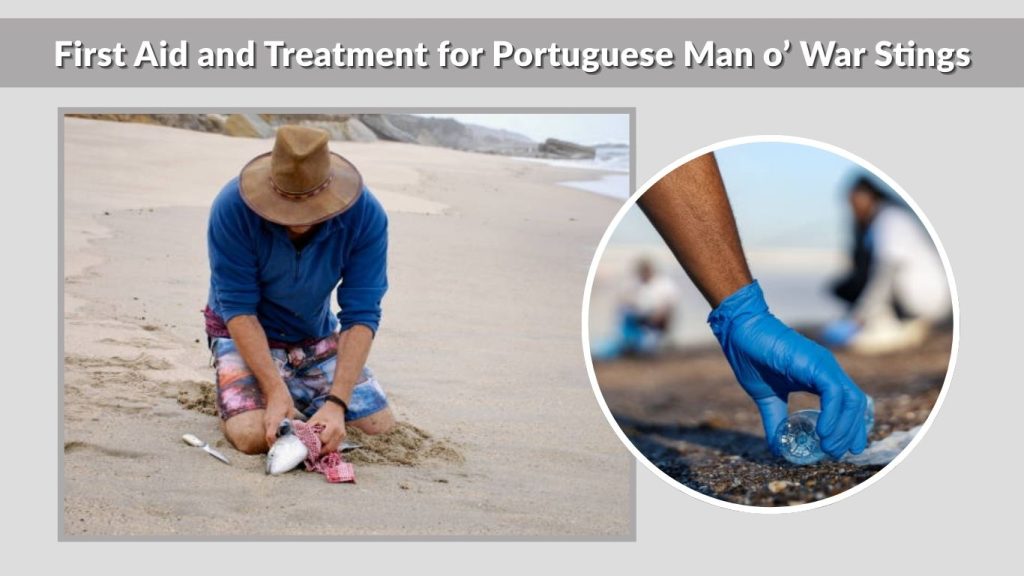
Prompt and proper first aid can significantly reduce pain and prevent complications. Knowing what to do—and what not to do—can make a major difference in recovery.
What You Should Do
If stung, the first step is to get out of the water calmly to avoid further contact. Any visible tentacles should be carefully removed using gloves, tweezers, or a similar tool—never with bare hands. Rinsing the area with saltwater can help remove remaining nematocysts.
Applying heat, such as warm water immersion, may help reduce pain by breaking down the venom. Over-the-counter pain relievers and antihistamines can also be useful for managing symptoms.
What You Should Never Do
Freshwater, alcohol, or vigorous rubbing should be avoided, as these actions can trigger additional venom release. Popular myths, such as urinating on the sting, are not only ineffective but may worsen the injury. Ice packs are generally less effective than heat and may provide limited relief.
Are Portuguese Man o’ War Deadly?
Although Portuguese Man o’ War stings are extremely painful, deaths are very rare. Most fatalities that have been reported involve complications such as allergic reactions, cardiac stress, or drowning following a severe sting. The risk of death increases when multiple stings occur or when medical care is delayed.
For the majority of people, a sting is a serious but manageable injury. However, the potential severity underscores the importance of respecting warning signs and avoiding contact altogether.
What to Do If You Encounter a Portuguese Man o’ War on the Beach
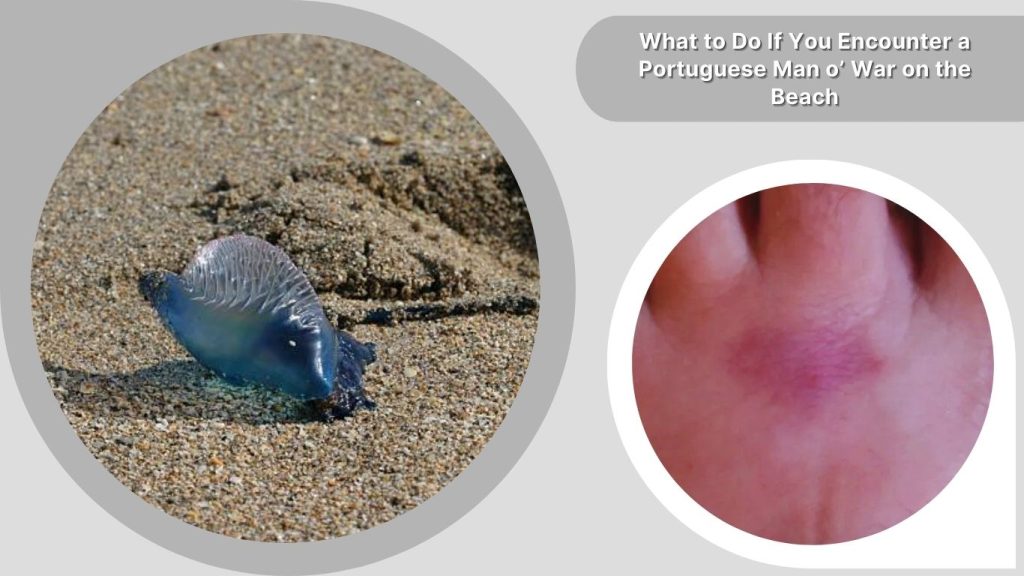
If you see a Portuguese Man o’ War on the beach, the safest action is to keep your distance. Even dried or partially buried specimens can still sting. Children and pets should be kept well away, and touching should be avoided under all circumstances.
In areas where Man o’ War sightings are common, beaches may display warning flags or signs. Reporting sightings to local authorities or lifeguards can help prevent others from being injured.
Role of the Portuguese Man o’ War in the Marine Ecosystem
Despite its fearsome reputation, the Portuguese Man o’ War plays an important role in the marine food web. It helps control populations of small fish and planktonic organisms. In turn, it serves as prey for certain species such as sea turtles, ocean sunfish, and specialized nudibranchs that are immune to its venom.
Some fish species even live among the Man o’ War’s tentacles, gaining protection from predators while remaining unharmed. These relationships highlight the organism’s ecological significance.
Interesting Facts About the Portuguese Man o’ War
One of the most fascinating facts about the Portuguese Man o’ War is that it is not a single animal but a floating colony of organisms. Its sail-like float can be oriented differently, helping reduce mass strandings. Remarkably, its tentacles can still sting long after the organism is dead, making it dangerous even when washed ashore.
Conclusion
The Portuguese Man o’ War is a striking yet hazardous presence in the world’s oceans. While it may resemble a jellyfish, its unique colonial structure, powerful venom, and unpredictable movement make it a creature that demands respect. By understanding how to identify it, avoid contact, and respond properly to stings, beachgoers can reduce risks and enjoy the ocean more safely while appreciating the complex role this organism plays in marine ecosystems.
FAQs
Is a Portuguese Man o’ War a jellyfish?
No, a Portuguese Man o’ War is not a true jellyfish. It is a siphonophore, which means it is a colony of specialized organisms working together as one. Although it looks similar to a jellyfish, its structure, movement, and sting are quite different.
How dangerous is a Portuguese Man o’ War sting?
A Portuguese Man o’ War sting is extremely painful and can cause severe skin reactions. Most stings are not life-threatening, but serious symptoms can occur in children, people with allergies, or those exposed to multiple tentacles. Medical attention is recommended for severe reactions.
Can a Portuguese Man o’ War sting you when it’s dead?
Yes, even dead Portuguese Man o’ War can still sting. The venomous cells in the tentacles remain active long after the organism has died or washed ashore. This is why touching stranded specimens is always dangerous.
What should I do if I get stung by a Portuguese Man o’ War?
Leave the water immediately and avoid rubbing the area. Carefully remove visible tentacles using gloves or a tool, then rinse with saltwater. Applying heat may help relieve pain. Seek medical help if symptoms are severe or worsen.
Where are Portuguese Man o’ War commonly found?
They are commonly found in tropical and subtropical oceans, including the Atlantic, Pacific, and Indian Oceans. Wind and currents can carry them far from their usual range, causing them to appear unexpectedly near coastlines and beaches.