




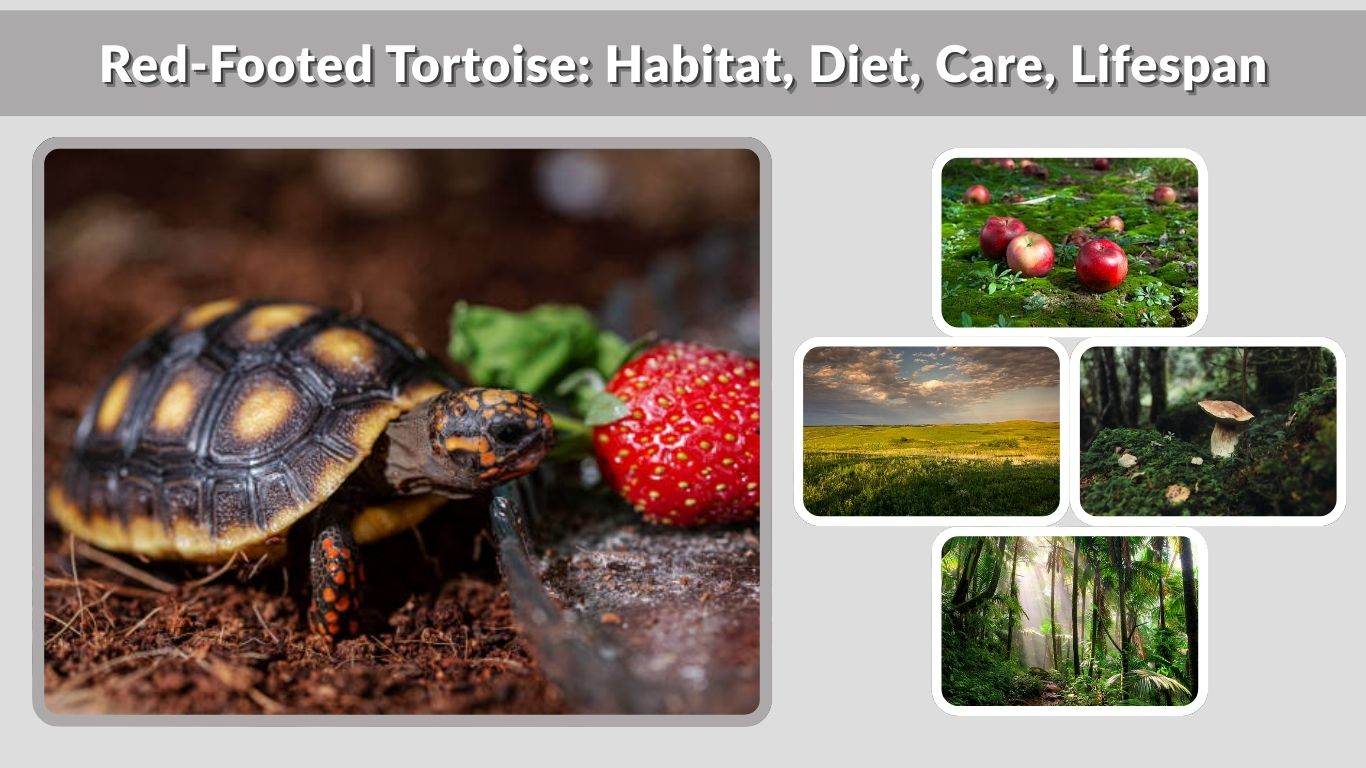
The red-footed tortoise (Chelonoidis carbonarius) is a fascinating land tortoise known for the bright red or orange scales on its legs and head. Native to South America, this species lives in warm tropical regions such as forests, savannas, and grasslands. Because of its colorful appearance and relatively calm temperament, the red-footed tortoise has become a popular reptile among pet enthusiasts. These tortoises are also known for their long lifespan and varied diet. Understanding their habitat, diet, and care requirements helps ensure that they can live healthy and comfortable lives.
What Is a Red-Footed Tortoise?
The red-footed tortoise is a medium-sized tortoise species belonging to the Testudinidae family, which includes all true tortoises. It is closely related to the yellow-footed tortoise and shares many similar characteristics.
This tortoise is well adapted to tropical climates where temperatures are warm and humidity levels are relatively high. Unlike some tortoise species that prefer dry environments, red-footed tortoises thrive in areas with plenty of vegetation and moisture.
Scientific Classification
Like other tortoises, the red-footed tortoise belongs to the reptile order Testudines, which includes turtles and tortoises with protective shells.
The scientific classification of the red-footed tortoise is:
- Kingdom: Animalia
- Phylum: Chordata
- Class: Reptilia
- Order: Testudines
- Family: Testudinidae
- Genus: Chelonoidis
- Species: Chelonoidis carbonarius
This classification helps scientists study how this species is related to other tortoises around the world.
Overview of the Species
Red-footed tortoises are known for their brightly colored scales on their legs and head, which can range from red to orange or yellow. These colorful markings make them easy to recognize compared to other tortoise species.
In the wild, these tortoises spend most of their time searching for food, exploring their surroundings, and resting under vegetation to stay cool. Because they live in tropical environments, they are well adapted to humid conditions.
Their calm behavior and moderate size make them one of the most commonly kept tortoises in captivity.
Red-Footed Tortoise Physical Characteristics
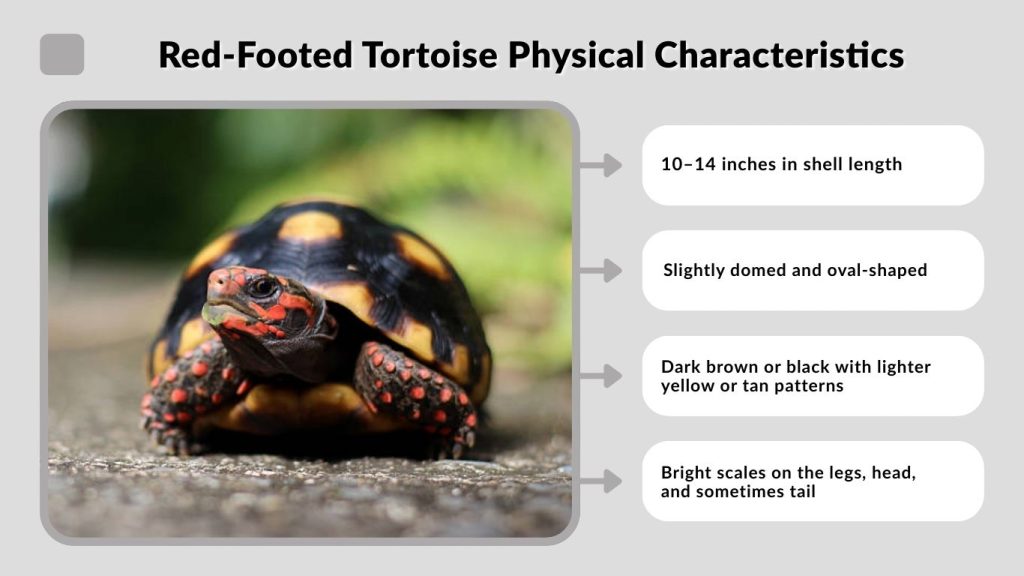
The red-footed tortoise is a medium-sized land tortoise known for its colorful scales and distinctive shell pattern. Its sturdy body, strong legs, and protective shell help it survive in tropical forests and savanna environments. One of its most recognizable features is the bright red or orange scales on its legs and head, which give the tortoise its common name. Below are some key physical characteristics of the red-footed tortoise.
- Medium Size: Adults usually grow between 10–14 inches in shell length.
- Shell Shape: The shell is slightly domed and oval-shaped for protection.
- Shell Color: Typically dark brown or black with lighter yellow or tan patterns.
- Red or Orange Scales: Bright scales on the legs, head, and sometimes tail.
- Strong Legs: Thick, powerful legs adapted for walking across forest floors.
- Scaly Skin: Tough skin that protects the body from rough environments.
- Compact Body: A sturdy body structure that supports slow movement.
- Strong Beak: A hard beak used for eating plants, fruits, and other foods.
These physical features help the red-footed tortoise move easily through tropical habitats while protecting it from predators and environmental challenges.
Red-Footed Tortoise Habitat
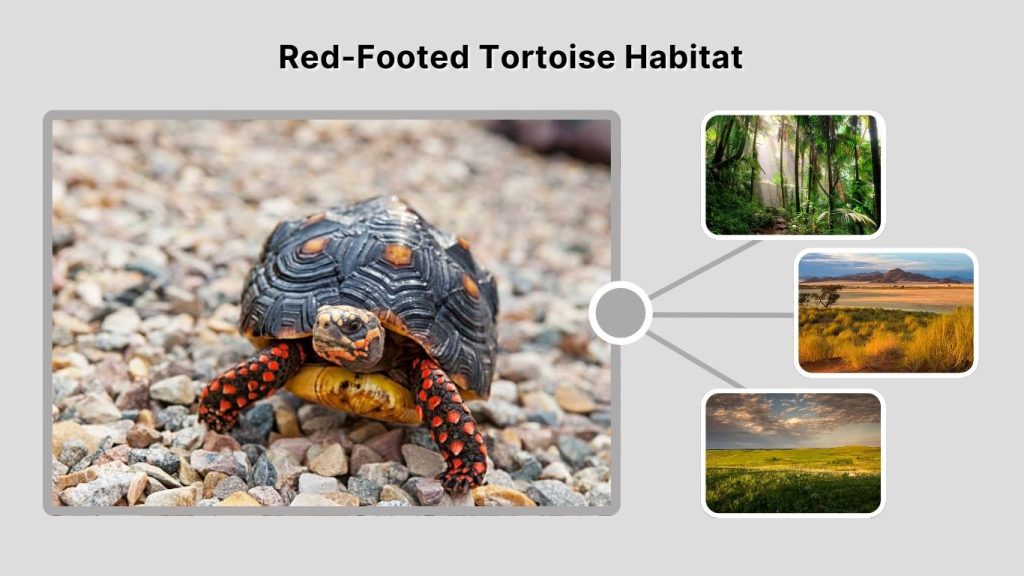
The red-footed tortoise is native to South America, where it lives in warm tropical and subtropical environments. These habitats provide the humidity, vegetation, and shelter necessary for the tortoise to survive.
Natural Habitat in the Wild
In the wild, red-footed tortoises can be found in a variety of habitats. They commonly live in:
- Tropical rainforests
- Savannas
- Grasslands
- Forest edges
These environments offer abundant plant life and fruits that form an important part of the tortoise’s diet.
Geographic Distribution
Red-footed tortoises are widely distributed throughout South America. They are commonly found in countries such as:
- Brazil
- Colombia
- Venezuela
- Paraguay
- Bolivia
These regions have warm climates and seasonal rainfall that support the vegetation the tortoises rely on.
Preferred Environment
Red-footed tortoises prefer environments that provide warm temperatures, moderate humidity, and plenty of vegetation.
Their ideal habitats usually include:
- Areas with dense plant growth
- Access to shade and shelter
- Moist soil or forest floors
These conditions allow the tortoises to remain active while staying protected from extreme temperatures.
Red-Footed Tortoise Diet
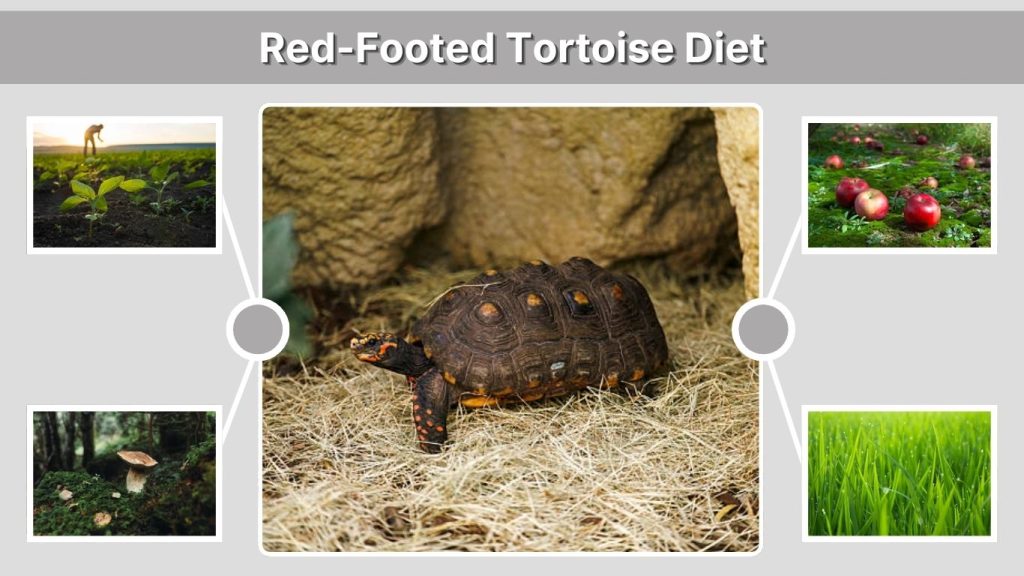
The red-footed tortoise has a varied diet compared to many other tortoise species. While most tortoises are strictly herbivores, red-footed tortoises are considered omnivores, meaning they eat both plant material and small amounts of animal protein. In the wild, they feed on fruits, plants, flowers, and occasionally insects or small invertebrates.
Their flexible diet helps them survive in tropical environments where food availability may change throughout the year.
What Do Red-Footed Tortoises Eat in the Wild?
In their natural habitat, red-footed tortoises eat a wide range of foods that grow in forests and savannas. Their diet mainly includes plant-based foods, but they may also consume small amounts of protein.
Common foods eaten in the wild include:
- Fruits that fall from trees
- Leaves and grasses
- Flowers and plant shoots
- Mushrooms and fungi
Occasionally, they may also eat insects or other small invertebrates found on the forest floor.
Red-Footed Tortoise Diet List
When kept in captivity, red-footed tortoises should be given a balanced diet that includes both plant foods and occasional protein sources.
A typical red-footed tortoise diet list may include:
- Leafy greens such as collard greens and mustard greens
- Vegetables like squash and carrots
- Fruits such as papaya, mango, and berries
- Edible flowers like hibiscus
These foods provide vitamins, minerals, and fiber needed for good health.
Protein Sources
Unlike many tortoise species, red-footed tortoises may occasionally eat small amounts of protein. This can include:
- Insects
- Earthworms
- Other small invertebrates
However, protein should only be provided occasionally because too much protein can cause health problems.
Red-Footed Tortoise Care
Providing proper care is essential for keeping a red-footed tortoise healthy in captivity. Because these tortoises come from tropical regions, their environment must replicate warm temperatures and adequate humidity.
Housing Requirements
Red-footed tortoises require a spacious enclosure where they can move around and explore. Outdoor enclosures work well in warm climates because they allow access to natural sunlight.
A suitable enclosure should include:
- Plenty of space for movement
- Secure walls to prevent escape
- Areas with shade and shelter
- Soft soil or substrate
These conditions allow the tortoise to behave naturally and remain comfortable.
Temperature and Humidity
Since red-footed tortoises come from tropical areas, maintaining the correct temperature and humidity is very important.
Ideal conditions include:
- Warm daytime temperatures
- A basking area for heat
- Moderate to high humidity levels
UVB lighting may also be necessary if the tortoise is kept indoors, as it helps with calcium absorption and shell health.
Diet and Feeding in Captivity
A balanced diet is one of the most important aspects of red-footed tortoise care.
Basic feeding guidelines include:
- Provide a mix of leafy greens and vegetables
- Offer fruits occasionally
- Provide protein sources in small amounts
- Ensure access to fresh water
A proper diet helps maintain healthy growth and a strong shell.
Red-Footed Tortoise Lifespan
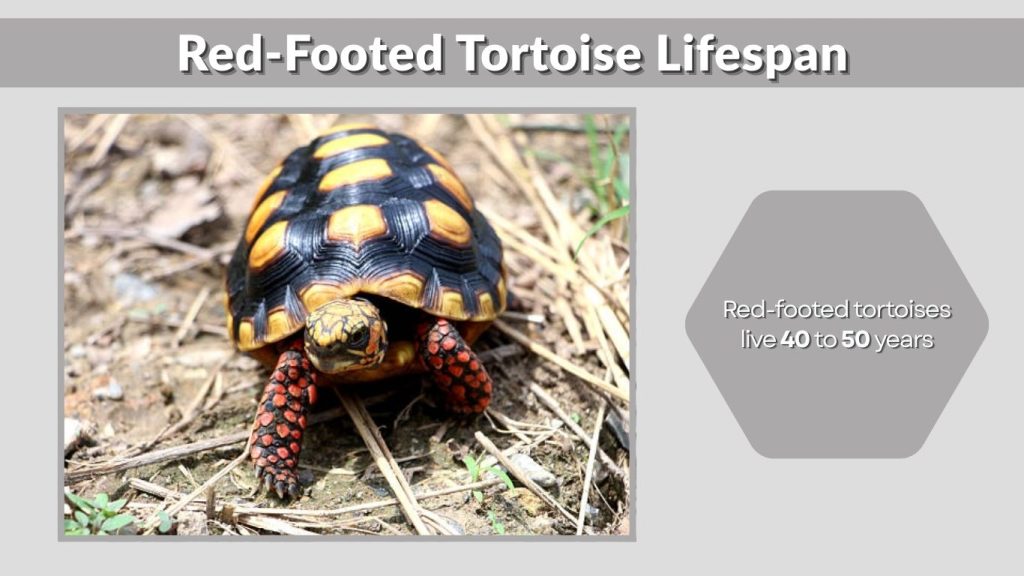
Red-footed tortoises are long-lived reptiles that can remain with their owners for many decades.
How Long Do Red-Footed Tortoises Live?
On average, red-footed tortoises live 40 to 50 years. With proper care, some individuals may live even longer.
Their slow metabolism and strong protective shells contribute to their long lifespan.
Factors That Affect Lifespan
Several factors can influence how long a red-footed tortoise lives.
Important factors include:
- Proper diet and nutrition
- Suitable habitat conditions
- Adequate humidity and temperature
- Regular health monitoring
Tortoises that receive proper care are much more likely to live long and healthy lives.
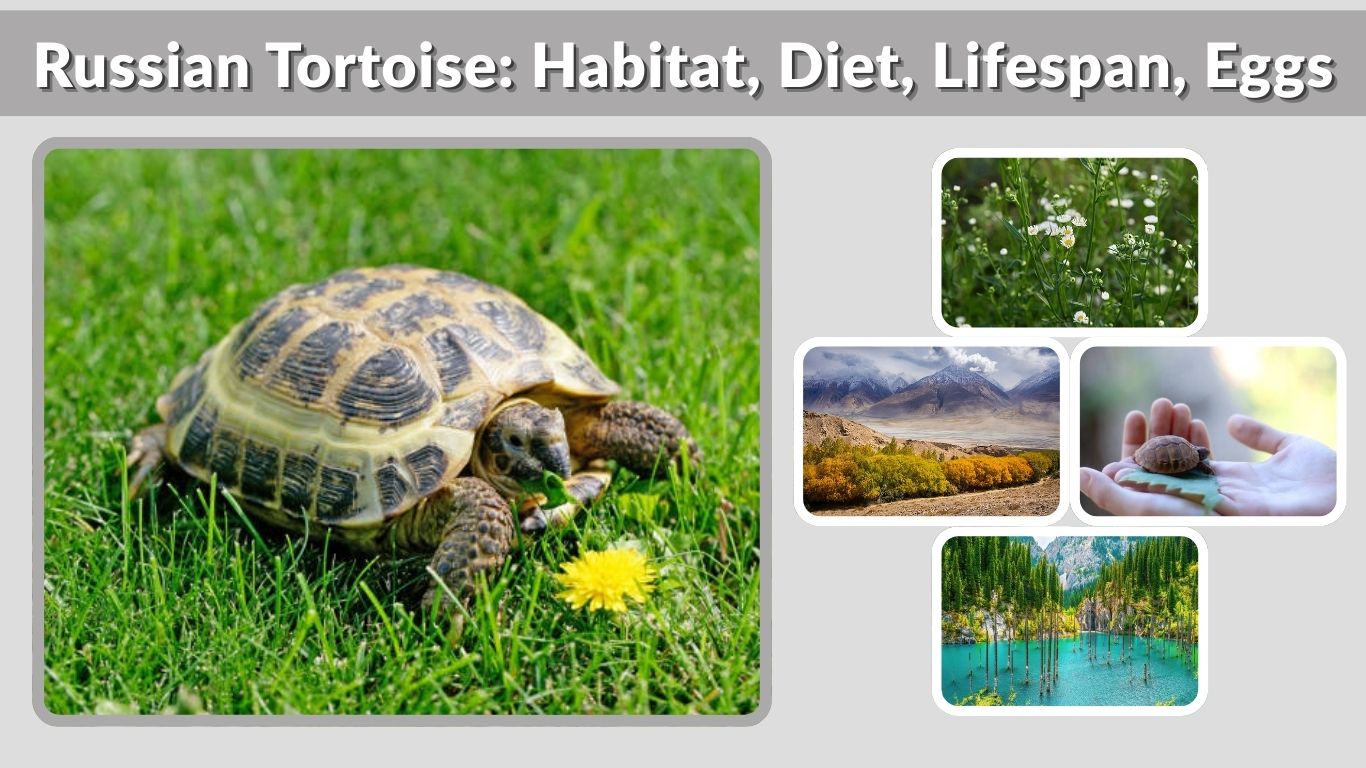
Russian Tortoise vs Red-Footed Tortoise
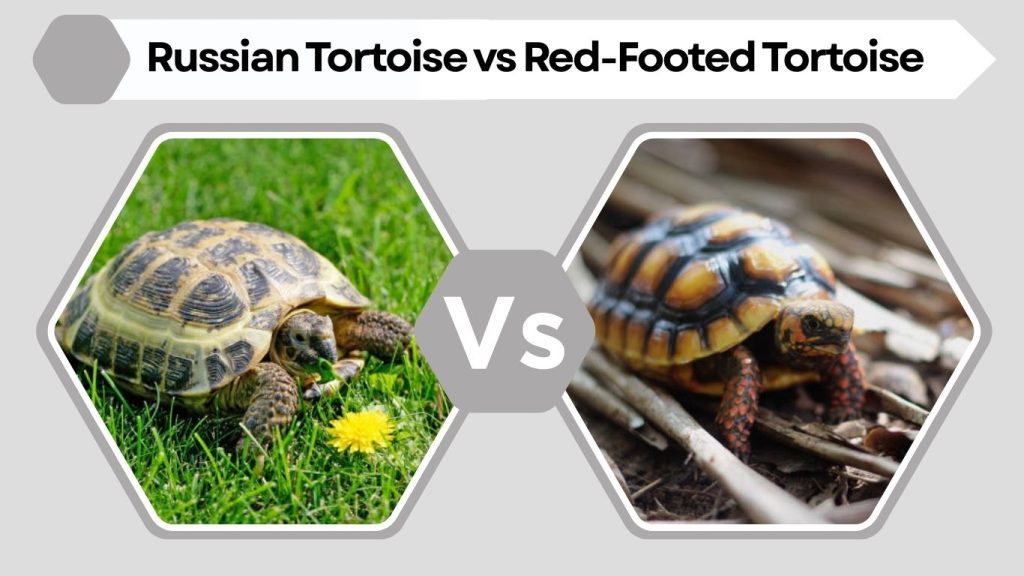
Although both species are popular pet tortoises, there are several differences between the Russian tortoise and the red-footed tortoise.
Habitat Differences
Russian tortoises typically live in dry grasslands and desert environments, while red-footed tortoises prefer humid tropical forests.
Diet Differences
Russian tortoises are strict herbivores, meaning they eat only plants. In contrast, red-footed tortoises are omnivores, occasionally eating insects or other protein sources.
Care Requirements
Red-footed tortoises generally require higher humidity levels, while Russian tortoises thrive in drier environments.
Understanding these differences helps potential owners choose the species that best fits their care capabilities.
Red-Footed Tortoise Facts
The red-footed tortoise is a fascinating reptile with several interesting characteristics.
- It is known for its bright red or orange scales on the legs and head.
- Red-footed tortoises are native to South America.
- They have a more varied diet than many other tortoise species.
- These tortoises can live for several decades with proper care.
- They are among the most popular tortoises kept as pets.
Conclusion
The red-footed tortoise is a remarkable reptile known for its colorful appearance, varied diet, and calm temperament. Native to the tropical regions of South America, this tortoise thrives in warm and humid environments with abundant vegetation. Its omnivorous diet and adaptable nature make it unique among tortoise species. However, proper care, including a suitable habitat, balanced diet, and correct environmental conditions, is essential for its health and longevity. By understanding the habitat, diet, lifespan, and care needs of the red-footed tortoise, people can better appreciate and responsibly care for this fascinating animal.