




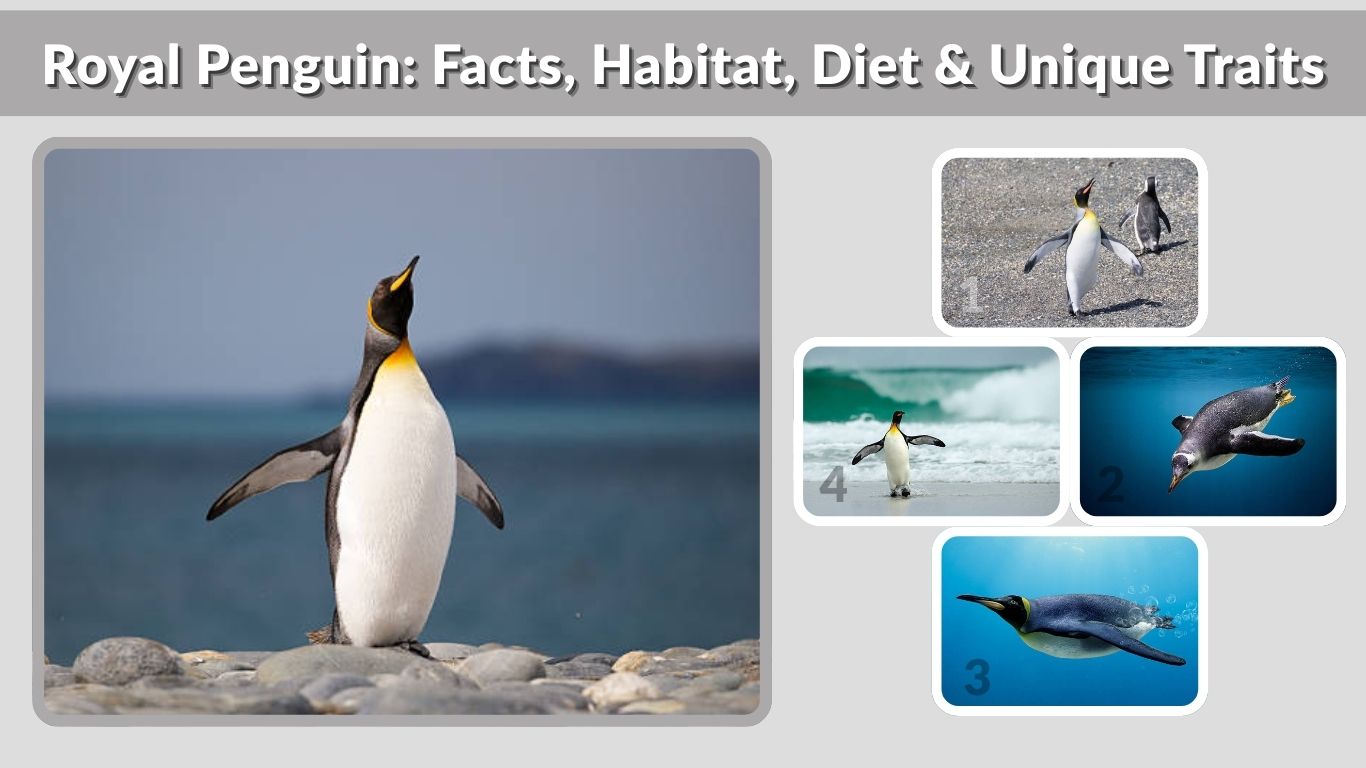
The royal penguin (Eudyptes schlegeli) is one of the most distinctive crested penguins in the world. Known for its bright yellow crest and striking white face, this subantarctic species stands out among its relatives. Found mainly on Macquarie Island, the royal penguin thrives in cold, oceanic environments where it feeds on krill, fish, and squid. Although often compared to the macaroni penguin, it has unique features, behaviors, and habitat patterns that make it truly remarkable.
What Is a Royal Penguin?
The royal penguin is a medium-sized penguin species belonging to the family Spheniscidae. Its scientific name is Eudyptes schlegeli, and it is closely related to the macaroni penguin. In fact, some scientists once considered it a subspecies of the macaroni penguin due to their similar appearance and behavior.
What makes the royal penguin different is its white or pale gray face, compared to the black face of the macaroni penguin. This clear visual distinction helps researchers and wildlife observers identify it more easily.
Royal penguins typically grow between 65 and 75 centimeters tall and weigh around 4.5 to 6 kilograms, depending on the season. Like other penguins, they are excellent swimmers and spend much of their lives at sea. On land, however, they gather in large, noisy colonies during breeding season.
Royal Penguin Habitat
Geographic Location
The royal penguin habitat is remarkably specific. Nearly the entire breeding population is found on Macquarie Island, a remote subantarctic island located between Tasmania and Antarctica. This makes the species unique because it breeds almost exclusively in one location.
Macquarie Island is surrounded by the cold waters of the Southern Ocean. The island’s isolation has helped protect royal penguins from many human disturbances, although environmental threats still exist.
Outside of breeding season, royal penguins spend most of their time at sea. They disperse across the Southern Ocean in search of food, traveling long distances through open waters.
Natural Environment
Royal penguins prefer rocky beaches and coastal slopes for nesting. These areas provide enough space for large colonies while offering some protection from strong winds. The climate is cold, wet, and windy for much of the year, with frequent rain and low temperatures.
The surrounding ocean plays a crucial role in their survival. Rich in nutrients, the Southern Ocean supports large populations of krill, fish, and squid — the primary components of the royal penguin diet.
Their habitat is tightly connected to ocean health. Changes in sea temperature or food availability can directly affect breeding success and survival rates.
Royal Penguin Diet
What Do Royal Penguins Eat?
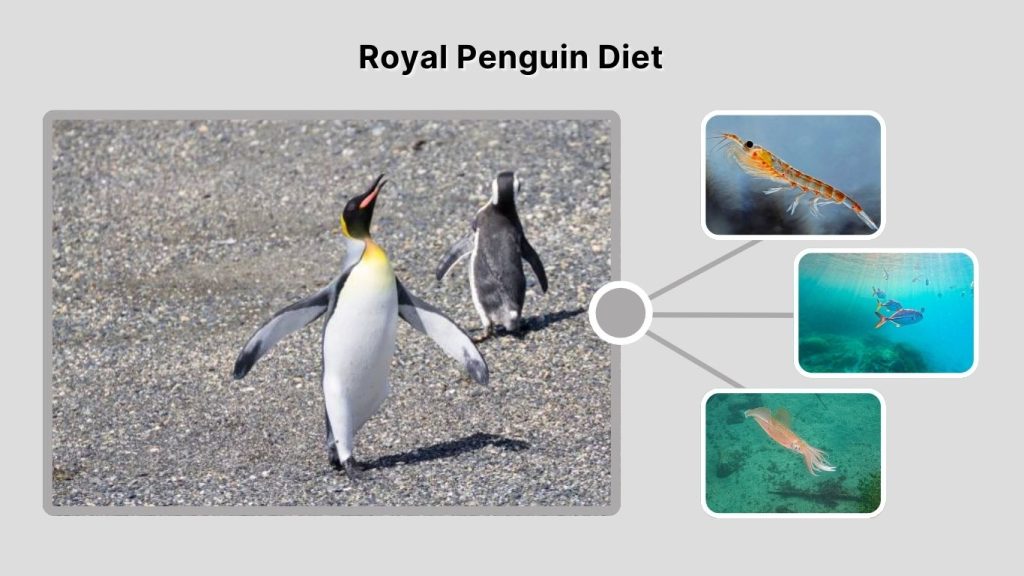
The royal penguin diet mainly consists of small marine animals found in the nutrient-rich waters of the Southern Ocean. Their primary food source is krill, tiny shrimp-like crustaceans that form massive swarms in cold Antarctic waters. Krill provides high energy and is especially important during breeding season when adults must feed their growing chicks.
In addition to krill, royal penguins also eat small fish, squid, and other crustaceans. Their diet can vary depending on seasonal availability and ocean conditions. During certain times of the year, fish may make up a larger portion of their meals.
Because they rely heavily on marine life, any disruption in ocean ecosystems can directly impact their food supply and survival.
Hunting and Feeding Behavior
Royal penguins are skilled hunters. They use their strong flippers to propel themselves underwater and can dive to depths of over 100 meters in search of prey. Most dives, however, are shorter and shallower, allowing them to conserve energy.
They often forage in groups, which may help them locate dense patches of krill more efficiently. Once they spot prey, they use their sharp beaks to catch and swallow it quickly underwater.
During the breeding season, feeding trips are carefully timed. One parent stays behind to guard the egg or chick while the other heads out to sea. These trips can last several days, depending on how far they must travel to find sufficient food.
Role in the Marine Food Chain
Royal penguins play an important role in the marine food chain. As predators of krill and small fish, they help regulate marine populations. At the same time, they are prey for larger animals such as leopard seals and orcas. Seabirds may also prey on eggs or young chicks in the colony.
This balance places royal penguins in a key position within the Southern Ocean ecosystem. Any major change in their population can signal broader environmental shifts.
Royal Penguin Facts
Physical Characteristics
One of the most fascinating royal penguin facts is its dramatic appearance. Adults have a sleek black back and head, contrasted by a white belly and face. The most eye-catching feature is the bright yellow-orange crest that extends from the forehead and sweeps backward above the eyes.
Their bodies are streamlined, which helps them move quickly underwater. Their flippers are strong and flat, functioning like powerful paddles that allow them to swim efficiently. Royal penguins can reach impressive speeds in the water, helping them escape predators and catch prey.
They also have a thick layer of blubber beneath their skin, which insulates them from the freezing waters of the Southern Ocean. Waterproof feathers provide additional protection against the cold.
Behavior and Social Life
Royal penguins are highly social birds. They form massive breeding colonies that can include hundreds of thousands of individuals. These colonies are loud and energetic, filled with constant calls used to identify mates and chicks.
Communication is essential in such crowded environments. Each penguin has a unique vocal call that helps partners find each other among thousands of similar-looking birds. This ability is especially important during breeding season.
In the water, royal penguins are agile and efficient swimmers. They can dive to significant depths in search of food, often reaching over 100 meters. Their streamlined shape and powerful flippers make them perfectly adapted for marine life.
Reproduction and Breeding Cycle
The breeding season usually begins in October. Royal penguins return to Macquarie Island, their primary nesting site, to find mates and establish territories. They build simple nests made of small stones, grass, and other available vegetation.
Like many crested penguins, royal penguins lay two eggs. However, the first egg is usually smaller and rarely survives. The second egg is larger and has a much higher chance of developing into a healthy chick.
Both parents share incubation duties, taking turns keeping the egg warm while the other hunts at sea. Once the chick hatches, it depends entirely on its parents for food and protection. After several weeks, chicks gather in groups called crèches, where they stay together for safety while parents forage.
Royal Penguin vs. Macaroni Penguin
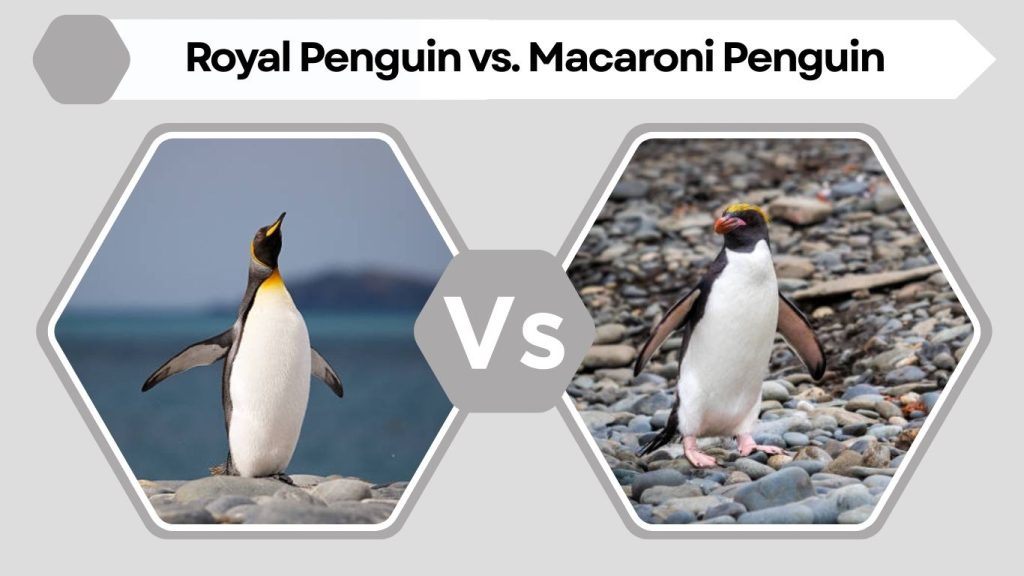
Royal penguins are often compared to macaroni penguins because of their similar size, crest feathers, and breeding behavior. However, there are noticeable differences.
The most obvious distinction is the face color. Royal penguins have a white or pale gray face, while macaroni penguins have a black face. This visual difference is the easiest way to tell them apart.
There has been scientific debate over whether royal penguins should be classified as a separate species or a subspecies of the macaroni penguin. While they are closely related, most modern classifications recognize the royal penguin as its own species.
Despite their differences, both species share similar diets, habitats in subantarctic regions, and colonial breeding patterns.
Conservation Status of the Royal Penguin
Royal penguins are currently classified as Near Threatened by conservation organizations. While their population is relatively large compared to some other penguin species, their limited breeding range makes them vulnerable.
Since they breed almost entirely on Macquarie Island, any environmental disaster, disease outbreak, or major climate event could have significant consequences. Climate change poses one of the biggest long-term threats. Rising ocean temperatures may affect krill populations, which are a crucial part of the royal penguin diet.
Overfishing in the Southern Ocean can also reduce food availability. However, Macquarie Island is a protected nature reserve, and conservation measures are in place to safeguard wildlife and manage human activity.
Ongoing monitoring and environmental protection efforts are essential to ensure the species remains stable.
Interesting Royal Penguin Facts You Might Not Know
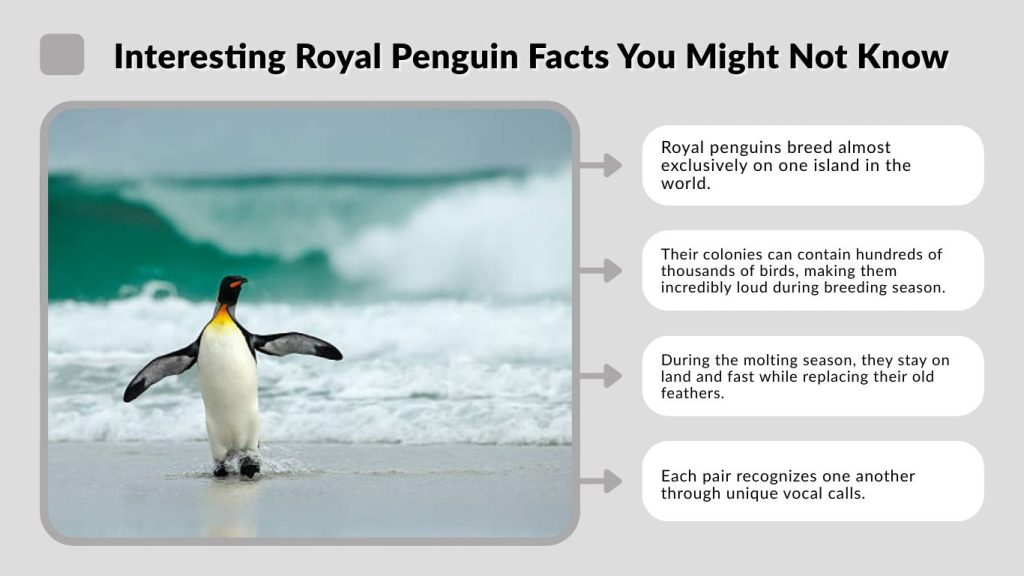
- Royal penguins breed almost exclusively on one island in the world.
- Their colonies can contain hundreds of thousands of birds, making them incredibly loud during breeding season.
- During the molting season, they stay on land and fast while replacing their old feathers.
- Each pair recognizes one another through unique vocal calls.
- They can spend months at sea outside the breeding season.
Why Royal Penguins Are Important to Marine Ecosystems
Royal penguins are considered indicator species. This means their population health can reflect the overall condition of the Southern Ocean ecosystem. If their numbers decline, it may signal problems such as reduced krill populations or changing ocean temperatures.
They also contribute to nutrient cycling. Waste from penguin colonies enriches the surrounding soil and supports plant growth on Macquarie Island. In this way, they influence both marine and land environments.
Protecting royal penguins helps maintain balance within the fragile subantarctic ecosystem.
FAQs
Where do royal penguins live?
Royal penguins primarily live and breed on Macquarie Island in the subantarctic region between Australia and Antarctica. Outside of breeding season, they spend most of their time at sea in the Southern Ocean, traveling long distances in search of food.
What is the royal penguin diet mainly based on?
The royal penguin diet mainly consists of krill, which provides essential nutrients and energy. They also eat small fish, squid, and other marine crustaceans depending on availability and seasonal ocean conditions.
Are royal penguins endangered?
Royal penguins are currently classified as Near Threatened. Although their population is relatively stable, their limited breeding range and dependence on ocean health make them vulnerable to climate change and food shortages.
How long do royal penguins live?
Royal penguins typically live between 15 and 20 years in the wild. Survival depends on food availability, predator threats, and environmental conditions during breeding and molting seasons.
What makes royal penguins different from other crested penguins?
The main difference is their white face, which distinguishes them from other crested penguins like the macaroni penguin. They also breed almost exclusively on Macquarie Island, making their habitat unusually restricted.