




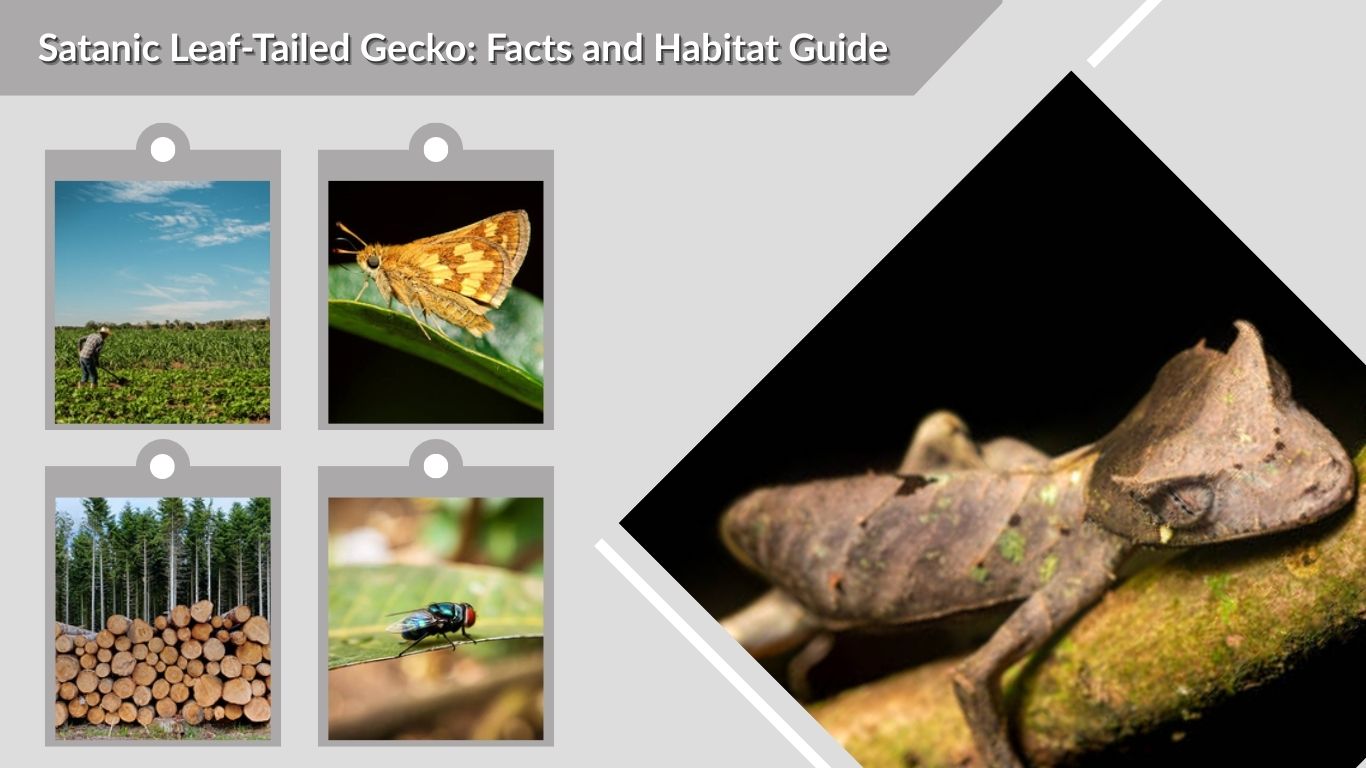
The Satanic leaf-tailed gecko is one of the most extraordinary reptiles on Earth. Despite its dramatic name, this small lizard is harmless and shy, relying on camouflage rather than aggression for survival. Scientifically known as Uroplatus phantasticus, it is native to the tropical rainforests of Madagascar. What makes this gecko truly remarkable is its uncanny resemblance to a dead leaf, complete with vein-like patterns and ragged edges. This natural disguise allows it to blend seamlessly into its surroundings, making it one of the best camouflaged reptiles in the world.
What Is the Satanic Leaf-Tailed Gecko?
The Satanic leaf-tailed gecko is a small nocturnal reptile belonging to the genus Uroplatus, a group known for their impressive camouflage abilities. These geckos are endemic to Madagascar, meaning they are found nowhere else on Earth. Over time, they have evolved unique physical and behavioral traits that allow them to survive in dense rainforest environments filled with predators.
Scientific Classification
The Satanic leaf-tailed gecko belongs to:
- Kingdom: Animalia
- Phylum: Chordata
- Class: Reptilia
- Order: Squamata
- Family: Gekkonidae
- Genus: Uroplatus
- Species: Uroplatus phantasticus
The genus Uroplatus includes several species of leaf-tailed geckos, but Uroplatus phantasticus is among the smallest and most visually striking. Its name “phantasticus” reflects its unusual and almost mythical appearance.
Why Is It Called “Satanic”?
The word “satanic” comes from the gecko’s somewhat eerie appearance. It has small horn-like projections above its eyes and a sharply contoured face that can look intimidating at first glance. However, this reptile is completely harmless to humans. The name is more about its dramatic look than its behavior.
In reality, the Satanic leaf-tailed gecko is shy and avoids confrontation. If threatened, it prefers to rely on its camouflage or startle predators with a brief defensive display rather than attack.
Physical Characteristics and Appearance
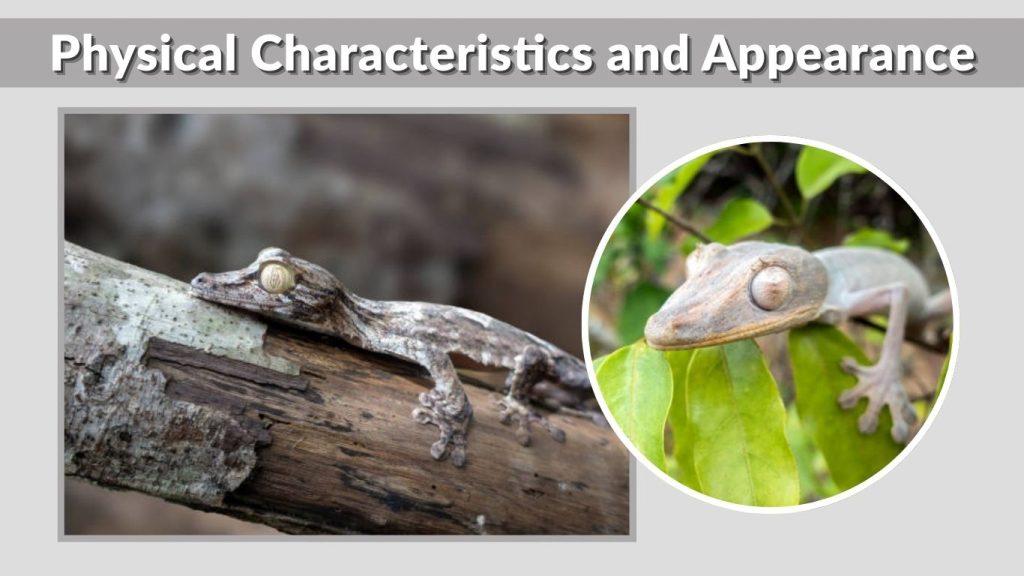
The Satanic leaf-tailed gecko may be small, but its physical design is incredibly detailed and specialized. Nearly every part of its body contributes to its camouflage.
Size and Body Structure
This species is relatively small compared to other reptiles. The body typically measures about 2.5 to 3.5 inches in length, while the total length, including the tail, can reach up to 6 inches.
Its body is flattened, allowing it to press closely against tree bark or leaf surfaces. The edges of its skin are irregular and jagged, helping to break up its outline and eliminate shadows. This makes it difficult for predators to detect its true shape.
Leaf-Shaped Tail and Camouflage Design
The most striking feature of the Satanic leaf-tailed gecko is its tail. Unlike most lizards, its tail looks almost identical to a dried, decaying leaf. It often has patterns that resemble leaf veins and even markings that look like insect damage.
Color variations range from brown and gray to tan and orange. These shades match the forest floor and fallen leaves in Madagascar’s rainforests. Some individuals even have darker patches that enhance the illusion of decay.
When the gecko rests among leaf litter or clings to a tree trunk, it becomes nearly invisible. This level of camouflage is so effective that even experienced observers can struggle to spot one in the wild.
Eyes and Vision
The gecko’s eyes are another fascinating feature. Like most geckos, it does not have eyelids. Instead, it has a transparent membrane that protects its eyes. To keep them clean, it uses its tongue to lick them.
Its large eyes and vertical pupils are perfectly adapted for nighttime activity. These features allow it to see clearly in low-light conditions, giving it an advantage when hunting insects after dark.
Natural Habitat and Distribution
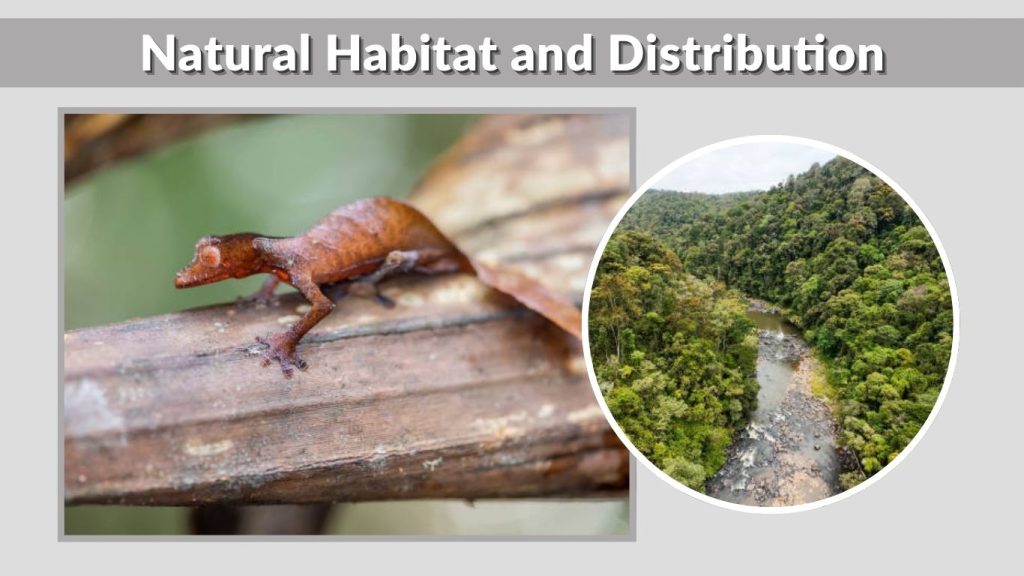
The Satanic leaf-tailed gecko is endemic to Madagascar, an island nation off the southeastern coast of Africa. Madagascar is famous for its unique biodiversity, and this gecko is a prime example of the island’s evolutionary wonders.
Where Do They Live?
This species is primarily found in the eastern rainforests of Madagascar. These forests are dense, humid, and filled with vegetation, providing the perfect environment for a camouflage specialist.
Because they are so well hidden, their exact population numbers are difficult to determine. However, they are generally associated with undisturbed forest areas.
Preferred Environment
Satanic leaf-tailed geckos prefer living among leaf litter, tree trunks, and low vegetation. During the day, they remain motionless on branches or among fallen leaves. At night, they become active and move through the forest in search of food.
The dense canopy above helps maintain humidity and stable temperatures, both of which are essential for their survival. Their entire lifestyle is closely tied to the rainforest ecosystem.
Camouflage and Defense Mechanisms
Perhaps the most remarkable aspect of the Satanic leaf-tailed gecko is its camouflage strategy. Its survival depends almost entirely on remaining unseen.
Master of Leaf Mimicry
The gecko’s body shape, tail design, and coloration all work together to mimic a dead leaf. Even the irregular edges of its body resemble the torn or decayed margins of foliage.
When resting on a tree trunk, it can flatten its body to reduce shadows. This eliminates visual clues that predators might use to detect it. Its natural coloring blends seamlessly with bark, moss, and leaf litter.
Behavioral Adaptations
In addition to its physical traits, the gecko also uses behavioral strategies to enhance its disguise. It can sway gently from side to side, imitating the movement of a leaf in the wind. This subtle motion further convinces predators that it is simply part of the environment.
When danger approaches, it often freezes completely. Remaining motionless is often more effective than fleeing, especially when your best defense is invisibility.
Defense Displays
Although camouflage is its primary defense, the Satanic leaf-tailed gecko has a few additional survival tactics. If a predator gets too close, it may suddenly open its mouth wide to reveal a bright red interior. This unexpected display can startle or confuse predators just long enough for the gecko to escape.
Unlike some reptiles, it does not rely on venom or strong bites. Instead, it depends almost entirely on deception and quick reactions. In extreme situations, it may drop part of its tail to distract a predator, a common defense mechanism among many gecko species.
Diet and Hunting Behavior
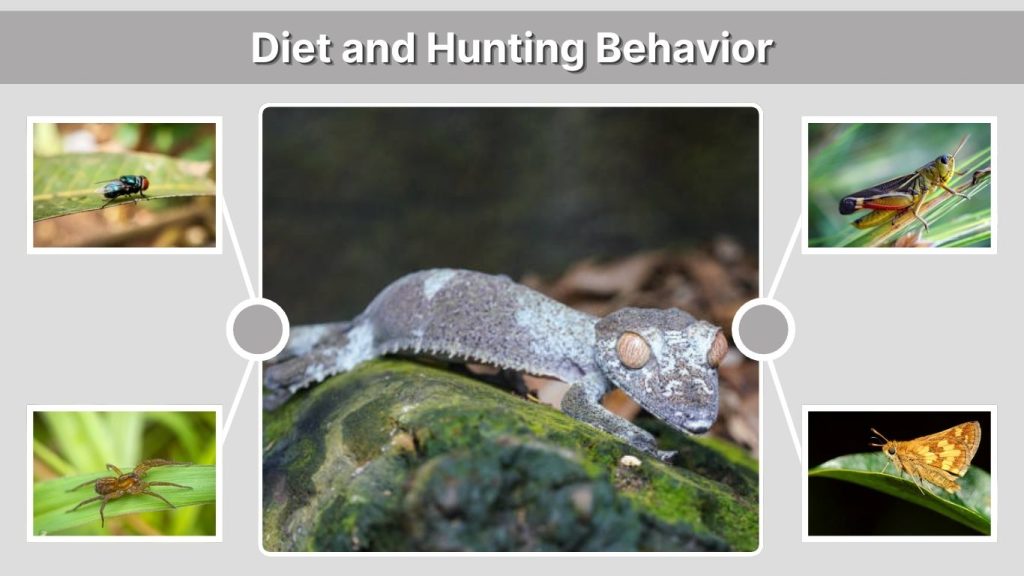
The Satanic leaf-tailed gecko is a carnivorous insectivore. Its diet mainly consists of small invertebrates that are active at night.
What Do They Eat?
In the wild, their diet includes:
- Crickets
- Moths
- Flies
- Spiders
- Small beetles
They play an important role in controlling insect populations within their ecosystem. By feeding on various insects, they help maintain balance in the rainforest food chain.
Nocturnal Hunting Strategy
As a nocturnal hunter, this gecko becomes active after sunset. It uses its excellent night vision to detect movement in low light. Rather than chasing prey over long distances, it relies on patience and stealth.
The gecko typically waits motionless until an insect comes within striking range. Then, with a quick and precise movement, it captures its prey. This ambush-style hunting conserves energy and reduces exposure to predators.
Behavior and Temperament
The Satanic leaf-tailed gecko is generally solitary. Each individual prefers its own space and may become stressed if housed too closely with others, especially in captivity.
These geckos are shy and sensitive creatures. They avoid confrontation and prefer to remain hidden during the day. Excessive handling can cause stress, which may negatively impact their health. For this reason, they are best observed rather than frequently touched.
In the wild, their quiet and cautious temperament is perfectly suited to a life of camouflage and nighttime activity.
Lifespan and Reproduction
Lifespan in the Wild vs. Captivity
In the wild, the average lifespan of a Satanic leaf-tailed gecko is estimated to be around 5 to 10 years. Survival depends heavily on habitat quality, food availability, and avoidance of predators.
In captivity, with proper care and controlled conditions, they may live closer to the upper end of that range. However, maintaining the right humidity, temperature, and diet is essential for longevity.
Breeding and Egg-Laying
Satanic leaf-tailed geckos are oviparous, meaning they lay eggs rather than giving birth to live young. Females typically lay two eggs at a time, placing them carefully on the forest floor among leaf litter.
The incubation period can last several weeks, depending on environmental conditions. Once hatched, the young geckos are independent and must immediately rely on their natural camouflage for protection.
Can You Keep a Satanic Leaf-Tailed Gecko as a Pet?
Legal Considerations
The Satanic leaf-tailed gecko is protected under international regulations. It is listed under CITES (the Convention on International Trade in Endangered Species), which restricts its trade to prevent overexploitation.
Anyone interested in owning one must ensure that it was legally bred in captivity and obtained through proper channels. Import and export laws vary by country.
Care Requirements
Caring for this species is challenging. They require:
- High humidity levels (typically 70–85%)
- Moderate temperatures
- A vertically oriented enclosure with branches and foliage
- A steady supply of live insects
Their enclosure must closely mimic a tropical rainforest environment. Even slight fluctuations in humidity or temperature can cause stress or illness.
Is It Beginner-Friendly?
The Satanic leaf-tailed gecko is not recommended for beginners. Its specialized care requirements make it better suited for experienced reptile keepers who understand humidity control and nocturnal species management.
For most people, appreciating this gecko in documentaries or wildlife photography may be the better option.
Conservation Status and Threats
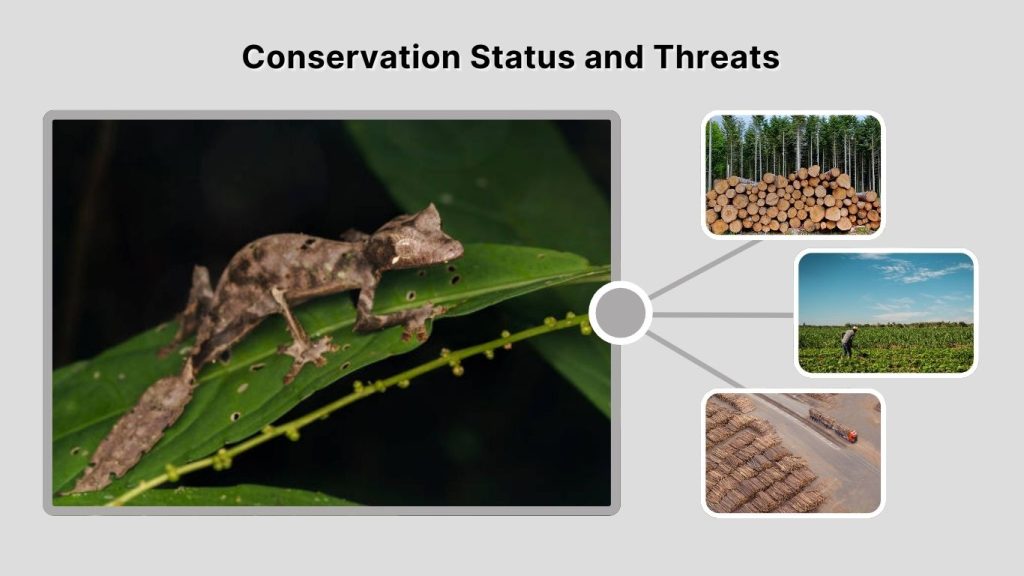
The Satanic leaf-tailed gecko faces several threats in the wild. Madagascar’s rainforests are under pressure from deforestation, agriculture, and logging. Habitat destruction reduces the safe spaces these geckos depend on for survival.
Illegal collection for the exotic pet trade has also contributed to population concerns in the past. Although international regulations now limit trade, habitat loss remains a significant issue.
Protecting Madagascar’s forests is essential not only for this species but also for the many other unique animals that live there.
Interesting Facts About the Satanic Leaf-Tailed Gecko
- It is considered one of the best camouflaged reptiles in the world.
- Its tail can look like a half-eaten or decaying leaf.
- It can flatten its body to eliminate shadows and improve disguise.
- Each individual has slightly unique patterns and coloration.
- Despite its name, it is completely harmless to humans.
FAQs
Is the satanic leaf-tailed gecko dangerous?
No, the Satanic leaf-tailed gecko is not dangerous to humans. It does not have venom and rarely bites. Its dramatic appearance may look intimidating, but it is a shy reptile that prefers to hide rather than confront threats.
How big does a satanic leaf-tailed gecko get?
The body typically measures between 2.5 and 3.5 inches long. Including the tail, total length can reach about 6 inches. It is one of the smaller species within the Uroplatus genus.
Why does it look like a leaf?
Its leaf-like appearance is an evolutionary adaptation for survival. By mimicking dead leaves in shape, color, and texture, it can avoid detection by predators in Madagascar’s rainforests.
Where can you see one in the wild?
They are found in the eastern rainforests of Madagascar. Because of their excellent camouflage, they are extremely difficult to spot, even for experienced wildlife observers.
How long do they live?
In the wild, they typically live between 5 and 10 years. With proper care in captivity, they may reach the higher end of that range.
Conclusion
The Satanic leaf-tailed gecko is a true marvel of evolution. From its leaf-shaped tail to its night-adapted vision, every feature serves a purpose in helping it survive within Madagascar’s rainforests. Though small and shy, it demonstrates one of nature’s most impressive camouflage strategies. Protecting its habitat is essential to ensuring that this remarkable reptile continues to thrive for generations to come.