
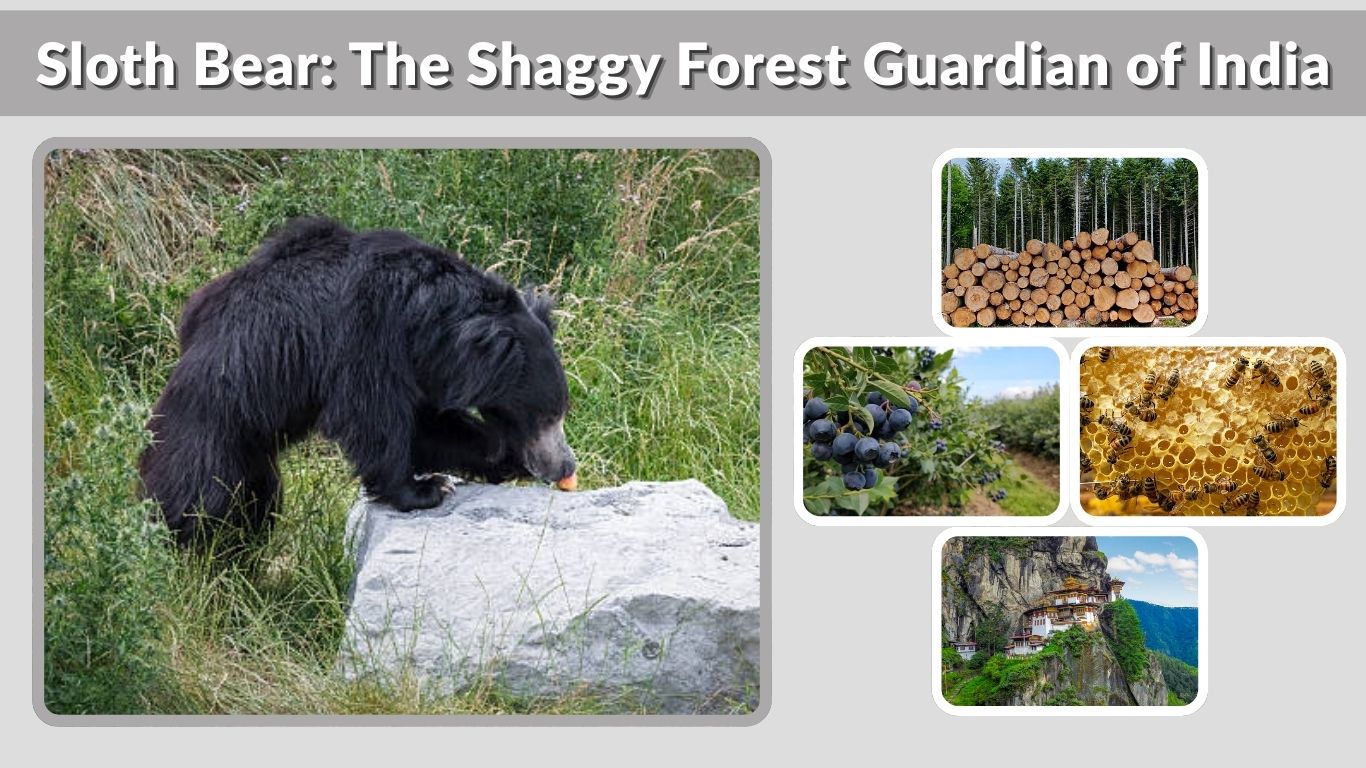
The sloth bear (Melursus ursinus) is one of the most distinctive and fascinating bear species in the world. Native to the Indian subcontinent, this shaggy-coated mammal stands apart from other bears due to its unusual diet, unique physical adaptations, and defensive temperament. Often misunderstood and sometimes feared, the sloth bear plays an important ecological role in its habitat. From its loud termite-sucking feeding habits to cubs riding safely on their mother’s back, this remarkable animal continues to capture the attention of wildlife researchers and conservationists alike.
Scientific Classification and Taxonomy
The sloth bear belongs to the family Ursidae and is scientifically classified as Melursus ursinus. Unlike brown bears or polar bears, it belongs to its own genus, Melursus, highlighting its evolutionary uniqueness. Its closest relatives are Asian bear species, but the sloth bear has developed highly specialized adaptations that separate it from other members of the bear family.
There are two recognized subspecies:
- The Indian sloth bear (Melursus ursinus ursinus)
- The Sri Lankan sloth bear (Melursus ursinus inornatus)
The Sri Lankan subspecies is generally smaller and has slightly different skull characteristics. Fossil evidence suggests that sloth bears evolved to thrive in warm, tropical climates, unlike many other bears that adapted to colder regions.
Physical Characteristics
Size and Weight
Sloth bears are medium-sized bears. Adult males typically weigh between 80 to 140 kilograms (176 to 309 pounds), while females are smaller, weighing between 55 to 95 kilograms (121 to 209 pounds). They usually measure about 1.5 to 1.9 meters (5 to 6.2 feet) in length, including their tail. When standing upright on their hind legs, they can appear quite tall and intimidating.
Distinctive Features
One of the most recognizable features of the sloth bear is its long, shaggy black coat. The fur is especially thick around the neck and shoulders, giving it a somewhat unkempt appearance. Most sloth bears have a cream or white “V” or “Y”-shaped patch on their chest, although the shape and size vary among individuals.
Their long, curved claws are specially adapted for digging into termite mounds and ant nests. Unlike many other bears, sloth bears have a gap between their front teeth because they lack upper incisors. This unusual dental structure allows them to suck insects efficiently. Their lips are flexible and can form a tube-like shape, helping them vacuum termites with a loud slurping sound that can be heard from a considerable distance.
Adaptations for Survival
The sloth bear’s strong sense of smell is one of its most important survival tools. It can detect insects buried deep underground and locate ripe fruits from afar. Its thick fur not only provides protection from insect bites while feeding but also acts as a defense against predators during confrontations. These physical adaptations make the sloth bear highly specialized for its environment.
Habitat and Geographic Distribution
Geographic Range
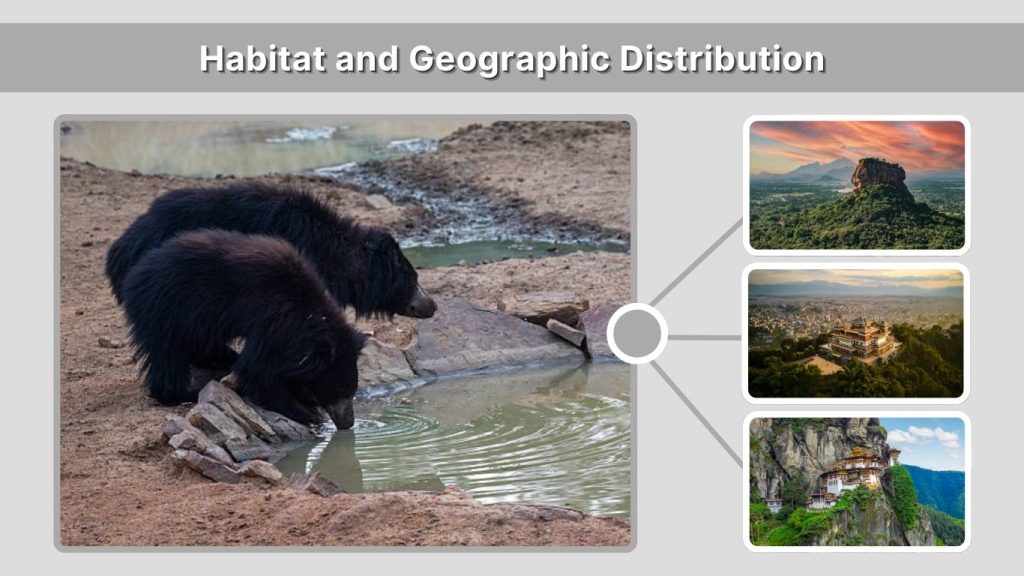
Sloth bears are primarily found in the Indian subcontinent. India holds the largest population, but they are also present in Sri Lanka, Nepal, and Bhutan. Their distribution has declined over time due to habitat loss, but they still occupy several protected areas and national parks.
Preferred Habitat
Unlike bears that live in snowy mountains or Arctic regions, sloth bears prefer warm climates. They inhabit tropical forests, dry forests, grasslands, and scrublands. They are especially common in regions with abundant termite colonies and fruit-bearing trees.
These bears can live in both lowland areas and moderate elevations. However, they generally avoid very high altitudes and extremely cold environments. Access to water sources and dense vegetation for shelter are key factors in their habitat selection.
Diet and Feeding Habits
Primary Diet
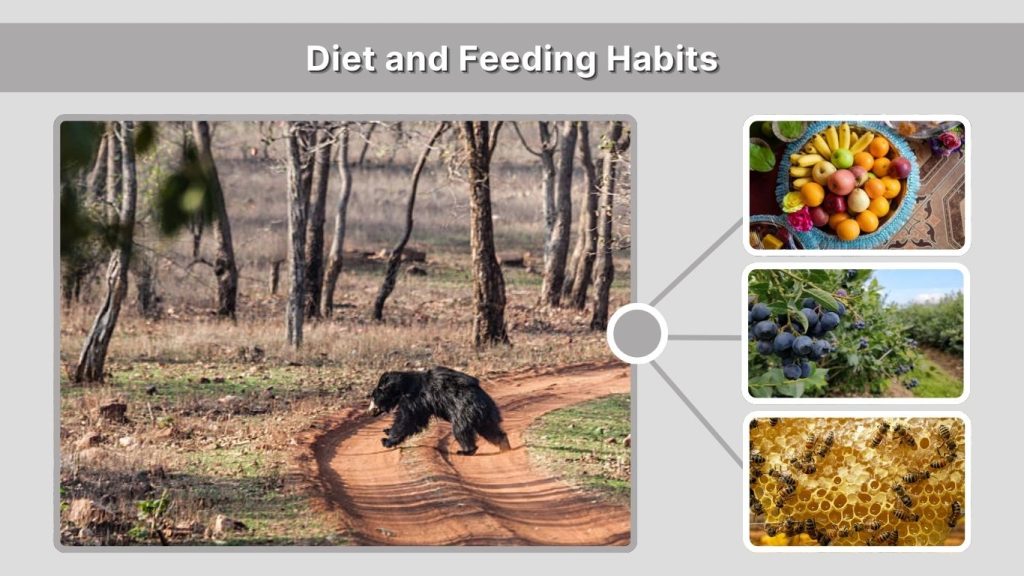
The sloth bear is primarily insectivorous, meaning insects form the largest part of its diet. Termites and ants are its favorite food sources. Using its powerful claws, it breaks open termite mounds and digs into the ground to expose insect colonies.
After breaking open a mound, the bear blows away dirt and debris before sucking up insects using its specialized lips. The feeding process produces a loud sucking noise that can often be heard from several meters away.
Additional Food Sources
Although insects are their main food, sloth bears also consume fruits, berries, honey, flowers, and occasionally small vertebrates. During fruiting seasons, fruits can make up a significant portion of their diet. By eating fruits and dispersing seeds through their droppings, sloth bears help maintain forest ecosystems.
Their flexible diet allows them to adapt to seasonal changes in food availability, increasing their chances of survival in fluctuating environments.
Behavior and Lifestyle
Nocturnal Nature
Sloth bears are primarily nocturnal animals, meaning they are most active during the night. This behavior helps them avoid the intense daytime heat common in many parts of India and Sri Lanka. Being active at night also reduces encounters with humans, although conflicts still occur in some regions.
During the day, sloth bears typically rest in caves, rock crevices, or dense vegetation. In protected areas with minimal human disturbance, they may sometimes be seen during daylight hours. Their activity patterns can vary depending on season, food availability, and human presence.
Solitary Behavior
Sloth bears are generally solitary animals. Adult males and females live independently and come together only during the mating season. The most common social group consists of a mother and her cubs.
Each bear maintains a home range, though these territories may overlap. They do not strongly defend territories like some carnivores, but they may avoid direct contact with other adults unless necessary.
Temperament and Defense
Sloth bears have a reputation for being more aggressive than many other bear species. However, this behavior is largely defensive. Because they often live in areas with dense vegetation, sudden encounters with humans can startle them. When surprised, a sloth bear may react quickly to protect itself or its cubs.
When threatened, they stand on their hind legs, growl loudly, and may charge. Their long claws are powerful weapons capable of inflicting serious injury. Tigers are their primary natural predators, and sloth bears have evolved to be highly defensive in order to survive in tiger habitats.
Communication
Sloth bears communicate through a combination of vocalizations, scent marking, and body language. They produce grunts, roars, snorts, and the well-known loud sucking sound while feeding. Scent marking helps them signal their presence and reproductive status to other bears in the area.
Reproduction and Life Cycle
Mating and Gestation
The breeding season for sloth bears typically occurs between May and July, although this may vary by region. After mating, the female undergoes a gestation period of about six to seven months.
Birth usually takes place in a sheltered den during the cooler months, often between November and January. Dens may be located in caves, under large boulders, or in thick vegetation.
Cubs and Maternal Care
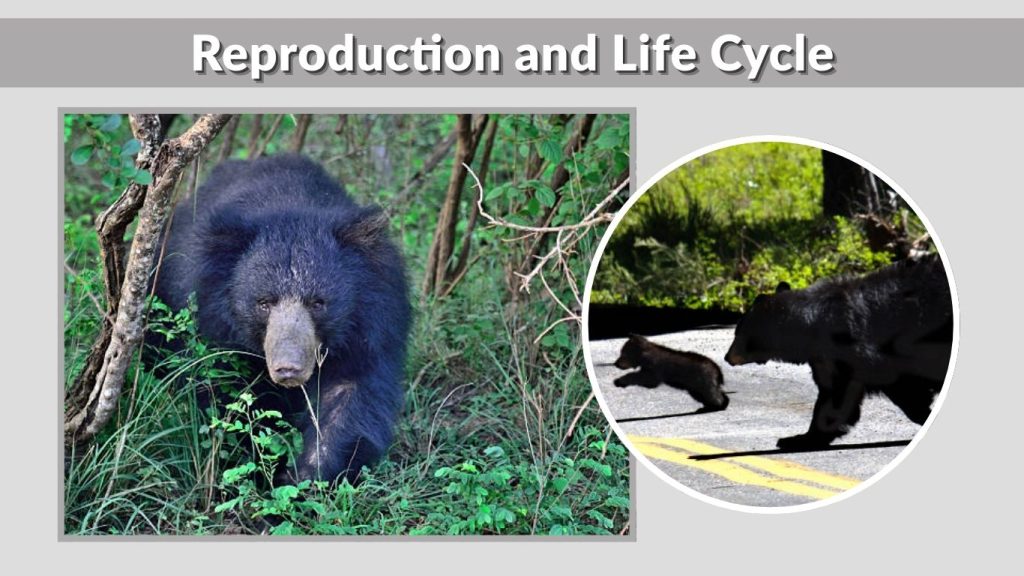
A female sloth bear usually gives birth to one or two cubs, though litters of three have been recorded. At birth, cubs are blind, small, and completely dependent on their mother.
One of the most remarkable behaviors of sloth bears is that cubs ride on their mother’s back. This behavior is rare among bear species and provides protection as the mother moves through forests or escapes danger. The cubs cling to her thick fur while she walks or even runs.
The mother is highly protective and will aggressively defend her cubs from predators or threats. Cubs remain with their mother for approximately two to three years, learning essential survival skills such as foraging and recognizing danger.
Lifespan
In the wild, sloth bears typically live around 15 to 20 years. In captivity, where threats such as predators and food shortages are absent, they may live up to 25 years or more.
Predators and Threats
Natural Predators
Adult sloth bears have few natural predators due to their size and defensive nature. However, tigers are known to prey on them, particularly cubs or weaker individuals. Leopards may occasionally target young cubs, but such cases are rare.
Human-Related Threats
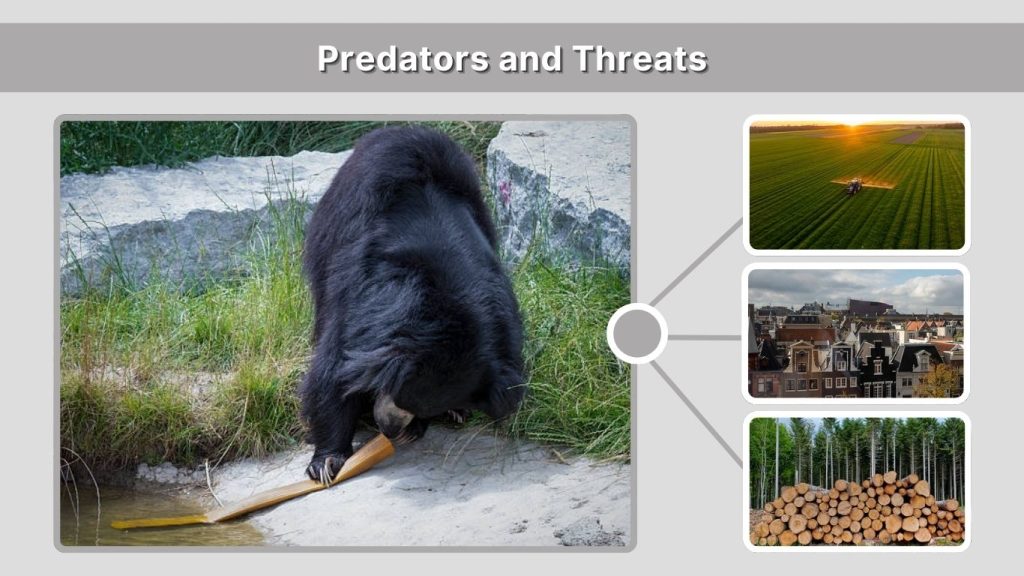
The greatest threats to sloth bears today come from human activities. Habitat destruction due to agriculture, urban expansion, and deforestation has significantly reduced their natural range. As forests shrink, bears are forced into closer contact with human settlements.
Human-wildlife conflict is a major concern in some areas. Sloth bears may raid crops or wander into villages in search of food, leading to confrontations.
Historical Exploitation
In the past, sloth bears were captured and used in the cruel “dancing bear” practice in India. Cubs were taken from the wild and trained to perform for entertainment. Thankfully, this practice has been outlawed, and conservation groups have rescued many of these animals.
Conservation Status
The sloth bear is currently classified as Vulnerable on the IUCN Red List. Although exact population numbers are uncertain, trends indicate a decline in several regions.
Governments in India, Sri Lanka, Nepal, and Bhutan have granted legal protection to the species. Sloth bears are found in numerous national parks and wildlife reserves, including well-known tiger reserves in India.
Conservation efforts focus on habitat preservation, reducing human-wildlife conflict, anti-poaching measures, and community awareness programs. Protecting forest ecosystems not only benefits sloth bears but also supports countless other species that share the same environment.
Importance in the Ecosystem
Sloth bears play a crucial ecological role. By feeding on termites and ants, they help regulate insect populations. Their fruit consumption aids in seed dispersal, contributing to forest regeneration.
As part of the forest food web, they influence both prey and predator dynamics. Their presence indicates a relatively healthy ecosystem. Protecting sloth bears ultimately helps maintain biodiversity in South Asian forests.
Conclusion
The sloth bear is a remarkable and highly specialized member of the bear family. From its insect-based diet and unique dental adaptations to the rare sight of cubs riding on their mother’s back, it stands apart from other bear species. Despite facing threats from habitat loss and human conflict, conservation efforts continue to provide hope for its survival. Protecting the sloth bear is not only about saving one species—it is about preserving the delicate balance of the forest ecosystems it calls home.